Inspiration
Research work is often scattered across PDFs, notes, transcripts, and separate AI chats. This makes it difficult to understand how individual facts relate to the original source and which conclusions can actually be trusted.
We built Flow-AI Research IDE to make research more structured, traceable, and easier to verify.
What We Built
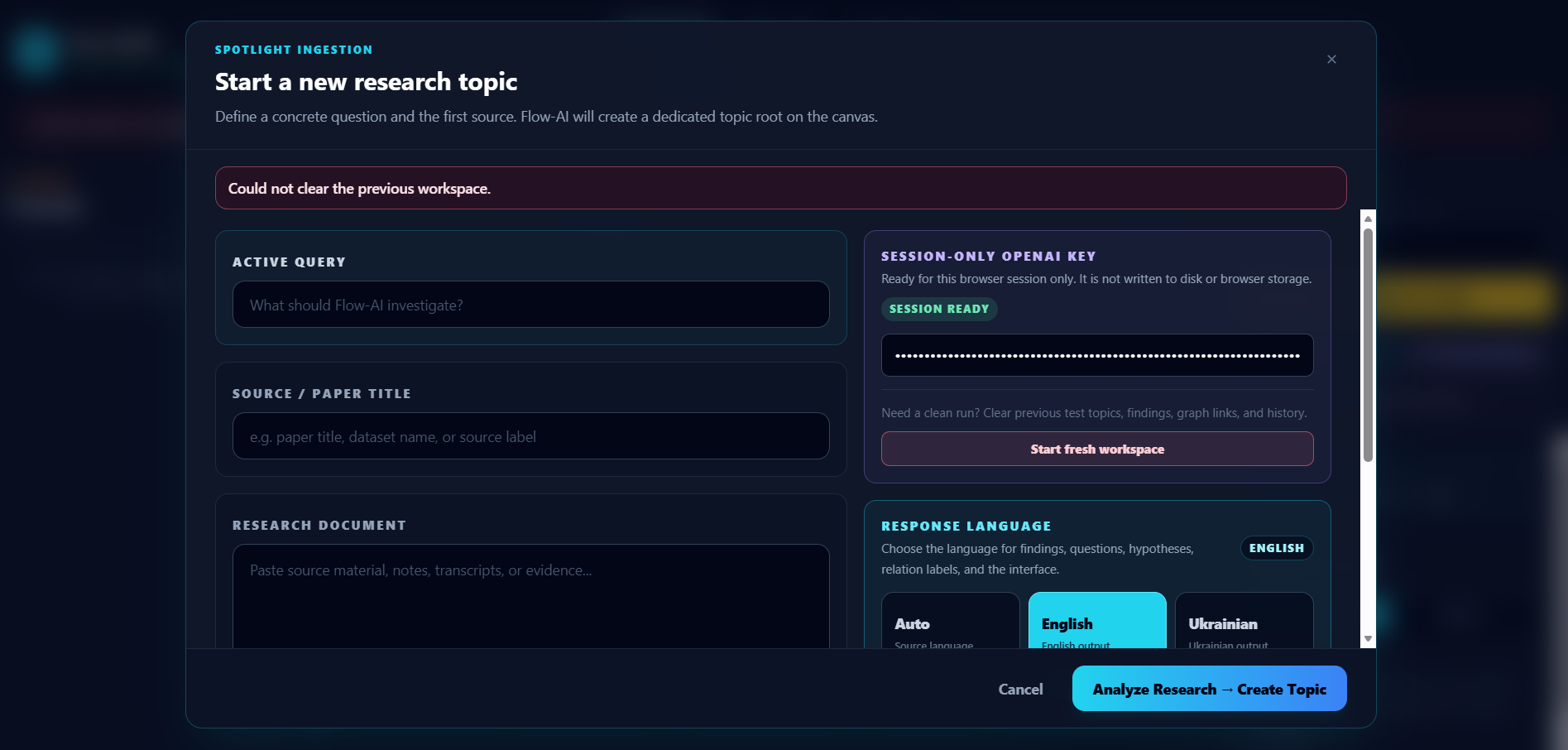
Flow-AI transforms research documents into an interactive, evidence-grounded knowledge workspace.
Users can:
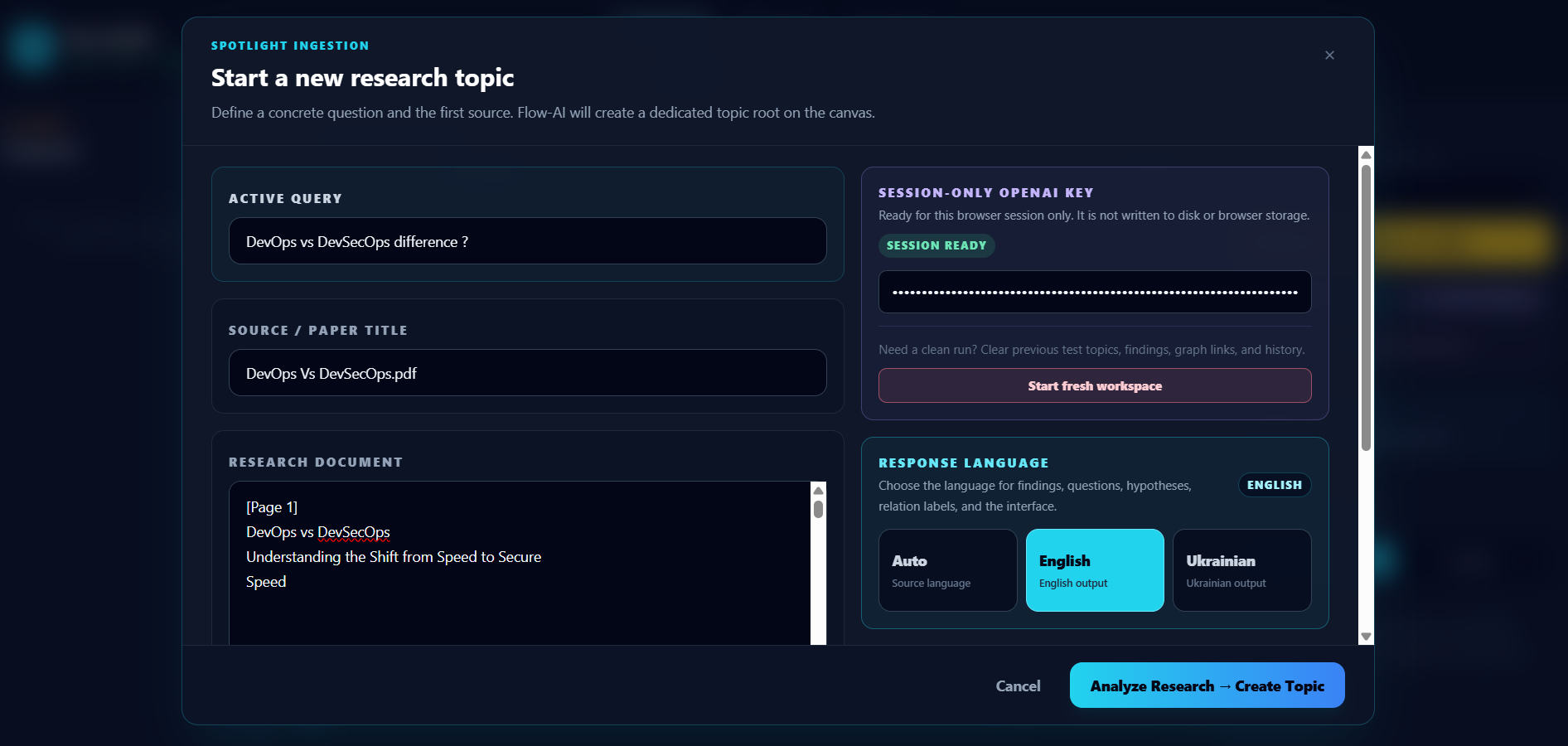
- Upload research sources such as PDF, DOCX, TXT, Markdown, CSV, or JSON files.
- Ask a focused research question.
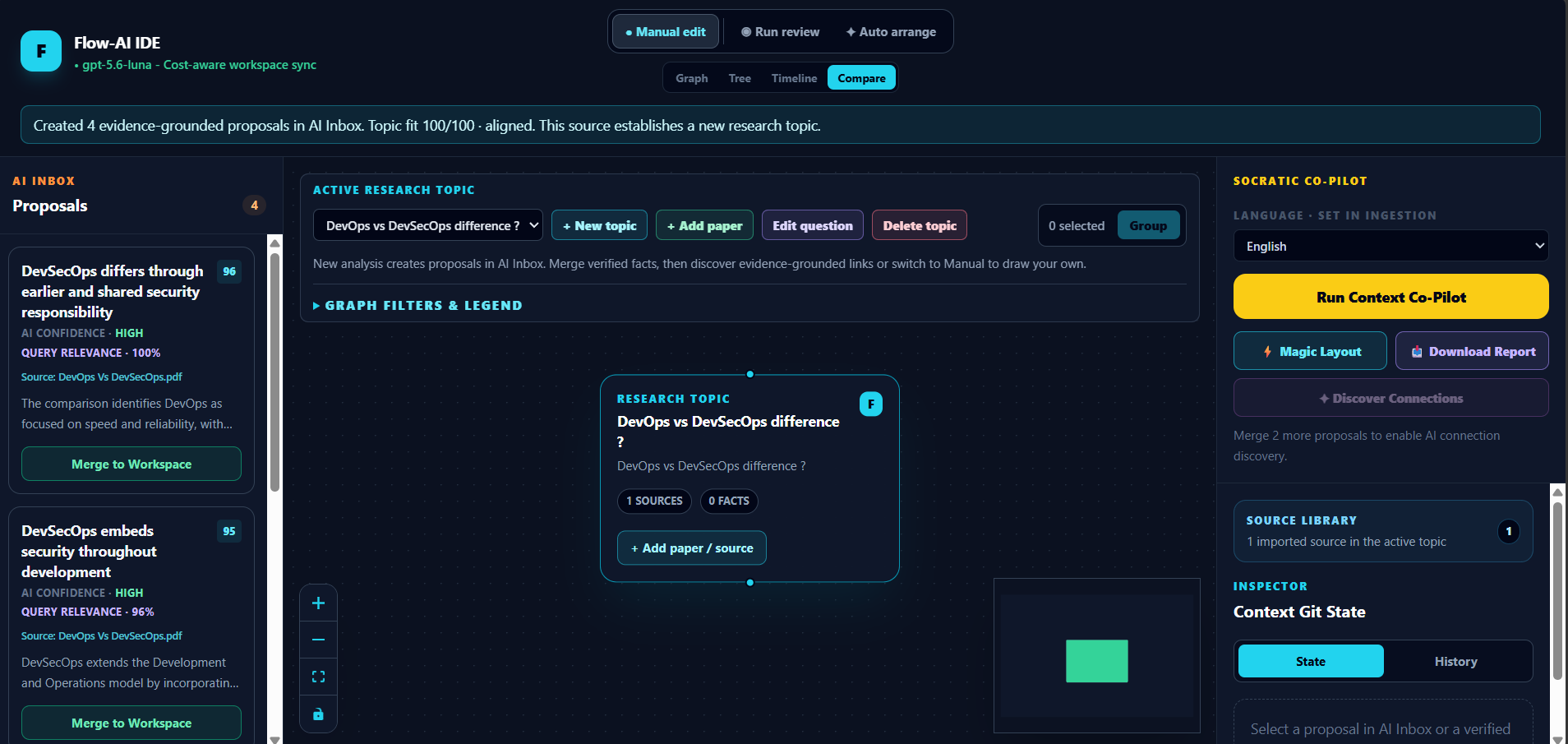
- Review AI-generated findings in an Inbox before accepting them.
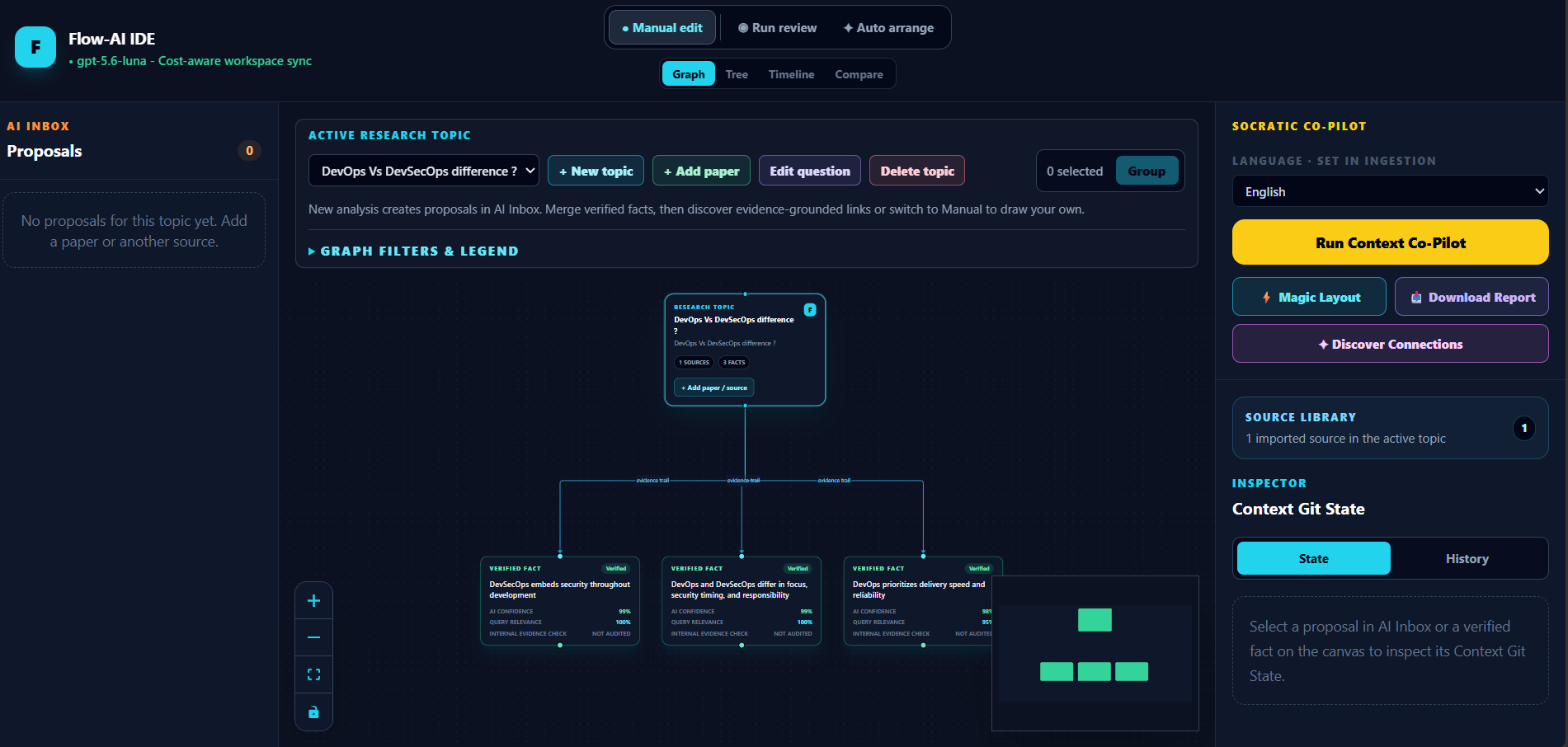
- Inspect exact source evidence for every proposed fact.
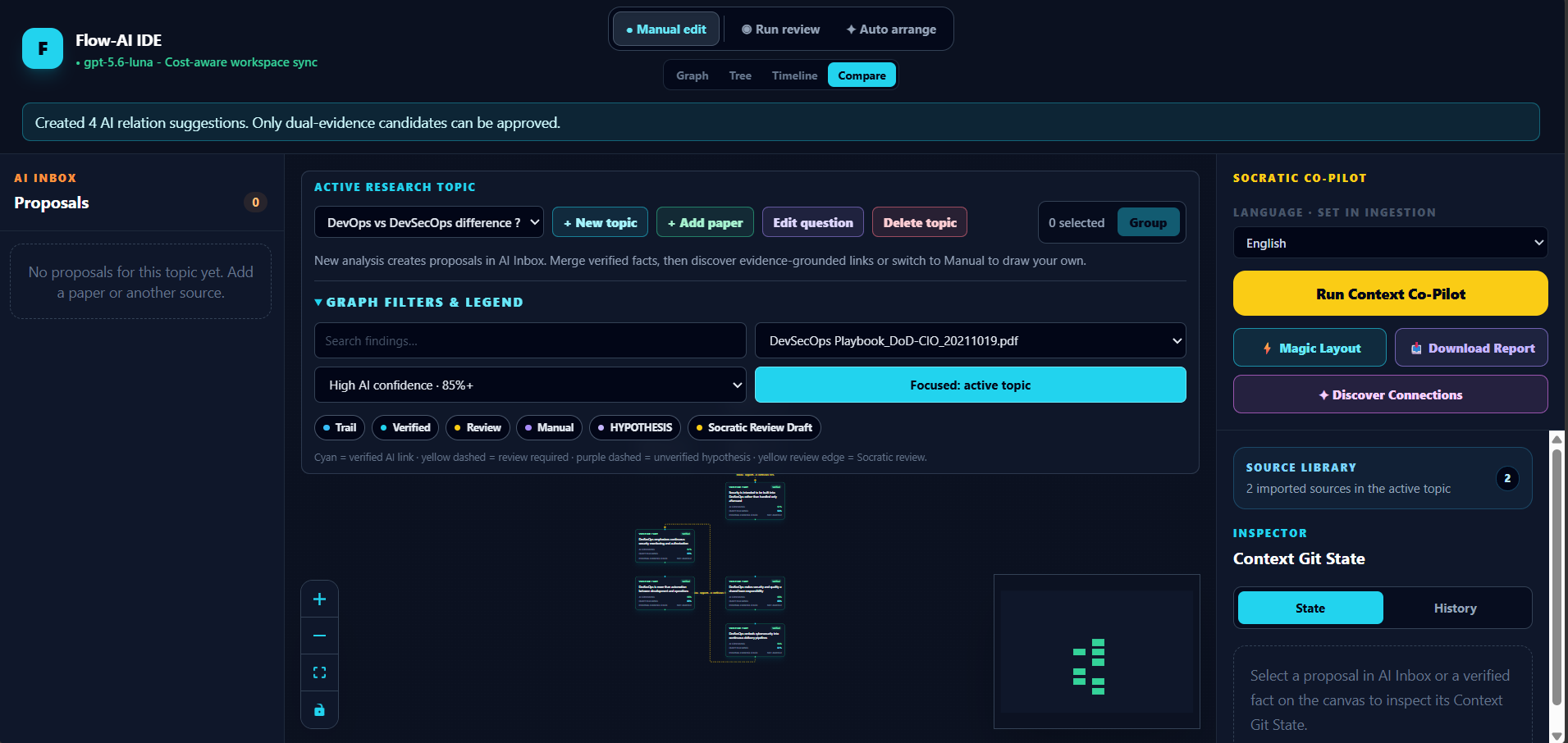
- Merge verified findings into a visual knowledge graph.
- Explore relationships between topics and facts.
- Use Context Co-Pilot to identify gaps and suggest further research directions.
- Work in English, Ukrainian, or the detected source language.
- Export the resulting research as a Markdown report.
The system keeps the human researcher in control: AI proposes, but the user verifies and commits information to the workspace.
How We Built It
The frontend is a Vite React single-page application styled with Tailwind CSS. React Flow powers the interactive research canvas and graph relationships.
The backend is built with FastAPI, Python, Pydantic, and Uvicorn. It handles document ingestion, text extraction, structured AI responses, evidence mapping, workspace state, and snapshots.
OpenAI GPT-5.6 Luna is used for document analysis, finding extraction, evidence-grounded reasoning, and Context Co-Pilot suggestions. Codex helped us implement and refine the full-stack workflow, including the graph UI, API integration, persistence, localization, testing, and the one-command local launcher.
What We Learned
The most important lesson was that useful AI research is not only about generating plausible answers. Each finding must remain connected to its source evidence and be easy for a human to inspect. We also learned that visual structure is valuable: a graph can reveal missing links, competing ideas, and research gaps that are difficult to notice in a linear document.
Challenges
The main challenges were maintaining consistency between the FastAPI schemas and React state, preserving graph positions and relationships, supporting multiple documents, and preventing unsupported AI conclusions from appearing as verified facts.
We addressed these challenges with structured Pydantic models, explicit evidence fields, human approval steps, local workspace persistence, and a clear separation between proposals and committed findings.
Current Scope
Flow-AI is an MVP for evidence-grounded research exploration. It is designed for researchers, analysts, students, and knowledge workers who need to move from unstructured documents to a traceable visual understanding of a topic.
Built With
- ai
- analysis
- api
- codex
- css
- document
- fastapi
- flow
- gpt-5.6
- graphs
- human-in-the-loop
- javascript
- knowledge
- openai
- pydantic
- python
- react
- tailwind
- vite

Log in or sign up for Devpost to join the conversation.