-
-
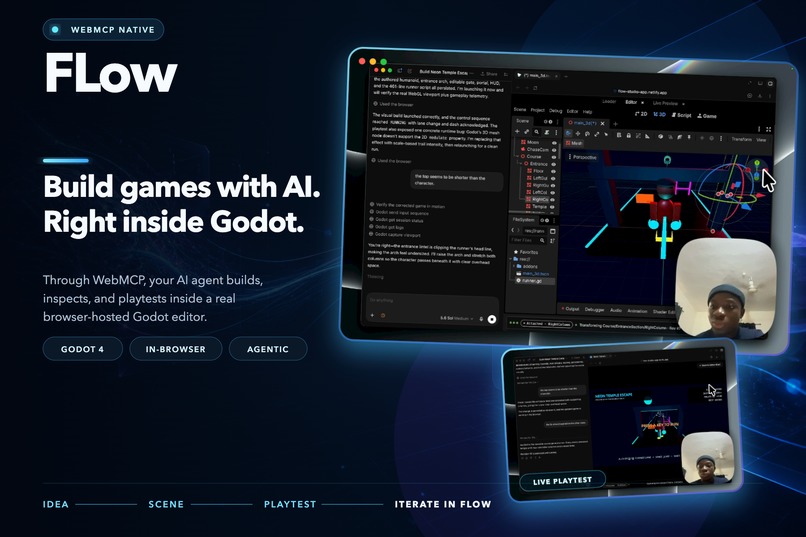
Build any idea with the Godot Webmcp
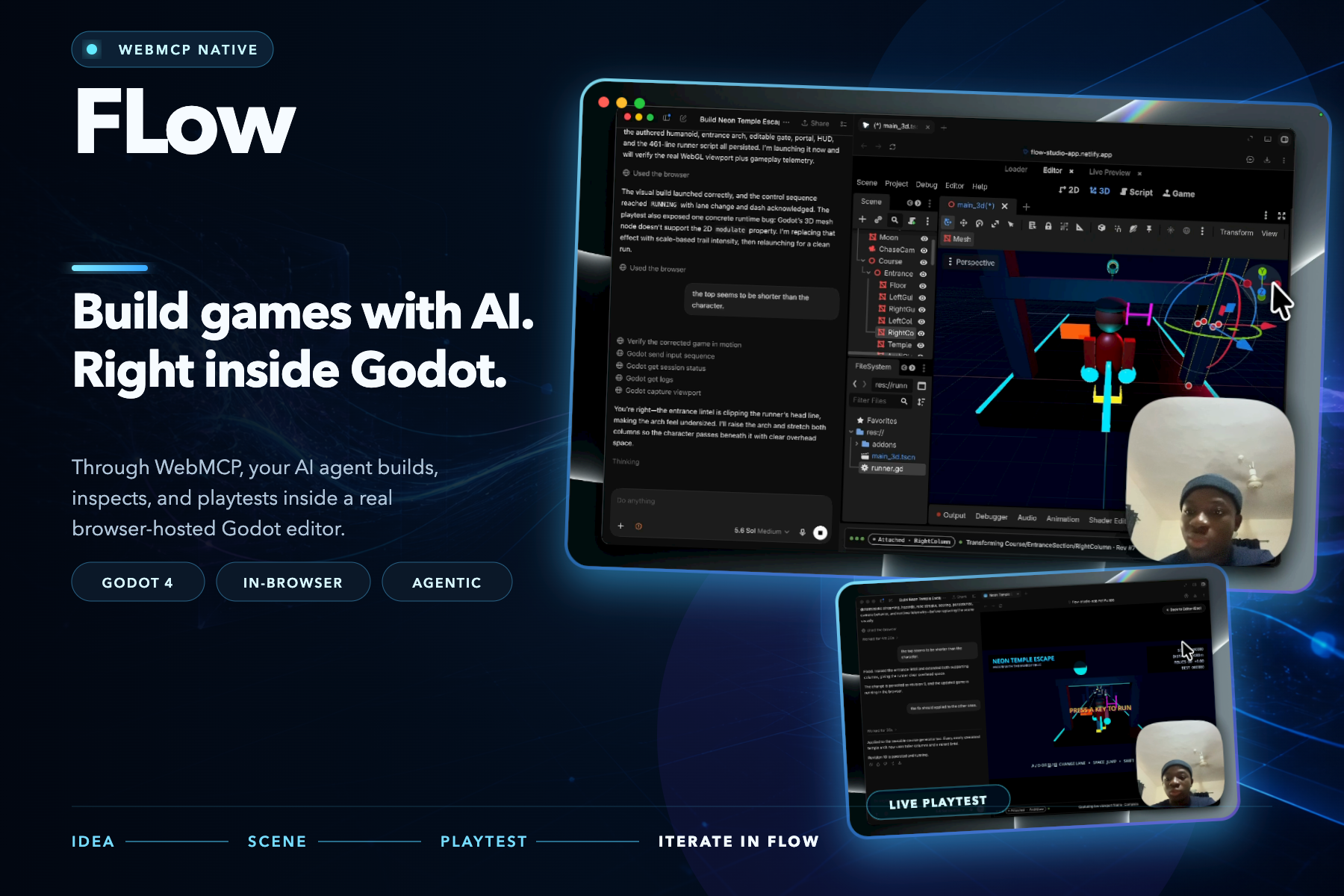
Why This Is a Strong Fit for WebMCP
WebMCP is a new way of enabling effective collaboration between humans and agents. For a long time, game development has often been limited to heavy desktop applications that require several steps to set up. This use case enables people with little or no experience building games, and professional game developers, to build out their ideas easily, fast, and with little cost.
A Better User Experience
Previously, game developers would usually copy and paste code and screenshots from their game engines to their agents, and attempt to figure out how to connect their characters and elements to their scripts. This loop is extremely stressful, consumes significant tokens, and doesn't yield the best results. With WebMCP, this gap is closed; the agent now has the ability to build out fully functional games, test them, and continuously iterate till it meets the specified quality bar.
Implementation
To build this, I leveraged an existing web game engine from Godot, compiled to WebAssembly from C++. To give the agent control over the engine, I worked on exposing the different parts of the engine through a custom script and a Godot plugin, to WebMCP tools that AI agents can invoke to build out whatever game the user requests. The preexisting project was the Godot game engine, and it was meaningfully extended using WebMCP. The details of the commit history during the timeline of the hackathon can be found here: https://github.com/fadexadex/flow/commits/main/
Built With
- express.js
- gdscript
- godot-engine
- html5
- indexeddb
- javascript
- json-rpc
- model-context-protocol-(mcp)
- node.js
- webassembly
- webgl
- webmcp
- websockets

Log in or sign up for Devpost to join the conversation.