-
-
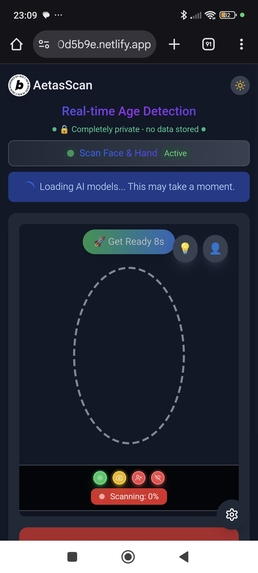
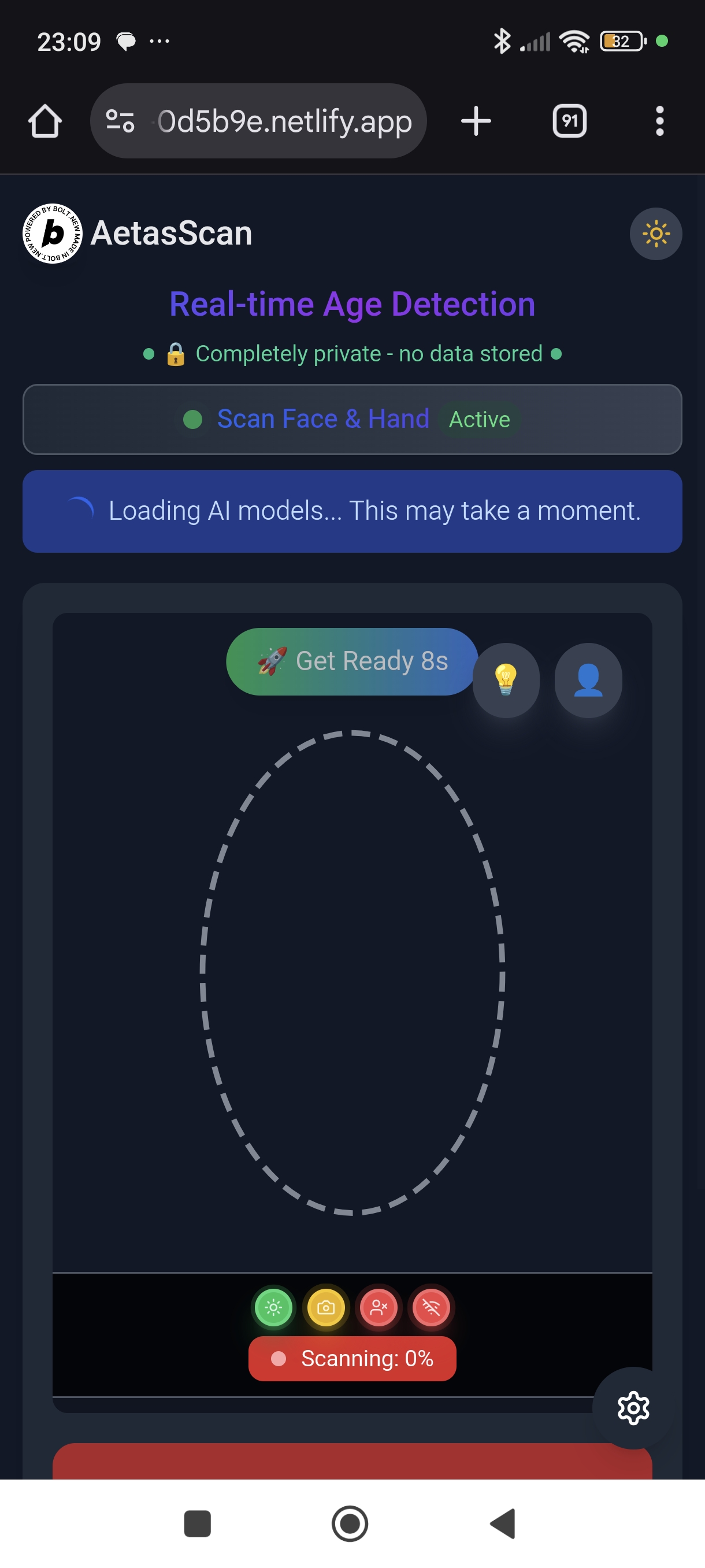
AetasScan – Preparing Face Scan…
-
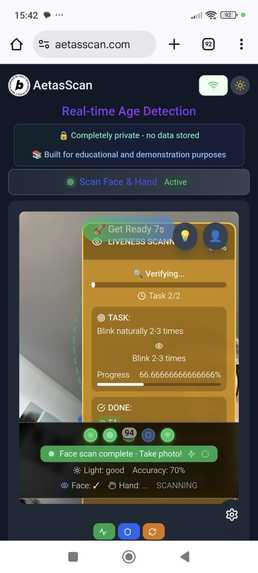
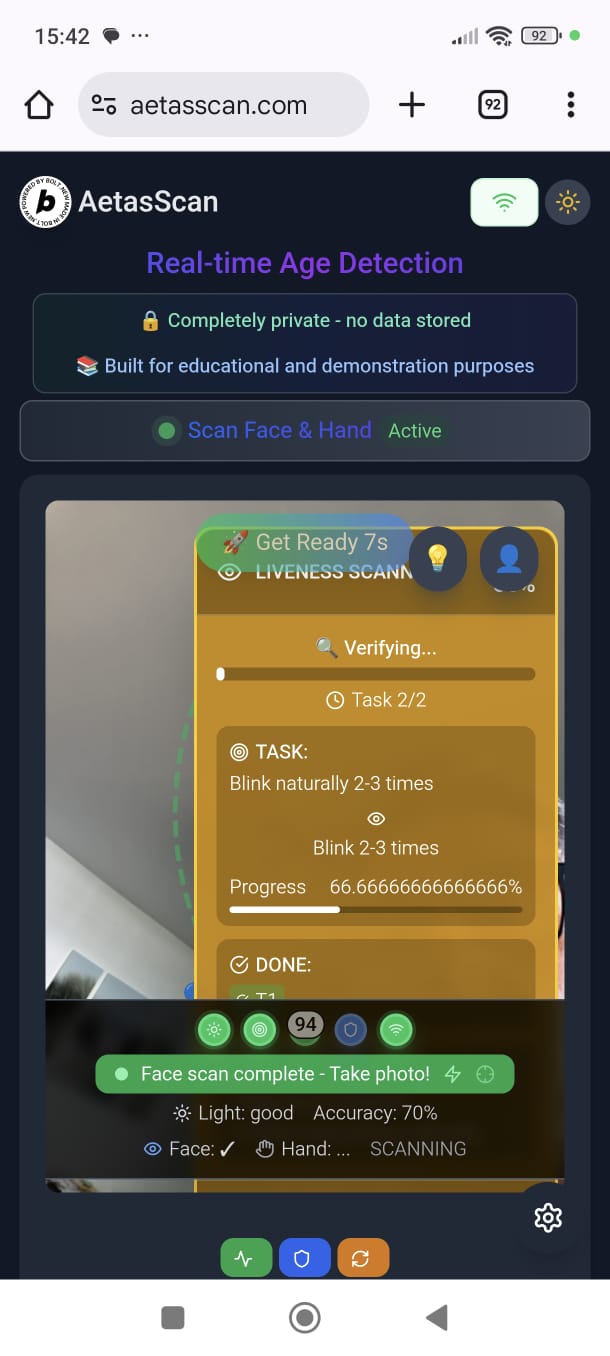
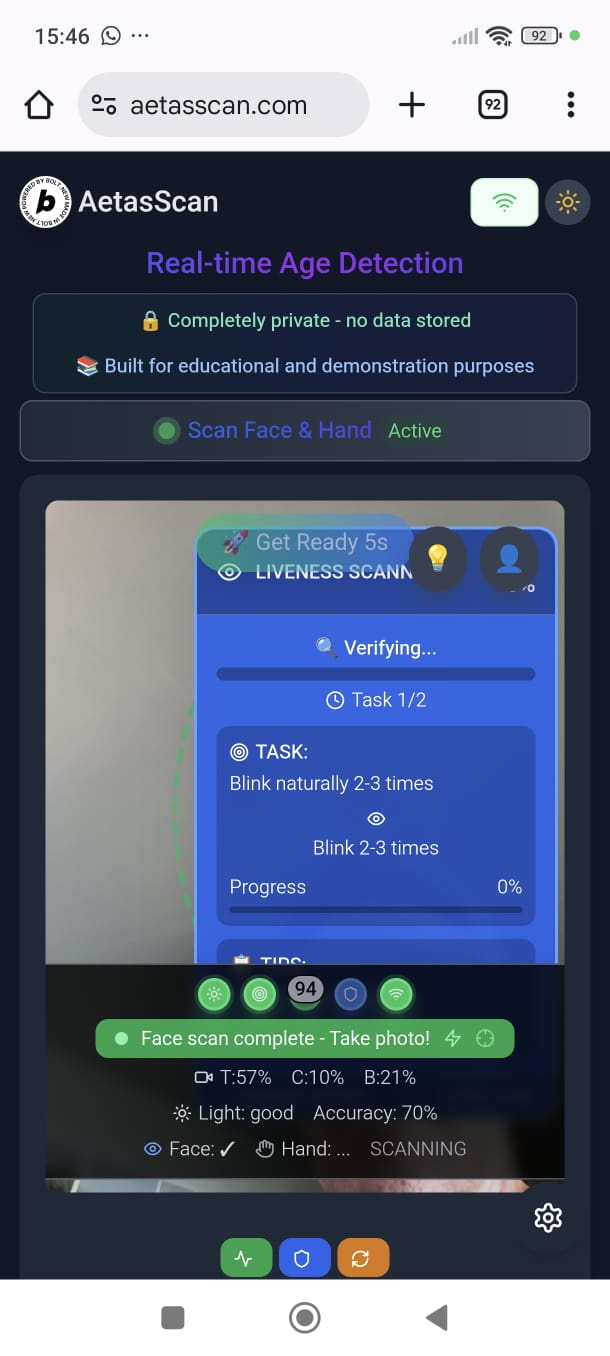
AetasScan – Liveness Detection
-
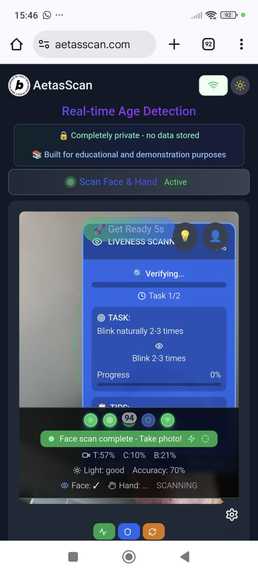
AetasScan – Liveness Detection - 2
-
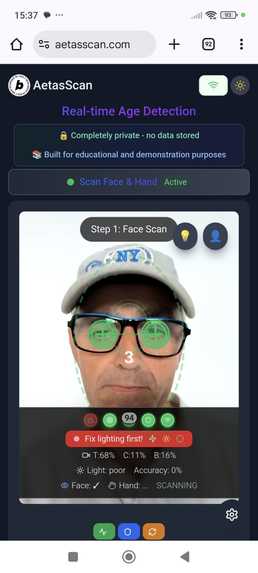
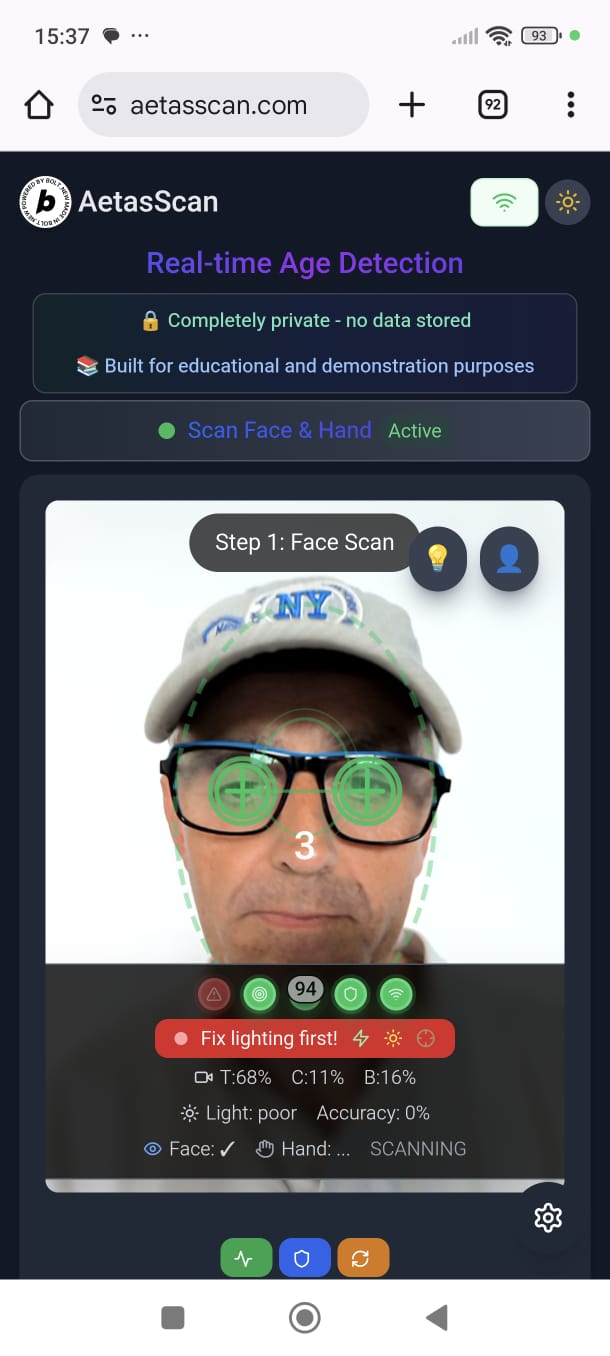
AetasScan – Real-Time Face Detection
-
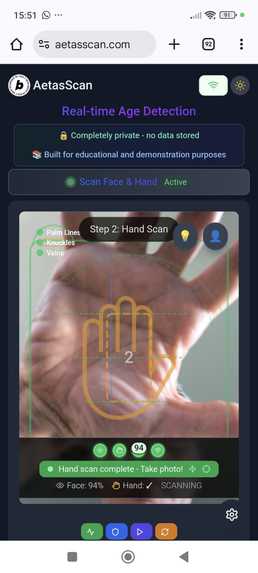
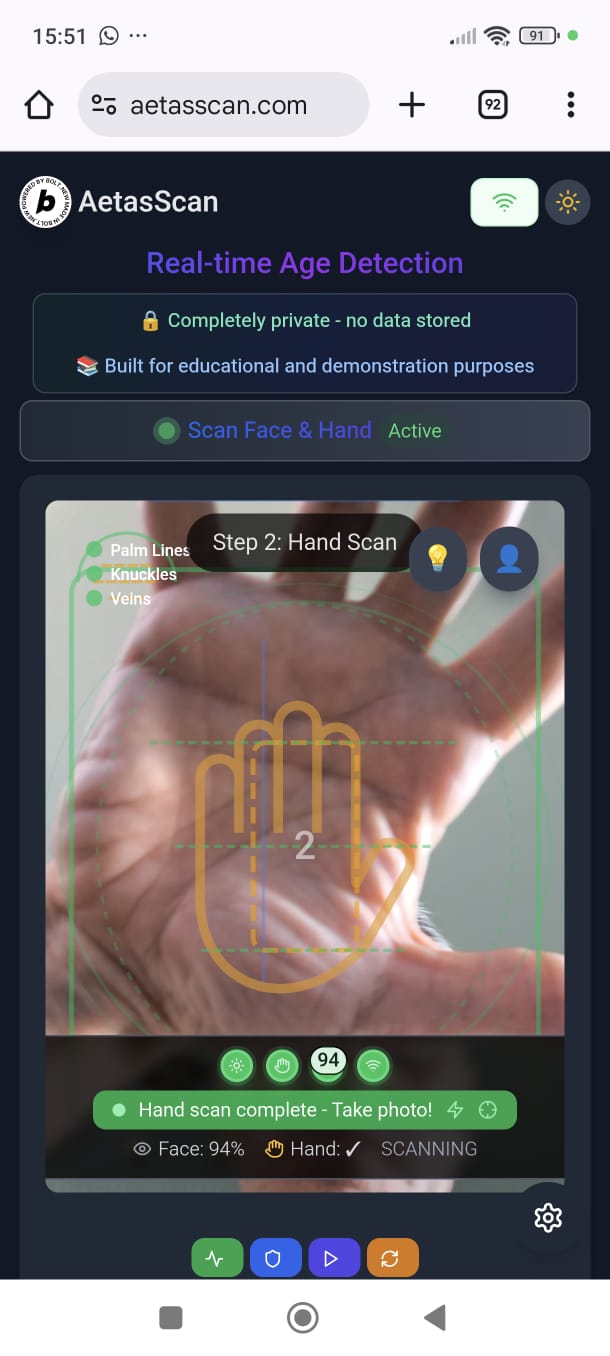
AetasScan – Hand Scan
-
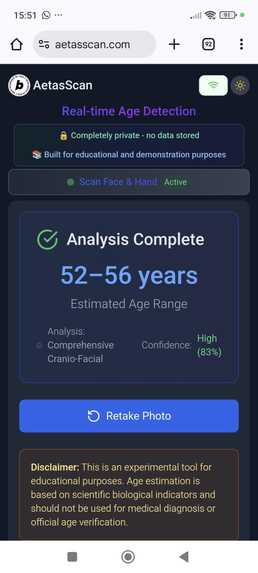
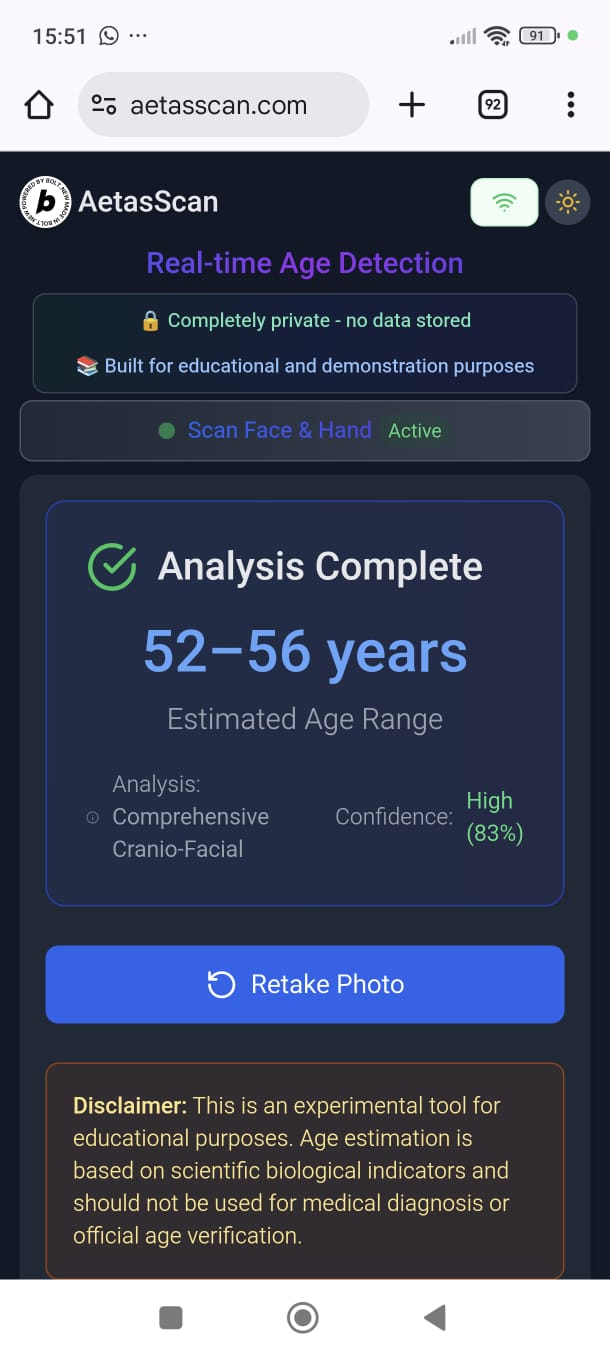
AetasScan – Analysis Complete
About the Project – AetasScan
AetasScan was born from a simple yet urgent observation: in a digital world where children can access anything, anytime, and where age verification mechanisms rely on sensitive personal data, there is a growing need for a fair, privacy-respecting, and decentralized solution to protect minors.
This project is both a technical experiment and a civic commitment: to design an age estimation tool that works with no data storage, no identity tracking, and no network dependency — creating a safer internet, without compromise.
Protecting minors online is no longer just an ethical concern — it is becoming a legal requirement in many countries. But today’s solutions are often intrusive, fragile, and environmentally costly.
AetasScan offers a new path: respectful, anonymous, and compatible with the growing demands of data protection regulations, while being aligned with digital sustainability goals.
What Inspired Us
The idea emerged from the convergence of embedded technology and strong ethical constraints:
an AI capable of estimating a person’s age by analyzing physiological features of the face and the palm — without storing anything or transmitting any personal data.
A more sober, human-centered, and fair approach.
How We Built It
The application runs entirely on the user’s device, with no server calls, no network requests, and no external data processing.
It uses an on-device AI to analyze in real time:
- Real human faces (not photos or videos)
- Ambient light, skin folds, wrinkle density, facial bone structure
- Age-related markers on the palm
The AetasScan widget can be integrated into any platform (social networks, payment systems, online games) to provide instant, anonymous age validation.
The system relies on a cross-analysis of face and palm, combining non-facial biometrics and morphophysiological logic drawn from scientific studies.
There is no cloud processing, no server, no metadata, and no trace left behind — the age estimation is computed locally, then immediately discarded.
Challenges Faced
- Detecting real human presence (not images or videos) required advanced modules for analyzing light, depth, and micro-movements.
- Building an AI that is lightweight yet robust, able to run on mobile in real time without external GPU, was a major challenge.
- Avoiding algorithmic bias while ensuring reliable accuracy between minor and adult thresholds required the use of anonymized datasets.
- We focused on creating a clean, neutral, and universal design, compatible with various contexts (apps, web, widgets) while maintaining optimal usability.
User Experience
From the start, usability and trust were central to the AetasScan experience.
- There is no account to create, no data to fill in, no information to upload — the tool launches and returns a simple yes/no signal based on estimated age.
- The interface is minimal, the interaction time is less than a second, and there are no pop-ups, no permissions, and no data trails.
- Users benefit from confidence and transparency: they know the system never sends or stores anything.
- Integration into apps and platforms is seamless for developers and invisible for end users — making it ideal for frictionless compliance with emerging age assurance regulations.
Green IT & Eco-Conception
Unlike conventional solutions relying on servers, cloud APIs, or document verification, AetasScan is designed with low environmental impact in mind:
- No energy-intensive data centers: all computations happen locally on the user’s device.
- Zero data transit: no uploads, downloads, or storage mean no bandwidth consumption.
- Optimized code footprint: the AI model is compact and efficient, requiring minimal power, even on mobile devices.
- By avoiding heavy infrastructure, AetasScan aligns with Green IT principles and offers a rare example of responsible AI that protects both people and the planet.
In short: better for privacy, better for the user, and better for the environment.
What We Learned
- Ethical biometrics is not only possible — it’s necessary. No databases, no cloud, no surveillance.
- Users are far more willing to accept age checks when their privacy is fully respected.
- Radical simplicity (a face, a hand, and a local estimation) is more powerful than complex systems requiring documents or IDs.
- Offline-by-design systems eliminate the risk of network breaches, hacking, or misuse of personal data.
- AetasScan not only protects users, it also protects the planet:
- No energy-intensive datacenters
- No carbon footprint from data transfers
- A model of eco-responsible digital design
- No energy-intensive datacenters
AetasScan is not a surveillance tool.
It is a lightweight ethical key, anonymous, instant, and local.
A brief interaction that opens — or closes — a digital door.
What if this was the future of age verification:
no data, no emissions, no fear — just a signal of trust.
Built With
- bolt.new
- eslint
- face-api
- google-analytics
- javascript
- netlify
- nginx
- node.js
- react
- redux
- ssl
- tailwindcss
- tenserflow
- typescript
- ubuntu
- vite


Log in or sign up for Devpost to join the conversation.