Inspiration
Our inspiration for this project comes from the growing trend of everyday people embracing gardening not just professional farmers. We wanted to make it easier and more rewarding for anyone to grow their own plants and vegetables, promoting sustainability and a closer connection to nature.
What it does
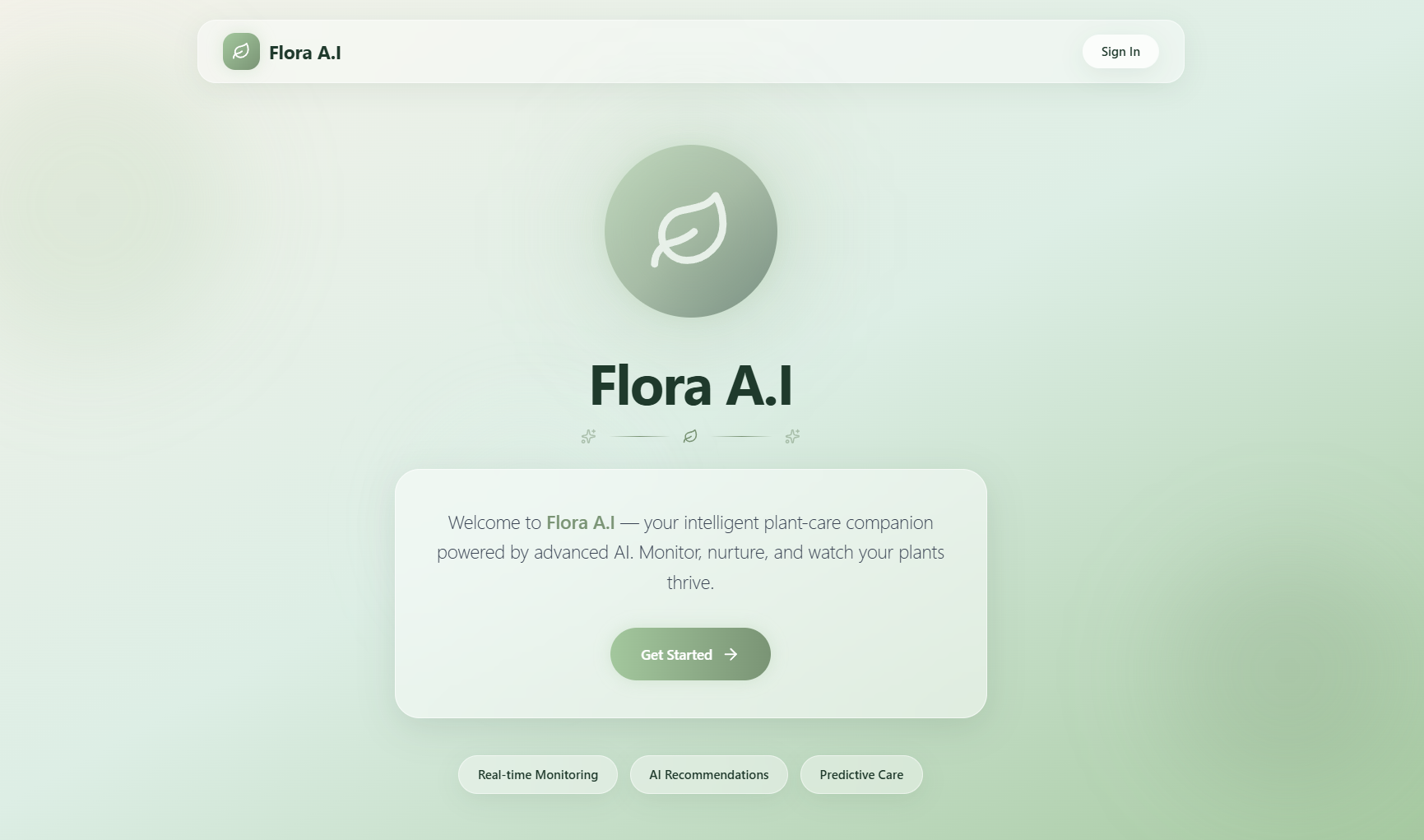
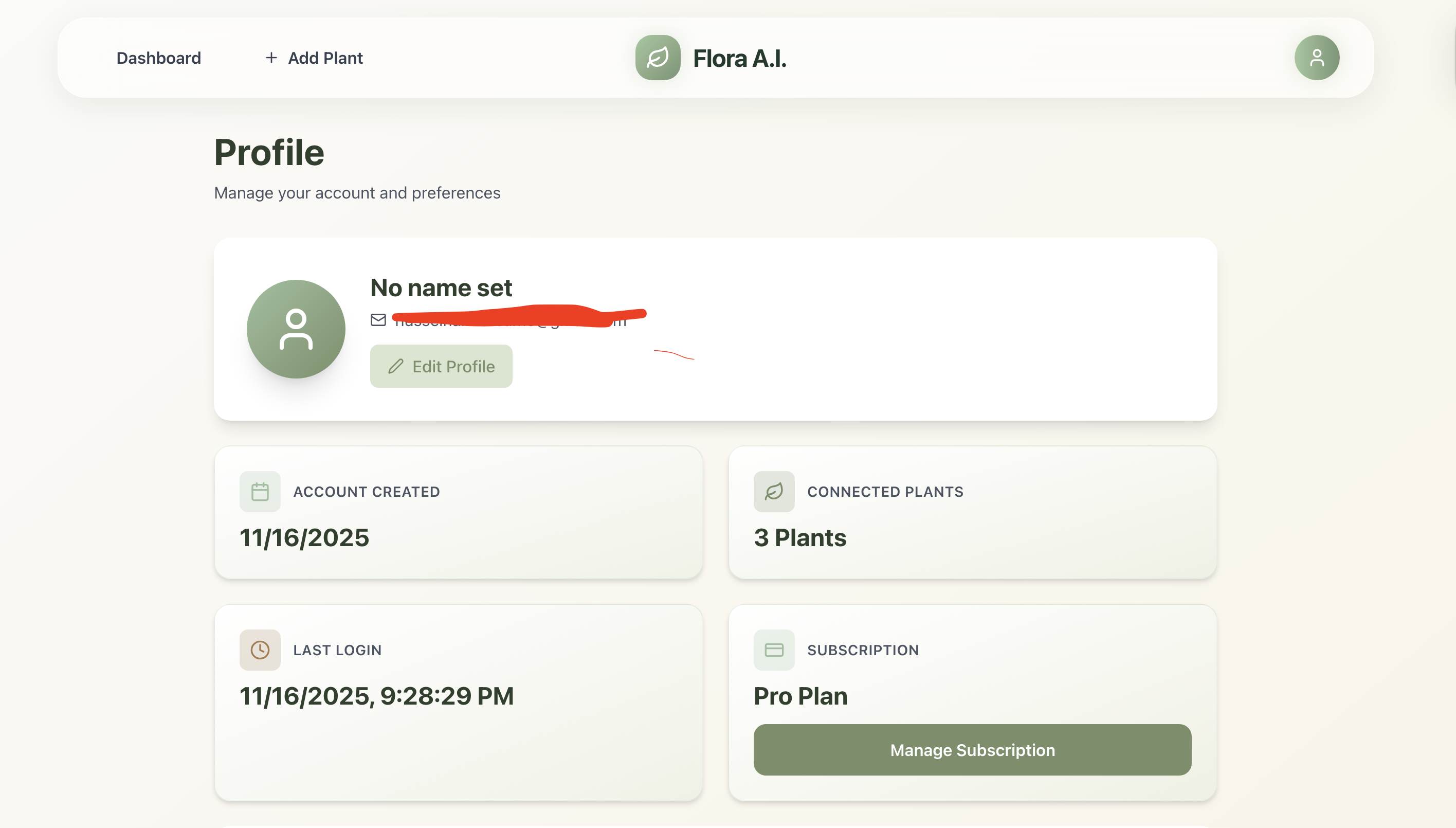
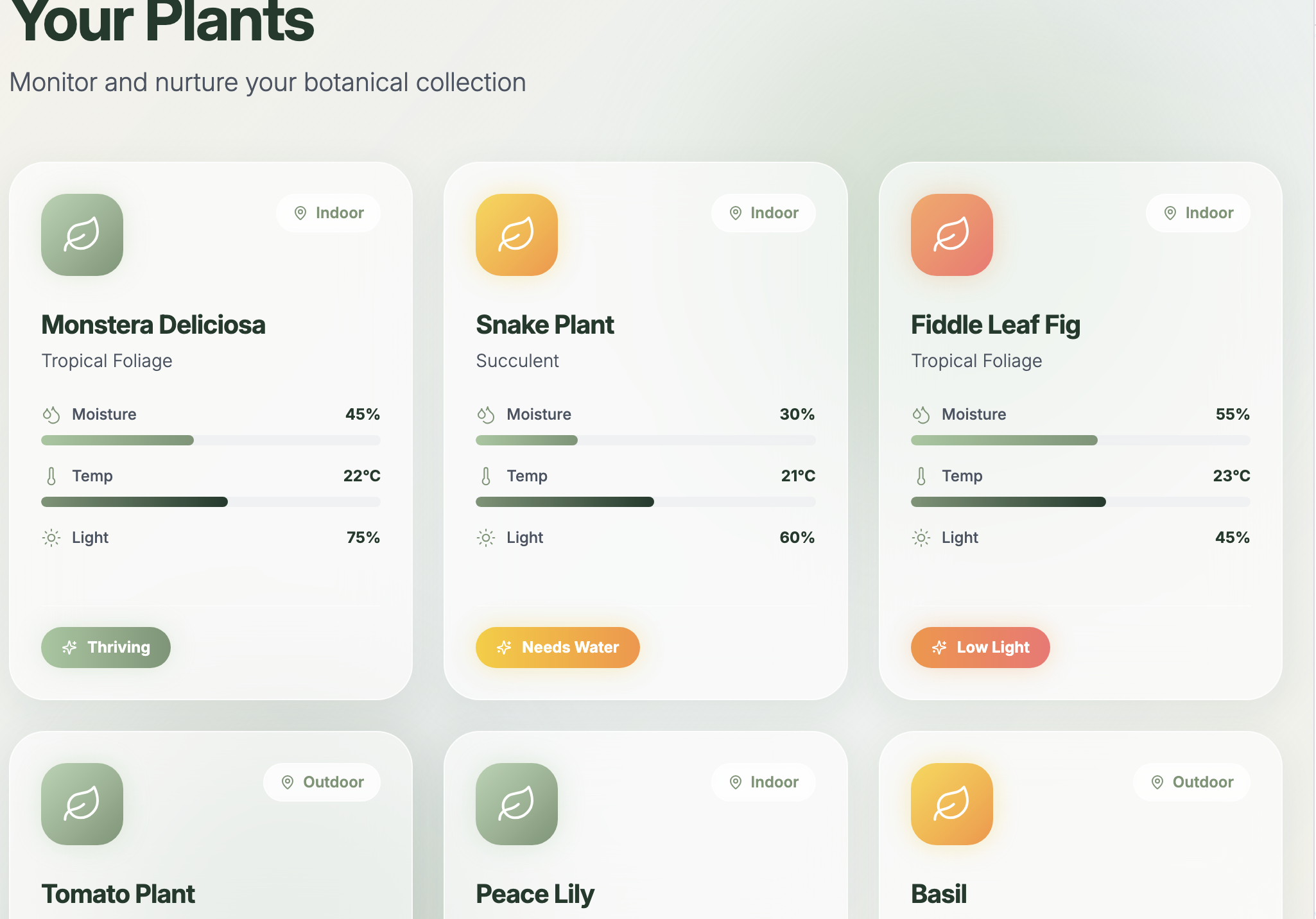
Flora A.I. helps users effortlessly care for their plants by combining smart hardware with an AI assistant. It monitors soil moisture, humidity, temperature, and light intensity, provides real-time insights, answers plant care questions, and gives advice to keep plants healthy and thriving. Users can also create their own profiles to track their plants, manage settings, and personalize their plant care experience.
How we built it
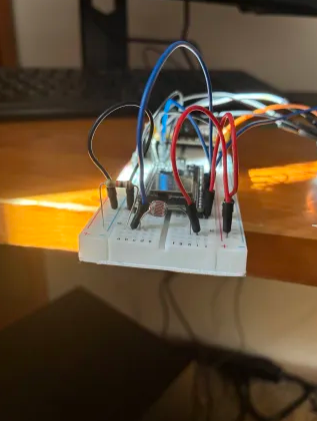
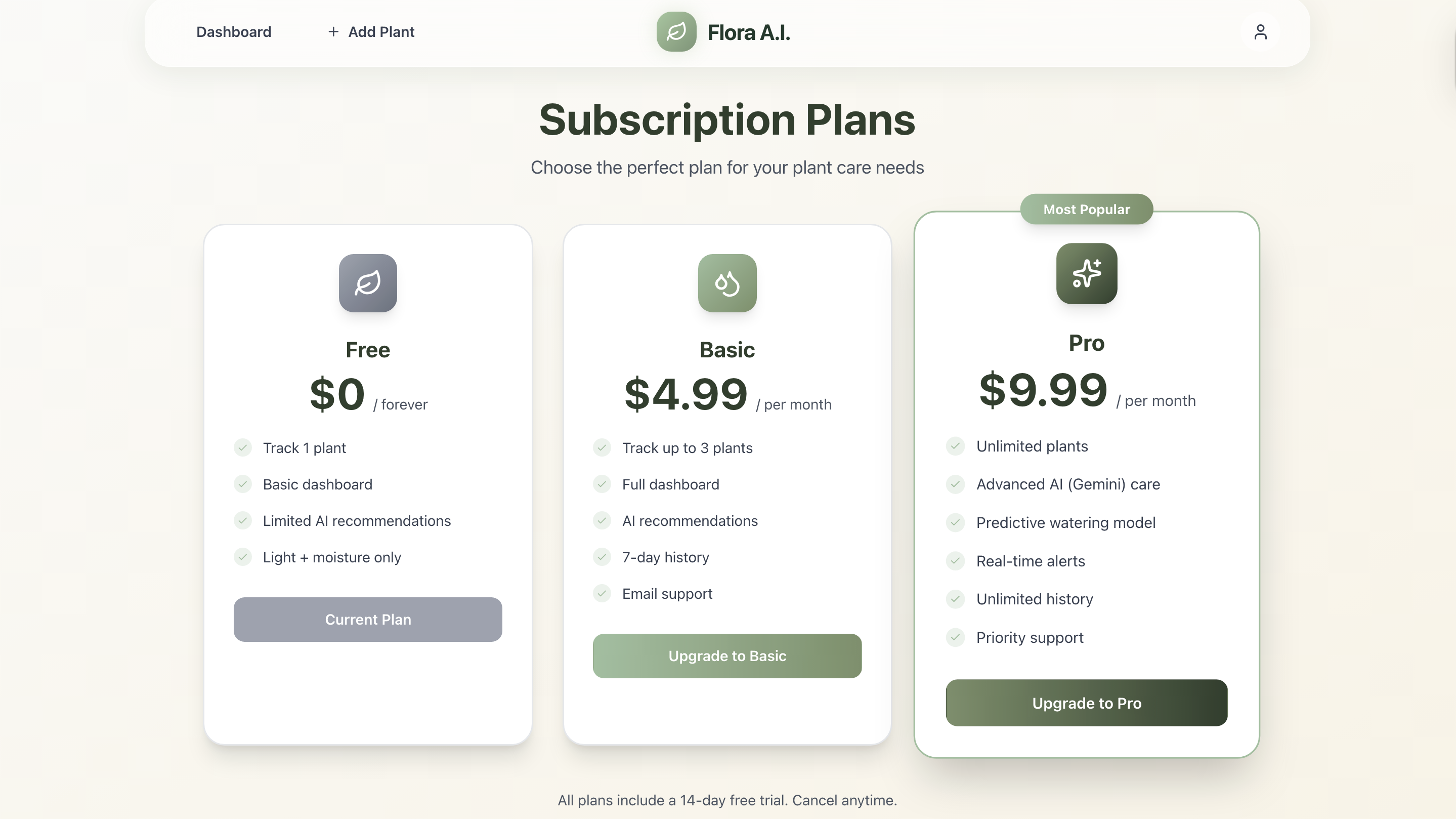
Flora A.I. is built using both software and hardware. On the software side, we used Tailwind CSS, React, Node.js, C, C++, Firebase for authentication and database management, and Gemini for AI-driven plant care guidance. This combination powers the web app, backend, and the logic that processes plant data and provides care instructions. For hardware, we built a custom plant-monitoring device using a breadboard and an ESP32-32X microcontroller. It includes a DHT11 sensor for temperature and humidity, a photoresistor to measure light, and a 2-pronged soil moisture sensor. The device collects real-time data from plants and sends it to the app so users can see their plants’ conditions and follow simple, practical care instructions.
Challenges we ran into
One of the biggest challenges was getting the hardware and software to work together smoothly. Making sure the ESP32 sensors could reliably send temperature, humidity, soil moisture, and light data to Firebase in real time was tricky, especially with multiple plants connected. Another challenge was turning raw sensor data into useful care advice. We had to tune thresholds for watering, lighting, and humidity to make the AI guidance accurate for different types of plants. Integrating C and C++ firmware with a Node.js backend and React frontend also took careful handling to ensure data flowed correctly between hardware and app. Finally, creating a simple, user-friendly interface that could display all this information without overwhelming the user required a lot of testing and iteration.
Accomplishments that we're proud of
We’re proud of creating a system that actually works end-to-end, connecting real hardware, cloud services, and an interactive interface seamlessly. Jack Wallace from GMU focused on getting the AI to provide meaningful, context aware advice based on sensor data which was a major milestone that required fine-tuning and problem-solving. We’re also proud of Idris Barakzai from GMU, building a secure and reliable authentication system that handles multiple users, keeps data private, and gives users the option to continue with Google which was more complex than expected. We had Mohamed Warsame from UVA to rely on for the frontend, we managed to design a clean, responsive interface that makes plant tracking enjoyable rather than overwhelming. Finally, Andy No from VT overcame significant challenges in hardware reliability, ensuring our custom device could consistently read and transmit accurate plant data without constant maintenance. Each of these achievements demonstrates that our project is practical, usable, and genuinely helpful to users.
What we learned
Through this project, we learned how to bring software and hardware together into a working system. We gained hands on experience collecting and using real-time data from sensors, and figuring out how to display that information in a helpful way for users. On the software side, we improved our skills in React, Node.js, and Firebase, especially when it came to managing user accounts and keeping data organized. Working with the AI showed us how to turn data into simple, practical advice that anyone can follow. We also learned a lot about building and troubleshooting the hardware, making sure it worked reliably. Beyond the technical side, we realized how important testing, iteration, and attention to detail are. Overall, the project taught us how to combine different skills to create something that’s both useful and fun to use.
What's next for Flora A.I.
We plan to scale up Flora A.I. by improving the software to support more users and adding features based on feedback. On the hardware side, we aim to mass-produce and distribute the plant-monitoring devices so customers can use them right out of the box without any assembly. We’re also exploring marketing strategies to reach a wider audience, helping everyday plant enthusiasts discover how Flora A.I. can make plant care simpler and more rewarding.


Log in or sign up for Devpost to join the conversation.