


Inspiration
Floppy Guardian IA was born from a recurring reality in flood-prone and vulnerable communities: emergencies often escalate with little warning, and responders lack reliable, real-time information to act early. Floods, in particular, create a dangerous combination of rapid change, night-time events, and limited visibility. We wanted to build a “guardian” that continuously monitors risk, reduces uncertainty with evidence, and turns early signals into actionable alerts so people and authorities can respond faster and safer.
What it does
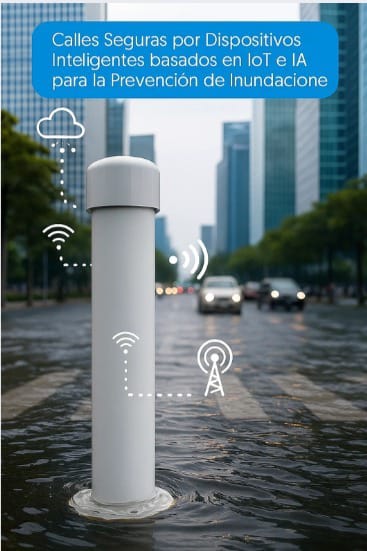
Floppy Guardian IA is an early-warning and incident-management platform designed to support multiple types of emergencies. It combines field monitoring (sensors and cameras), real-time data processing, and an alerting workflow to:
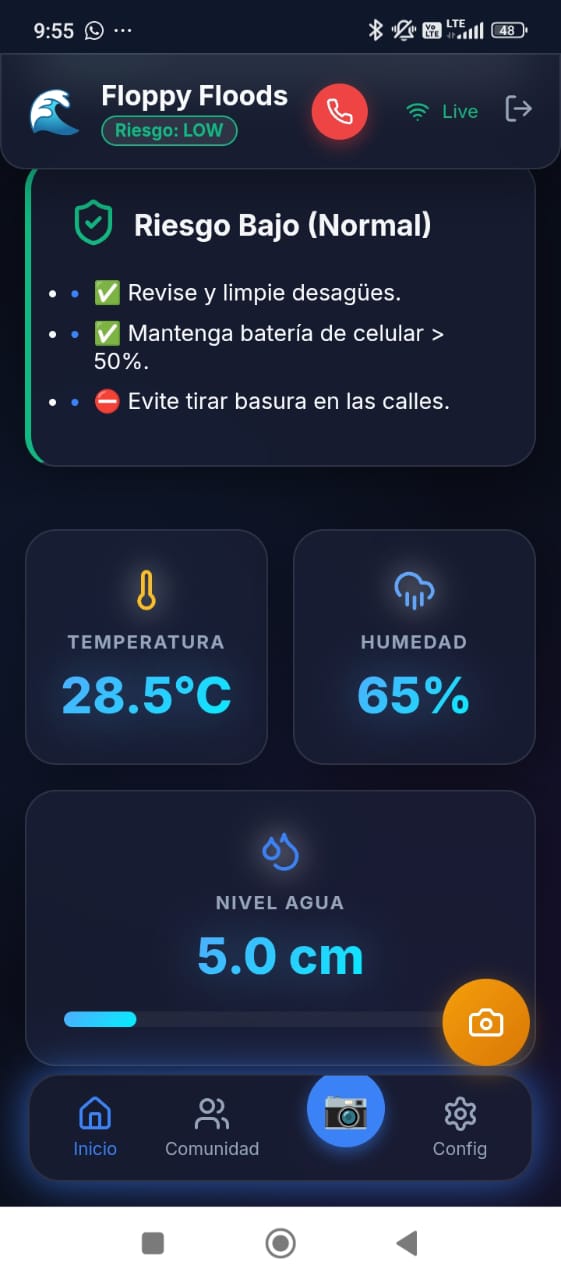
- Detect abnormal risk conditions (e.g., rising water level and fast rate of change).
- Validate events with evidence (camera context and corroboration).
- Prioritize incidents by severity and confidence to reduce false alarms.
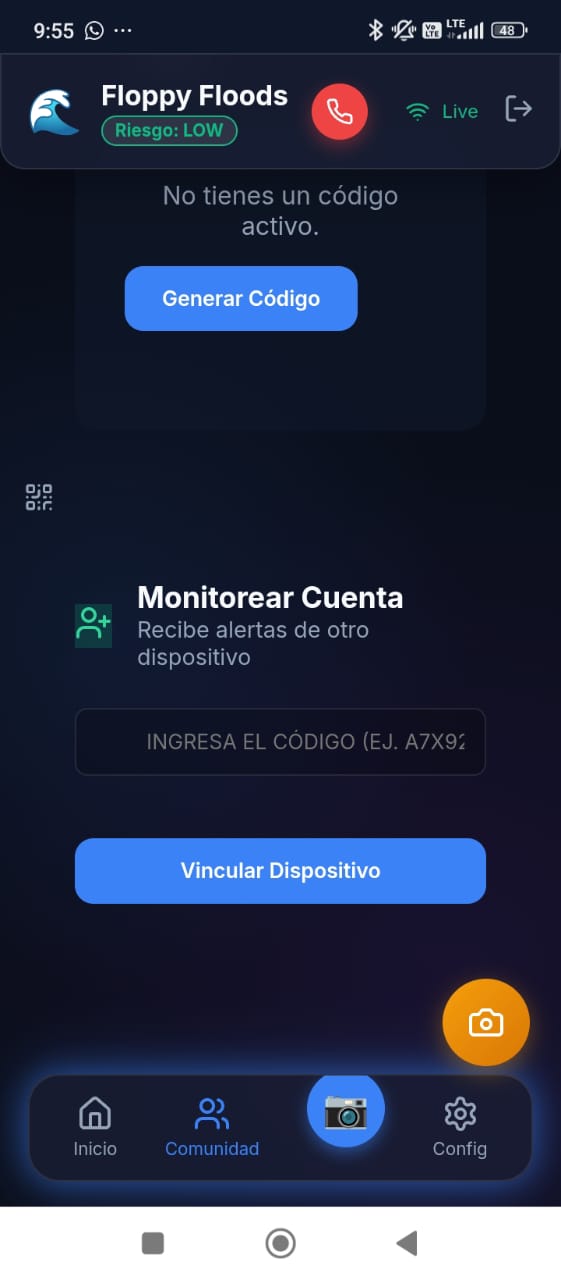
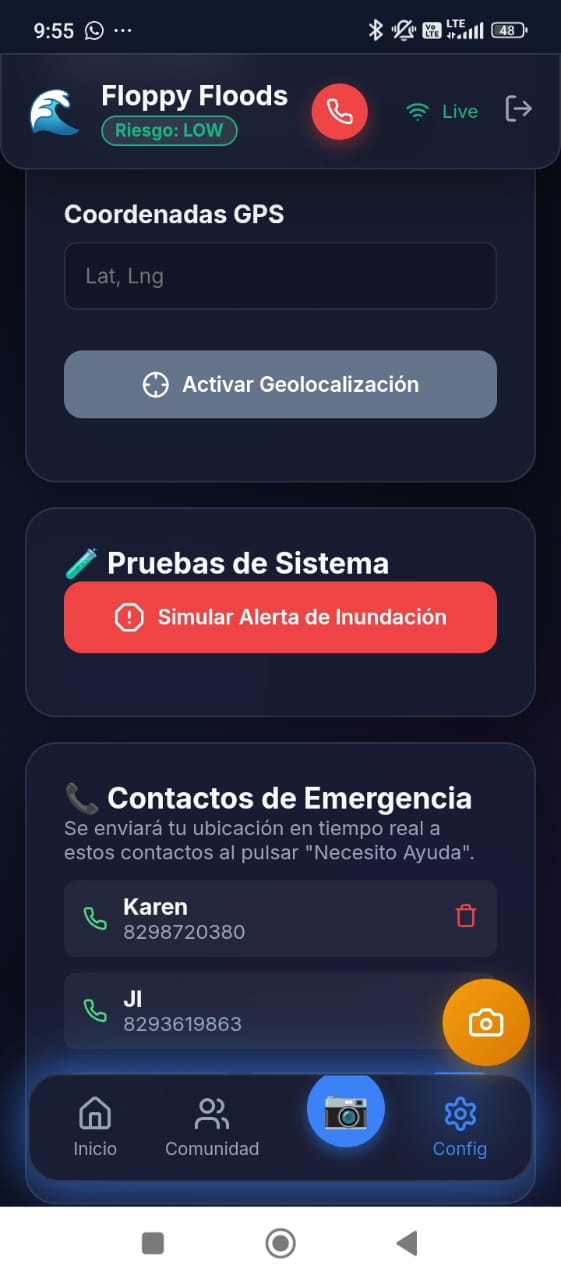
- Notify the right users (citizens, brigades, and authorities) with clear, location-based guidance.
- Provide a dashboard for monitoring, response coordination, history, and reporting.
How we built it
We built Floppy Guardian IA as a modular system so one core can power multiple emergency “modules” (starting with floods):
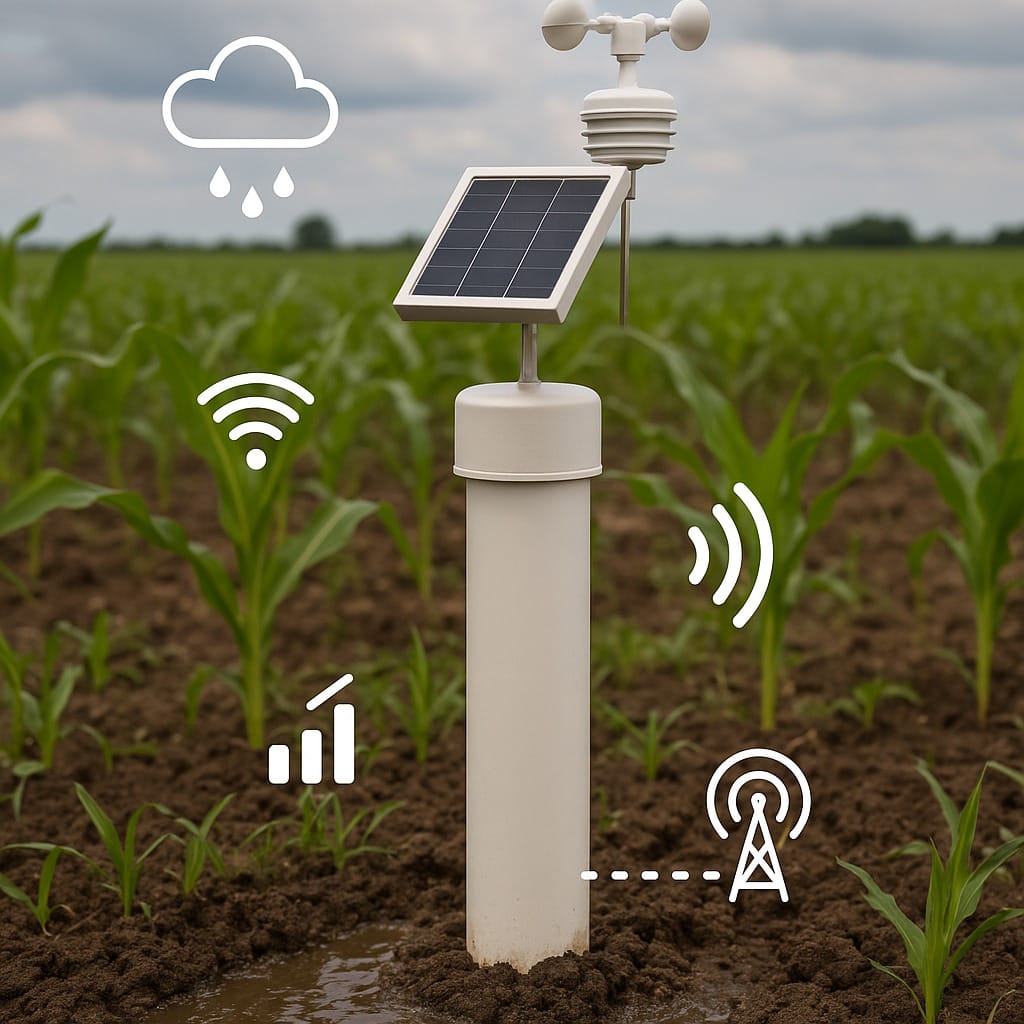
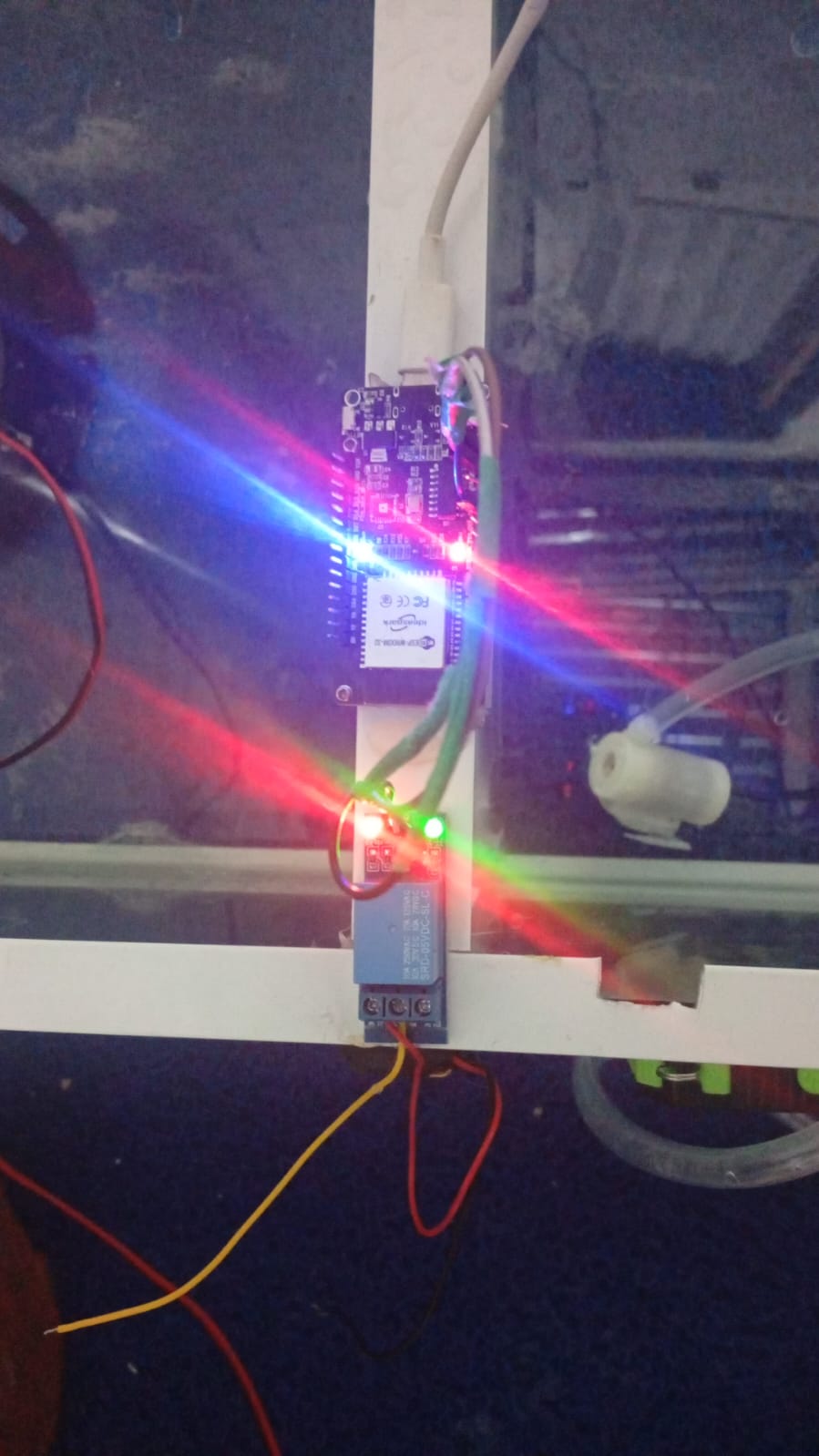
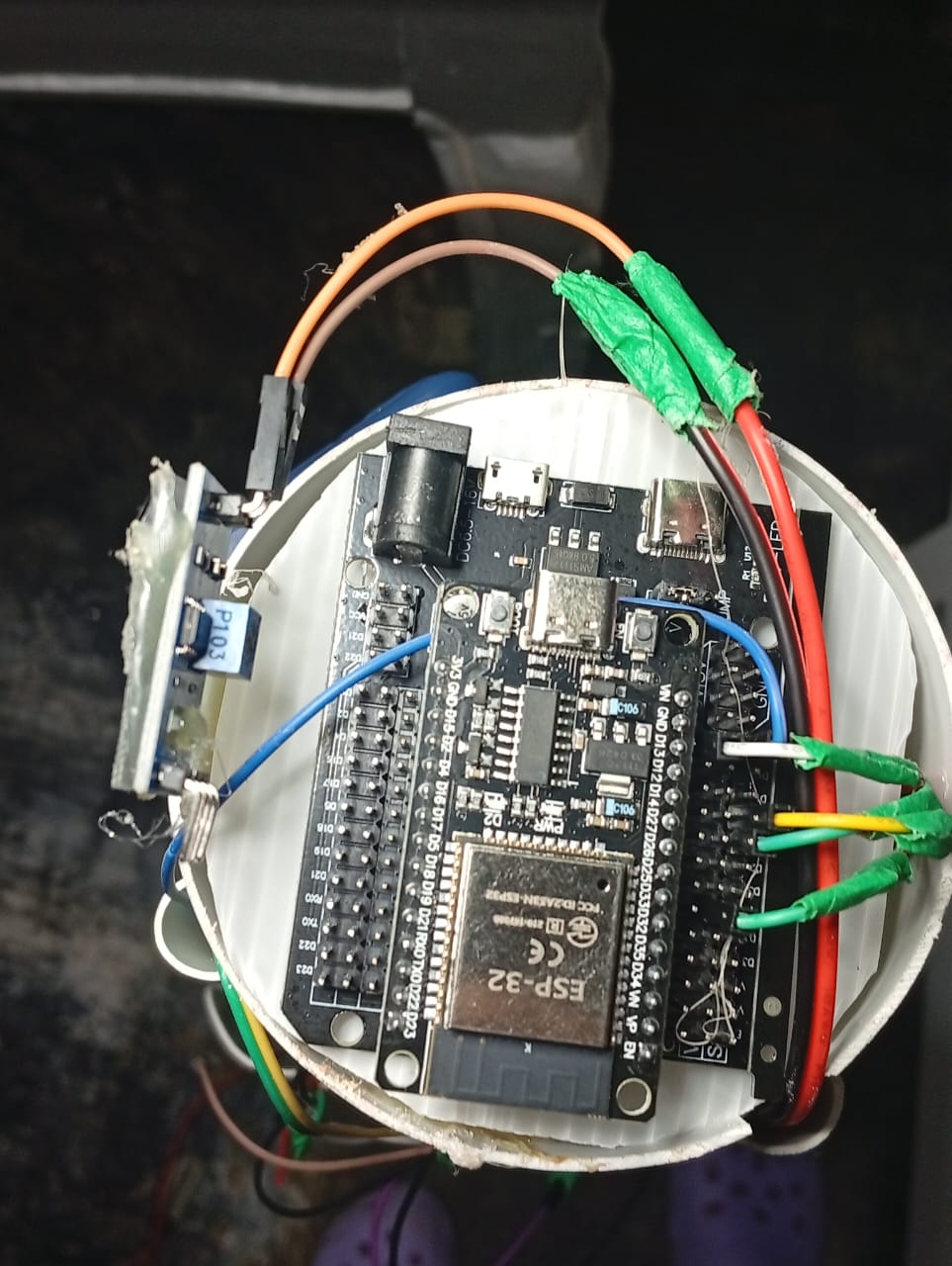
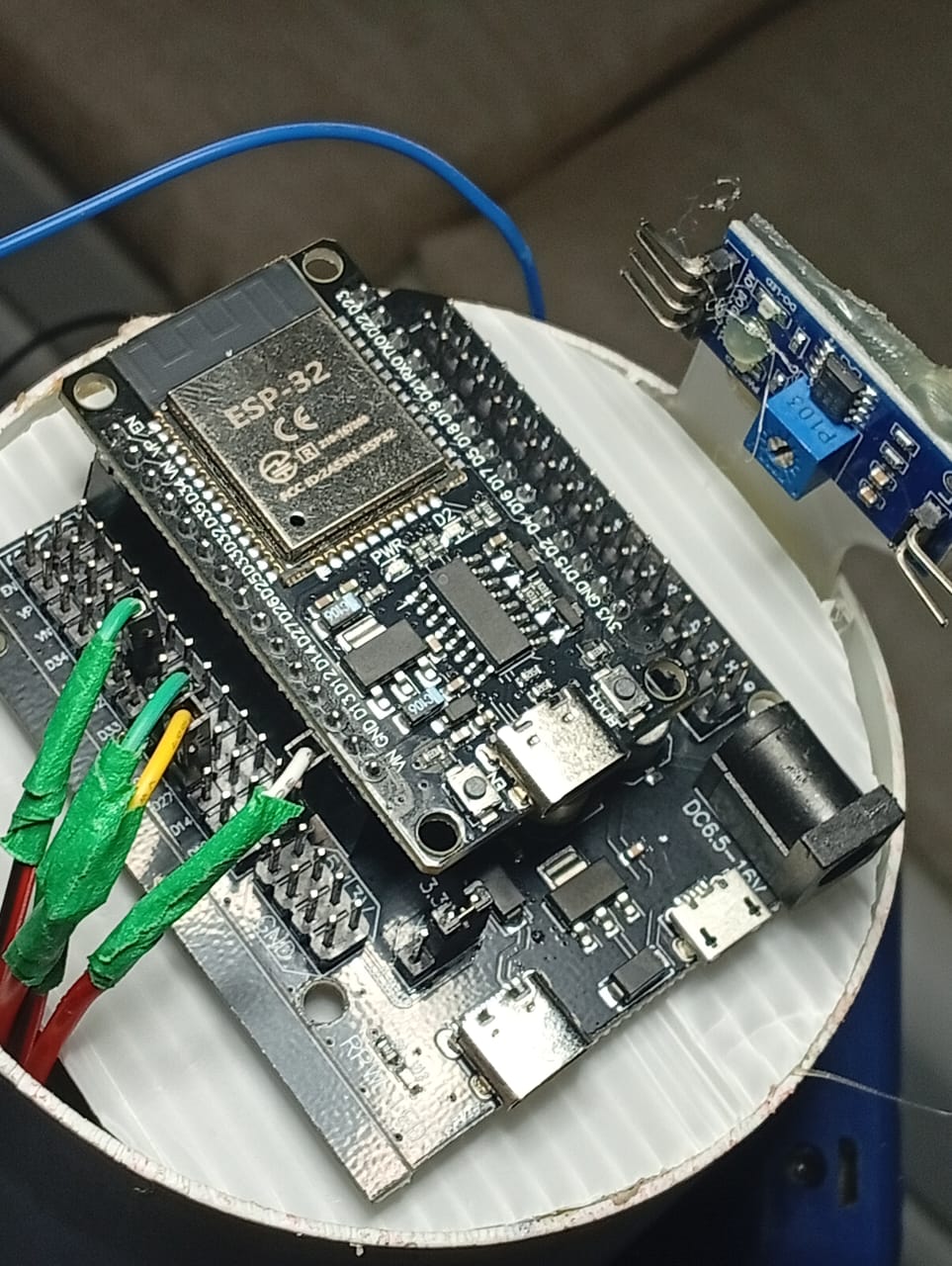
- Edge layer (in the field): sensors capture measurements and cameras provide visual context; the device is designed for continuous monitoring and resilience.
- Connectivity and ingestion: readings and events are transmitted to a backend that stores historical data and streams real-time updates.
- Risk logic and prioritization: thresholds and scoring combine magnitude, rate of change, and confidence signals to decide when to trigger alerts and how to rank incidents.
- Application layer: a user-facing app delivers alerts and allows reporting; an operations dashboard supports verification, escalation, and response tracking.
Challenges we ran into
- Noisy measurements and false alarms: water environments produce fluctuating readings (debris, turbulence, installation variability). We needed filtering and confidence scoring to avoid alert fatigue.
- Connectivity instability: emergencies frequently disrupt power and networks. We designed the system to tolerate drops with retries, event-based messaging, and local buffering.
- Alert clarity and usability: alerts must be short, specific, and actionable. We iterated on message structure, severity levels, and location context.
- Balancing evidence and privacy: cameras improve verification, but require careful framing (focus on waterways), access control, and sensible retention policies.
Accomplishments that we're proud of
- Delivered a complete end-to-end concept: field monitoring → risk detection → evidence → alerting → operational follow-up.
- Designed a platform architecture that can expand beyond floods while reusing the same incident core (roles, alerts, dashboard, reporting).
- Built a reliability mindset into the product: confidence scoring, verification workflow, and prioritization to reduce false positives.
- Defined clear user roles (citizen, brigadist, authority, admin) so the system supports real response operations, not just monitoring.
What we learned
- In emergency tech, trust is the product: if alerts are wrong or unclear, adoption collapses. Reliability and explainability matter as much as detection.
- Sensors alone are not enough; combining signals + context + verification significantly improves decision quality.
- Designing for real environments means planning for failure: power loss, weak networks, and harsh conditions must be assumed.
- A modular platform approach accelerates growth: one strong core can support many hazards with tailored inputs and playbooks.
What's next for Floppy Guardian IA
- Expand from the flood module to a broader multi-hazard catalog (e.g., landslides, storms, fires, infrastructure incidents) using the same incident engine.
- Strengthen multi-channel alerting (push, SMS, and WhatsApp) to maintain reach during connectivity disruptions.
- Improve verification and confidence scoring with more field data, calibration, and optional AI assistance for image/video cues.
- Run additional pilots, measure impact (response time reduction, false-alarm rate, avoided losses), and formalize partnerships with local emergency management stakeholders.
Built With
- c++
- esp32
- firebase
- node.js
- react
- typescript
- vite

Log in or sign up for Devpost to join the conversation.