-
-
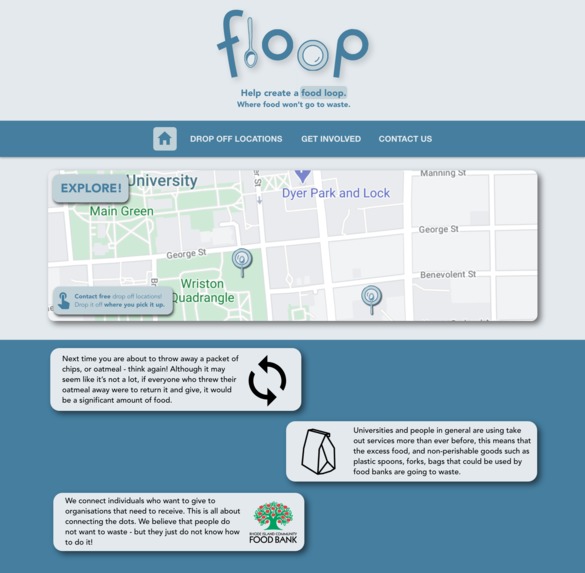
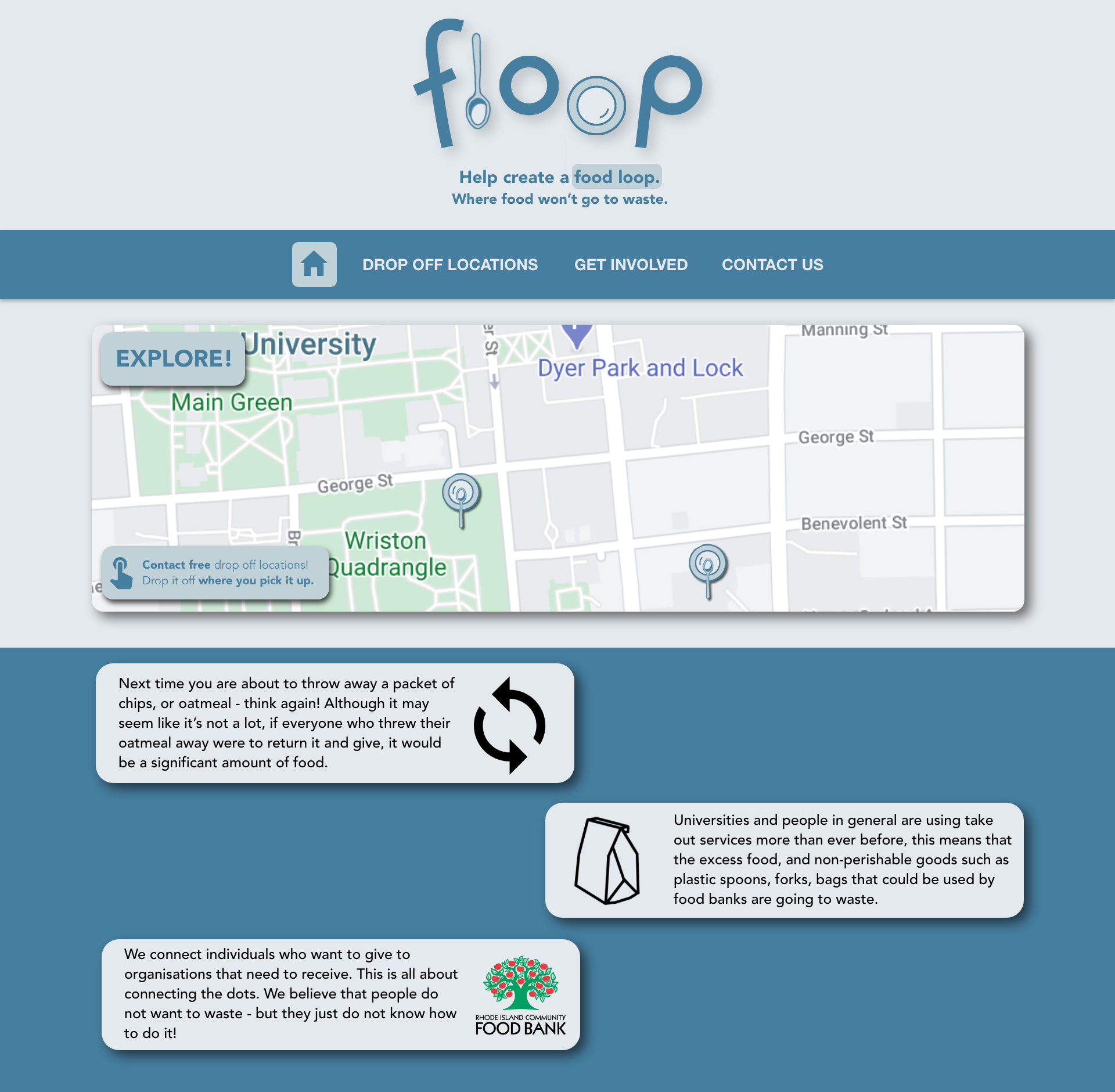
Web - Home
-
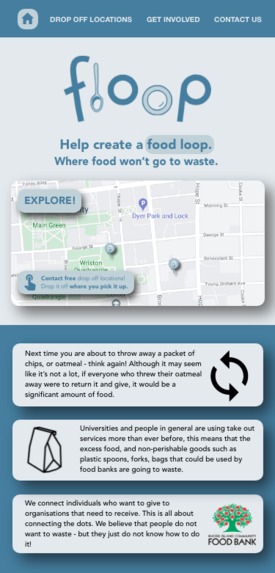
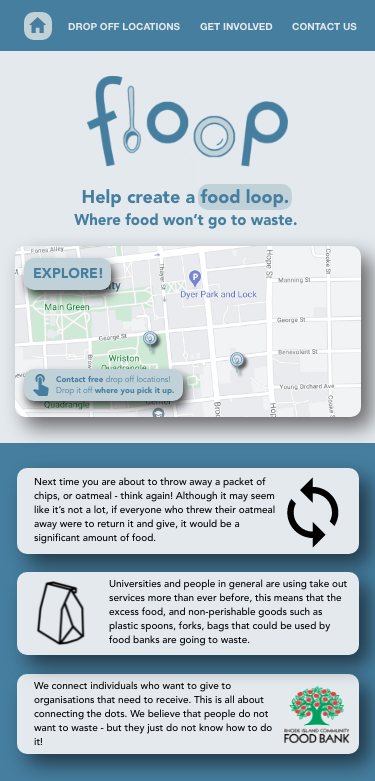
Mobile - Home
-
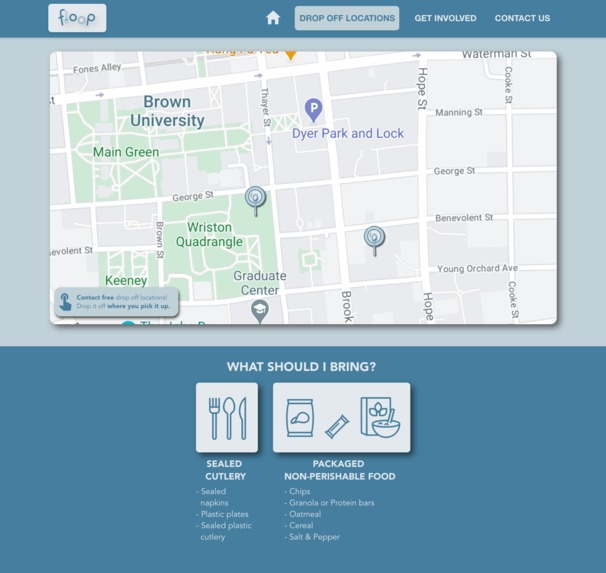
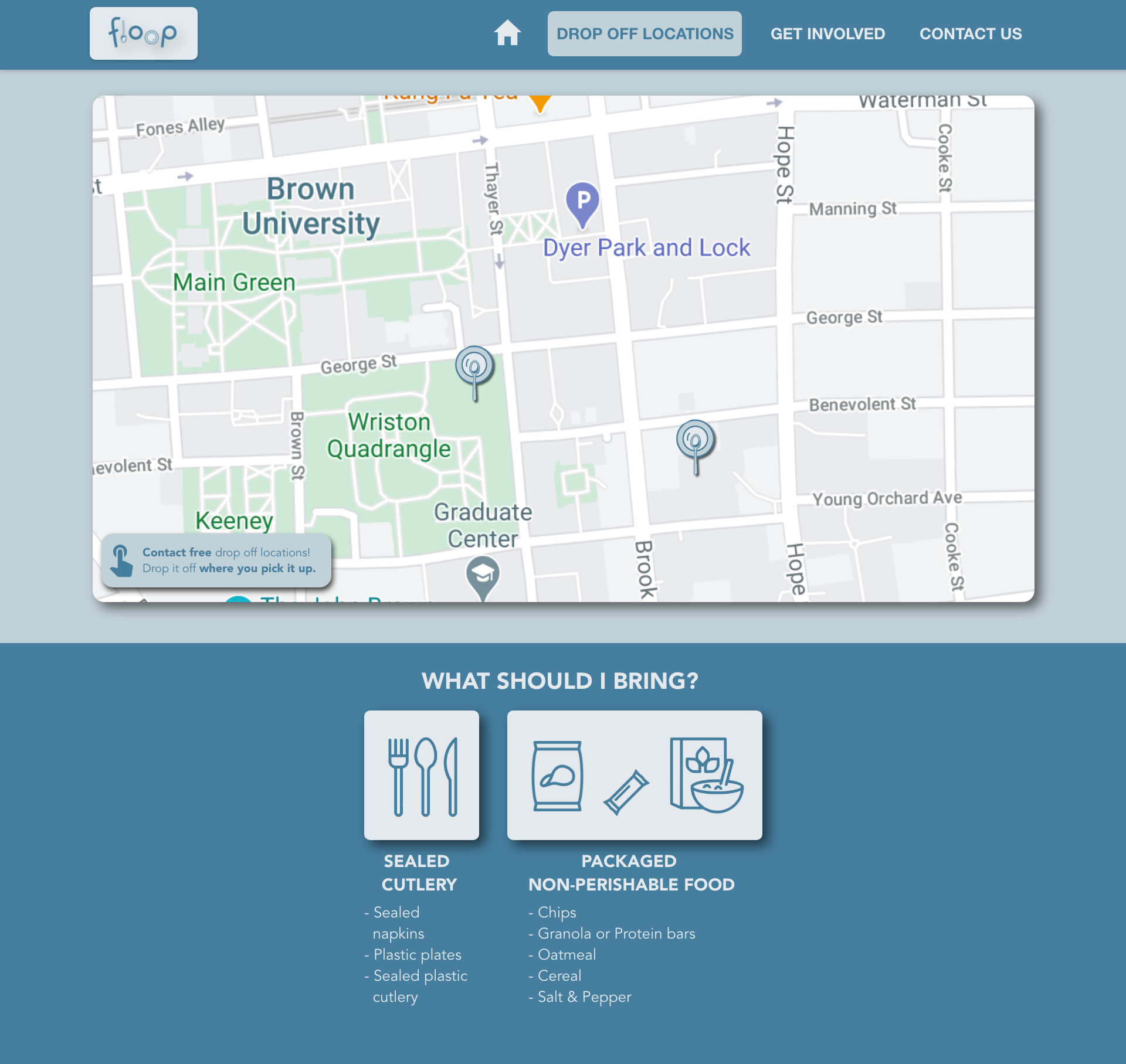
Web - Drop Off Locations
-
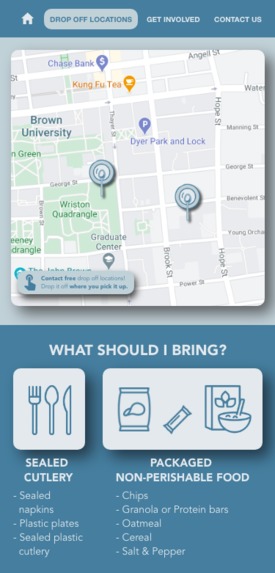
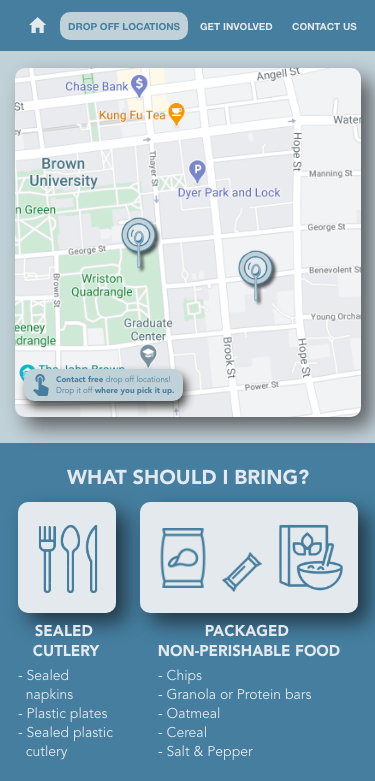
Mobile - Drop Off Locations
-
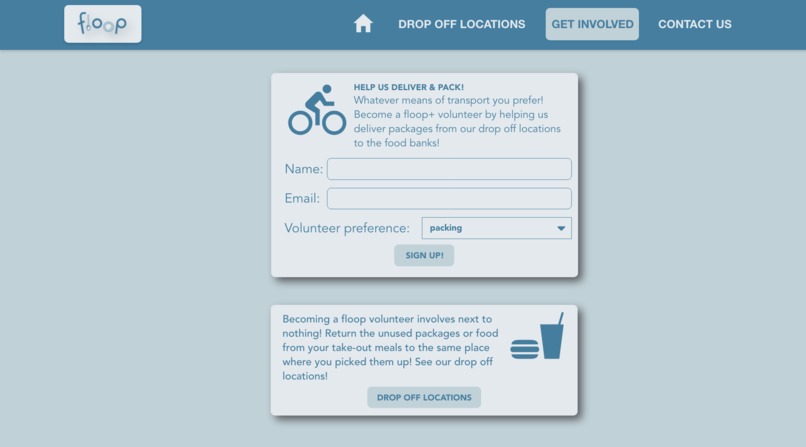
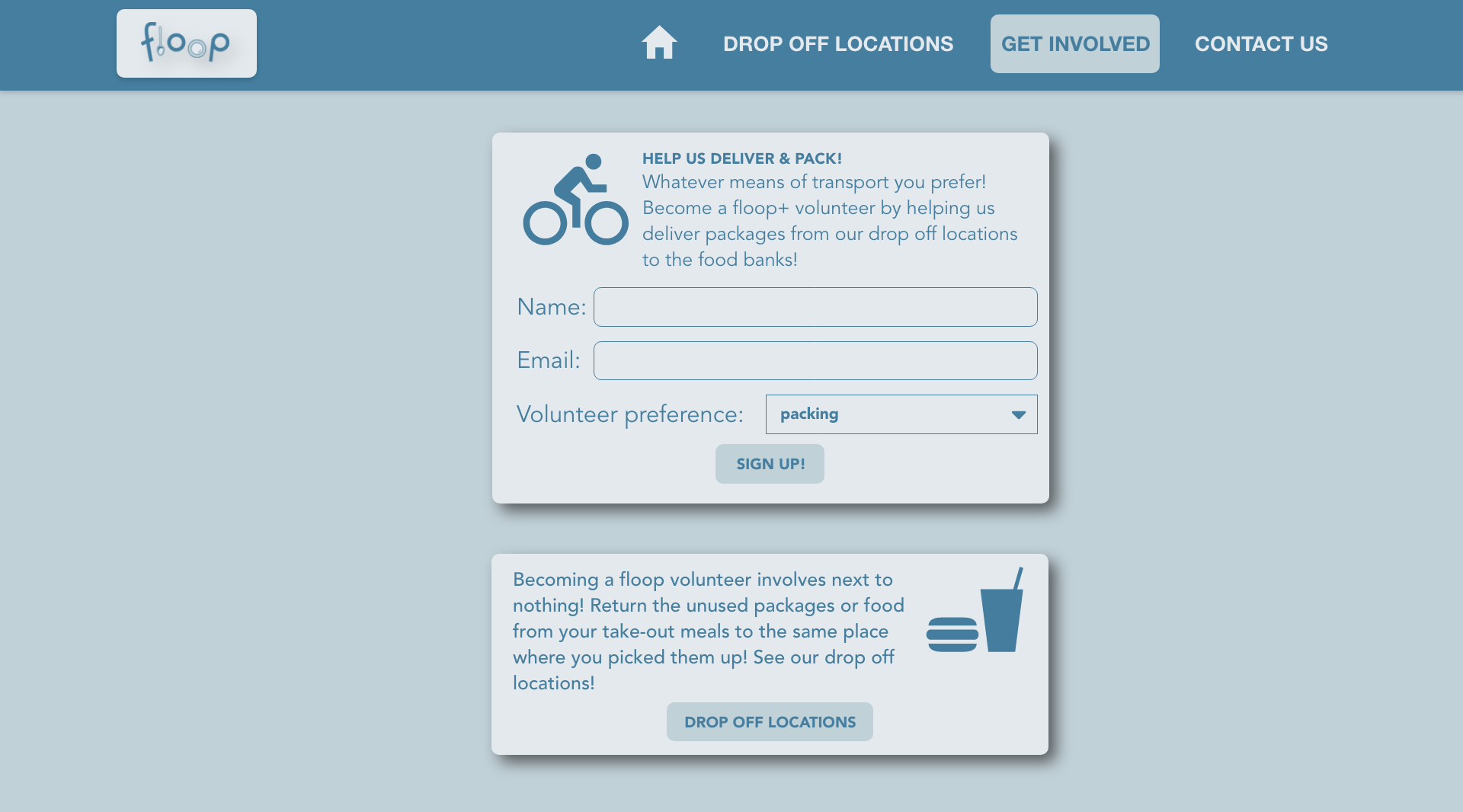
Web - Get Involved
-
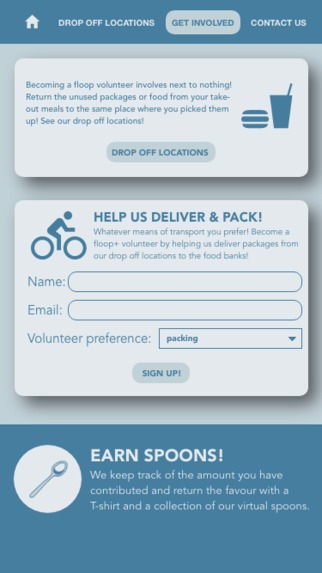
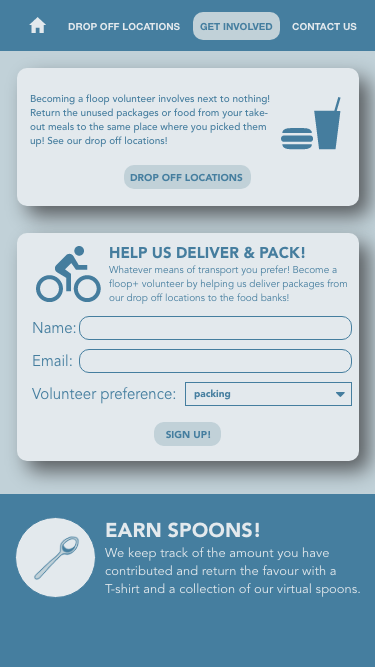
Mobile - Get Involved
-
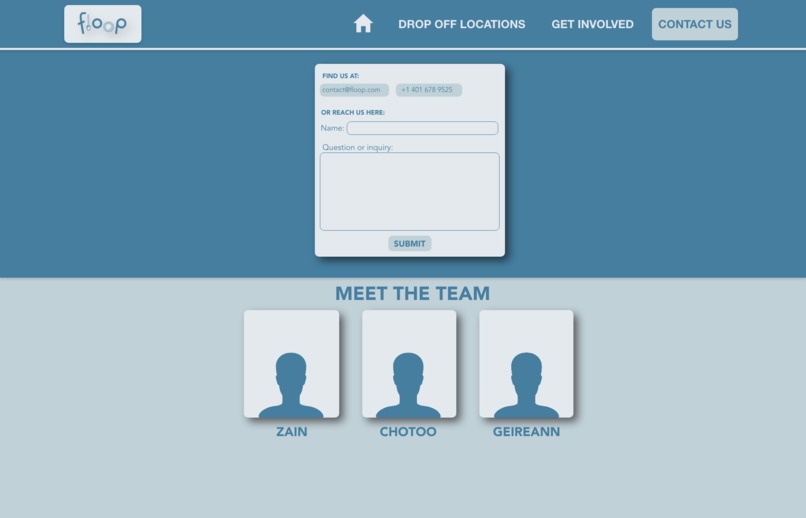
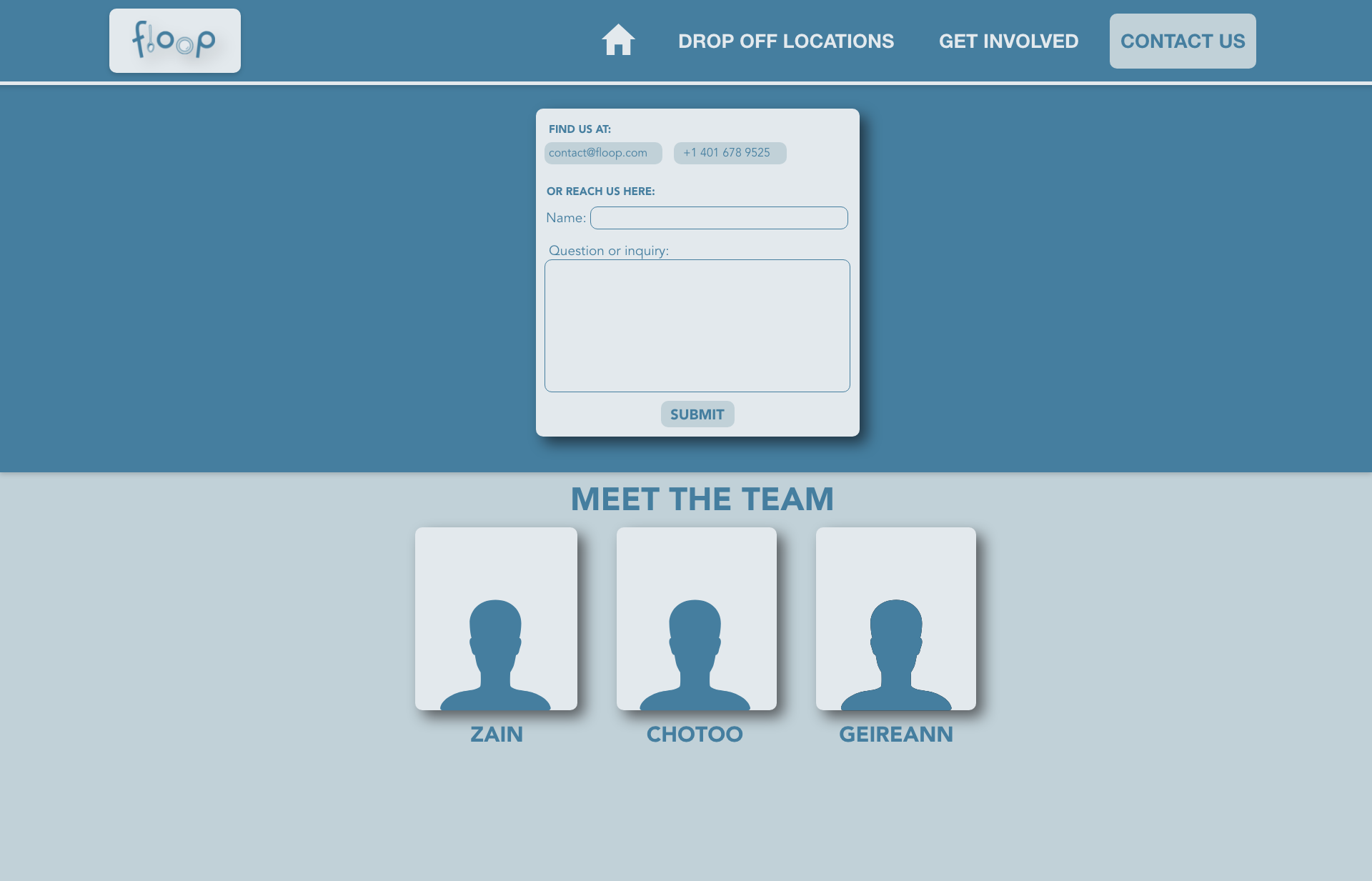
Web - Contact Us
-
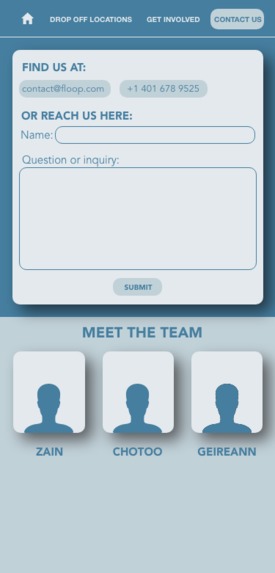
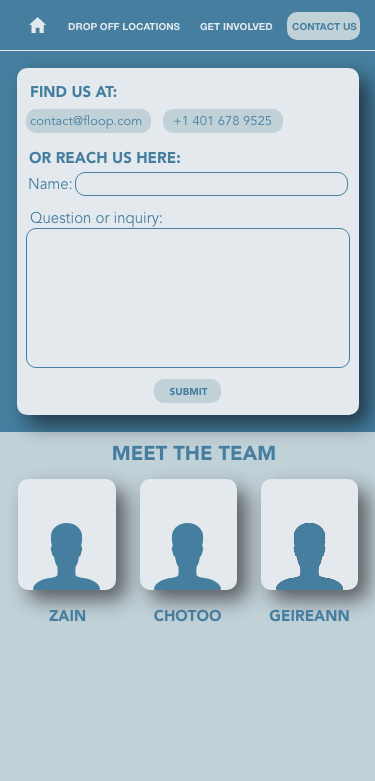
Mobile - Contact Us
Inspiration
- We noticed the excess food and utensils that we received from dining services three times a day.
- After a little research, we found that food banks have increased demand for donations, but are quite under-resourced. See here
- We also found that food banks only accept non-perishable goods and utensils.
- While exploring our interests, we came across circular design—a design principle popular in the clean tech industry. Circular design aims to eliminate waste via the continual use of resources (e.g. recycle, re-use, and repurpose).
What it does
- floop is a platform (mobile app and web-page) which connects individuals to contactless drop-off locations to donate excess non-perishable goods and utensils.
- floop also allows users to join a volunteer community that will package and deliver donated goods.
- In its broadest sense, floop empowers users to positively impact their local communities.
How we built it
- We started by researching food banks and contactless delivery. These were the guiding activities/resources for floop.
- After brainstorming ideas, we fleshed out the UI/UX of floop using Figma and Adobe Xd.
- Since a large component of our project is an interactive map which connects users to the nearest drop-off location, we experimented with the Google Maps SDK (Android version).
- Using a Github repository (mainly in Java and Kotlin), we were able to create an Android app which displayed the Brown University campus with a marker at one of our dining halls. The Github repository is linked below and is part of a set of tutorials provided by Google.
Challenges we ran into
- Unfortunately, we ran into a few issues with the Google Maps SDK. It required an API Key which we were eventually able to get. Unfortunately, for a while it still did not work since the API Key required an SHA-1 Fingerprint. Once we found this value, we were able to get it working.
- We attempted to contact local food banks via email and call but received no response.
- Due to knowledge and time constraints, we couldn't create the project we were hoping to. However, we still were able to create a prototype which displays a large portion of our functionality.
Accomplishments that we're proud of
- The Figma mock-ups clearly describe our application and look great.
- Our logo and all accompanying style choices look amazing.
- We were able to get a domain, flooop.com (floop.com was unavailable).
- Our name perfectly encapsulates our inspiration (food + loop = floop).
- We were proud to get the Maps SDK functioning. Unfortunately, we cannot submit our map on DevPost since it contains information sensitive to our Google Cloud accounts (API credentials). Instead, we have provided the Github repository we utilized to accomplish our task.
What we learned
- Learning and implementing APIs in any amount of time is quite difficult.
- Figma is a powerful tool to express any idea.
What's next for floop
- Moving forward, we hope to actually create this application and start contributing to our community.
- In the future, we also aim to expand to other universities/communities.
Built With
- adobe-xd
- css
- domain.com
- figma
- google-cloud
- html
- java
- javascript
- kotlin


Log in or sign up for Devpost to join the conversation.