-
-
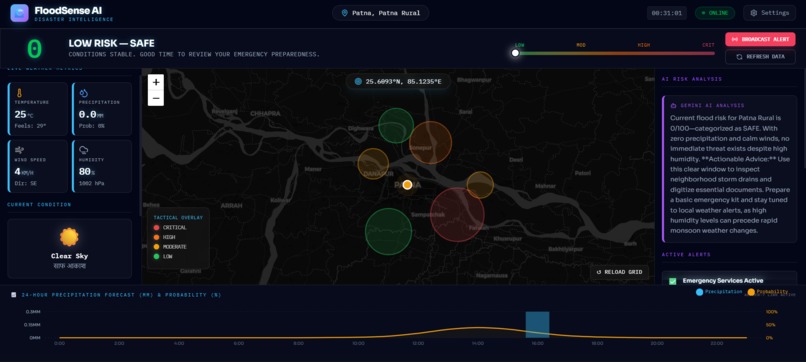
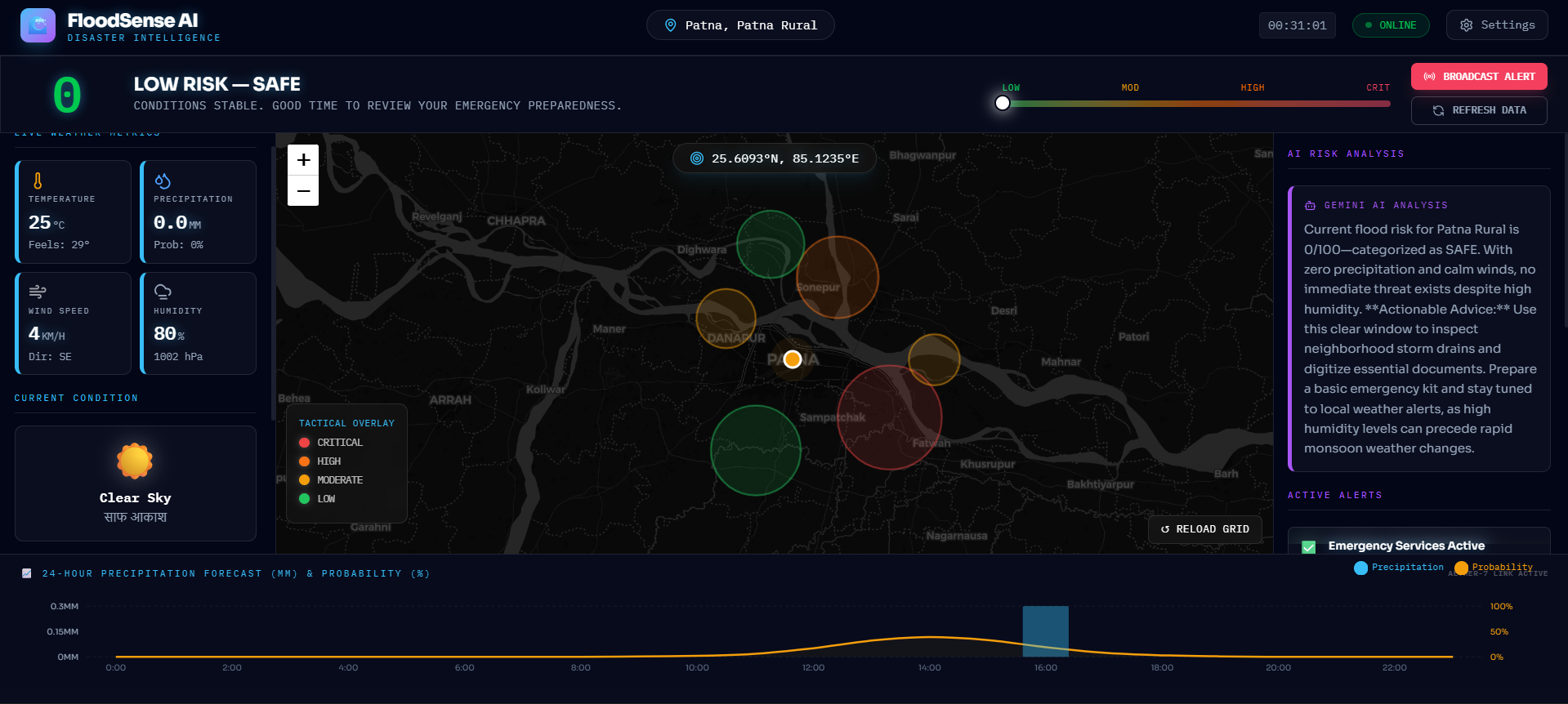
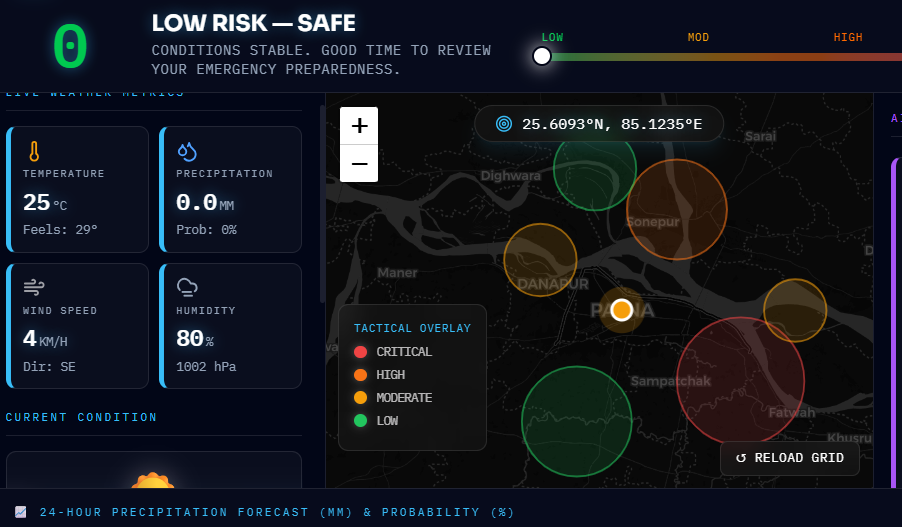
FloodSense AI dashboard
-
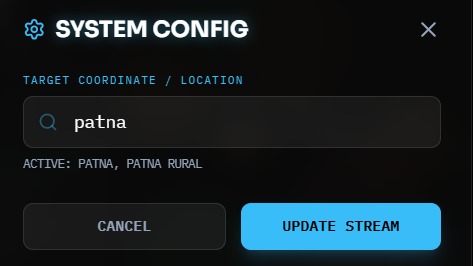
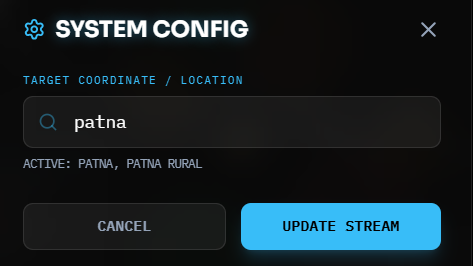
select flood prone location
-
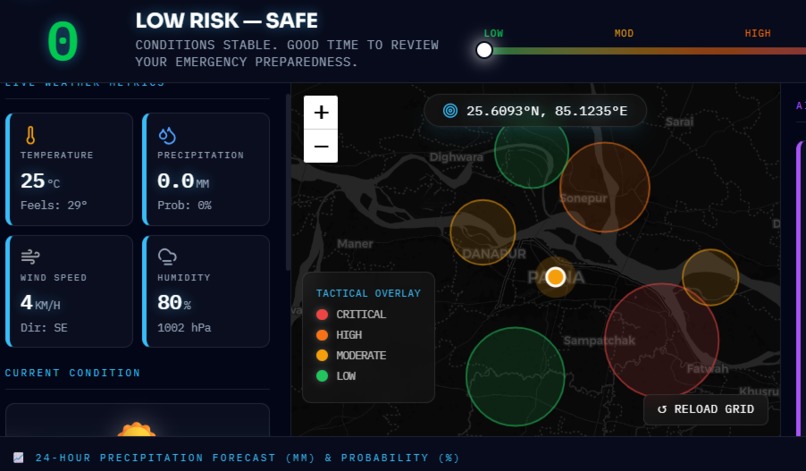
realtime map view
Inspiration
Flood disasters are becoming more frequent and severe due to climate change, yet millions of people still lack access to timely, understandable, and actionable disaster warnings. In many rural and vulnerable communities, alerts either arrive too late or fail to provide clear guidance on what actions people should take.
What it does
FloodSense AI is a real-time disaster intelligence platform focused on flood risk monitoring and community preparedness. Monitors live weather and flood-related data Uses AI to analyze flood risk patterns Predicts potential flood threats in real time Sends intelligent risk alerts to users Key features include: AI-powered flood risk prediction Real-time weather and rainfall monitoring Emergency alerts and notifications
How we built it
We built FloodSense AI using a combination of modern AI, weather intelligence APIs, and scalable web/mobile technologies. Frontend: React / Next.js / Tailwind CSS Backend: Node.js / Express AI & Analytics:Gemini AI APIs: Weather APIs, rainfall and flood monitoring data Maps & Geolocation: Mapbox / Google Maps APIs Database: Firebase Notifications: Real-time alert systems and push notifications Deployment: Cloud-based scalable infrastructure
Challenges we ran into
One of the biggest challenges was handling real-time environmental data and converting it into meaningful, actionable intelligence. Other challenges included: Managing inconsistent weather and flood datasets Designing AI predictions with limited historical data Building a lightweight system for low-connectivity areas
Accomplishments that we're proud of
We are proud that FloodSense AI goes beyond being just another weather application. Key accomplishments include: Building an AI-powered disaster intelligence platform with real-time analysis Creating a community-first emergency preparedness experience Designing a scalable architecture for future disaster types Developing a lightweight and accessible solution for vulnerable regions
What we learned
Through this project, we learned: The importance of real-time data reliability in disaster systems How AI can support emergency preparedness and public safety The challenges of designing for accessibility during high-stress situations How to integrate multiple live data systems into a unified platform
What's next for FloodSense AI
Our vision is to evolve FloodSense AI into a complete AI-powered disaster resilience platform. Future plans include: Expanding support beyond floods to cyclones, heatwaves, landslides, and earthquakes Integrating satellite imagery and advanced geospatial AI Building multilingual voice-based emergency assistance Adding community SOS and rescue coordination features
Built With
- css3
- express.js
- fastapi
- figma
- firebase
- framer-motion
- github
- google-maps
- html5
- javascript
- mapbox
- next.js
- node.js
- openai-apis
- openweather-api
- postman
- python
- react.js
- scikit-learn
- tailwind-css
- tensorflow
- typescript
- vercel

Log in or sign up for Devpost to join the conversation.