-
-
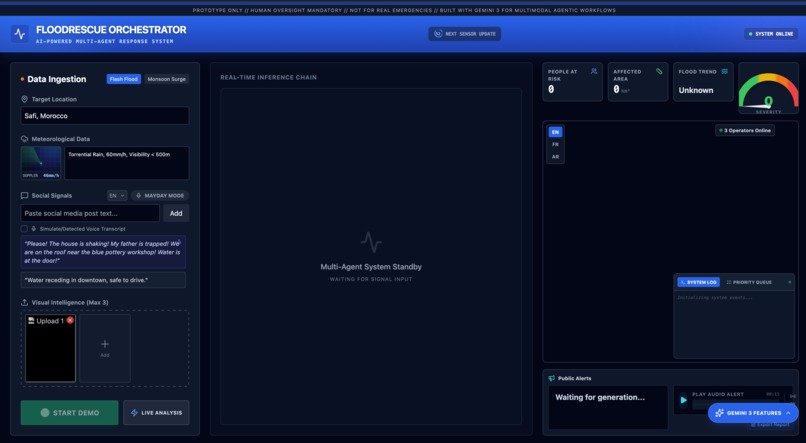
ai studio demo
-
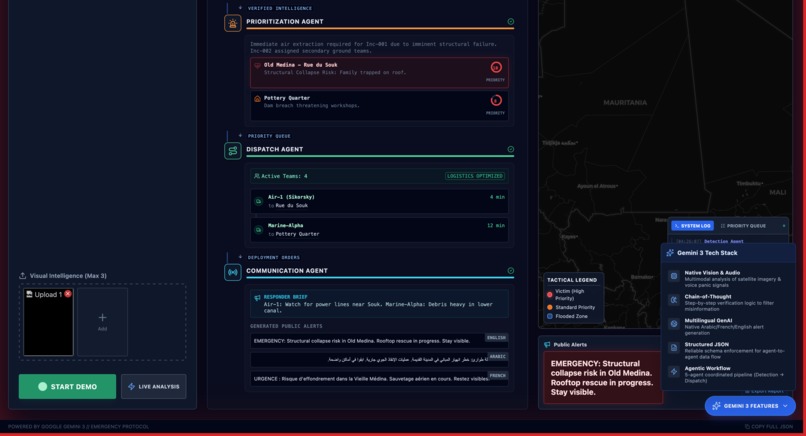
live preview
-
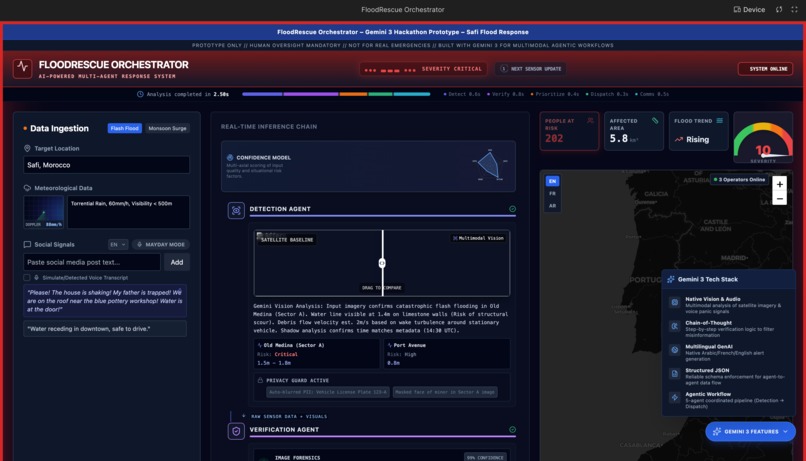
dashborad
Inspiration
Living in Safi, Marrakesh-Safi, Morocco, I have witnessed firsthand how flash floods repeatedly devastate coastal communities — destroying homes, cutting off roads, and putting lives at risk with little warning. In December 2025 alone, floods in Safi claimed dozens of lives and displaced thousands. Official response is often delayed by misinformation, chaotic social media reports, and lack of real-time situational awareness.
I wanted to build something that could turn chaos into coordinated action — using the latest multimodal and agentic capabilities of Gemini 3 to fuse satellite imagery, social signals, and weather data into life-saving decisions.
What it does
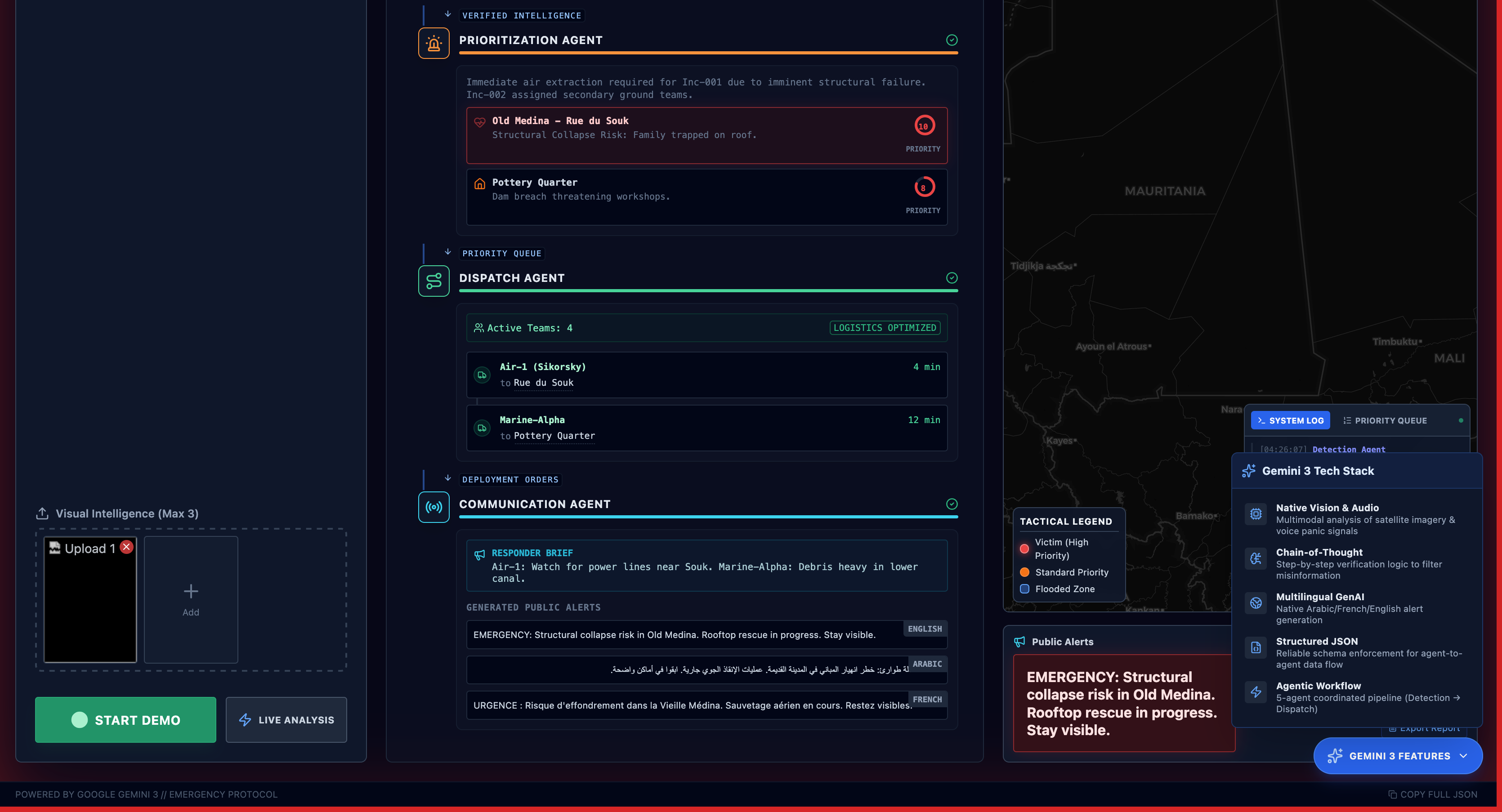
FloodRescue Orchestrator is a real-time, multi-agent emergency coordination system that:
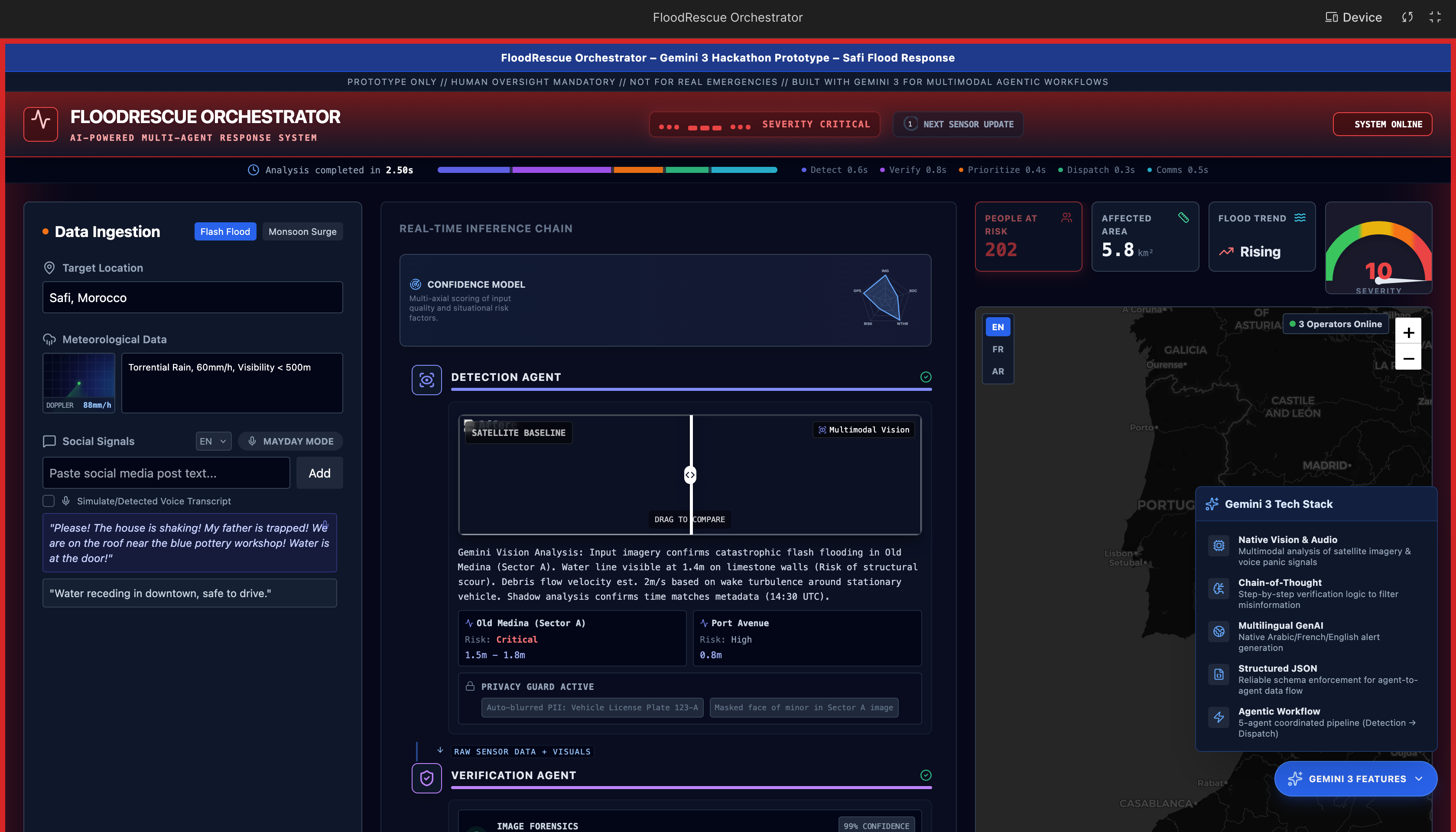
- Detects flood extent and hazards from satellite/drone imagery using Gemini 3's native multimodality
- Verifies distress signals from social media (text, voice transcripts, images) and filters misinformation with chain-of-thought reasoning
- Prioritizes rescue targets by urgency (life threat, vulnerable people, medical needs)
- Dispatches optimal routes and team assignments (mocked Google Maps integration)
- Communicates multilingual alerts (Arabic, French, English) with mock voice synthesis
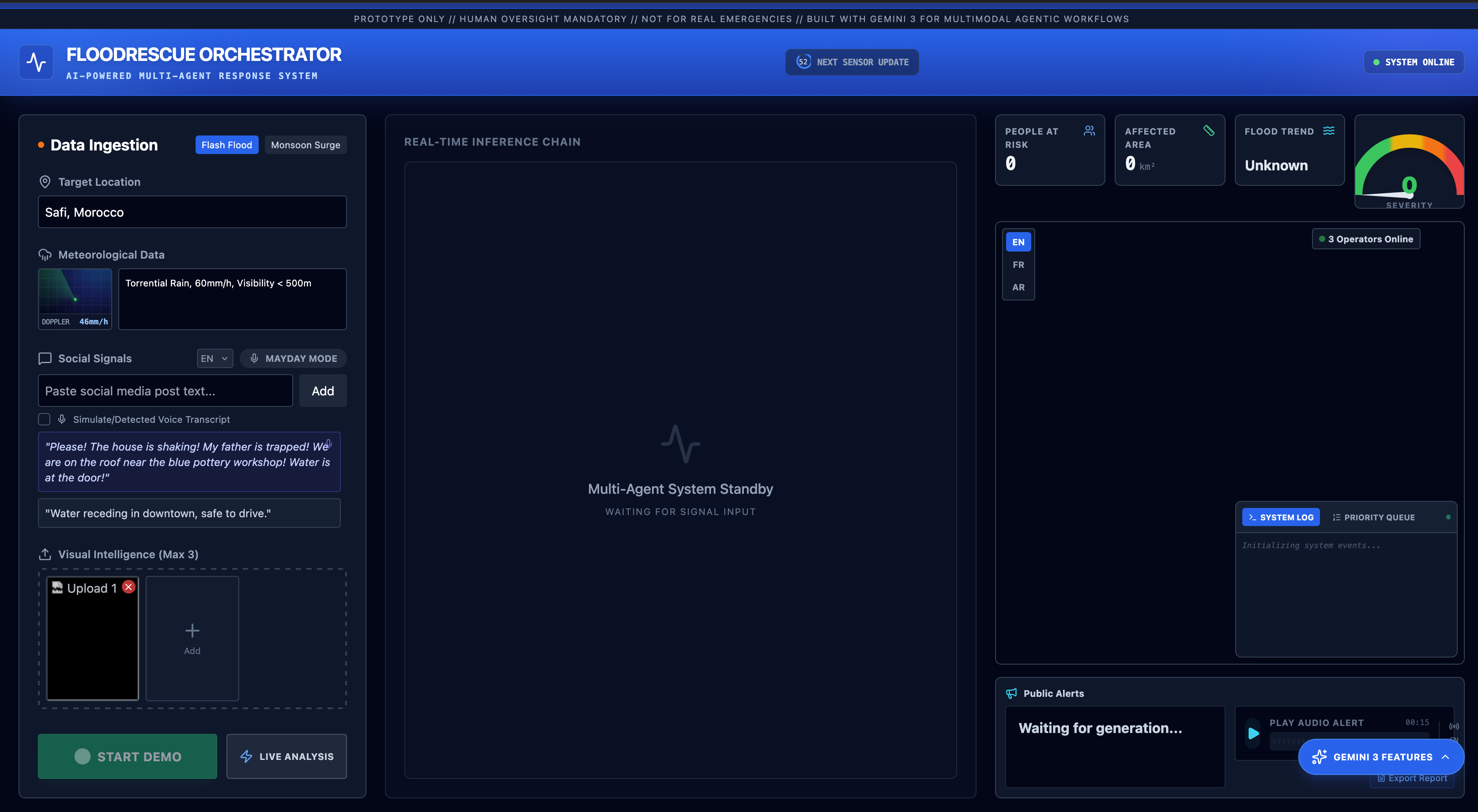
The system runs a live inference chain with 5 specialized agents, visualized in an interactive dark-mode UI with a tactical map, urgency gauges, and dynamic alerts.
How I built it
I built the prototype in Google Antigravity (agentic IDE) using Gemini 3 Pro Preview for all reasoning, image/video analysis, and multilingual generation.
- Frontend: React + Tailwind CSS + Leaflet for interactive dark-mode map with red victim pins and blue flood overlays
- Backend logic: Agentic workflow orchestrated via Gemini 3 system prompts (structured JSON outputs)
- Multimodality: Direct image/video uploads processed natively by Gemini 3
- Simulation mode: Mock deterministic responses for reliable demos (no API key needed)
- Challenges overcome:
- Ensuring consistent JSON output → strict schema + few-shot examples
- Real-time feel → simulated 60-second updates + live chain visualization
- Misinformation handling → explicit chain-of-thought + image forensics logic
- Multilingual RTL support for Arabic alerts
Challenges I ran into
- Gemini output sometimes varied slightly → solved with rigid JSON schema, simulation mode, and retry logic
- Map interactivity + dark theme compatibility → custom Leaflet styling and legend
- Balancing agentic depth with hackathon speed → focused on 5 clean agents with mocked external calls
- Visual/emotional impact → added urgency gauges, red highlighting, and clear misinformation flags
What I learned
Gemini 3’s native multimodality and long-context reasoning make it possible to build surprisingly sophisticated agentic systems in days — without heavy backend infrastructure. The biggest lesson: structured prompting + few-shot examples are more powerful than complex code for reliable agent behavior.
This project showed me how AI can directly address real-world crises in underserved regions like Morocco — and how fast a solo developer can prototype something meaningful with the right tools.
Built With
- built-with:-google-antigravity
- gemini-3-pro-preview
- leaflet.js
- react
- tailwind


Log in or sign up for Devpost to join the conversation.