-
-
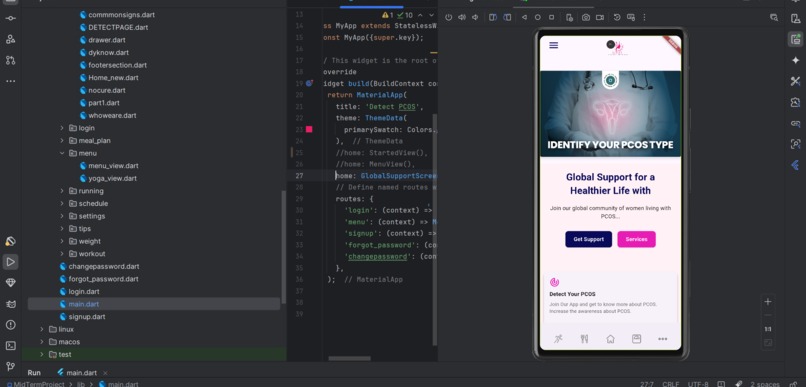
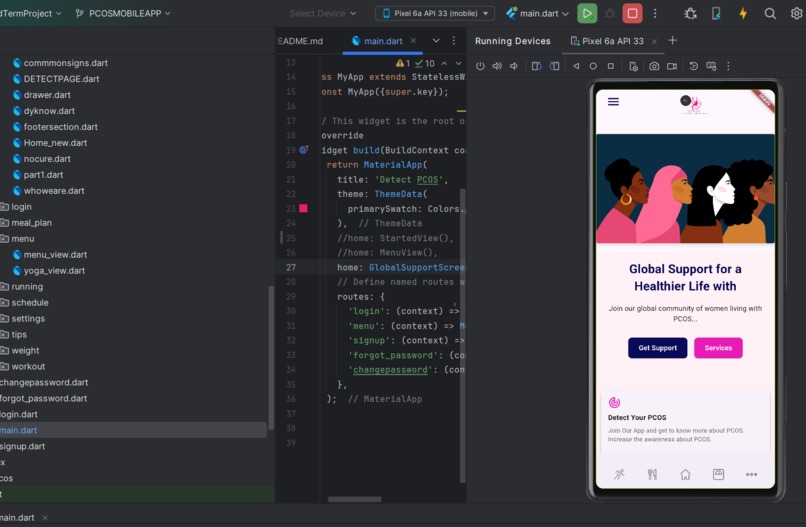
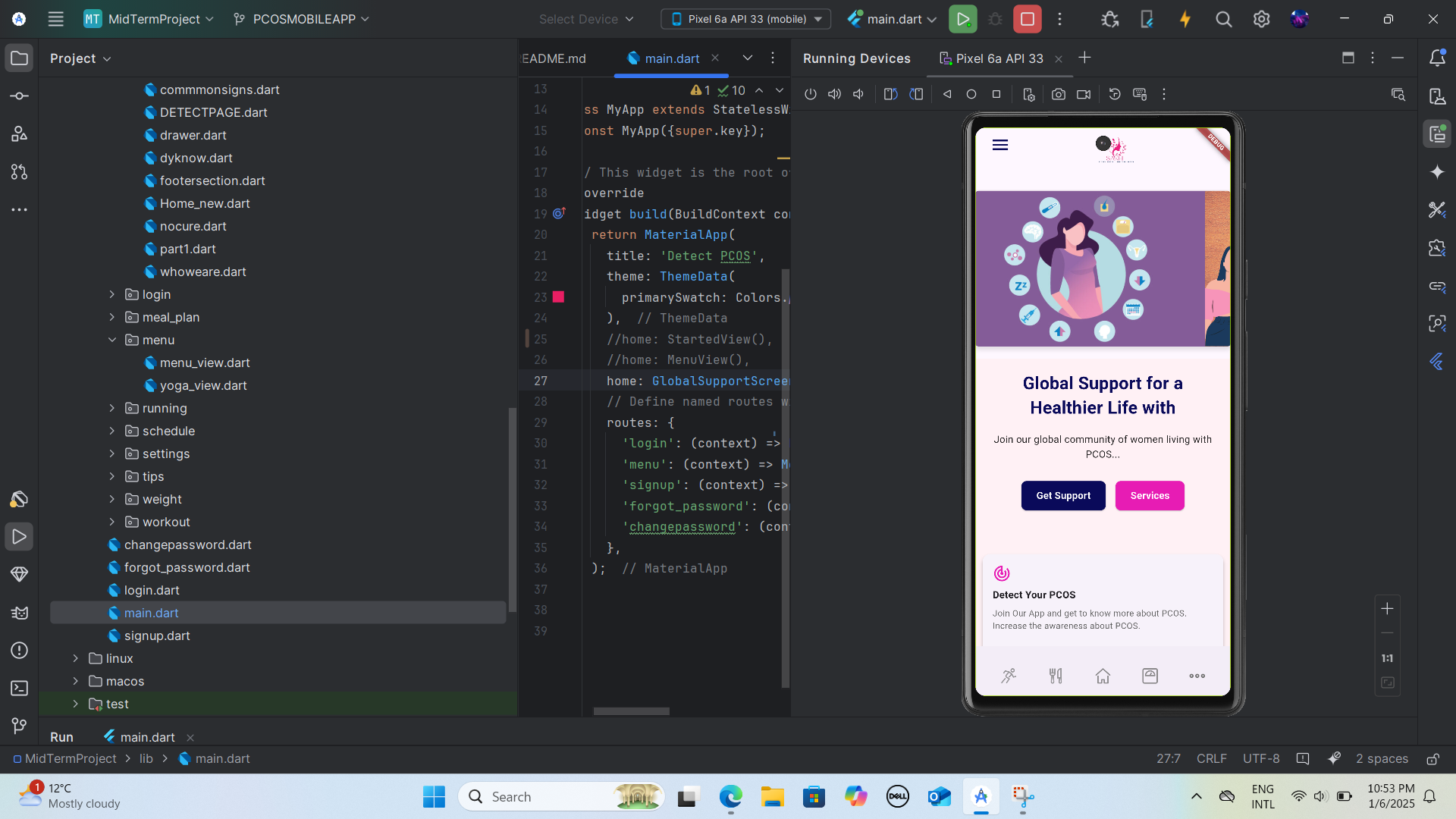
PCOS Detection App demo built with Flutter, Django, and Machine Learning for Devpost Hackathon.
-
-

Inspiration
The inspiration for the PCOS Detection App came from the rising awareness of Polycystic Ovary Syndrome (PCOS), a condition affecting many women worldwide. Early detection is key to better management, and this app aims to help users identify potential symptoms and encourage them to seek professional advice.
What it does
The app allows users to input their symptoms, age, and medical history to receive a prediction of their likelihood of having PCOS. It uses a Machine Learning model to analyze the data and provide results, helping users understand their health better.
How we built it
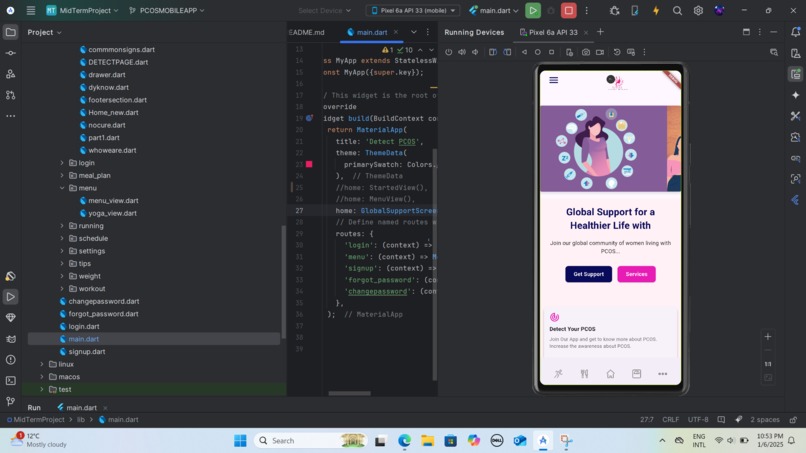
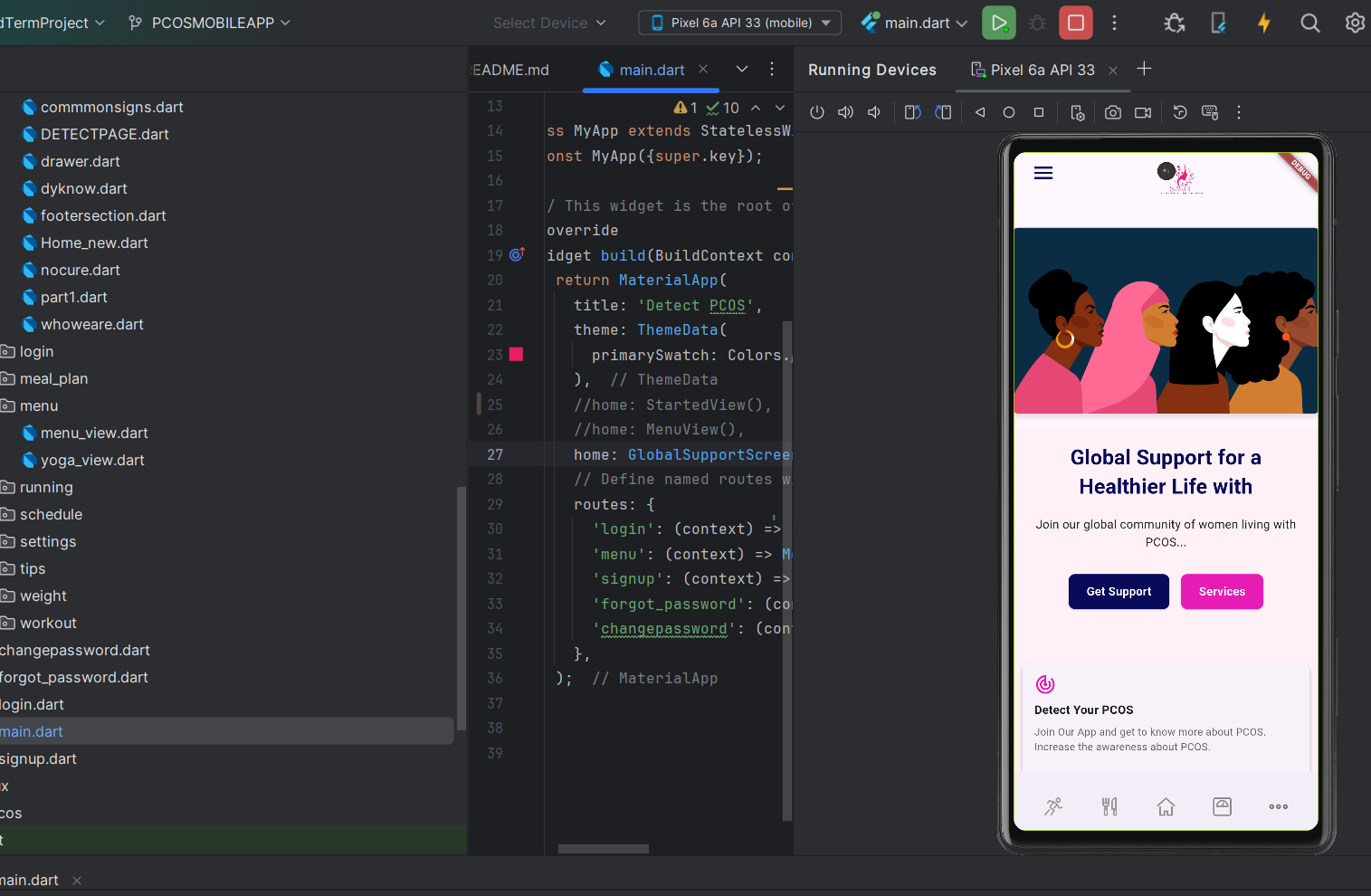
- Frontend: We used Flutter and Dart to create a user-friendly mobile interface where users can easily input their data.
- Backend: We built a Django REST API to handle user requests, process data, and return predictions.
- Machine Learning: The app integrates a Machine Learning model, trained with scikit-learn or TensorFlow, to predict PCOS based on user inputs.
Challenges we ran into
- Data Availability: Finding high-quality, labeled datasets for training the machine learning model was a significant hurdle.
- Model Accuracy: Ensuring the model’s predictions were accurate and reliable required extensive experimentation with various algorithms and tuning.
- Integration: Properly integrating the machine learning model with the Django backend to process data in real-time while maintaining the app’s performance was a technical challenge.
Accomplishments that we're proud of
- Successfully integrated Machine Learning into a mobile app, allowing users to get predictions based on real-time inputs.
- Built a Django API that handles user data securely and provides accurate results.
- Created a smooth, user-friendly mobile app experience with Flutter.
What we learned
- The importance of data preprocessing and feature selection in building an effective machine learning model.
- How to integrate complex technologies like Django and Machine Learning with a Flutter frontend.
- The challenges of handling sensitive health data and ensuring its privacy and security.
What's next for PCOS DETECTION APP
- Enhance the model's accuracy with more diverse data.
- Add features like user history tracking, push notifications, and integration with wearable devices.
- Explore potential partnerships with health organizations to improve the app's reach and credibility.
Built With
- aws/google-cloud-(optional)-databases:-sqlite
- ci/cd
- django
- django-rest-framework-platforms:-android
- ios
- languages:-dart
- numpy-version-control:-git-ide:-vs-code-other:-docker-(optional)
- pandas
- postgresql/mysql-apis:-django-api
- python-frameworks:-flutter
- scikit-learn
- tensorflow/scikit-learn-api-(optional)-machine-learning-tools:-tensorflow
- tools
- web-(optional)-cloud-services:-firebase

Log in or sign up for Devpost to join the conversation.