-
-
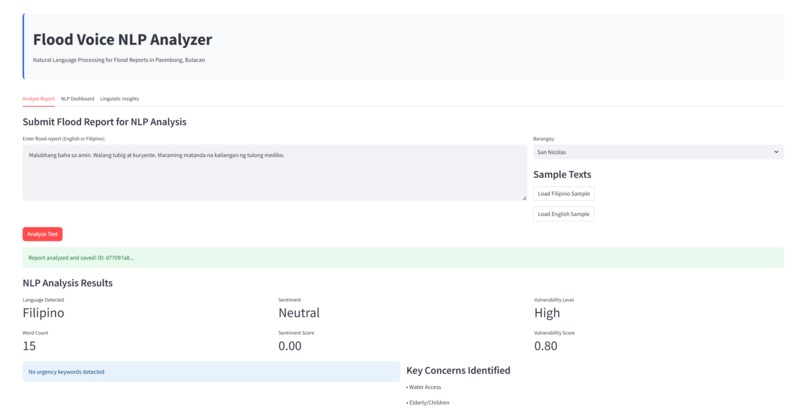
Analyzes concerns
-
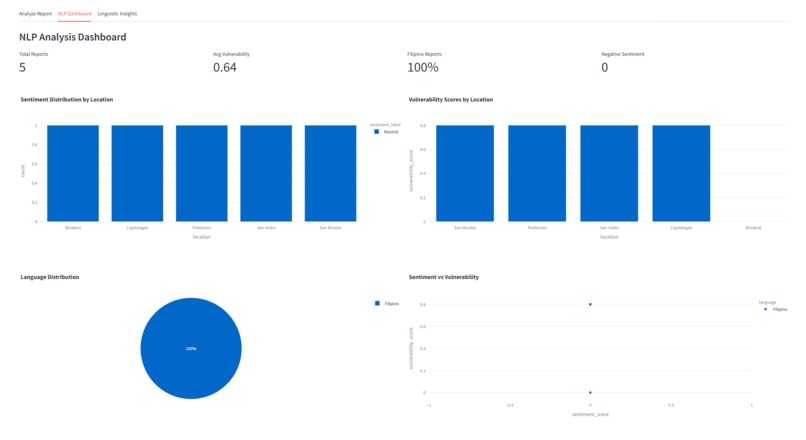
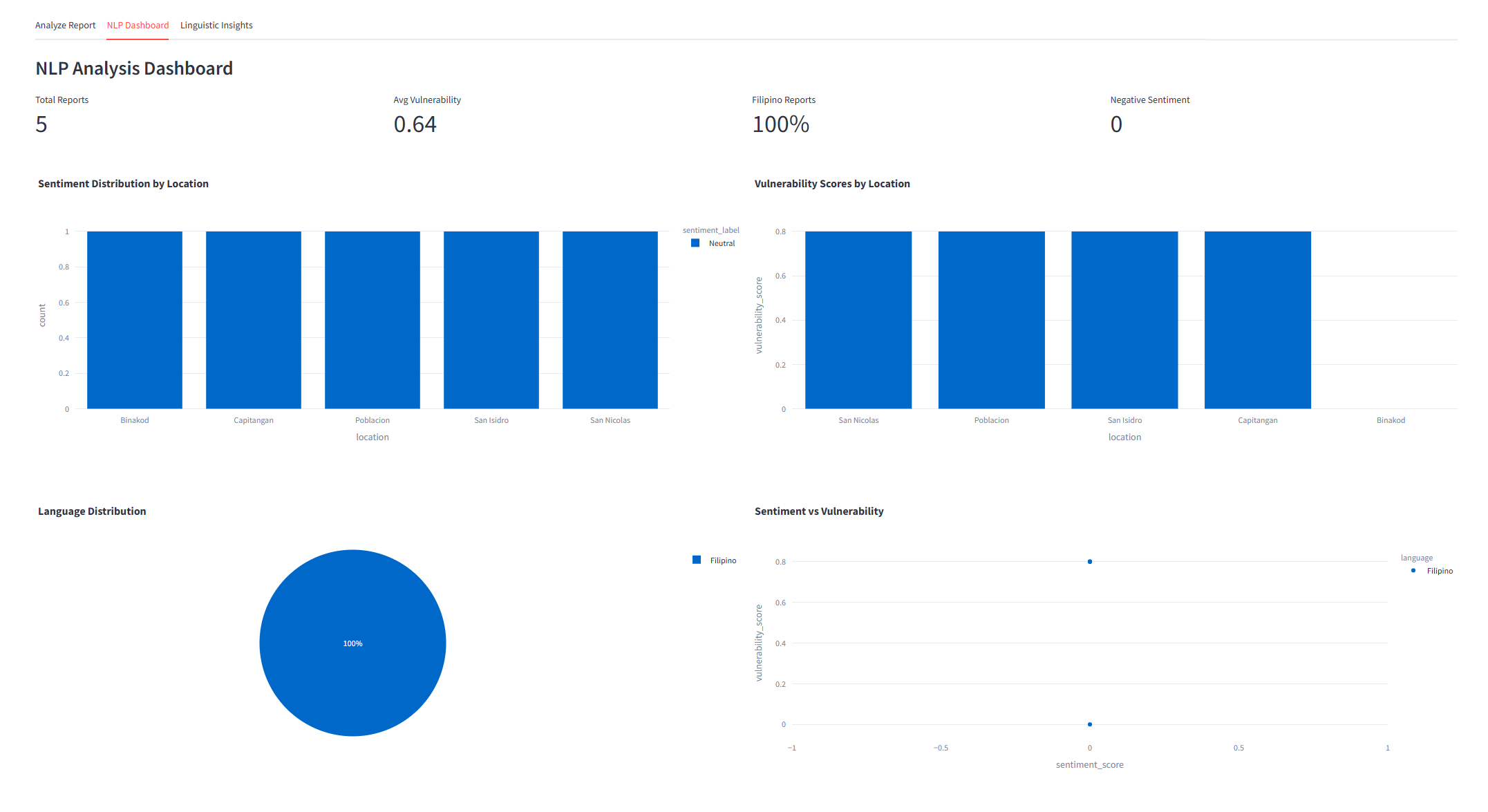
For agencies - an analytics dashboard
-
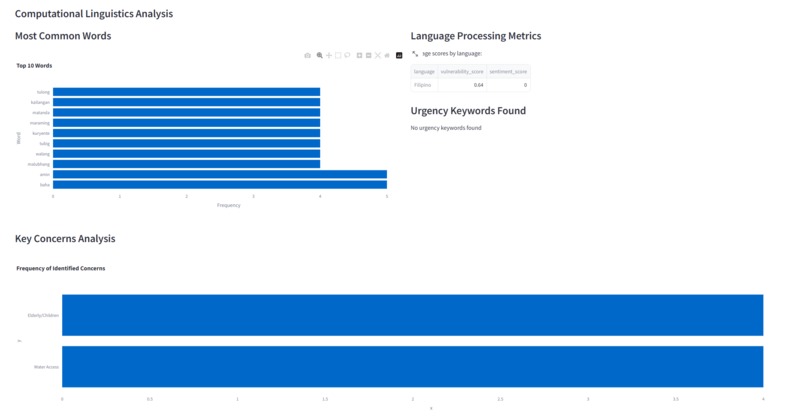
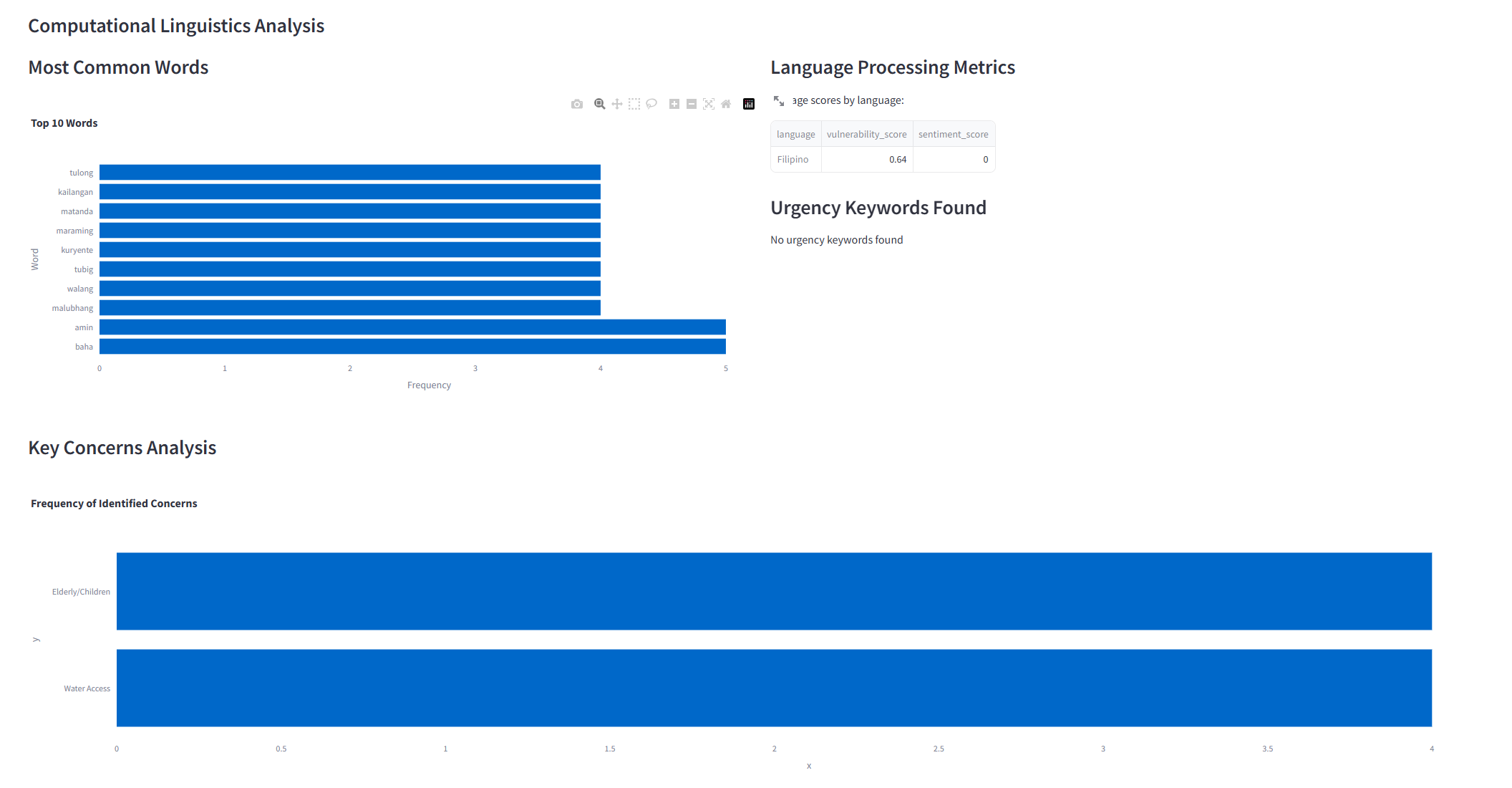
For agencies - a linguistic analysis to identify concern trends
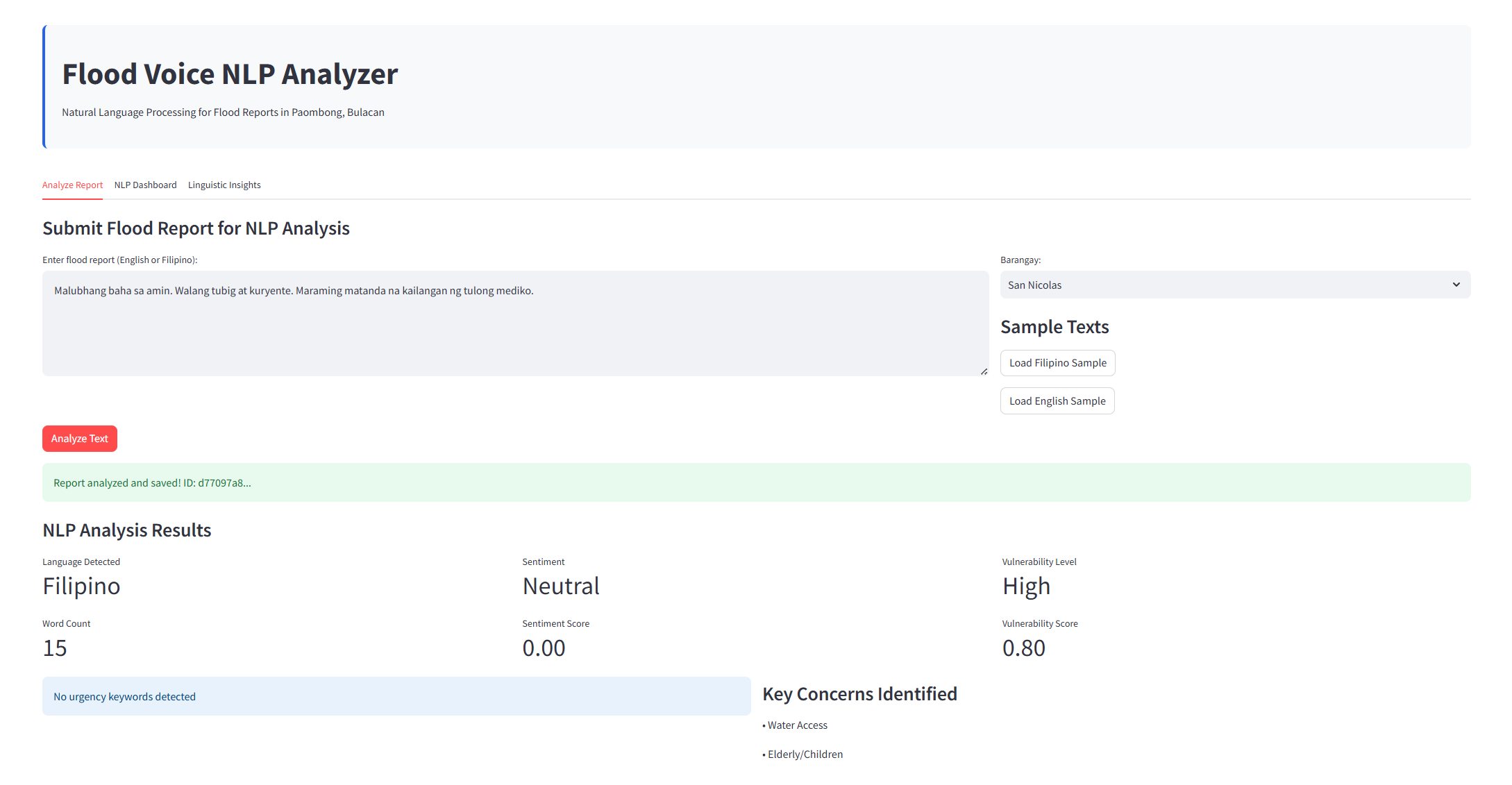
Flood Voice NLP Analyzer
Inspiration
Flooding in the Philippines continues to endanger vulnerable communities, particularly in low-lying areas like Paombong, Bulacan. During such emergencies, people instinctively turn to their native language, often Filipino, to communicate urgent needs. However, most emergency systems lack the capacity to interpret and prioritise multilingual crisis reports effectively. This project emerged from a desire to bridge that linguistic divide using computational linguistics, enabling responders to better understand the voices of those most at risk.
What It Does
Flood Voice NLP Analyser is a bilingual natural language processing system that supports both English and Filipino. It interprets flood-related messages, identifies signs of emotional distress, assesses vulnerability, and prioritises responses based on urgency and need. The system also offers categorisation of core concerns, such as access to water, food, medical care, shelter, and transport. An interactive dashboard helps emergency personnel coordinate responses efficiently, while deeper linguistic analysis reveals broader communication patterns during disasters.
Development Process
The analyzer was built by combining principles from computational linguistics with practical NLP tools and techniques. At its core is a pipeline tailored for bilingual analysis, capable of detecting language, analysing sentiment, and extracting urgency indicators. Vulnerability scoring is informed by a custom algorithm that interprets linguistic cues, and the system categorises reported needs based on feature extraction.
The platform itself runs on Streamlit, with sentiment analysis powered by TextBlob and custom algorithms designed specifically for Filipino. Data is stored in SQLite, visualised with Plotly, and processed using Pandas.
Linguistically, the system draws on bilingual dictionaries to detect vulnerability markers and urgency-related expressions. It recognises common Filipino constructions, such as walang tubig, and maps sentiment across languages, taking cultural context into account throughout.
Challenges
Creating accurate NLP tools for a bilingual, low-resource environment presented several challenges. Filipino remains underrepresented in mainstream NLP datasets, which necessitated the creation of custom dictionaries and the manual tuning of language models. Designing an effective vulnerability scoring method also required a careful balancing of linguistic indicators to avoid misclassification.
Equally important was the need to account for cultural context—understanding how distress is expressed in Filipino communication patterns is vital to interpreting urgency correctly. Lastly, the system had to be optimised to function in near real-time to support active emergency response.
Achievements
Flood Voice NLP Analyser now processes both English and Filipino with cultural and linguistic sensitivity. It is a fully operational system, not a mere prototype, with database functionality and export capabilities. The analyser addresses real-world issues faced during disaster response in the Philippines, demonstrating how computational linguistics can serve humanitarian needs. It was designed with community impact in mind, built specifically for those living in flood-prone areas.
Lessons Learned
Developing the system provided valuable insights into processing low-resource languages and understanding the linguistic dimensions of disaster response. Working with the Filipino language reinforced the importance of cultural awareness in natural language processing and showed me how language choices in moments of crisis can reveal underlying social vulnerabilities.
What’s Next
Short-Term Enhancements
The next phase will involve integrating social media feeds for real-time monitoring and improving the Filipino language models with additional training data. A mobile-responsive interface is also in development, along with support for regional dialects such as Tagalog and Kapampangan.
Long-Term Goals
Looking ahead, the project aims to form partnerships with Philippine disaster management agencies and integrate with alert systems in real time. As more flood report data becomes available, the underlying models will be refined using machine learning. There are also plans to adapt the system for other types of disasters and at-risk communities, with a view toward releasing it as open-source software for wider humanitarian use.
Research Potential
Flood Voice also opens pathways for academic research into crisis communication, especially in multilingual and culturally complex environments. It could support studies on disaster-related language patterns, the development of NLP tools for Filipino, and broader cross-cultural analyses of emergency response.

Log in or sign up for Devpost to join the conversation.