-
-

Slide-1
-
Slide-4
-
Slide-6
-
Slide-3
-
Slide-2
-
Slide-5

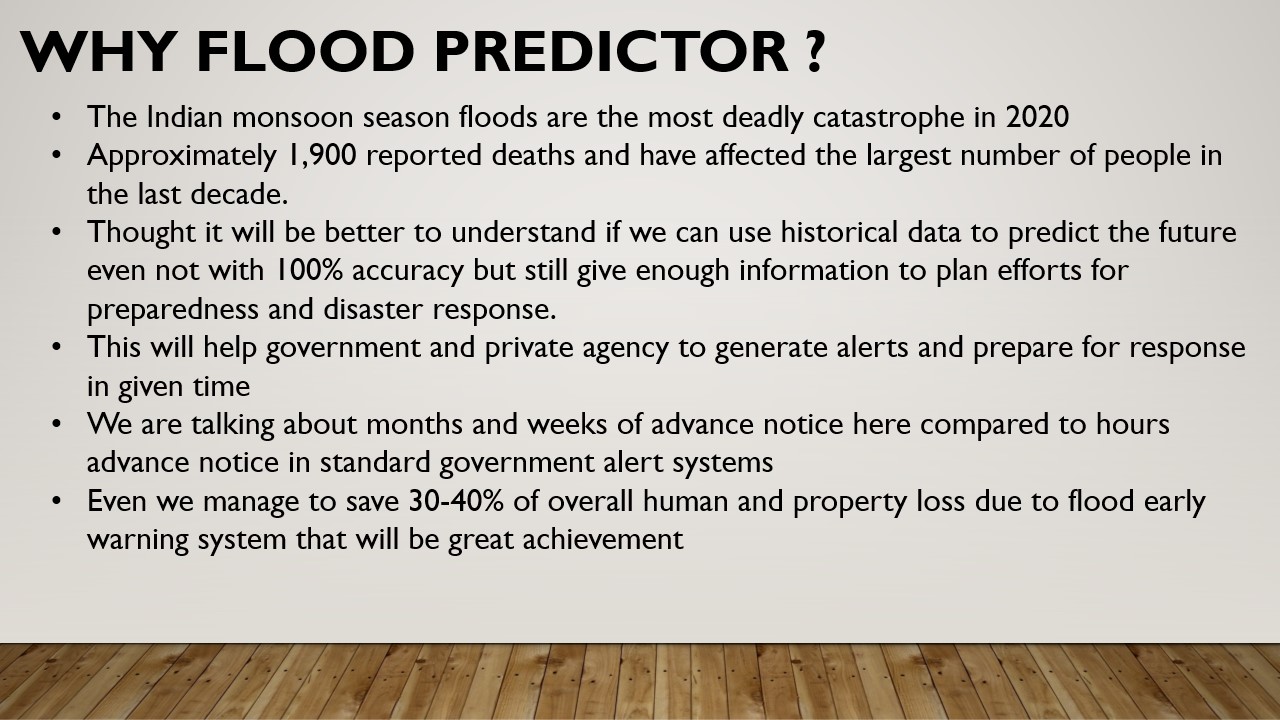
Inspiration
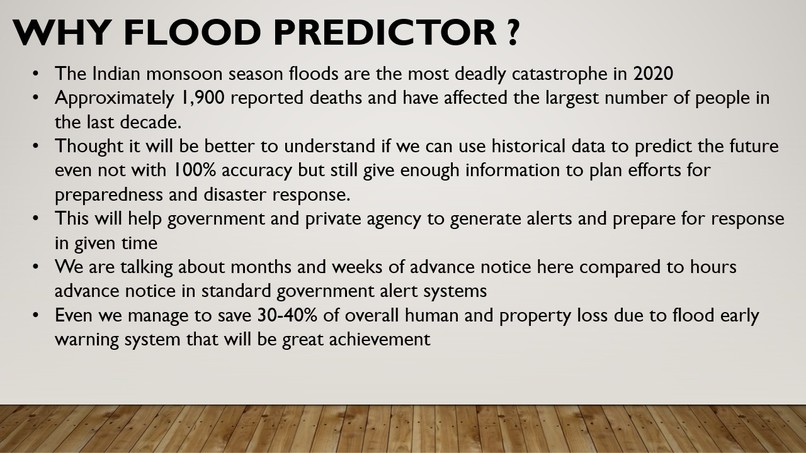
The Indian monsoon season floods are the most deadly catastrophe in 2020 with approximately 1,900 reported deaths and have affected the largest number of people in the last decade. So thought it will be better to understand if we can use historical data to predict the future even not with 100% accuracy but still give enough information to plan efforts for preparedness and disaster response.
What it does
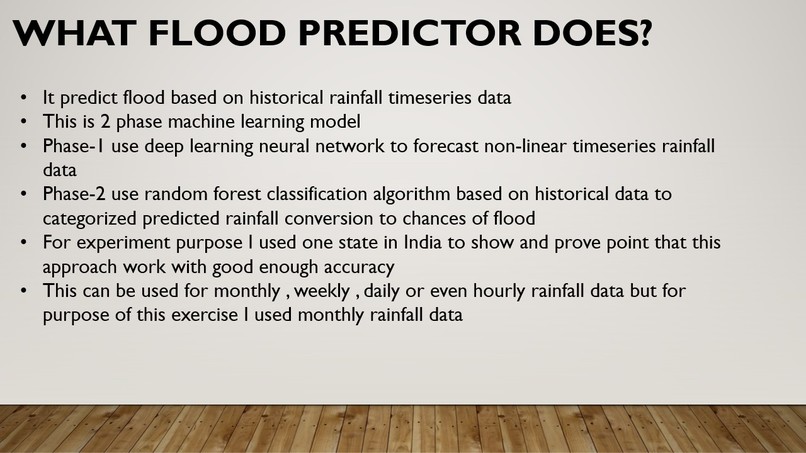
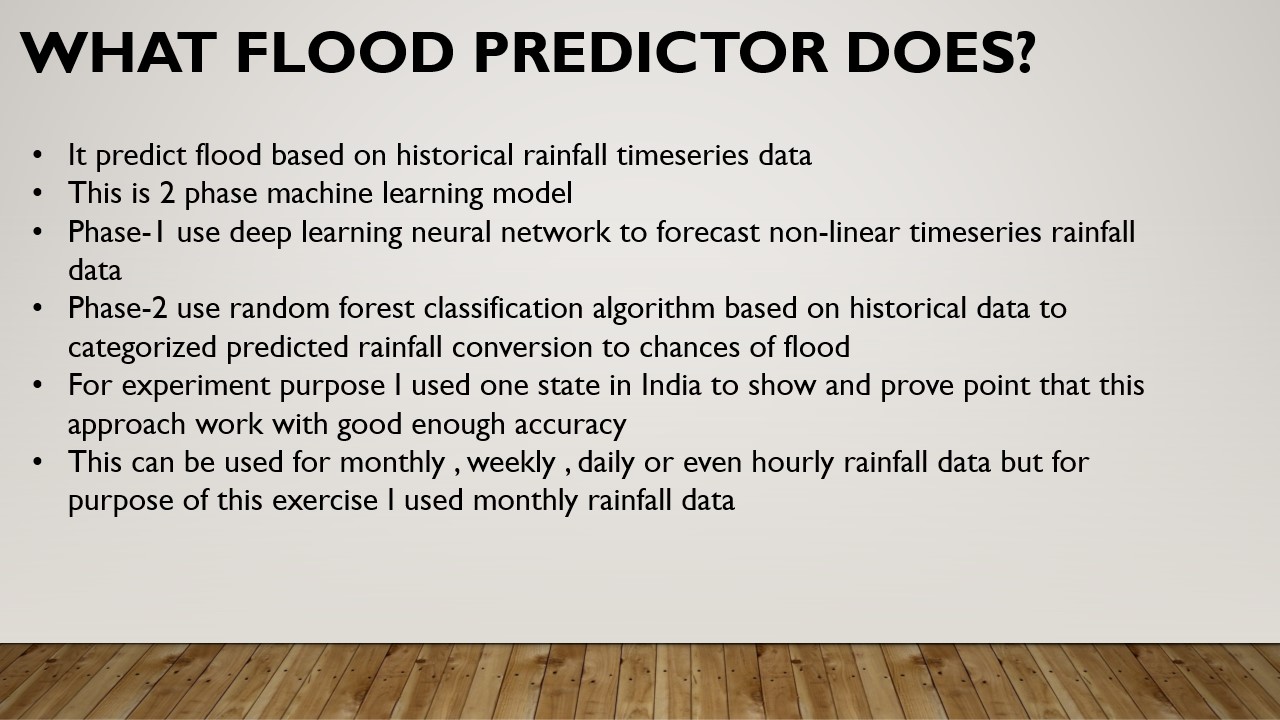
AWS-Disaster-Response-Hackathon Rain fall Predictor --> Flood Predictor This Machine Learning project is created for AWS-Disaster-Response-Hackathon which uses 2 phase prediction using Machine Learning algorithm to predict the flood using historical rainfall and flood data well in advance.
How we built it
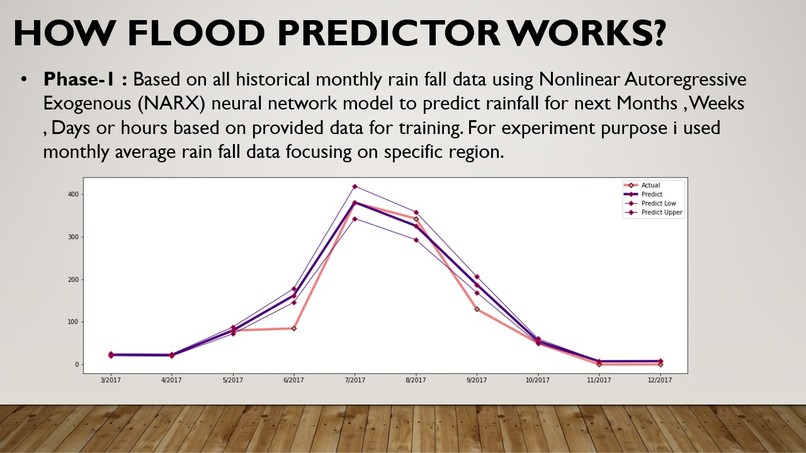
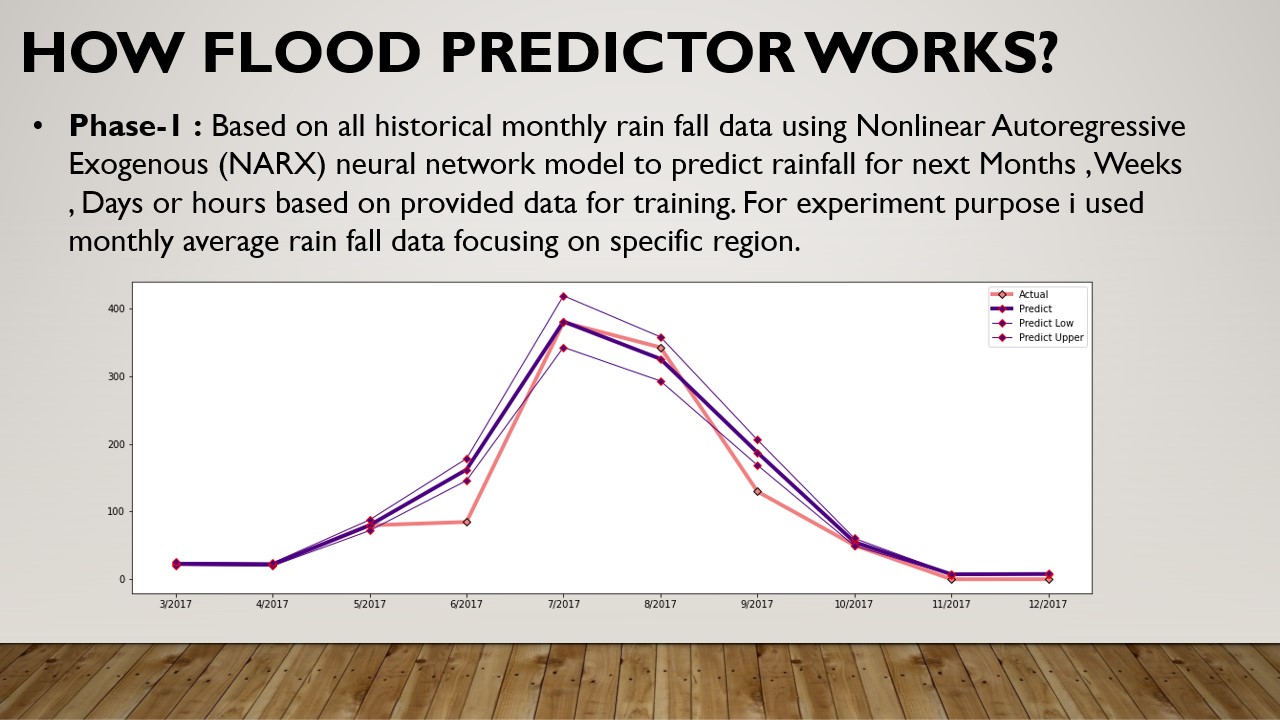
** Phase-1 : ** Based on all historical monthly rain fall data using Nonlinear Autoregressive Exogenous (NARX) neural network model to predict rainfall for next Months , Weeks , Days or hours based on provided data for training. For experiment purpose i used monthly average rain fall data focusing on specific region.
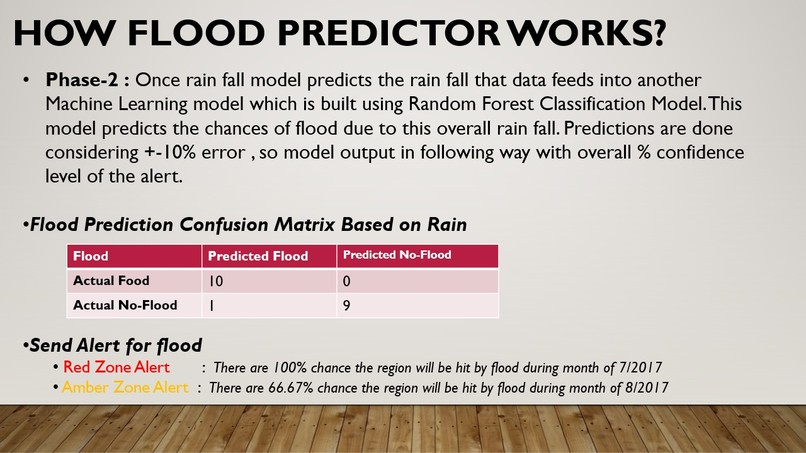
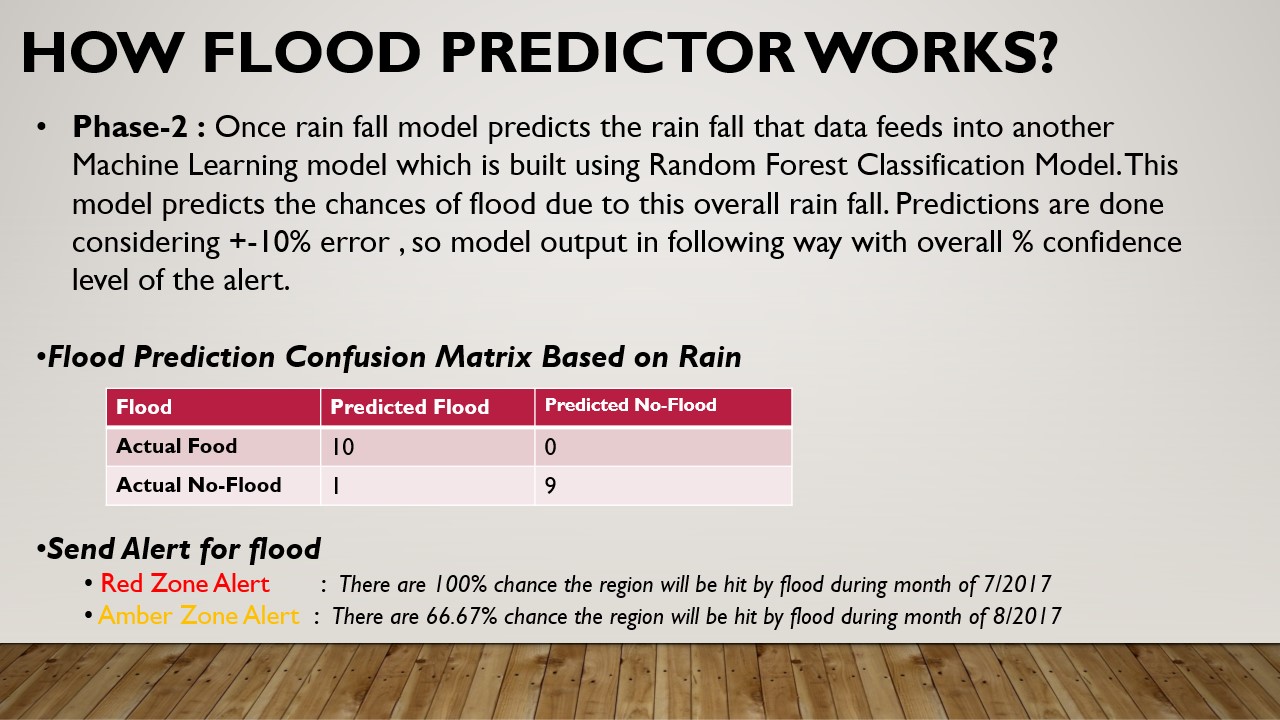
** Phase-2 :** Once rain fall model predicts the rain fall that data feeds into another Machine Learning model which is built using Random Forest Classification Model. This model predicts the chances of flood due to this overall rain fall. Predictions are done considering +-10% error , so model output in following way with overall % confidence level of the alert.
Flood Prediction Confusion Matrix Based on Rain
10 0
1 9
Send Alert for flood
Red Zone : There are 100% chance the region will be hit by flood during month of 7/2017
Amber Zone : There are 66.67% chance the region will be hit by flood during month of 8/2017
Challenges we ran into
Biggest challenge was collecting data for rainfall and flood which is not easy considering different states use their own process and mechanism for it. I end up dropping email to different departments which includes central government and state government to manage to gather some relevant data to for model building. But as part of next steps got commitment from the state government if i manage to demo the model and working of it they will support it from data requirement side as part of their own project.
Accomplishments that we're proud of
Manage to communicate and establish that relation with state government to get any future data Able to build the model from scratch which gives quite high accuracy on different test data sets as shown in example here.
What we learned
Key thing is data and cleansing of data with clear objective of what end outcome I want to achieve help a lot. Focus on small problem and subset first prove it and then take next step
What's next for Flood Predictor
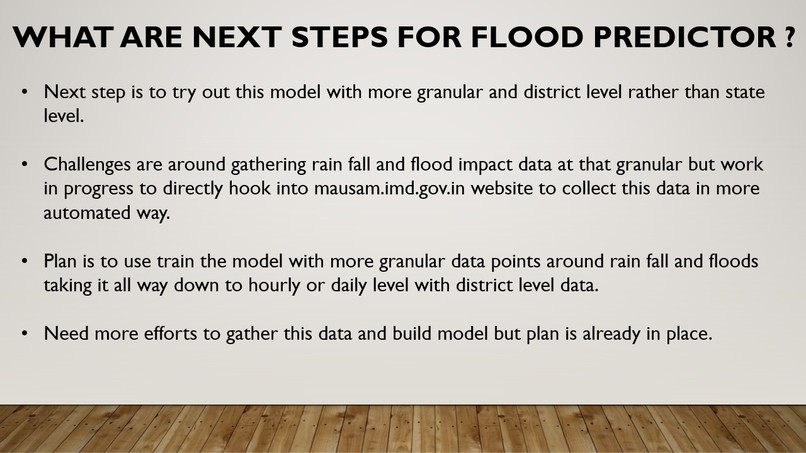
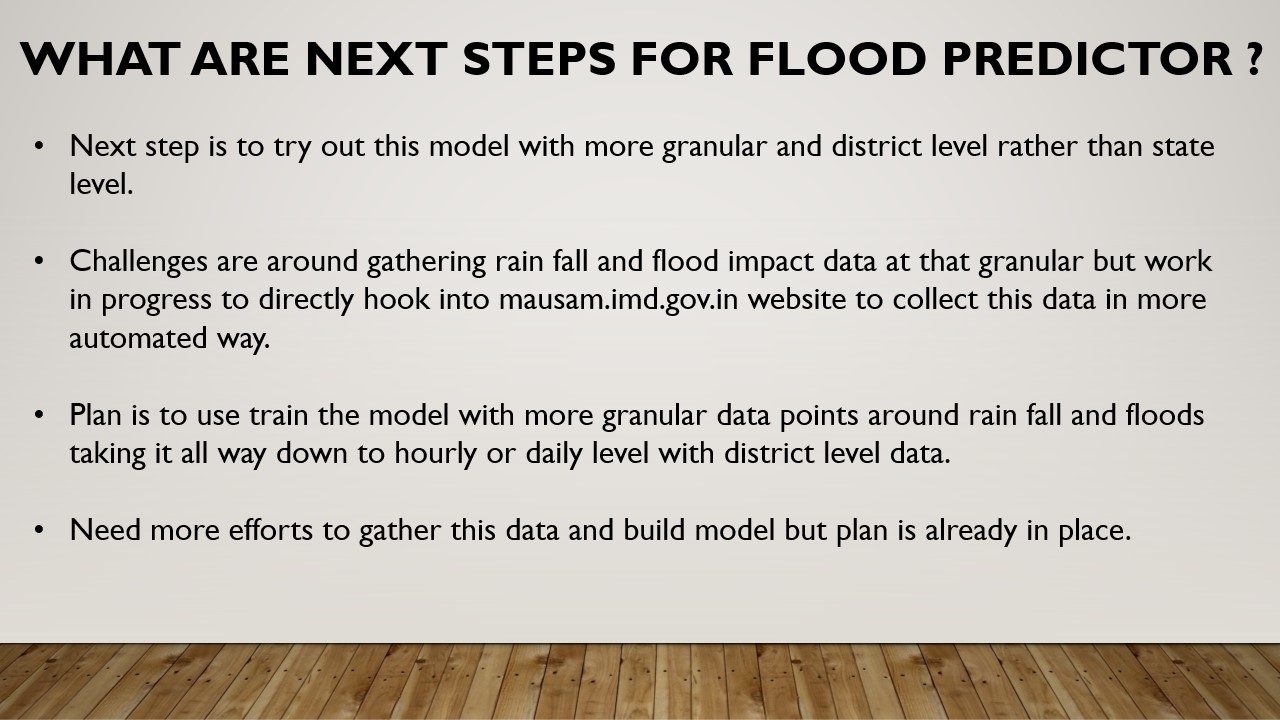
Next step is to try out this model with more granular and district level rathe than state level. Challenges are around gathering rain fall and flood impact data at that granular but work in progress to directly hook into mausam.imd.gov.in website to collect this data in more automated way. Plan is to use train the model with more granular data points around rain fall and floods taking it all way down to hourly or daily level with district level data. Need more efforts to gather this data and build model but plan is already in place.

Log in or sign up for Devpost to join the conversation.