-
-
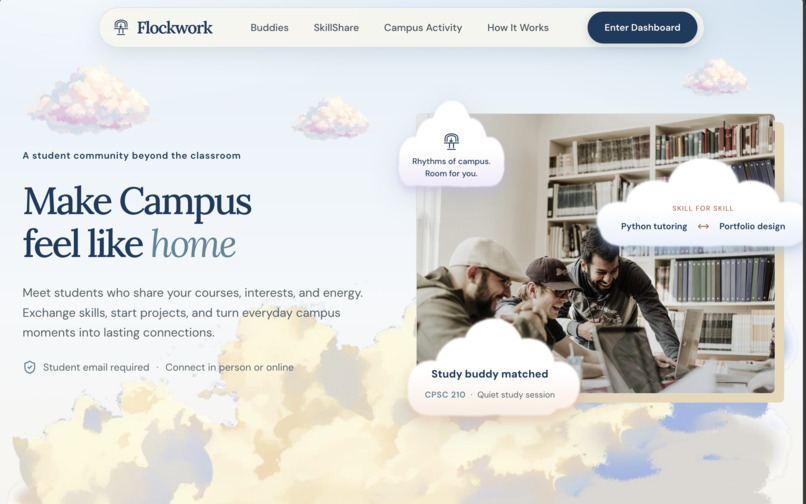
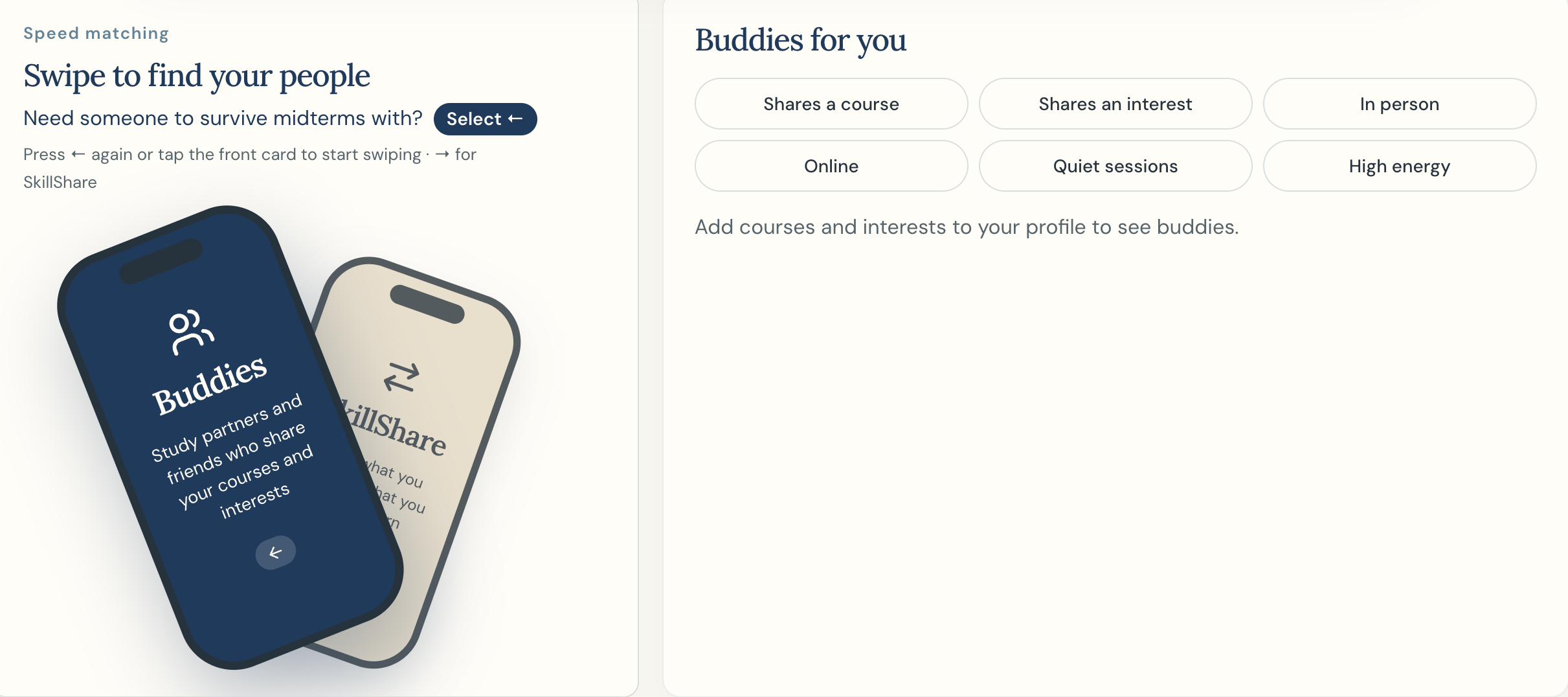
Landing Page
-
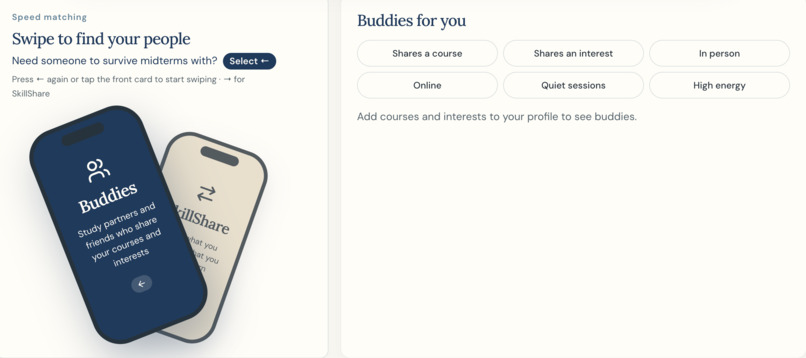
Empty Buddies Page
-
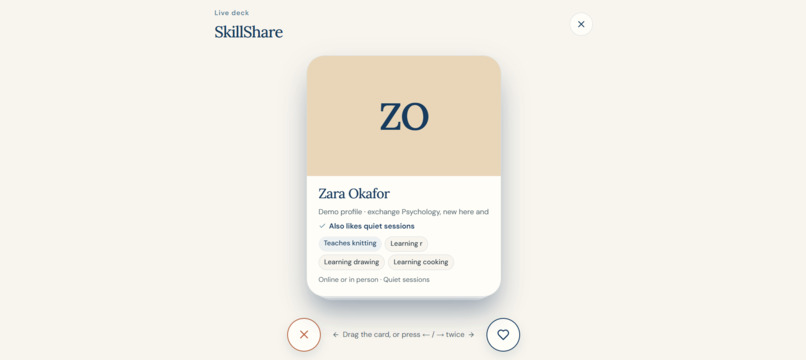
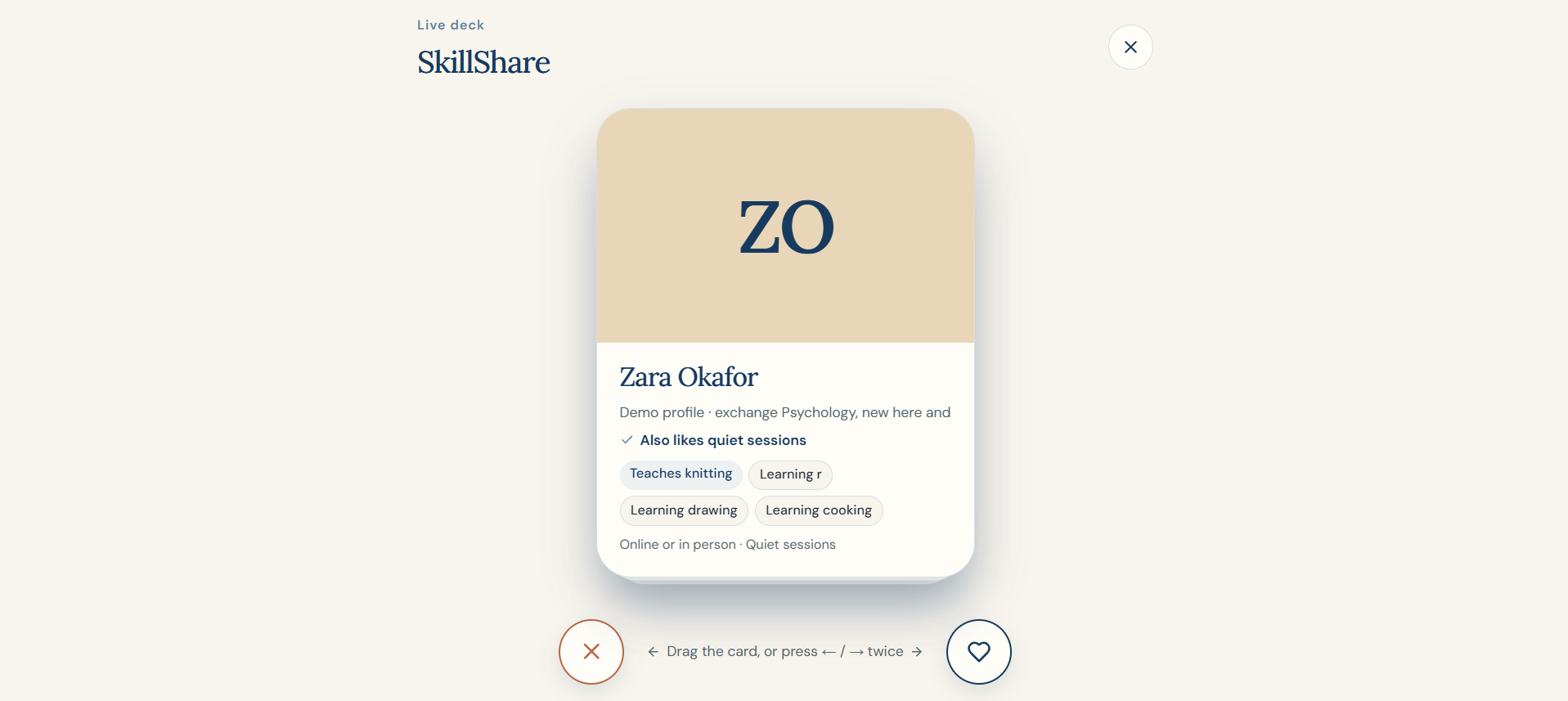
Swip right!
-
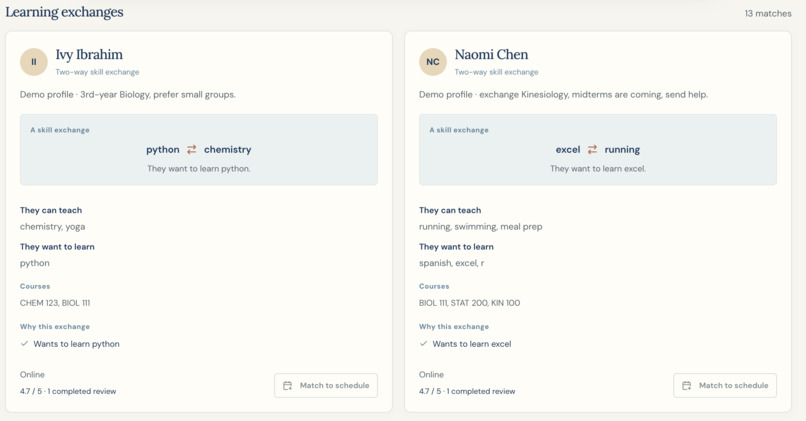
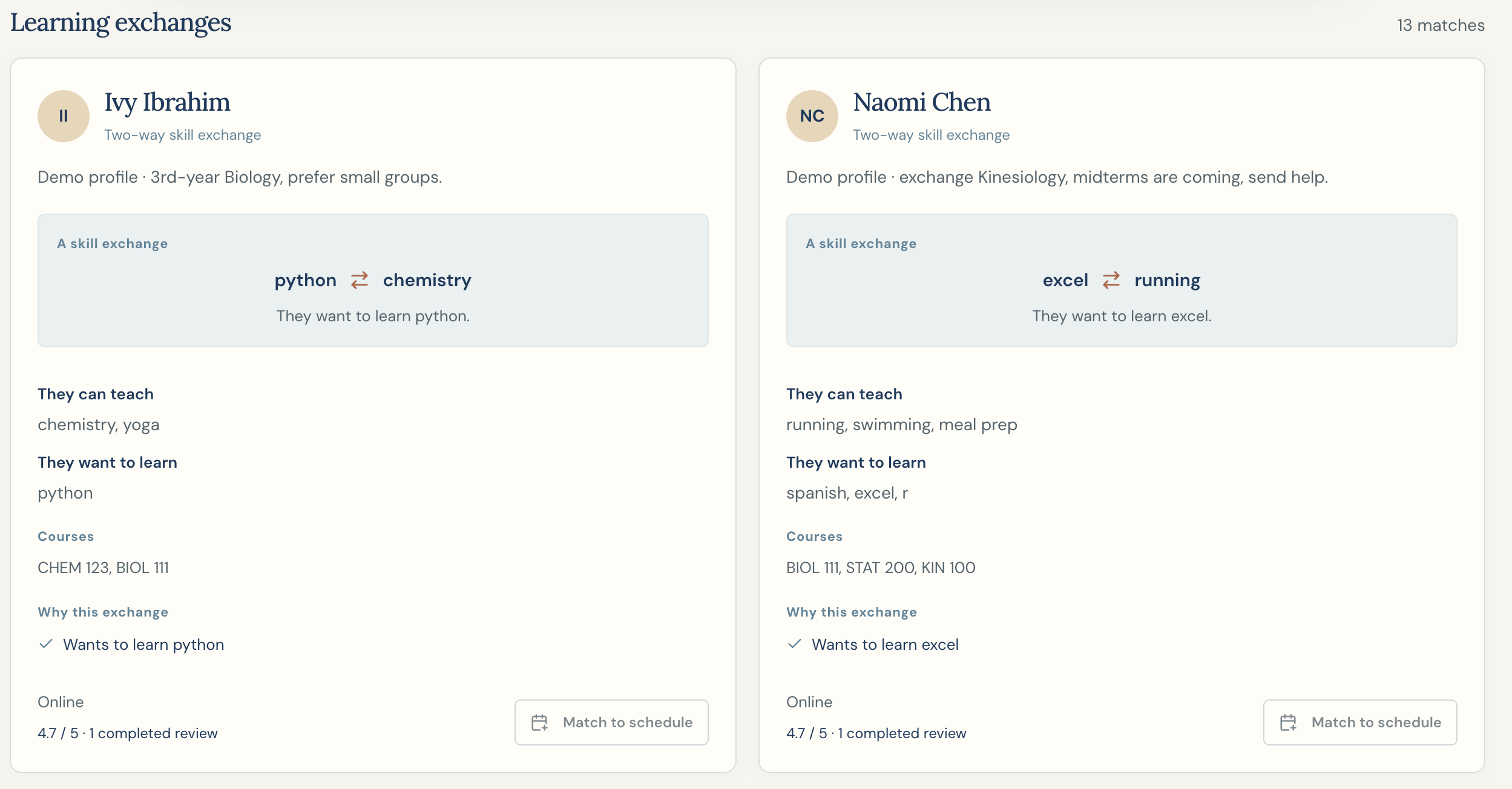
Example SkillSwap Page
-
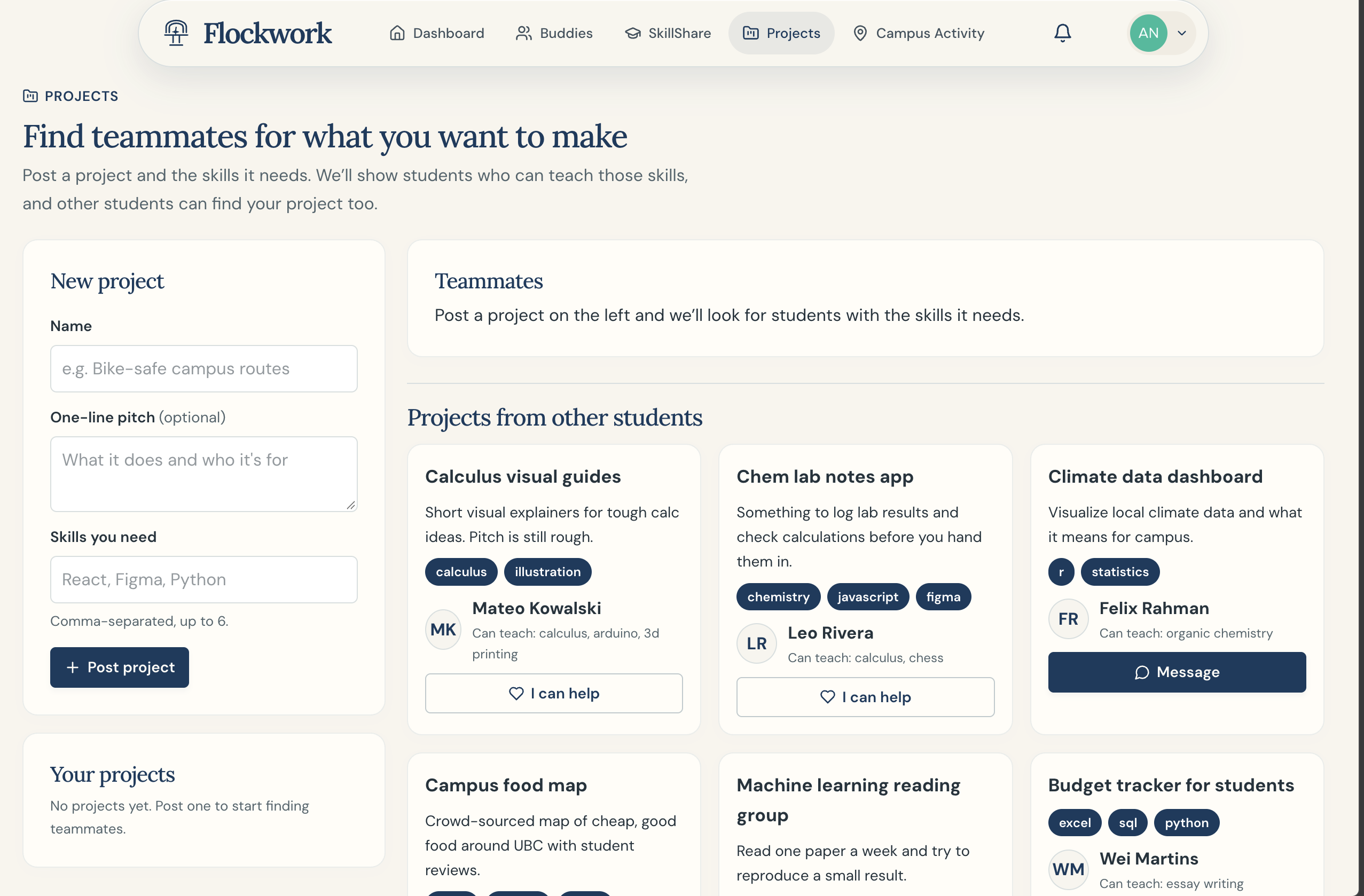
Example Projects Page
-
Profile
-
Inspiration
UBC has more than 50,000 students, yet 44% of students name loneliness as an issue, having the feeling that they don't have anyone they can ask — not just for weekend plans, but also for a study partner, a mentor in a skill they can't afford to tutor for, and even practical safety problems like whether a lease is safe to sign
Sure, Reddit may take the question, but the thread gets buried and dies before anyone who can help replies.
Problem Statement:
Isolation at campuses similar to UBC derives a plethora of issues, such as degraded social skills and mental health problems, which all eventually serve to hinder students' future lives.
Flockwork is unique in that it is a middle ground toward having the informal connections built on Reddit but still having the closeness and localness of Canva
What it does
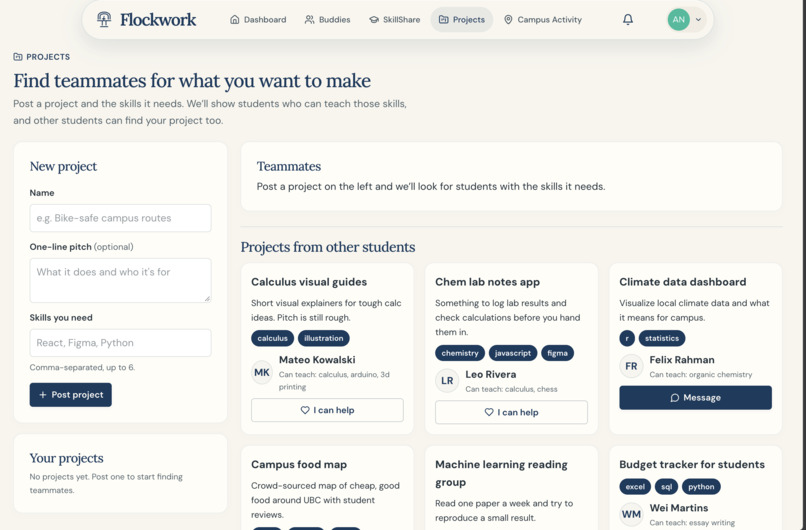
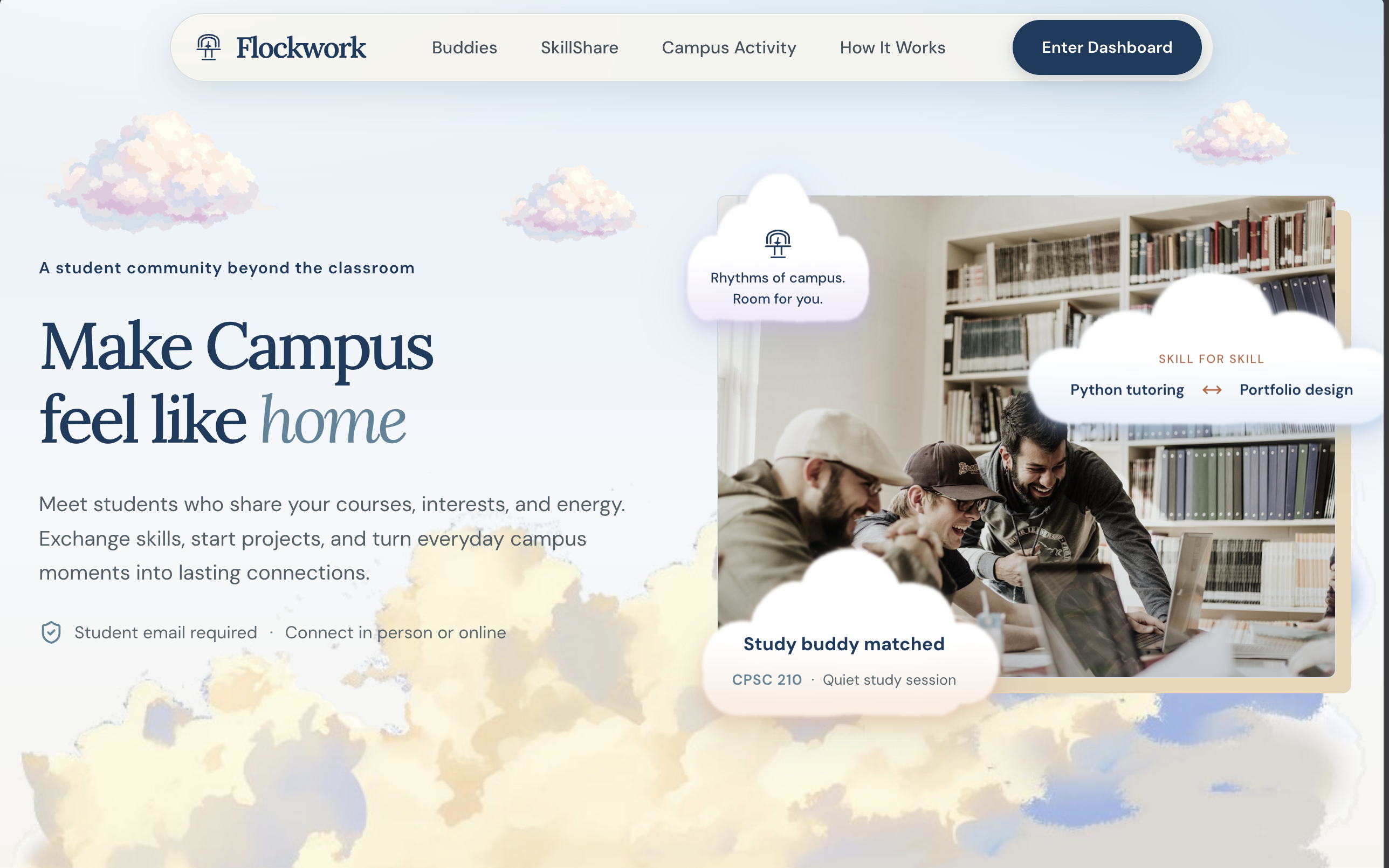
Flockwork is a privacy-conscious campus community platform that helps students turn shared interests, skills, and goals into meaningful connections all for the end goal of decreasing loneliness and all the countless benefits that come with that. Built initially for the UBC community, it brings together three core experiences: Buddies, for finding compatible peers, SkillShare, for offering or discovering practical knowledge, and collaborative projects, for forming teams and turning ideas into real work, stemming as a branch of SkillShare. Students can use profiles and tags to communicate what they care about, what they can contribute, and what they hope to learn, making it easier to find the right people beyond their existing classes or social circles. University-email authentication and a community-focused design help create a trusted, student-centred environment, while the platform’s worker-based architecture connects these features through a smooth, unified experience. Flockwork’s goal is to make a large campus feel smaller, more welcoming, and more collaborative. Collectively, Flockwork aims to go beyond having simple exchanges between students, but instead, providing strong reasons and incentive for these fellow peers to meet back up again, potentially beyond the scope of simple walks or tutoring sessions!
How we built it
Flockwork is a community hub for *verified students. *
Students sign up with their email. Auth0 checks it, so people are sure they are talking to a real student.
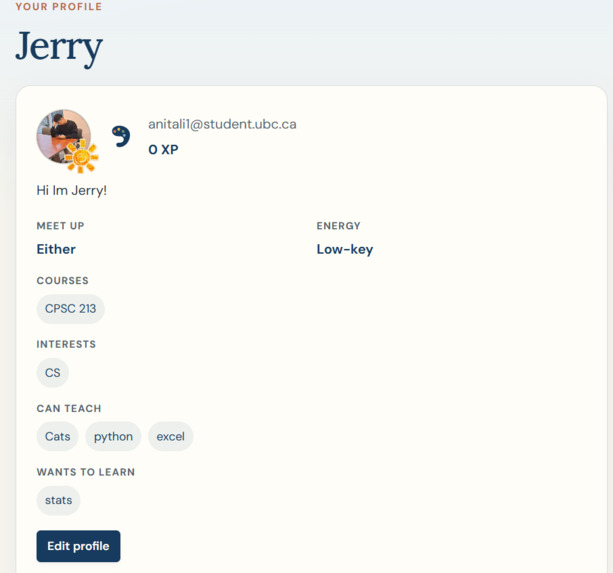
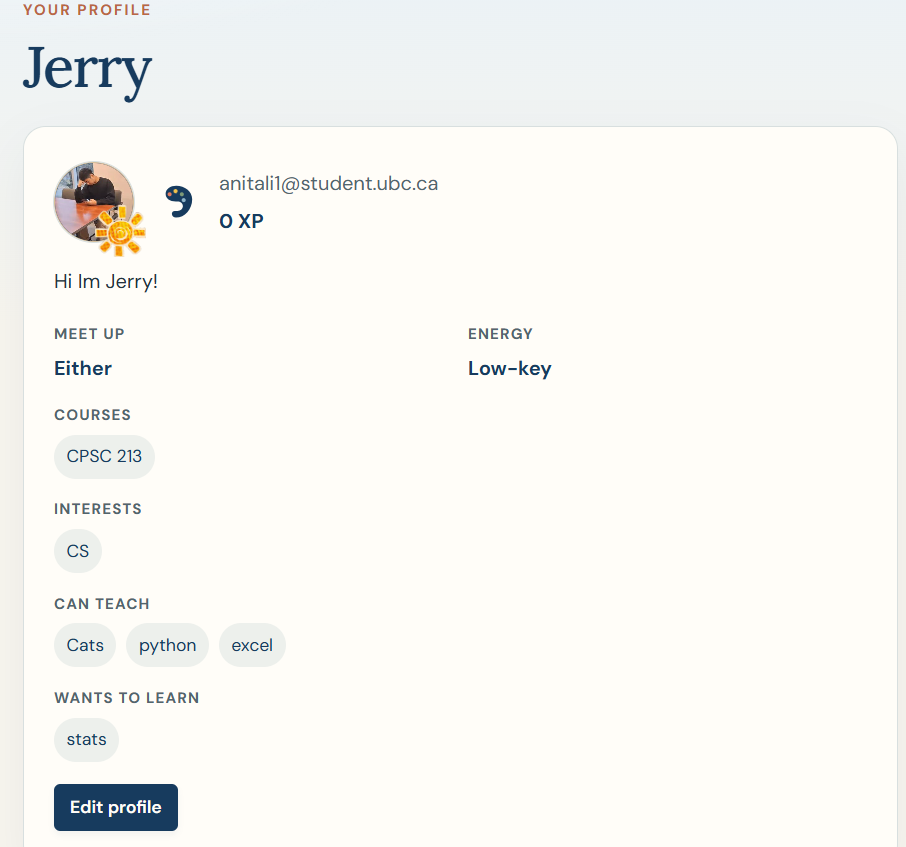
Following is a profile, unique to themselves: courses, interests, a skill they can teach, a skill they want to learn, whether they want to meet in person or online, and the energy level of that meetup. Alongside two main features
1# Flock up: students are greeted with a Tinder-like swipe system to show people who share similar interests; you are given the option to 'swipe right', and if both parties 'swipe right', you will be flocked!
2# Skill share: presented with a separate deck, each swipe contains a person with a unique skill that is interested in sharing and learning something new
Of course, in both cases users will have the option to use a more traditional filter-sort view to flock up with others!
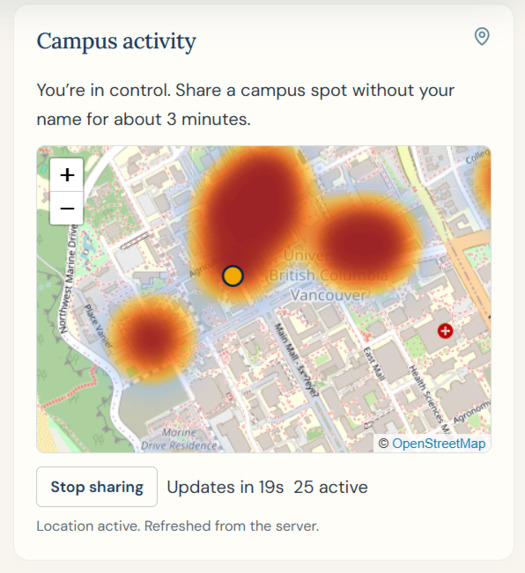
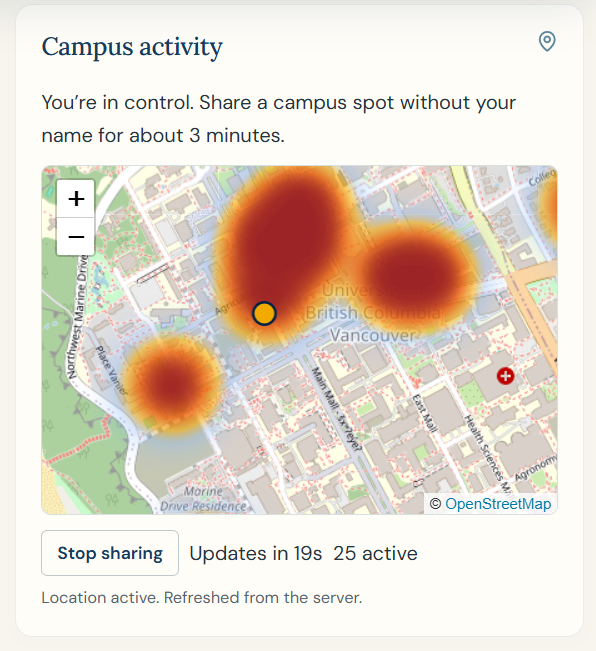
The campus map stores activity by area. Students see where campus is busy. They do not see a live dot on another person.
Challenges we ran into
The new part of us was connecting services that each had their own unique way of running. We integrated Auth0, DeepSpace, and our own API together before. Each one was intuitive when we followed the shape it was built around, and that turned into the best learning of the weekend.
Accomplishments that we're proud of
We are really proud of the solution that we used to make a match worth a second meeting. A one-sided swipe feels like a dating app and then fades. We required both students to like each other, and we gave them a useful reason to show up: a shared course, or a skill that goes both ways.
What we learned
Auth0 is built around a verified identity. A student logs in with the UBC email, Auth0 sends the one-time code, and our API reads the email from the token. We do not ask the browser to submit an email and then trust it. Setting up the callback, the audience, and the token check felt confusing for an hour. After that, the flow was obvious, because the security lives in Auth0 and the app only checks the proof.
DeepSpace is built around the app itself, providing a really interesting insight into the design aspects of how DeepSpace is run. We learned to build the pages inside that structure instead of treating the host as a folder we upload at the end.
What's next for Flockwork
Looking ahead, we plan to use Gemini to turn opt-in “About Me” profiles into summaries and skill tags, enabling more relevant buddy and project matches. We also want to expand Flockwork beyond its current features with practical community tools such as subletting and lost-and-found boards. Longer term, Flockwork could support communities beyond UBC, allowing each organization to customize its branding and features while defining its own server-enforced verification rules—such as institution-specific email domains—without compromising privacy, safety, or community trust.
Deepspace Write-Up
For Flockwork, a campus community platform that helps students find buddies, share skills, and collaborate on projects, we used DeepSpace as our production application and delivery layer. DeepSpace deploys our Vite-built React client alongside a Hono-based Worker, allowing active user flows to run through one managed application: worker.ts provides public runtime configuration, Auth0 callback routing, campus and WebSocket endpoints, and same-origin proxying to our independently deployed FastAPI backend. This architecture improves usability and security by avoiding production localhost dependencies, reducing cross-origin complexity, and keeping environment-specific configuration and secrets outside the repository, while Auth0 and FastAPI retain responsibility for identity and token verification. We deliberately kept the backend and database on Vultr, using DeepSpace where it added the most value: managed Worker and asset hosting, stable public routing, environment bindings, deployment logs, release tracking, and rollback support. That separation let our team iterate quickly without obscuring infrastructure ownership or creating an operational burden for a hackathon project. DeepSpace also supported our evolution from our initial prototypes to our final MVP Flockwork. The result is a working, thoughtfully scoped product at flockwork.app.space, with DeepSpace embedded in the sign-in, configuration, API, and deployment paths that students actually use.
Built With
- authzero
- deepspace
- geminiapi
- html
- javascript
- liondata
- python
- react
- vultr


