-
-
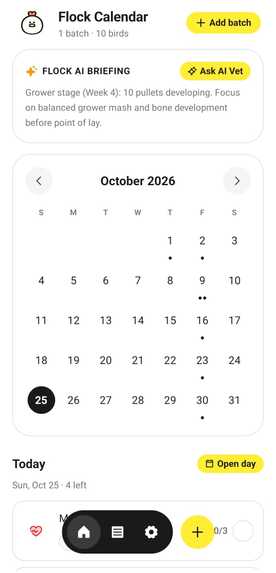
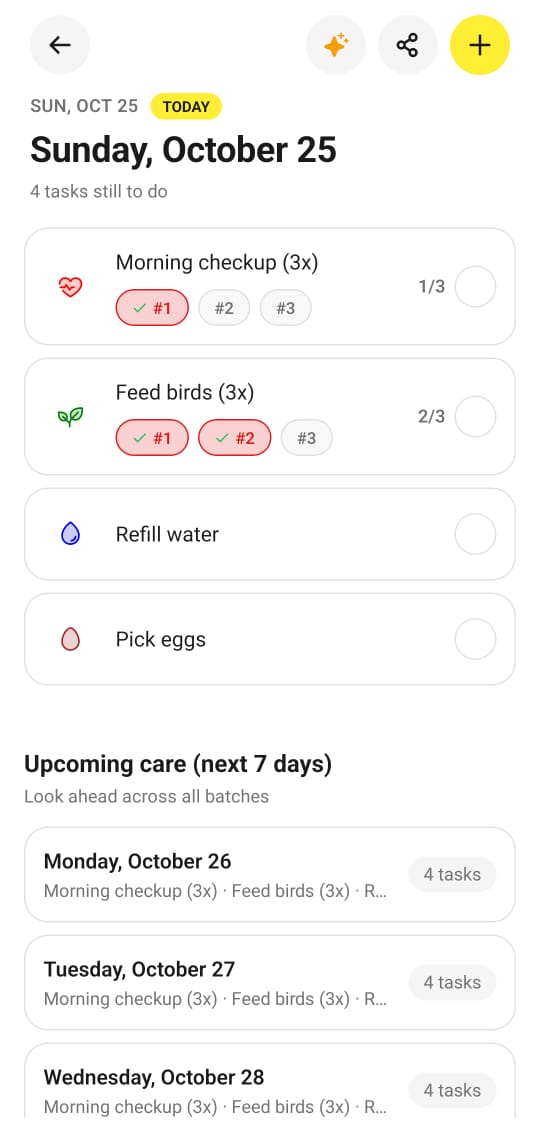
Home Screen Light
-
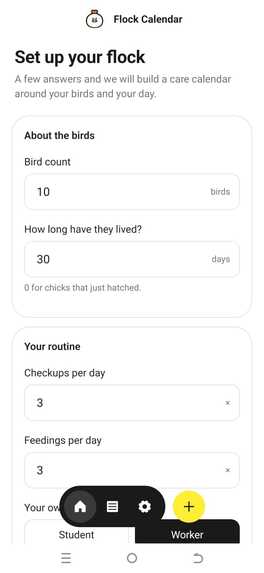
Setup Screen
-
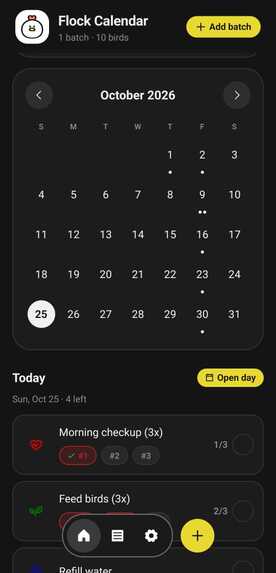
Home Screen Dark
-
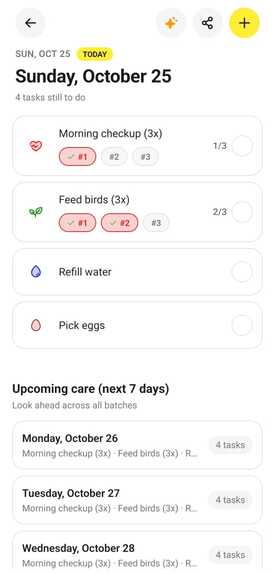
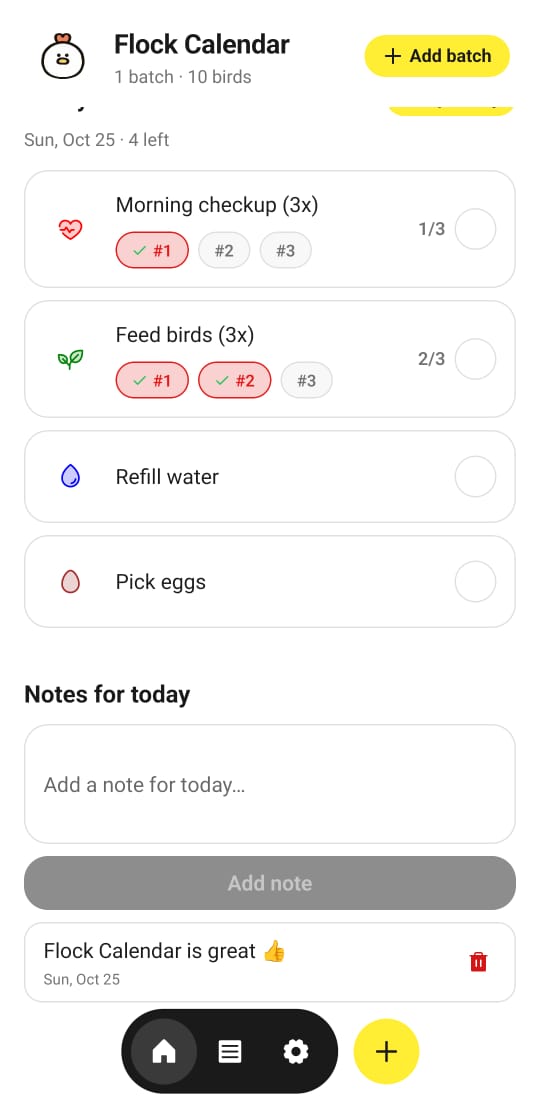
Day Screen
-
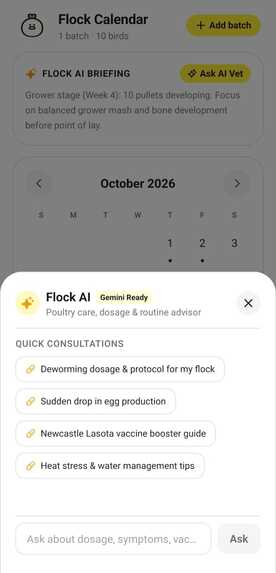
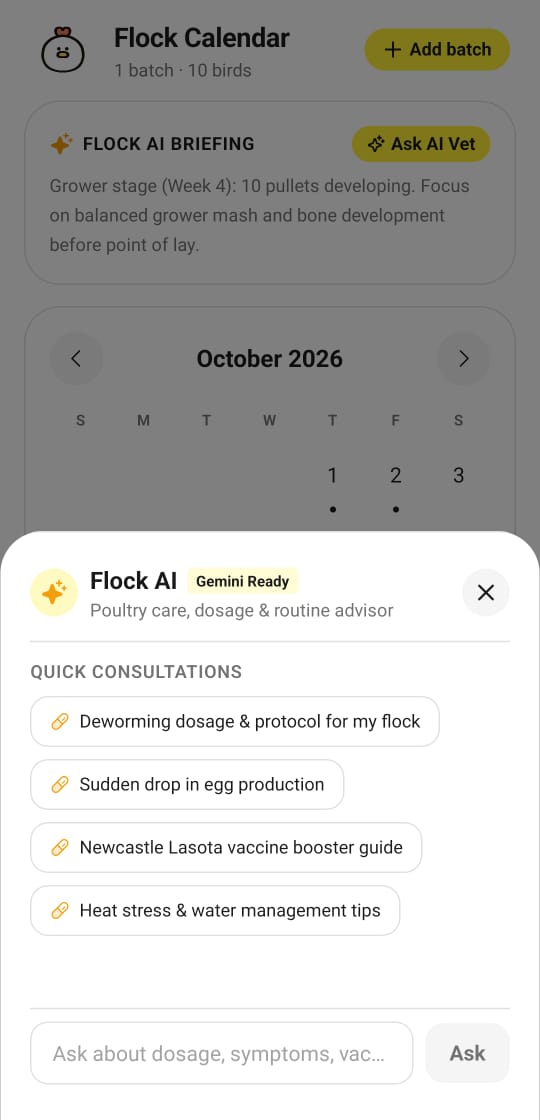
Flock Ai
-
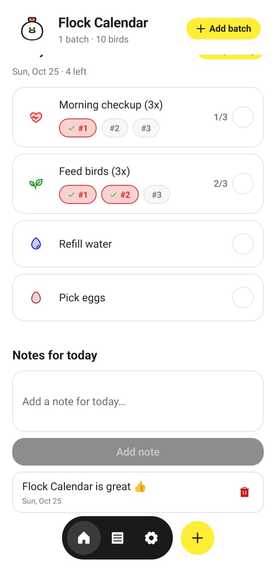
Home Screen
-
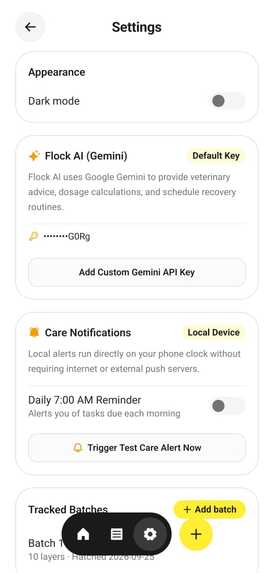
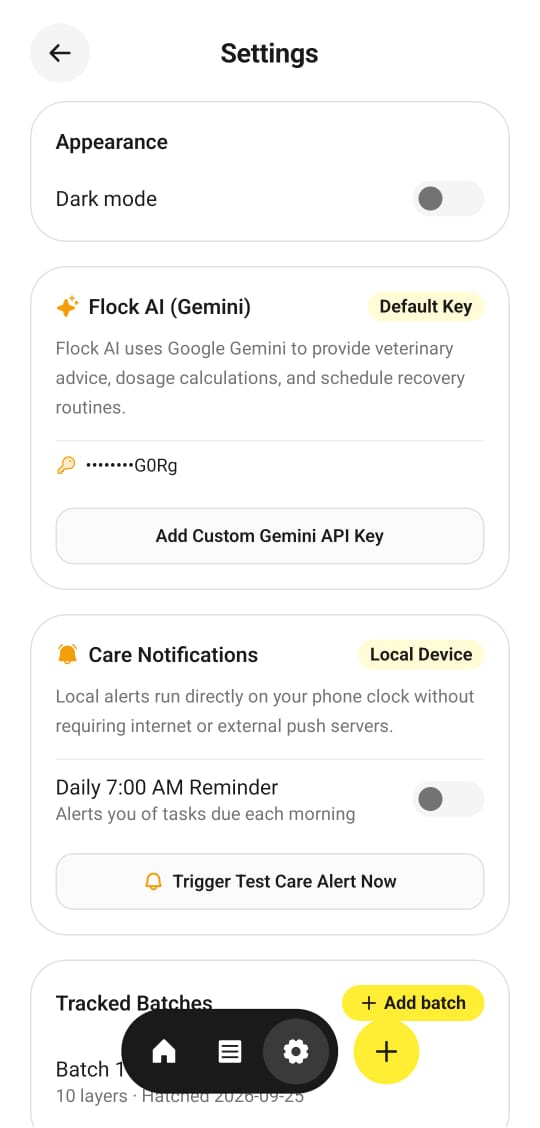
Settings Screen
-
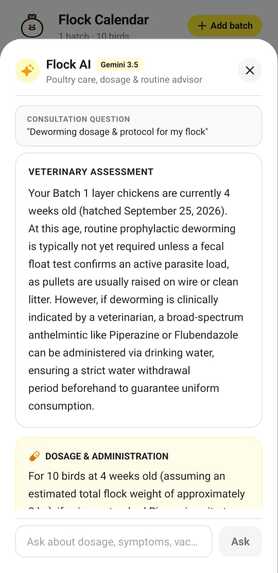
Flock Ai Response
-
History Screen
Inspiration
A friend of mine who manages a poultry farm told me that one of the main issues he faces when rearing birds is having to keep track of all the daily care tasks. He usually tracked routines on paper, but could still easily forget them. I realized a mobile app would be the best solution because a phone is always readily accessible and harder to overlook. Building it as an app also allowed me to add powerful features like automated routine generation and veterinary AI insights.
What it does
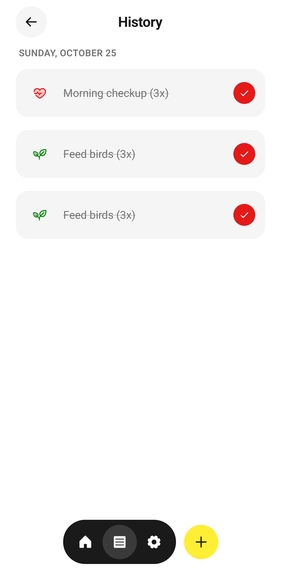
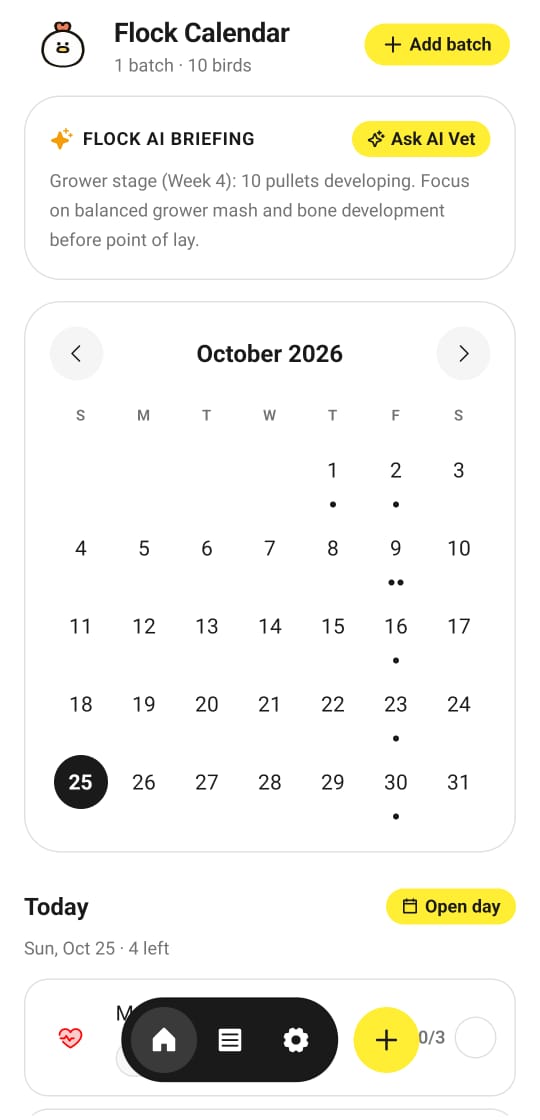
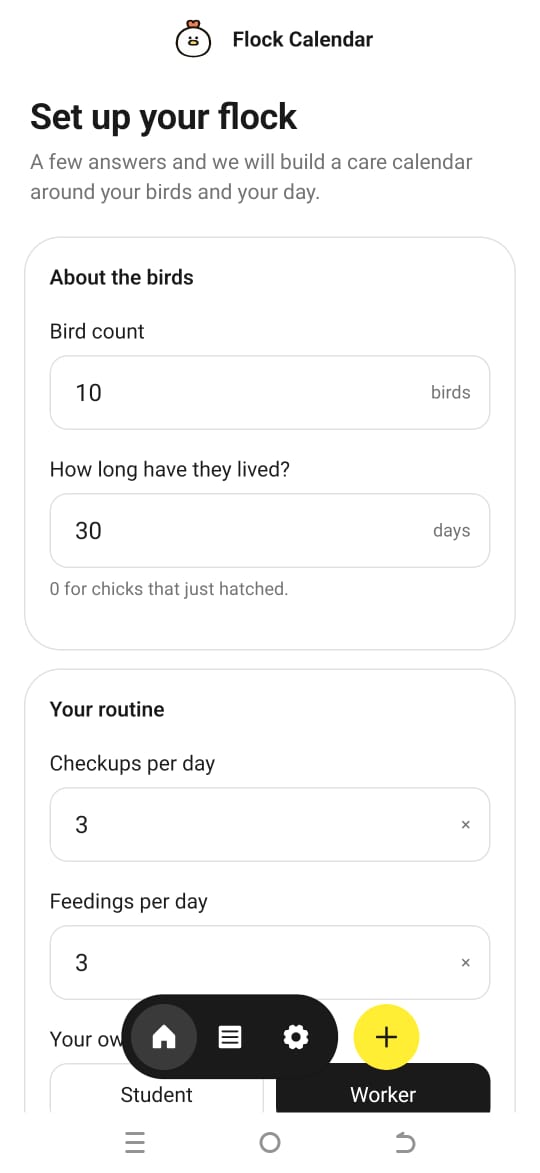
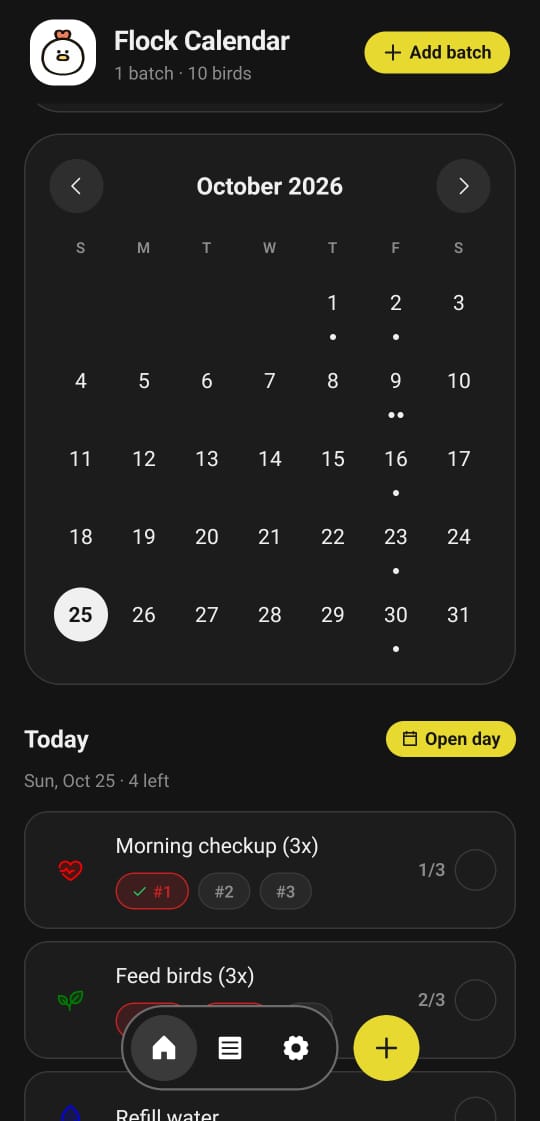
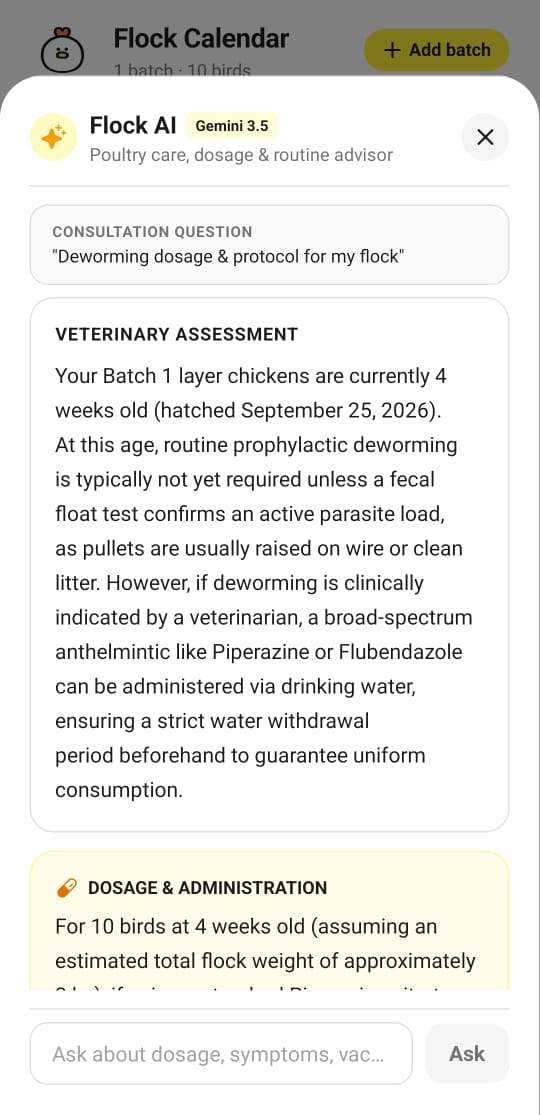
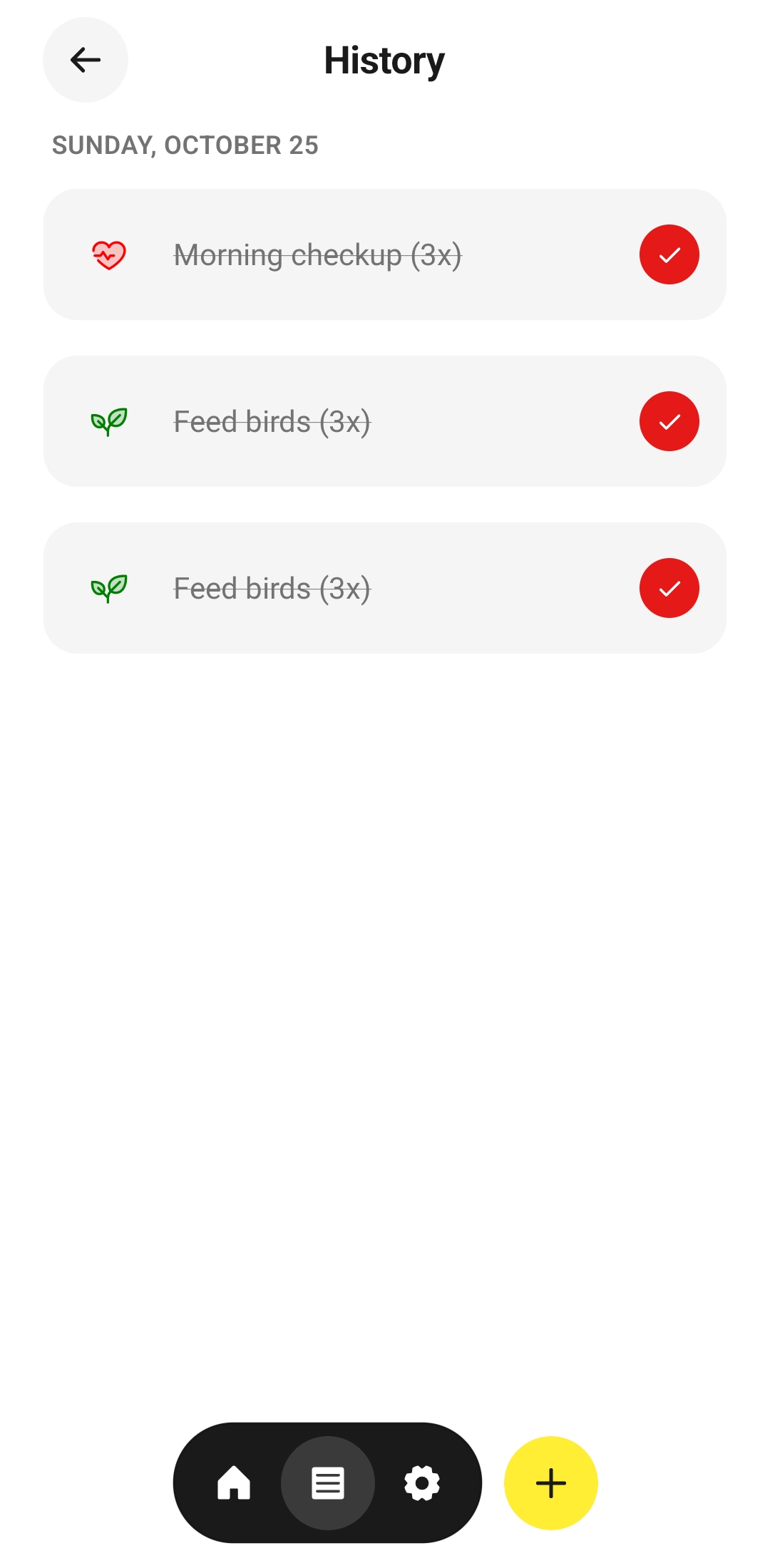
Flock Calendar allows poultry farmers to enter details about their layer batches—such as bird count, bird age in days, and daily feeding and checkup routines—and automatically generates an age-based care calendar and daily task checklist. The app features an AI veterinary advisor powered by Google Gemini (with Bring Your Own Key support and an offline expert fallback). The AI analyzes flock batch details to provide veterinary care advice, calculate exact medication and water dosages based on flock size, and automatically inject recovery routines directly into the calendar. Farmers can manage multiple batches, check off multiple daily feeding instances (e.g. 3× per day), keep dated farm notes, share daily task lists with farmhands via WhatsApp or SMS, and set local daily morning care reminders.
How we built it
Built with React Native and Expo SDK 58 (Expo Router, Expo Notifications), TypeScript, NativeWind (Tailwind CSS), Phosphor icons, and AsyncStorage for 100% offline-first persistence. Powered by Google Gemini 3.5 Flash Lite with an offline rule-engine fallback. I designed and developed the app in direct collaboration with my course mate, Monday Samuel Chidera, who provided the real-world poultry domain expertise and care workflows from his layer farm. We developed the codebase using AI pair-programming tools, starting with OpenCode before transitioning to Google Antigravity to architect, build, and polish the application.
Challenges we ran into
First, a persistent UI challenge was getting the native Android navigation bar contrast to sync unreliably during dynamic dark/light theme switching. Second, coming up with the right concept was initially difficult until my course mate shared his real-world poultry struggles, giving the project a clear, grounded purpose. Finally, tooling was a major hurdle: the free models I initially accessed via OpenCode produced underwhelming results and made flawed architectural decisions that required extensive manual debugging, refactoring, and UI redesigns. This prompted my switch to Google Antigravity, which provided the deeper reasoning needed to untangle the codebase and implement the complex multi-batch scheduling logic.
Accomplishments that we're proud of
I really love how clean, responsive, and intuitive the UI turned out. Most of all, I am proud that I had Monday Samuel Chidera test and use it firsthand, and he confirmed that the app is practical and reliable enough for him to actually use in his daily flock management.
What we learned
I learned how to manage and communicate with AI coding agents far more effectively. Clear communication has become a crucial bridge when conveying an idea to an agent so it builds what you actually intend, and this project sharpened my communication skills significantly. I also sharpened my user research and interview skills. This was the first time I conducted an in-depth investigation with an end-user to understand their exact pain points; it took patient questioning to uncover Chidera's specific scheduling hurdles. Finally, I deepened my understanding of mobile development and system architecture through the sections I manually refactored and guided the agent to build.
What's next for Flock Calendar
I have sent the app to Chidera, and he is providing ongoing feedback from his daily farm use. Hopefully, after further iteration, testing, and refining these core workflows, I plan to officially launch Flock Calendar on the Google Play Store and Apple App Store in the future.
Built With
- antigravity
- expo.io
- opencode
- react
- reactnative
- typescript

Log in or sign up for Devpost to join the conversation.