-
-
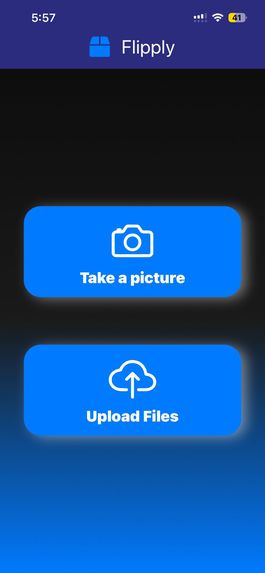
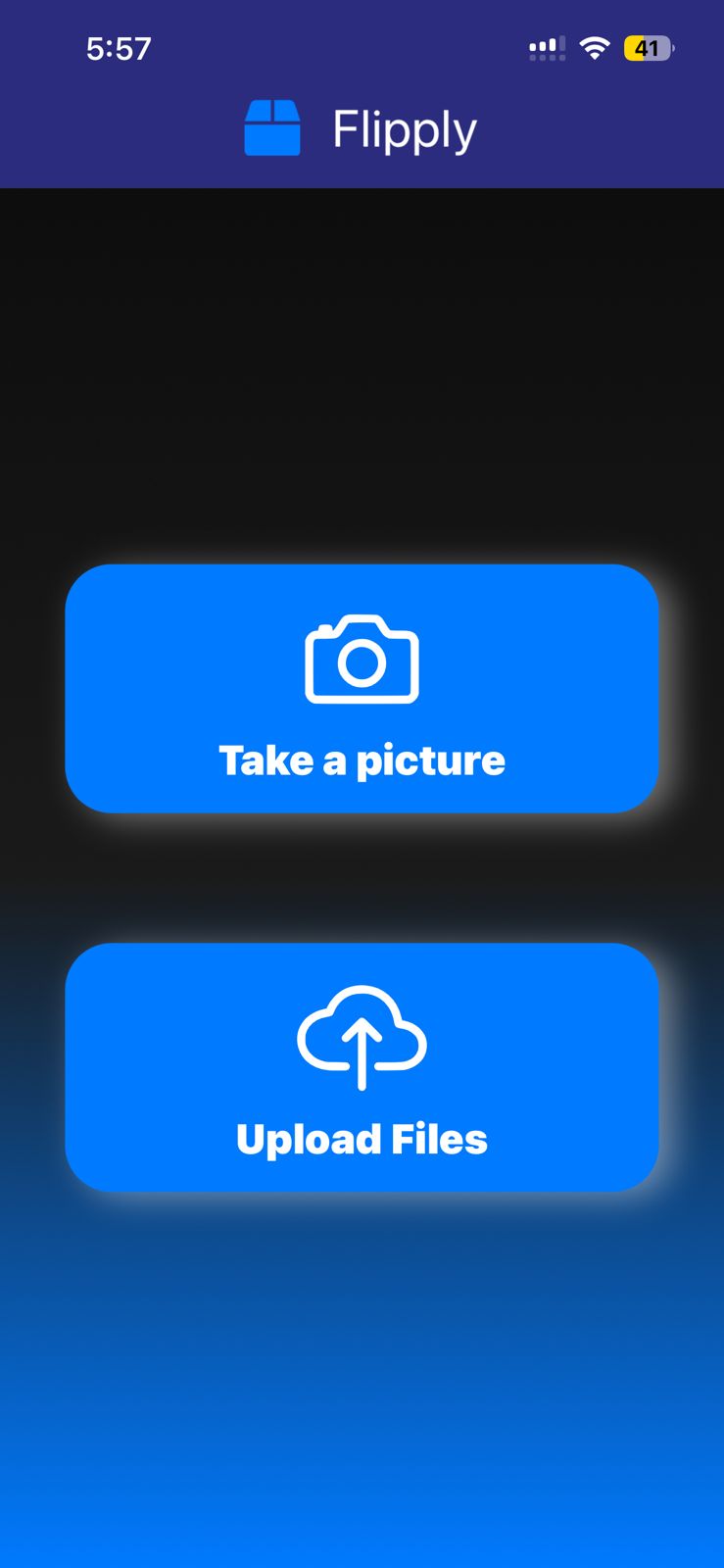
User receives the option to choose between taking a picture or uploading the picture from the gallery
-
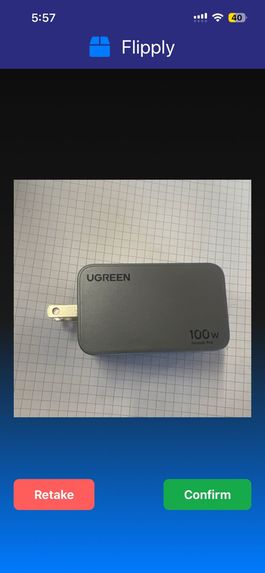
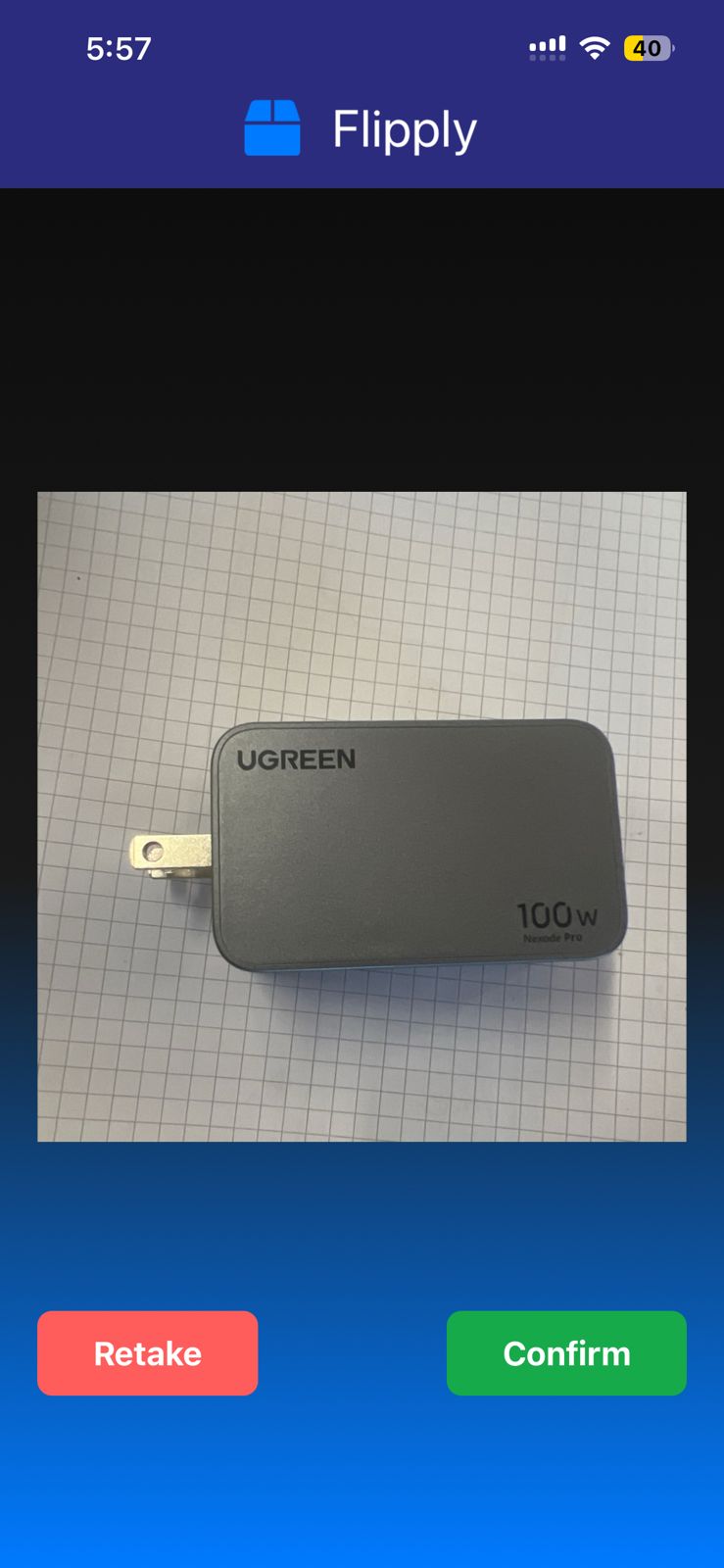
Example of an image uploaded by a user to analyze and receive the suggested price and product details
-
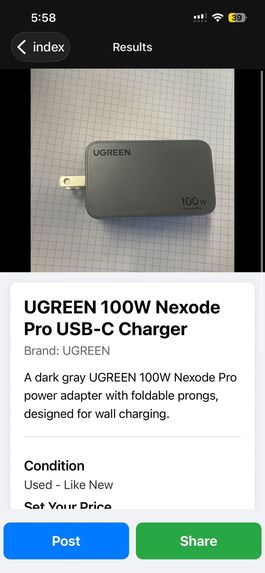
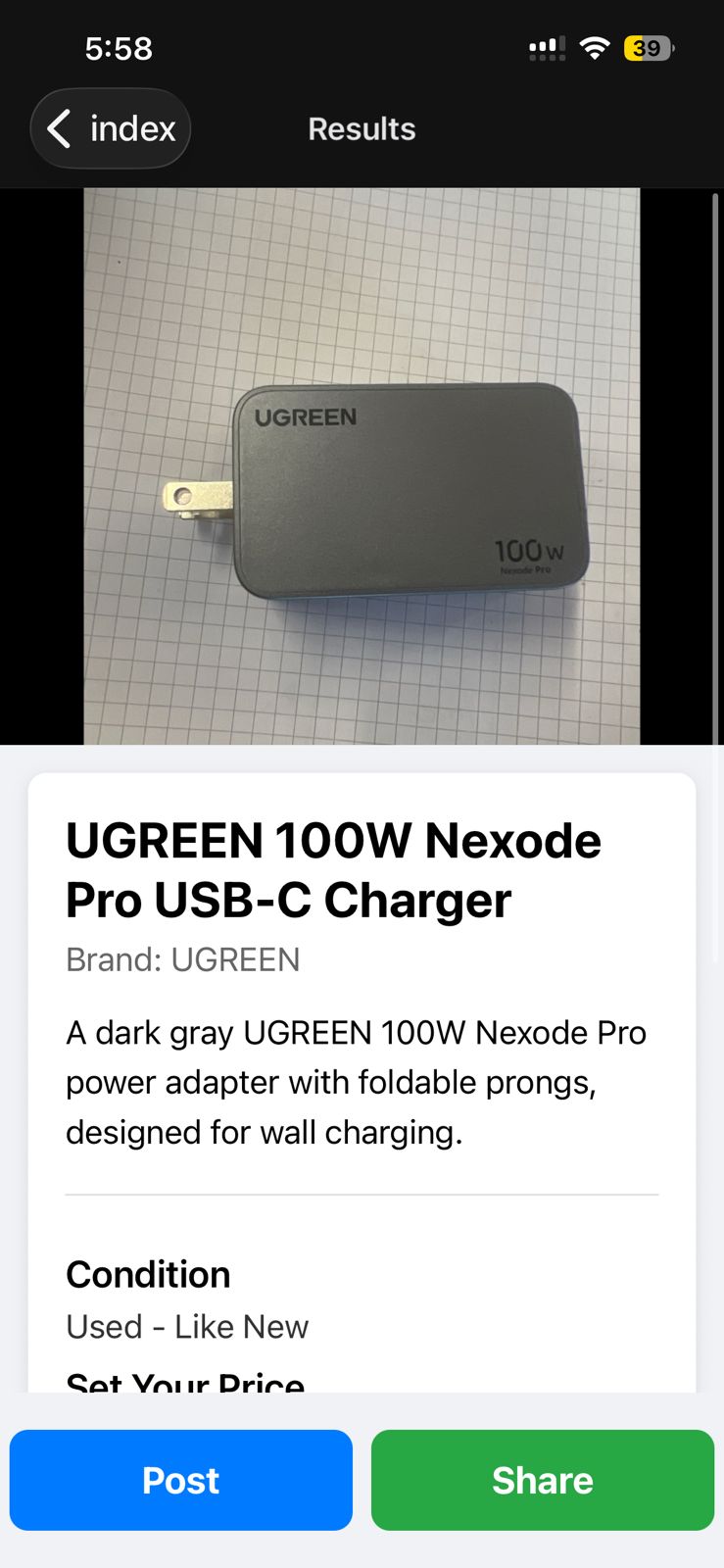
Details like the name of the product, it's brand, and a brief description about the function and condition of the product
-
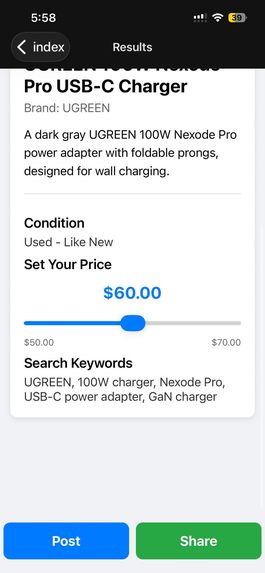
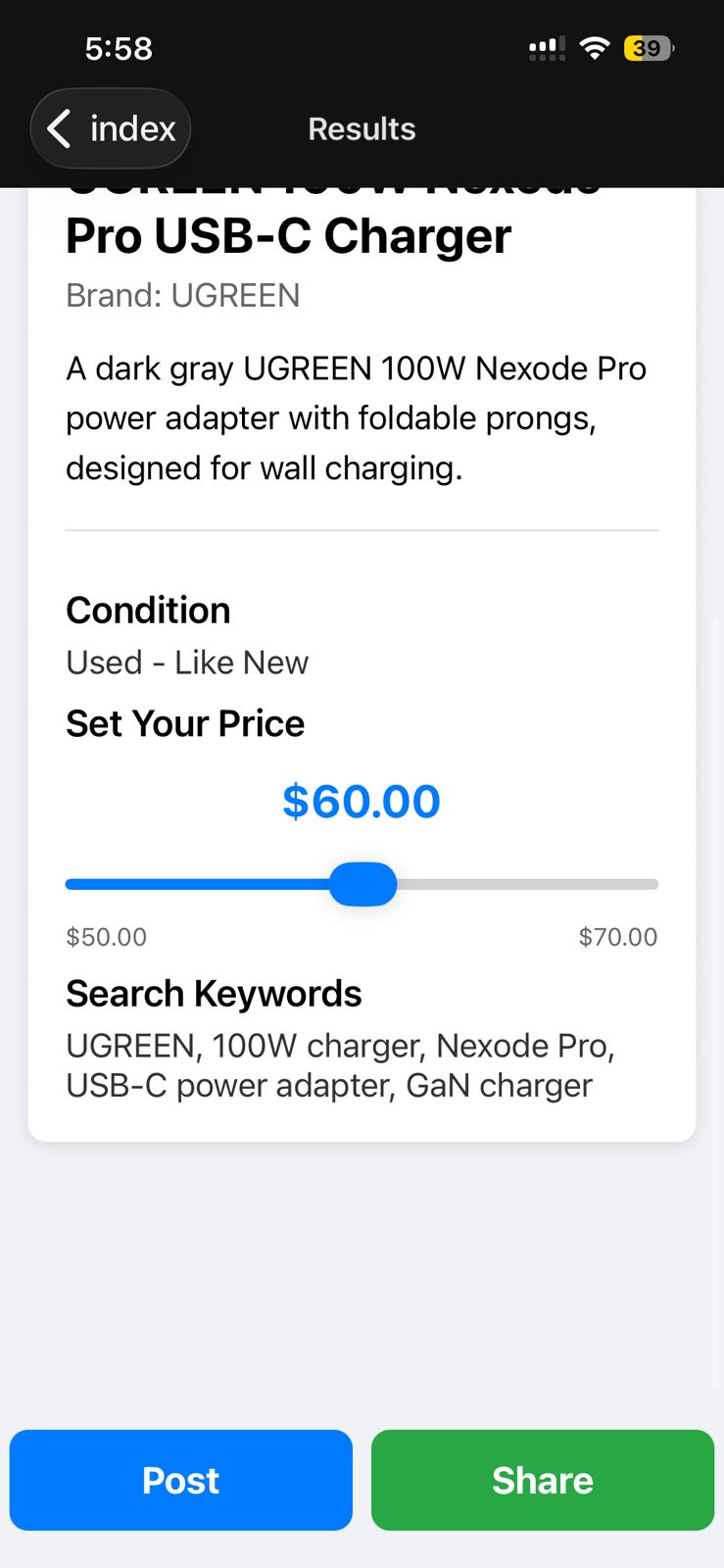
Price selector with the suggested price in blue, keywords to investigate more if the user wants and the post and share options
-
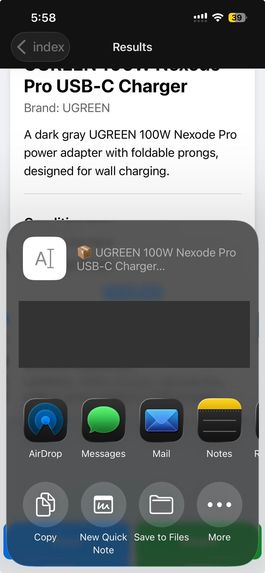
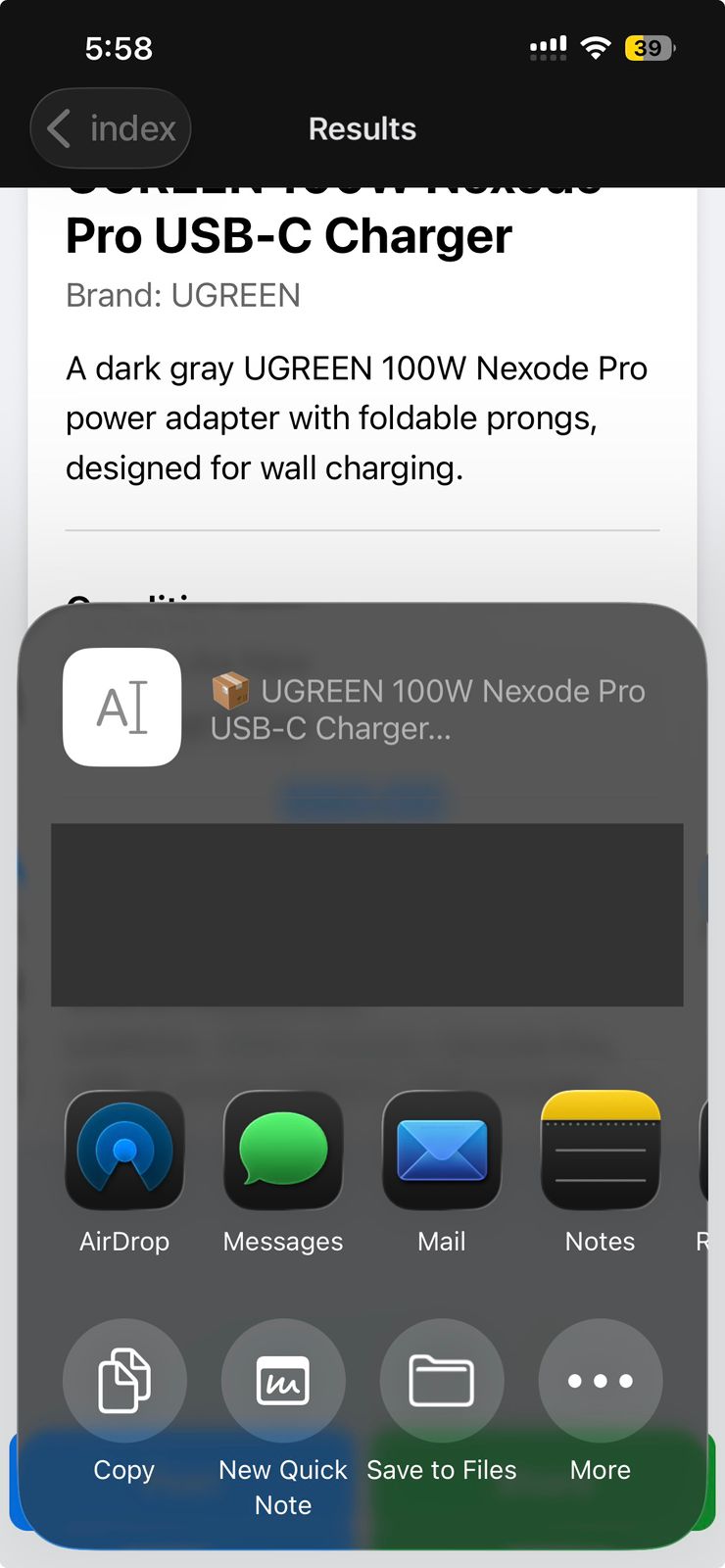
Share button functionality, including the copy function to make it easier for the user to share/use listing details manually
Inspiration
- E-commerce brought in a total of $27 trillion USD in sales in 2022. One of the bigger players in achieving this goal was eBay, considerably the most important second-hand e-commerce company. Contradictly, nearly 75% of general merchandise value (GMV) on eBay was made by the top 20% of sellers on eBay, showing a clear discrepancy in seller visibility when comparing small and large sellers.
- Listing on any e-commerce website is time consuming, whether on Facebook Marketplace, Amazon, or eBay. The opportunity cost for large sellers and smaller sellers dedicating time towards implementing an SEO-optimized listing for maximum buyer impressions is vastly inequitable, with smaller sellers having more to lose when having to compare to larger sellers who have more "flashy" and "optimized" listings.
- Flipply was idealized as a way to ensure digital marketplaces ensure equity among large and small sellers, leveling everyone's opportunity cost and facilitating a level playing field for all sellers, while maintaining an efficient environment for all prospective buyers.
- Additionally, the overall goal for Flipply is to facilitate sustainability by making it easier for all users to dispose of unwanted goods/items in an environmentally friendly way.
What it does
- Flipply was designed to make selling things online easier for all users. By giving a user the ability to take a snapshot of an item with the intention to sell, Flipply sends the image to an LLM (Gemini) to fetch more information about the product itself, establish product condition, and generate a title and description for the product page.
- Additionally, Flipply establishes a realistic price range for the product a user wishes to sell by analyzing and comparing current price trends with product demand. Whilst Flipply determines a reasonable asking price, it is ultimately up to the user whether they would like to skew more towards a higher asking price or a lower asking price while remaining within current acceptable asking price ranges as dictated by Flipply.
- Flipply makes selling easier by integrating itself with the eBay API to autonomously format and parse selling information to automate a listing on the eBay platform. Flipply turns what could've been multiple iterations of trial and error into a fully working and functioning listing with comprehensive data in only a click of a button.
- Whilst Flipply is currently only directly compatible for seamless listing integration with eBay, Flipply gives you the option to copy to your clipboard the information that it gathered for seamless use on other selling platforms.
How we built it
- The project itself consists of a front end and a backend.
- Frontend:
- First, the frontend render the landing home page, which gives the user the option to take a photo or use a prexisting photo in their camera roll for upload. After selecting (or taking) their photo of choice, the photo is uploaded and sent to the backend for processing.
- Eventually, the frontend receives (from the backend) a preprocessed piece of data reflecting the title, description, price range, and more for a proposed listing.
- The frontend then renders this information into a "mock" listing page, however this listing page is able to be edited and altered by the user to ensure the user is satisfied with the details that the backend logic returns prior to sending the information back to the backend to handle POSTing the listing to eBay.
- Backend:
- First, the backend receives a photo sent from the frontend for the proposed item that the user is interested in selling.
- This photo is therefore sent through Gemini API to parse and analyze what item is being depicted in the photo and its corresponding condition, establishing and generating an SEO-optimized title and description, and analyzing current market trends for the item to establish a reasonable range of selling prices for the user to choose from. Once all of this data is received from the API, its sent back to the frontend to be visualized and rendered for the user.
- After the user has made any changes they wish to make to the "mock" listing data they were given and explicitly tell the program they wish to have the listing be created on eBay, the backend takes in the object that contains the data from the "mock" listing page on the frontend to be converted into inputs for the eBay API. After successful authentication, if none was given prior, the backend successfully posts the listing information without any additional interference or confirmation needed from the user directly.
- Frontend:
Challenges we ran into
- Gaining access to eBay's API required acceptance into eBay's Developer Program after manual review, causing delays on overall seamless listing implementation and requiring us to consider fallbacks in case our applications didn't get accepted prior to the deadline.
Accomplishments that we're proud of
Being able to make a seamless listing integration with eBay, providing an almost "agentic" facilitation of selling products for a user, whilst also maintaining importance on user input throughout the process was something that we wanted to prioritize throughout the design and implementation process. Maintaining personalization within the overarching idea of selling.
Being able to make a fully-fledged and embellished eBay listing in a matter of clicks. No need to type anything (if no user edits are suggested).
What we learned
- Establishing a realistic, yet impressive and rigorous scope for our project.
- Fallback mindset, ability to adapt quickly and being prepared for things to go wrong.
- Intuitive design is often more simple than it is complex.
- API integration and authentication
What's next for Flipply
- Being able to integrate seamless product listings into eBay was extremely monumental and opens the door to further our cross-compatibility with other seller-centric platforms. The next steps for Flipply will consist of expanding our scope and facilitating a seamless listing experience for other services like: Facebook Marketplace, Amazon, and more.
Built With
- ebay-api
- fastapi
- gemini-api
- git
- github
- javascript
- python
- react
- streamlit
- typescript


Log in or sign up for Devpost to join the conversation.