Inspiration
We've all been at a thrift store holding something up and wondering if it's worth buying, with no fast way to know. And we've all spent way too long hunting for a specific item across Depop, eBay, and Mercari, messaging sellers who never respond, and eventually just paying full asking price. The secondhand market is massive but the experience of participating in it is still completely manual. We wanted to fix both sides of that problem at once.
What it does
FlipIt is a mobile-first autonomous resale agent that works on both sides of the secondhand market.
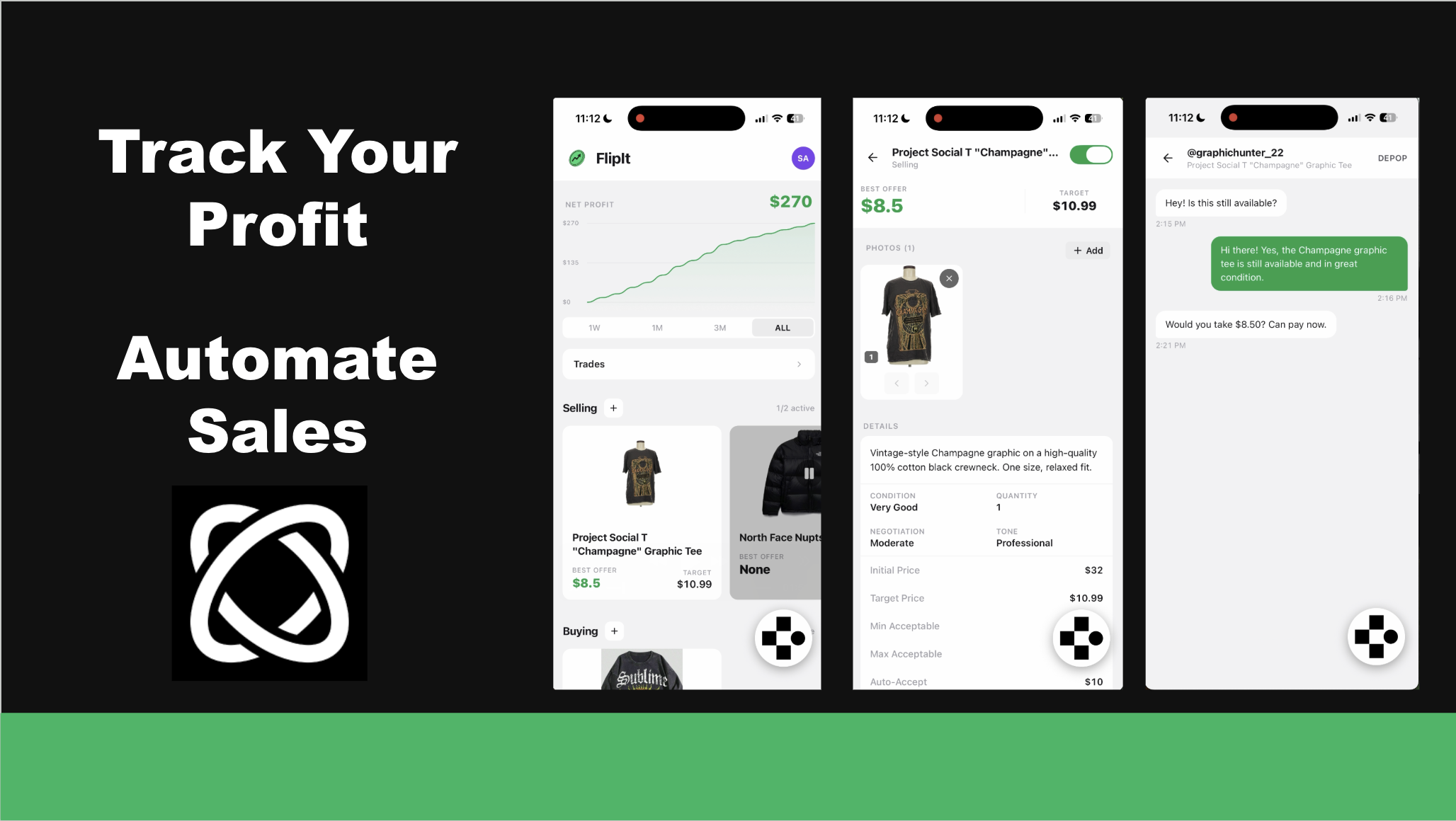
SELL mode: Point your camera at any item. FlipIt identifies it using Gemini Vision, pulls real sold comps from eBay, calculates your exact profit margin after fees, and auto-populates a Depop listing. From photo to ready-to-post in under 60 seconds.
BUY mode: Paste a link or describe any item. Four agents sweep Depop, eBay, Mercari, and OfferUp simultaneously, rank every listing by value, and automatically send personalized negotiation offers to sellers. The app manages the entire hunt and haggle process without any manual effort.
How we built it
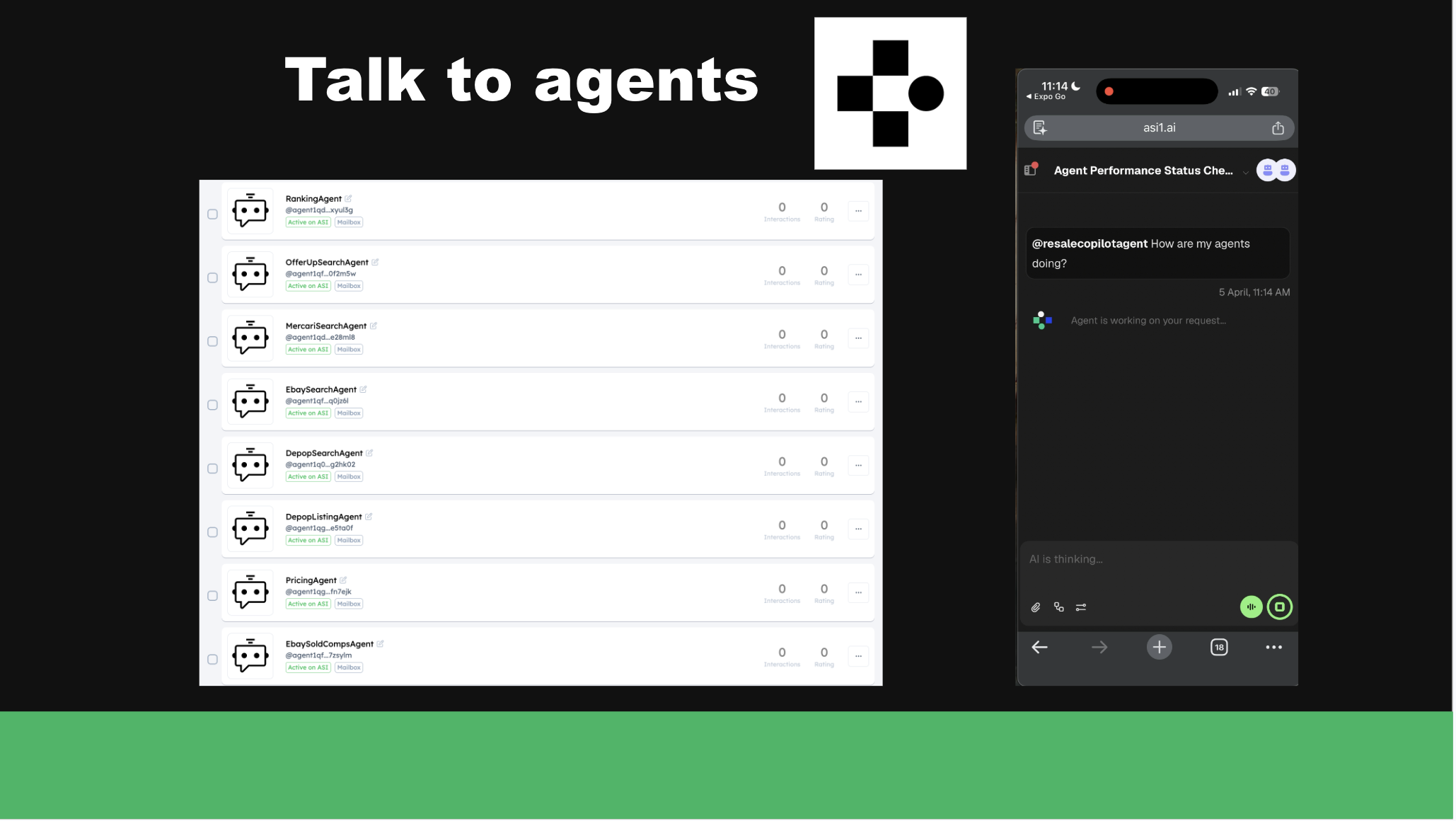
FlipIt runs on ten registered Fetch.ai uAgents, each with a distinct responsibility in either the SELL or BUY pipeline. All ten are registered on Agentverse via Mailbox, implement the Chat Protocol, and are discoverable by ASI:One, which acts as the orchestration layer across the multi-agent network.
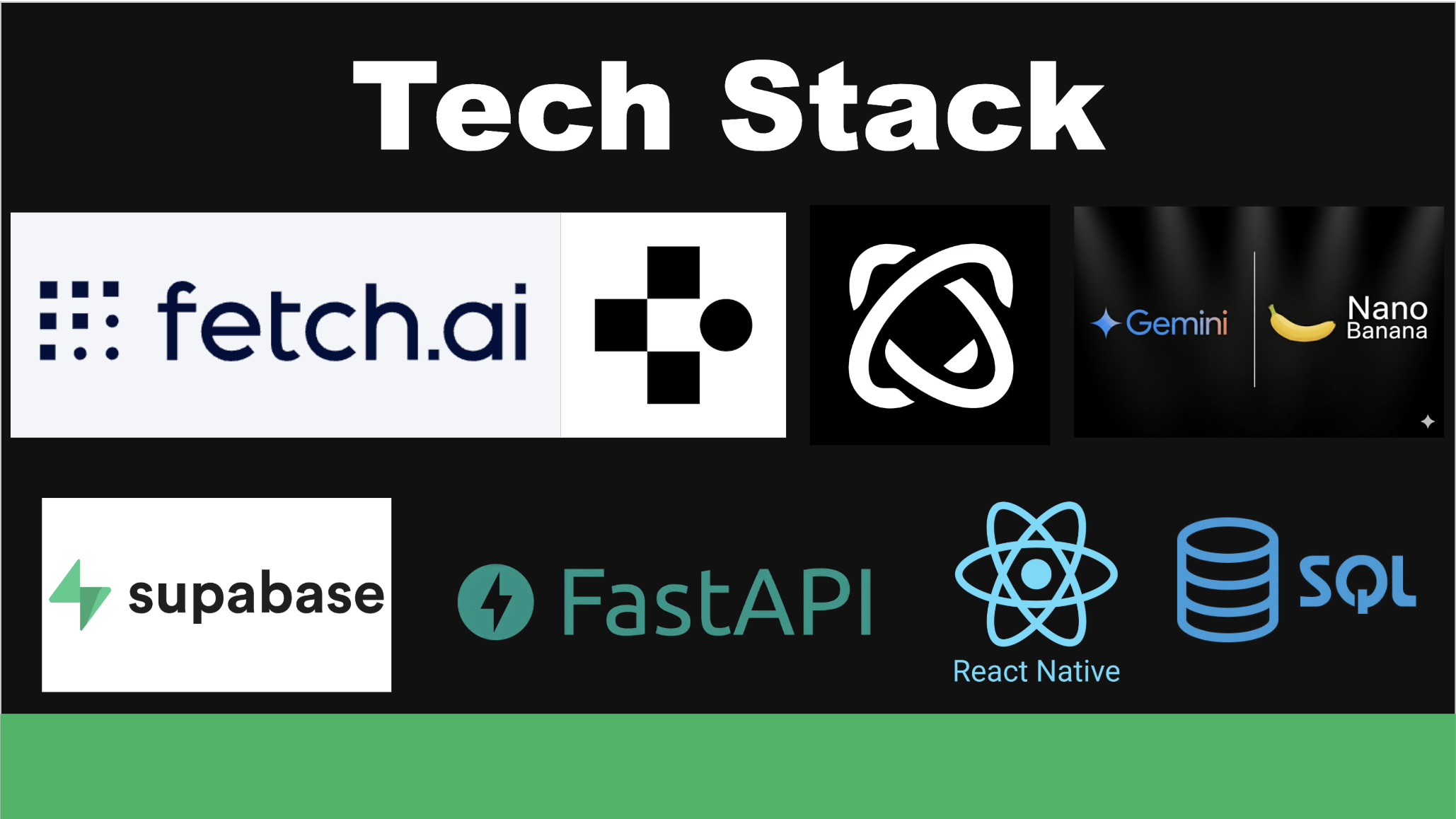
Six of the ten agents use Browser Use to navigate live web UIs, filling forms, scraping real sold listings, and sending messages to sellers exactly as a human would. Gemini Vision handles in-store item identification. Gemini text models power pricing logic, listing ranking, and negotiation message generation. Nano Banana generates clean white-background product photos from raw camera shots.
The mobile app is built in Expo React Native and connects to a FastAPI backend via Server-Sent Events for real-time agent activity streaming. Supabase handles data persistence. The backend mirrors the same ten-agent pipeline as the Fetch.ai layer, giving us two front doors to one agent system: ASI:One for multi-agent orchestration on Agentverse, and FastAPI for low-latency mobile execution.
Challenges we ran into
One of the biggest challenges was the learning curve of working with technologies none of us had used before. Browser Use, Fetch.ai uAgents, the Agentverse Mailbox system, and the Chat Protocol were all new to the team. Getting ten agents registered, active, and communicating correctly under hackathon time pressure required a lot of rapid learning and debugging. ASI:One orchestration in particular took significant trial and error to get working end to end.
Browser Use inside live agent logic was also significantly harder than we expected. eBay bot detection required playwright-stealth and careful timing to avoid blocks. Depop's file input for photo uploads was a known edge case that needed targeted testing. OfferUp's messaging restrictions on new accounts required us to verify functionality before the demo, which added pressure early on.
Streaming real-time agent activity from ten sequential agents to a mobile client via SSE required careful session state management and fallback handling for when individual agents hit timeouts or platform blocks.
On the collaboration side, working across four people on a shared codebase led to merge conflicts that cost us time we did not have. Coordinating the frontend data model, the FastAPI backend, and the agent pipeline across different branches meant we had to be deliberate about how we split ownership and when we merged. We learned quickly that communication about who owns what file matters as much as the code itself.
Accomplishments that we're proud of
Shipping a genuinely two-sided product in 24 hours. Most resale tools address only sellers or only buyers. We built autonomous pipelines for both, end to end, with real agents navigating real platforms and sending real messages. The NegotiationAgent sending live offers to actual sellers and receiving replies during the demo is something we are especially proud of.
We are also proud of the ten-agent Fetch.ai architecture. These are not tool calls dressed up as agents. Each is a discrete registered uAgent with its own role, running independently on Render, coordinating through ASI:One via the Chat Protocol.
What we learned
Building with Browser Use taught us how brittle live web navigation can be at scale and how much defensive engineering goes into making it reliable. We learned the difference between a genuine multi-agent system and a single model with tool calls, and why that distinction matters for coordination and extensibility. We also learned that shipping a real two-sided product requires twice the demo preparation, twice the account setup, and twice the fallback planning.
What's next for FlipIt
The agent architecture is designed to be plug-and-play. Adding a new platform means writing one new SearchAgent and dropping it into the roster. Poshmark, Vinted, Grailed, and Facebook Marketplace are the immediate next targets. Beyond platforms, we want to expand into new verticals: electronics, furniture, and books all run through the same VisionAgent and pricing pipeline without any changes.
Longer term, FlipIt becomes a background financial agent for your resale activity. You set your buying targets and selling rules once, and it monitors markets, posts listings, negotiates deals, and adjusts prices autonomously while you do other things. That is a meaningfully different product from anything that exists in the secondhand market today.
Built With
- asi:one
- browser-use
- fastapi
- fetch.ai
- gemini
- nano-banana
- react-native
- sql
- supabase


Log in or sign up for Devpost to join the conversation.