-
-
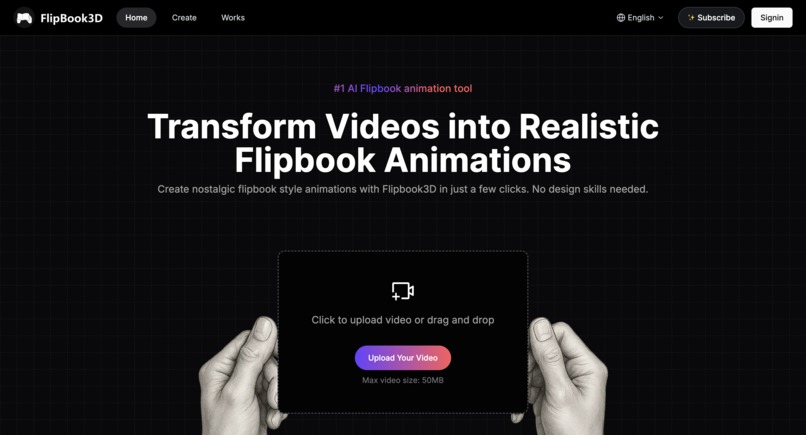
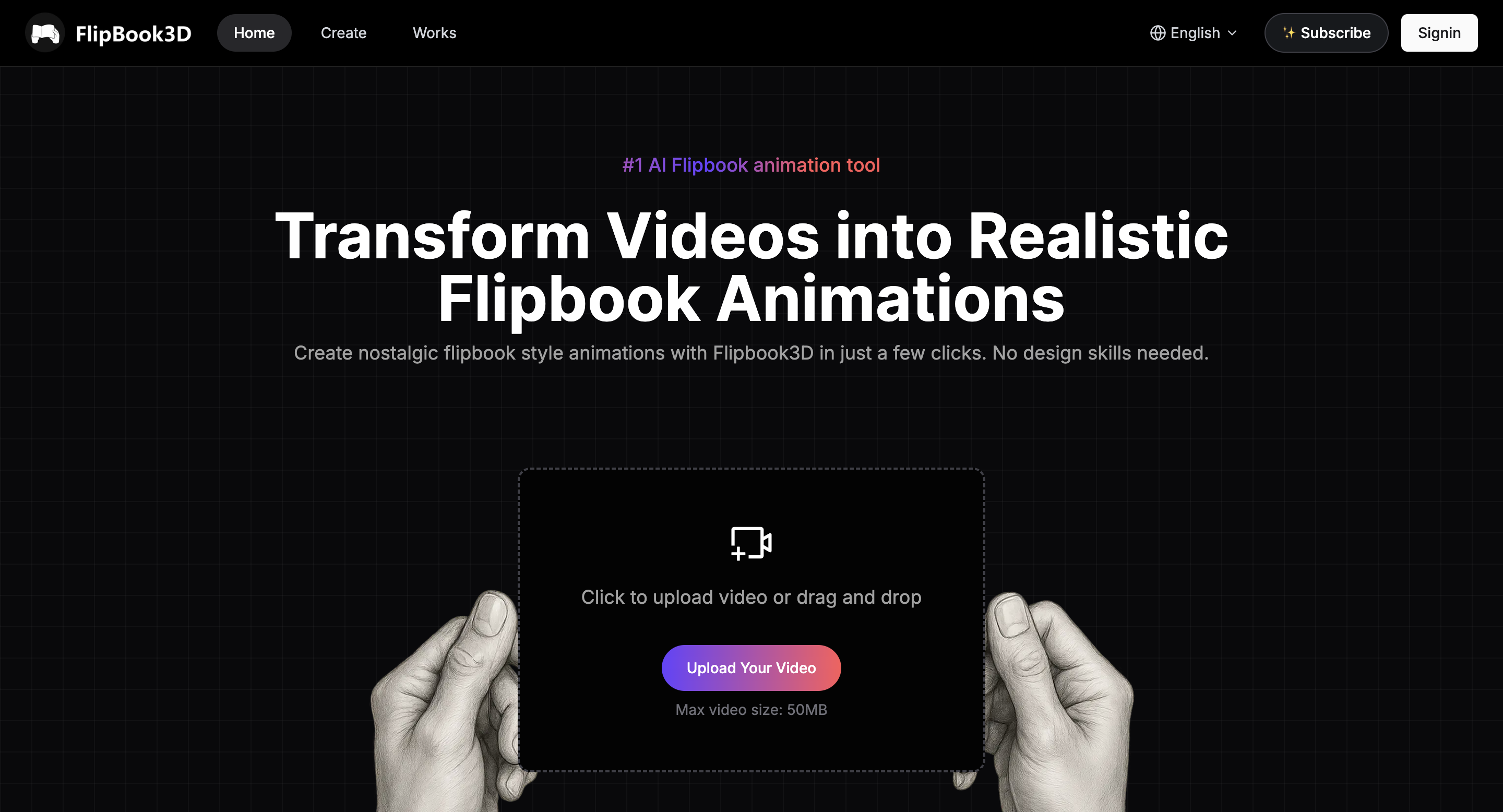
home page
-
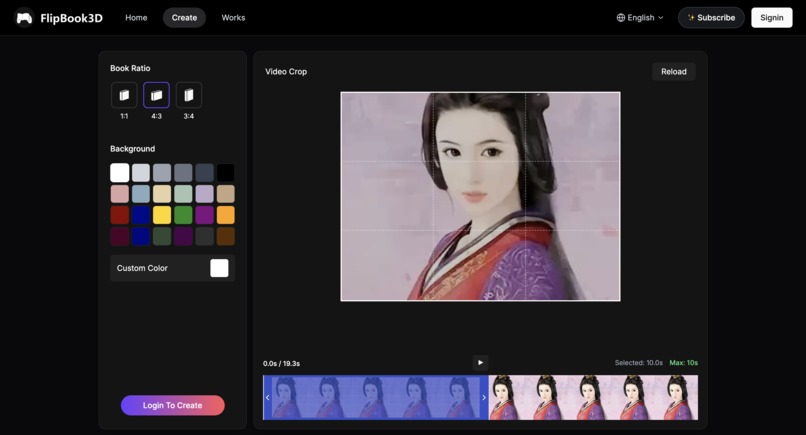
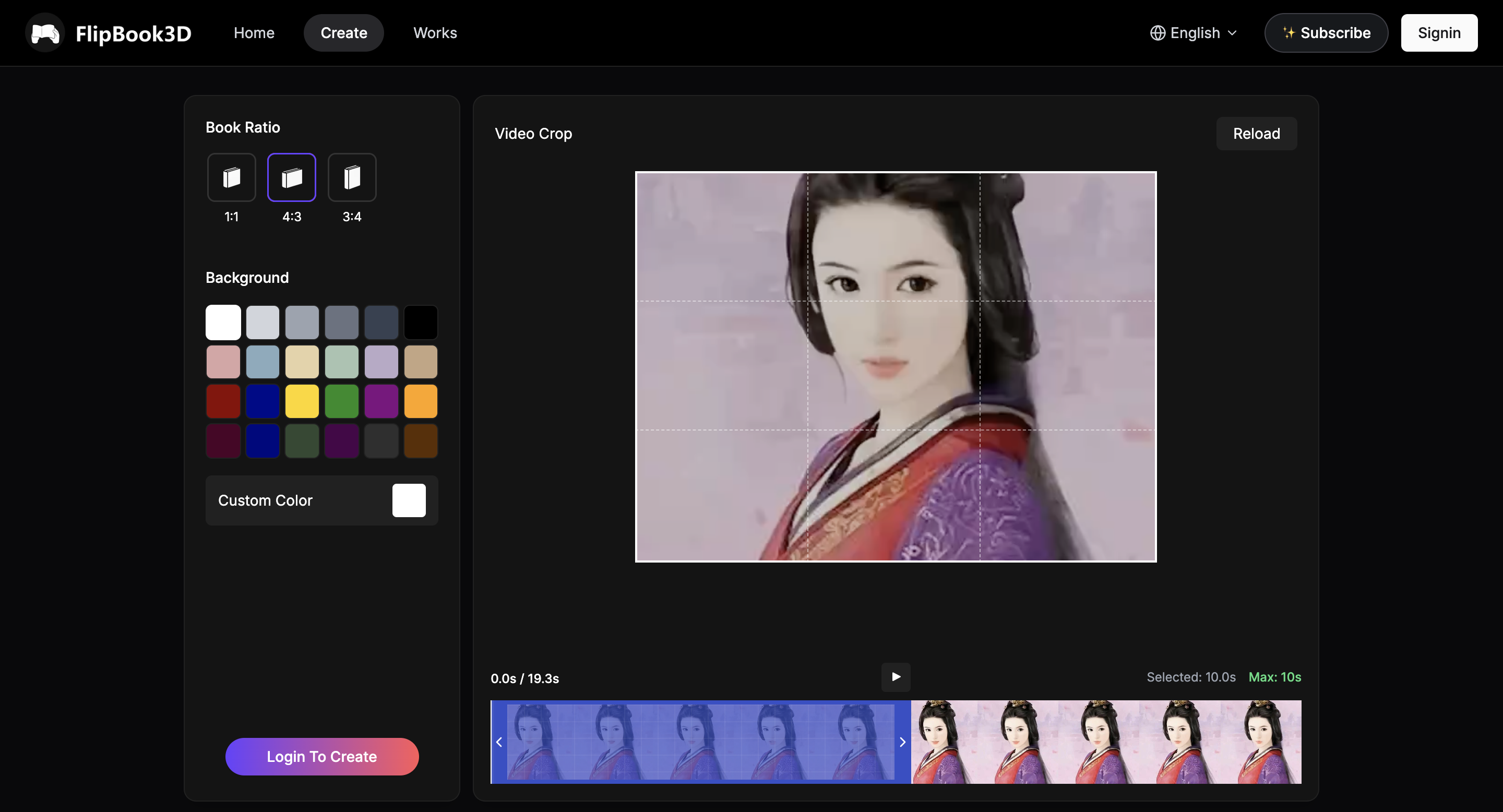
flipbook maker page
Inspiration
Scrolling through Instagram and TikTok, I kept noticing creators posting mesmerizing, hyper‑realistic flipbook animation videos. The way they blended analogue charm with slick digital editing fascinated me—but the workflow looked painstaking and out of reach for most people. I wanted to democratize that magic by building a tool that lets anyone upload a video and instantly get the same “wow”‑worthy flipbook effect, no special equipment or advanced skills required.
What it does
Flipbook3D transforms ordinary videos into animated flipbooks using AI and 3D visualization. Users simply upload a video, and the platform generates a page‑by‑page animated preview that replicates the look and feel of a physical flipbook—complete with custom styling and downloadable formats.
How I built it
Frontend / SSR: Next.js Rendering & Processing: Blender API driven by Python scripts AI Enhancements: Frame selection and stylization models Cloud Infrastructure: AWS for hosting and S3 for storage
Challenges I ran into
Integrating Blender’s rendering engine into a web workflow while maintaining quality and speed proved tricky. Managing large video files and ensuring the UI stayed responsive required careful performance tuning.
Accomplishments that I'm proud of
I created an intuitive UX that turns a complex creative pipeline into a two‑click experience. Seeing users share their flipbooks online—and knowing the process used to take hours of manual work—is incredibly rewarding.
What I learned
Deepened my understanding of Blender scripting, optimized AI‑assisted media pipelines, and balanced automation with user control to keep the experience both powerful and fun.
What's next for Flipbook3D
Upcoming features include themed templates, audio‑sync, one‑click social sharing, and an option to order physical flipbooks. Scaling for more users and richer experiences is also on the roadmap.


Log in or sign up for Devpost to join the conversation.