Inspiration
Flip Flash was born out of a desire to create something simple, beautiful, and mentally stimulating. I’ve always been fascinated by games that challenge cognitive skills especially memory and focus. I wanted to build a game that’s not only fun but also helps players sharpen their minds in a playful way. The idea of flipping cards and racing against time felt like the perfect blend of excitement and brain training.
What it does
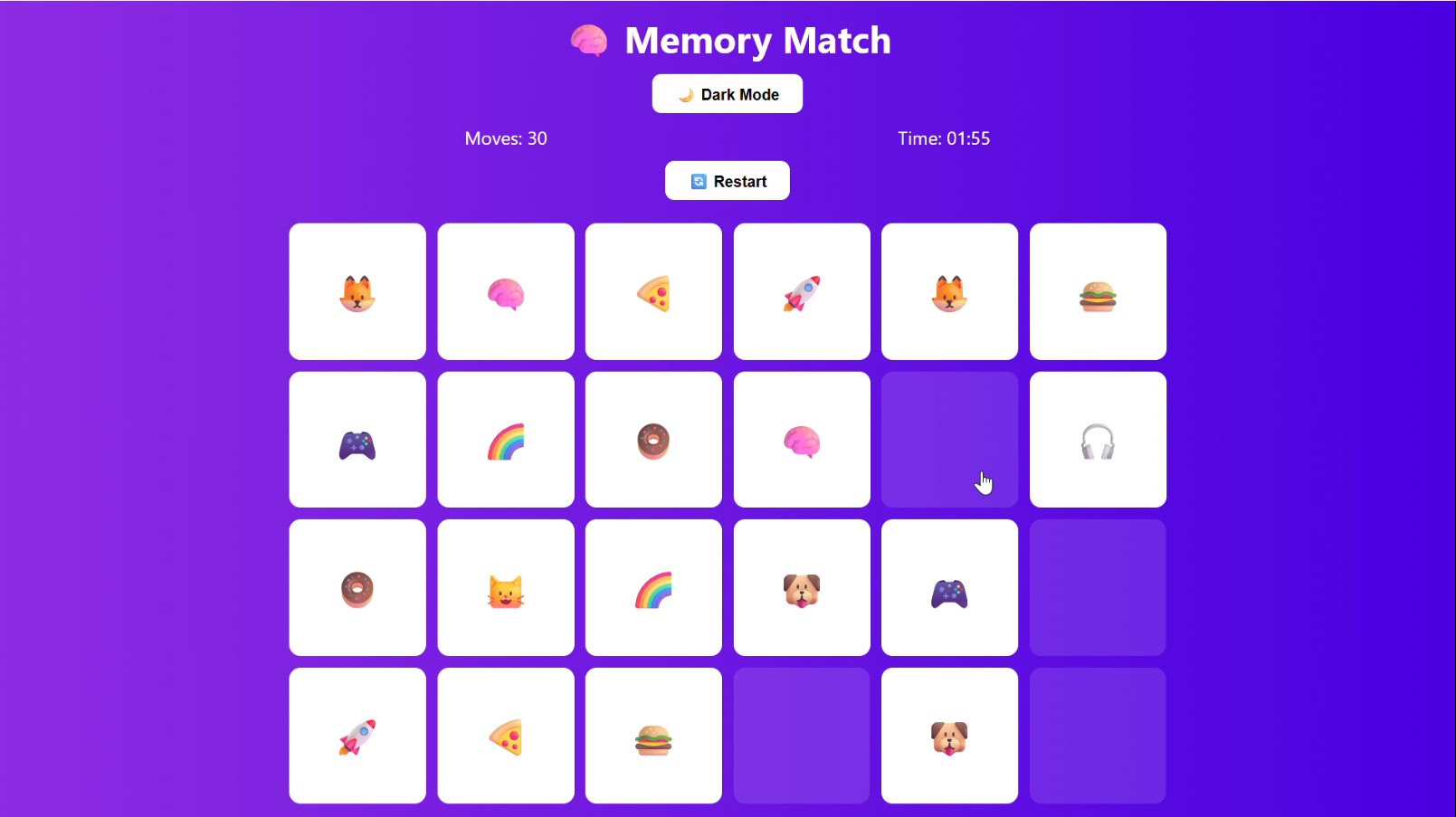
Flip Flash challenges players to:
- Flip cards and find matching pairs
- Race against the clock to complete the grid
- Improve memory and focus through repeated play
- Enjoy a visually polished and responsive experience across devices
How we built it
Flip Flash was built using:
- HTML for structure
- CSS for styling and animations
- JavaScript for interactivity and game logic Key features include:
- A grid of cards that shuffle randomly
- A timer that tracks performance
- Match detection and score tracking
- Smooth animations for flips and matches
- A restart button to replay instantly
Challenges we ran into
Some of the biggest hurdles were:
- Card flipping logic: Ensuring only two cards are flipped at a time and managing the match-checking flow without glitches.
- Timer synchronization: Making sure the timer starts and stops accurately with game state.
- Responsive layout: Designing a grid that adapts to different screen sizes without breaking the visual flow.
- Preventing rapid clicks: Handling user input gracefully to avoid bugs during fast interactions.
Accomplishments that we're proud of
- Built entirely with vanilla HTML, CSS, and JavaScript—no frameworks
- Created a smooth and intuitive gameplay experience
- Designed a responsive layout that works beautifully on mobile and desktop
- Implemented clean animations and transitions for a polished feel
- Achieved a bug-free match logic with accurate timing and scoring
What we learned
This project taught me a lot about:
- DOM manipulation and dynamic rendering using vanilla JavaScript
- Game logic design, including timers, state management, and match detection
- CSS animations and transitions for smooth, engaging UI feedback
- Responsive design principles to ensure the game works well across devices
- User experience (UX)—how subtle details like sound, color, and pacing affect engagement
What's next for Flip Flash: Memory Game
Here’s what I plan to add in future versions:
- Leaderboard and scoring history to track progress over time
- Difficulty levels with larger grids and shorter timers
- Theme customization (e.g., card styles)


Log in or sign up for Devpost to join the conversation.