-
-
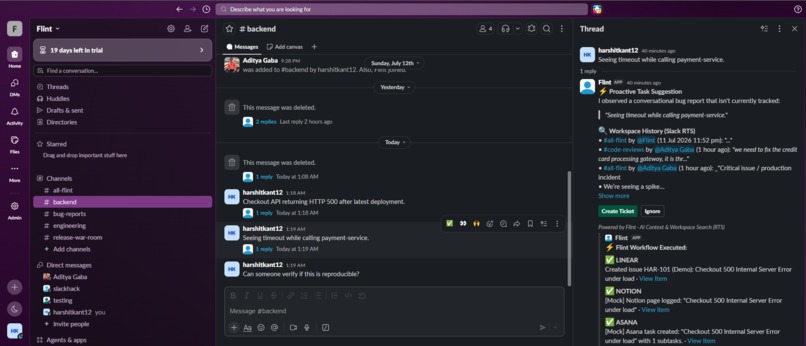
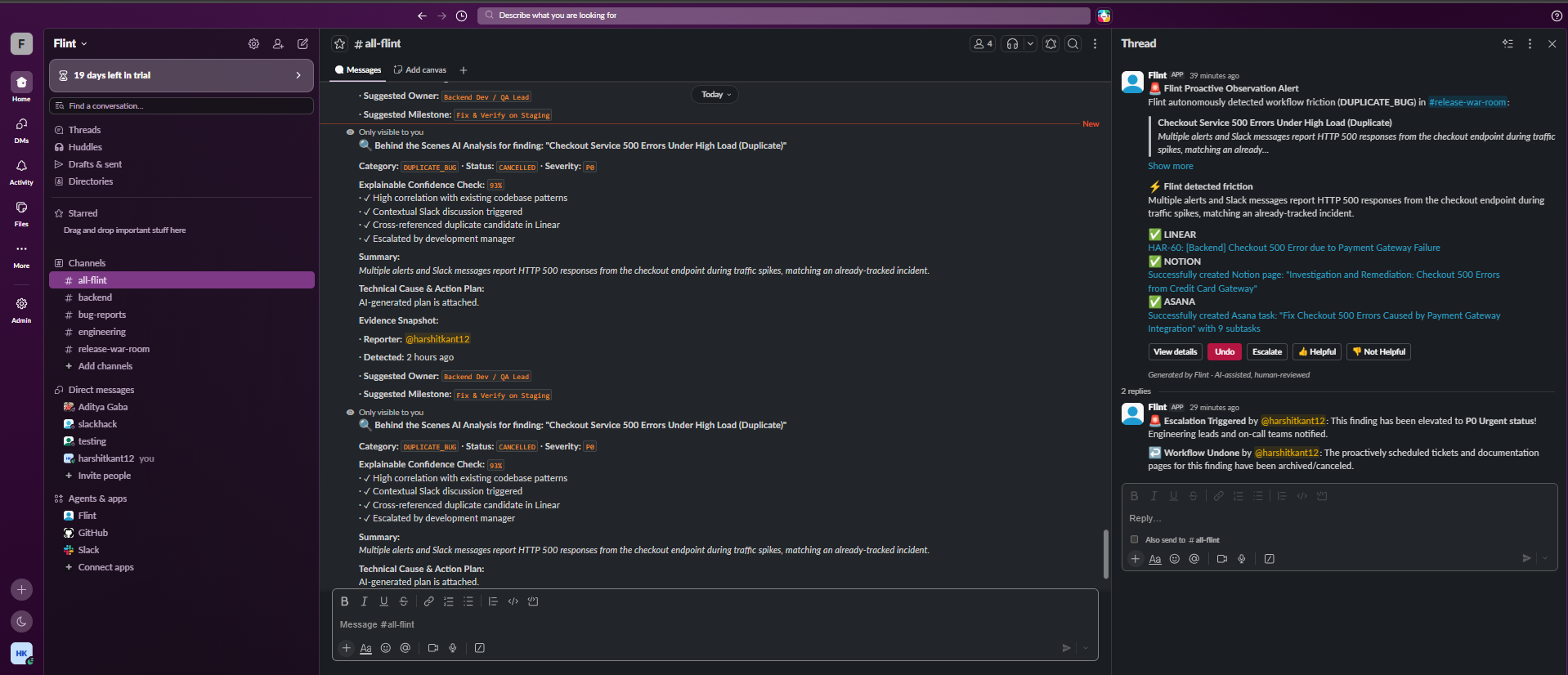
Workspace Overview
-
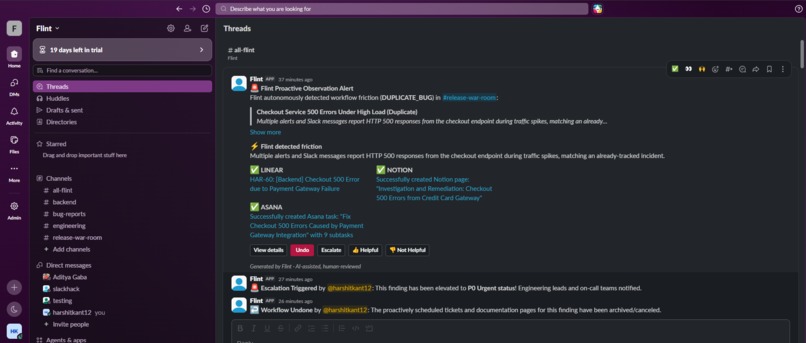
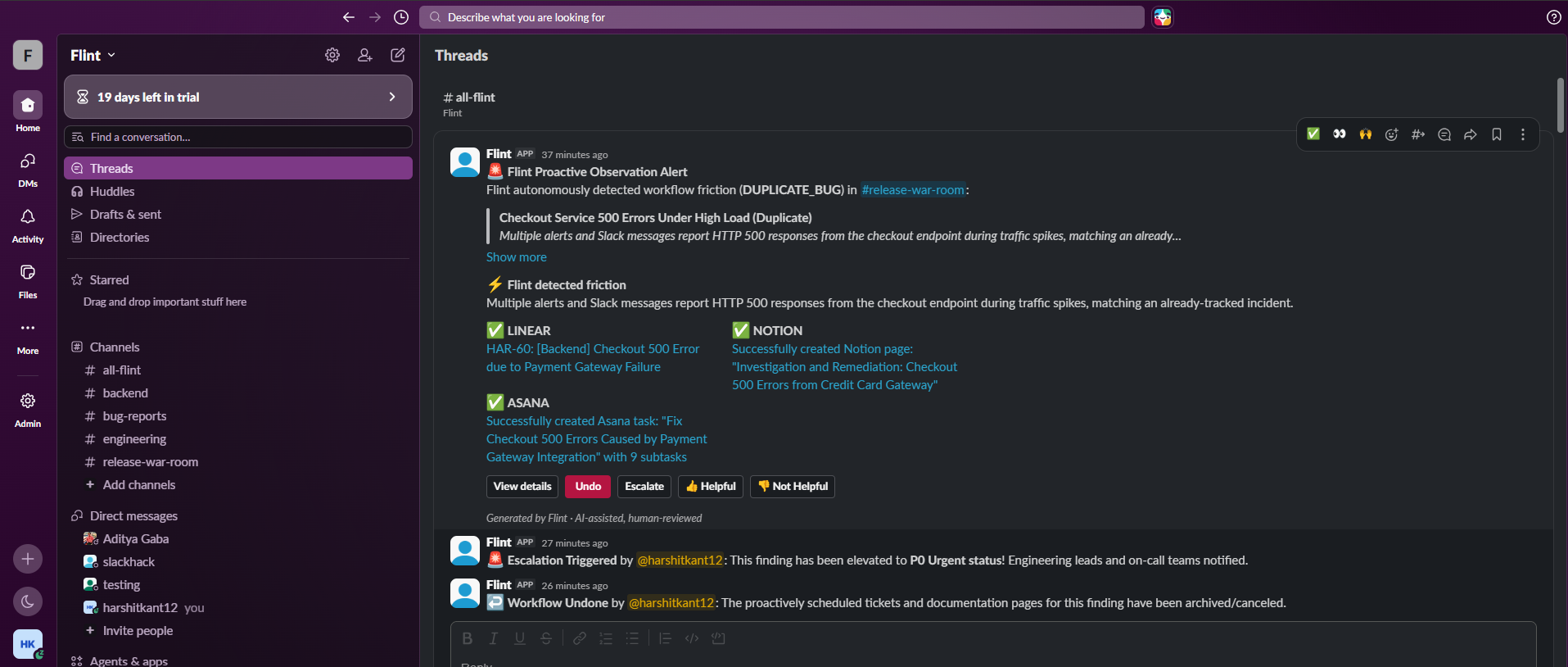
Duplicate Bug Discussion
-
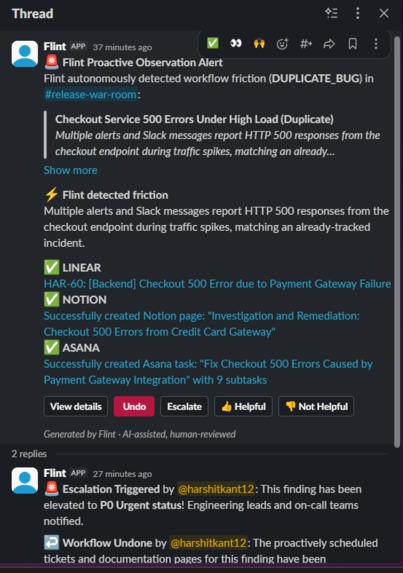
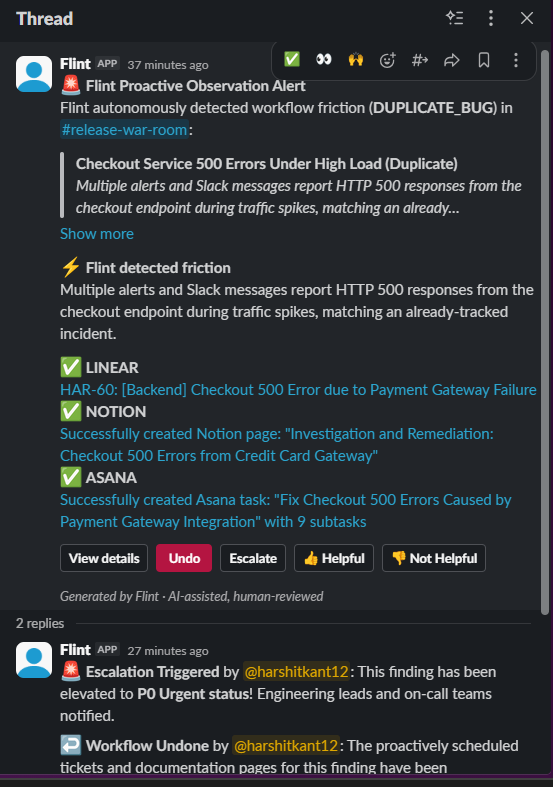
Flint Action Card
-
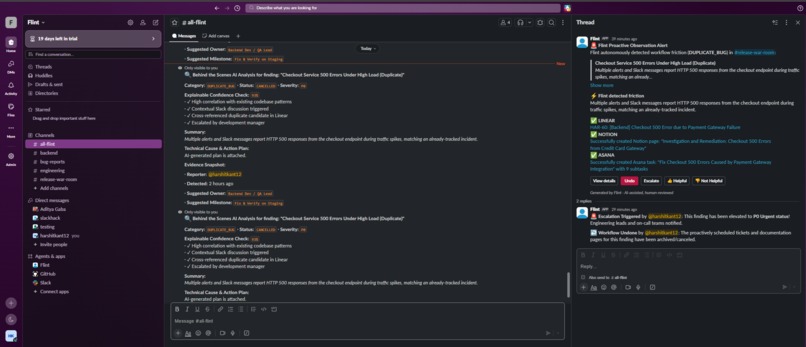
AI Details
-
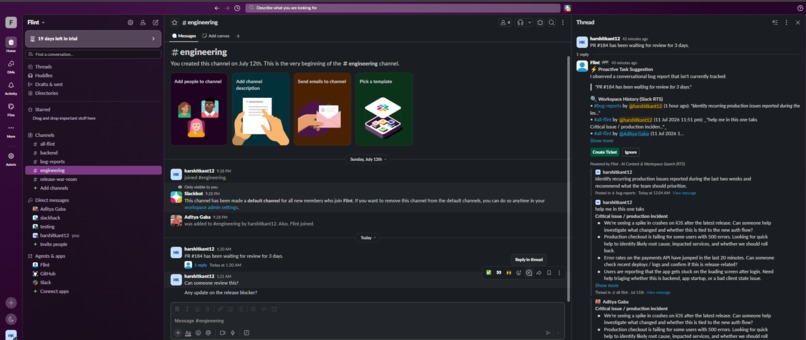
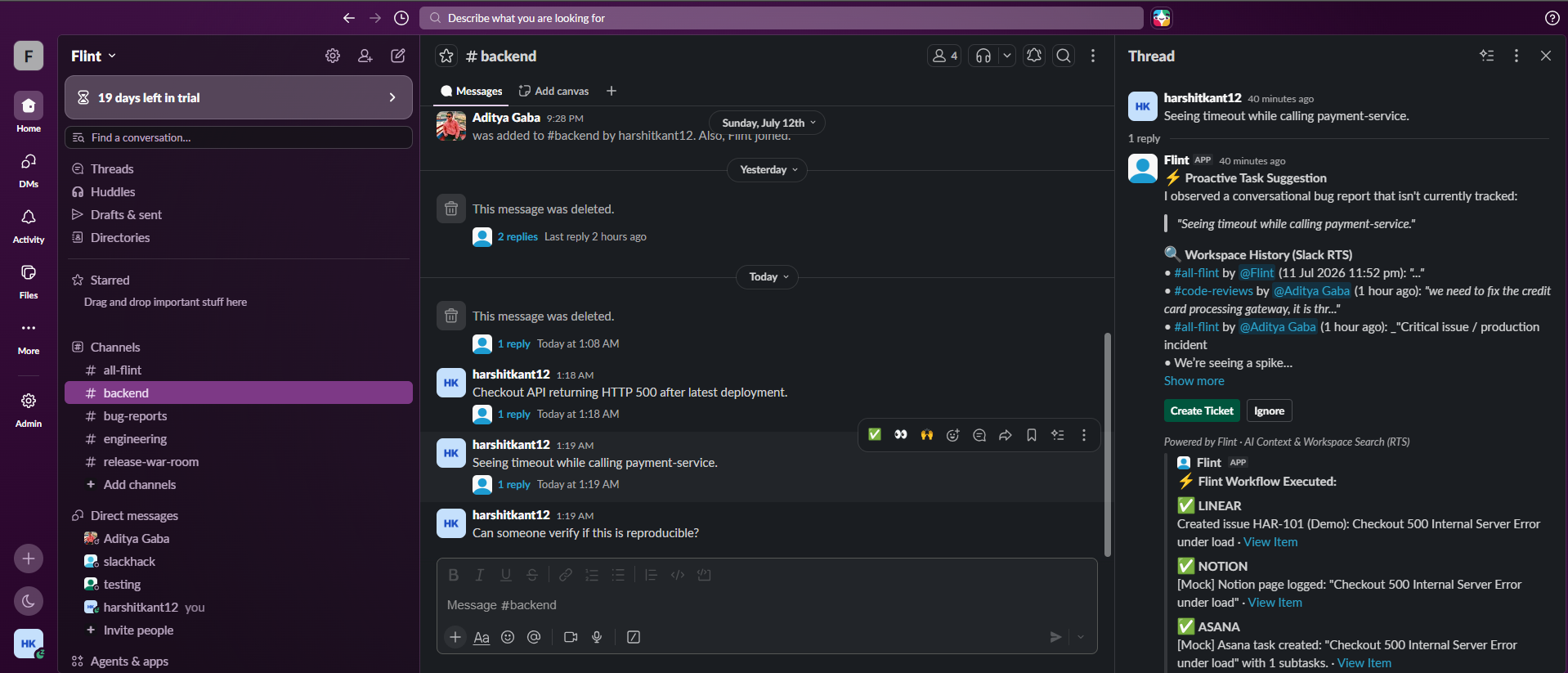
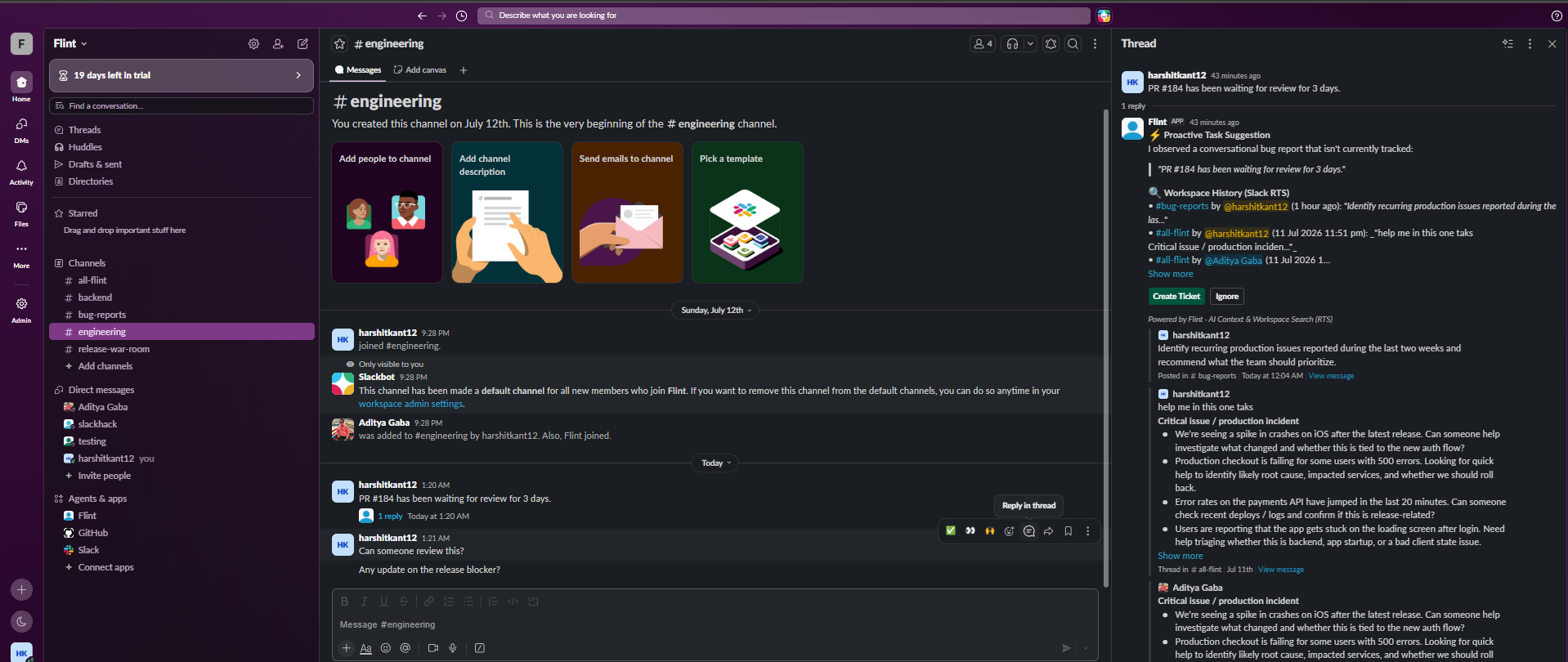
Engineering Channel
-
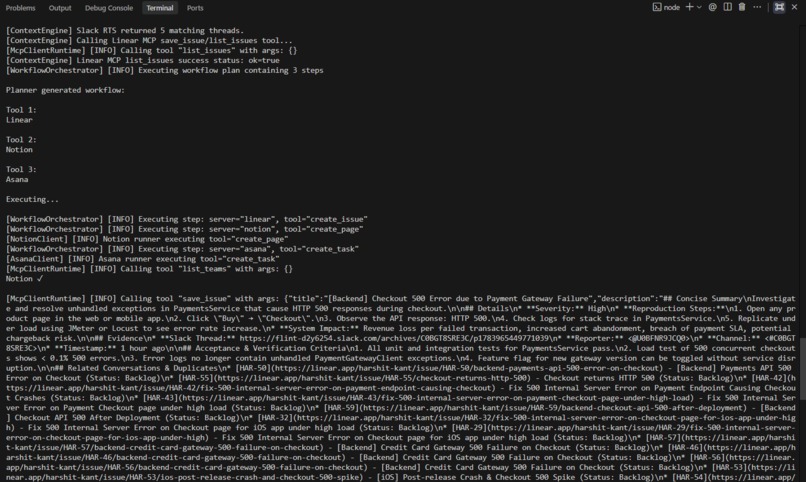
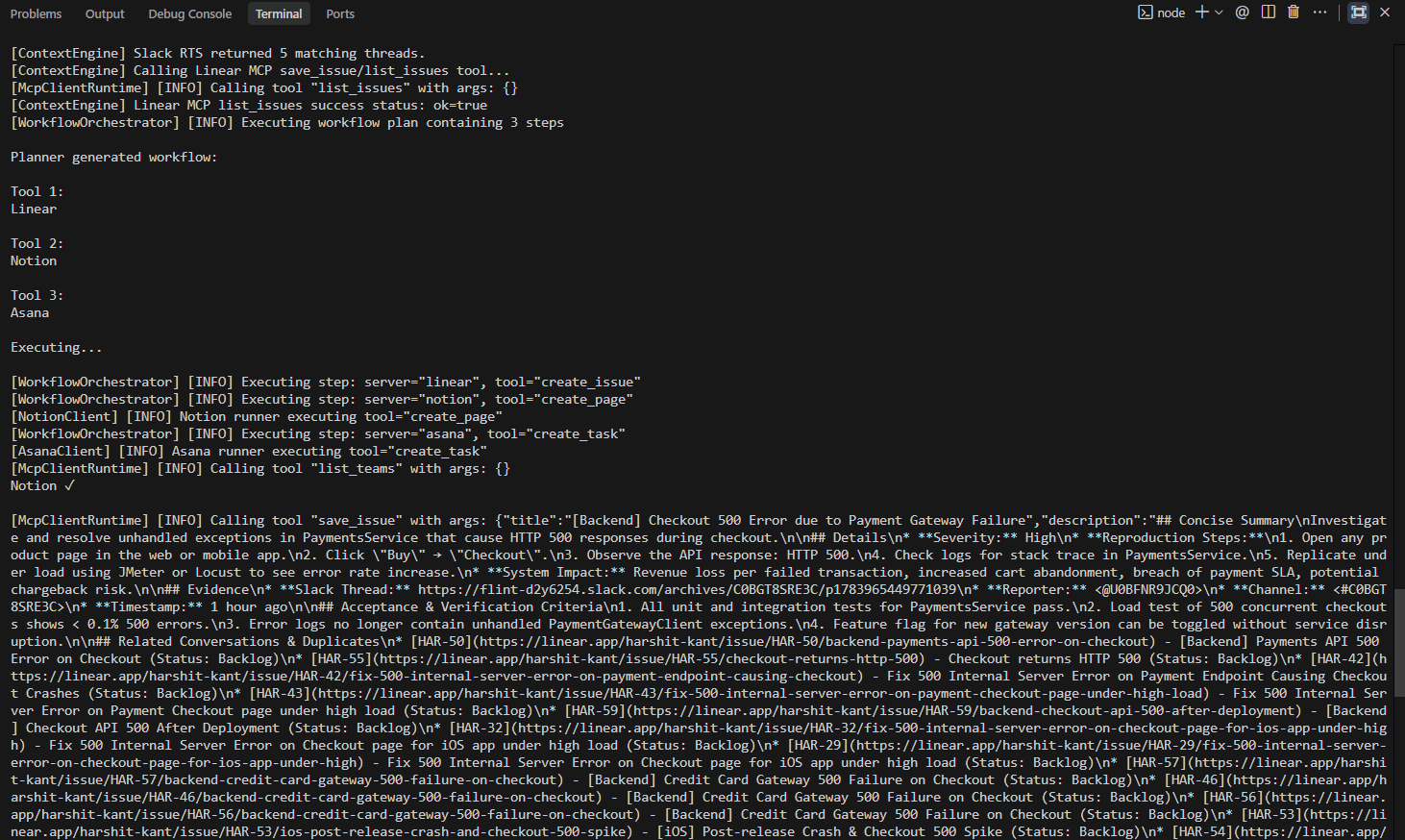
Logs
-
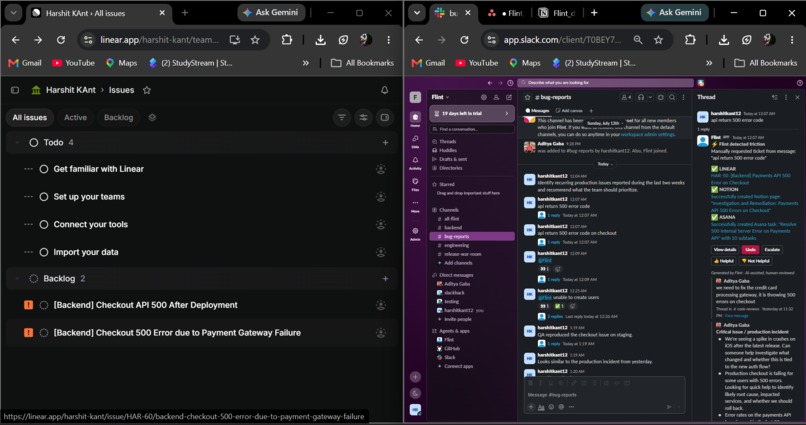
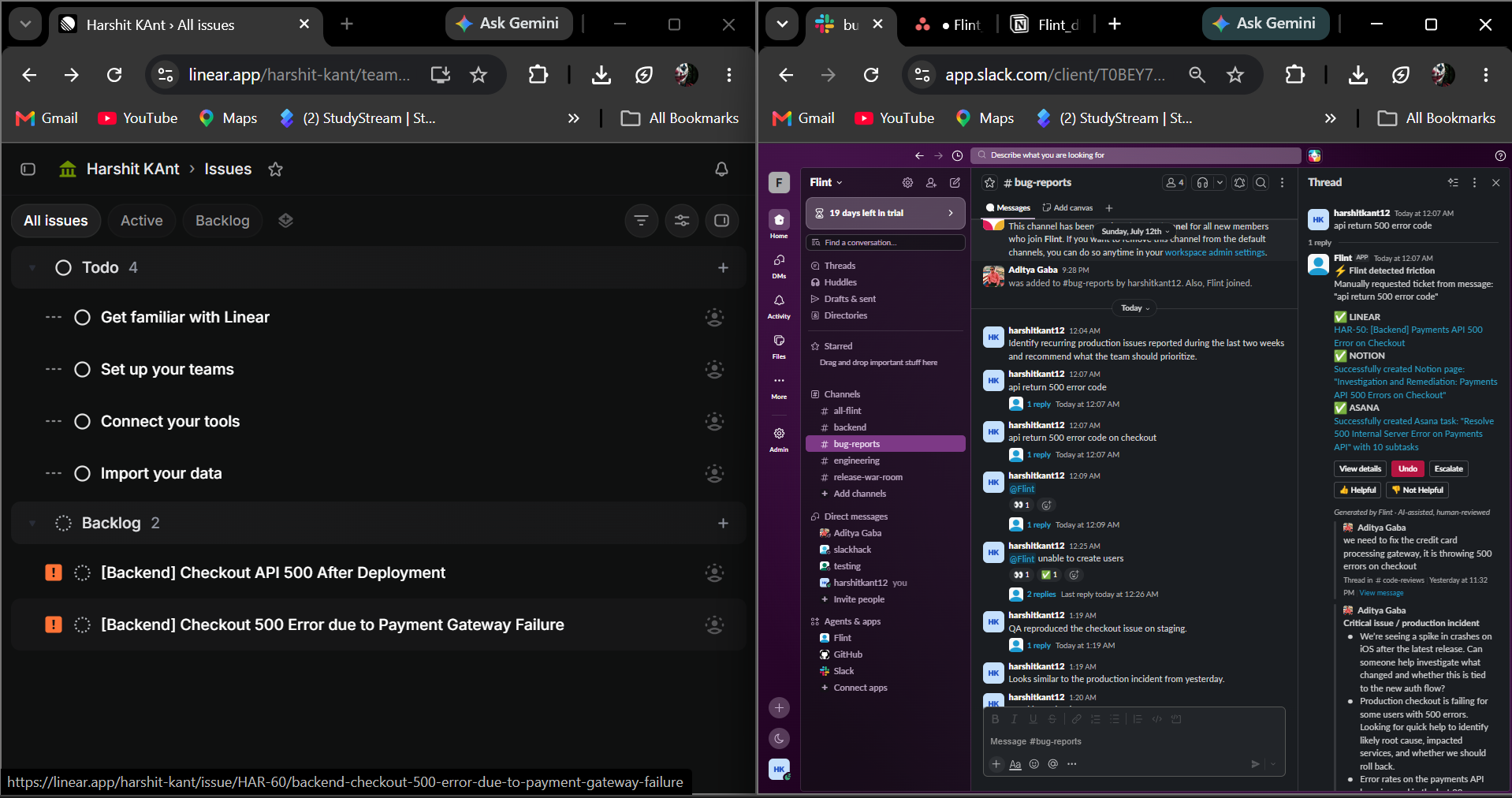
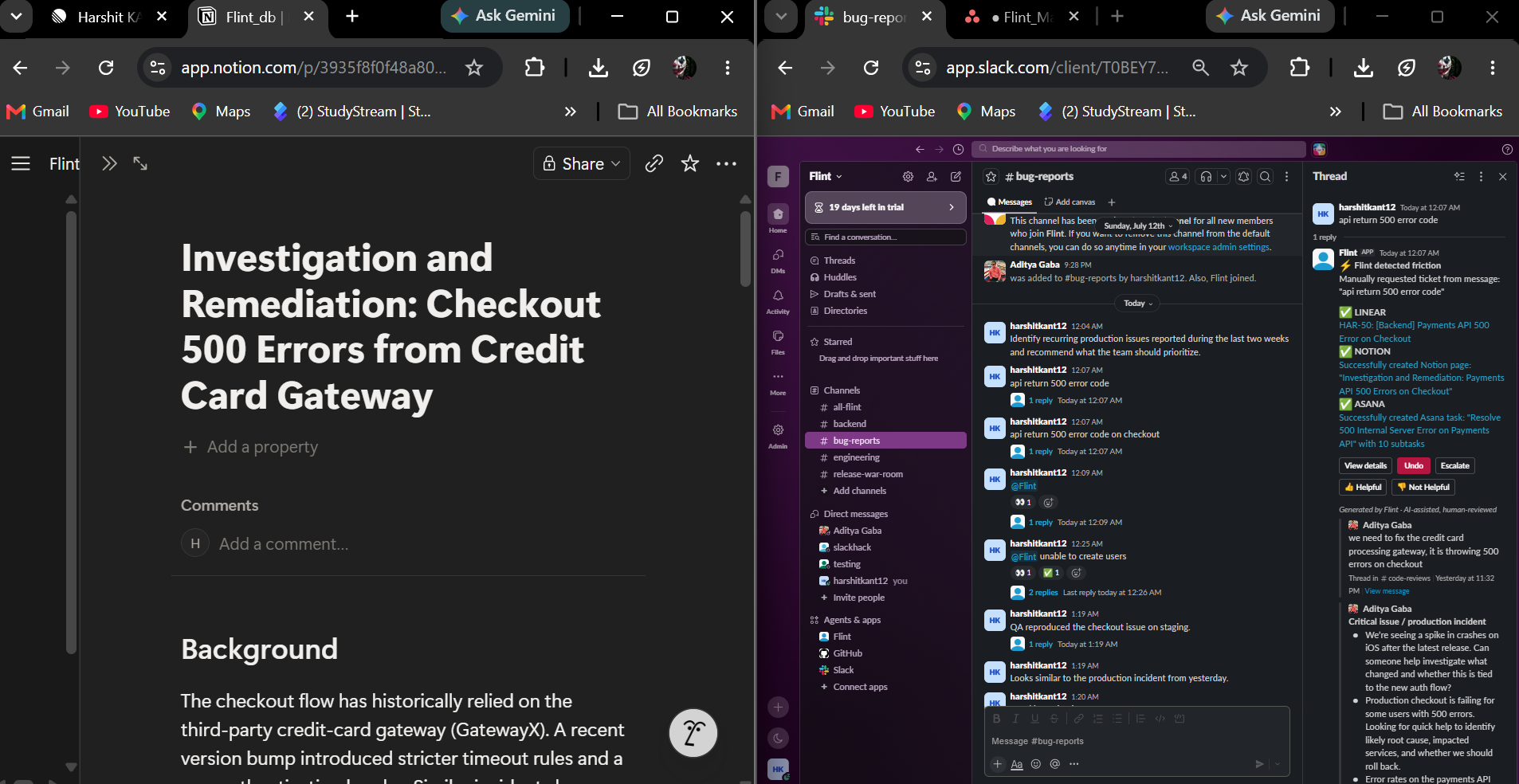
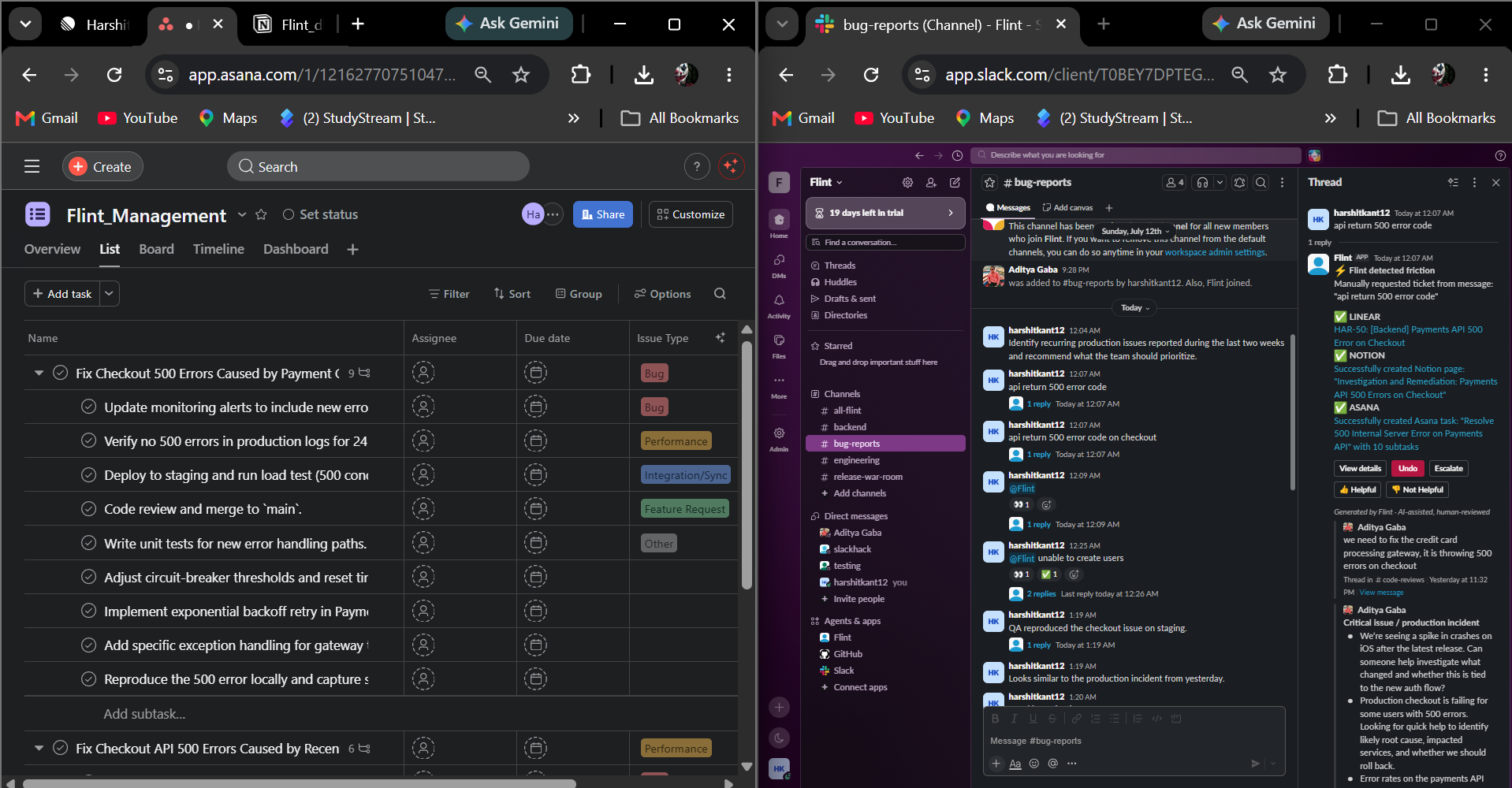
Slack + Linear
-
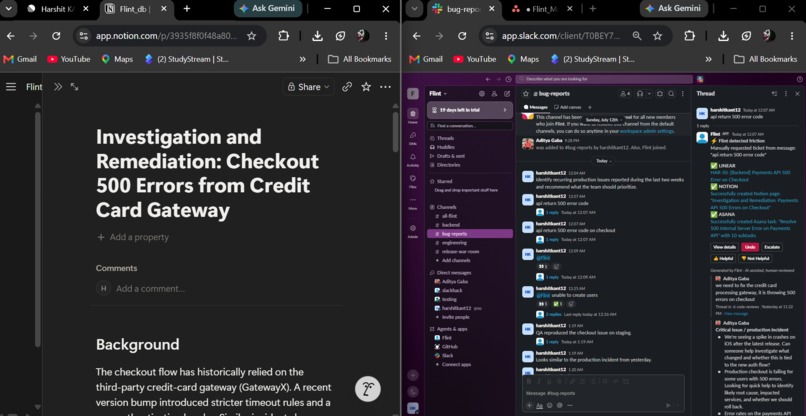
Slack + Notion
-
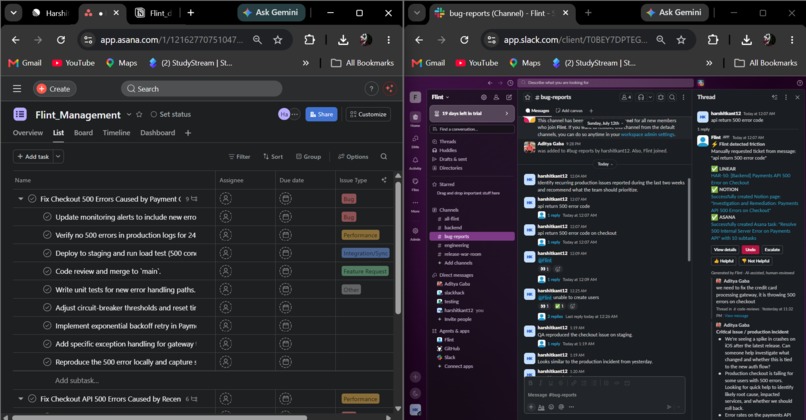
Slack + Asana
Inspiration
Engineering teams spend a significant amount of time reacting to workflow issues such as stale pull requests, blocked releases, recurring bugs, and unanswered discussions. These problems are often discovered too late, slowing development and reducing productivity.
We wanted to build an AI teammate that doesn't wait for commands but proactively identifies workflow friction and helps engineering teams resolve issues before they become bottlenecks.
What it does
Flint is a proactive AI engineering agent built for Slack. It continuously monitors engineering workflows, understands workspace activity, and detects issues such as stale pull requests, recurring bugs, blocked releases, and unresolved discussions.
Using AI-powered reasoning, Flint provides contextual recommendations and can orchestrate actions across connected engineering tools directly from Slack, reducing context switching and improving team productivity.
How we built it
Flint is built using TypeScript and Node.js with the Slack Bolt framework. It leverages Slack's Agent Builder capabilities, Real-Time Search (RTS) for workspace awareness, Model Context Protocol (MCP) for connecting external tools, NVIDIA Mistral AI for intelligent reasoning, Upstash Redis for lightweight storage, and Slack Block Kit for an interactive user experience.
Challenges we ran into
One of the biggest challenges was designing a proactive workflow instead of a traditional request-response chatbot. We also focused on creating a modular architecture that can scale across multiple engineering tools while keeping Slack as the primary interface.
Accomplishments that we're proud of
- Designed a proactive AI engineering assistant instead of a reactive chatbot.
- Built an architecture capable of integrating multiple engineering tools through MCP.
- Created a Slack-native experience using Block Kit.
- Established a scalable, modular foundation for future engineering workflow automation.
What we learned
Building Flint reinforced the importance of proactive AI systems that understand context rather than simply responding to prompts. We also gained experience designing scalable Slack applications, AI orchestration, and cross-platform integrations.
What's next for Flint
Our next steps include deeper integrations with GitHub, Jira, CI/CD platforms, and incident management tools, enabling Flint to automatically coordinate engineering workflows, prioritize issues, and execute routine actions with minimal human intervention.
Built With
- agent
- mcp
- node.js
- nvidia
- slack
- typescript

Log in or sign up for Devpost to join the conversation.