-
-
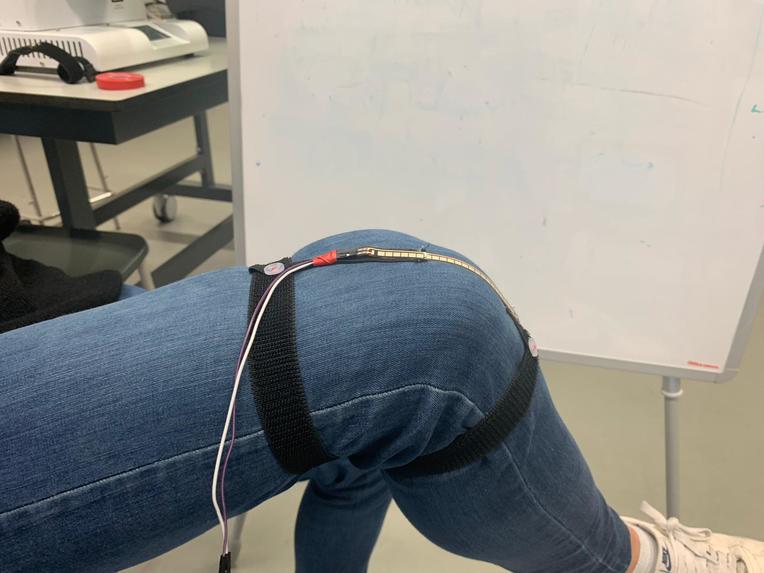
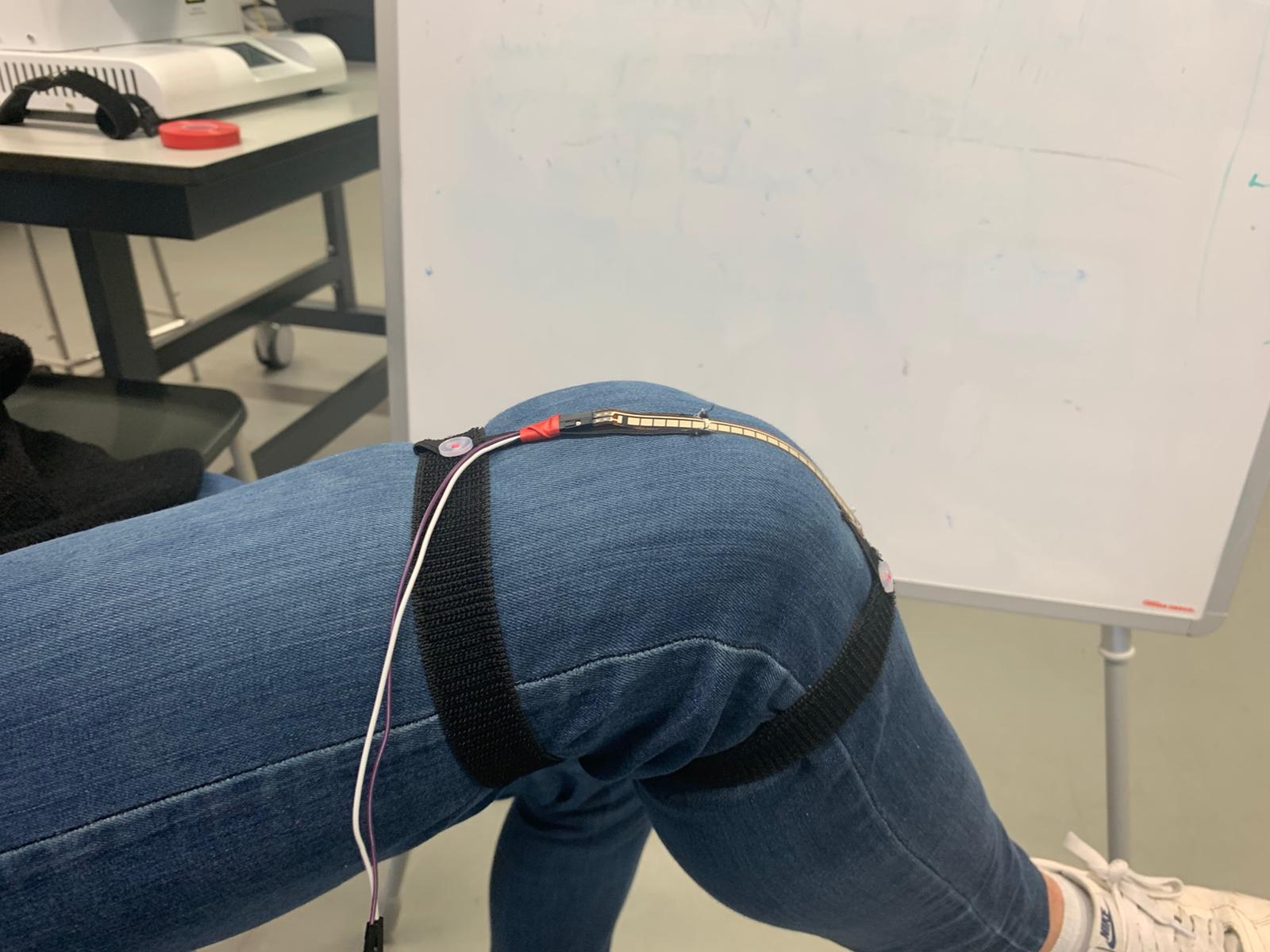
Knee brace
-
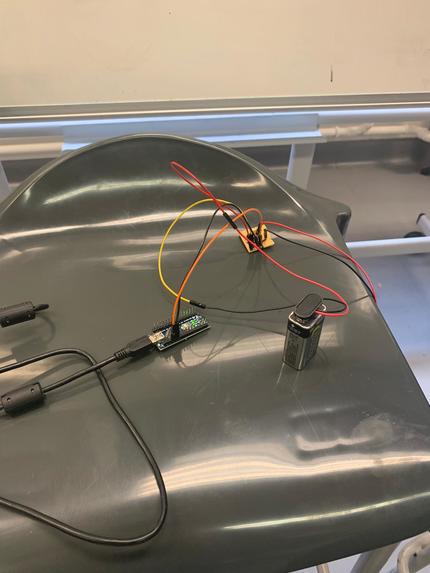
Wheatstone bridge compact circuit
Inspiration
Our mission is to give children and vulnerable adults control over their injury recovery. There is over 750,000 knee injuries per year in the US alone. Knee injury recovery is a particular challenge for vulnerable adults and children as they find it difficult to stick to exercise regimes. Especially for children or adults with autism spectrum disorder and ADHD, it is challenging to interact with and follow the instructions of a physiotherapist. The resulting lack of compliance with physiotherapy leads to further complications that can span over the patients' lifetime and avoidable costs to the health system.
What it does
Flex is a game-based therapy that allows users to control a game character to navigate through the game avoiding obstacles and collecting points with the movement of their knee. The appropriate range of movement is calibrated for each user at the start of the game. This provides a fun motivation to exercise their knee and monitor their progress of recovery.
How we built it
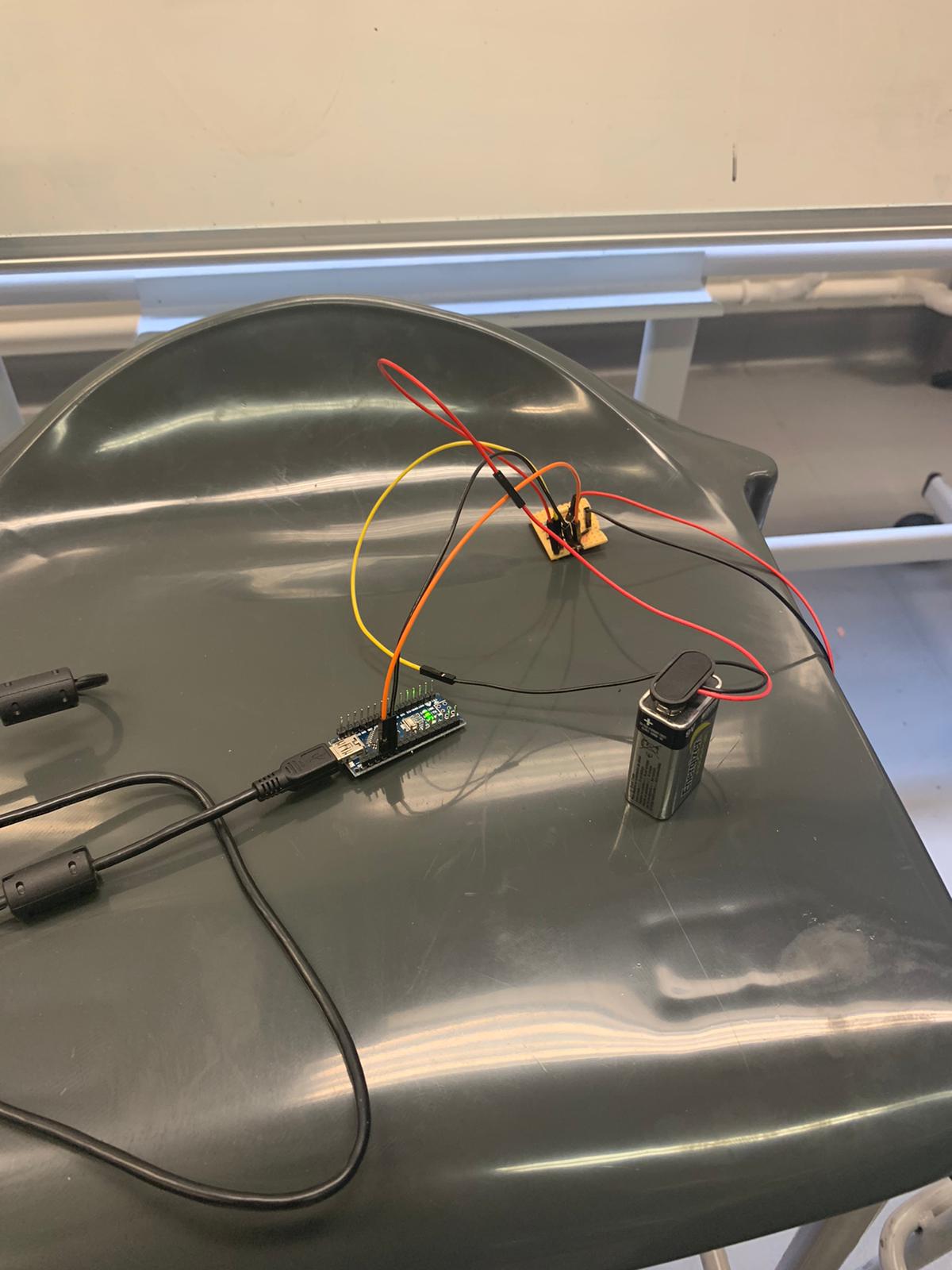
A flex sensor attached to a knee brace was connected to a Arduino Nano processor. The Arduino Nano processor reads takes readings of the voltage changes across a Wheatstone bridge circuit from the sensor. The voltage changes are sent to the output device, a mobile phone app, via a bluetooth module attached to the Arduino Nano processor. At the start of each game, the app can be used to request the maximum and minimum voltage detected to calibrate the game.
Challenges we ran into
Bluetooth connection compatibility with app prototypes could not be established. The game app could not be fully programmed in time.
Accomplishments that we're proud of
Initial prototype used a breadboard and simple circuit to read voltage. We achieved setting up a fully compact Wheatstone bridge circuit device with quicker response time and less noise.
What we learned
We learned to couple analogical bioelectronics to digital based applications for smartphones for medical purposes.
What's next for Flex
Getting the bluetooth connection and the app running to get a fully functional product. Further improvements include coyupling with EMG signal device to monitor muscle rehabilitation progress more precisely.


Log in or sign up for Devpost to join the conversation.