-
-
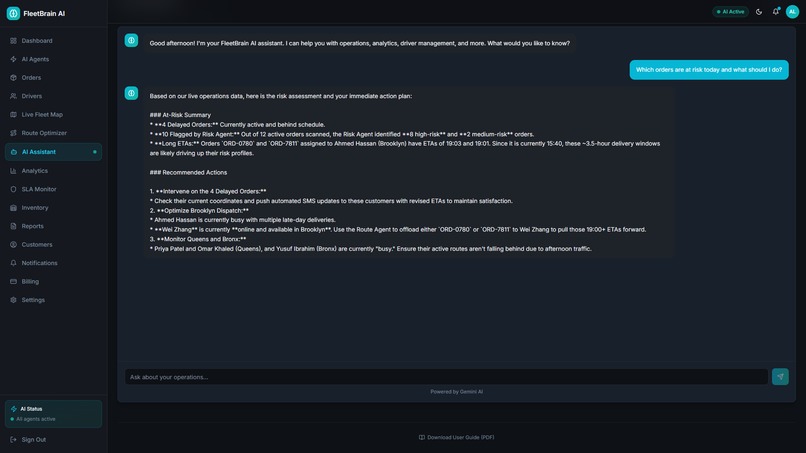
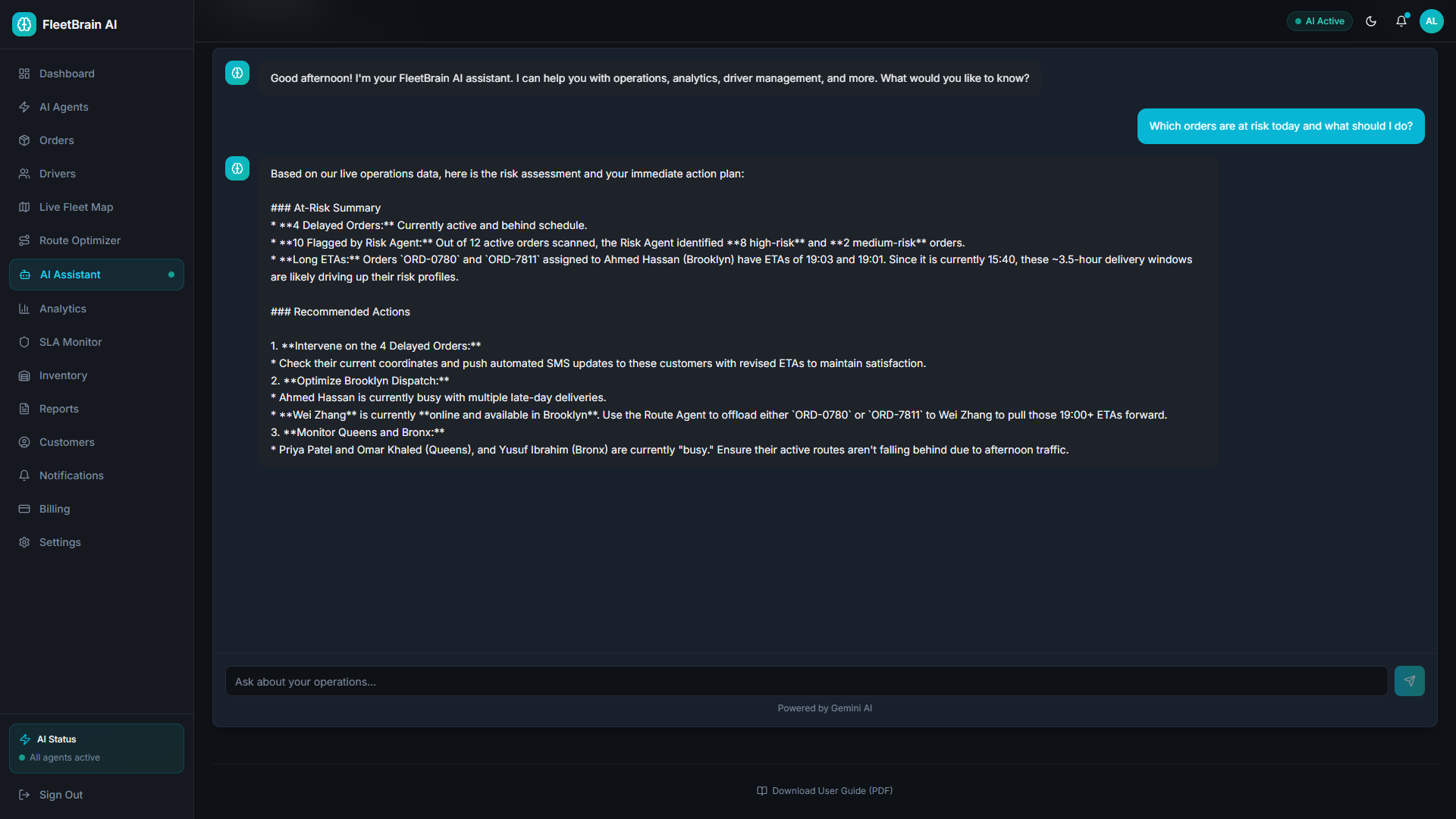
AI Assistant answering from live operational data
-
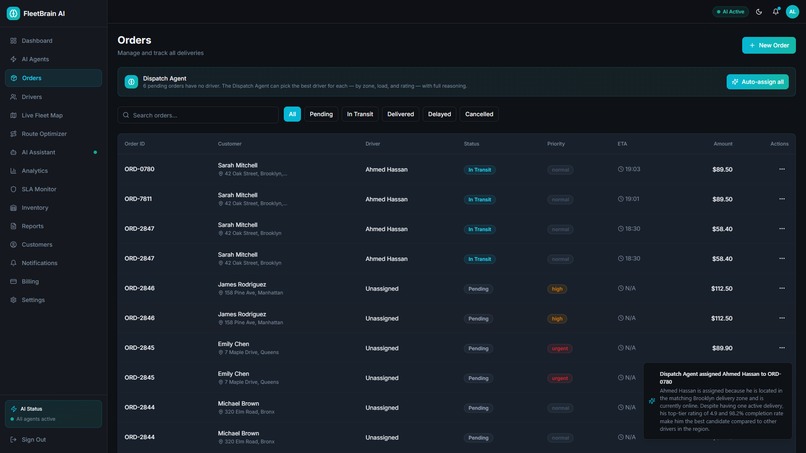
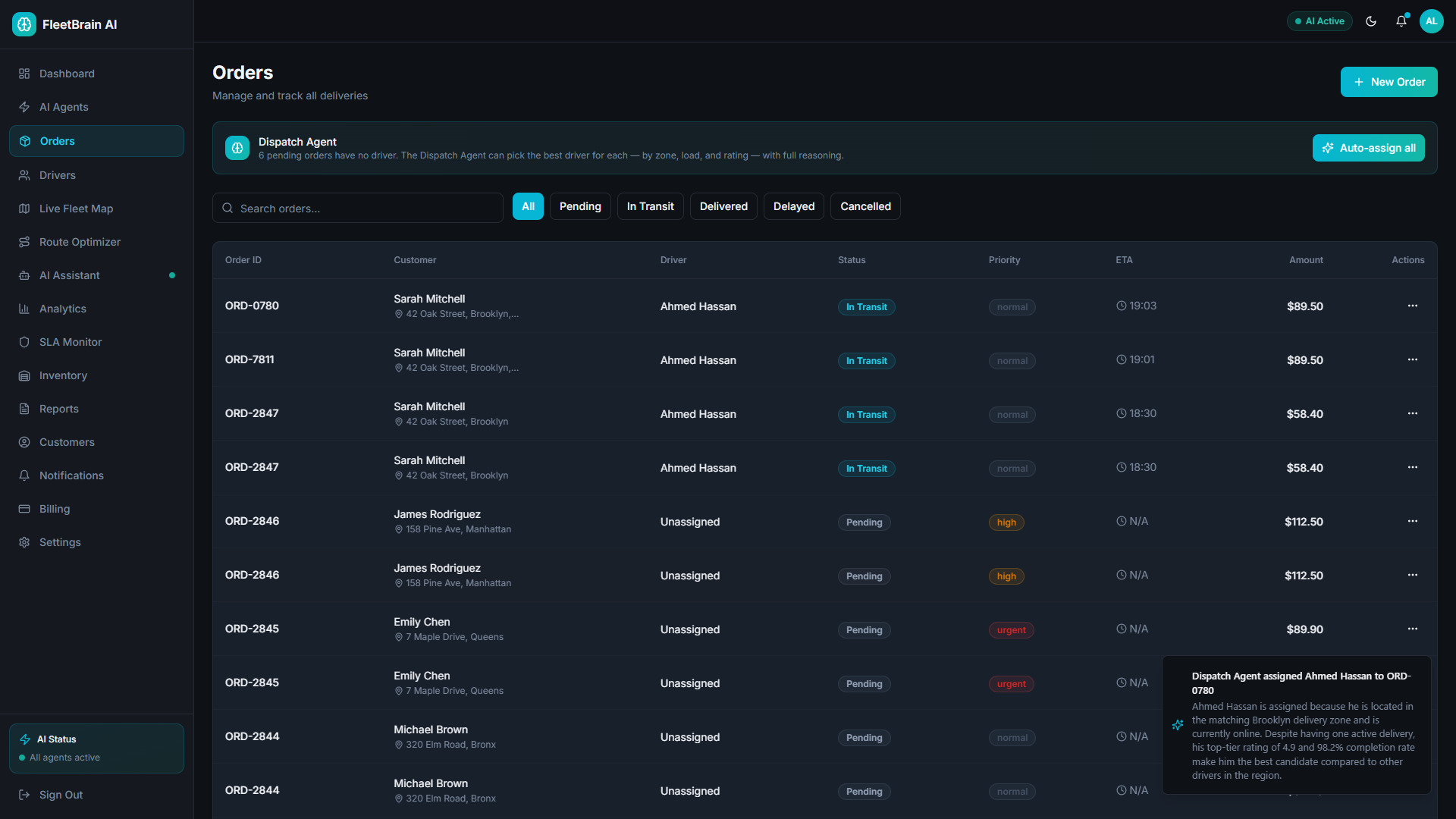
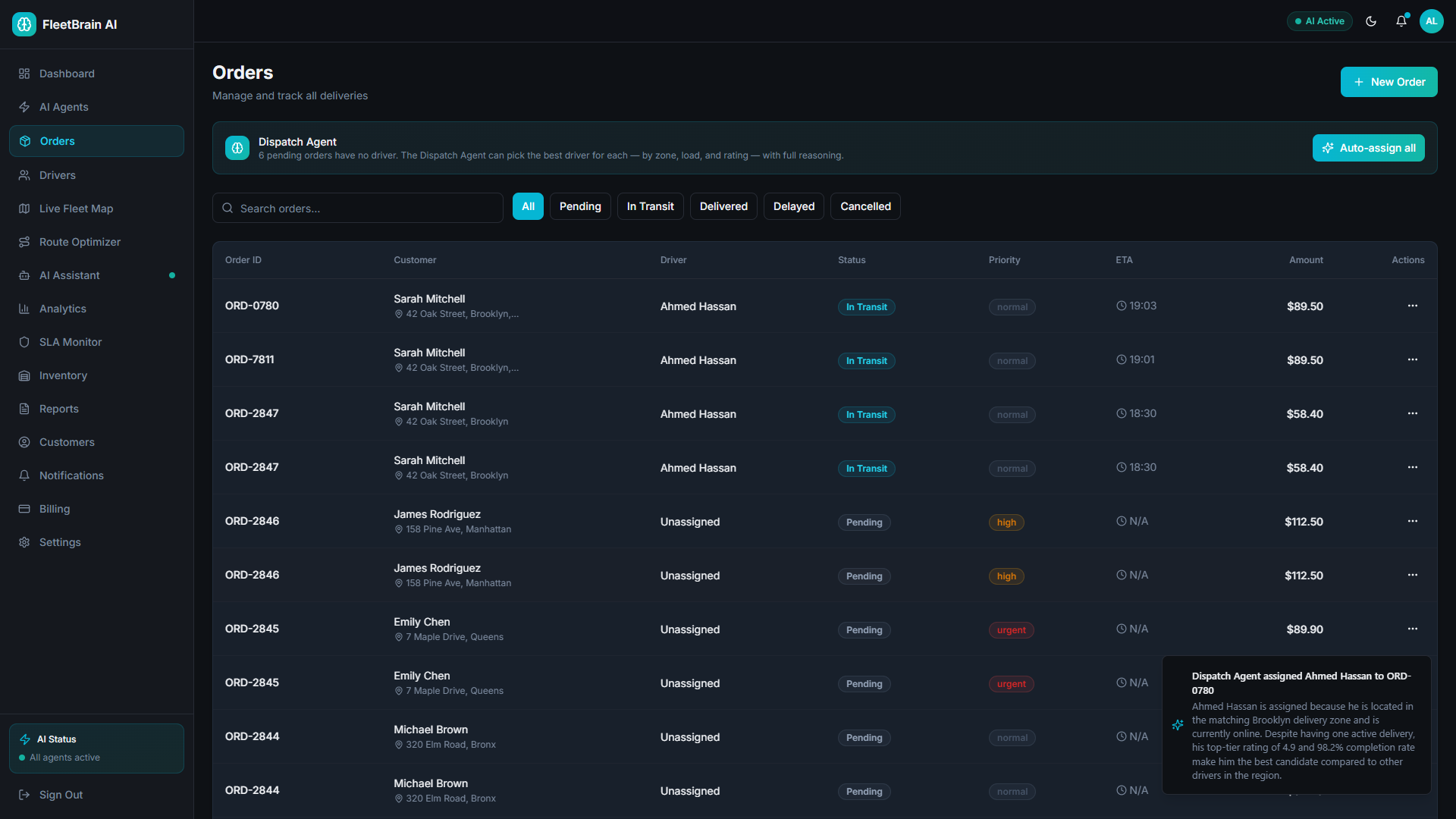
Orders after auto-dispatch assigned and in transit
-
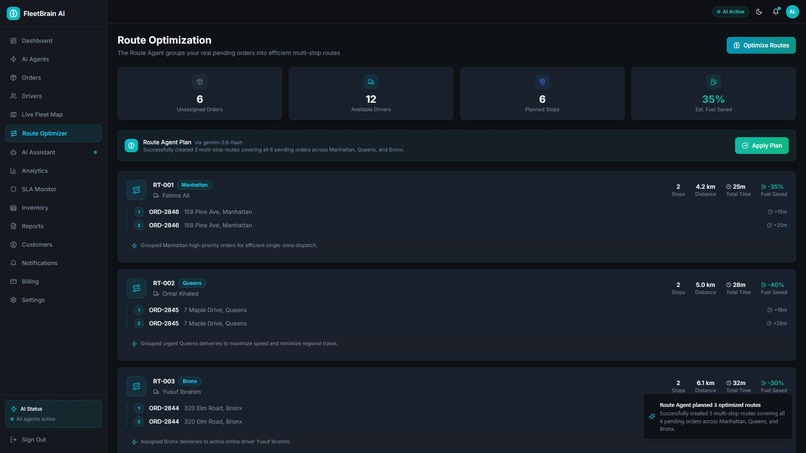
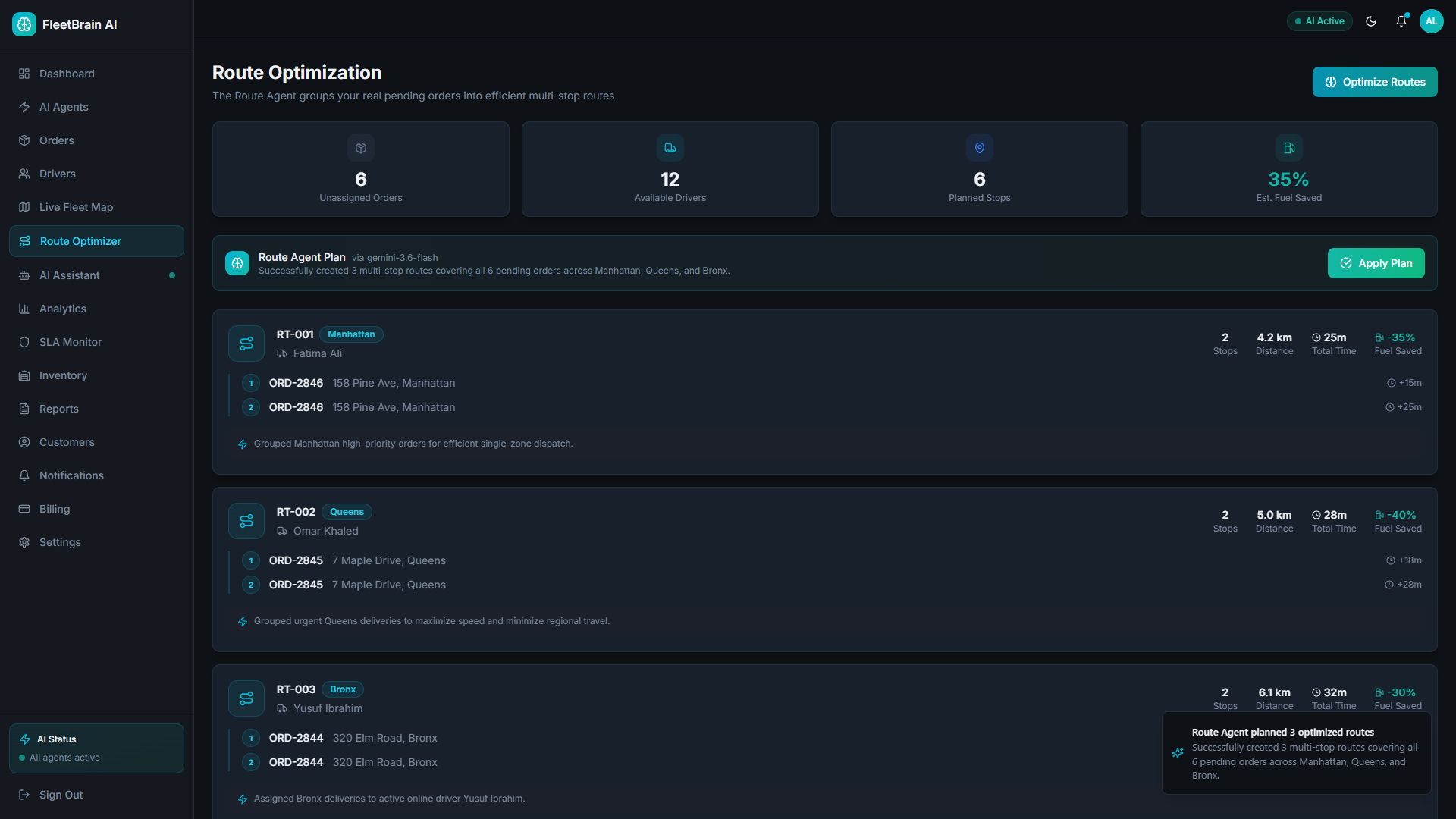
Route Agent plan via gemini-3.6-flash zone-matched multi-stop routes, applied in one click
-
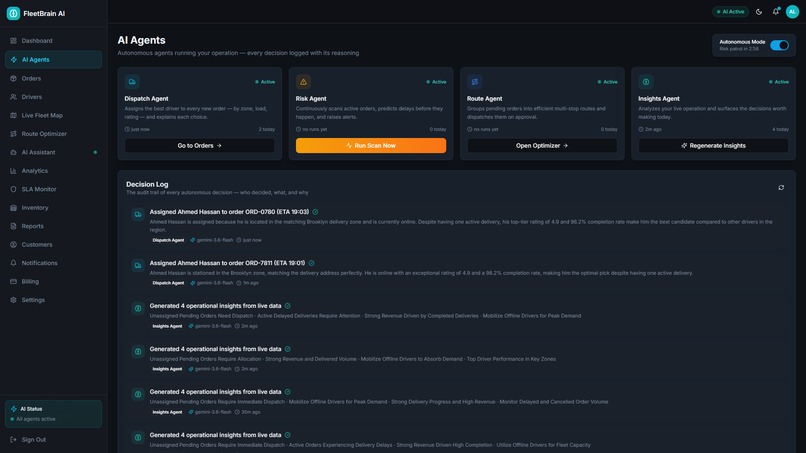
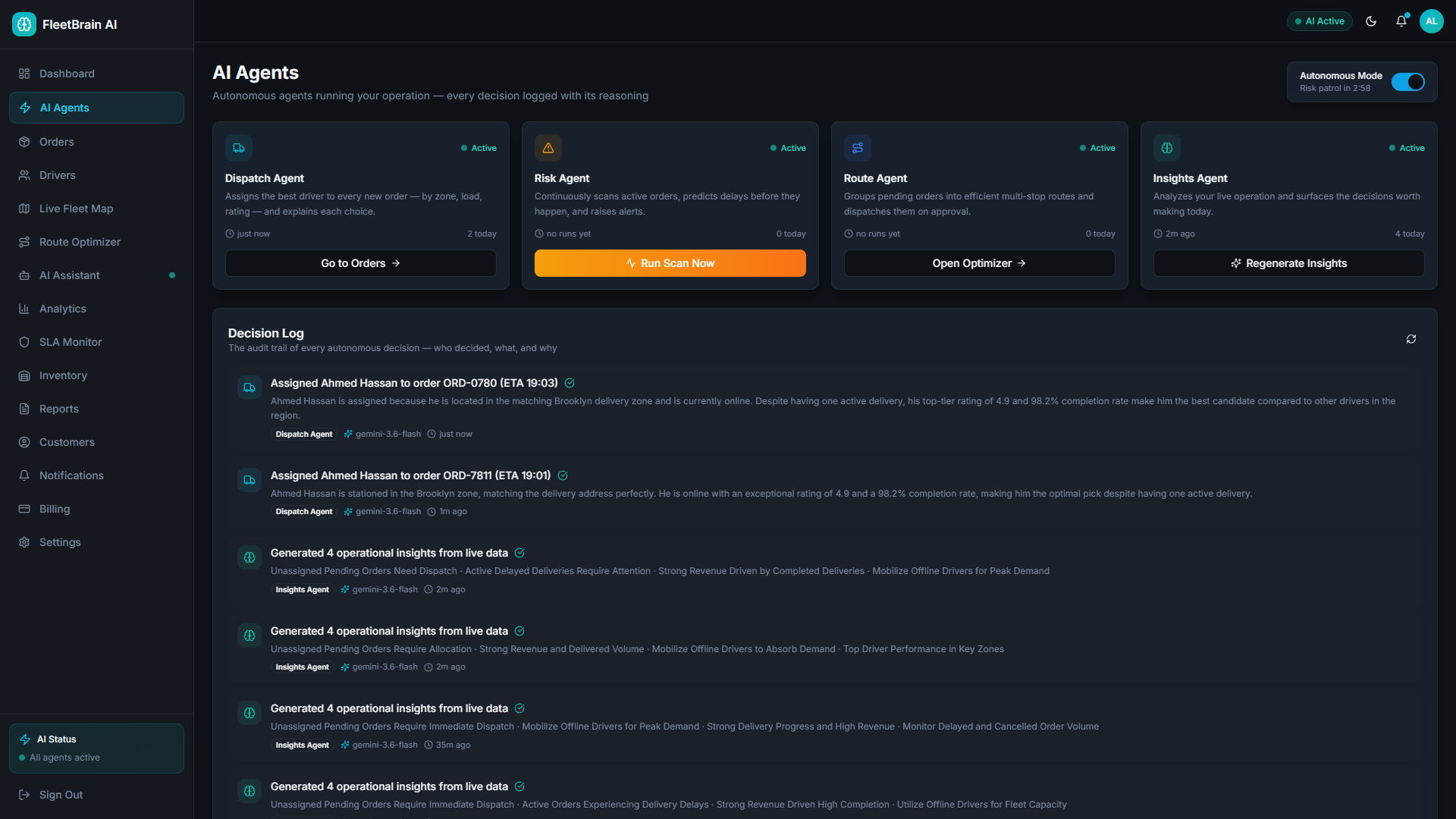
Agent Center Autonomous Mode keeps the Risk Agent patrolling on a timer
-
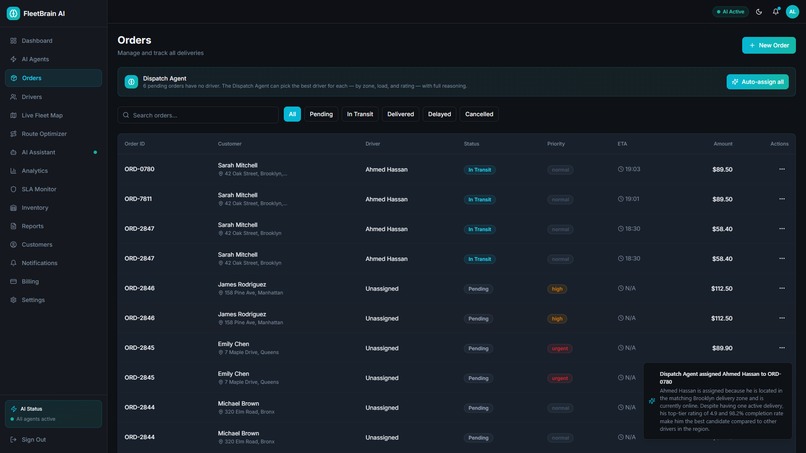
The Dispatch Agent assigns a driver autonomously with its full reasoning
-
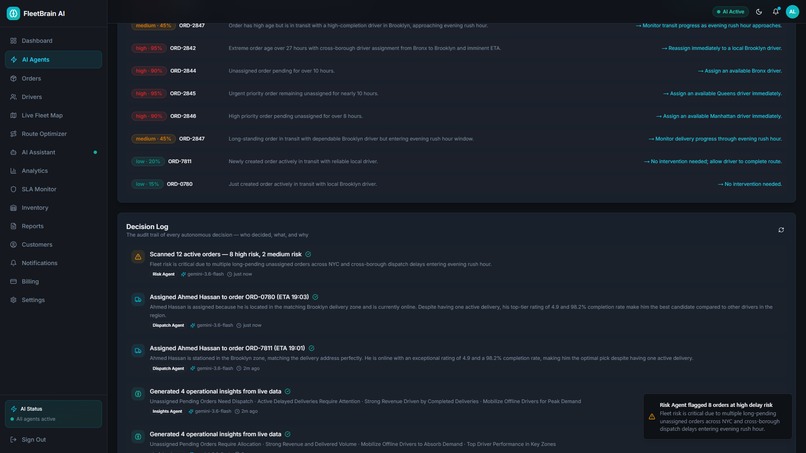
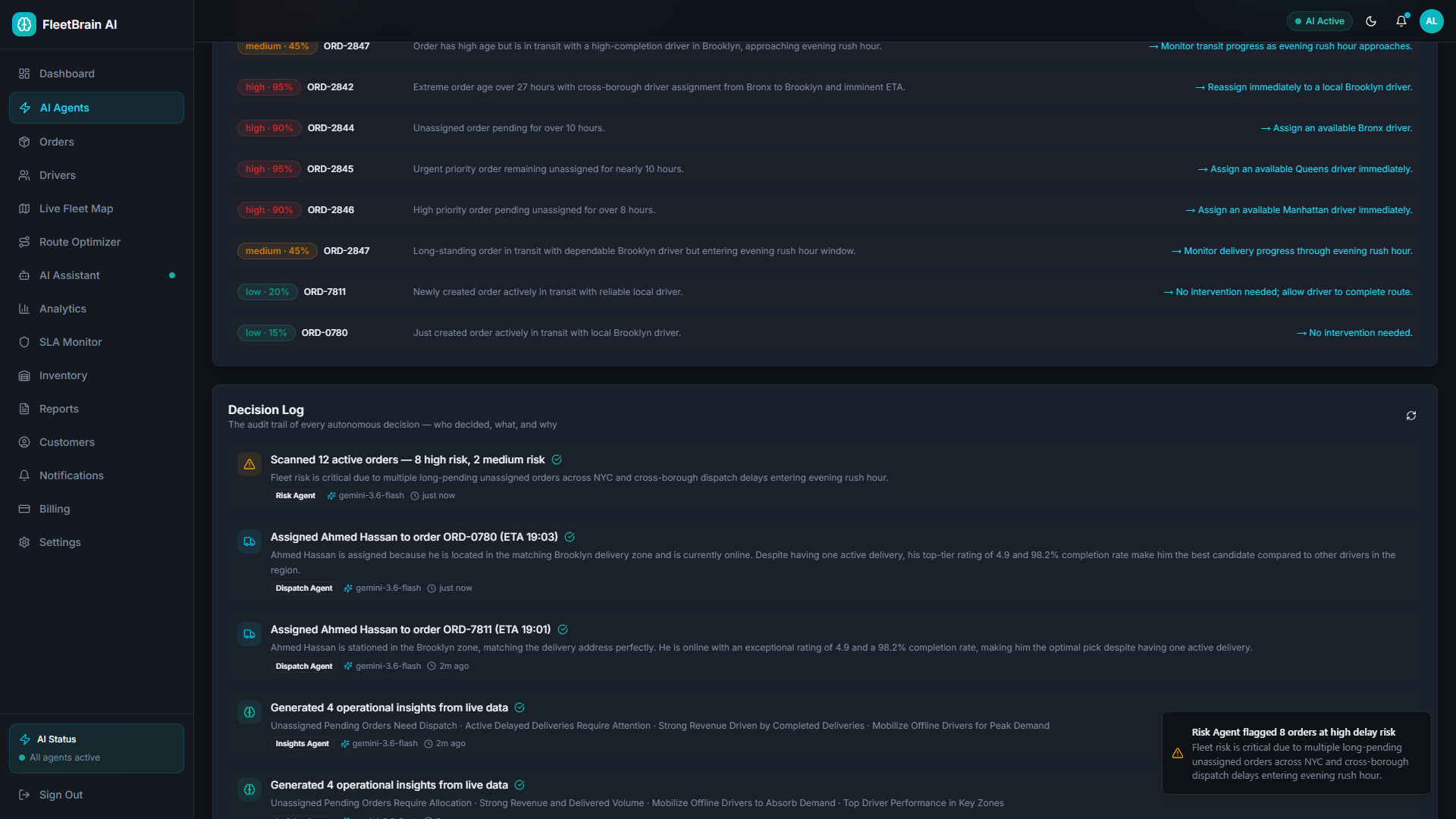
The Decision Log an audit trail of every autonomous agent decision, with the Gemini model that made it
-
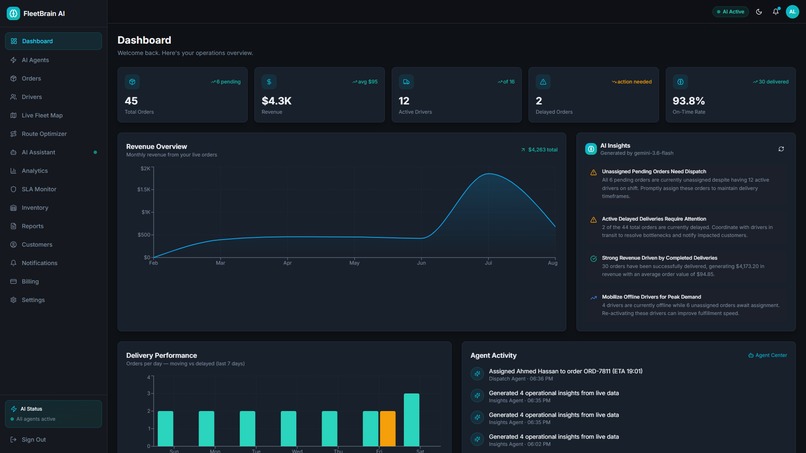
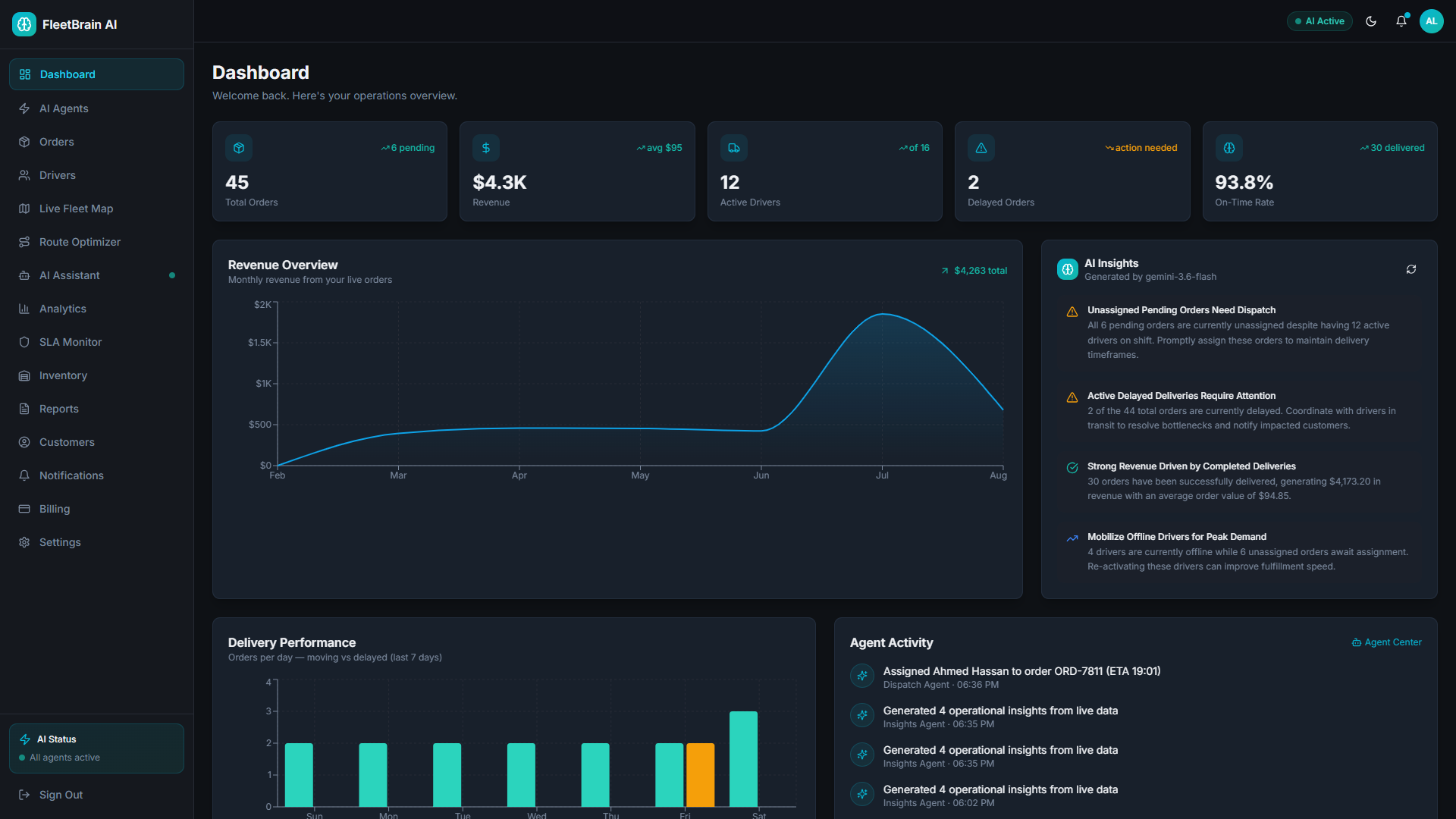
Live dashboard real orders, revenue, and insights generated by Gemini from this account's data
Inspiration
Small delivery businesses lose money every day to manual dispatching, missed delays, and wasted routes. The owner IS the dispatcher, the analyst, and the support desk. We asked: what if AI agents actually ran those operations not as a chatbot on the side, but as the decision-makers?
What it does
FleetBrain AI is a delivery operations platform where four autonomous agents, powered by the Google Gemini API, run the day-to-day business:
- Dispatch Agent when an order is created with no driver, Gemini analyzes every available driver (zone, live workload, rating, completion rate), assigns the best one, sets the ETA, and records its reasoning. No human in the loop.
- Risk Agent patrols active orders on a timer (Autonomous Mode), scores each order's delay probability, flags high-risk deliveries, and raises real notifications with recommended interventions.
- Route Agent turns the unassigned backlog into zone-matched multi-stop routes with stop sequences, ETAs and fuel estimates; one click executes the whole plan.
- Insights Agent analyzes live orders, drivers and revenue, and generates the operational insights shown on the dashboard.
Every decision lands in a Decision Log: what was decided, why, and which Gemini model produced it a live audit trail of AI-native operations. An AI Assistant grounded in the same live data answers operational questions, and a live fleet map shows the fleet across NYC zones.
How we built it
Next.js 13 (App Router) + TypeScript + Tailwind/shadcn-ui on the front; Supabase (Postgres + Auth) with Row-Level Security for multi-tenant isolation. The agents are JWT-verified Next.js API routes calling the Gemini API server-side with structured JSON output (responseSchema), a model-fallback chain (gemini-flash-latest → 3.5 → 2.5 → 2.0), per-user rate limiting, and deterministic heuristic fallbacks so operations never stop. Deployed on Vercel. Every new account is instantly seeded with a demo fleet left in an agent-actionable state — sign up and watch the agents work within seconds.
Challenges we ran into
Making autonomy trustworthy: validating every Gemini decision against real constraints (driver exists, capacity, data ownership) before executing it, designing structured-output schemas that survive model upgrades, and keeping a complete audit trail so autonomy never means opacity.
Accomplishments we're proud of
The Decision Log. Watching the Dispatch Agent justify a driver choice with the same reasoning a good human dispatcher would use zone match, current load, rating and then execute it in production, unprompted.
What's next
Onboarding pilot delivery businesses during the competition window, activating Stripe billing on our existing plans ($29/$99/$299), agent-to-agent workflows (Risk Agent triggering automatic re-dispatch), and real GPS integration to replace the simulated fleet telemetry.
Built With
- googlegeminiapi
- nextjs
- postgresql
- shadcn/ui
- supabase
- tailwindcss
- typescript
- vercel

Log in or sign up for Devpost to join the conversation.