-
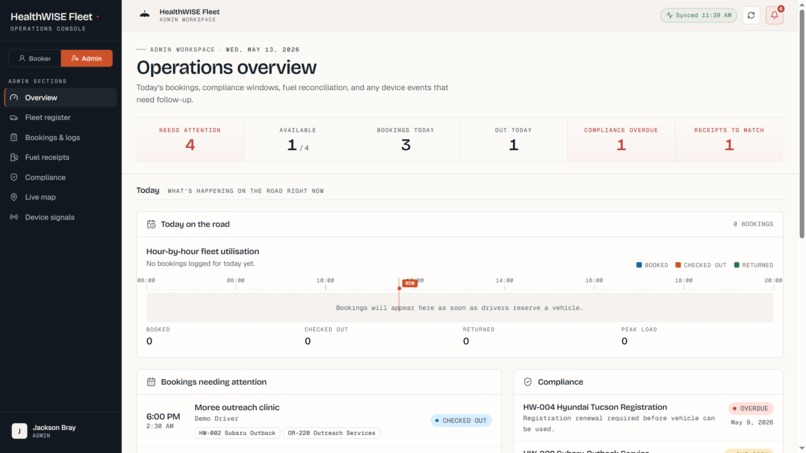
Main Page
-
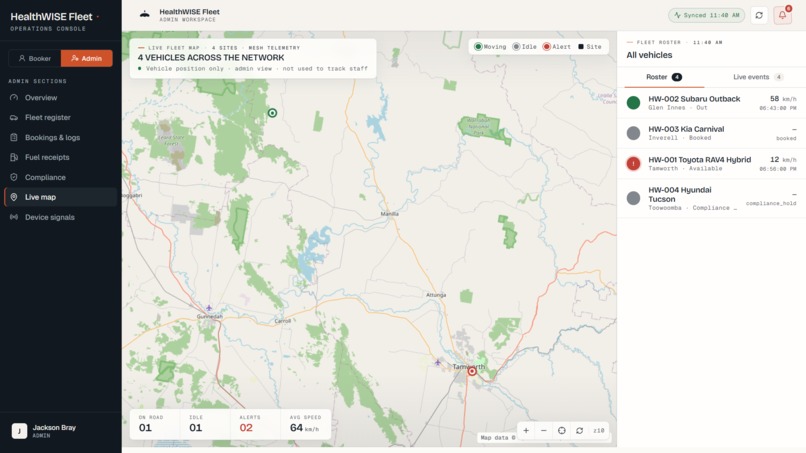
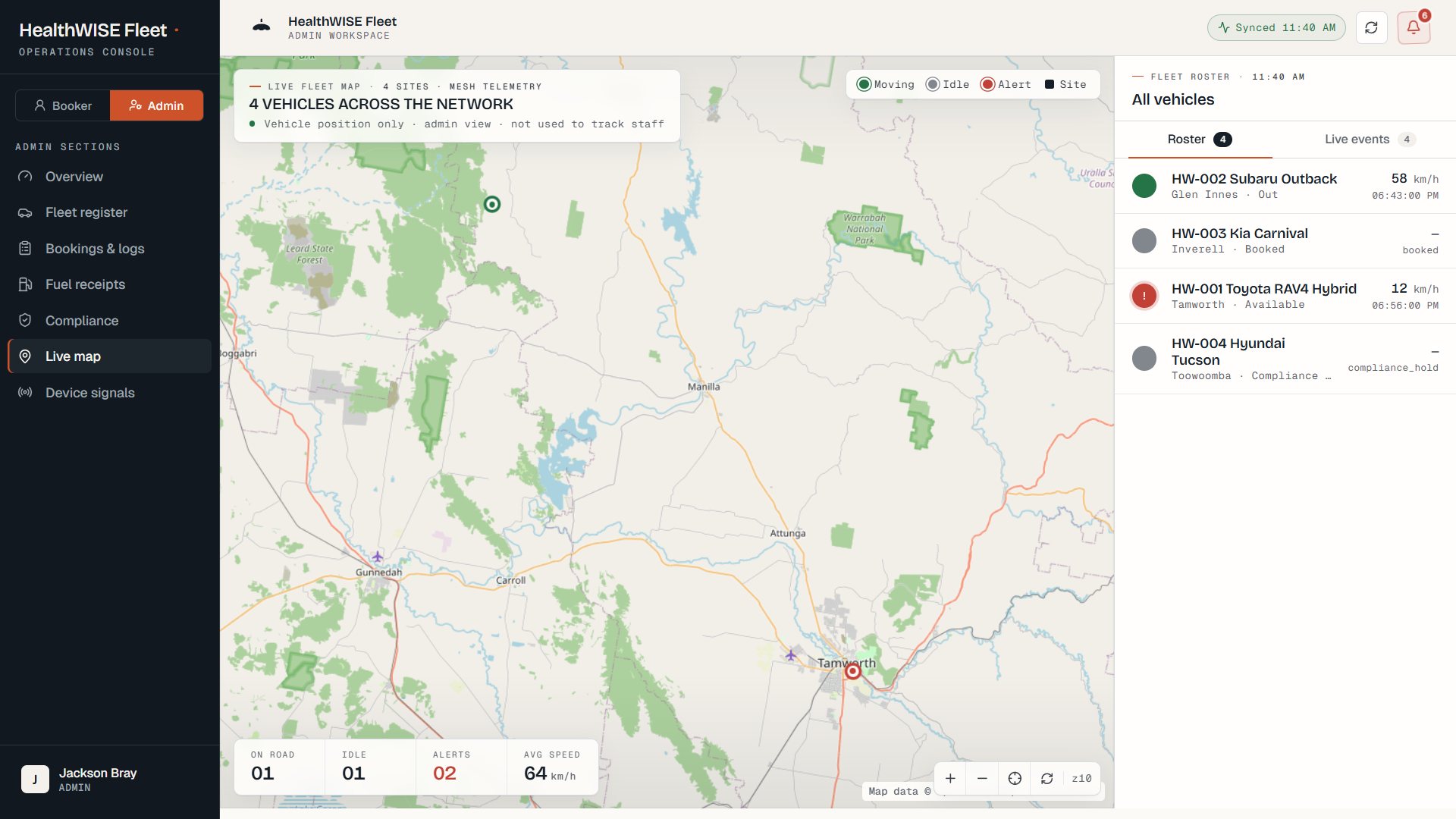
Map
-
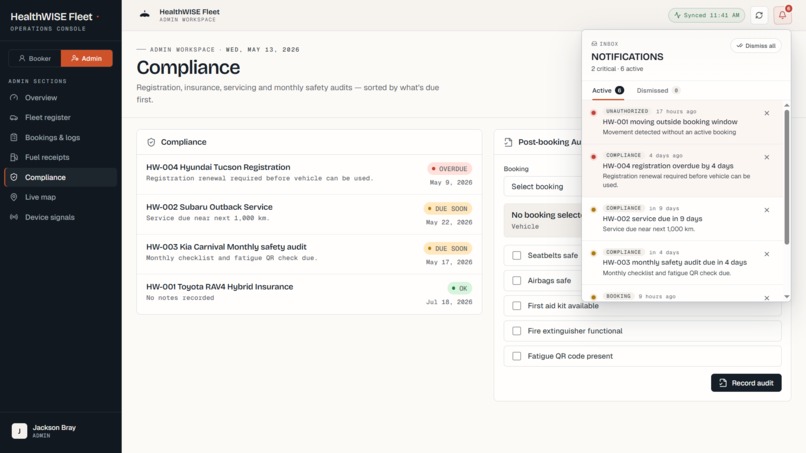
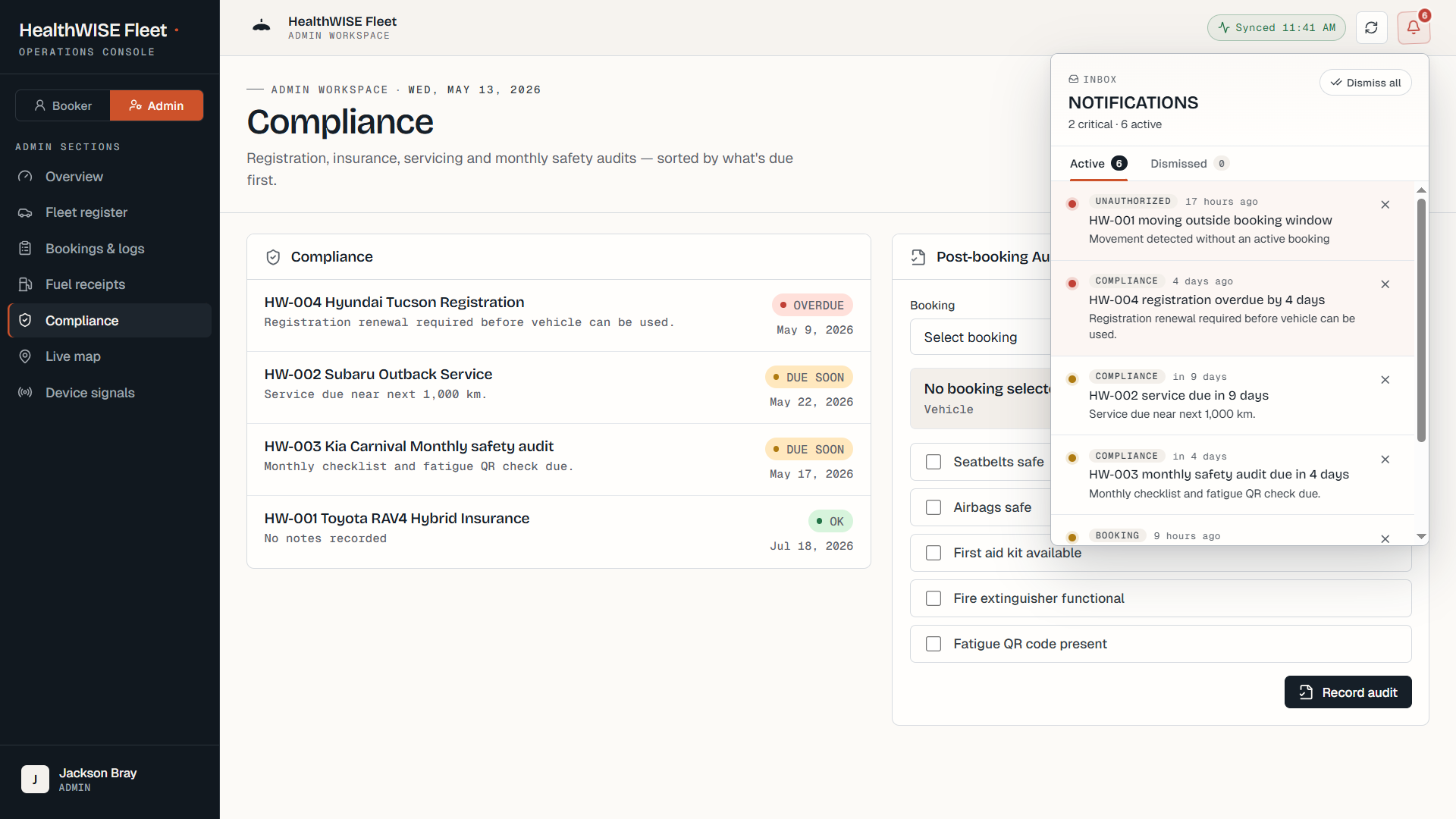
Compliance page with notifications
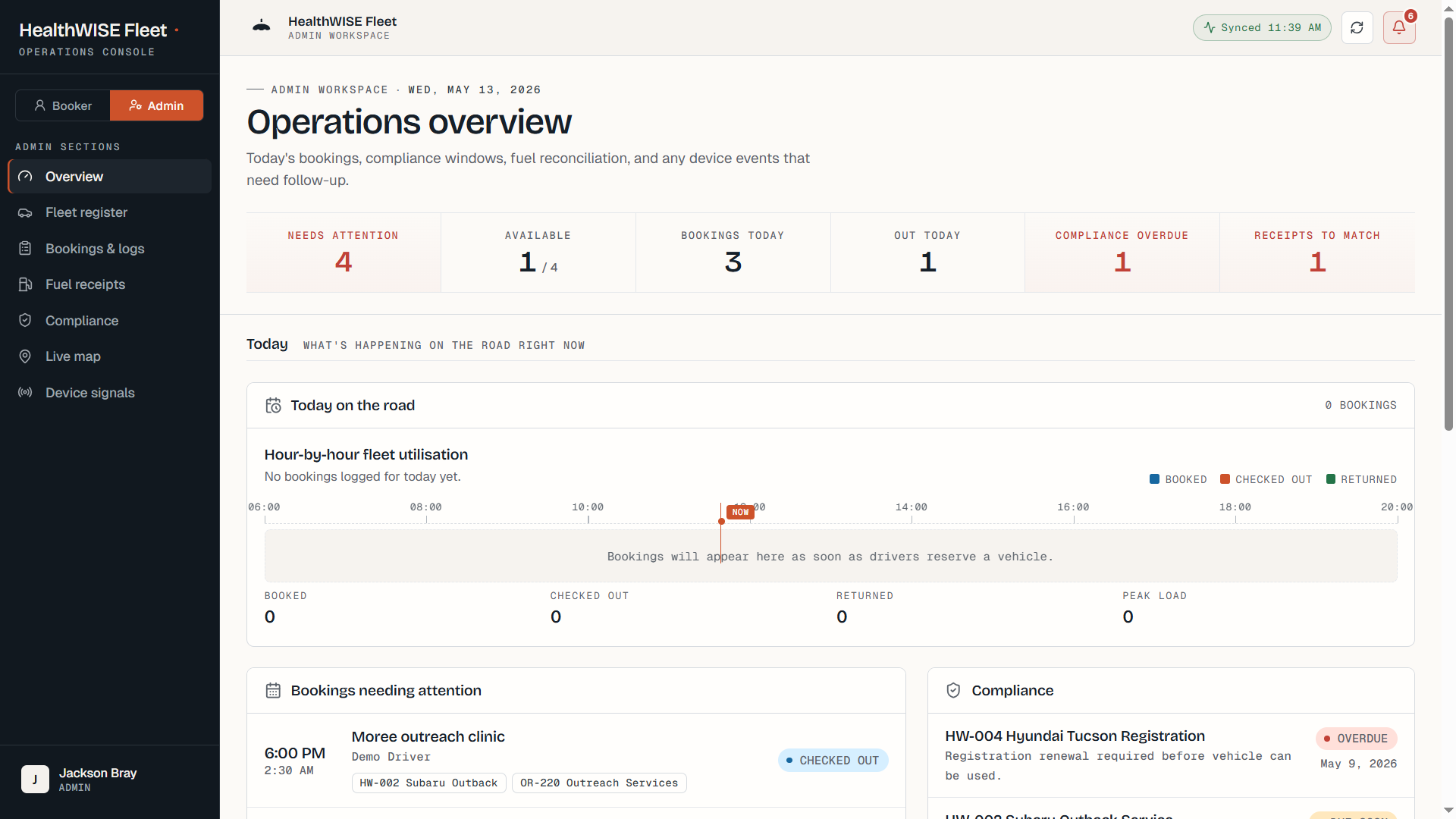
HealthWISE’s mission is to create healthier communities to deliver a range of primary health care programs and social services, respecting peoples lived experience, empower communities and improve long term health.
As a not-for-profit organisation, their zone of operation is large, covering regional NSW and south-east Queensland. Currently, a point of friction in this mission is the management of their fleet, a core component of their mission. Without a centralised system, vehicles get double-booked, vehicles don’t appear as available, all docs are inputted and reconciled manually, in short, the system is fragmented and leading to staff distrust in the system, staff working too hard on business that is not core HealthWISE business.
In order to care for the carers, we have created a system (in progress) that reduces and removes these friction points by creating a centralised system. Core design principles,
The team worked quickly to familiarise themselves with Azure cloud deployment. A new process. They also set themselves an ambitious stretch goal of implement an embedded vehicle location service for instances when a vehicles location is unknown and critical point data collection system (ie collisions). A key decision point and learning moment was integrating the hardware with the software system. They had to decide between sim card or radio waves. The decision to go radio waves was based on a cost benefit analysis. The cost of the sim card was decided to not provide a sufficient enough advantage over the radio signal connection.
Not only have the team used AI to fast-track their ‘vibe coding’. And I mean these guys are amazing. Yesterday I had the unnerving experience of ducking out to refill a coffee, I think I might have a short conversation with someone, In the time it took me to get back they had knocked up a database schema, roughed out a user dashboard interface, and started up coding for the ESP device. They have also integrated AI in the final product. An AI agent reads and analyses fuel receipts, insurance and registration documents. THis novel use of AI allows for the pulling from the document required information inputting to desired form fields. This automation removes the need to manually input the required data
You might be saying, wait a sec, that all sounds diabolically complex. I agree, I scratch my head trying to understanding what they’ve put together. But the great thing about this solution is that it does all the hard work behind scenes, it works hard so the user doesn’t have to. The system takes all of the current processes, multiple calendars, inboxes, records, reminders, documentation, and places it ALL IN THE ONE PLACE. The staff can trust the system as it is all presented in one of two views, either a simple USER view allowing for vehicle availability check, booking creation, and log book update with Fatigue check and fuel receipt uploads (with AI-automation analysis for required information). The ADMIN view, overview with notifications, live information about availability, fleet register for adding a new vehicle to the fleet, trip overview, compliance to-do list sorted by due date, live map.

Log in or sign up for Devpost to join the conversation.