Inspiration
Transit operators at Durham Region Transit (DRT) manage critical information across multiple disconnected systems—vehicle GPS, maintenance work orders, ridership taps, and weather alerts. Operators often have to manually cross-reference spreadsheets and dashboards just to understand the health of the fleet.
This process is slow and reactive. Too often, maintenance issues are discovered only after a bus breaks down on the road.
We asked a simple question: What if all this data lived in one place—and operators could simply ask the system for answers?
What it does
Fleet AI is a real-time, AI-powered fleet management dashboard designed for Durham Region Transit, one of the largest transit systems in the Greater Toronto Area.
It combines live transit data, predictive analytics, AI assistants, and computer vision into a single operational platform.
Key features
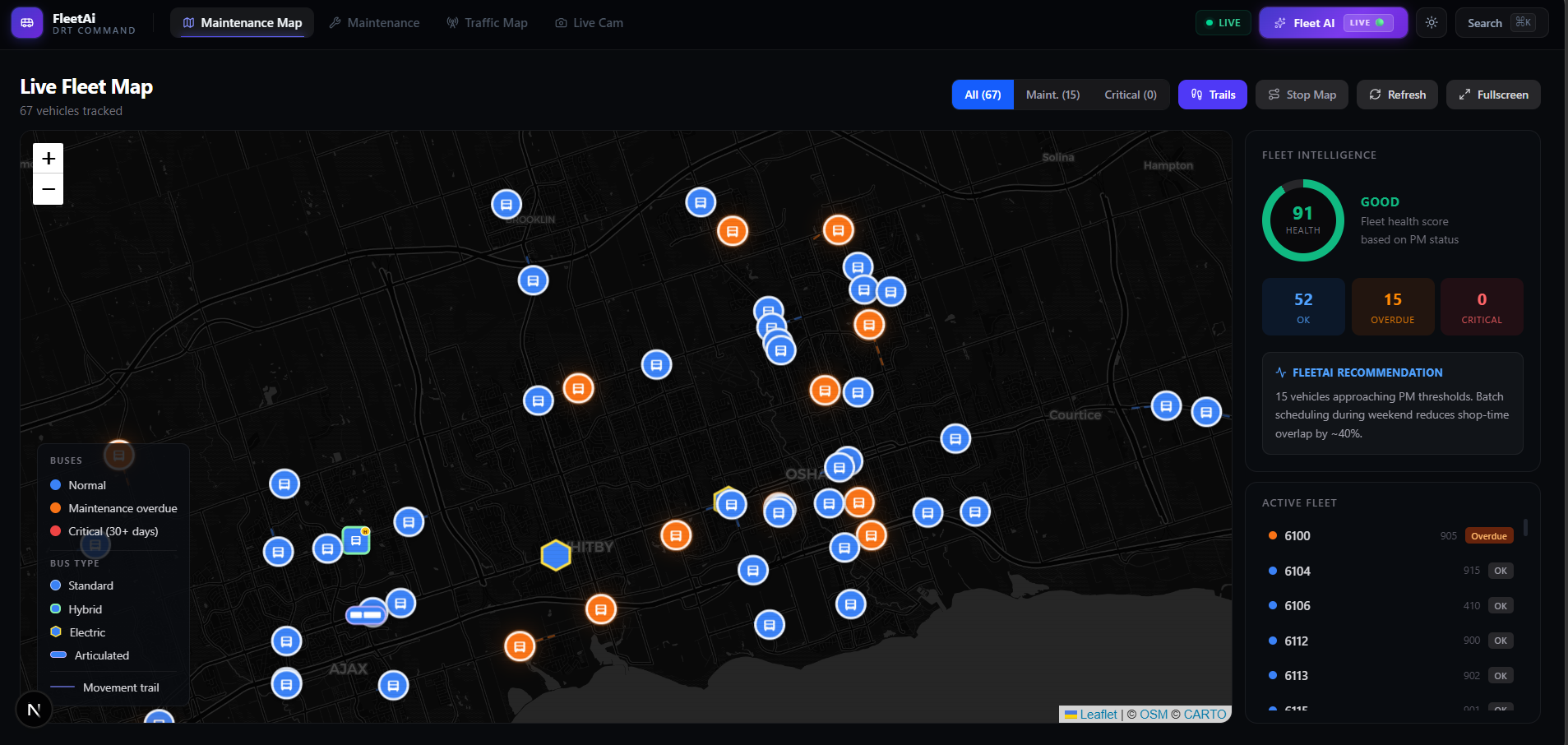
Live fleet map Displays every active bus with a health status (green / orange / red) based on how far it is past its maintenance threshold.
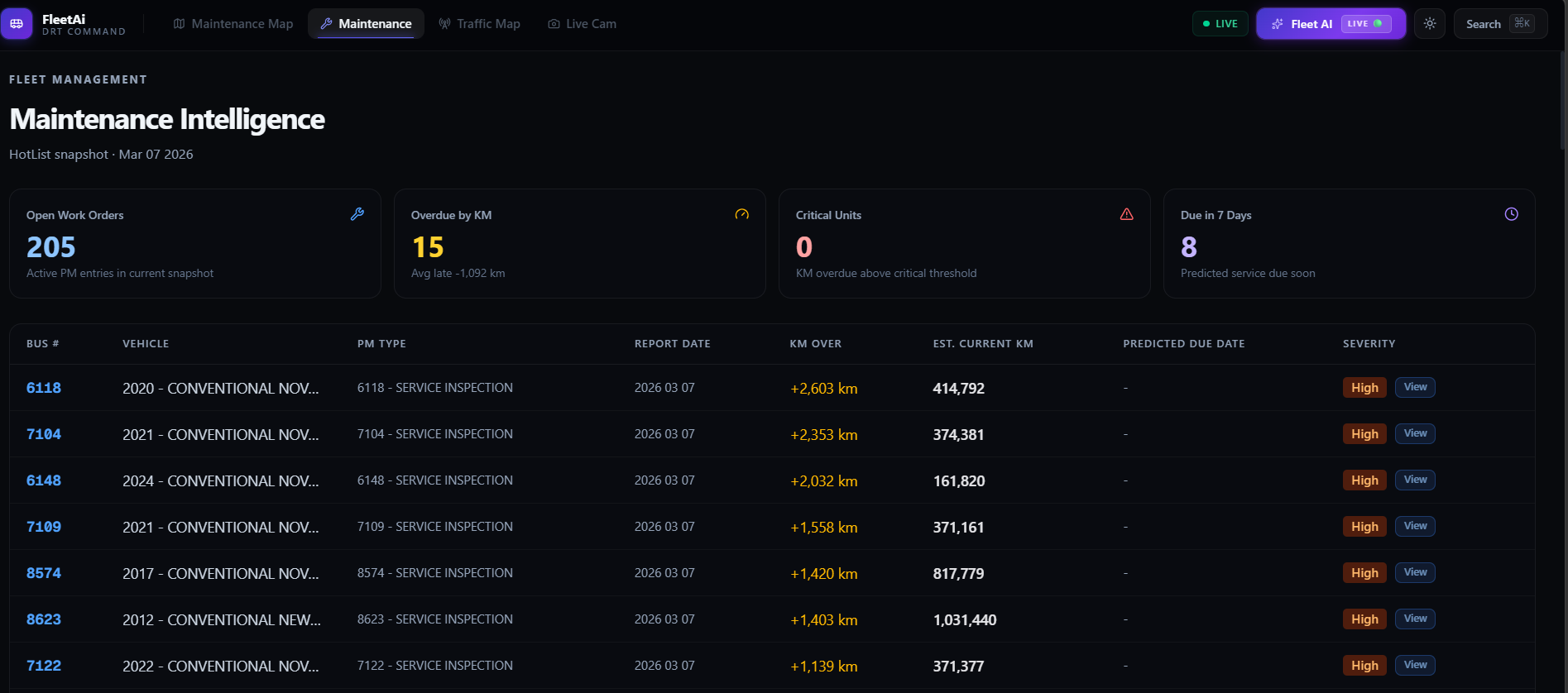
Predictive maintenance Risk scores update in real time by combining maintenance records with live vehicle telemetry.
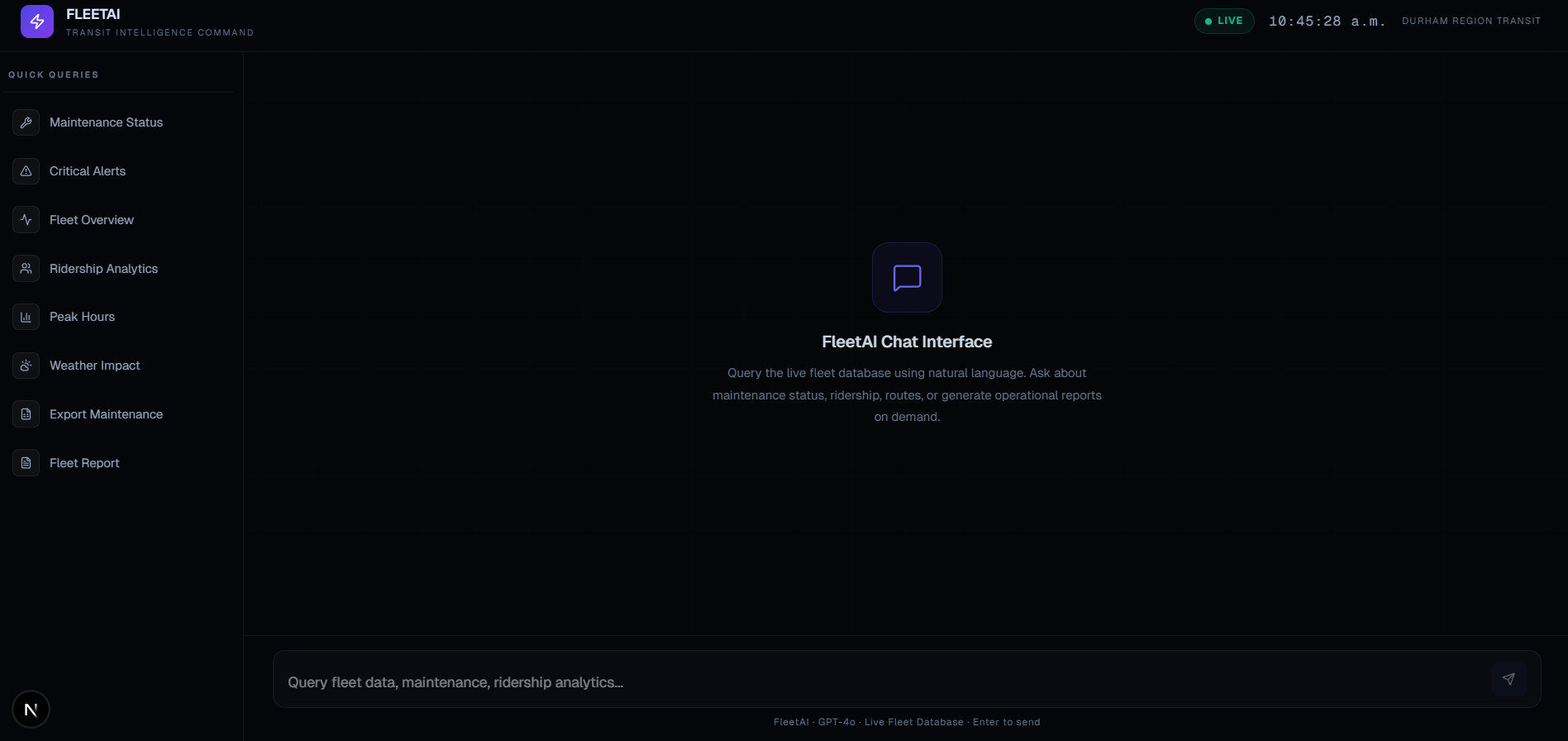
AI operations assistant Operators can ask questions in plain English (or voice) and receive instant answers and reports.
Fare evasion detection Computer vision analyzes live camera feeds to detect potential fare evasion events.
Stop vulnerability map Identifies bus stops currently served by vehicles that are overdue for maintenance.
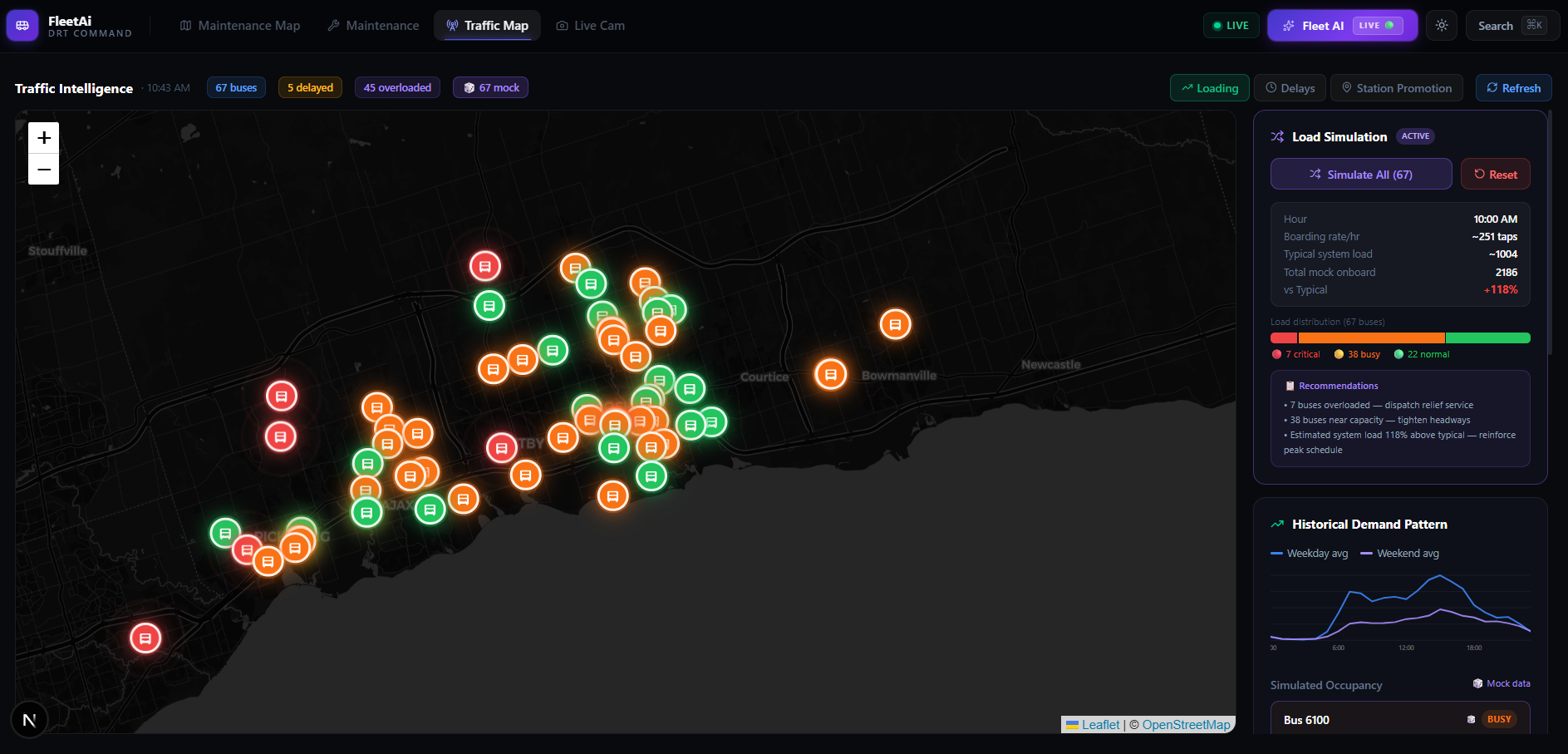
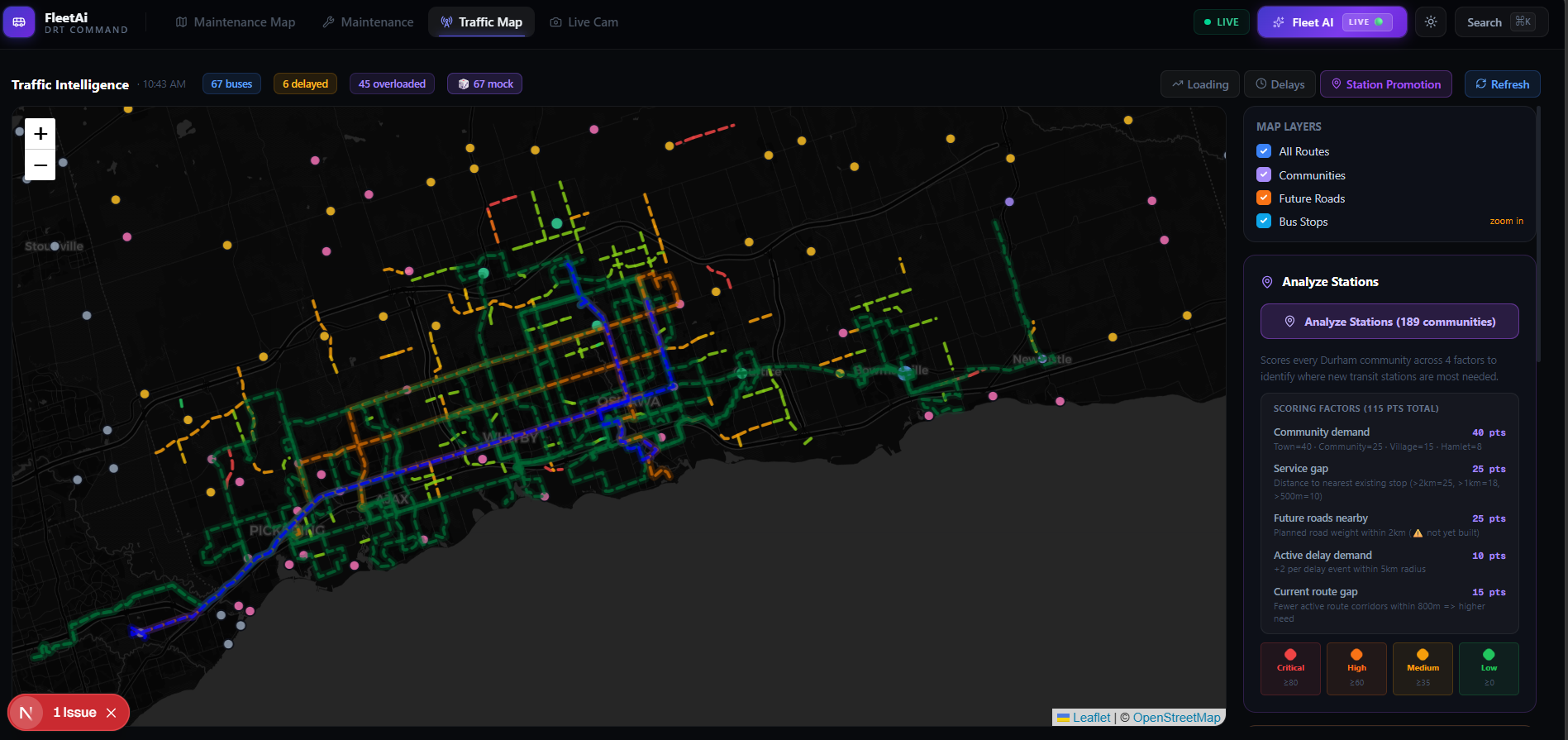
Traffic and bus bunching alerts Detects delays and bus bunching using real-time transit updates.
How we built it Layer Technology Frontend Next.js, React, TypeScript, Tailwind Backend FastAPI (Python), SQLAlchemy Database PostgreSQL + PostGIS AI GPT tool-calling, voice interface, text-to-speech Computer Vision YOLOv8 for pose and object detection Maps Leaflet + React-Leaflet Realtime GTFS-Realtime, WebSockets, WebRTC
The backend ingests GTFS-Realtime transit feeds, enriches them with maintenance records stored in PostgreSQL, and performs geospatial queries using PostGIS.
The AI assistant uses tool-calling to query internal APIs, generate insights, and respond with both text and voice.
Challenges we ran into
The most difficult challenge was connecting static maintenance records with live vehicle telemetry.
Transit feeds assign buses dynamically to routes and trips, so we had to calculate how far a bus has actually driven past its maintenance interval in real time, rather than relying on overnight reports.
Handling inconsistent GTFS data—missing assignments, mismatched block IDs, and protobuf parsing edge cases—required multiple fallback strategies.
Another challenge was integrating real-time computer vision with live video streams while keeping frame rates stable during pose estimation.
Accomplishments we’re proud of
Built a single dashboard that replaces multiple operational tools
Real-time maintenance risk scoring instead of overnight batch reports
AI assistant that answers operational questions in seconds
Live computer vision detecting fare evasion events
Efficient geospatial analysis using PostGIS
Built With
- fast-api
- next-js
- python
- yolo

Log in or sign up for Devpost to join the conversation.