-
-
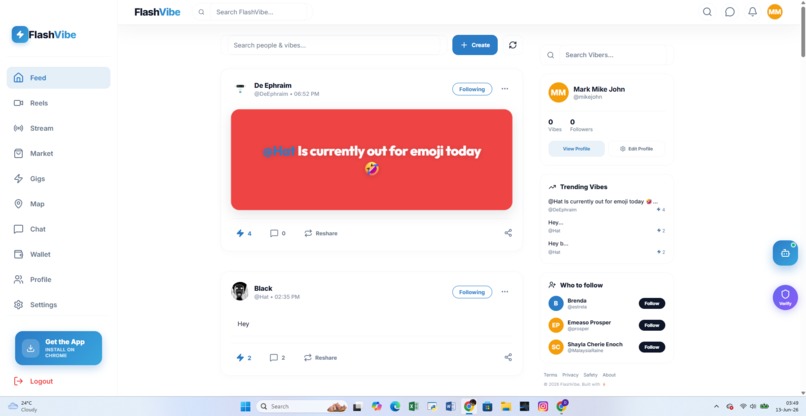
web screenshot
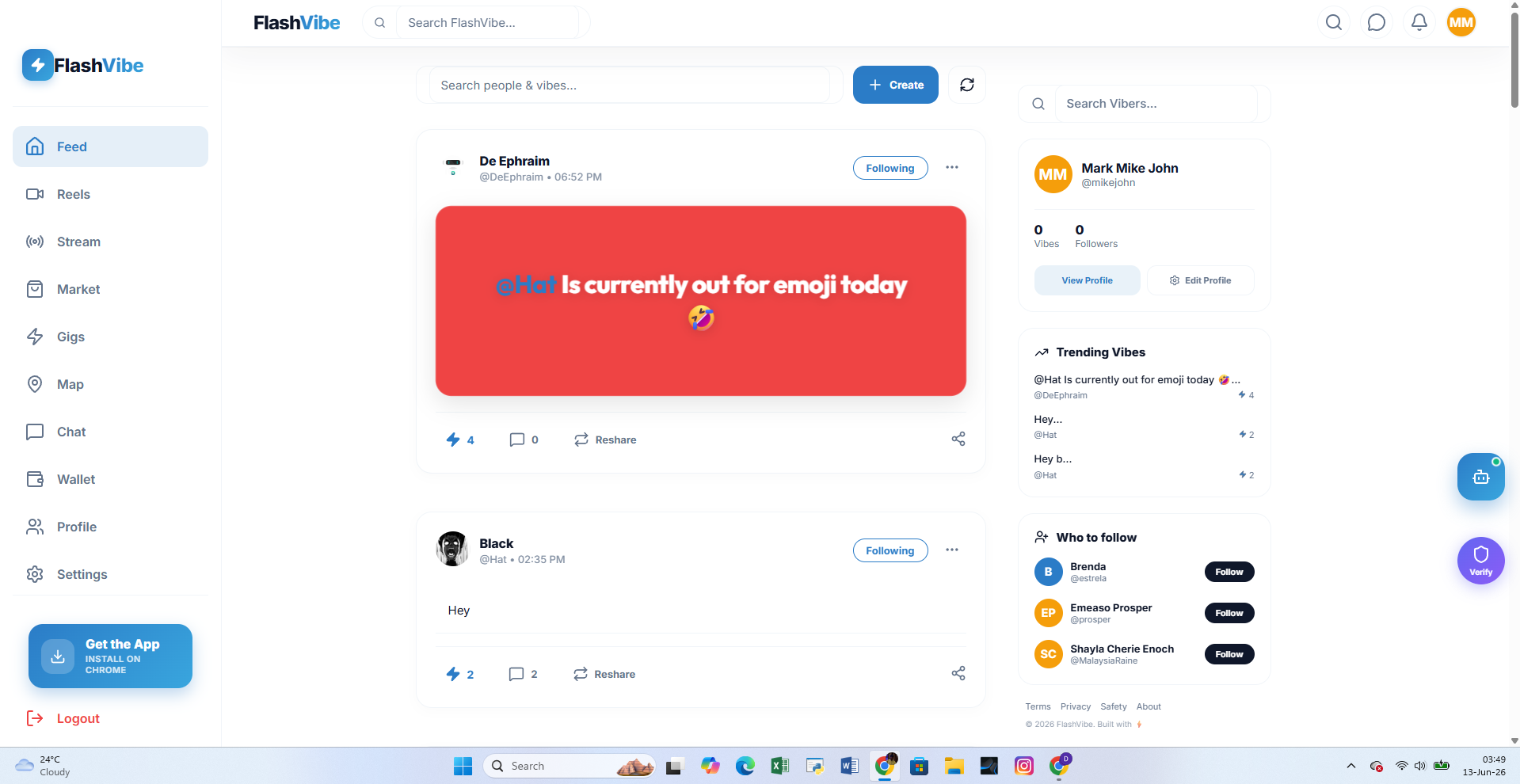
As a student at Michael Okpara University, I observed a growing digital dividenot in access, but in trust. Misinformation and deceptive sentiment patterns were polluting campus news, student forums, and emerging fintech micro-communities. I realized that the rapid growth of the digital economy in Nigeria is hindered by the inability to distinguish between genuine human sentiment and AI-generated noise or malicious scams. I founded FlashVibe to build a "Truth Filter" that empowers users to navigate the digital world with confidence.
The Architecture FlashVibe is a robust, multi-platform ecosystem designed as an AI-native intelligence layer for digital platforms.
Core Engine: Powered by the Gemini API for deep semantic understanding and large-scale language processing.
Multi-Platform Access: We provide a unified experience via FlashVibe Web and FlashVibe Mobile, with full PWA (Progressive Web App) support for seamless device installation.
Management Suite: The platform includes a dedicated FlashVibe Admin Dashboard for monitoring verification logs and a FlashVibe Qads (Quality & Analytics Data) Management Page to fine-tune detection algorithms and track accuracy metrics.
Infrastructure: Currently hosted on Render, we employ a "keep-alive" heartbeat system to optimize performance on our current budget, ensuring our community stays connected.
Current Traction & Scaling Strategy FlashVibe has already gained significant organic traction, with good number of users actively engaging across both our mobile and web-based PWA platforms. To maintain our high standard of accuracy, we currently utilize a "human-in-the-loop" verification workflow alongside our AI engine, which has provided us with invaluable data on localized sentiment and user behavior.
While we are currently bootstrapping—managing resources to prioritize feature development and service uptime—this lean approach has proven our market fit. We are now seeking grant funding to transition to a fully automated, production-grade infrastructure, which will allow us to scale our AI-driven verification engine to thousands of simultaneous users and eliminate latency.
The Challenges We Faced The primary challenge was optimizing for performance on a budget. Real-time verification is computationally expensive. We spent weeks refining our prompt engineering and architectural pipeline to ensure that our verification logic maintained high accuracy (currently at a 92% benchmark) while keeping response times low. We also curated a unique, context-aware dataset to ensure our model understands localized Nigerian slang—a nuance often missed by global AI models.
What We Learned This journey taught me that technical excellence is only half the battle. Building a tool is easy; building a solution requires understanding human behavior. I learned the power of the "AI-native" approach—using AI as the decision-making brain of an entire business workflow. Most importantly, I learned that student-led projects, when built with modular, scalable architecture, have the potential to grow into foundational infrastructure for a nation.


Log in or sign up for Devpost to join the conversation.