-
-
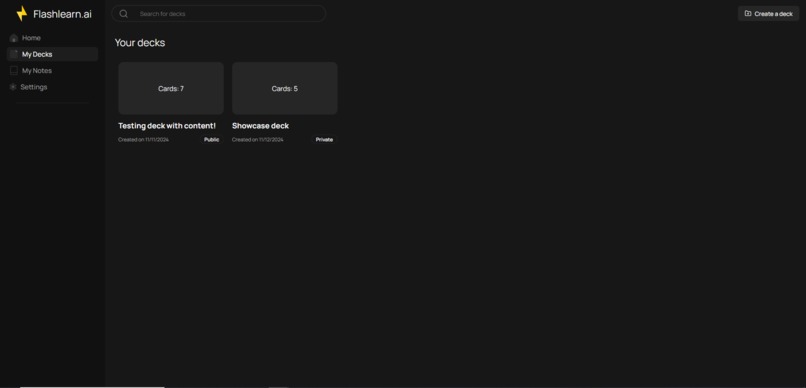
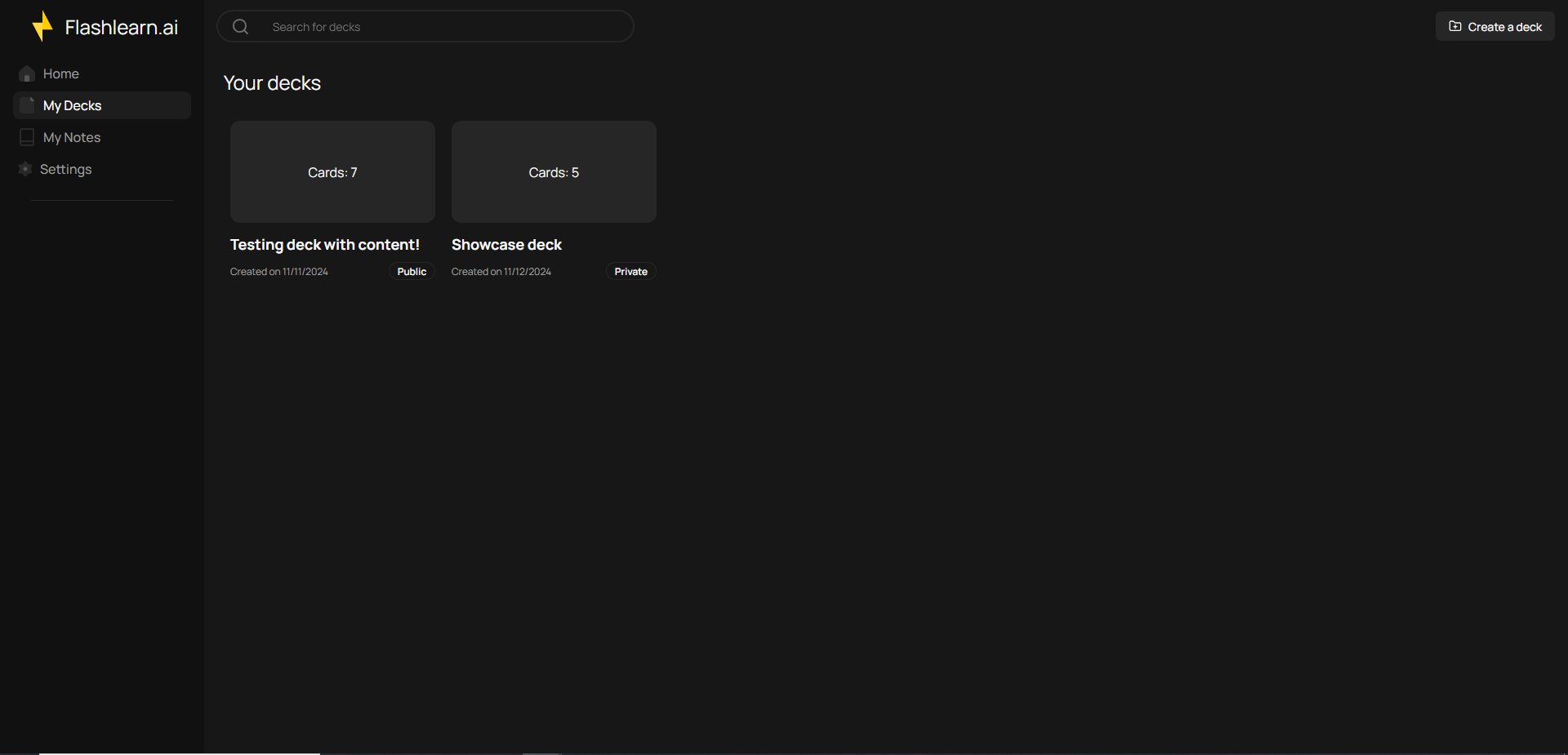
Dashboard for all user decks
-
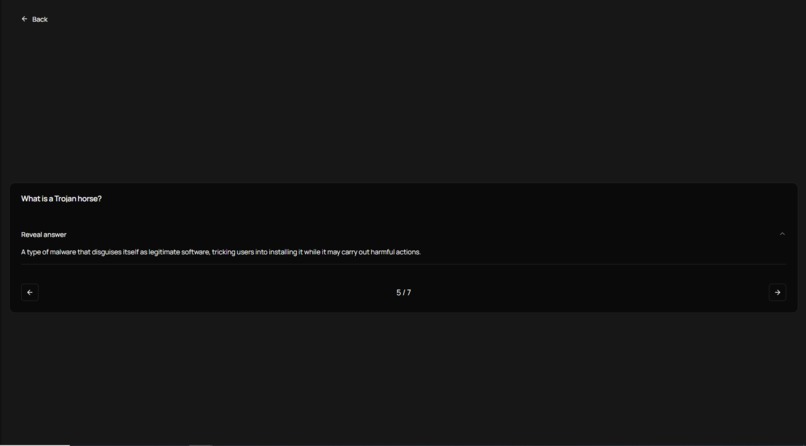
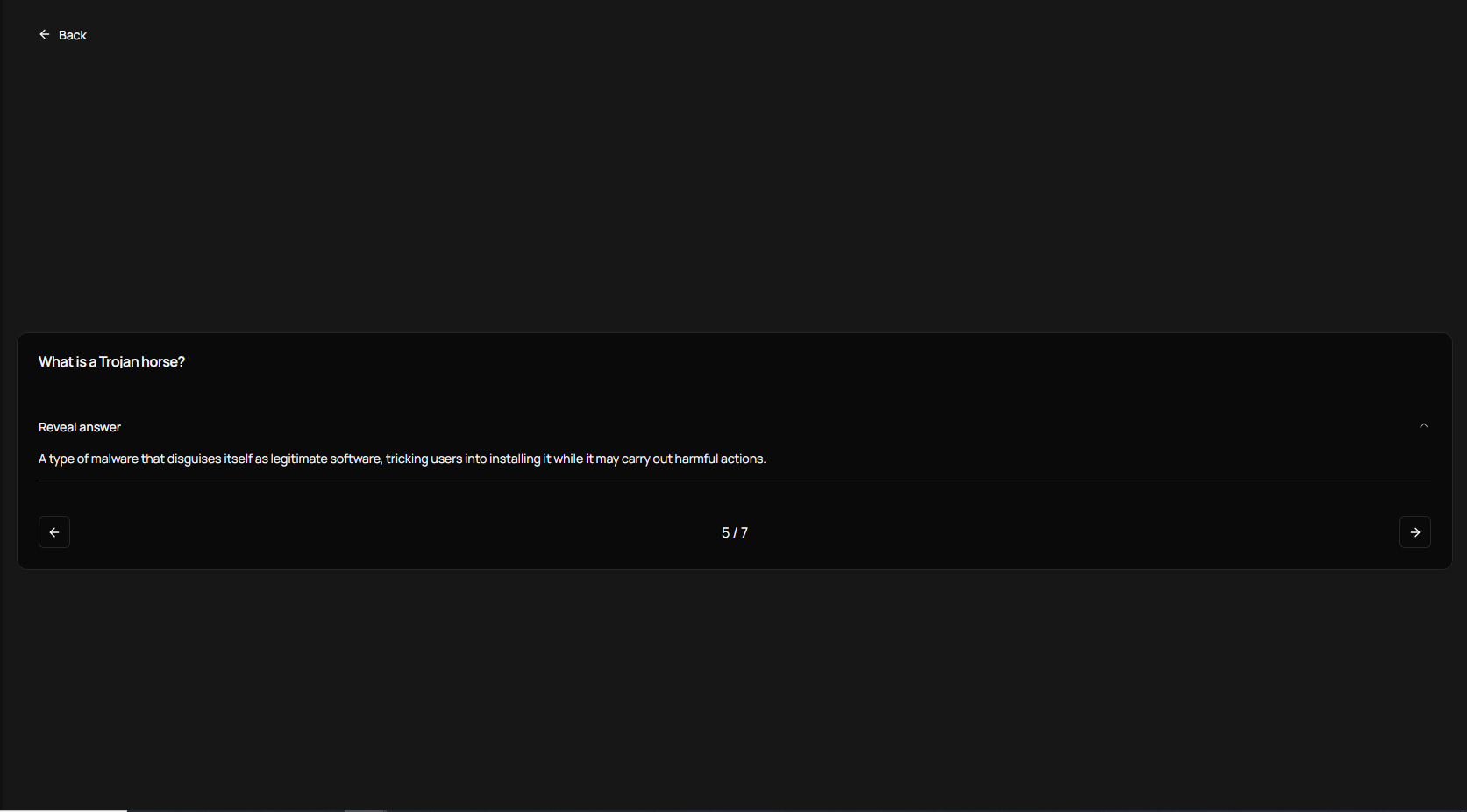
Flashcards active recall practice sessions for quick study sessions on important contentt
-
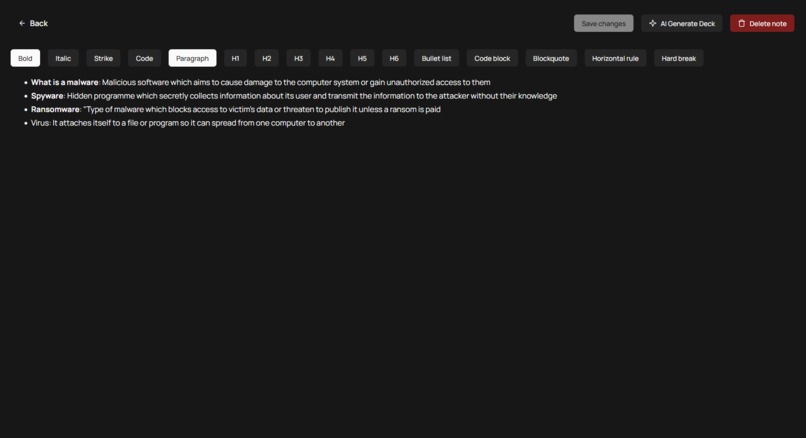
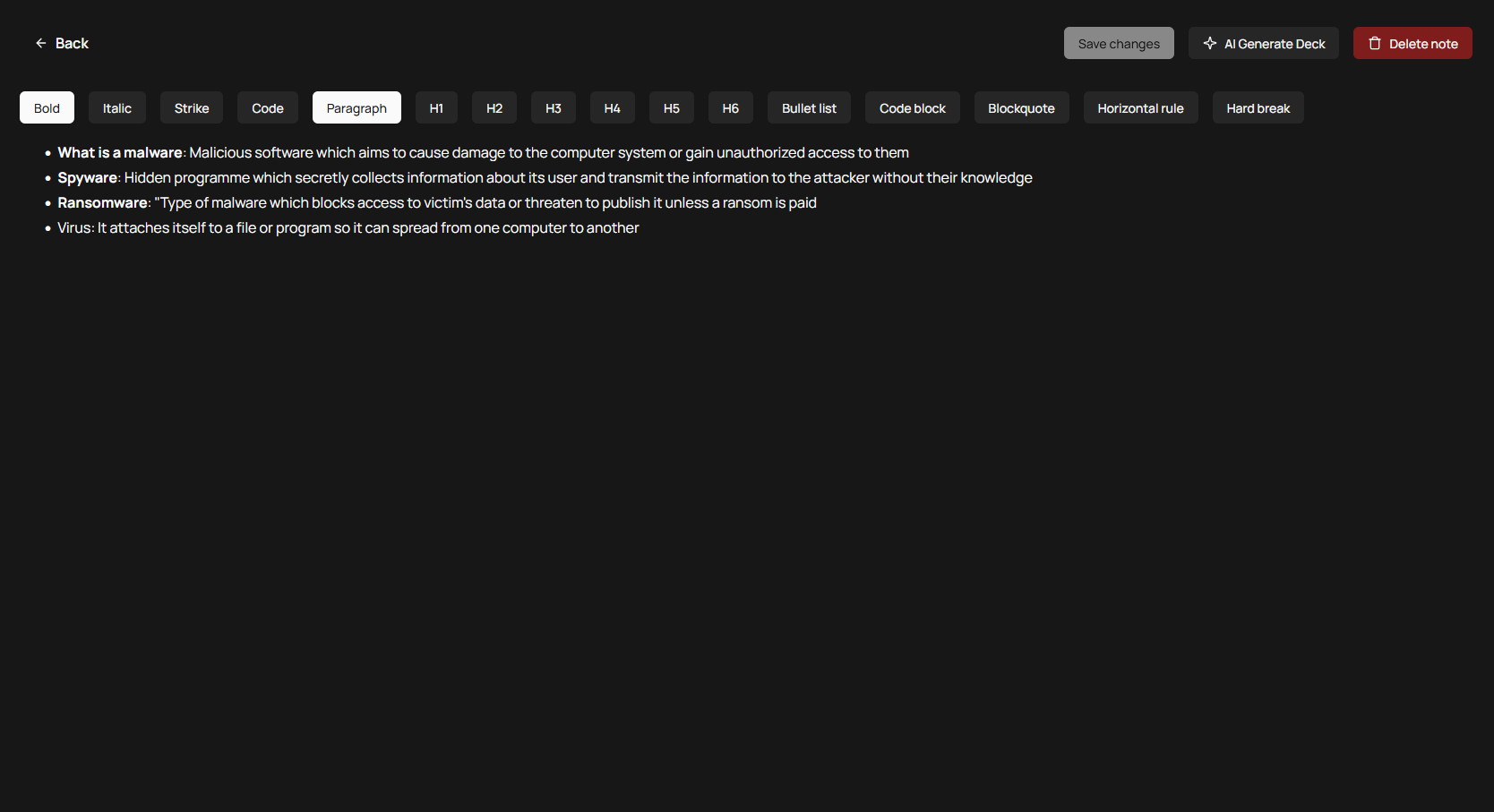
Note taking text editor for users to effortlessly take down notes whenever they need to
-
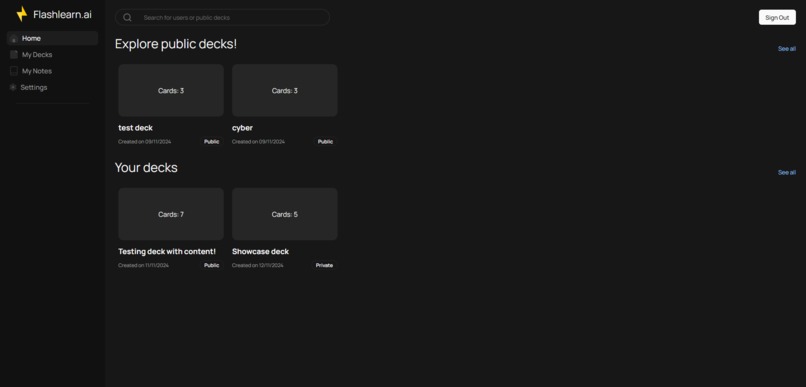
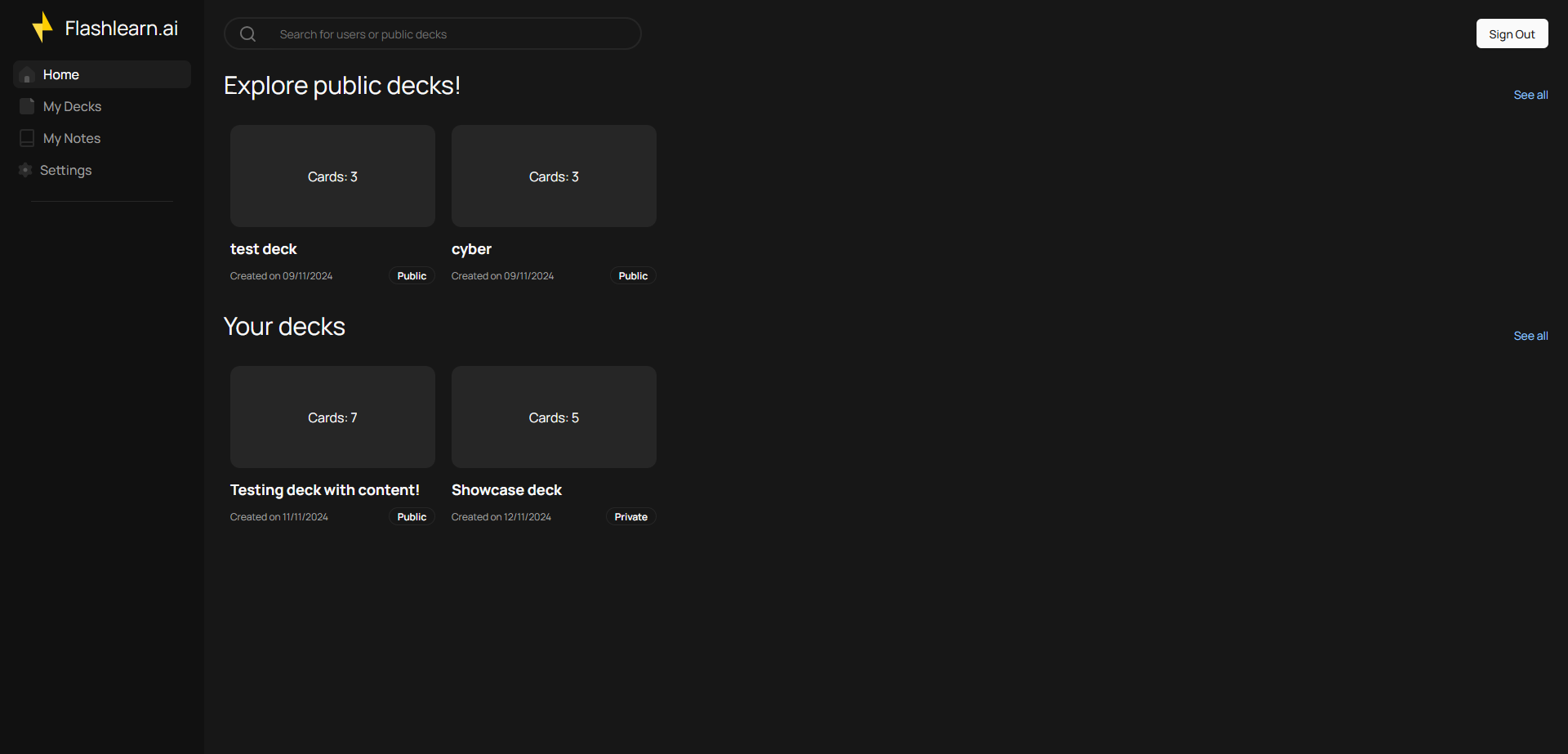
Home page where other public decks of users are visible to create a community of active learners and share quality educational materials
-
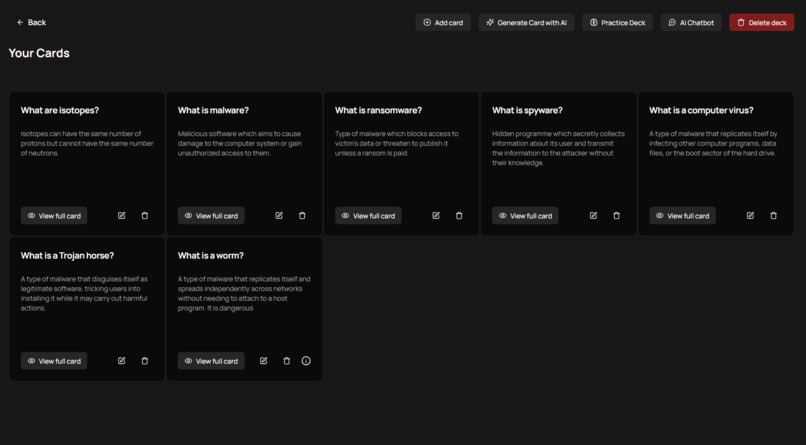
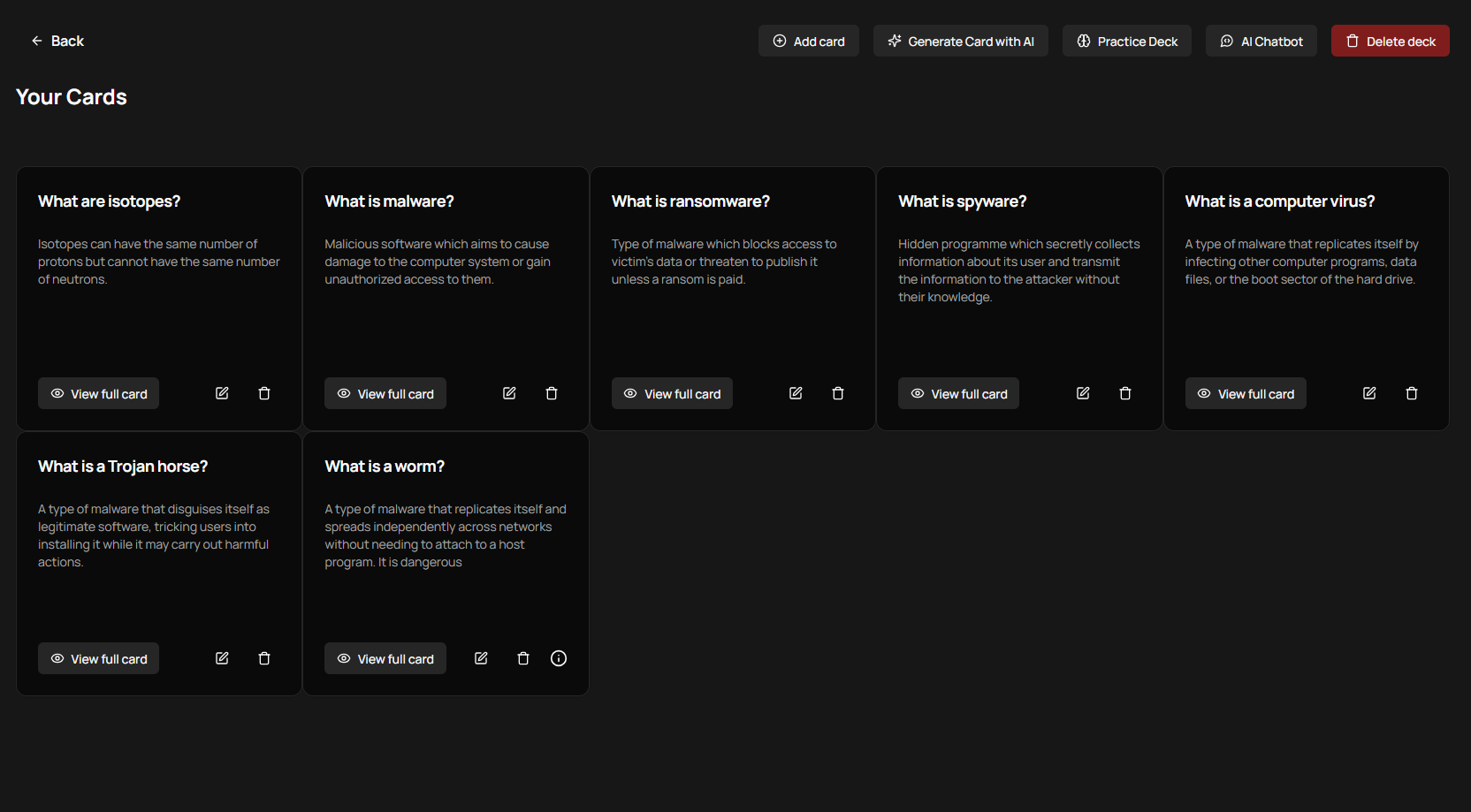
Deck page with flashcards
-
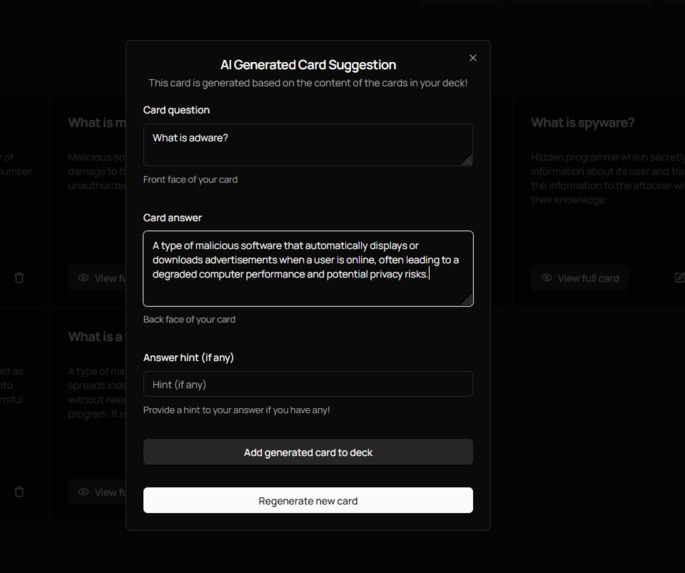
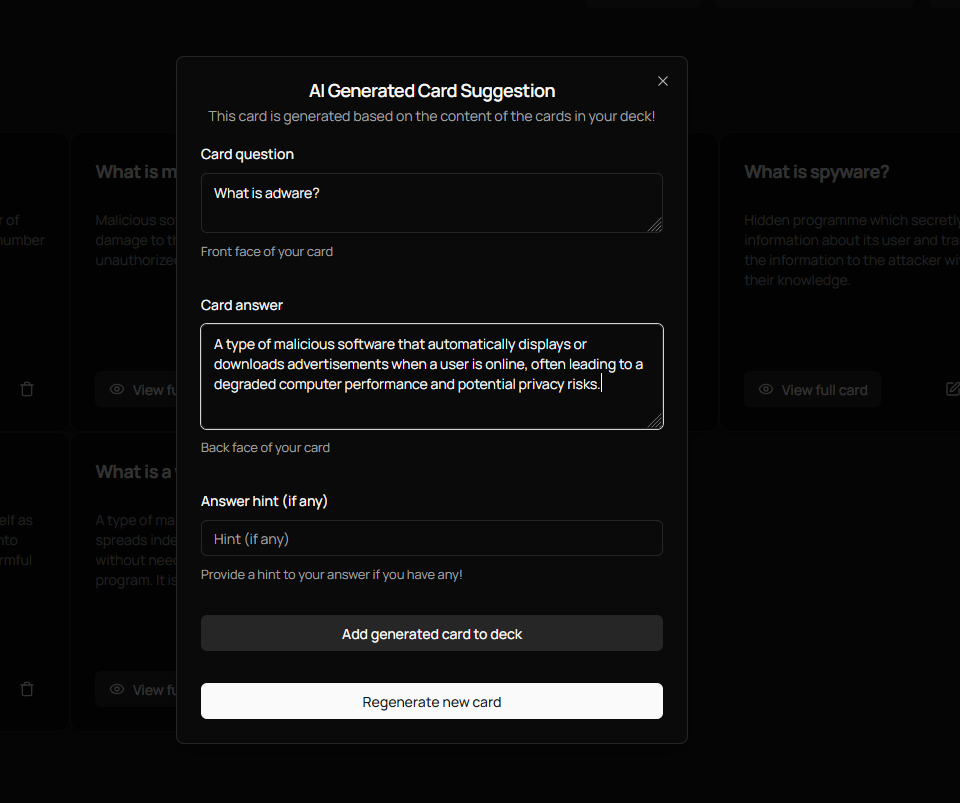
AI Generated flashcards based on deck content
-
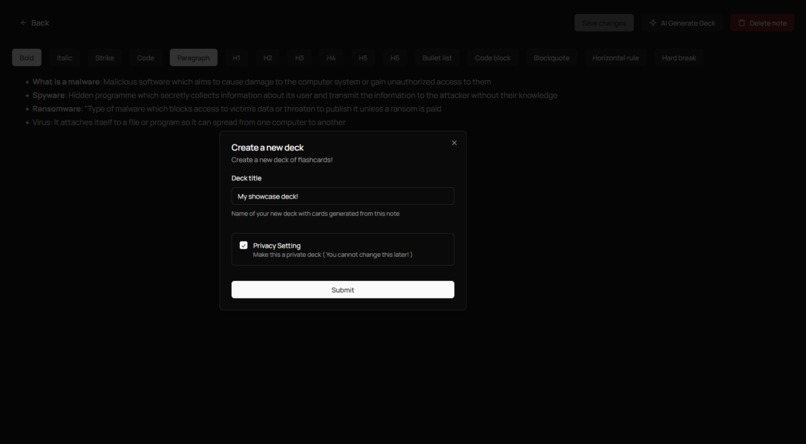
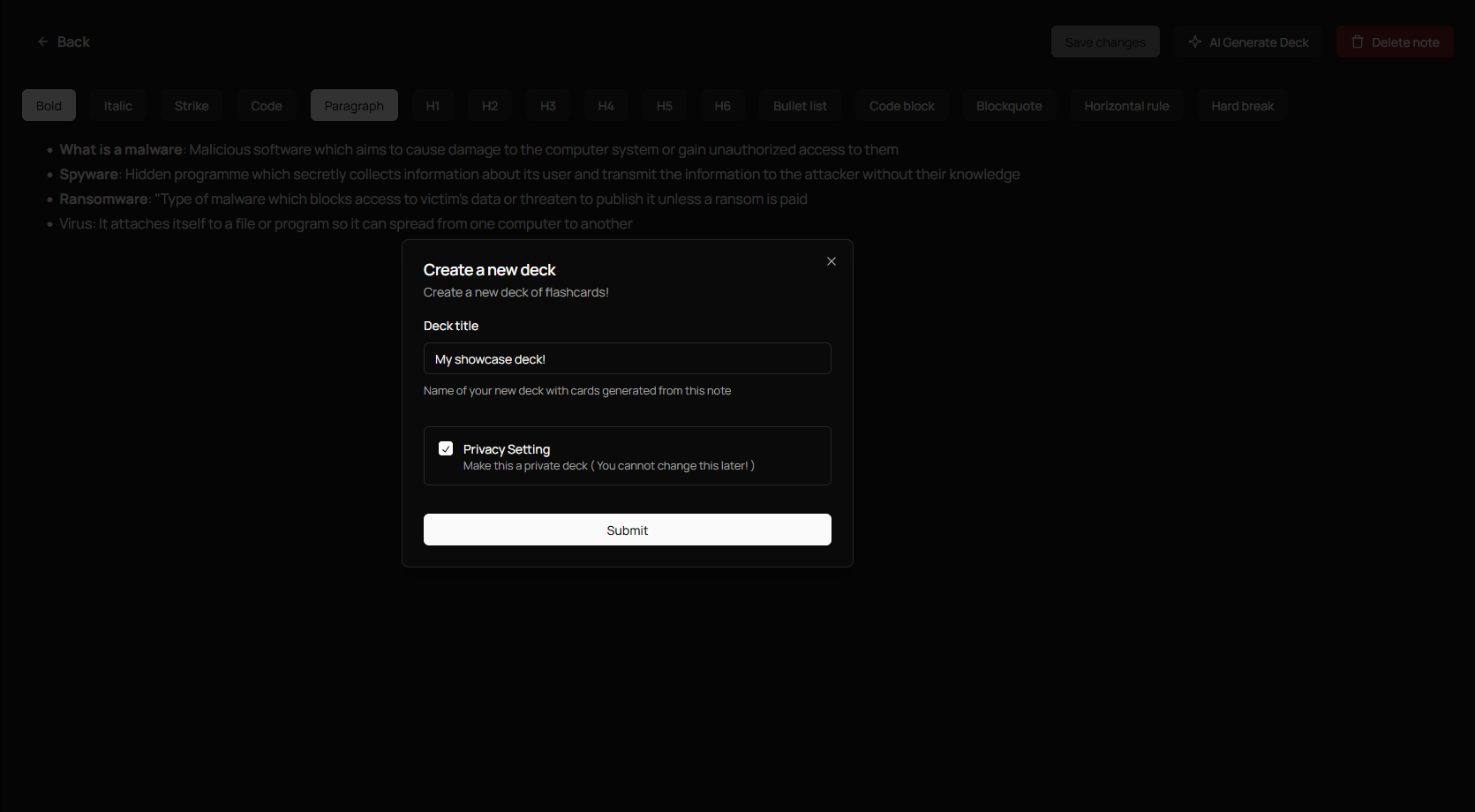
AI Generated deck using content from notes.
-
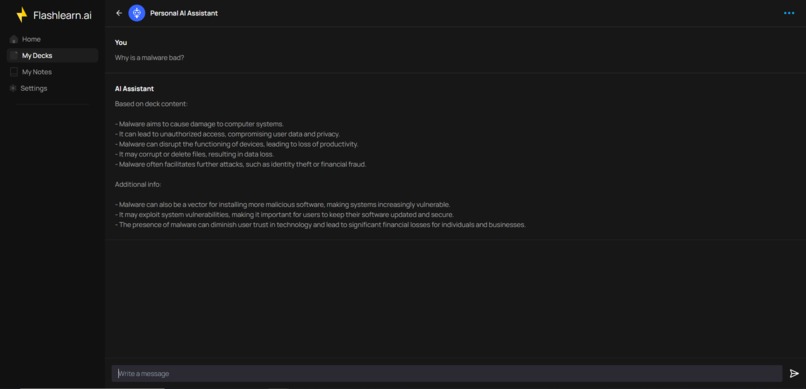
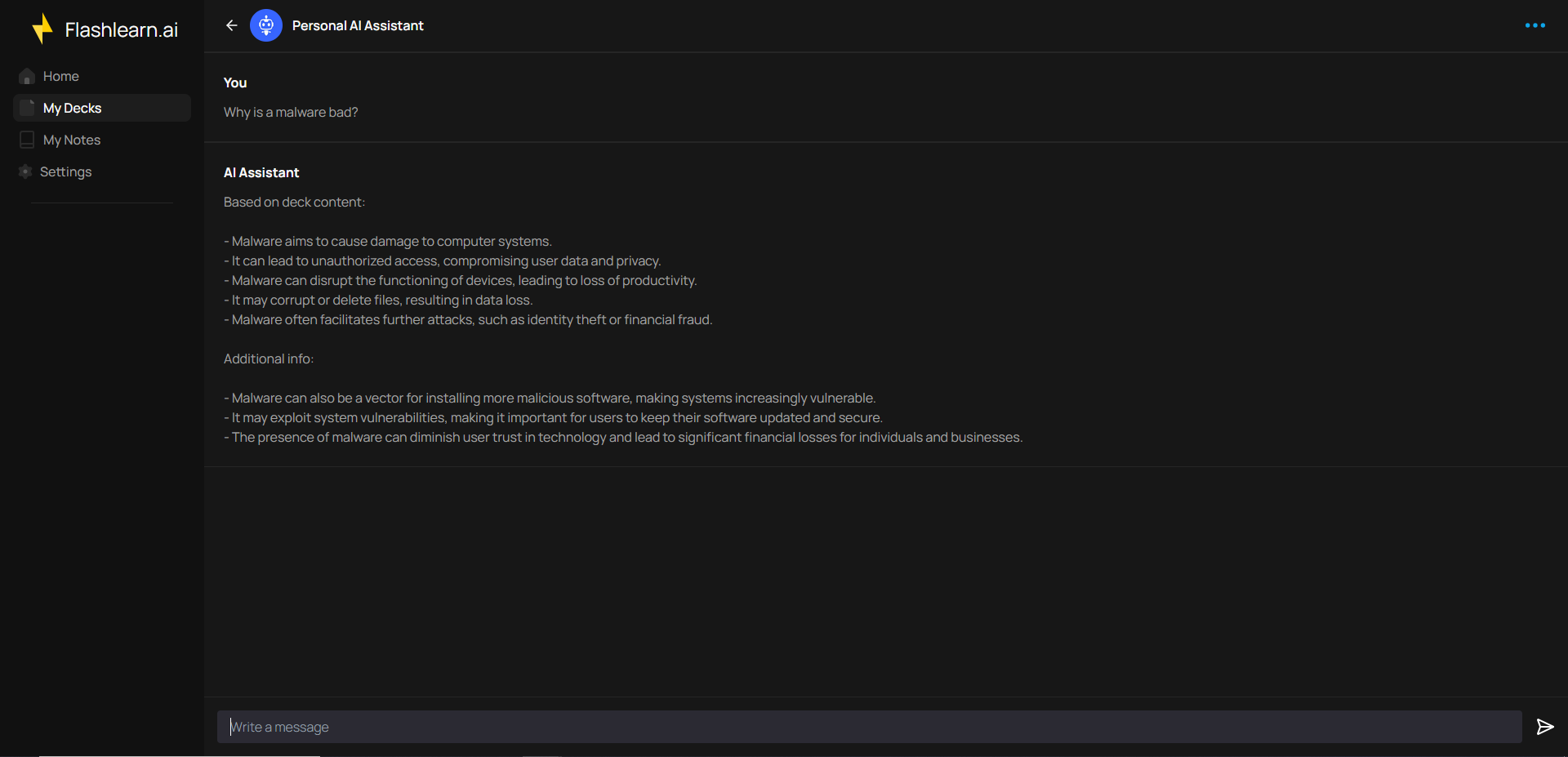
AI Powered Chat bot which references to deck content to answer user's questions for efficient learning and recap of content
Inspiration
Many university and high school students in Singapore face packed schedules, juggling numerous commitments that make it difficult to fit in effective study sessions. Flashcards are a powerful tool for learning, as they leverage active recall to help students retain large amounts of information efficiently. However, there are few solutions that enable students to both study with flashcards and quickly capture notes or ideas, transforming them into study materials in one seamless platform. When students use separate tools for note-taking and study prep, it's easy to overlook certain notes during revision, missing valuable content. Recognizing this challenge, we see a need for a unified platform that reduces friction for busy students, allowing them to create, organize, and study quality learning materials all in one place.
Our cause is to make a positive impact in the educational space by providing a quality platform that enables everyone to learn efficiently, even when facing challenges. We aim to break down barriers and offer students, teachers, and learners a seamless experience to enhance their educational journeys.
What it does
Flashlearn.AI is a comprehensive educational platform designed to support students in creating effective study resources, including:
- Flashcard decks for efficient revision
- Notes for capturing important content and ideas
With Flashlearn.AI, students can easily create notes and then transform these notes into flashcards using the "AI Generate Deck" feature. This feature automatically converts key content into flashcards, building a functional deck for students to review and practice.
Additionally, students can expand their flashcard decks by generating new cards that reference existing deck content, allowing AI to add relevant information and enhance study materials.
An AI chatbot feature also allows students to ask questions about specific deck content. The chatbot finds the most relevant flashcards to answer questions, providing context and any additional insights to give students a quick, targeted refresher on forgotten material.
Flashlearn.AI also includes a practice feature that lets users engage in quick study sessions on any device, making it easy to review flashcards on the go.
Students can also access public decks created by others, sharing high-quality educational resources across the community to enhance collective learning.
How we built it
Flashlearn.AI is powered by a robust tech stack:
Next.js for the front end, ensuring a seamless, responsive user experience
MongoDB Atlas on AWS as the backend for reliable data management and vector searching
Amazon Bedrock for question embeddings, enabling deep contextual understanding
OpenAI for generating flashcards from deck and note content
Each flashcard's question is embedded at creation and stored as part of a card object. This setup allows the AI chatbot to perform Atlas vector searches on flashcard questions when users ask questions related to deck content. The chatbot then retrieves the most relevant cards and crafts responses using both card content and additional online information, providing accurate and enriched answers to support students’ learning.
Challenges we ran into
We faced several challenges during the development of Flashlearn.AI:
AI Integration: As newcomers to AI, we found it initially daunting, especially when working with vector embeddings and setting up vector search in MongoDB Atlas. The complexity of AI made this an intimidating process to approach.
Navigating AWS Bedrock: Using AWS Bedrock was challenging due to frequent issues with throttling and API access errors, creating significant roadblocks and frustration during development.
Implementing Claude Haiku: We attempted to use Claude Haiku for generating flashcard content based on deck and note data, but ran into recurring throttling errors that prevented successful integration.
Limited Time for Testing: Since we registered for the hackathon later and had numerous daily commitments, we couldn't allocate sufficient time for rigorous testing or brainstorming new features. This also limited our ability to explore additional technologies like Amazon Q or Amazon Gemini.
Prompt Engineering: Our limited understanding of AI prompt engineering meant we had to rely on trial and error to get the AI to respond in the desired way. Developing effective prompts took time and experimentation, adding an additional layer of challenge.
Unfamiliar tech: We were not experienced in using a non-relational database for apps. Hence, we also had to take some time to learn basic CRUD operations and understanding how we can implement it effectively.
Accomplishments that we're proud of
Our proudest accomplishments include:
Overcoming Initial Hesitations About AI: We broke past our initial reservations and took the plunge into incorporating AI into our app, learning and experimenting along the way.
Building a Platform with Positive Feedback: We successfully created an all-in-one study platform that received enthusiastic reviews from peers, who expressed excitement about using it to enhance their daily study routines.
Delivering a Full-Stack Solution: Despite our busy schedules, we completed a full-stack app with all the essential features we envisioned, meeting the key needs of our users.
Gaining Valuable AI Knowledge: In a short time, we learned a great deal about prompt engineering, AI applications, and vector searches, which has sparked a newfound interest in exploring AI further.
What we learned
Key lessons we learned include:
The Power of Resilience: We discovered the importance of resilience, as there were many moments we felt certain features were out of reach. By trying different methods and persisting, we ultimately brought our vision to life.
AI's Potential for Efficiency: We saw firsthand how AI can greatly enhance efficiency, motivating us to explore new ways to leverage it for smoother, more effective study sessions—especially valuable for students with packed schedules.
Effective Prompt Engineering: We learned how to refine our prompts to achieve specific AI responses that meet our needs and goals, honing our skills in directing AI to work effectively within our platform.
What's next for Flashlearn.AI
What's next for Flashlearn.AI:
We plan to continue refining the platform to make it even more seamless for students to integrate into their study routines. Key areas of focus include:
- Improving authentication services for smoother user experience
- Enhancing AI-driven flashcard generation to make it more accurate and efficient
- Revamping the notes interface to make it more intuitive and user-friendly
We also aim to grow the community by getting more people onboard so that learners can share notes, create new decks, and benefit from a collaborative learning environment.
In the future, we hope to introduce Flashlearn.AI to schools, tutors, and students who handle large amounts of information, helping them streamline their study processes and improve learning effectiveness.
Built With
- amazon
- amazonbedrock
- atlas
- css
- javascript
- jsx
- mongodb
- mongoose
- nextauth
- nextjs
- openai
- tailwind
- tsx
- typescript
- vectorsearch


Log in or sign up for Devpost to join the conversation.