-
-
Logo
-
buyer page
-
courier page
-
seller page
Inspiration
Cash-on-delivery leaves sellers unsure whether buyers will pay and couriers handling cash. We wanted a payment flow that fits delivery without pretending software can prove a physical handover.
What it does
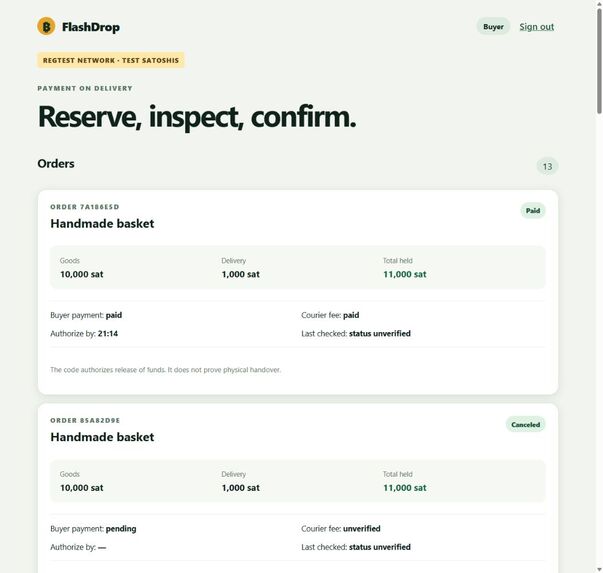
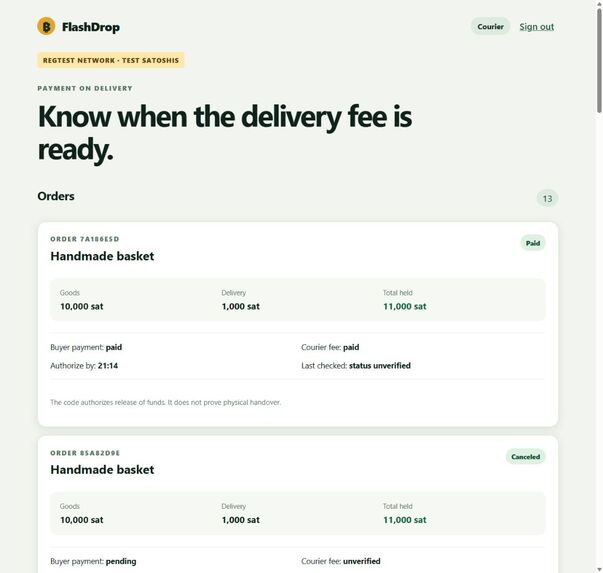
FlashDrop holds a buyer’s Lightning payment before dispatch. After inspecting the parcel, the buyer shares a release code that pays the seller and courier. An unreleased payment can be canceled.
How we built it
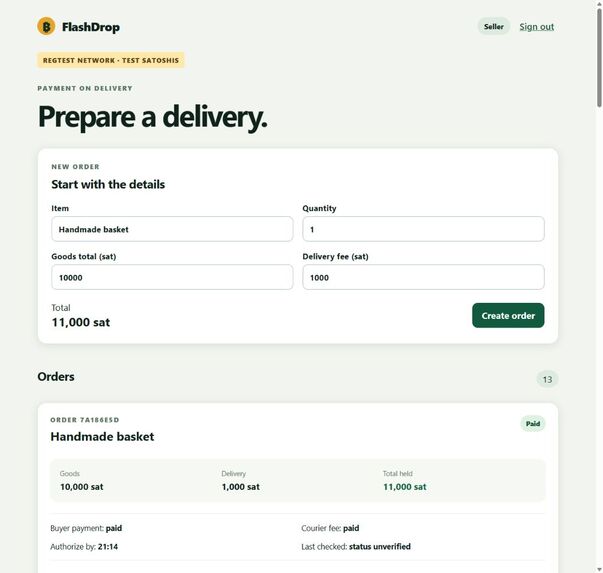
We used React, TypeScript, Fastify, SQLite, Bitcoin Core, and three LND nodes on regtest. Docker runs the wallets, an optional AI feature drafts orders for the seller to review.
Challenges we ran into
The seller and courier payments must share a hash while staying within safe Lightning time limits. We also fixed payment-hash encoding and made pending settlement recover after a server restart.
Accomplishments that we're proud of
We demonstrated the payment chain on real regtest nodes, completed three consecutive API journeys, and verified cancellation and restart recovery.
What we learned
A release code proves the buyer authorized payment, not that delivery happened. Clear trust boundaries and recovery matter as much as the happy path.
What's next for FlashDrop
Interview sellers and couriers in Dakar, test the full flow on phones, check wallet compatibility, and define a practical refund process.
Bitcoin/Lightning wallet implementation
FlashDrop integrates three LND wallets on a local Bitcoin regtest network. It creates hold invoices, sends Lightning payments, tracks payment states, and settles or cancels payments. The buyer holds the order total, then authorizes release after inspection, allowing the seller and courier payments to settle. Docker and a PowerShell script initialize the wallets, test funds, and payment channels.


