Inspiration
Life is short and fast-paced, filled with fleeting moments of joy, achievements, and connection. During Hack the North, our team met so many amazing and inspiring people in such a short amount of time. It struck us how easy it is to forget these meaningful interactions and experiences as life rushes on. This inspired us to create Flashback—a VR experience designed to memorialize these cherished moments and allow users to revisit them in a deeply immersive and personalized museum.
Unlike traditional social media, which encourages constant sharing with others, Flashback offers a personal and introspective journey through your own memories. It’s designed for the individual, allowing users to relive their most cherished moments in an immersive, meaningful way.
A quote that resonated with us this weekend:
Life is not measured by time. It is measured by moments. There is a limit to how much you can embrace a moment. But there is no limit to how much you can appreciate it.
Bonus: Great for us forgetful folks!
What it does
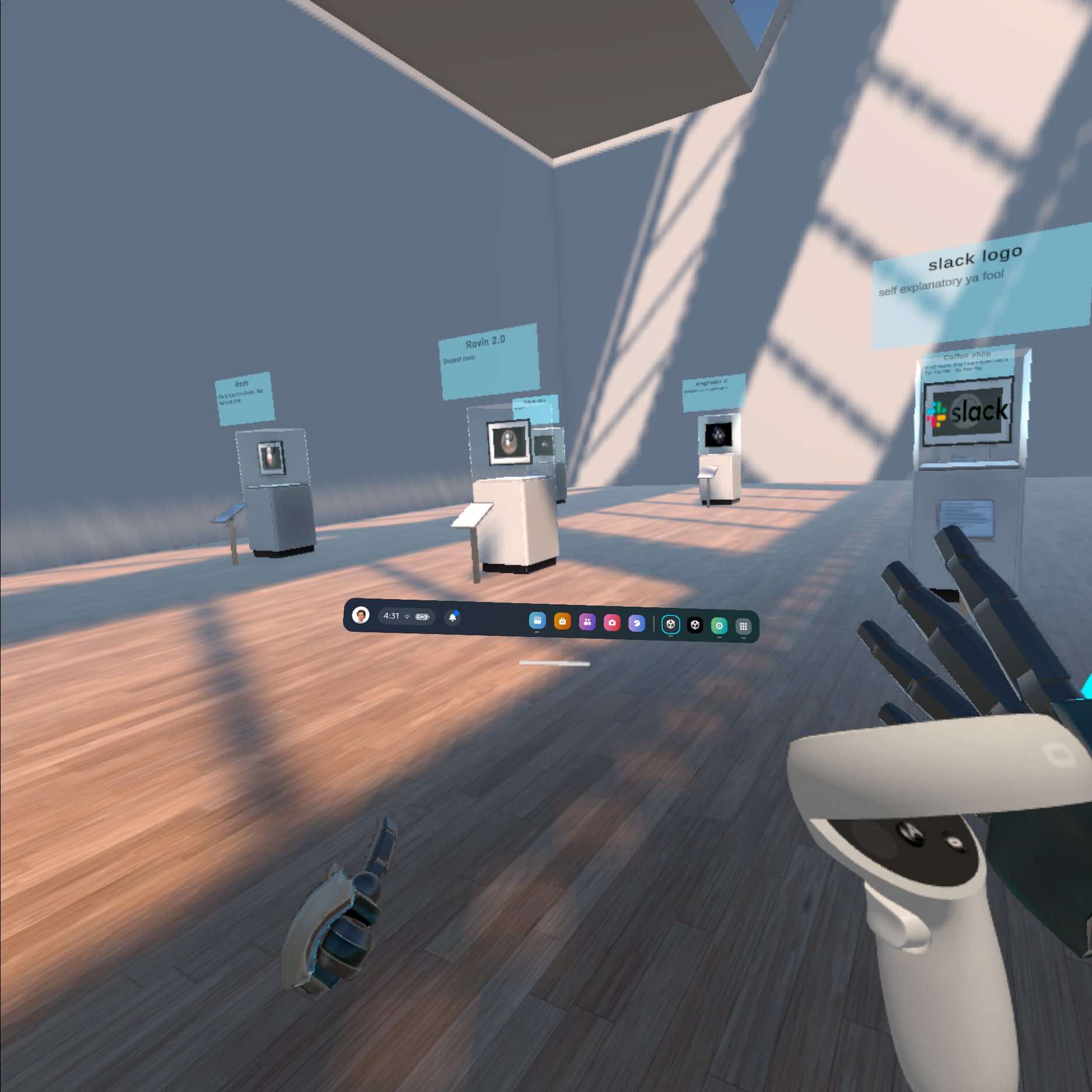
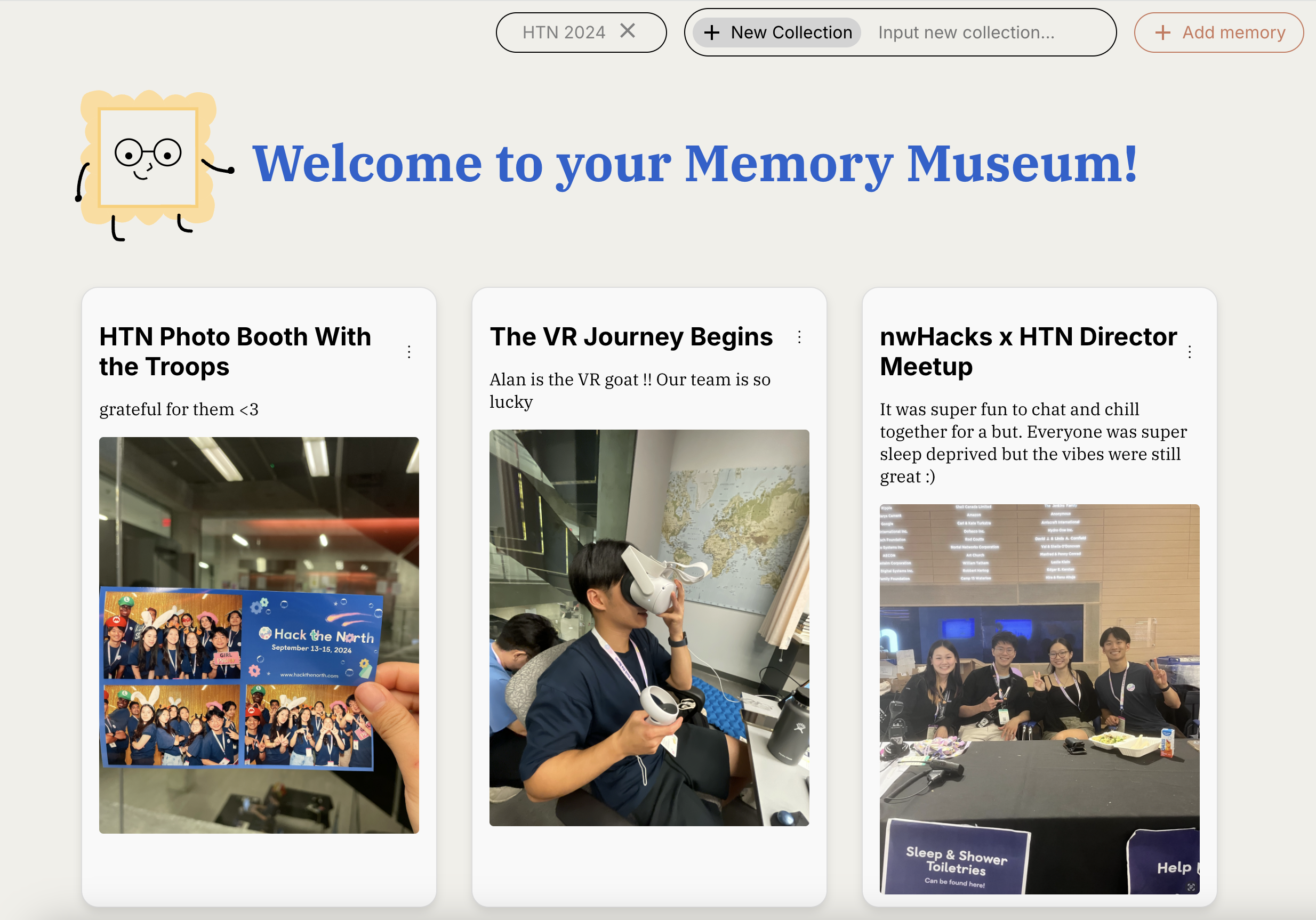
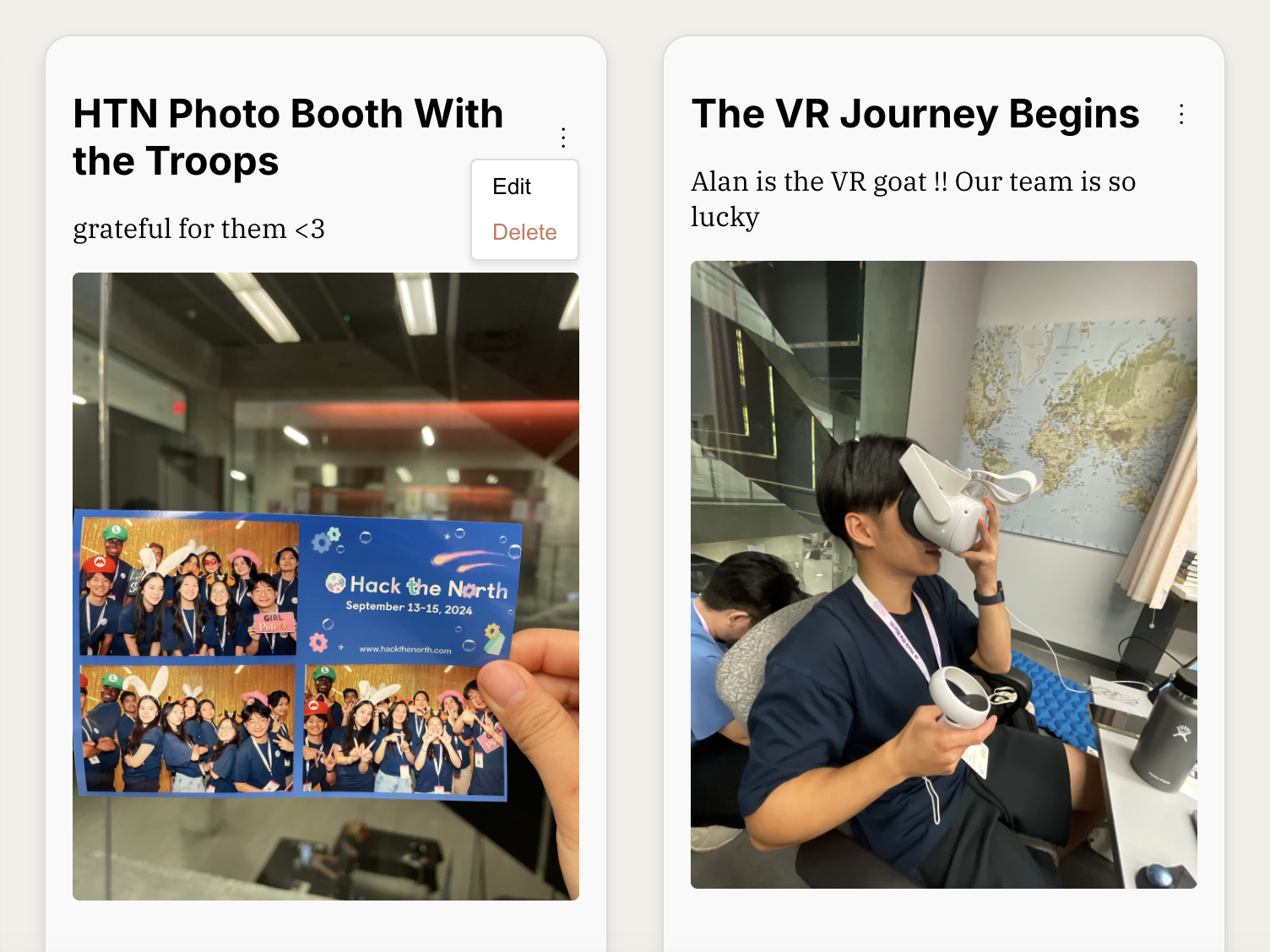
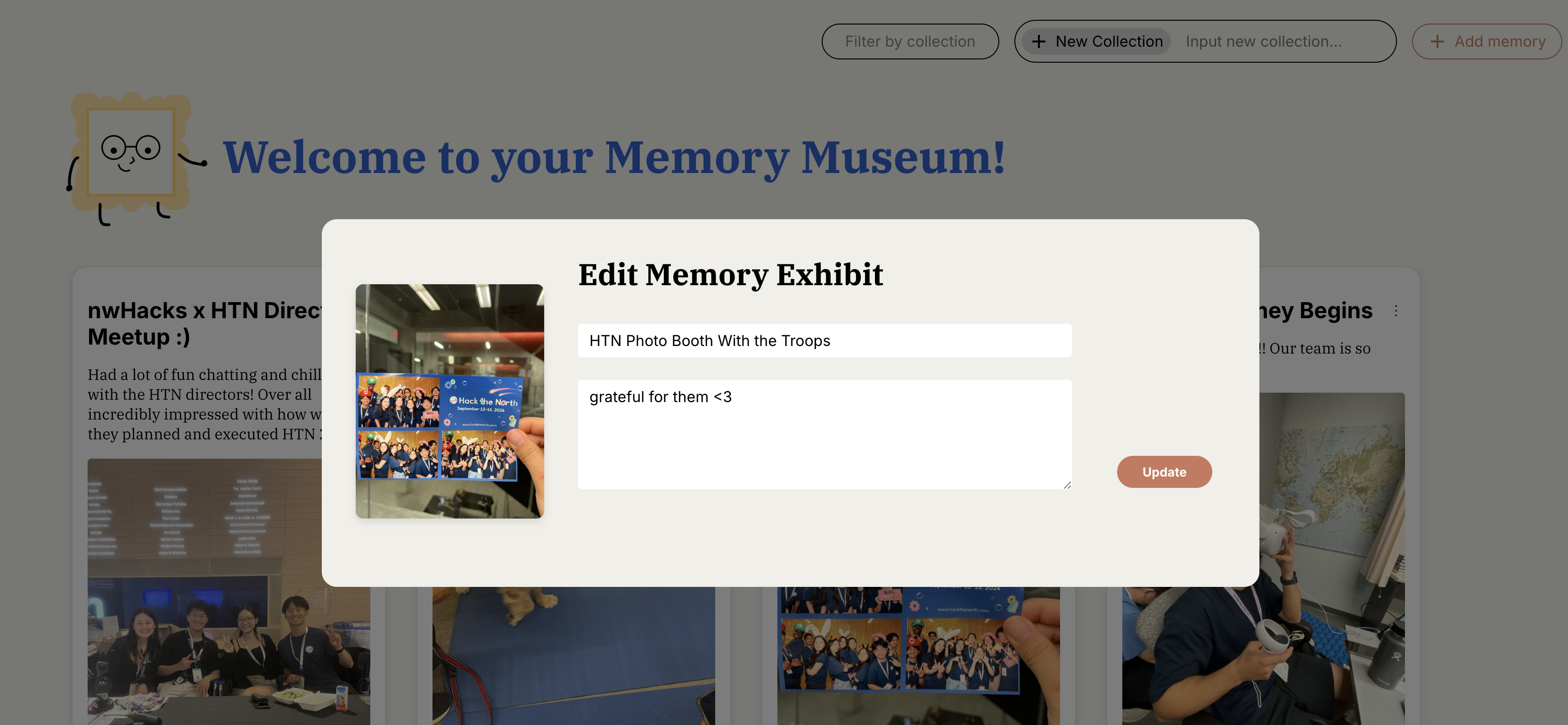
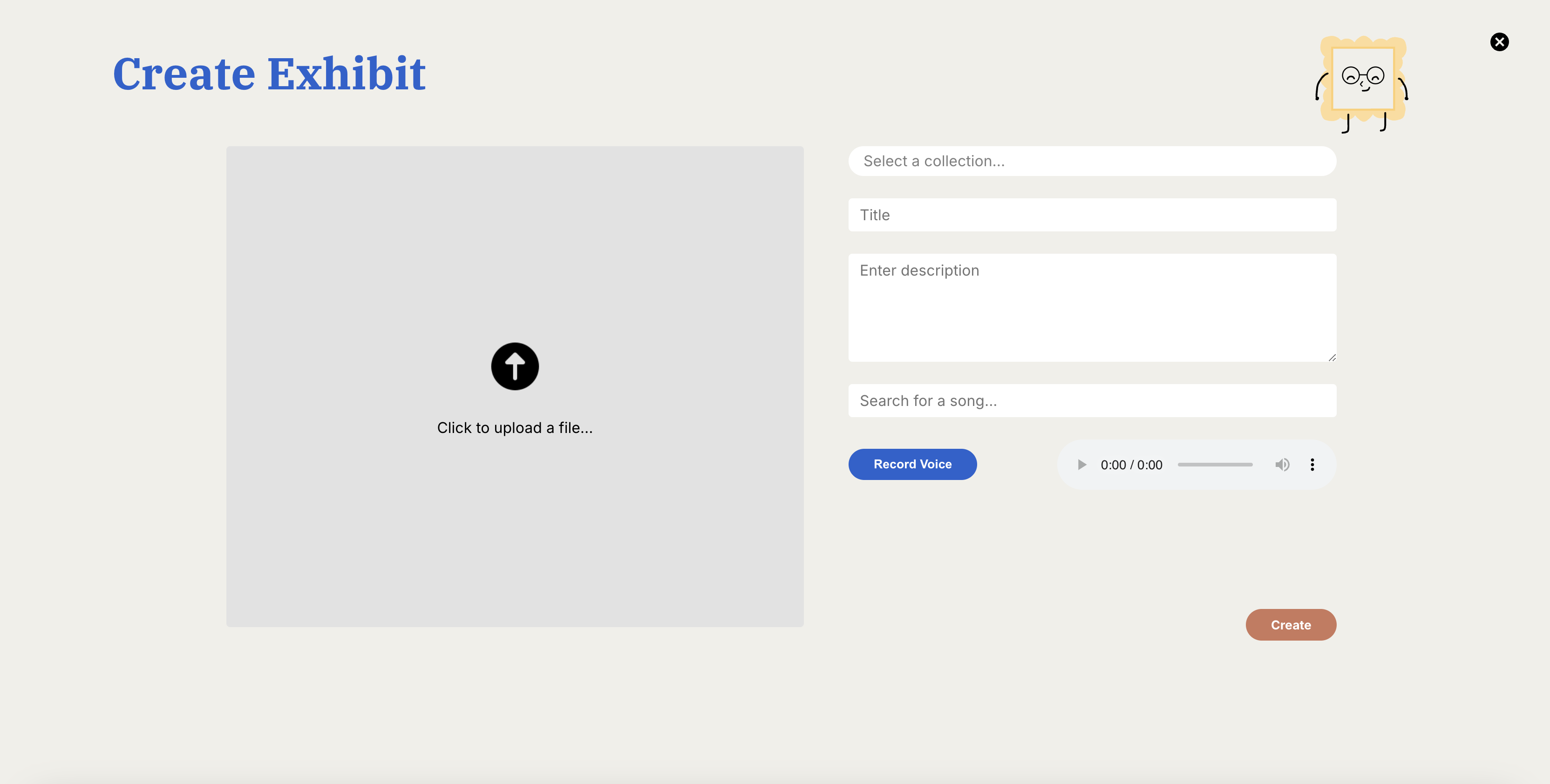
Flashback is a VR experience that transforms your personal memories and achievements into interactive, immersive museum exhibits. Users can upload photos, videos, personal audio clips, and music to create unique 3D galleries, where each memory comes to life. As you walk up to an exhibit, specific music, audio clips, and captions are triggered, bringing the memory to life in a dynamic way. Memories can also be grouped into collections. Instead of just scrolling through pictures, Flashback lets you step into your memories—hear familiar voices, see cherished moments, and relive experiences in a fully immersive environment. Additionally, there is a web app where users can upload, update, and maintain their growing museum of memories. Flashback evolves with you over time, offering a place to revisit positive memories on difficult days, and preserve fleeting moments like our time at Hack the North.
How we built it
Flashback is built with React, Node.js, JavaScript, Express.js, Convex, HTML, CSS, Spotify APIand Material UI for the web app's front and back end. The VR experience is developed using Unity, .NET, and C#, with testing done on a Meta Quest VR headset. Our mascot Framey was drawn up by our team mate Jenn.
Challenges we ran into
- Picking up Convex
- Designing on Figma for the first time
- Unity and C# are HARD (our teams first time making a VR project)
- learning new tech is hard
- merge requests on front end is hard
- Sleep deprivation
- figuring out how to connect and integrate client, server, and VR
Accomplishments that we're proud of
- Everything we made! We worked very hard!
- Adapting and persevering through a lot of roadblocks this weekend
- Creating a super cool VR experience (shoutout to Alan!!!)
- First time designer making a hi-fidelity mock up of the web app and VR user flows in Figma
- Spending time together and having fun as Hack the North 2024
What we learned
Everyone on our team had experience in different technologies, but this weekend we each tried doing something new- using Convex DB integration for the first time, designing for the first time, learning C# and Unity, trying out front-end development, and creating our first VR project! Additionally, we learned that unity is hard and doing research and regularly communication about feasibility is extremely important.
What's next for Flashback
- integration authentication and allow users to visit other museums!
- more customizability - users can choose their own VR assets to personalize their space and memories
- more fields for memories - multi-media, video, and personal audio upload
- more interactiveness in VR environment
Built With
- c#
- convex
- express.js
- figma
- materialui
- node.js
- react
- spotifyapi
- unity


Log in or sign up for Devpost to join the conversation.