-
FlareSight
-
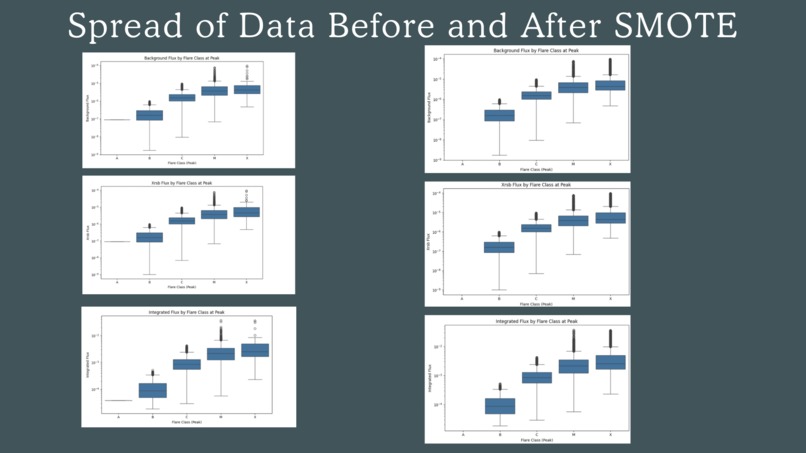
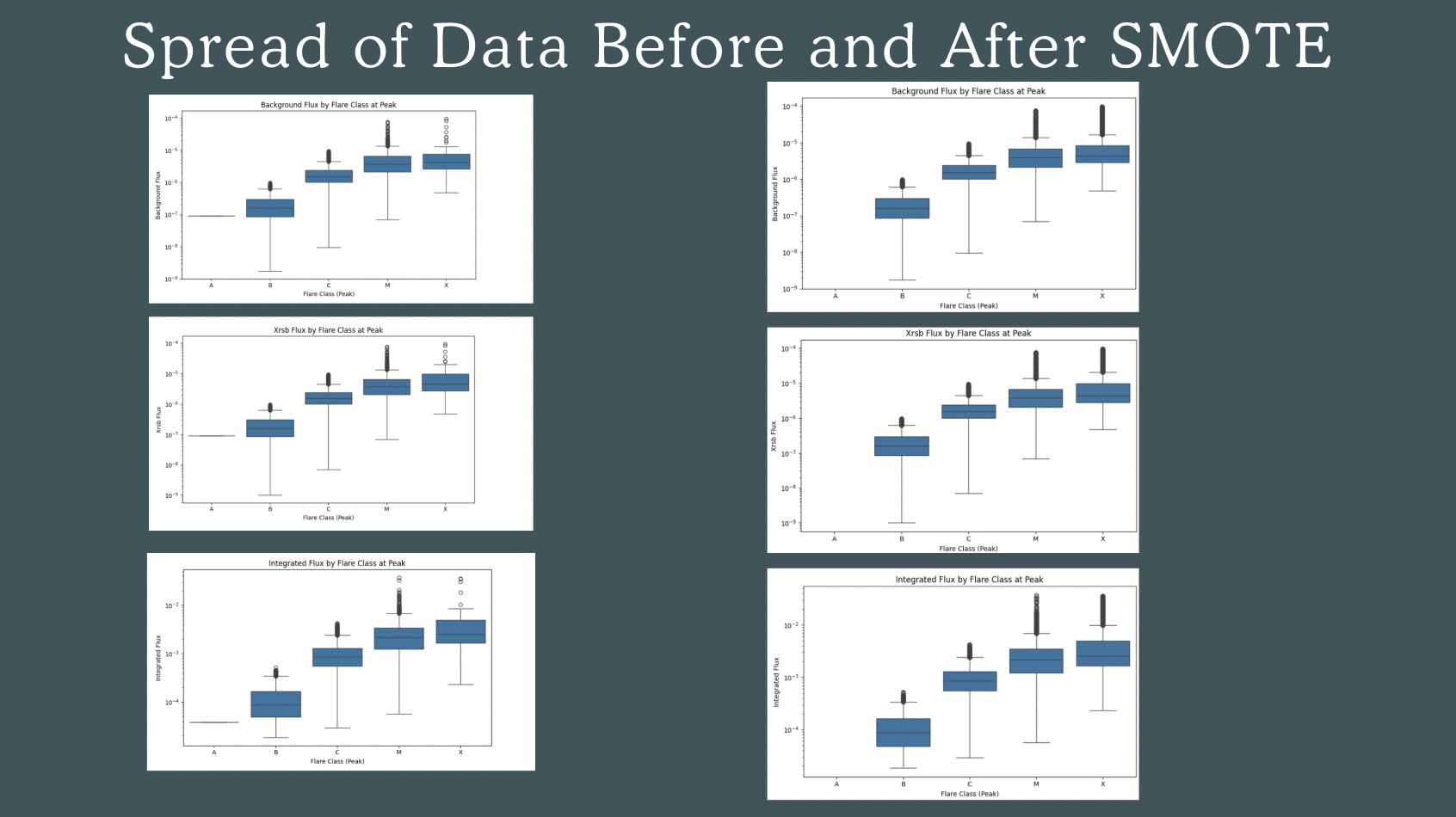
Data Spread Before and After SMOTE
-
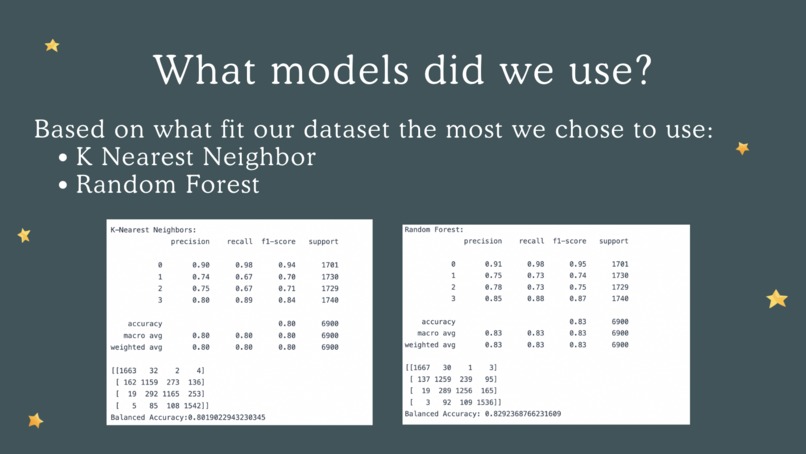
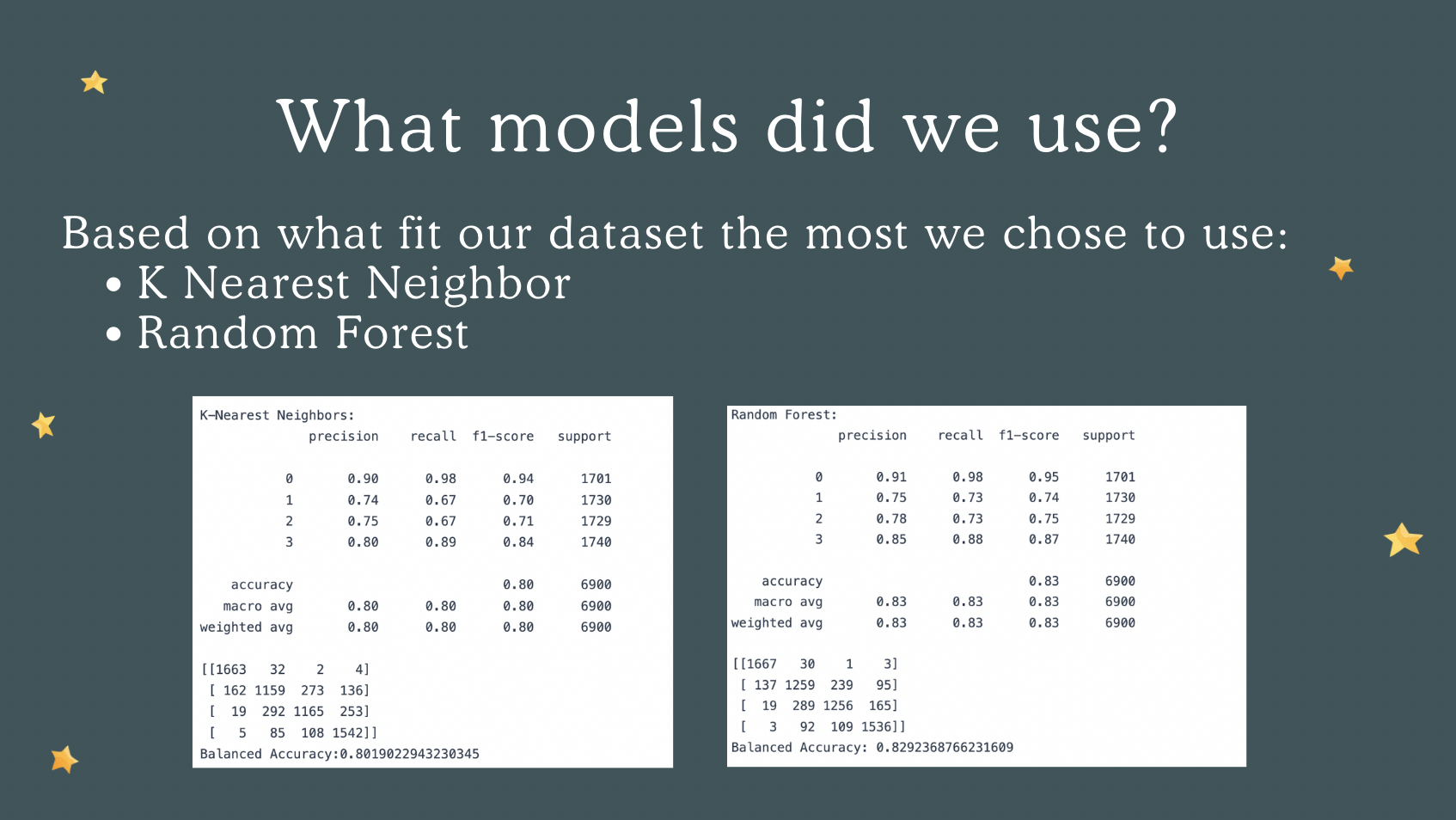
Machine Learning Models
-
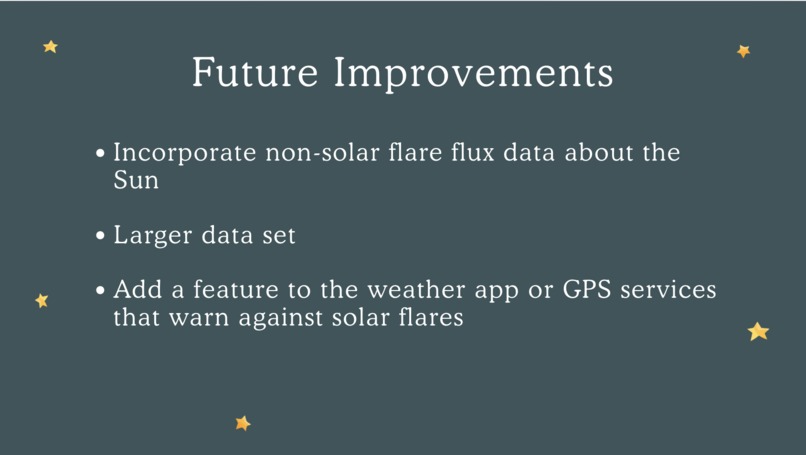
Future Improvements
-
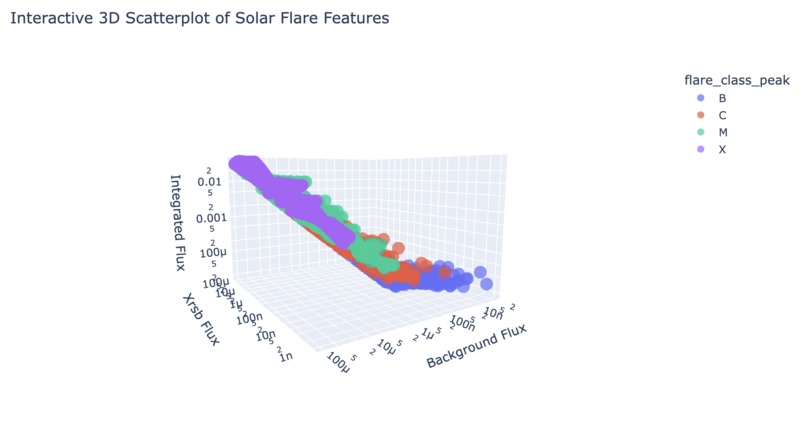
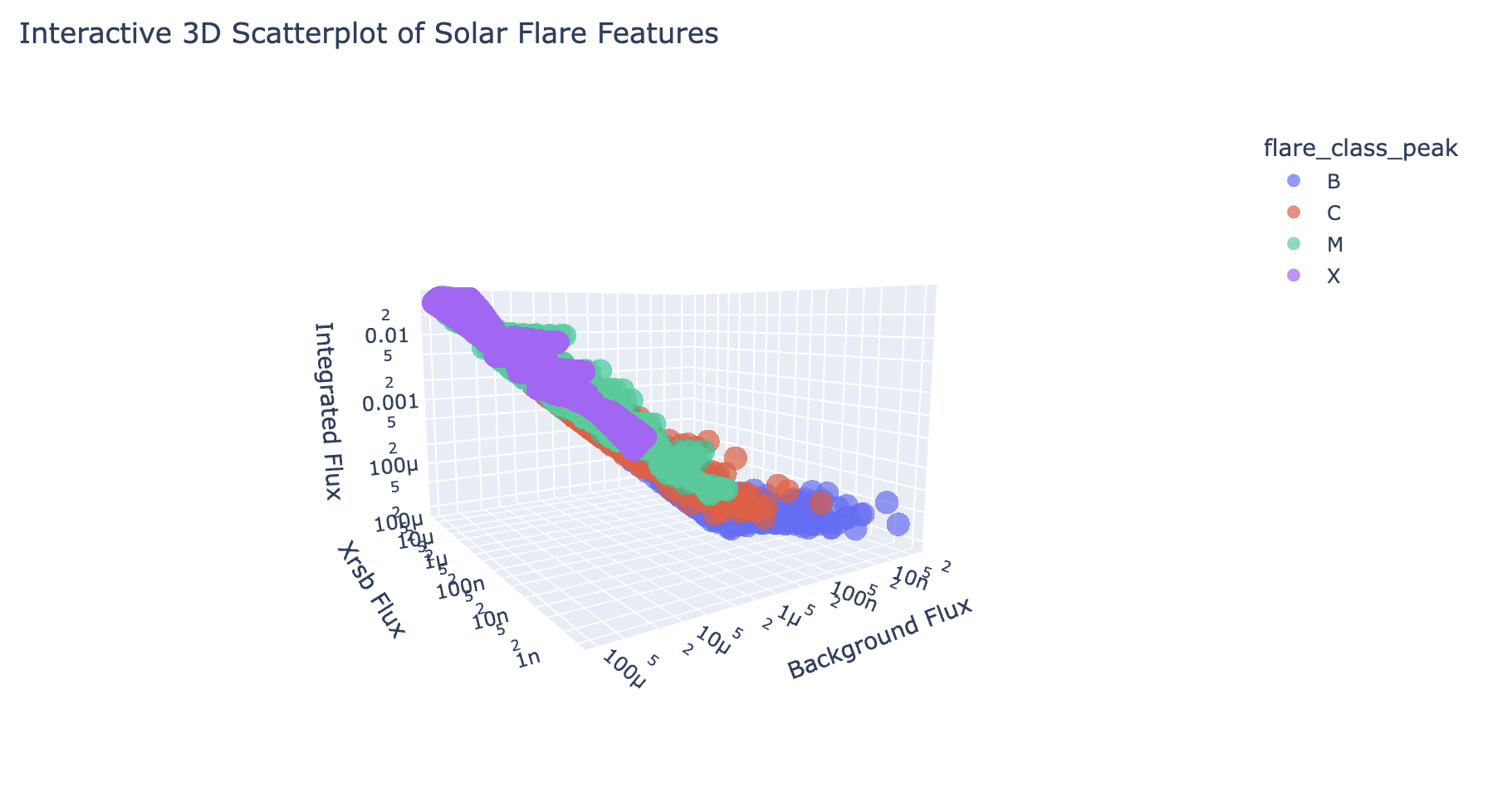
3D Scatterplot of Solar Flare Features
Inspiration
We were inspired by the geomagnetic storms from May 2024, where people were fascinated by the Aurora Borealis appearing all over the country. However, there were severe consequences from these storms, stemming from solar flares. They caused
What it does
FlareSight uses data from the start of a solar flare to predict the intensity of the flare, the flare class, at its peak.
How we built it
Our team collaborated on Deepnote and committed our changes to a Github repository throughout the process. We used Python and its various machine learning and data science libraries to predict the flare class at its peak.
Challenges we ran into
Our team was not well versed in solar physics and at first, we had to take an extensive period of time to truly understand the factors in our original dataset. We also had obstacles while preprocessing the data in a manner that was usable for a machine learning model.
Accomplishments that we're proud of
As this was our first datathon, we're proud to have completed a project that solves a real world problem even though there are definitely improvements that we can make.
What we learned
We learned how to use Deepnote with Github and gained a lot of data cleaning skills. We also learned about different machine learning models and which one best fits with our data.
What's next for FlareSight
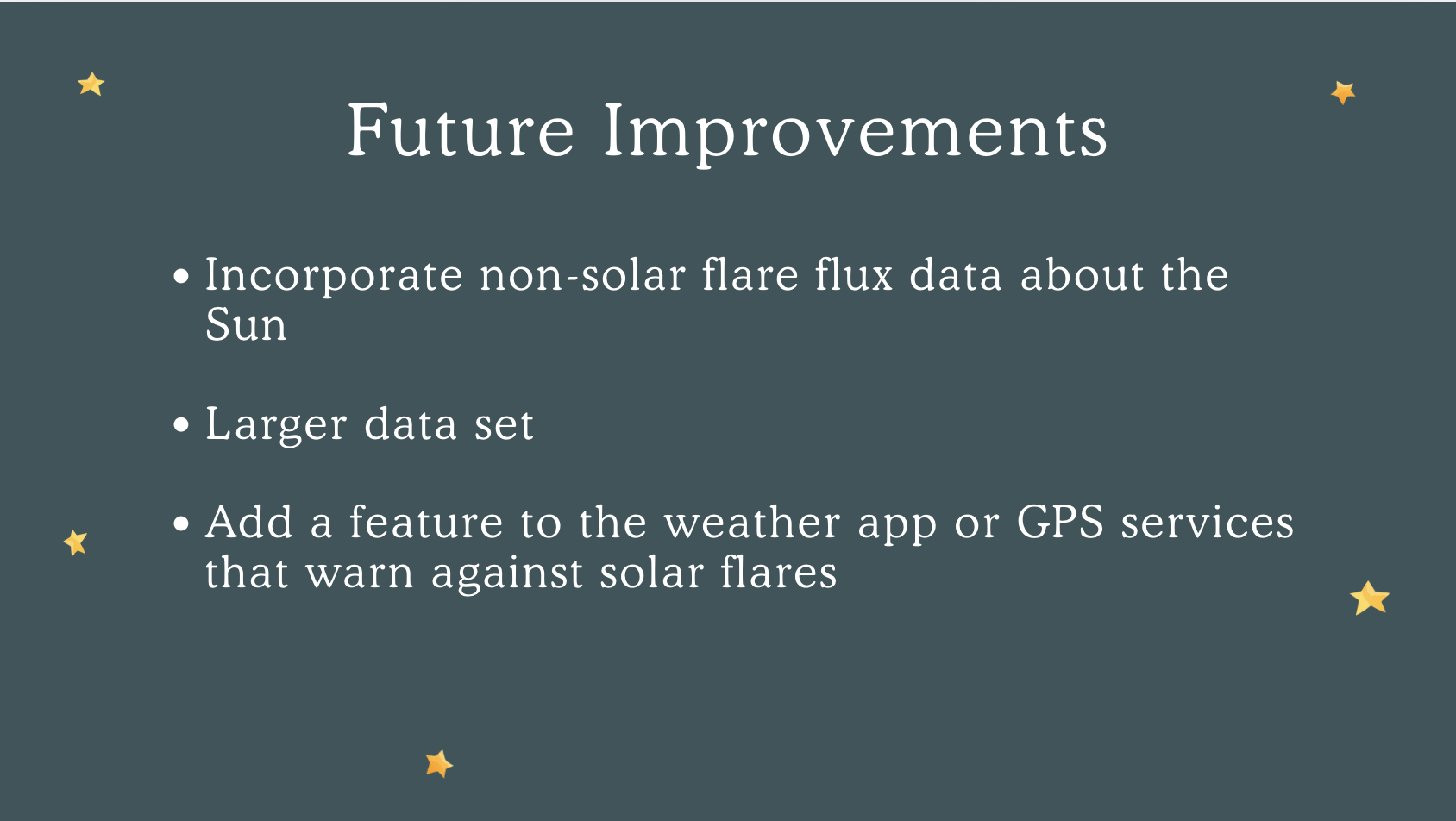
We intend to use larger datasets with more information on current solar flares to train our model to be more accurate. We also hope to add our results about the extremity of a solar flare at its peak to relevant apps like the weather app and GPS services that may be impacted by intense solar flare.
Built With
- deepnote
- github
- kaggle
- pandas
- python
- scikit-learn
- seaborn


Log in or sign up for Devpost to join the conversation.