Inspiration
Our inspiration came from a team member's personal experience with eczema. Trying product after product, it was difficult to determine whether it actually helped. After further research we found that 1 in 7 Canadian kids have eczema, and families spend hundreds of dollars trying to find the right treatment. In particular, we wanted to build a tool to help parents and caretakers decide which treatment is best for their child’s skin.
What it does
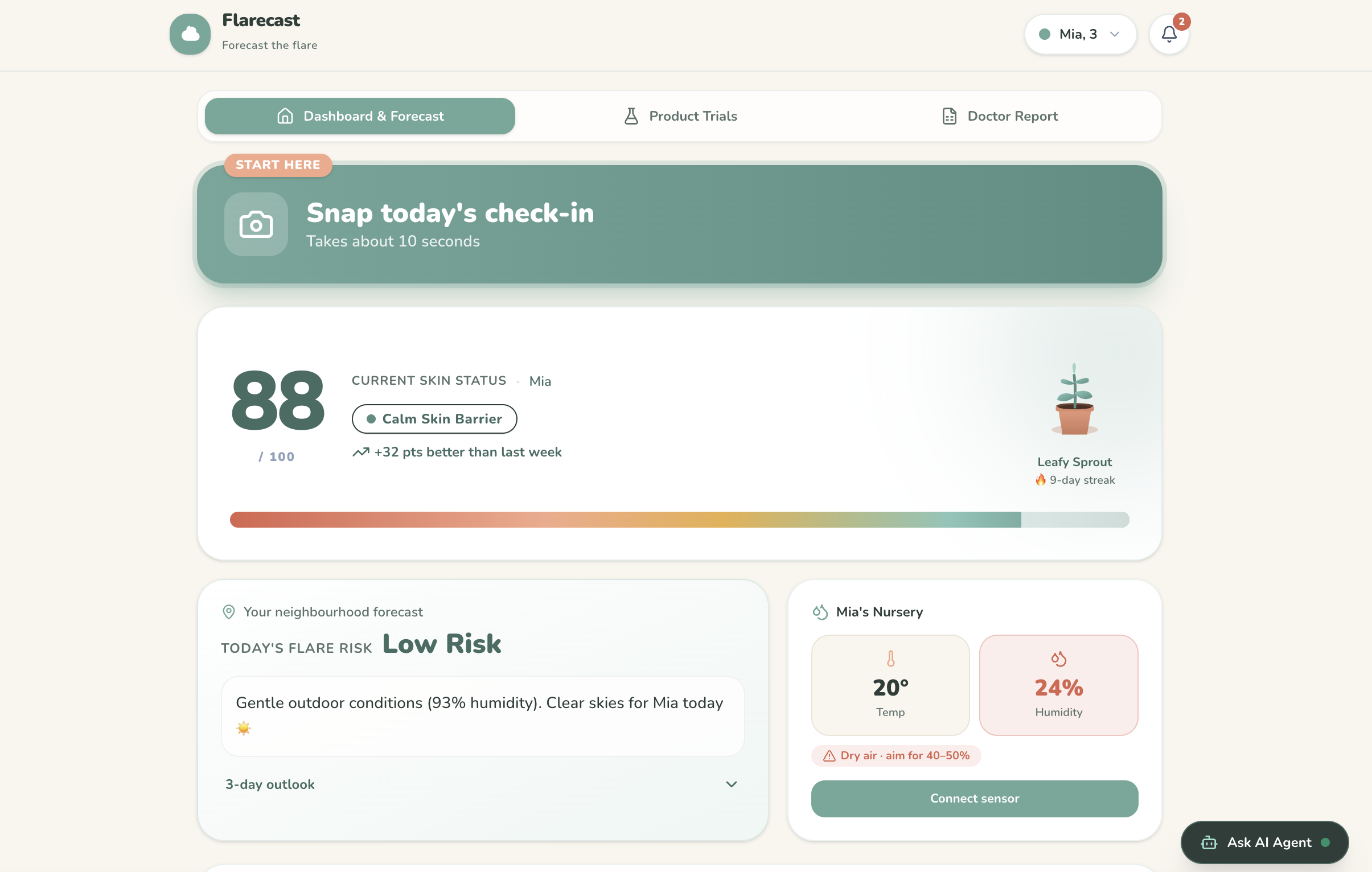
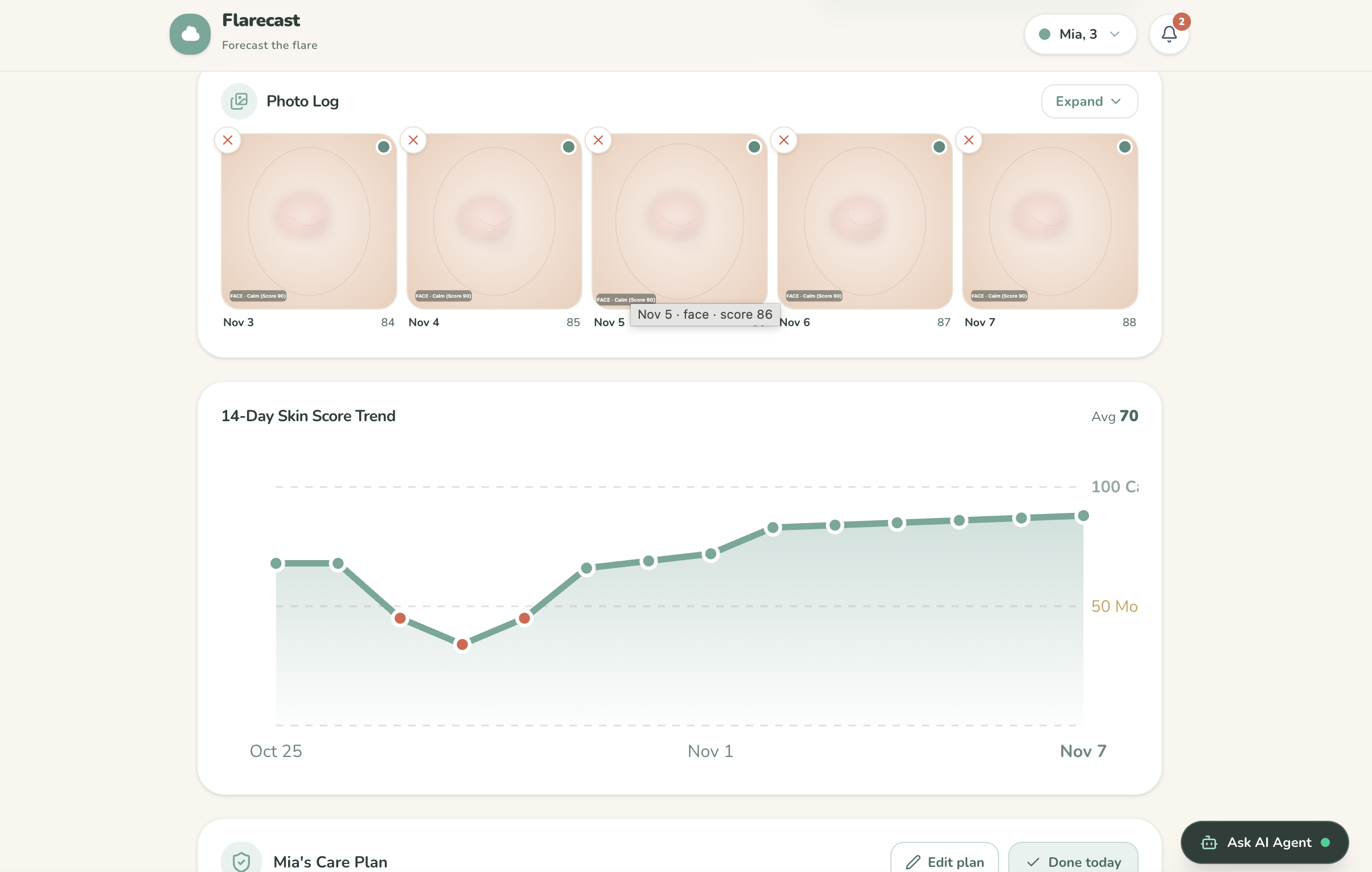
Flarecast is an eczema tracking and flare-prediction app that helps parents or caretakers better understand their child's skin. Flarecast allows you to upload pictures of their skin over time and record symptoms. It analyzes the photos, gives you insight into whether or not their skin is improving, and flags any concerning signs.
The website also tracks additional factors. Based on the weather outside, temperature, and humidity of your household, Flarecast will predict if they are at risk for skin flare-ups. To help parents have more informed conversations with their child's doctor, it generates easy-to-share reports on the child’s skin history.
How we built it
We built the website using React with TypeScript. We integrated Google Gemini to power the AI skin photo analysis and a conversational care assistant to provide personal guidance.
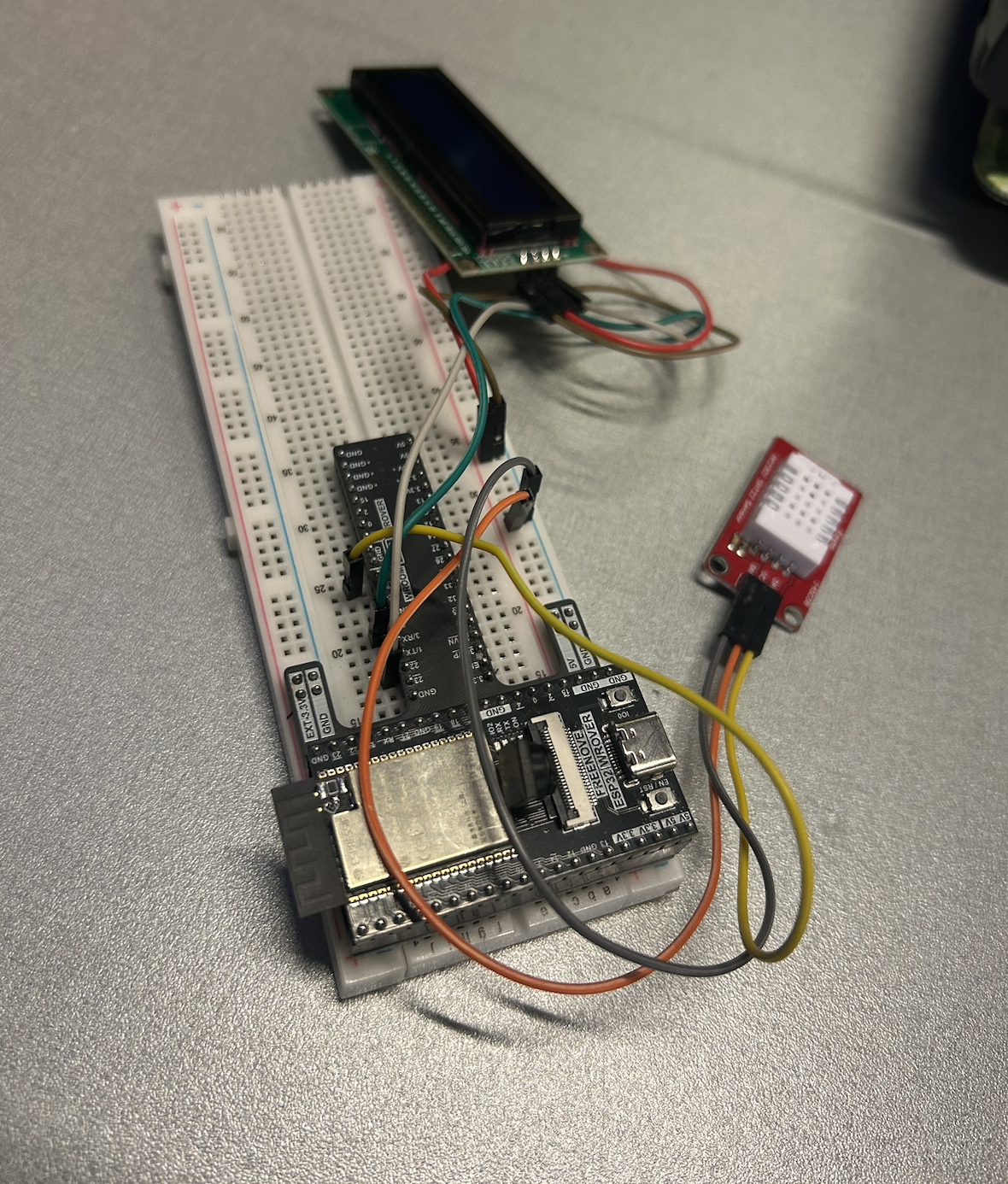
For the personalized flare forecasting, we integrated the Open-Meteo API to retrieve local weather conditions, including temperature and humidity. To complement the app, we built an ESP32-based indoor sensor using a DHT22 temperature and humidity sensor and an LCD display. The device communicates with the web app through the Web Serial API, allowing real-time indoor readings to contribute to flare predictions.
Challenges we ran into
We had challenges determining which features were essential to include. Since our target audience is parents of children with eczema, we needed to find a balance between making the website simple, but still informative.
Accomplishments that we're proud of
We’re proud of creating an app that combines AI image analysis, weather data, and user input to create a more personalized experience.
What we learned
We learned how to create a product that combines both software and hardware components through a Serial Web API communication protocol.
What's next for Flarecast
Next steps for Flarecast include offering suggestions for products and routines based on the individual’s skin history and needs. Additionally, we would like to expand to other skin conditions beyond eczema. To improve the sensor's portability and power usage, the Serial Web API protocol would be transitioned to Bluetooth Low Energy (BLE) communication. The Web Bluetooth API would allow the web application to directly communicate with the ESP32, enabling wireless sensor readings.
Built With
- claude
- esp32
- geminiapi
- react
- typescript
