Inspiration
As long activist and organziers we were inspired by the stark contrast in Los Angeles during the Wildfires & ICE raids: while some communities had abundant resources, others faced critical shortages. We saw mutual aid groups doing incredible work but struggling with coordination, distribution and volunteer support. Traditional apps weren't built for the rapid, trust-based distribution that emergencies require. FLARE was born from the belief that technology should empower community solidarity, not replace it.
What it does
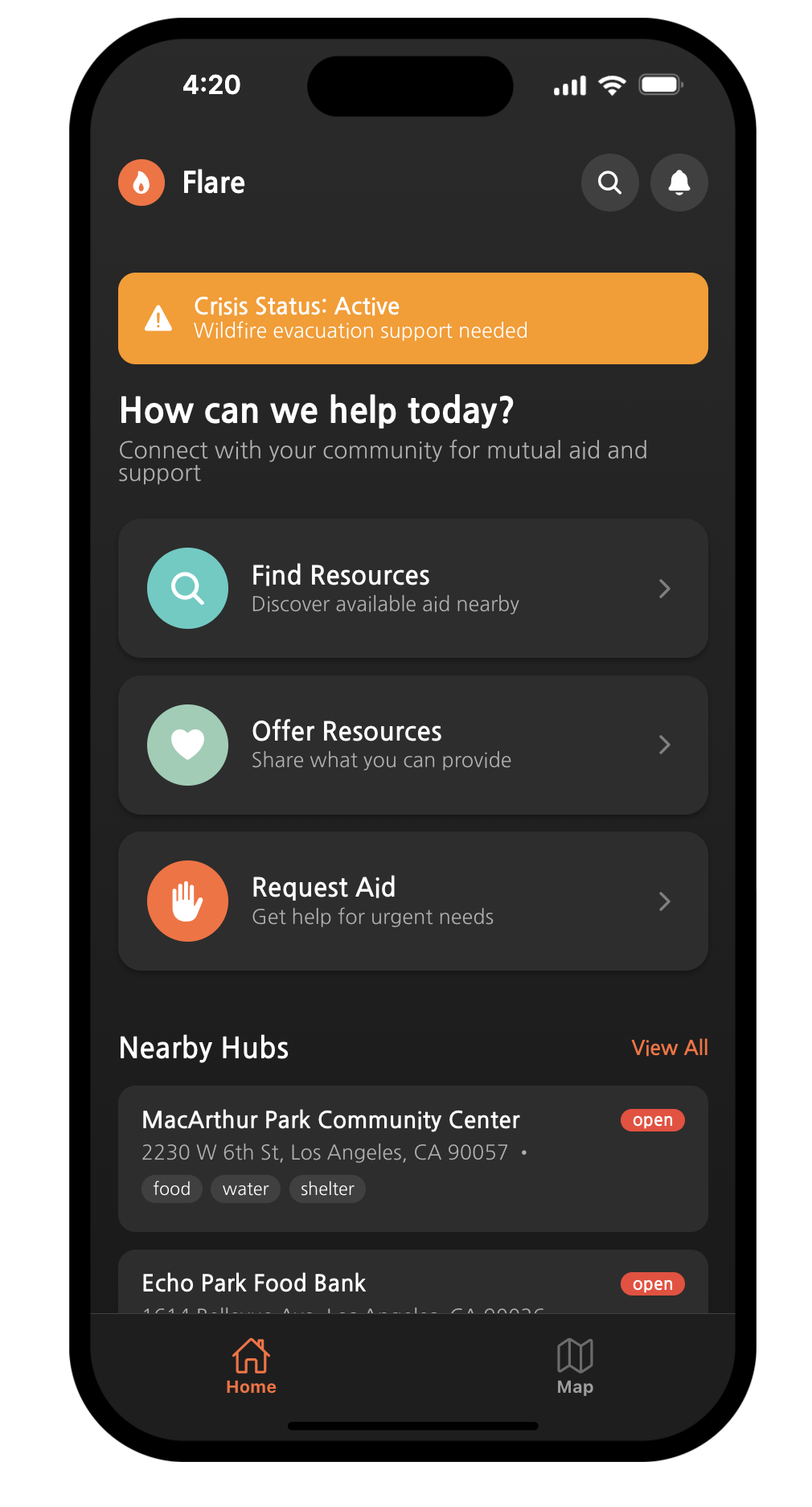
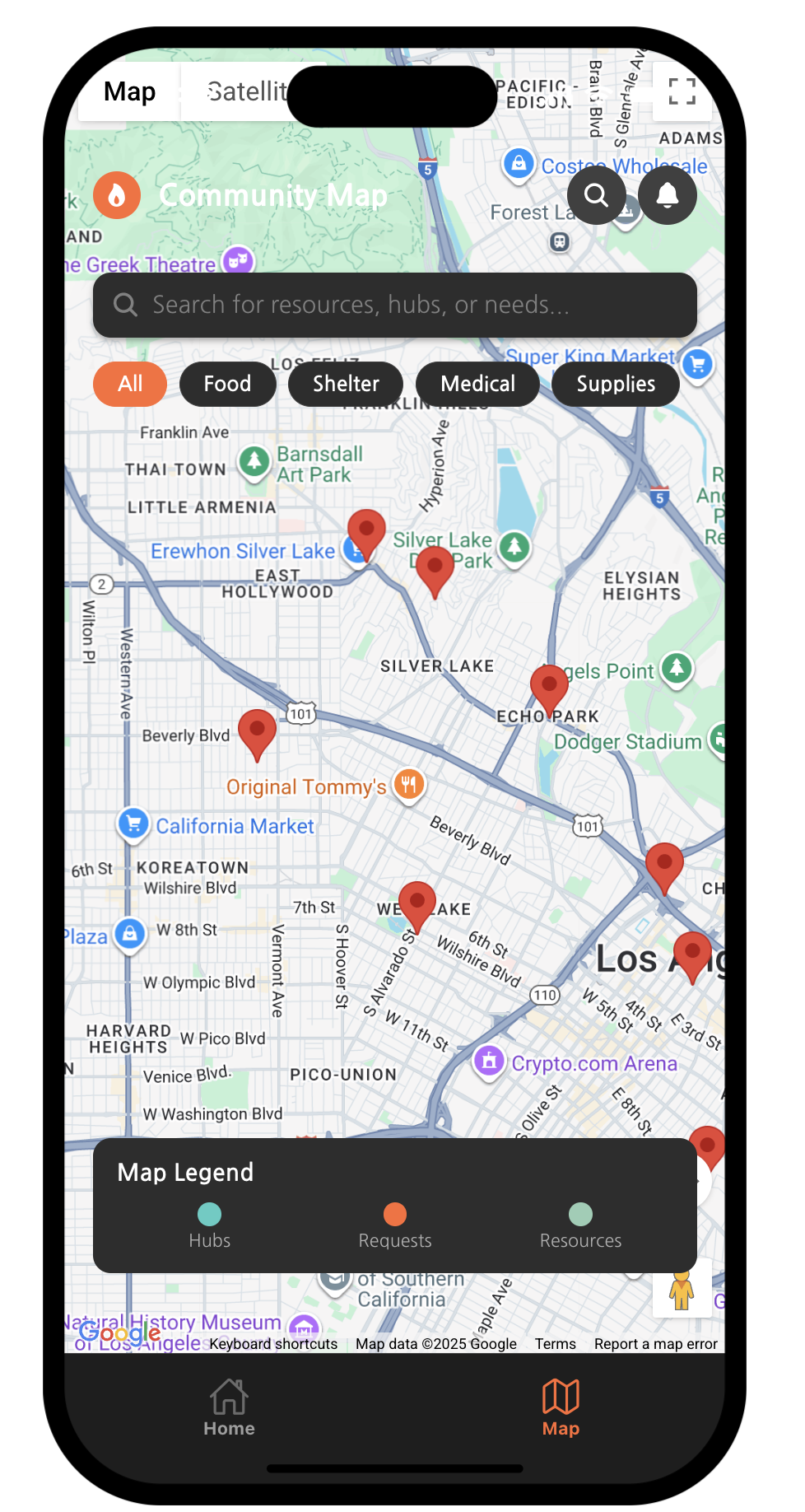
FLARE is a real-time mutual aid coordination platform that connects supply with demand at the hyperlocal level. It allows users to: Post needs (e.g., water, blankets, medication, masks, volunteers) Share resources (e.g., extra supplies, skills, volunteer time) Locate community hubs (CBO-operated drop-off/pick-up points) Track distributions to ensure efficient and equitable allocation
How we built it
Frontend: Built with React Native for cross-platform accessibility, ensuring usability in low-bandwidth conditions. Backend: Firebase for real-time database updates and cloud functions to handle matchmaking between offers and needs. Mapping: Integrated Mapbox API to visualize resource hubs and urgent needs geographically. Design: Prioritized accessibility and low-literacy usability with clear icons, voice input, and multilingual support.
Challenges we ran into
Trust Verification: Ensuring that users and hubs are legitimate without creating cumbersome onboarding. Real-Time Scalability: Designing the database to handle sudden spikes during crisis events without latency. UI/UX for Crisis: Simplifying the interface so it remains usable under high-stress conditions—fewer taps, clearer cues. Data Privacy: Balancing transparency with the need to protect vulnerable users’ locations and needs.
Accomplishments that we're proud of
Creating and demo idea that is relevant to us and our communties
What we learned
Mutual aid isn’t a logistics problem it’s a trust problem. Technology can’t replace relationships, but it can amplify them. The importance of graceful degradation: the app must work even when networks are weak or users are offline. Community-led design is a foundation for all work
What's next for FLARE
Pilot with grassroots organizations in LA during the upcoming fire season.
Incorporate SMS-based access for users without smartphones. Develop a verification system for community hubs using digital vouchers. Expand for in language support for many different langauges Explore predictive analytics, use AI to monitor news, networks to anticipate needs based on crisis type and location.

Log in or sign up for Devpost to join the conversation.