-
-
FlakeWarden: agentic flaky-test triage for UiPath Test Cloud. Is a red build a real defect, a flaky test, or an environment problem?
-
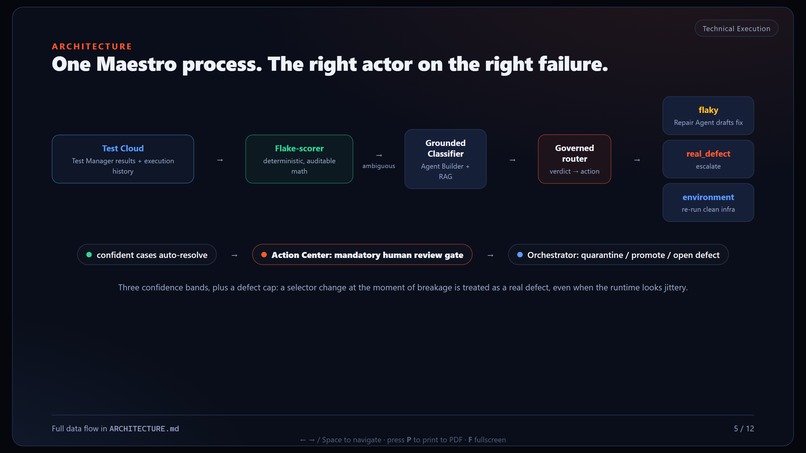
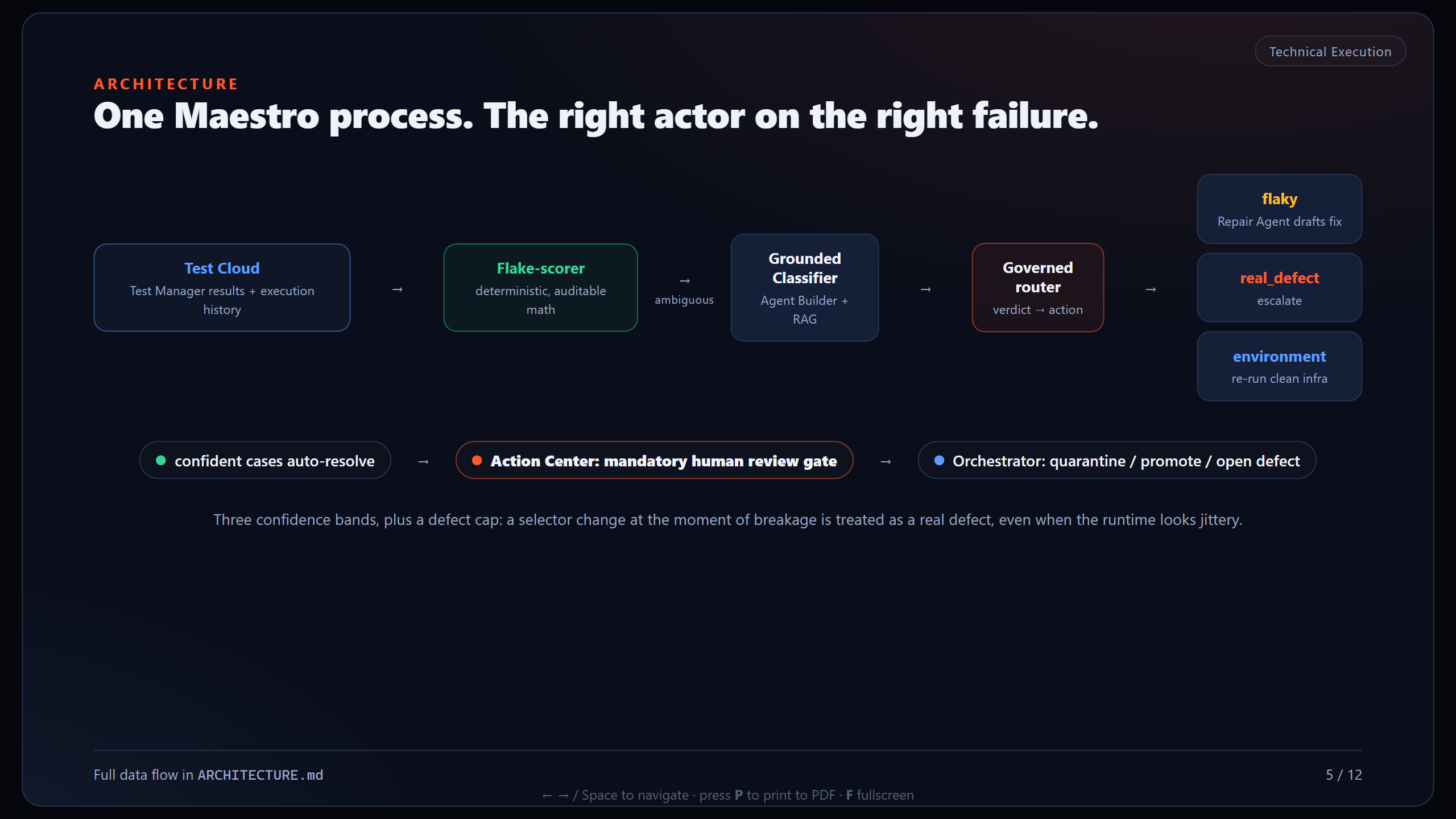
Architecture: a deterministic flake-scorer handles the clear cases; a grounded Agent Builder classifier reasons over the ambiguous ones.
-
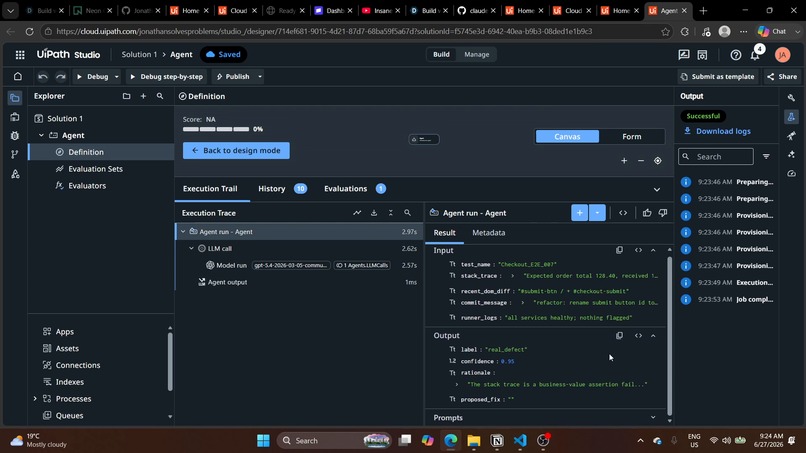
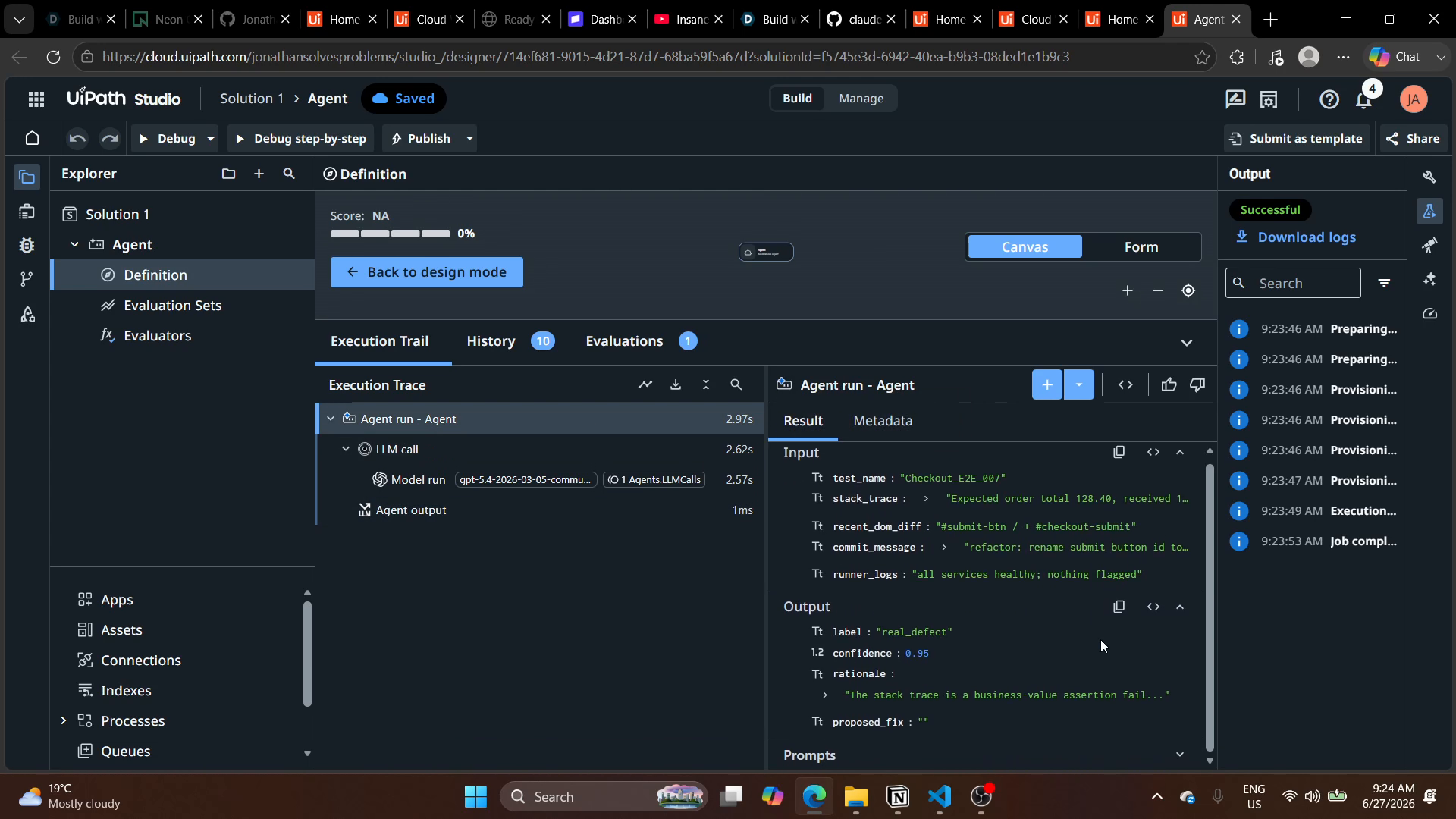
Live agent verdict: real defect (selector change at the break). It proposes no fix, because you never auto-heal a real bug.
-
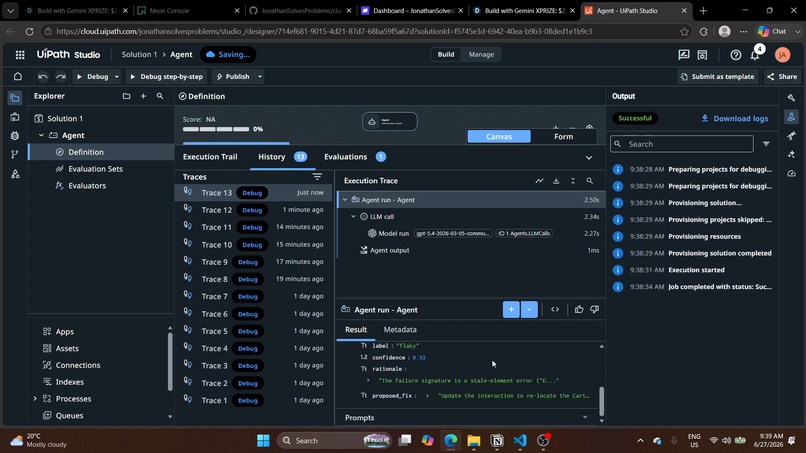
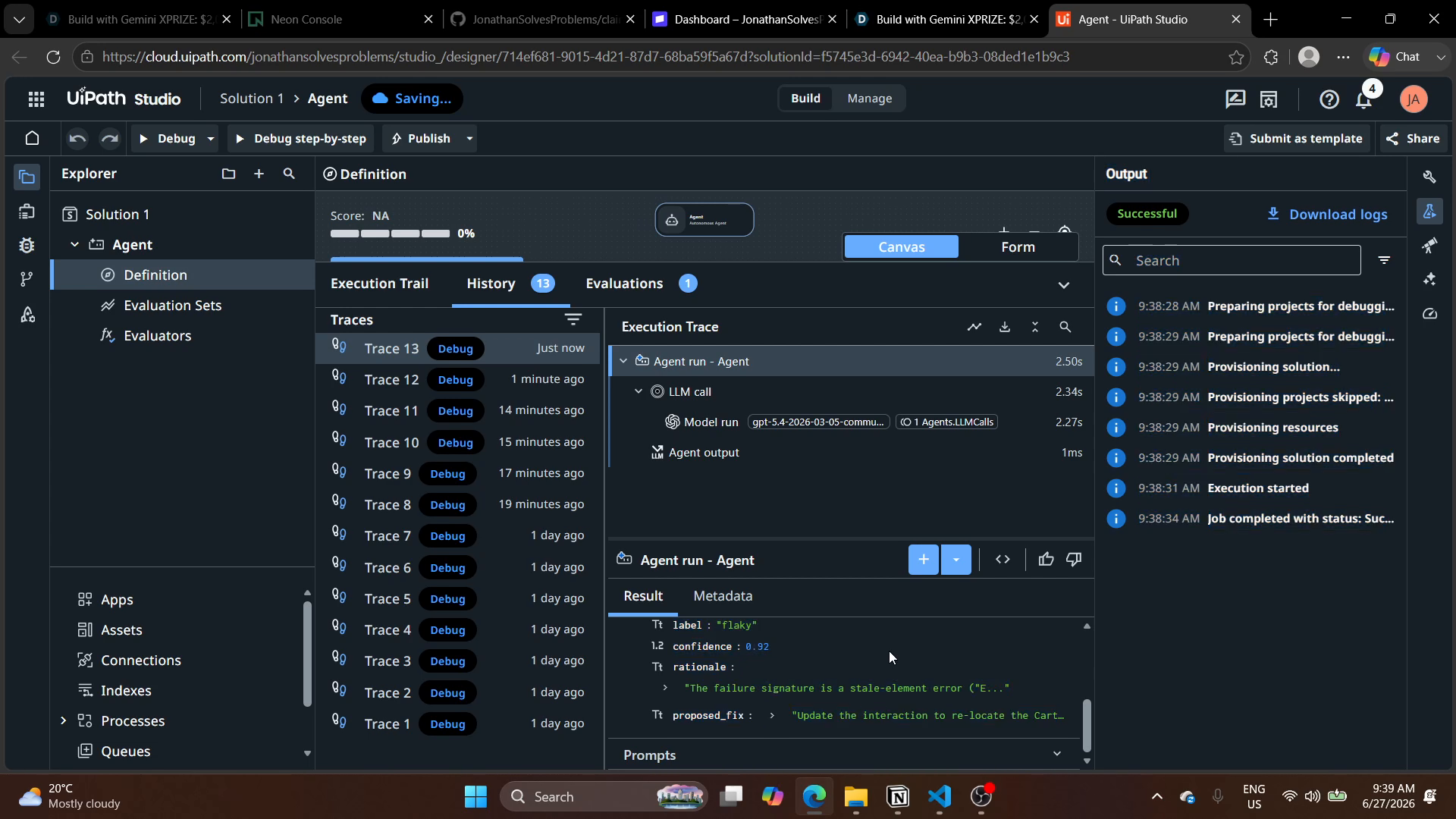
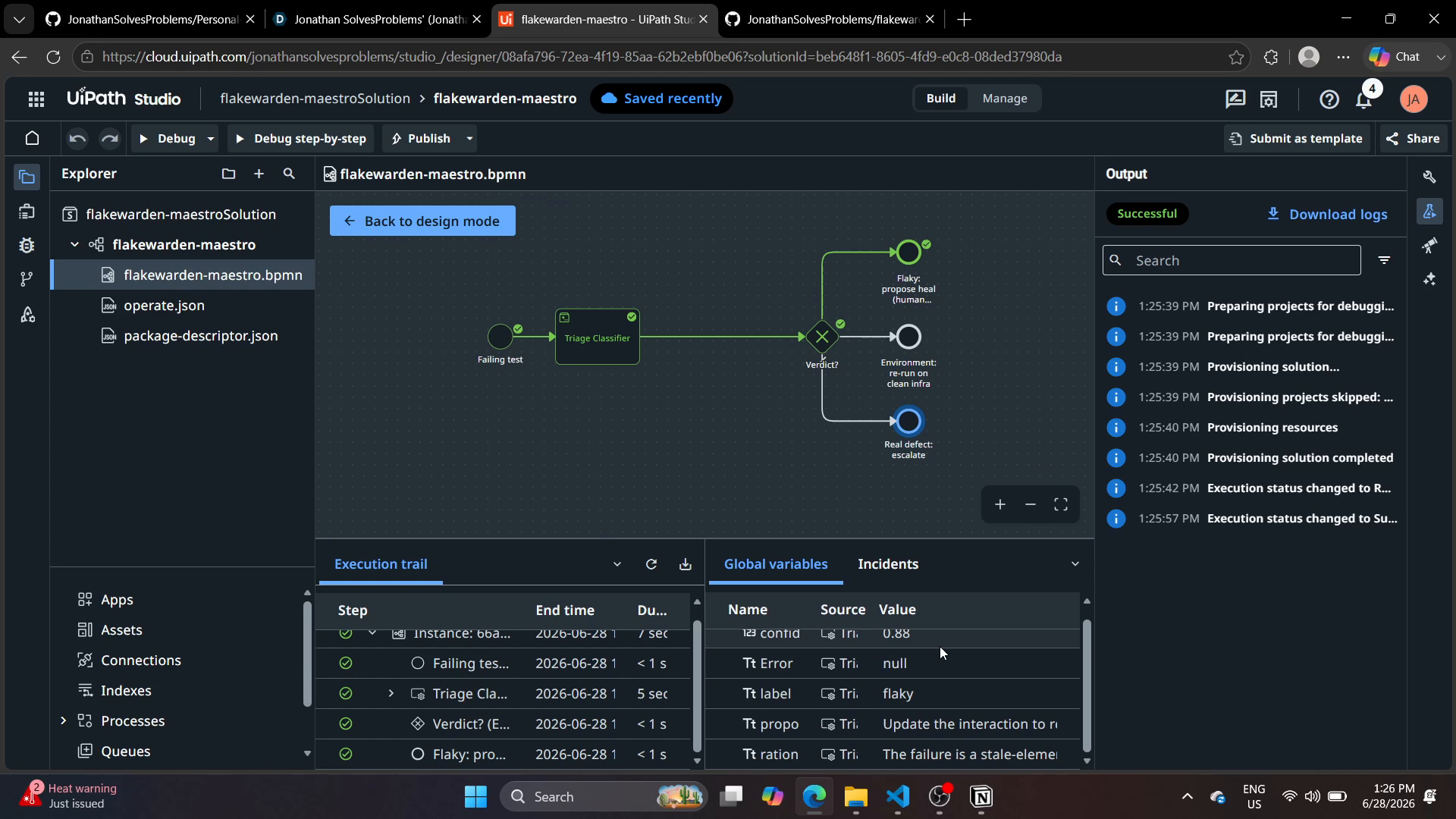
Live agent verdict: flaky (stale-element timing, no code change). It proposes a selector/wait fix, gated for human approval.
-
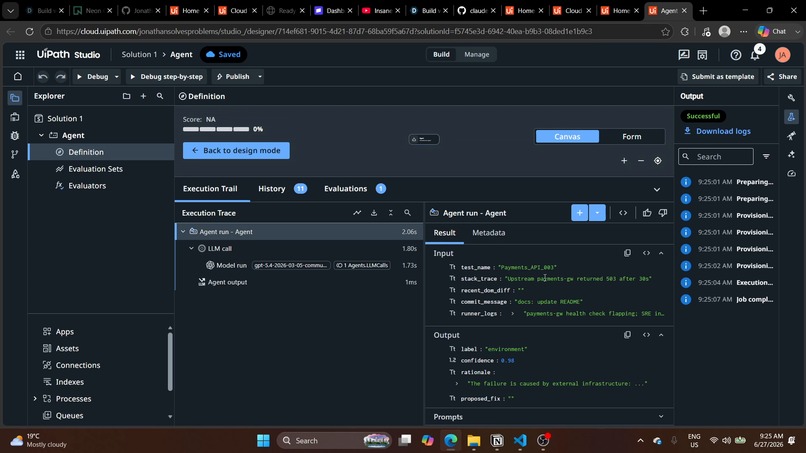
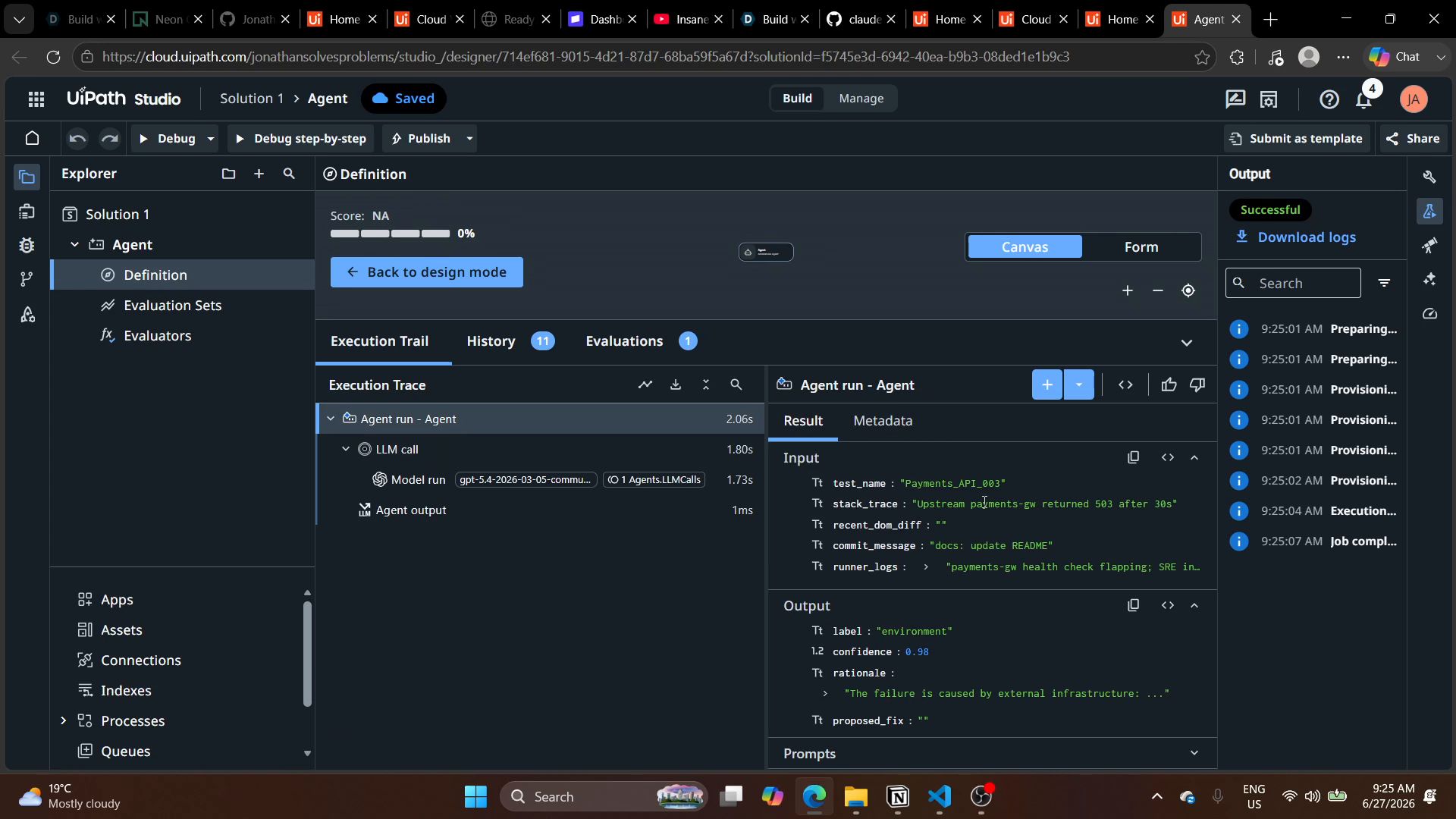
Live agent verdict: environment (503 from an upstream service). Re-run on clean infrastructure; don't blame the test or the code.
-
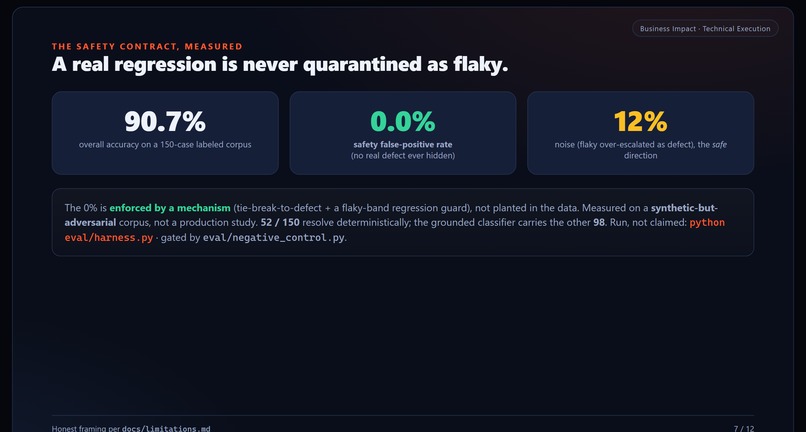
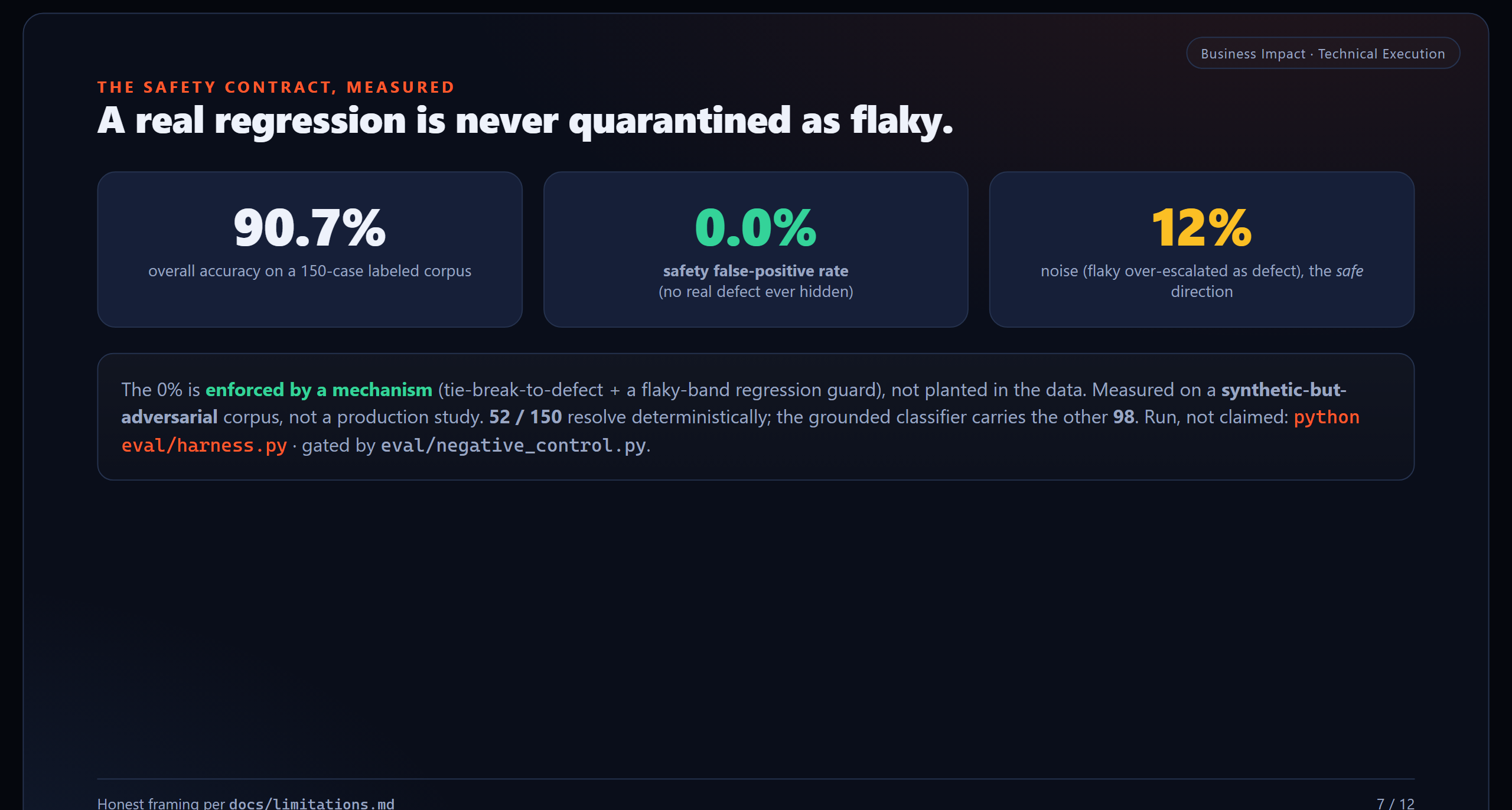
Measured on a 150-case labeled corpus: 90.7% accuracy and a 0% safety false-positive rate, enforced by a mechanism, not planted.
-
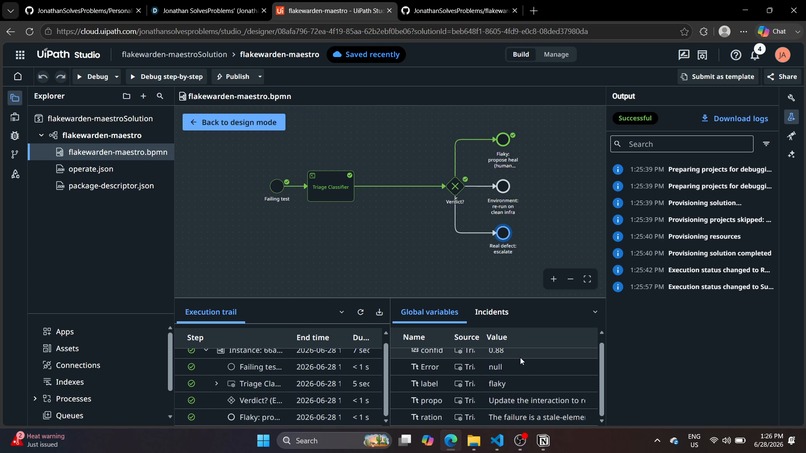
UiPath Maestro orchestrates the flow: failing test to Triage Classifier to a verdict gateway that routes each class to the right action.
-
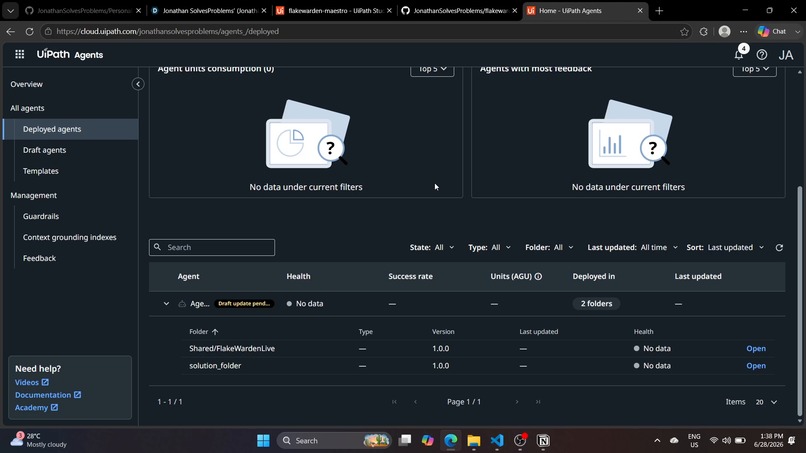
The Triage Classifier, published v1.0.0 and deployed as a live Orchestrator process on UiPath Automation Cloud.
-
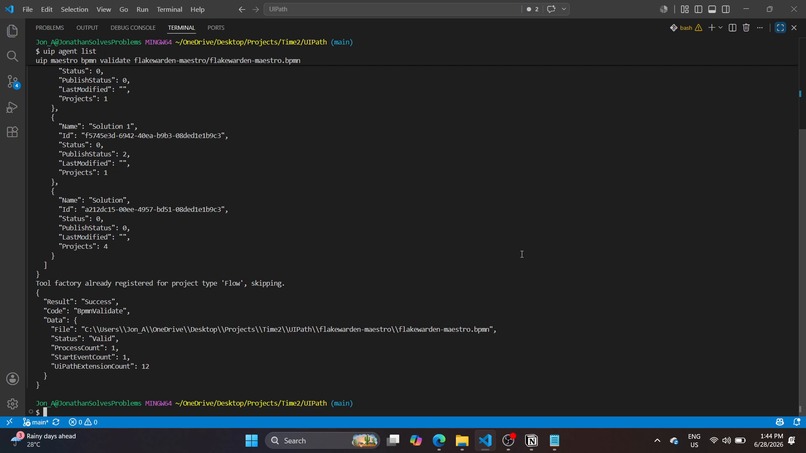
Built with a coding agent: Claude Code drives the UiPath uip CLI to deploy the agent and author the Maestro orchestration.
-
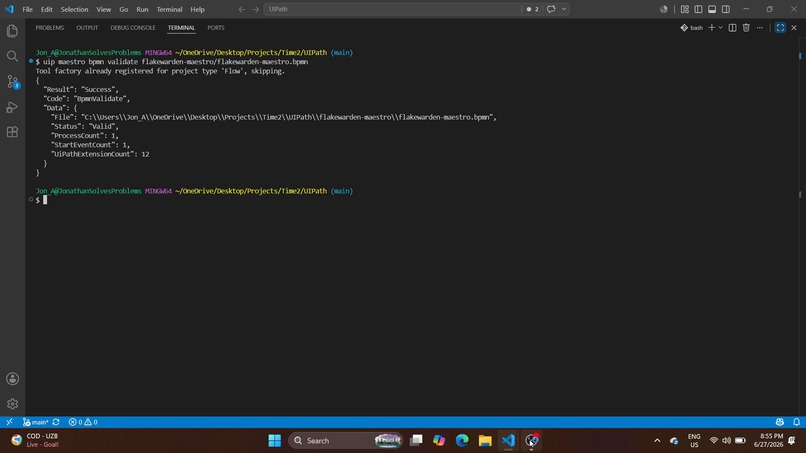
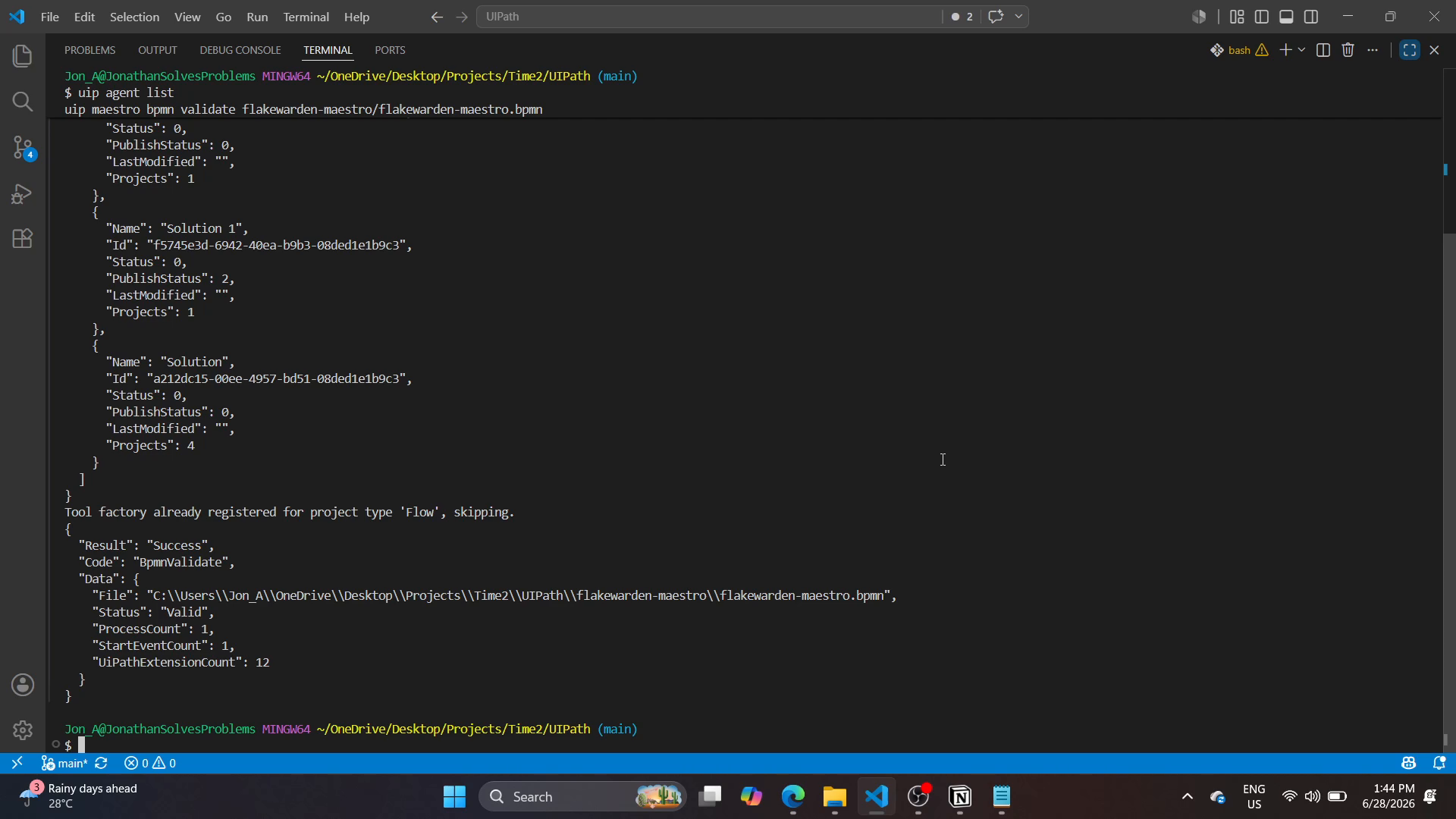
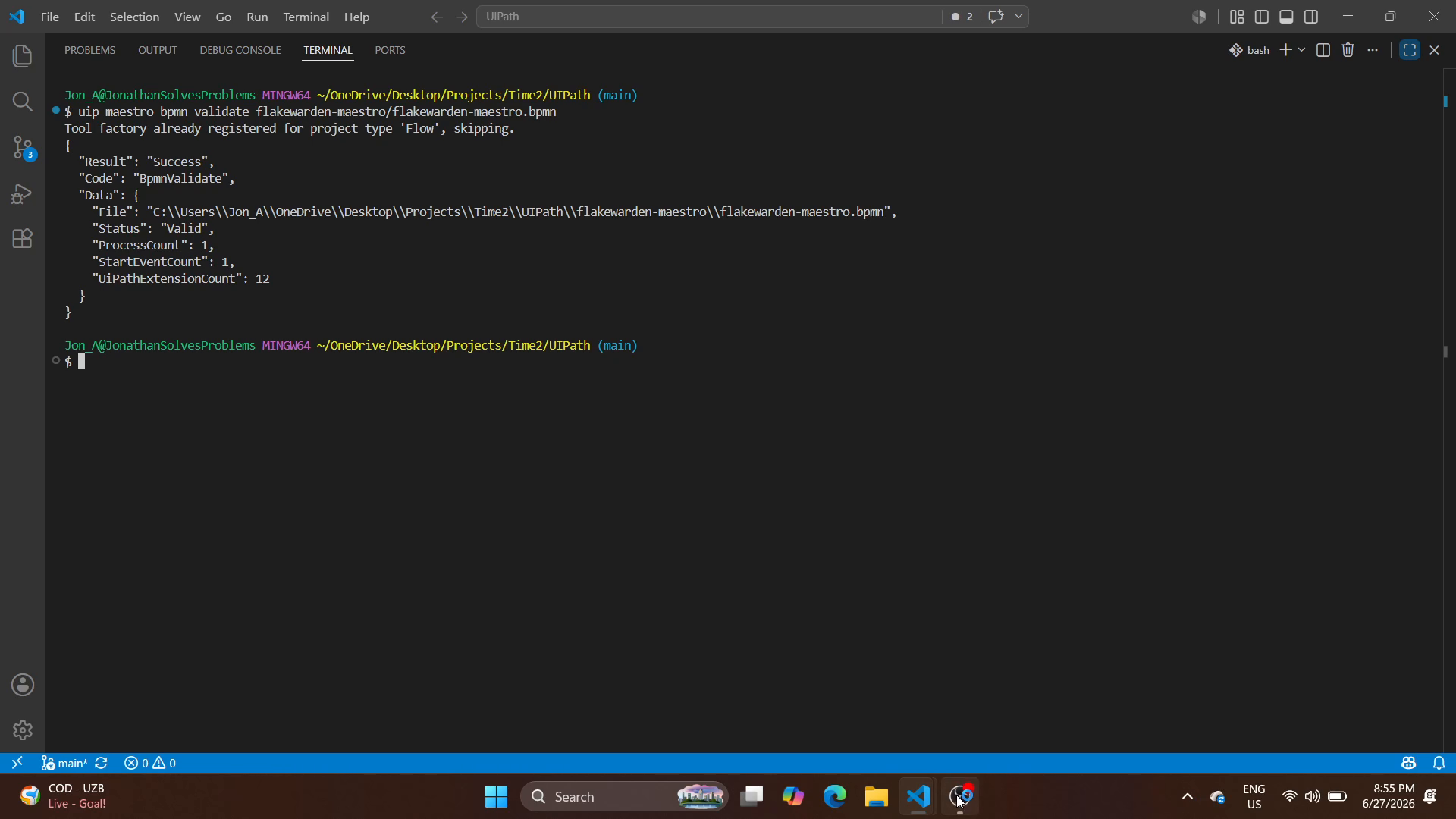
The Maestro BPMN was authored through the uip CLI and passes uip maestro bpmn validate cleanly.
-
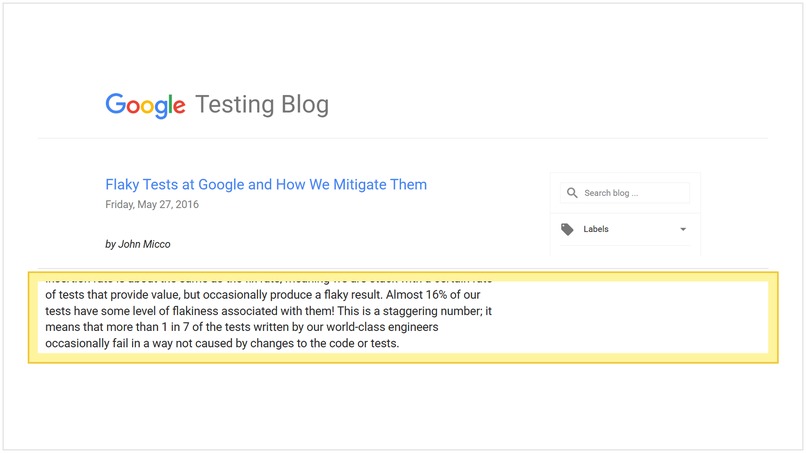
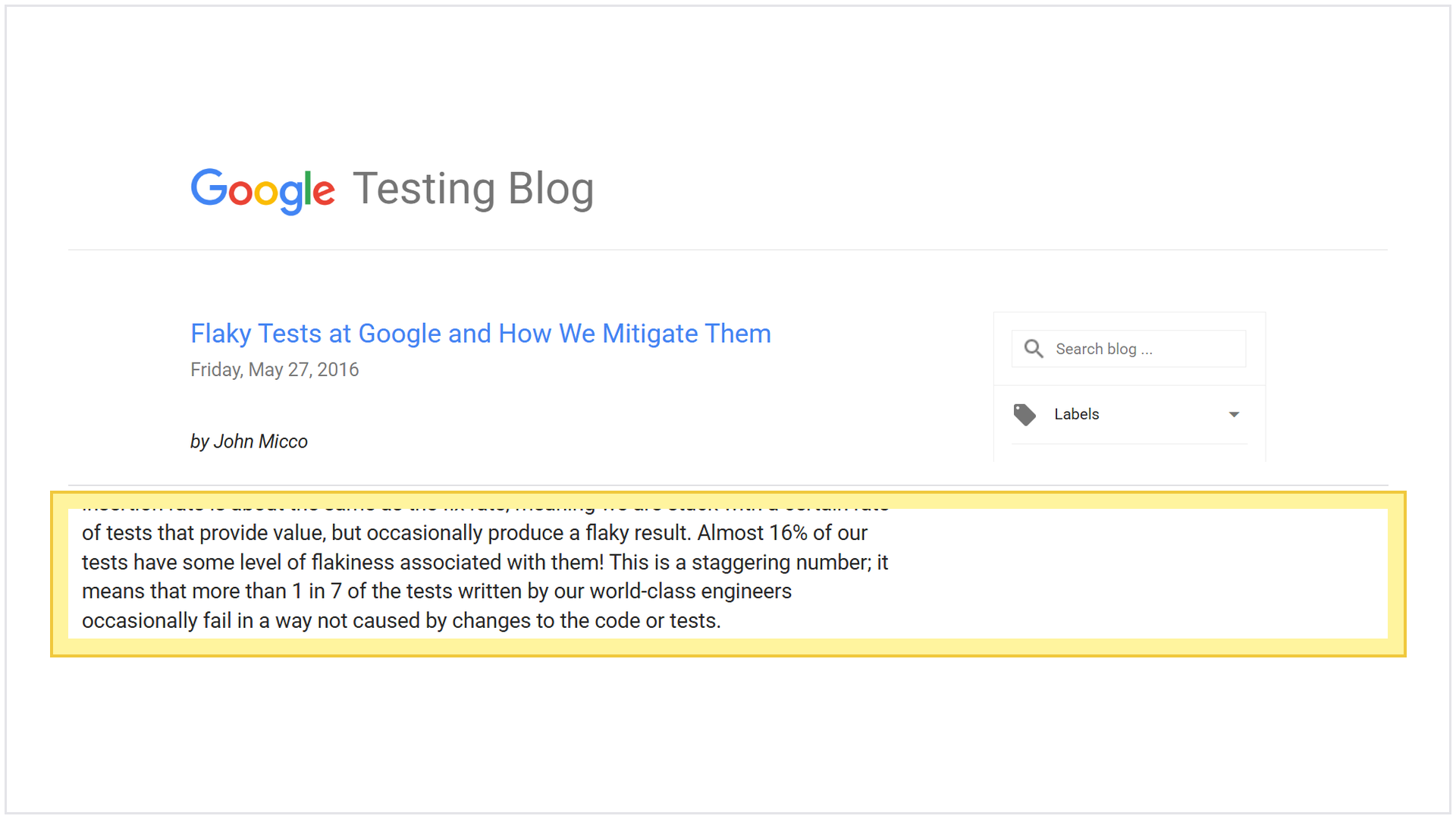
The problem, grounded: Google reported ~16% of tests showed flakiness and ~84% of pass-to-fail transitions came from flaky tests.

Inspiration
Flaky tests are the most corrosive failure mode in CI. When a build goes red, an engineer often cannot tell a real regression from noise, so they either burn 15 to 45 minutes triaging every failure or, worse, start ignoring red builds until a genuine regression ships. Google's continuous-testing data (J. Micco, Google Testing Blog, 2016; corroborated by Memon et al., ICSE-SEIP 2017) reported about 16% of their tests showed some flakiness and about 84% of pass to fail transitions came from flaky tests. I wanted an agent that answers the only question that matters: real defect, flaky, or environment. It never hides a real bug, and it keeps a human in charge of every change.
What it does
FlakeWarden triages a failing test and routes it to the right action:
- A deterministic, auditable flake-scorer (exact statistics over run history) resolves the confident cases and never guesses.
- A grounded UiPath Agent Builder classifier reasons over the messy evidence (stack trace, DOM/selector diff, commit message, runner logs) only for the ambiguous failures, and labels each one real_defect, flaky, or environment.
- It proposes a selector/synchronization fix only for flaky tests, and every quarantine, heal, or baseline change is a human-gated proposal, never an autonomous mutation.
It runs under a hard safety contract: a real regression is never auto-quarantined as flaky. On a 150-case labeled corpus it yields 90.7% accuracy and a measured 0% safety-direction false-positive rate, enforced by a mechanism, not planted in the data.
How I built it
The whole solution was designed and built with Claude Code through UiPath for Coding Agents, combining a coded agent with a low-code Agent Builder agent:
- Deterministic flake-scorer, grounded classifier interface, evaluation harness, and labeled corpus authored as Python (a UiPath Coded Agent).
- The Triage Classifier built in UiPath Agent Builder (Studio Web): grounded context, a structured output schema, and an evaluation set, running on the UiPath Automation Cloud.
- UiPath Maestro orchestrates the scorer, the classifier, and a human-review Action Center task; the deterministic-vs-generative split keeps exact math where it belongs and spends the model only on the ambiguous middle.
Challenges I ran into
- An early version of the evaluation was circular: the corpus encoded the exact signals the model read back. I caught it in an adversarial self-review and de-rigged the corpus (noisy signals, decoupled vocabulary, genuine conflict cases), re-measuring at an honest 90.7% instead of a tautological number.
- Making the 0% safety rate real, not designed: it is now enforced by a flaky-band regression guard plus a tie-break toward real_defect, so a real bug can never be silently healed.
- UiPath platform learning curve: binding prompt arguments uses the @ picker (not {{ }} typed text), and the in-product agent evaluator could not route its model in the EU tenant (HTTP 417 data-residency). The agent itself runs fine; the evaluator model routing is a real gap I am submitting as product feedback.
Accomplishments I'm proud of
- A grounded classifier agent running live on UiPath that classifies real_defect, flaky, and environment with correct, evidence-cited reasoning, published v1.0.0 and deployed as an Orchestrator process.
- A Maestro BPMN orchestration authored end to end through the UiPath
uipCLI (Claude Code), validating clean againstuip maestro bpmn validate. - A measured 0% safety-direction false-positive rate that is earned by a mechanism, with a negative-control gate that proves no real defect is ever auto-healed.
- A clean deterministic-vs-generative architecture that spends the LLM only where it adds value (about a third of failures resolve with no model call).
What I learned
- Evaluation-driven development is only honest if the eval set is decoupled from the model under test. Self-review and de-rigging mattered more than the headline number.
- Where rules belong versus where generative reasoning belongs: exact statistics for structured history, grounded LLM reasoning for messy multi-source context.
- Practical UiPath Agent Builder, Maestro, Context Grounding, and the uip CLI for coding agents, including data-residency constraints in EU tenants.
What's next for FlakeWarden
- Wire the full Maestro process and Action Center human gate end to end.
- Connect the live Test Manager results API in place of the seeded corpus, then run a shadow-mode prospective study to report real-world accuracy.
- Add drift monitoring so the scorer thresholds re-tune as the suite evolves.

Log in or sign up for Devpost to join the conversation.