-
-
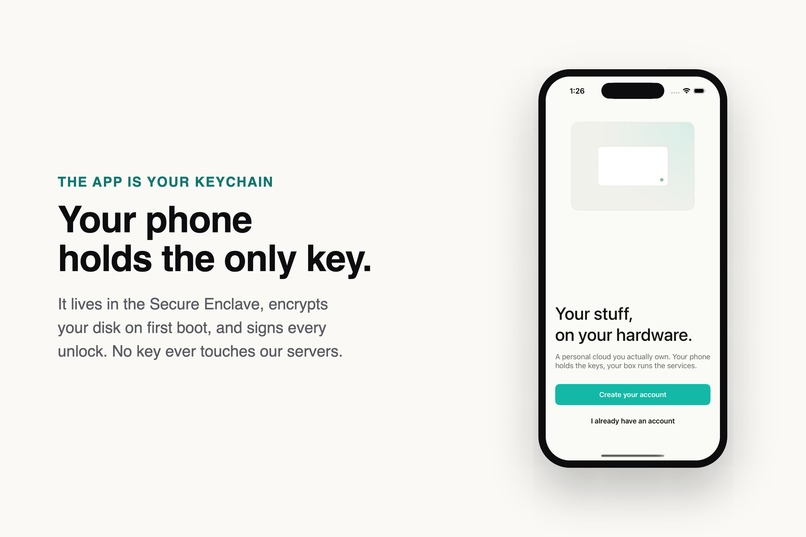
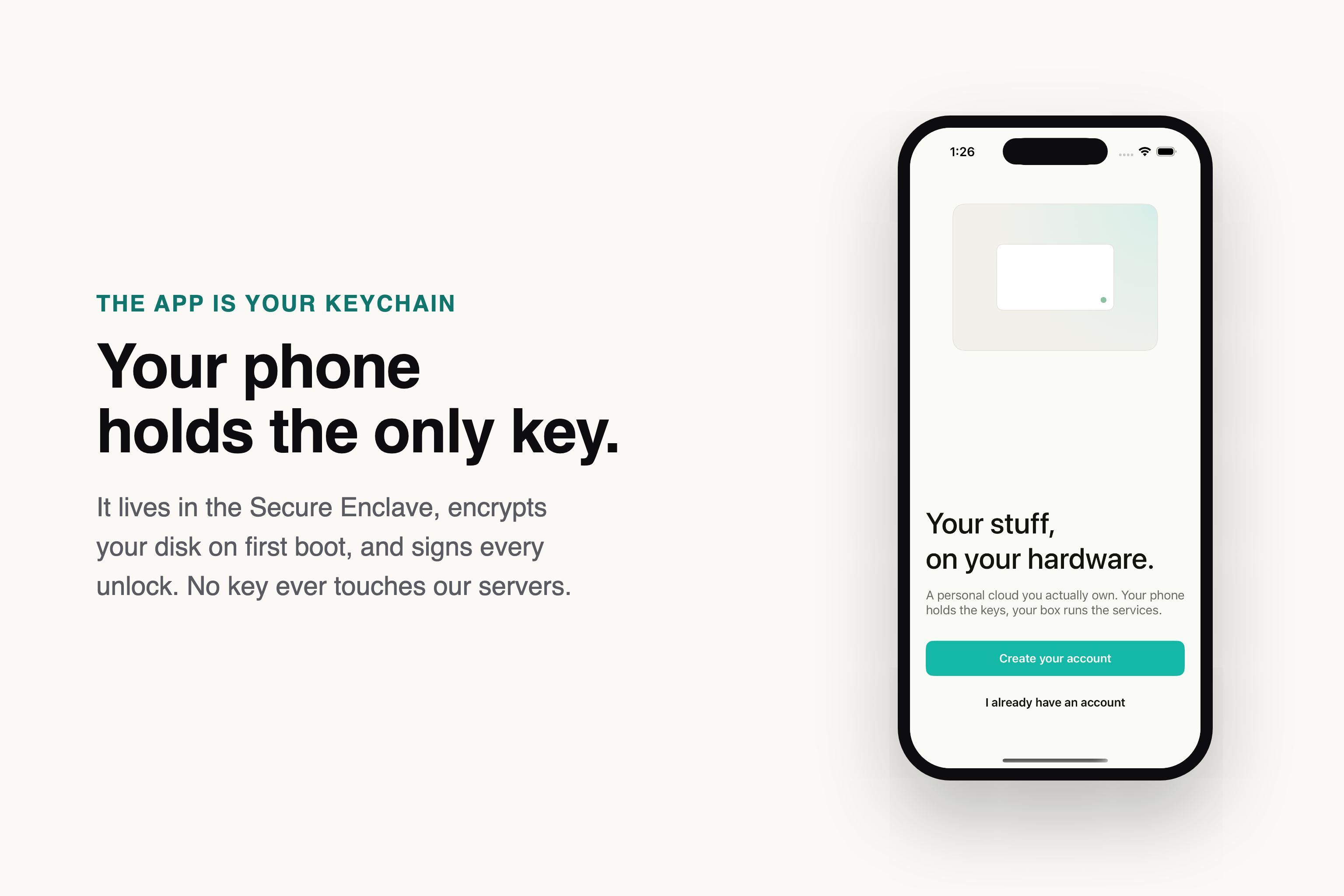
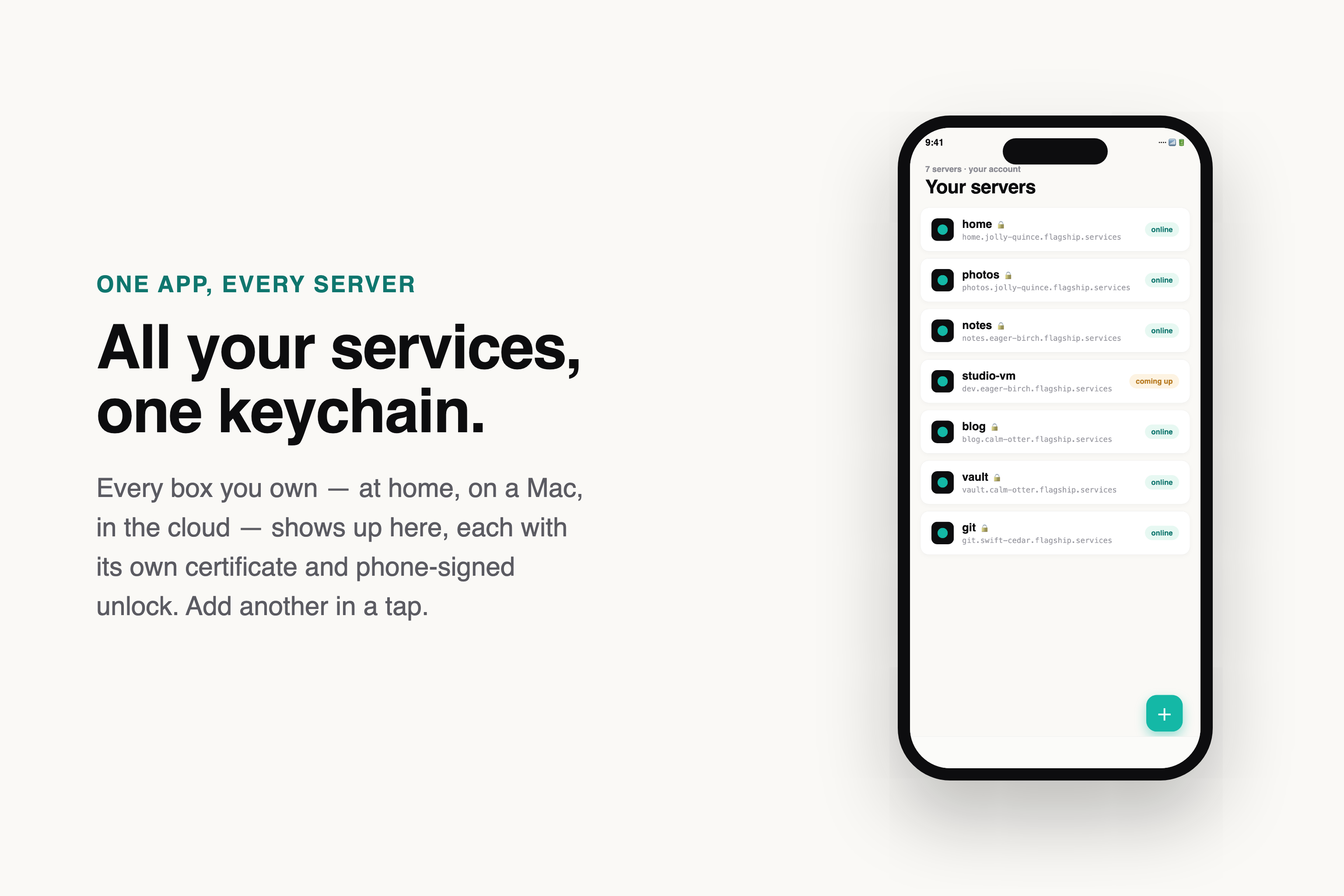
The app homescreen
-
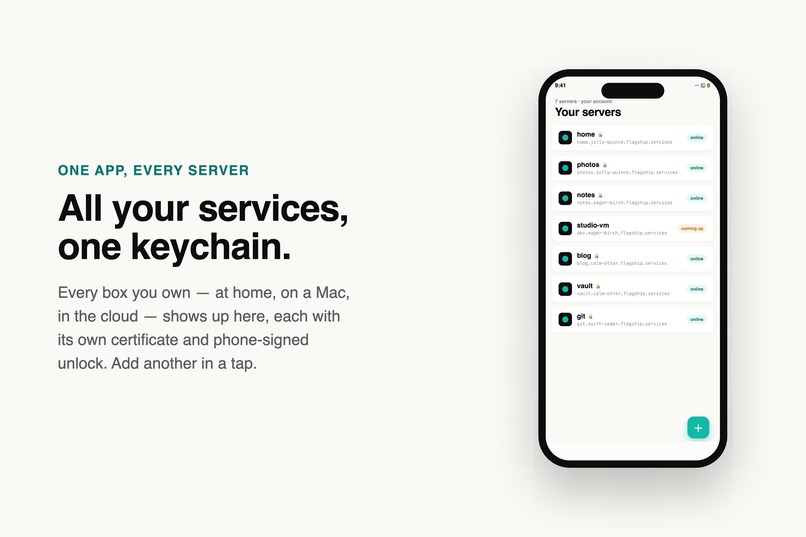
Servers list
-
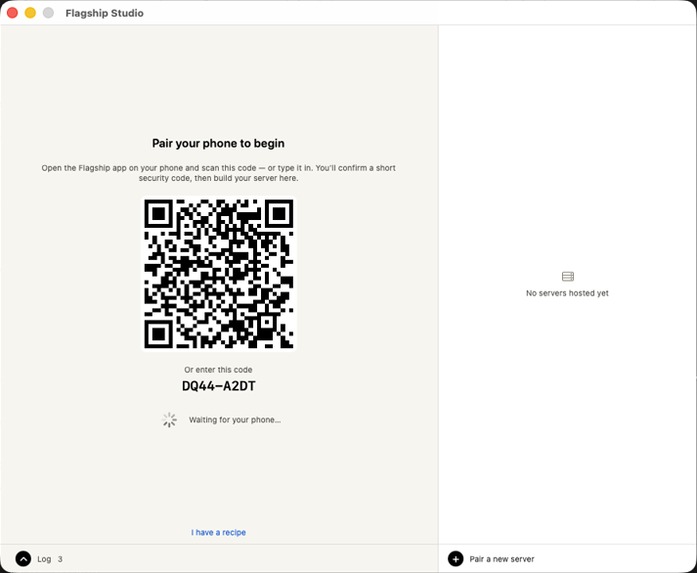
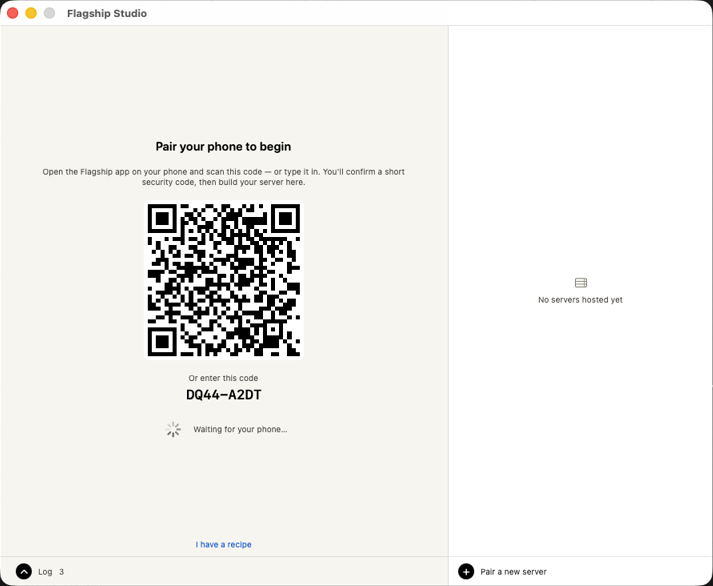
Desktop app
Inspiration
I've been obsessed with security for years. During my thesis I filled notebooks with protocols — phone-as-trust-root, TLS that terminates on hardware you own, authoring against data that isn't real — designs I was sure were the contribution of a lifetime, and just as sure I'd never actually ship alone. This week I did. Codex turned a mountain of theory into working code in seven days. That's the real inspiration behind Flagship: your cloud should live on your hardware and answer to your keys — not to a company that can read it.
What it does
Flagship is a personal cloud you actually own. Your phone is the only key — it lives in the Secure Enclave, encrypts the disk on first boot, and signs every unlock. TLS terminates on your box, so the network in between (us included) can only relay ciphertext it can't read. Run it on a spare machine via USB, or host it as a phone-gated encrypted VM on your own Mac or PC. Then vibe-code services onto it in plain English — and the AI writes them against fictitious data, never your real records.
How we built it
Agent-first, end to end. .com (a Cloudflare Worker) owns identity; .services (a Fly app) is a stateless pipe; the user's own daemon runs ACME and serves everything — that's what makes "we can't read your data" a property, not a promise.
Codex wrote the hardest parts: byte-identical Ed25519/X25519 sealed-key crypto across TypeScript, Swift, and Kotlin (pinned by golden vectors so clients can't drift); a synthetic-data engine that generates fake rows preserving structure, constraints, and edge cases but representing no real person; an encrypted VM appliance that boots sealed; and 7,000+ passing tests.
Challenges we ran into
There were two types of challenges, design and implementation. Codex always came in a clutch to solve the implementation challenged. For example, on the last day of the contest, our demo box booted but wouldn't serve — it looped on a signature-verification failure. The account was admin-pinned but the box was signing with the wrong key, and the hub allows no fallback. Letting codex trace that exact mismatch through all component logs got it live with a real green padlock. My mind was freed to focus on the design challenges, with more philosophical implications. For example, making "the AI can't see your data" true rather than aspirational. The answer was structural — devising a secure harness, a synthetic dataspace, and a secure review gate ... which I then handed over to the model.
Accomplishments that we're proud of
A real green padlock on a server running at home with full user key sovereignty. A live vibe-code run where the model built and deployed a service on the box, with the API key never leaving the user's hardware. And watching the fictitious-data idea go from a thesis sketch to tested, running code.
What we learned
The strongest privacy guarantees are structural, not behavioral — don't ask a model to be trustworthy, arrange things so it can't see what it shouldn't. And agent-first development genuinely scales when you hand the agent a contract: canonical bytes, strict manifests, golden vectors.
What's next for Flagship
Harden the dev→prod dataspace and the independent security-review gate; battle- test the Android, Windows, and Linux code (iPhone and Mac versions are relatively solid today because they are my daily driver). But the real goal is bigger than a product. I want to keep moving at this speed and turn Flagship into an open standard — so people anywhere can escape censorship and surveillance and reclaim their autonomy, on hardware they own, with the power of frontier models like Codex behind them. It's patent-pending, and open to — contributions for equity. Reach out at [email protected].
Built With
- cloudflare
- codex
- debian
- docker
- fly.io
- kotlin
- letsencypt
- minio
- node.js
- postgresql
- redis
- swift
- typescript
- webauthn

Log in or sign up for Devpost to join the conversation.