-
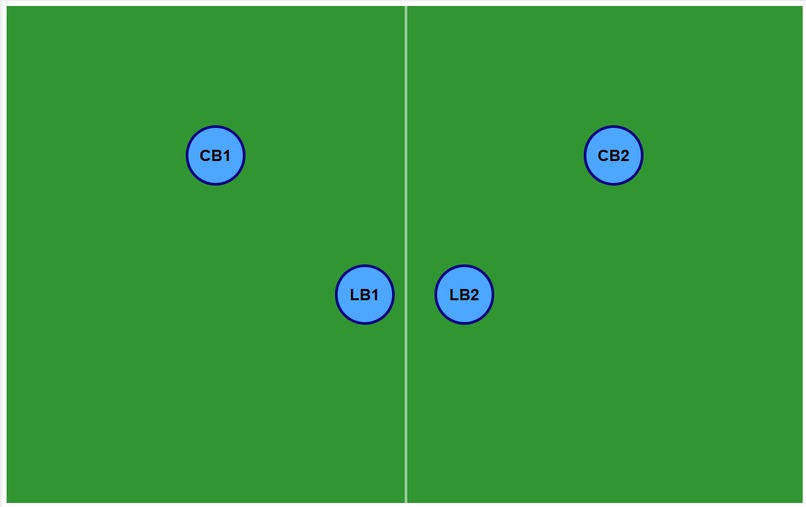
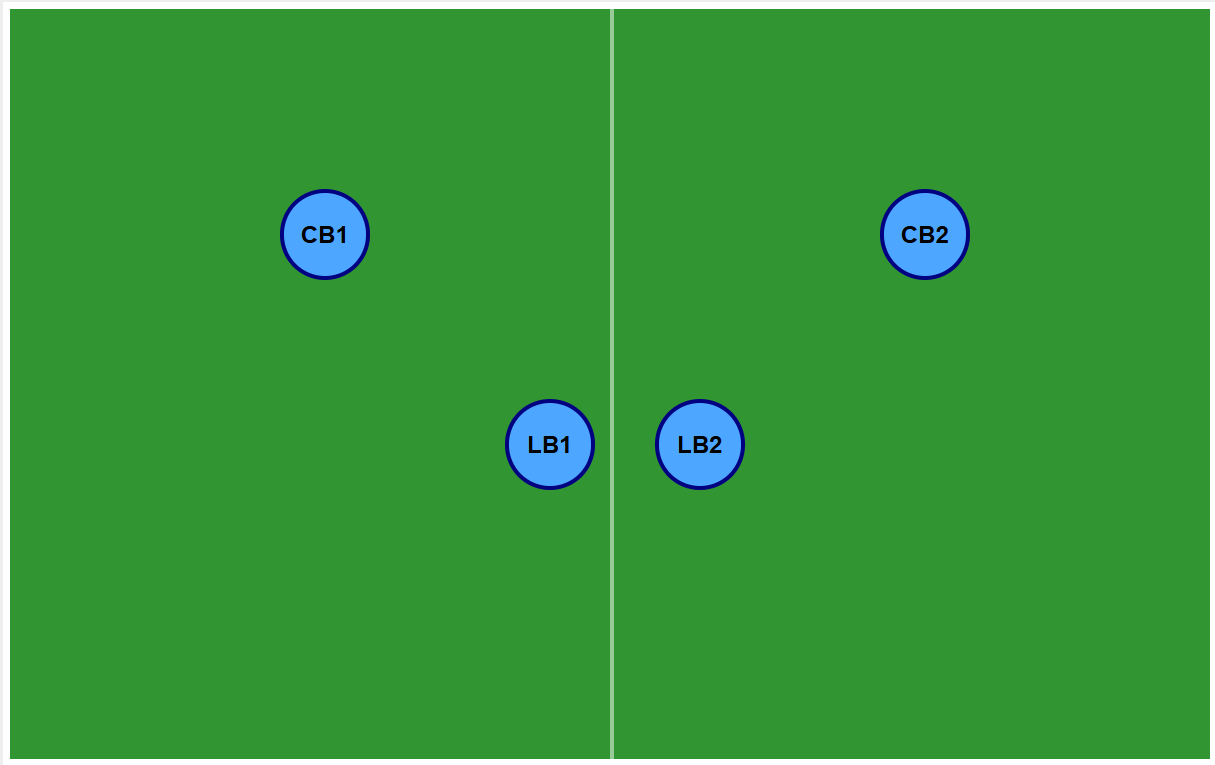
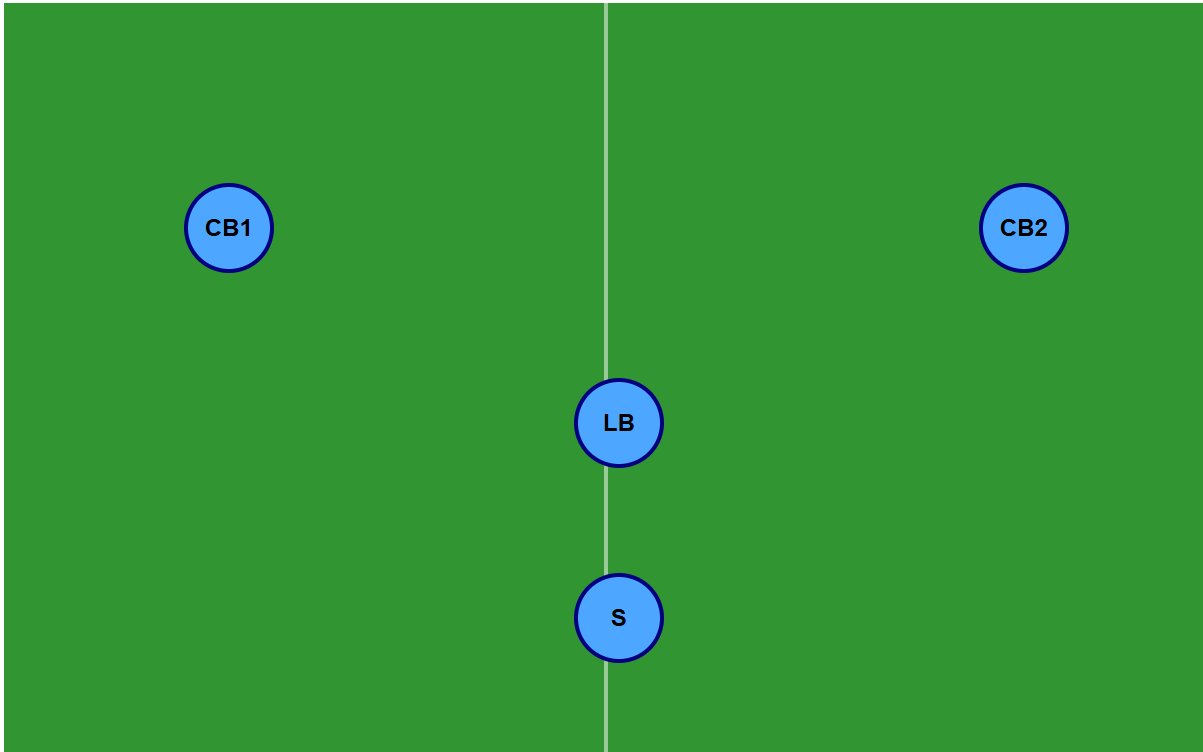
Defense Design Based on offense design 1
-
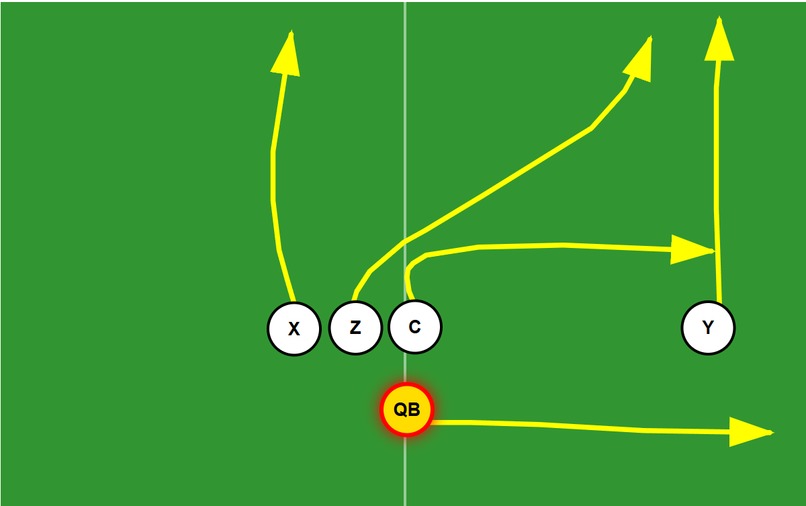
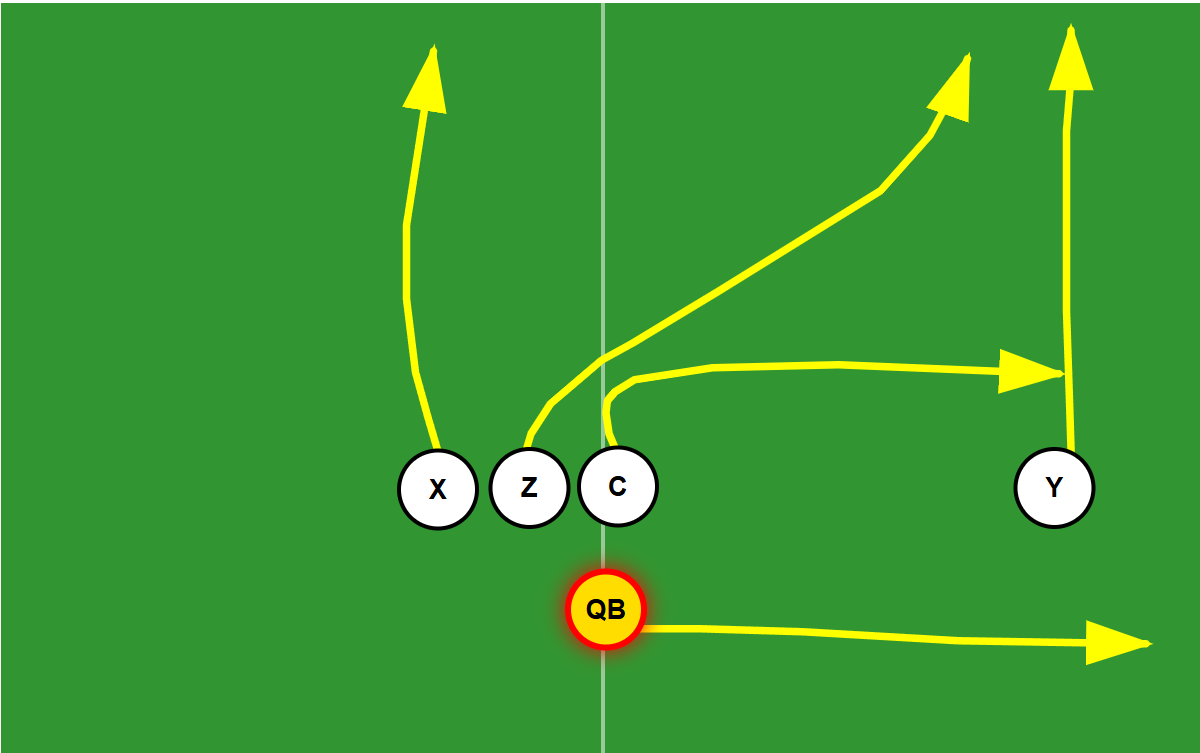
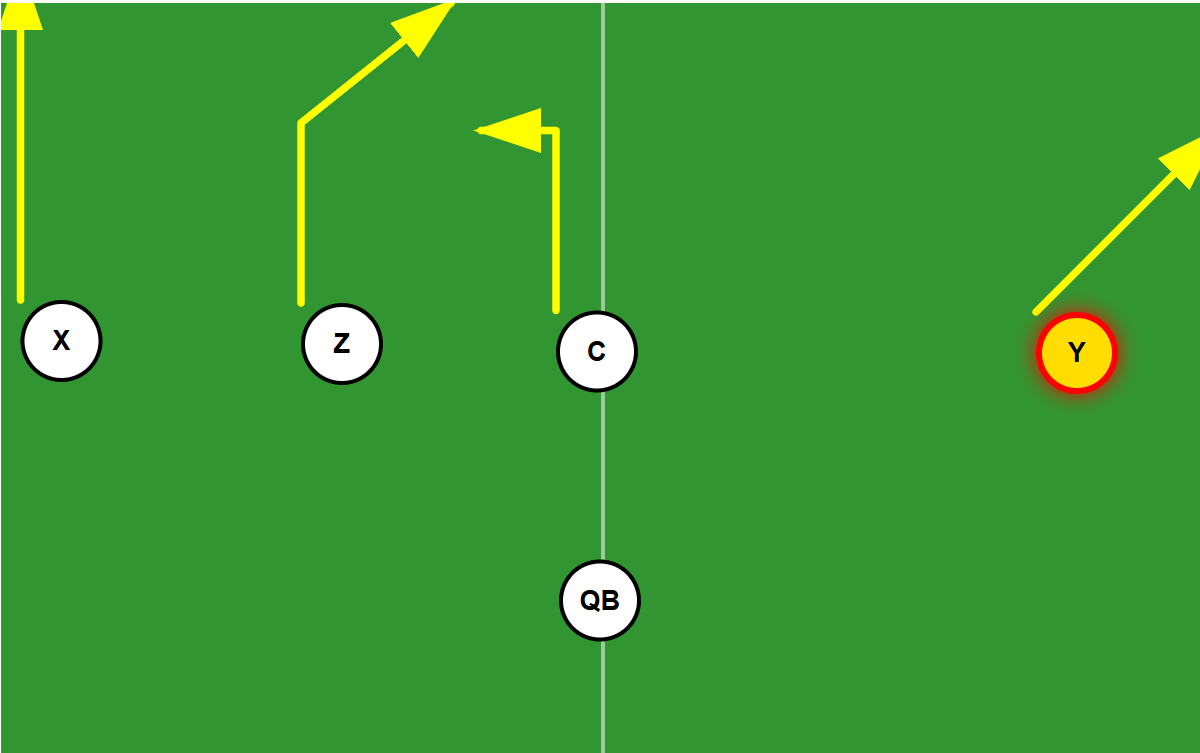
Offense Design 1
-
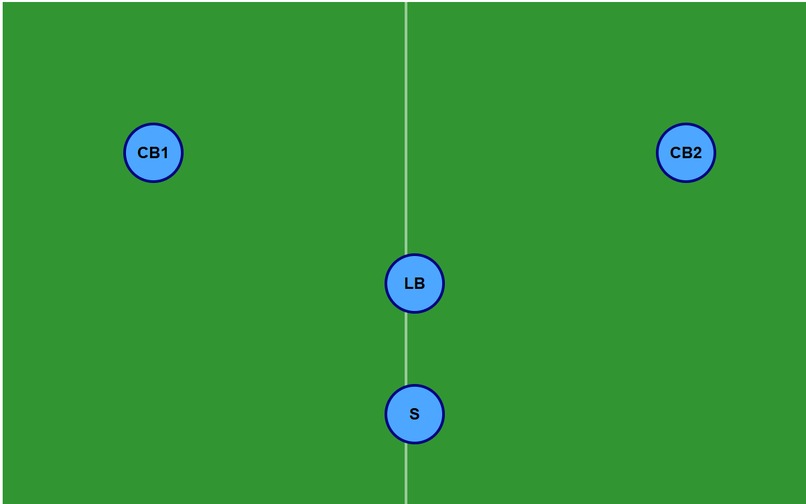
Defense Design Based on offense design 2
-
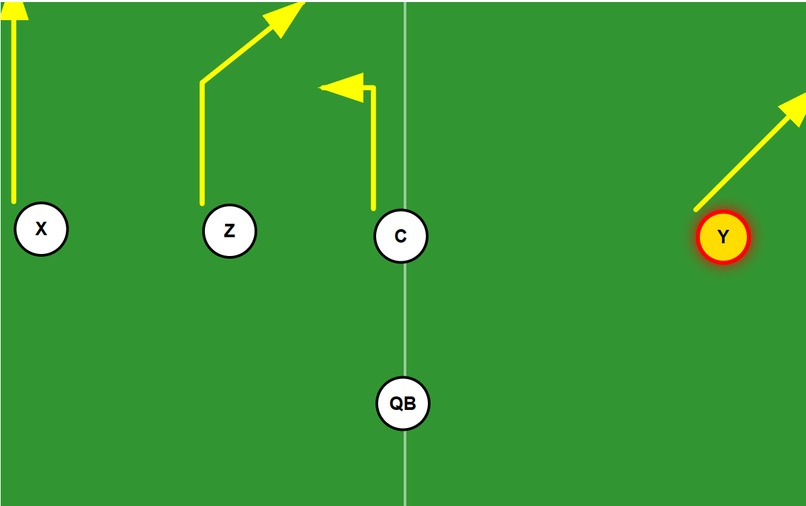
Offense Design 2
-
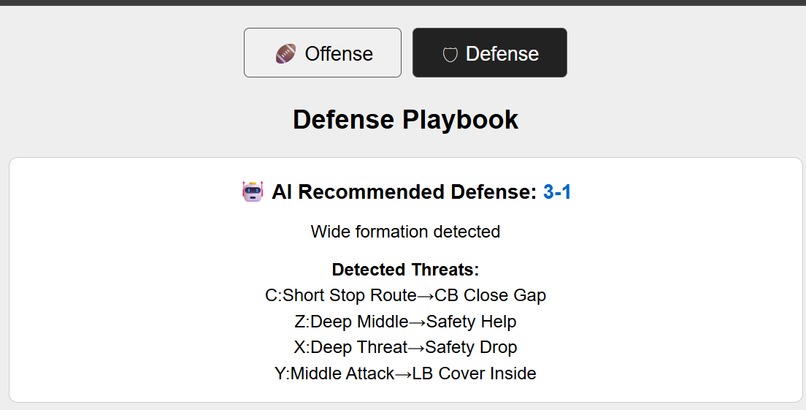
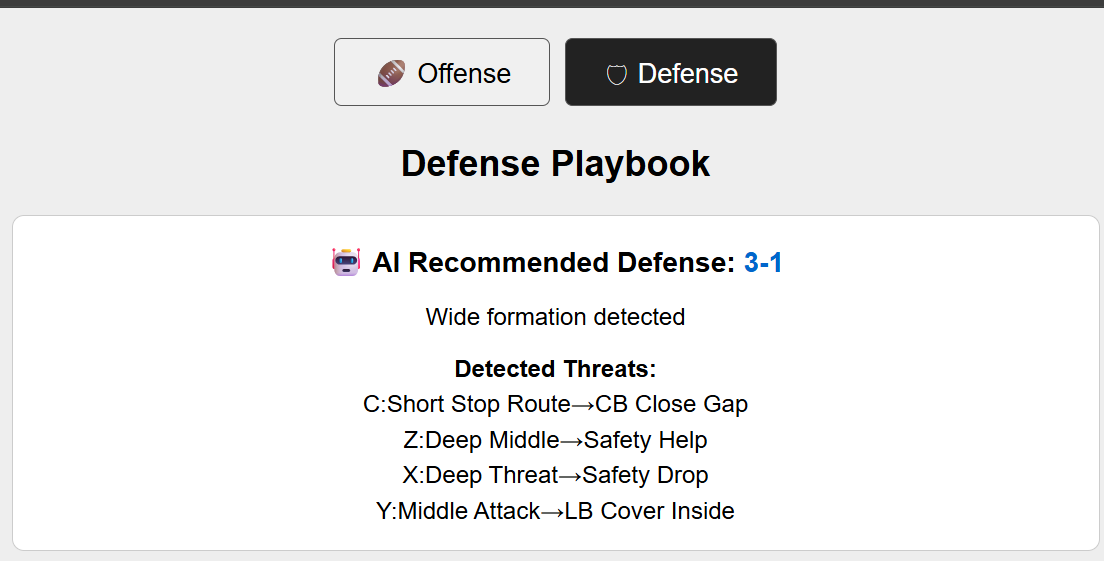
Defense playbook headings
-
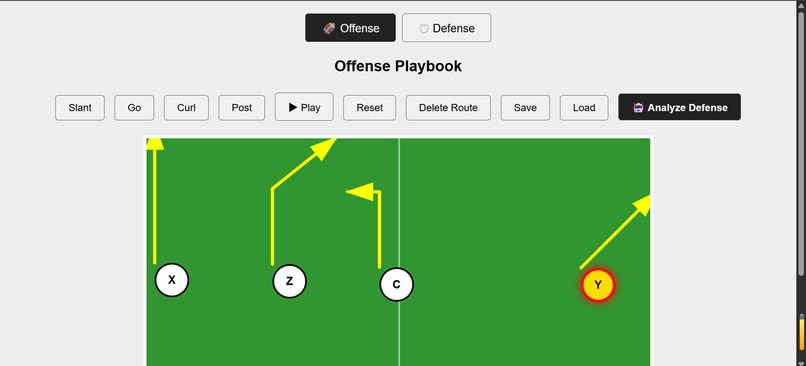
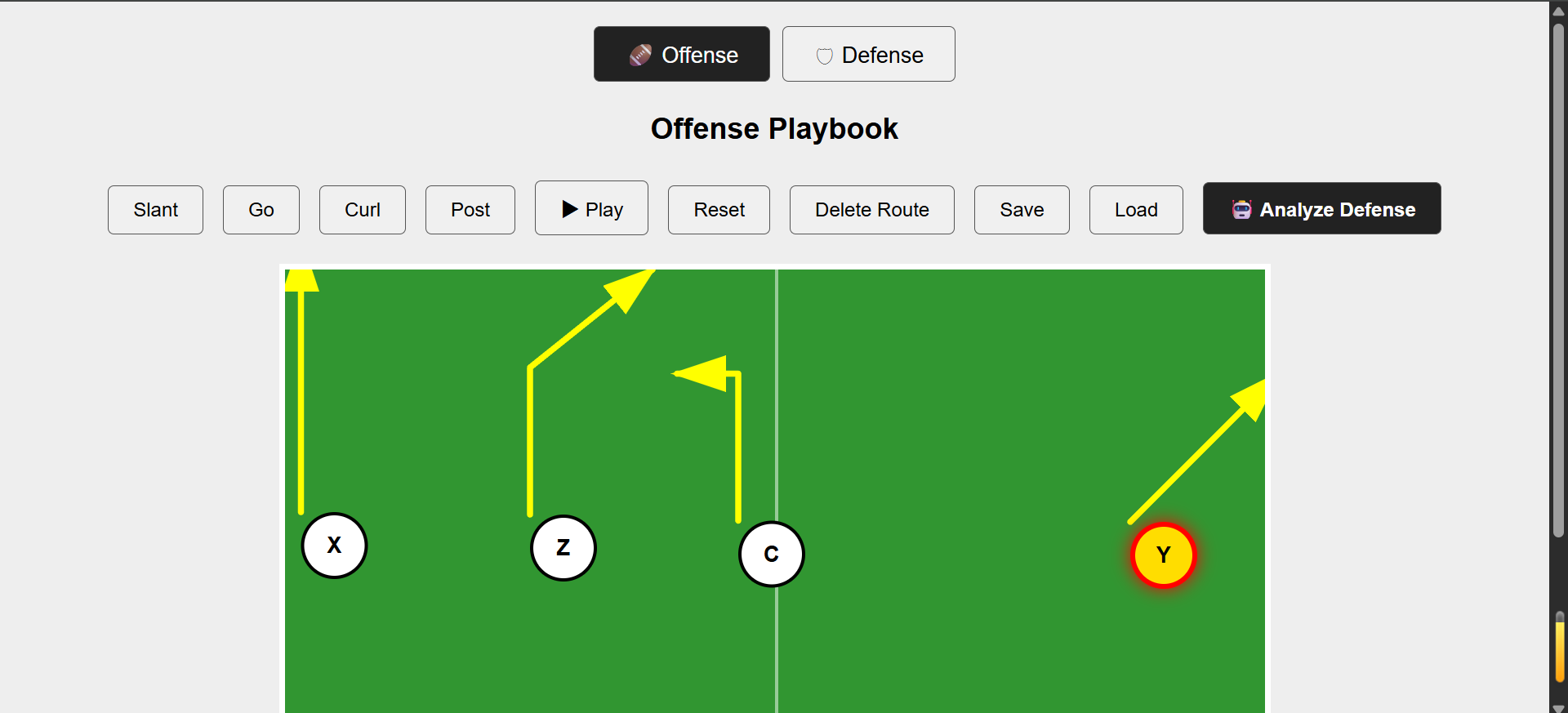
Offense playbook headings
Inspiration
As a flag football player and club member, I noticed that designing plays was often much harder than executing them. Coaches and players usually rely on hand-drawn diagrams, screenshots, or complicated playbook software that is not designed specifically for flag football. I wanted to build something simple, visual, and interactive that would make creating and experimenting with plays much easier. That idea became \textit{Flag Football Playboard}: a digital tactical board designed specifically for flag football.
What it does
Flag Football Playboard lets players and coaches visually design and test offensive and defensive plays. Users can: 1.Drag players around the field to set up formations 2. Select individual players and draw routes interactively 3.Use preset routes such as Slant, Go, Curl, and Post 4. Animate routes to visualize how a play develops 5.Save and manage plays in a playbook 6.Delete or modify routes 7.Switch between offensive and defensive views 8.Create defensive formations and explore defensive responses 9.Use AI-assisted defensive suggestions to analyze offensive formations and routes The goal is to turn play design from a static drawing into an interactive tactical experience.
How we built it
We built the project as a web application using React and Vite. The interface uses draggable React components for players, SVG-based layers for drawing and animating routes, and React state management to keep track of player positions, routes, selections, and saved plays. CSS is used to create the football field and player interface. We also structured the project into reusable components, including separate player, offensive board, and defensive board functionality. The AI-related features are designed to analyze formations and routes and generate possible defensive responses.
Challenges we ran into
One of our biggest challenges was making different interactions work together naturally. Players need to be draggable, but users also need to select a player and hold Shift while drawing a route without accidentally moving the player. We also ran into several state-management problems when adding features such as route deletion, route animation, saved playbooks, and separate offensive and defensive boards. Adding new functionality sometimes broke existing interactions, so we had to repeatedly refactor the components and rethink how player and route state was handled. Another challenge was designing the interface so that it remained simple enough for someone to understand immediately while still supporting relatively complex tactical interactions.
Accomplishments that we're proud of
We are especially proud that we turned an idea that originally existed as a simple tactical diagram into a functional interactive application. The project now supports draggable players, interactive route drawing, preset routes, route animation, playbook management, and separate offensive and defensive tactical views. We are also proud of building the project around the actual needs of flag football rather than simply adapting a generic sports drawing tool. Most importantly, the project is something we could actually imagine using during practice to quickly experiment with formations and plays.
What we learned
We learned that building an interactive application is much more than implementing individual features. Every new interaction can affect the existing state and user experience. Through this project, we learned much more about React component design, state management, event handling, SVG interactions, and debugging complex user interactions. We also learned how important it is to continuously test the application from the user's perspective rather than assuming that a feature works simply because its code works. Most importantly, we learned how to translate a real-world problem from a sport into a software interface.
What's next for Flag Football Playboard
We want to make Flag Football Playboard significantly smarter and more useful for real teams. Our next steps include improving the defensive AI, allowing the system to automatically identify weaknesses in offensive formations, generating defensive schemes, and eventually simulating an entire play from the perspective of both offense and defense. We also want to add multiplayer collaboration, better playbook organization, mobile and tablet support, and eventually statistics from real games so that plays can be evaluated based on actual performance. Our long-term goal is to turn Flag Football Playboard from a tactical drawing tool into a complete digital playbook and strategy assistant for flag football.
Built With
- css
- javascript
- localhost
- node.js
- vscode
