
About FizzHop
Inspiration
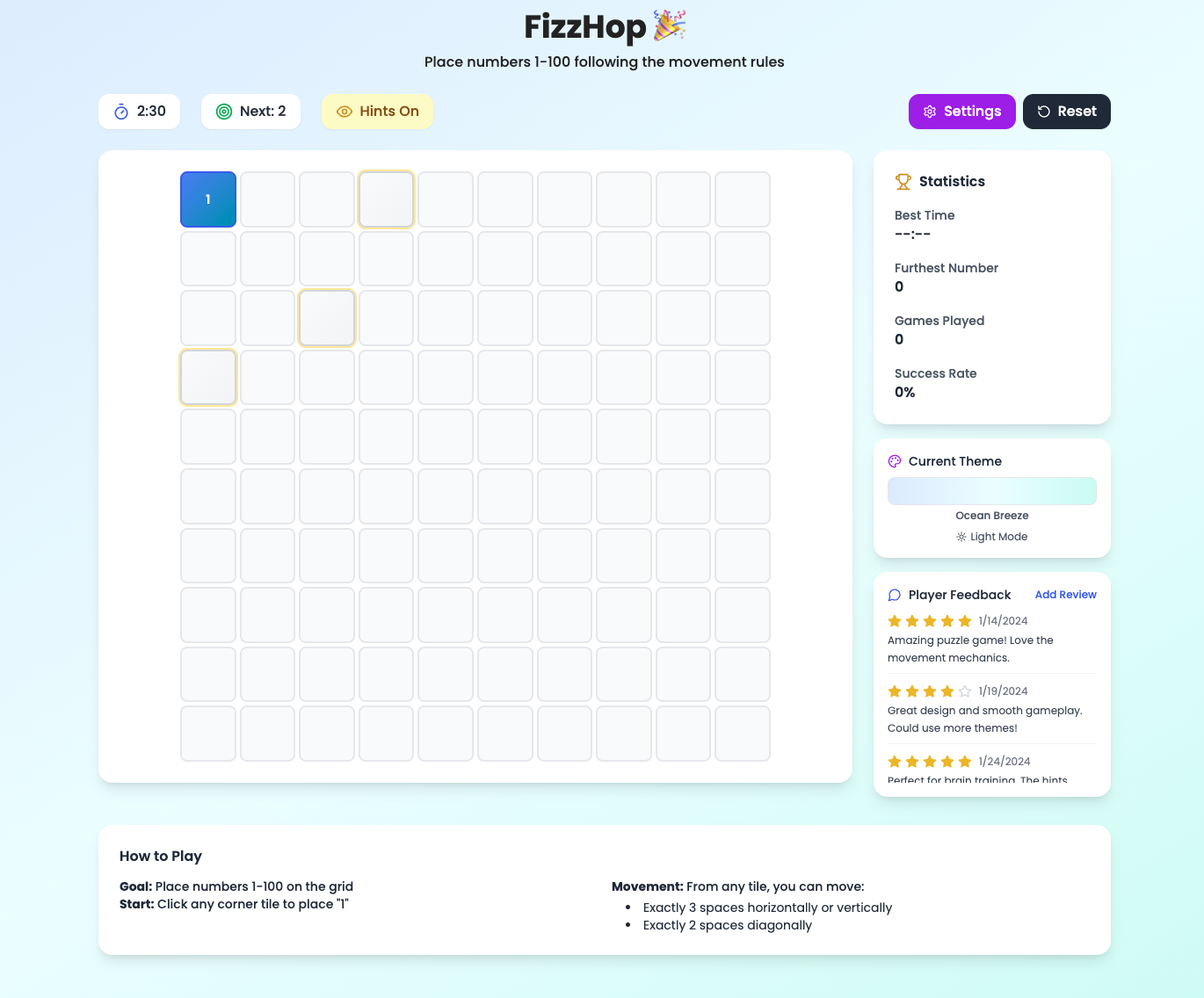
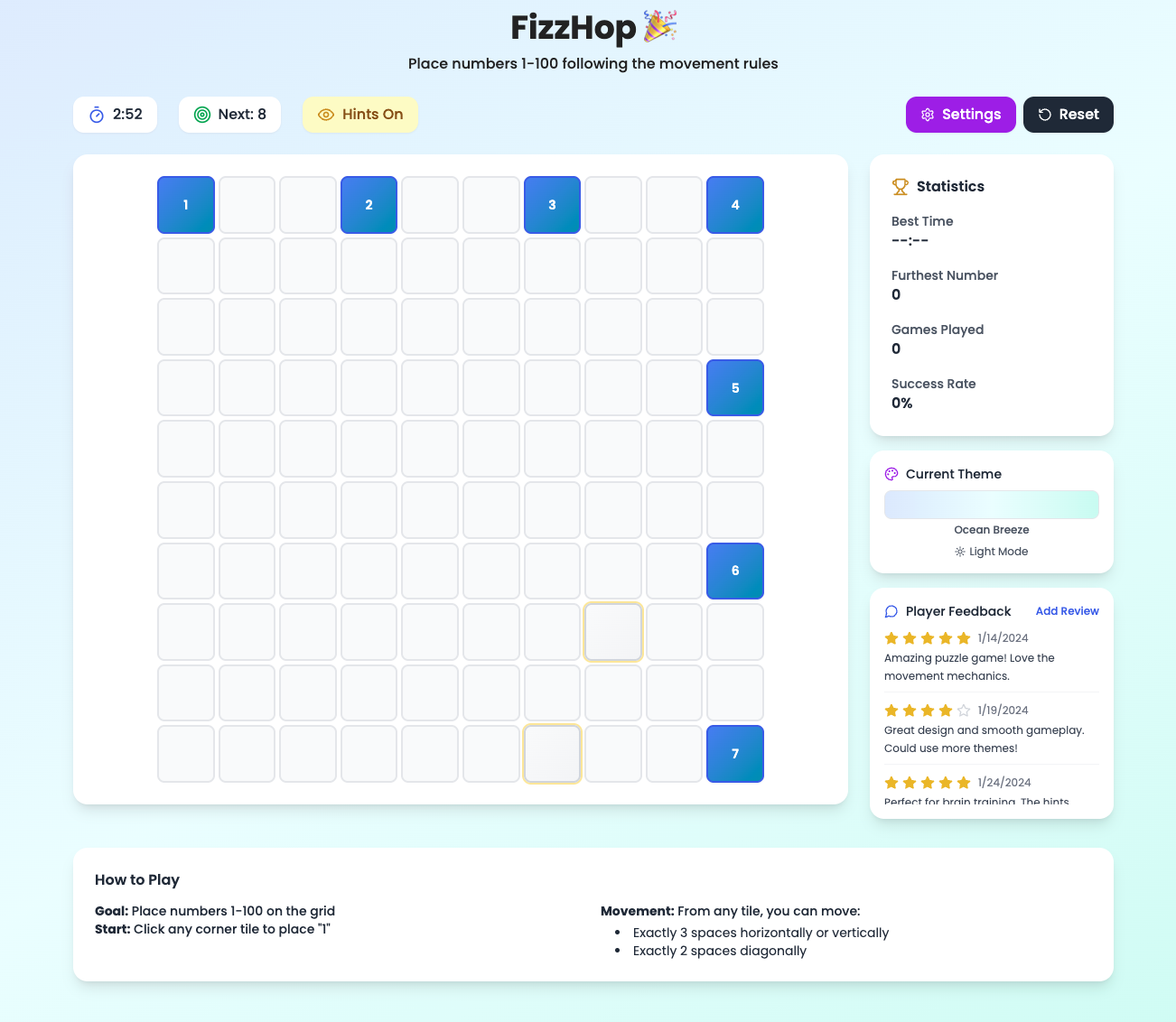
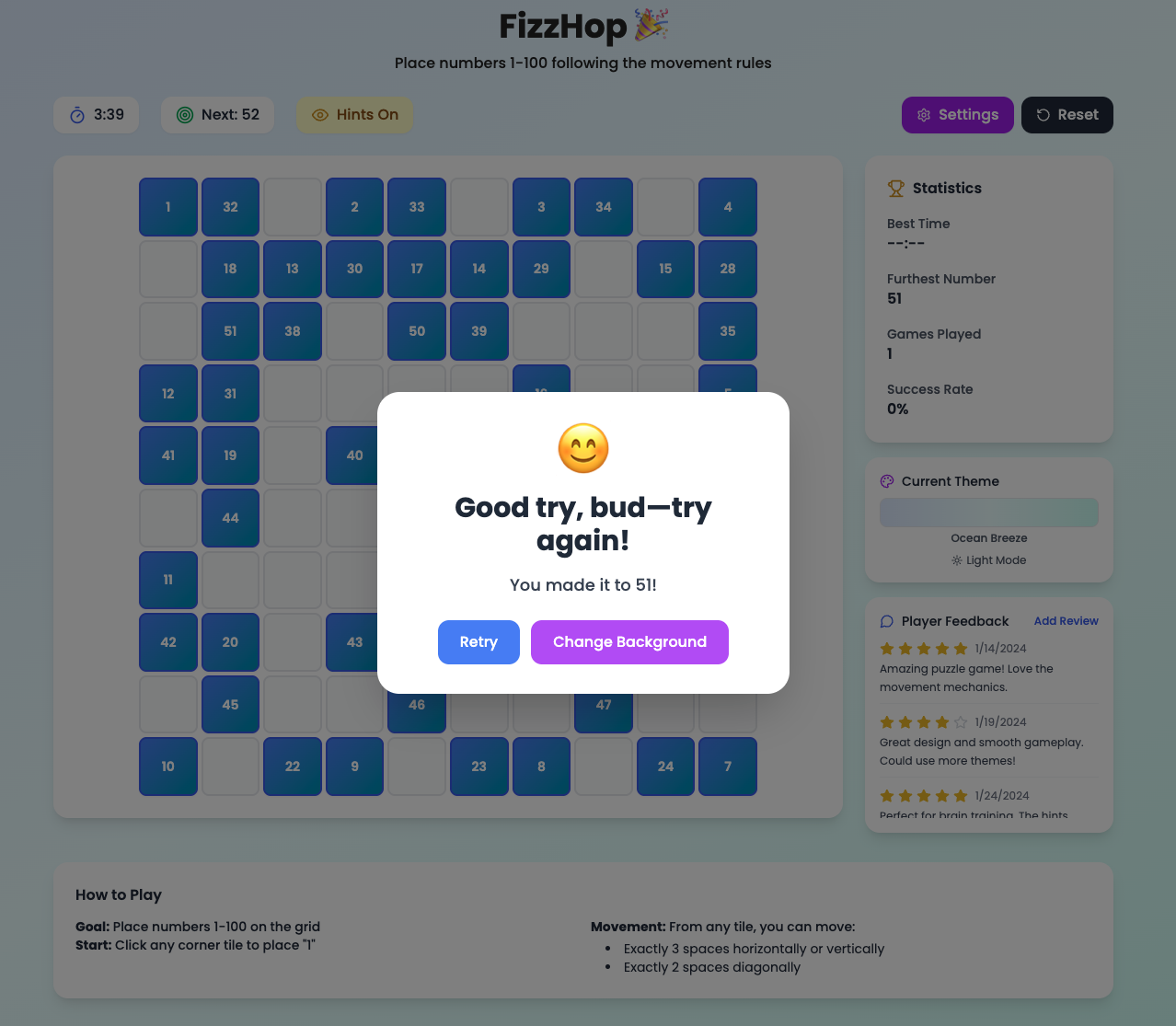
Years ago, stuck on a long-haul flight with nothing but pen and paper, I rediscovered a simple grid puzzle that let me escape my anxiety and pass the hours: draw a 10×10 square, start in any corner, then jump two spaces straight or one diagonally, numbering 1 through 100. It was pure, pen-and-paper bliss—no pixels, just strategy and calm focus. FizzHop was born from that memory, reinvented digitally to bring the same zen energy to phones and tablets.
What I Learned
- Player Psychology: Turning stress into fun taught me how small, self-contained challenges can soothe anxiety and build confidence.
- Visual Design: Crafting pastel gradients and light/dark themes helped me appreciate the emotional power of color and subtle animations.
- Mobile UX: Balancing touch targets, haptic feedback, and instant validation honed my sense of “snappiness” in UI.
How I Built It
I used Unity’s Bolt visual scripting to assemble FizzHop without writing a single line of C#. I created a 10×10 tile grid prefab, then wired up “TileTapped” events that enforce the two-step straight and one-step diagonal jumps. Customizable gradients, a light/dark detection system, and dynamic tile coloring all live as exposed Inspector variables—so I can tweak the feel at runtime.
Challenges Faced
- Rule Validation: Encoding the skip-and-hop logic in Bolt required some creative graph work to calculate valid moves every turn.
- Dynamic Styling: Generating complementary tile colors from arbitrary gradients meant sampling hues and adjusting saturation on the fly.
- Cross-Platform Input: Designing both touch and mouse flows in a single “TileTapped” event stream took careful event management to feel seamless on mobile and desktop.
FizzHop is my tribute to that pen-and-paper lifeline—reimagined for the digital age, still built to calm the mind and keep you “hopping” toward your next creative breakthrough.
Built With
- bolt
- jsx
- react
- typescript

Log in or sign up for Devpost to join the conversation.