-
-
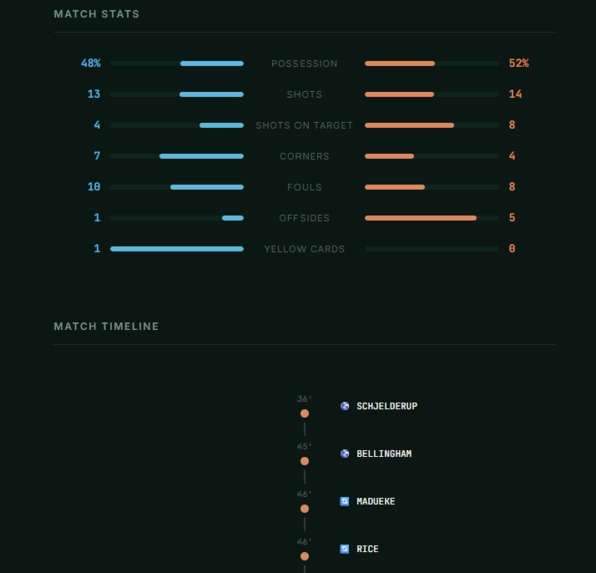
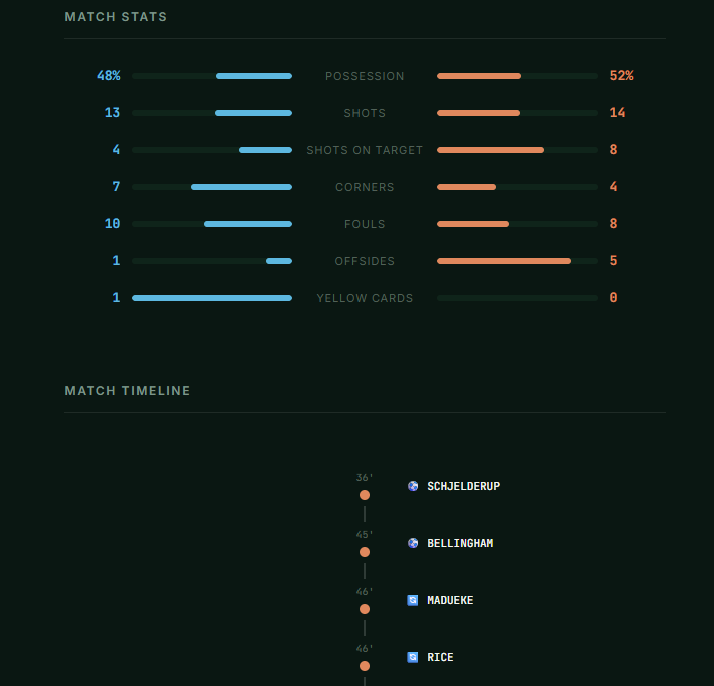
match stats
-
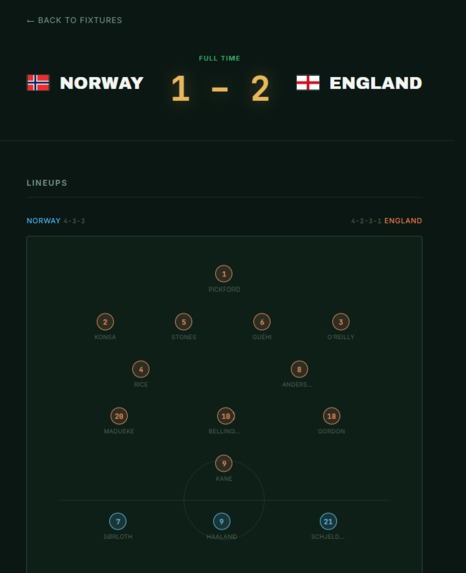
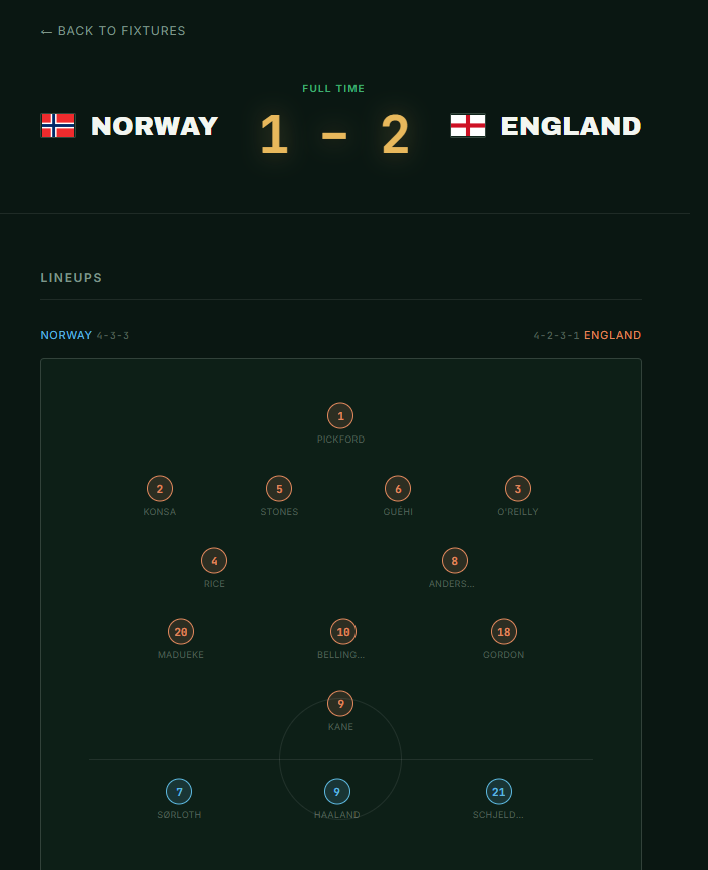
Match lineup
-
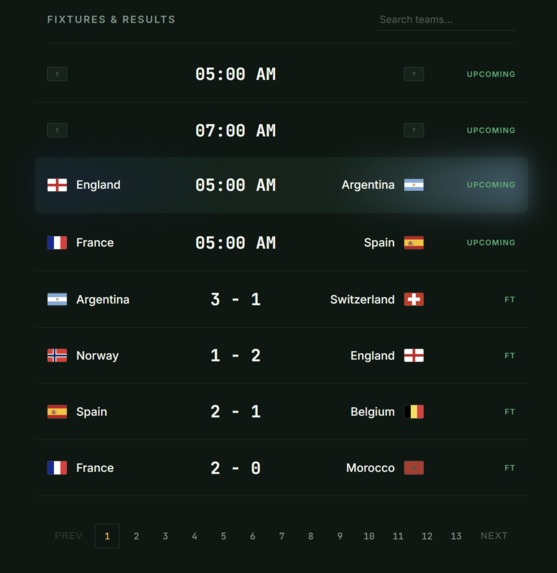
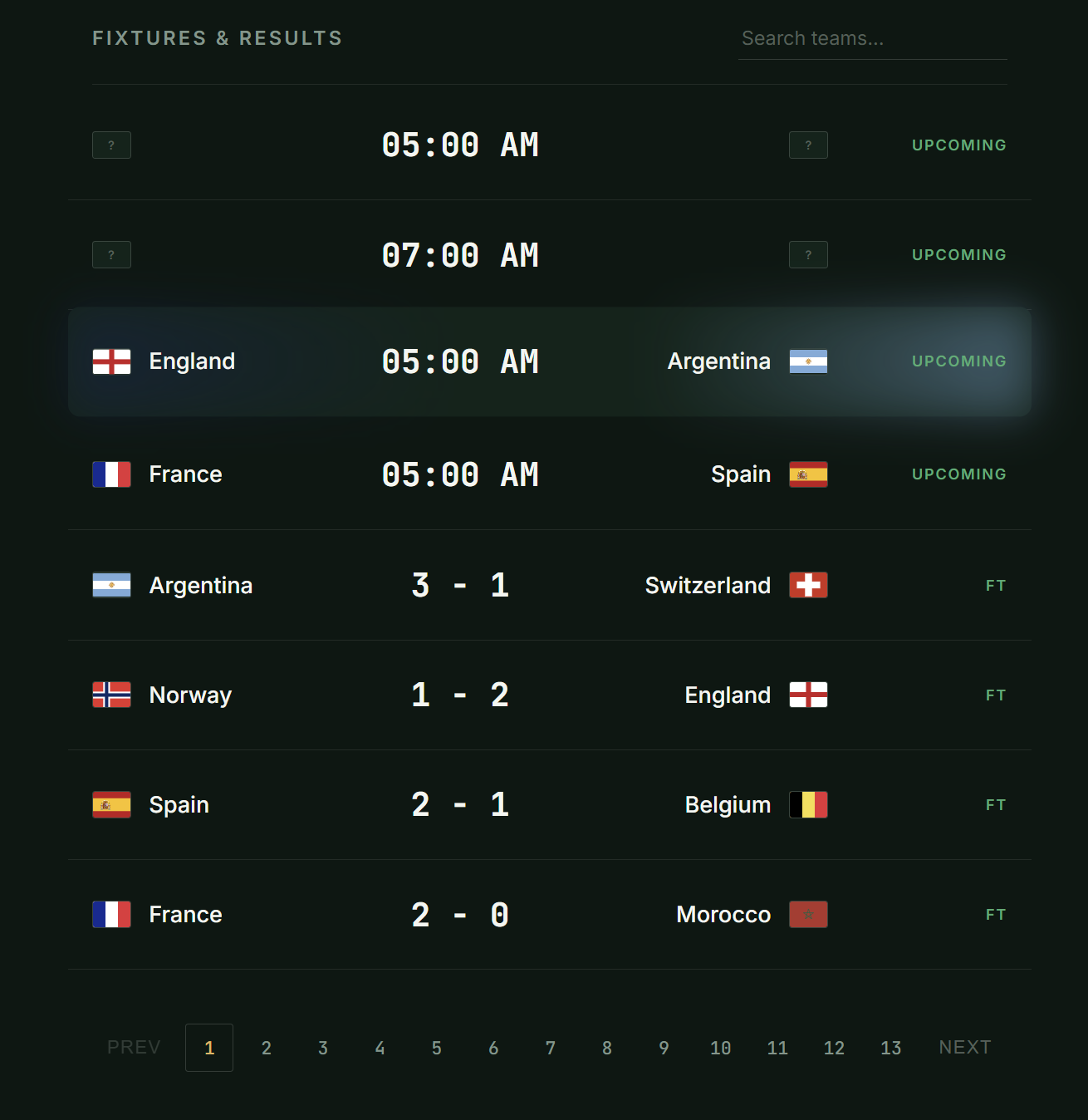
Upcomming patch and past match deatils
-
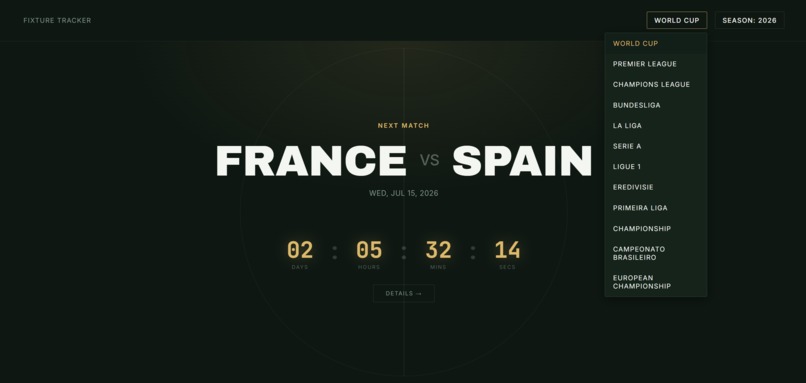
Toogle
-
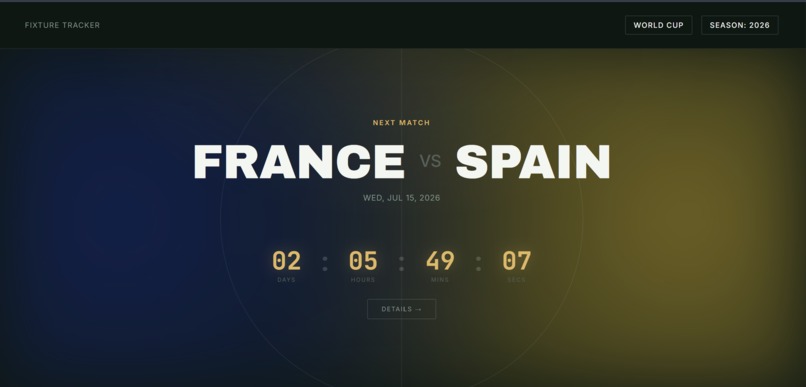
Home screen
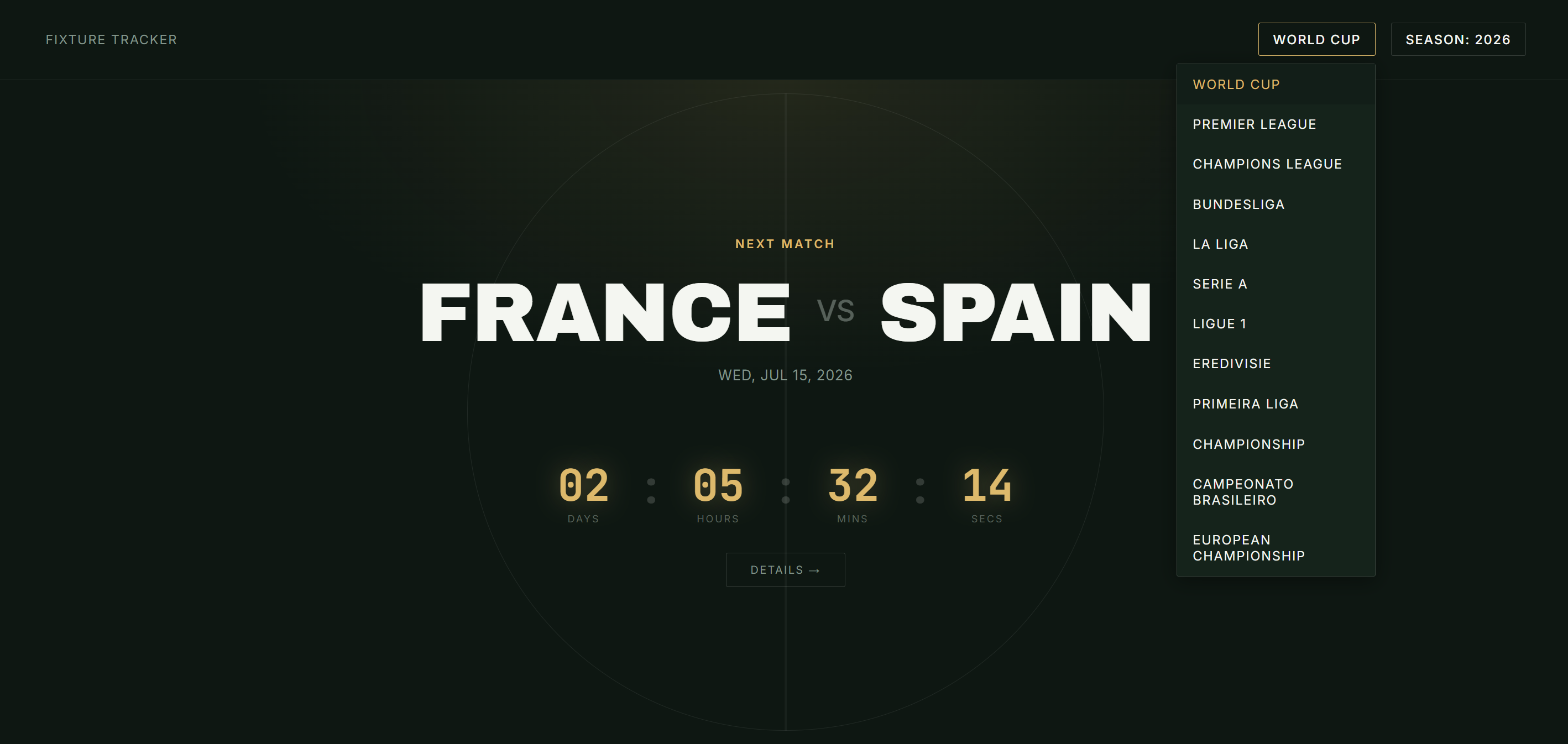
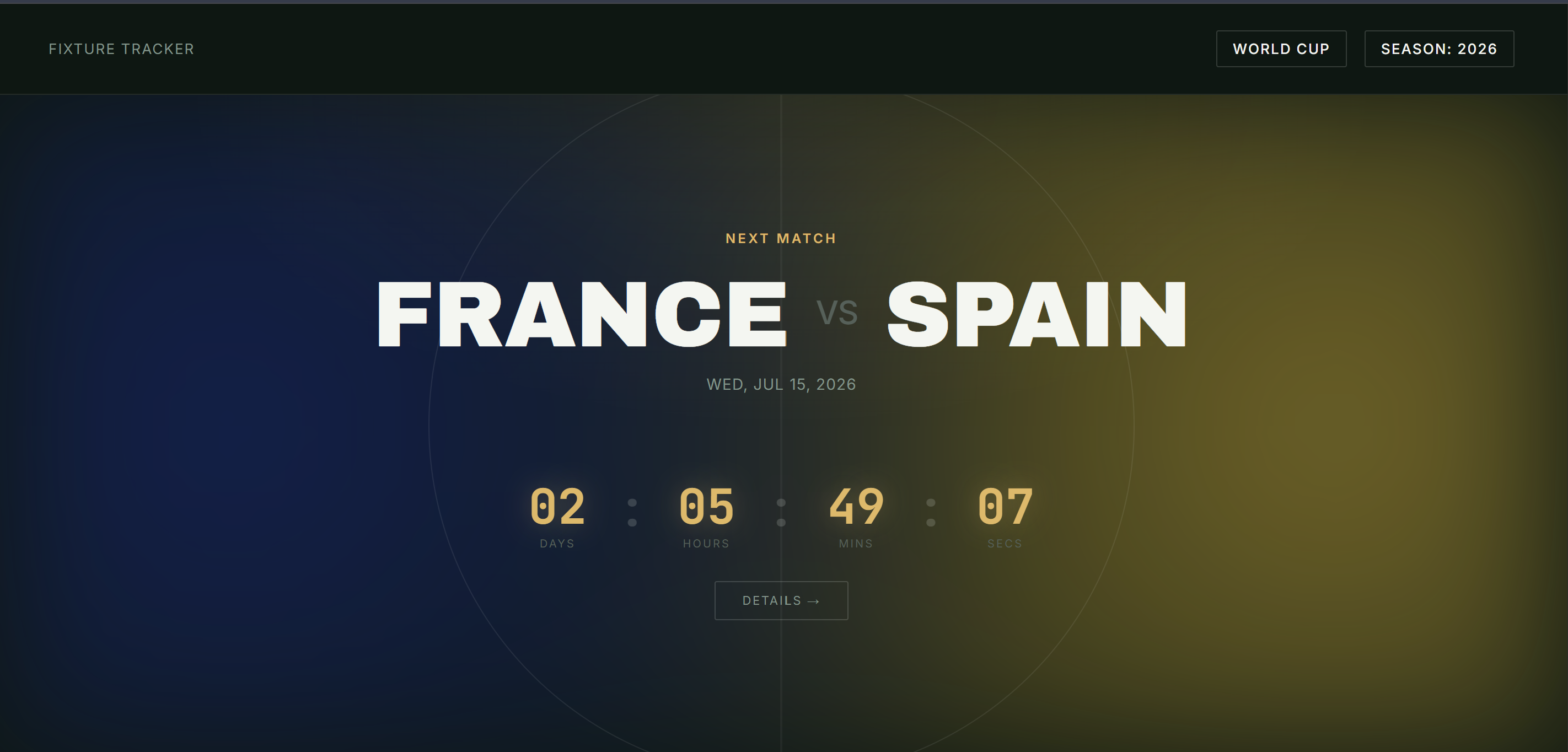
Inspiration
As someone who follows football religiously but rarely has time to catch a full 90 minutes live, I'm constantly relying on highlights and follow-up searches to stay current especially across multiple leagues and competitions. The problem is that googling scattered stats every time gets old fast, and while plenty of existing sites have the data, they're bogged down by clutter and ads. I wanted to build something clean and modern: a single place to get match data without the noise.
What it does
Fixture Tracker is an all-in-one hub for match data and stats. It currently covers 12 leagues, with more planned as the project grows. Users can dig into team stats, formations, and a full match timeline all presented in a clear, modern interface.
How we built it
I took a frontend-first approach, focusing heavily on delivering a modern layout. The core data is powered by two main APIs: football-data.org and API-Football. By consuming and normalizing the data from these endpoints, I was able to build a cohesive, responsive UI that renders complex statistics beautifully across different leagues.
Challenges we ran into
My biggest hurdle was dealing with the limitations and rate limits of free-tier API endpoints. Managing the data flow without forcing an upgrade to a premium plan required careful planning.
Additionally, I had to navigate API security and CORS issues. Fetching data directly from the client side wasn't secure or viable, which forced an architectural pivot. Ultimately, I spun up a dedicated backend folder to act as a proxy server. Routing our main API calls through this backend ensured our keys stayed secure and the data was properly formatted before hitting the frontend.
Accomplishments that we're proud of
I'm incredibly proud of shipping a highly functional, great-looking application within the strict hackathon timeframe. Designing a clean, intuitive interface out of raw, complex sports data is tough, and the final aesthetic really hits the mark.
What I learned
This project was a deep dive into API management and security principles. I also learned a lot about rapid prototyping while I definitely did some "vibe coding" to get major segments working quickly, it helped me grasp the abstract principles of secure data fetching. I'm excited to go back through the codebase after the event to solidify my understanding of the architecture.
What's next for Fixture Tracker
The immediate next step is expanding our coverage to include more global leagues and competitions. Beyond that, I want to elevate the UI even further by introducing interactive 3D elements and dynamic glassmorphism concepts to truly capture the energy of the match.

Log in or sign up for Devpost to join the conversation.