-
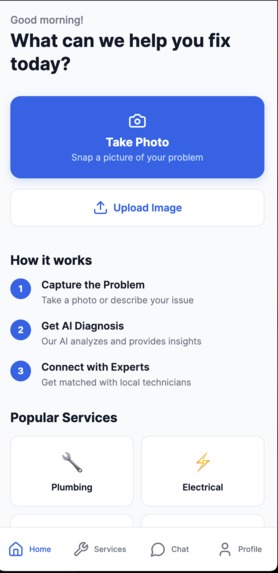
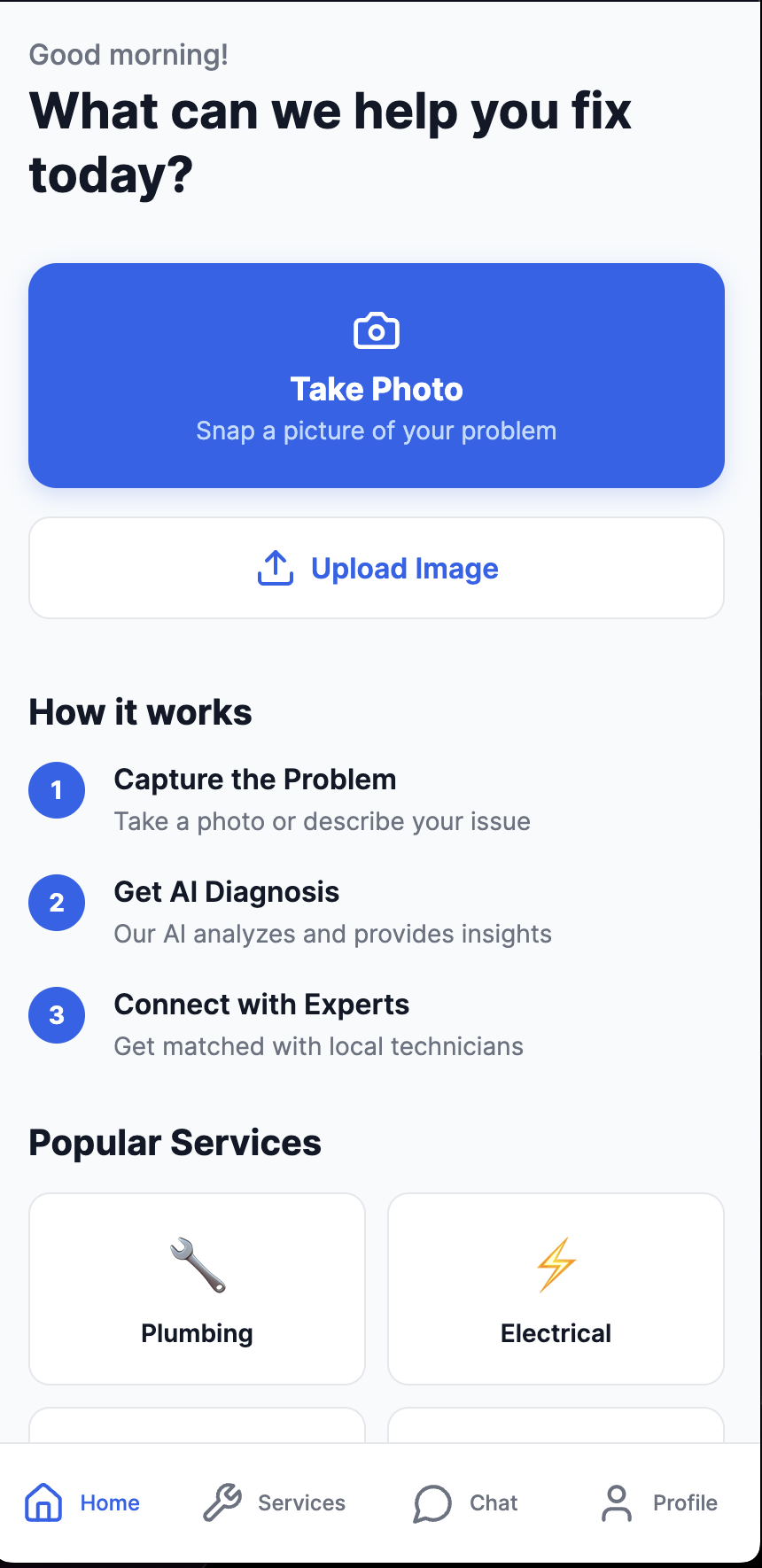
Home Page
-
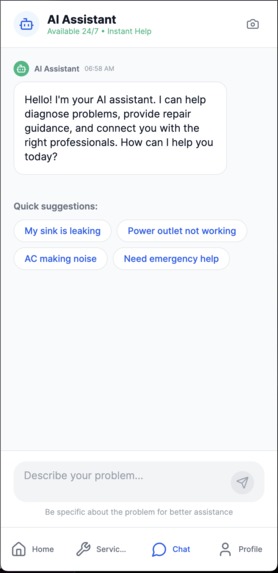
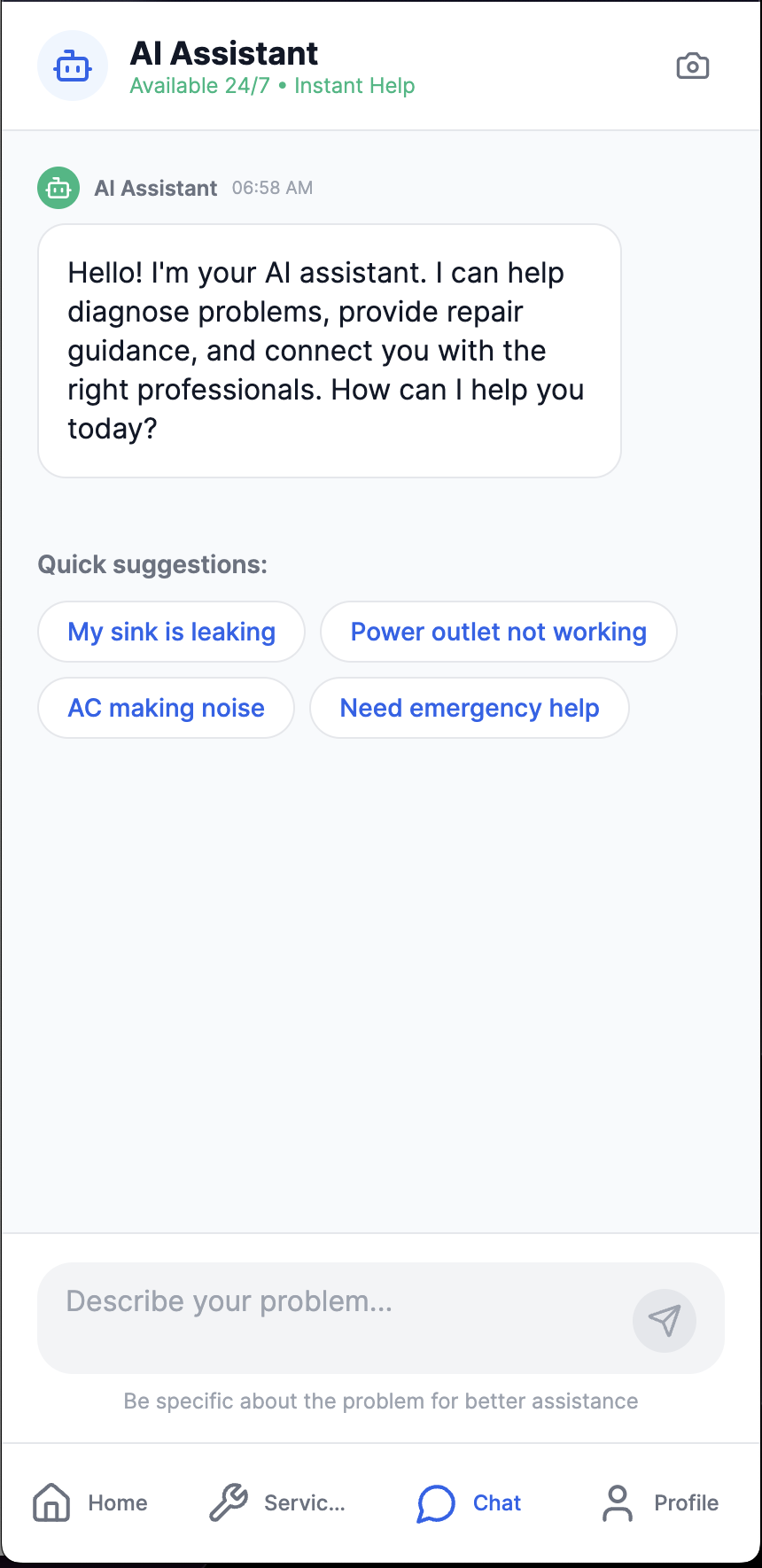
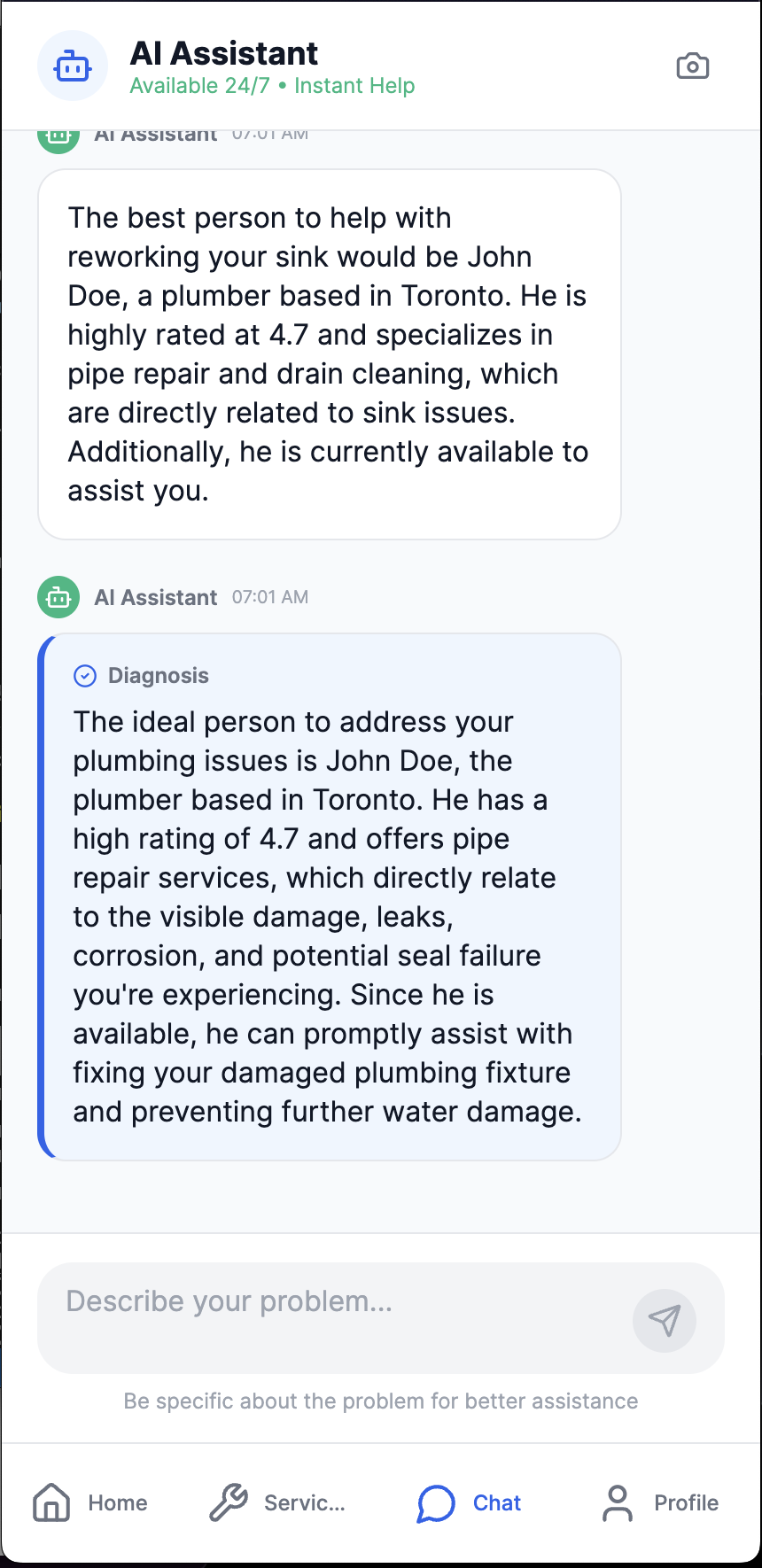
AI Chat for user to describe their problem and get suggested freelancers to help fix it
-
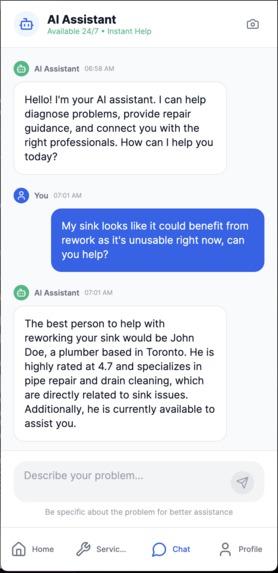
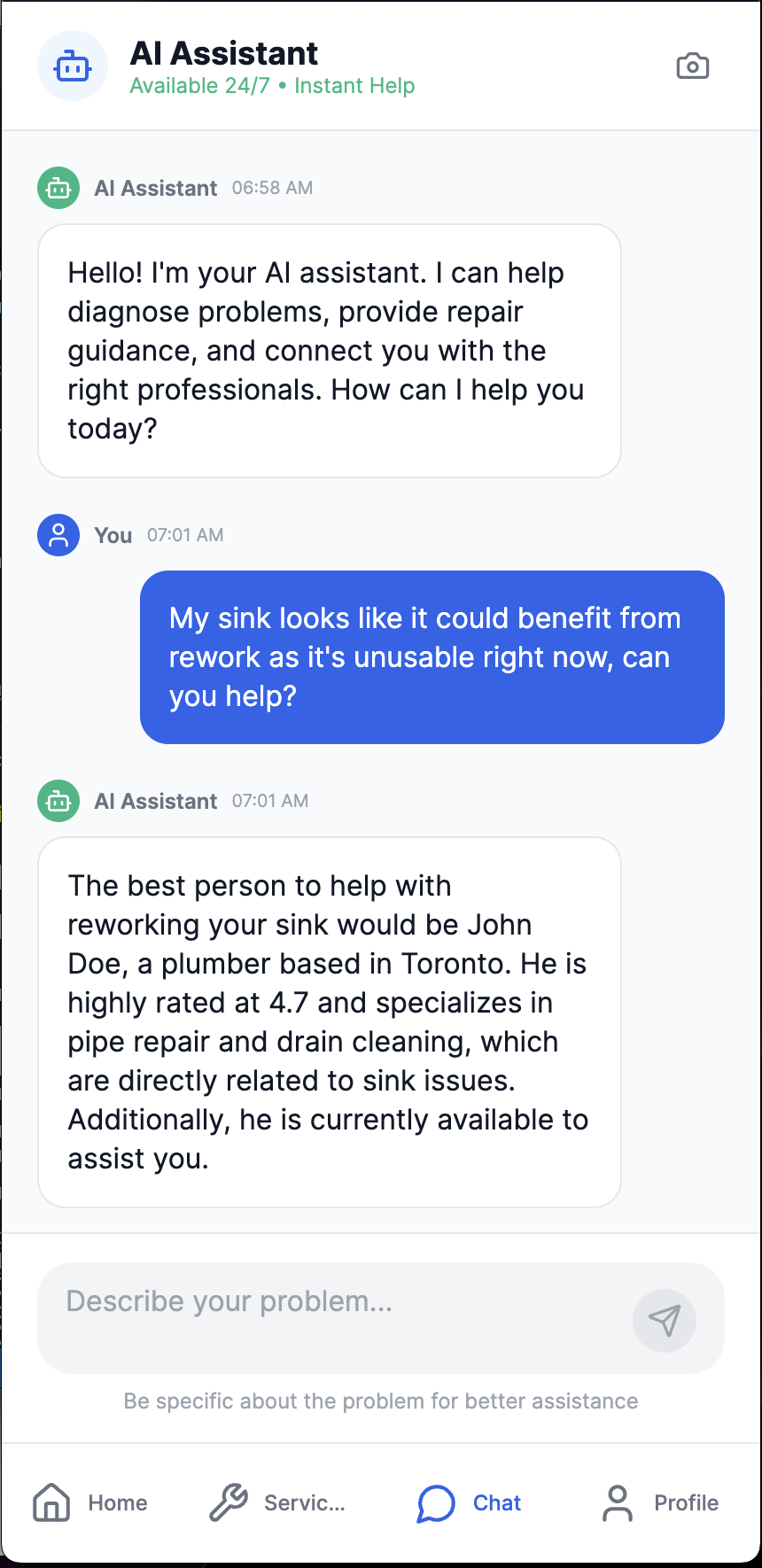
Example of problem - freelancer suggestion interaction
-
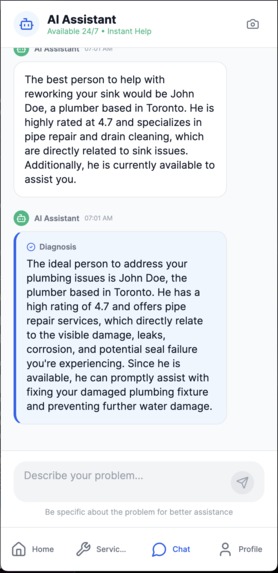
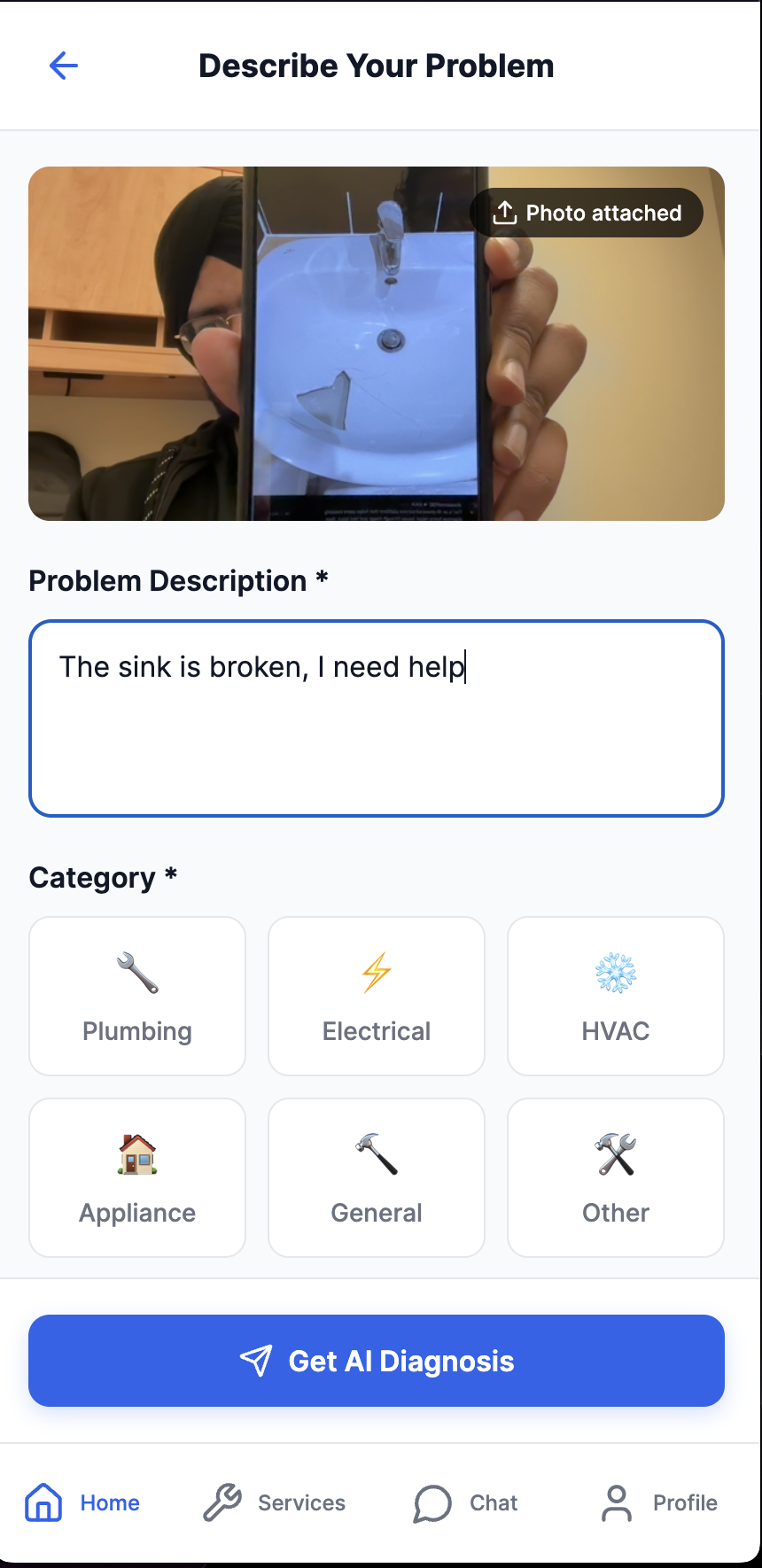
Example of problem - freelancer suggestion interaction from image upload
-
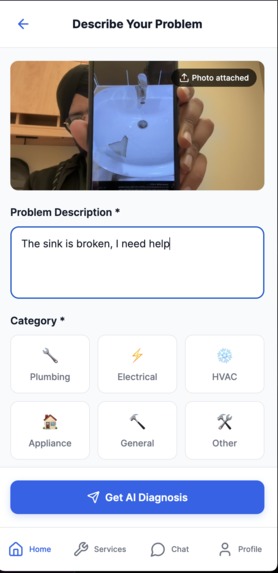
Image upload
-
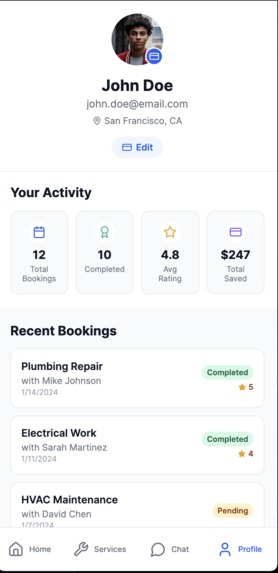
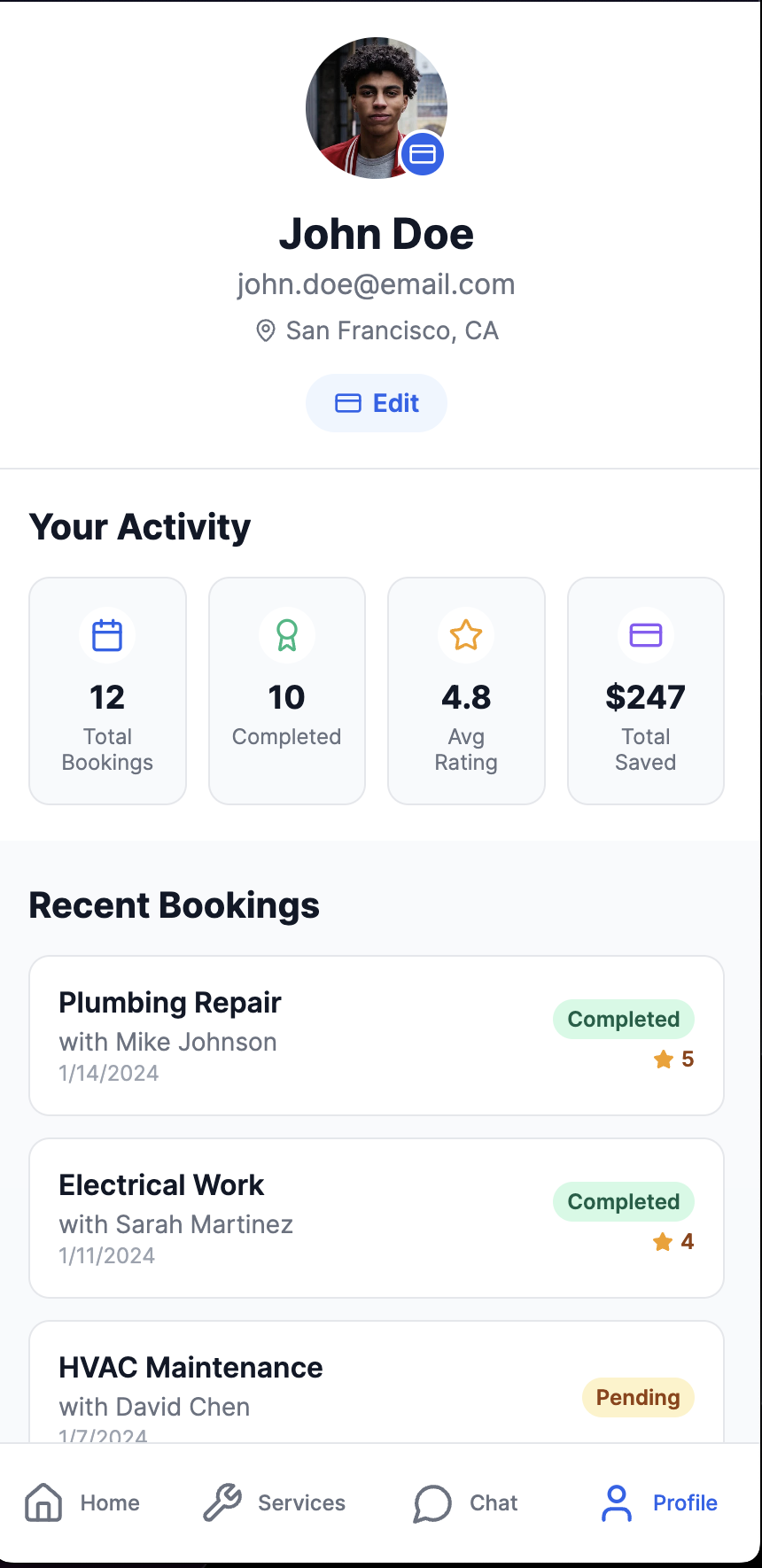
Profile Page
-
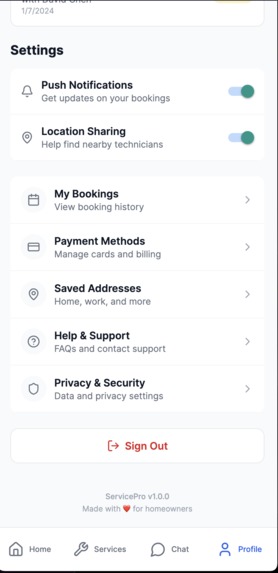
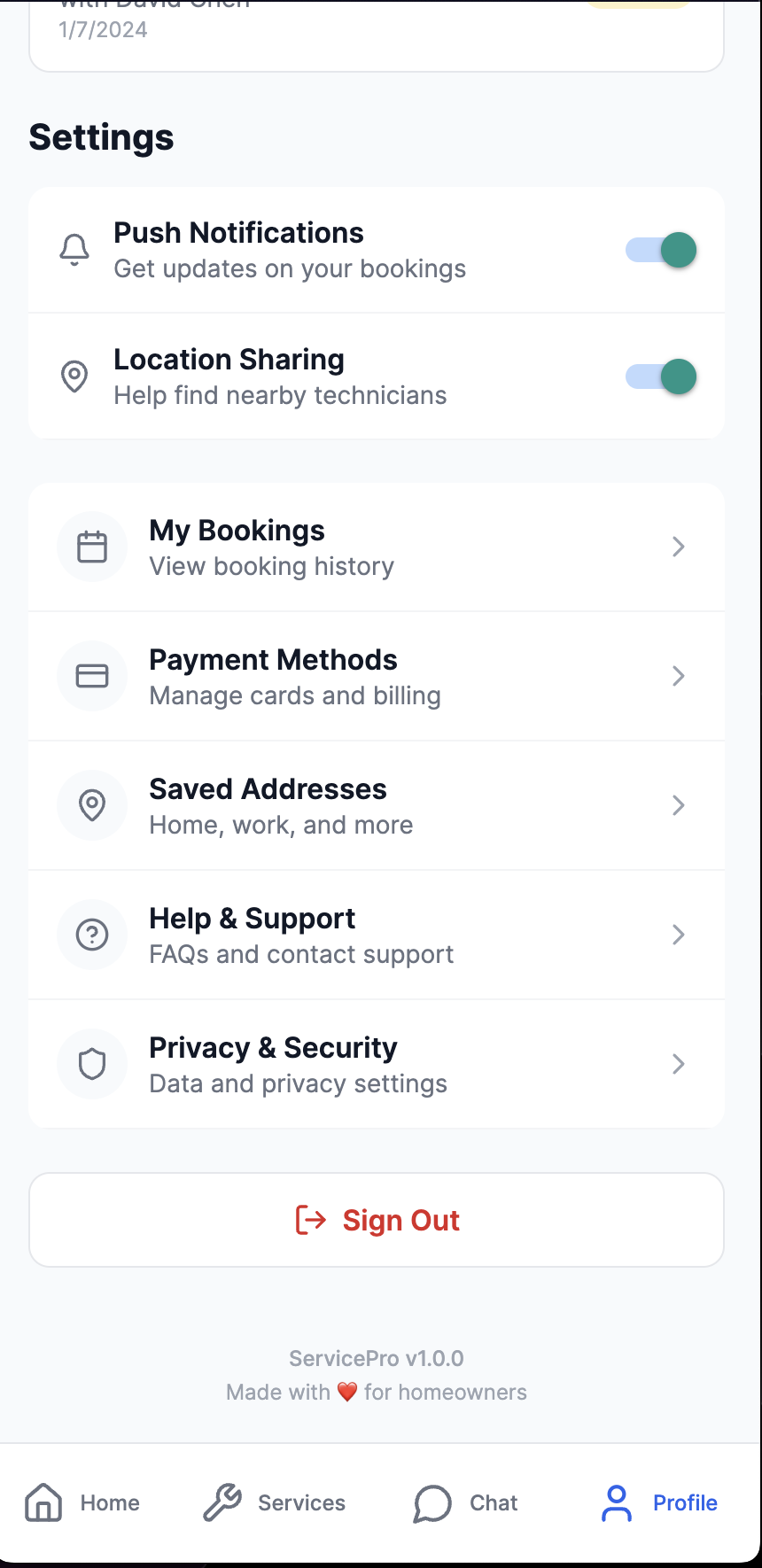
Settigns Page
-
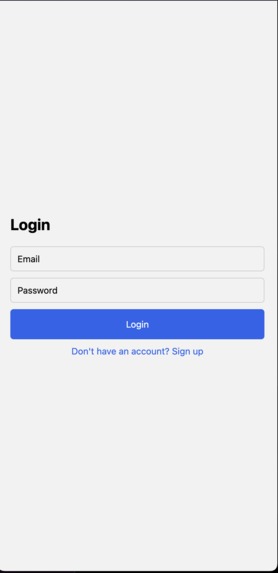
Login
-
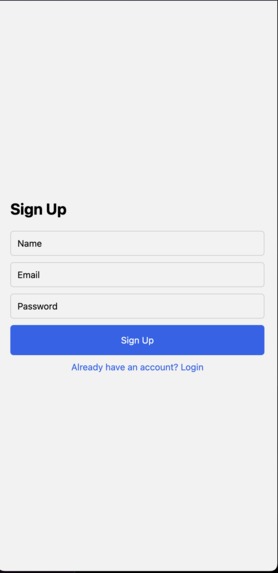
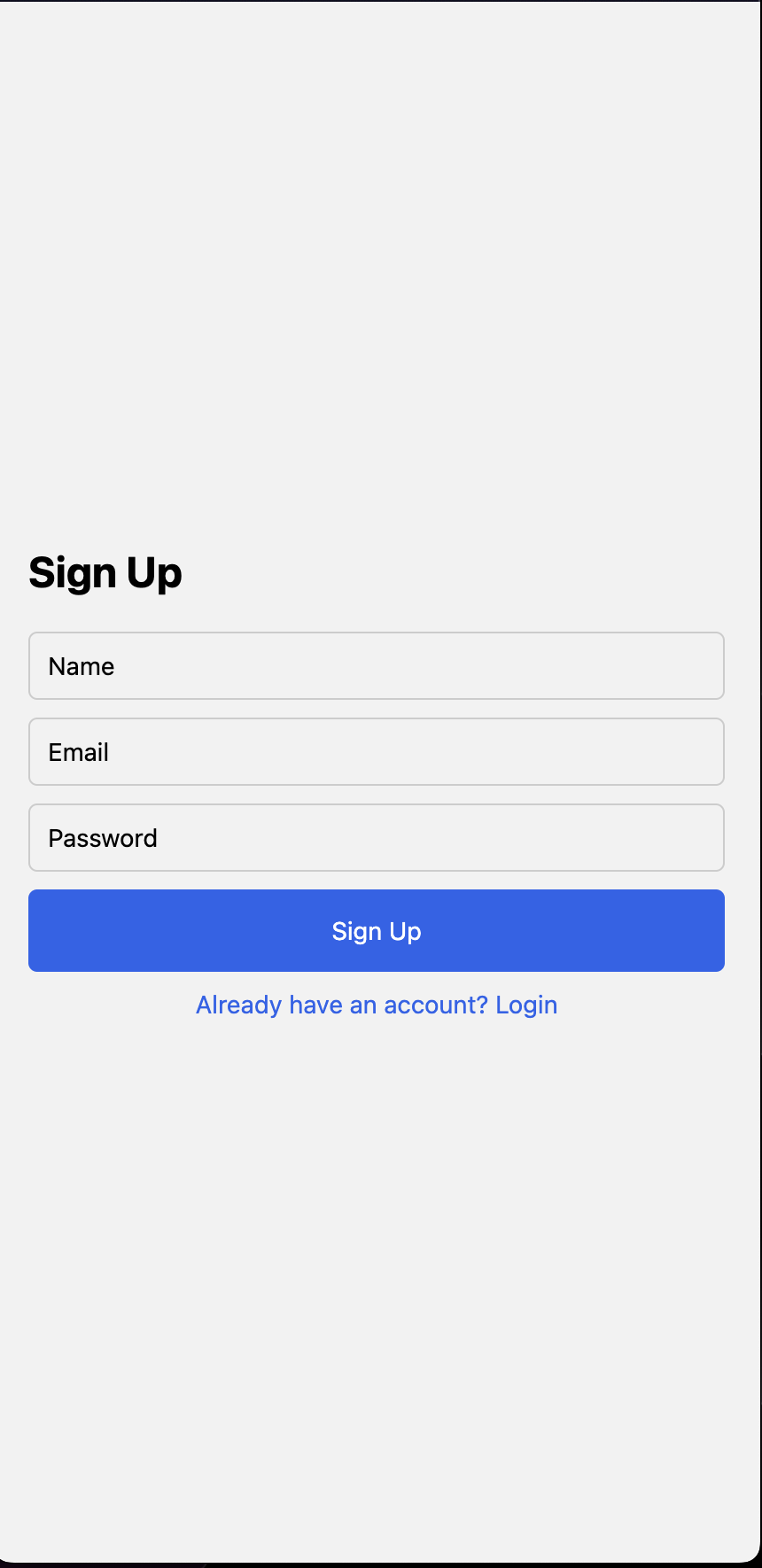
Signup

Inspiration
Last year, my family needed some home repairs and renovations done like closets, decks, and other minor fixes. We hired a highly rated company we found online, expecting the job to be completed smoothly. Instead, they walked off the job after two weeks, leaving everything half-done: unfinished decks, messy closets, and construction waste scattered around the house.
It took us a full week of searching through Facebook Marketplace, community groups, and online ads before we finally found a solo handyman who came by, gave us a fair quote, and finished everything on his own in under a week. The contrast between the two experiences made something clear: finding the right person to fix your issue shouldn't be this hard. That’s where the idea for Fixr came from. An easier, smarter way to diagnose problems and connect with trustworthy help.
What it does
Fixr is an AI-powered platform that connects users with reliable service providers for household repairs. Users can either describe their problem or upload an image of it. Gemini processes the image and provides an initial analysis, which is then used by ChatGPT to carry on a conversation and help identify the issue. Once diagnosed, Fixr offers users a breakdown of what the problem is, how they might fix it themselves, and which local technicians are available to help.
How we built it
We used React Native to build the mobile front end for both iOS and Android. The backend is powered by FastAPI in Python, and we used MongoDB Atlas as our database to store user profiles, requests, and technician listings, which aligned with the MongoDB hackathon track.
For AI integration:
Gemini is used to process and analyze customer-uploaded images.
ChatGPT (via OpenAI API) handles the diagnostic conversation with users.
Once a diagnosis is complete, we use simple tag-based filtering and location proximity to recommend relevant technicians.
Challenges we ran into
Integrating two different AI models (Gemini for image input, ChatGPT for text conversation) and maintaining a consistent data flow between them was tricky.
Managing file uploads and handling image preprocessing for Gemini took more time than expected.
Backend/frontend combination
Keeping the experience fast and responsive while dealing with third-party API calls under rate limits.
Accomplishments that we're proud of
Designing a clean, intuitive user experience within a limited time.
Building a working end-to-end demo that processes real user input and recommends actual technicians.
Creating a solution inspired by real-world frustration that could help countless others in the same situation
Training and prompting both OpenAI and Gemini to properly analyze information and learn to diagnose specific issues
What we learned
How to combine multiple AI tools (LLMs + vision models) to solve real problems.
How to manage state and data flow in a full-stack mobile app.
Deeper experience with MongoDB's flexible schema system and how it can be leveraged for dynamic matching.
How to scope an ambitious idea into something we could realistically deliver during a hackathon
What's next for Fixr
We want to expand Fixr into a real-world product. That means:
Adding user reviews and ratings for technicians

Letting technicians manage their availability and services

Improving the AI pipeline with real-time feedback and correction

Partnering with local service providers to build trust in the platform

Bringing Fixr to more cities and refining our matching algorithm with real user data

Adding more location based features, such as maps or a filtered list for viewing services/people near you

Log in or sign up for Devpost to join the conversation.