-
-
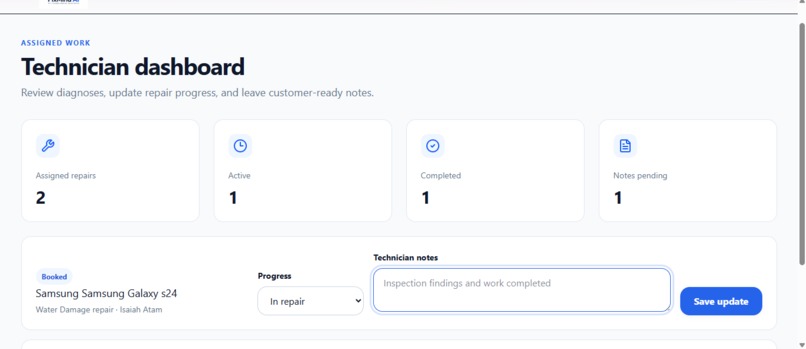
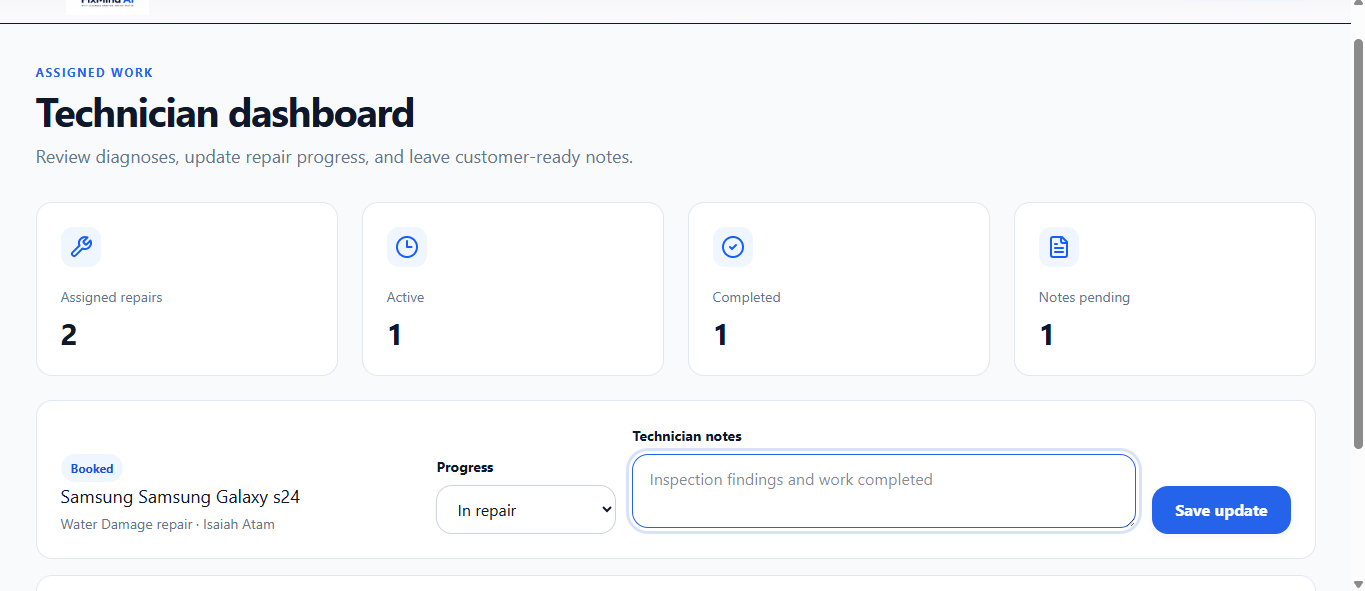
Technician workspace
-
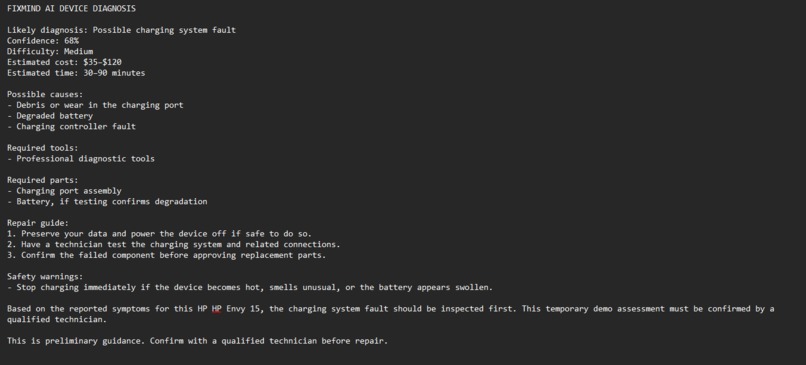
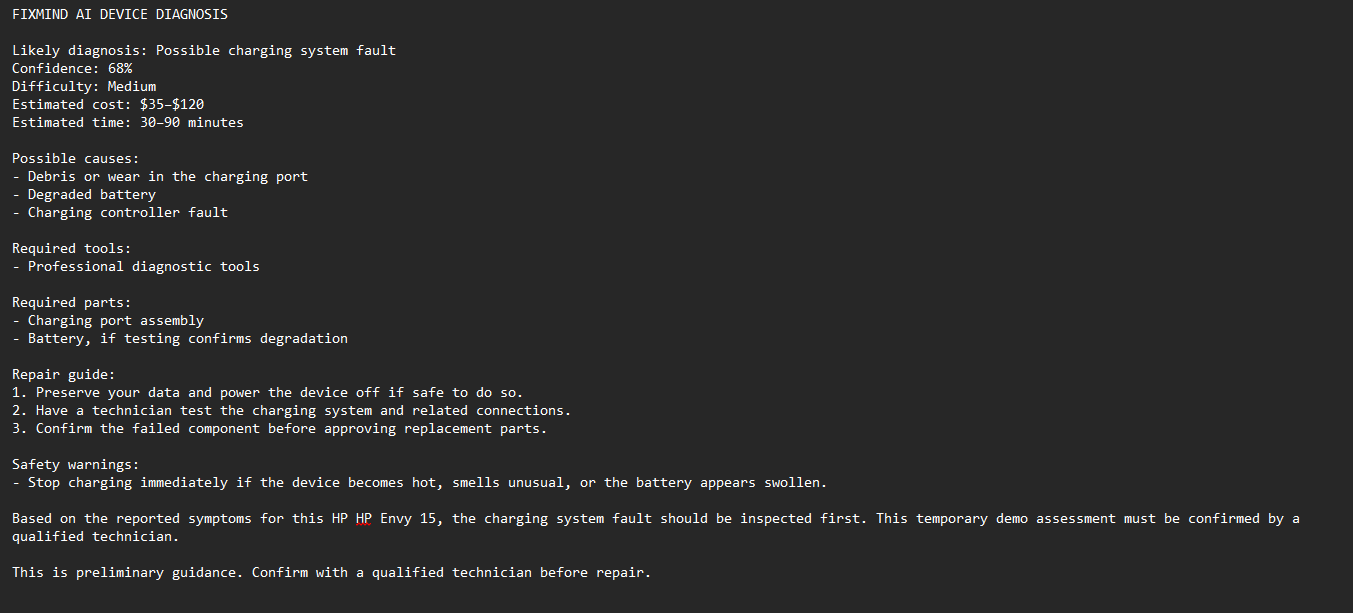
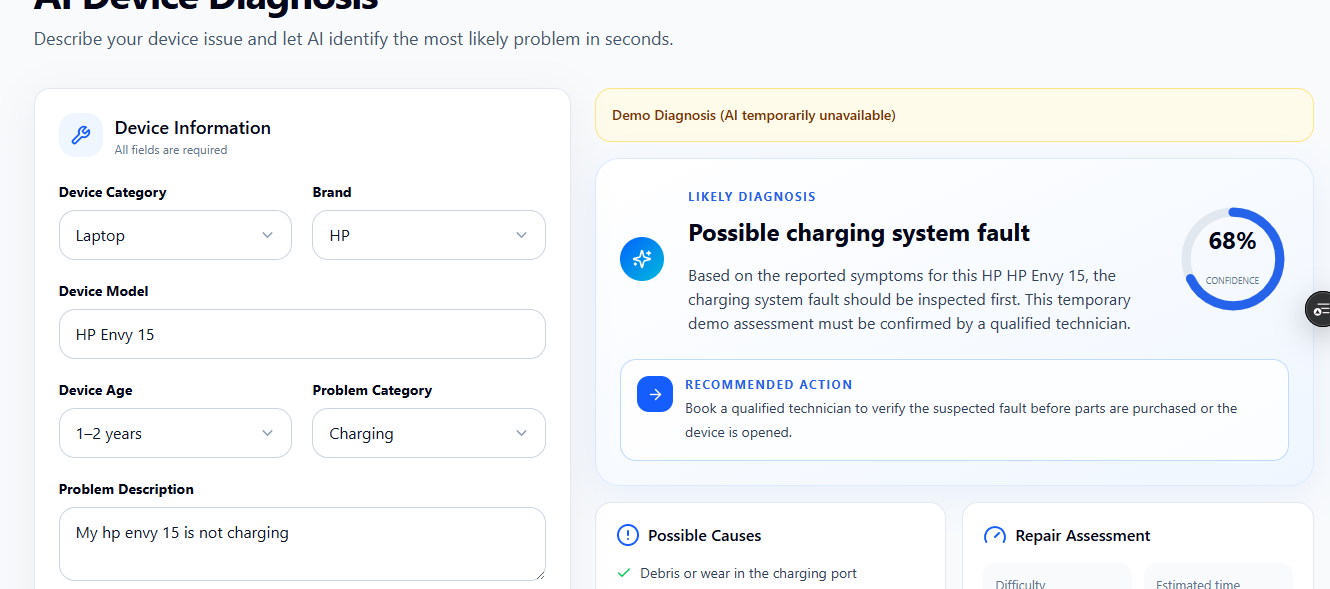
Structured Diagnosis Results
-
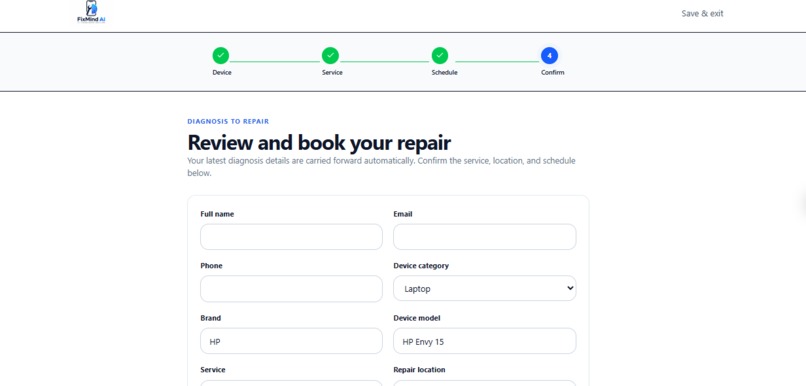
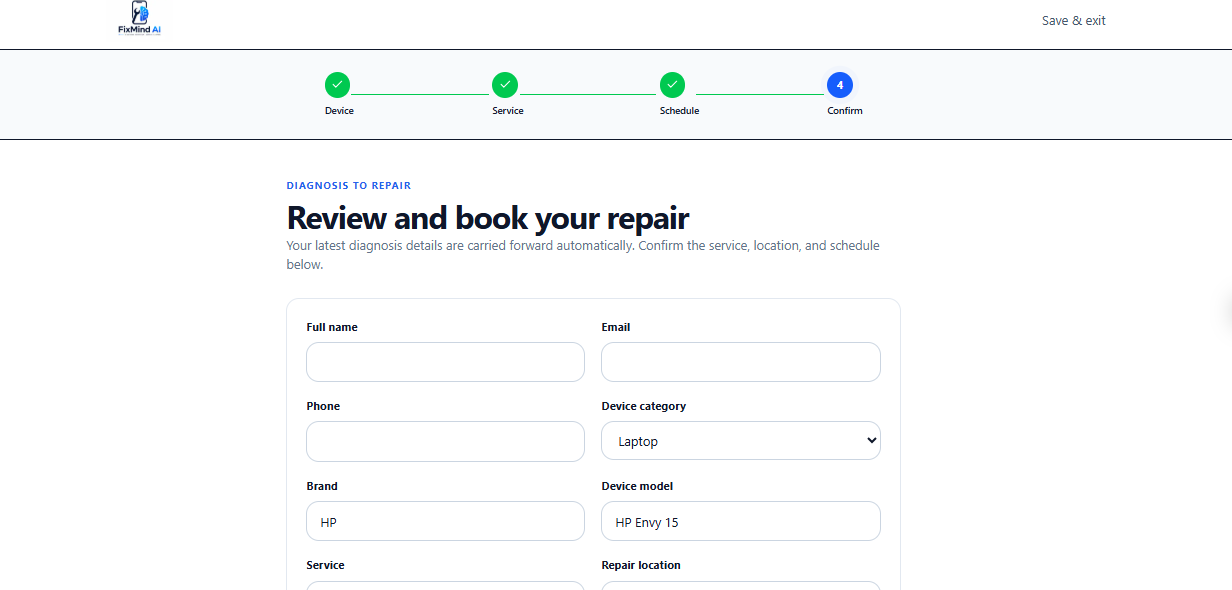
Repair booking workflow
-
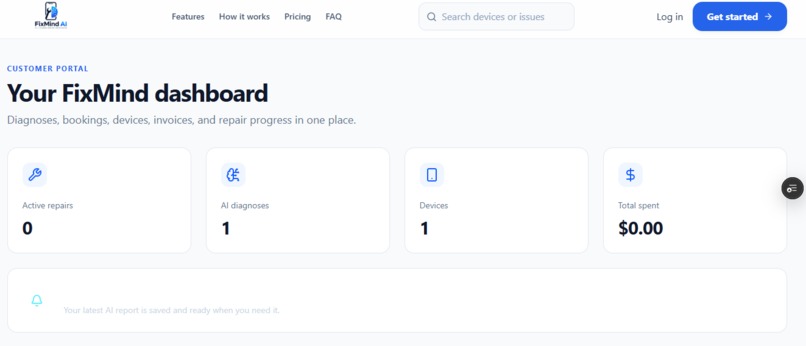
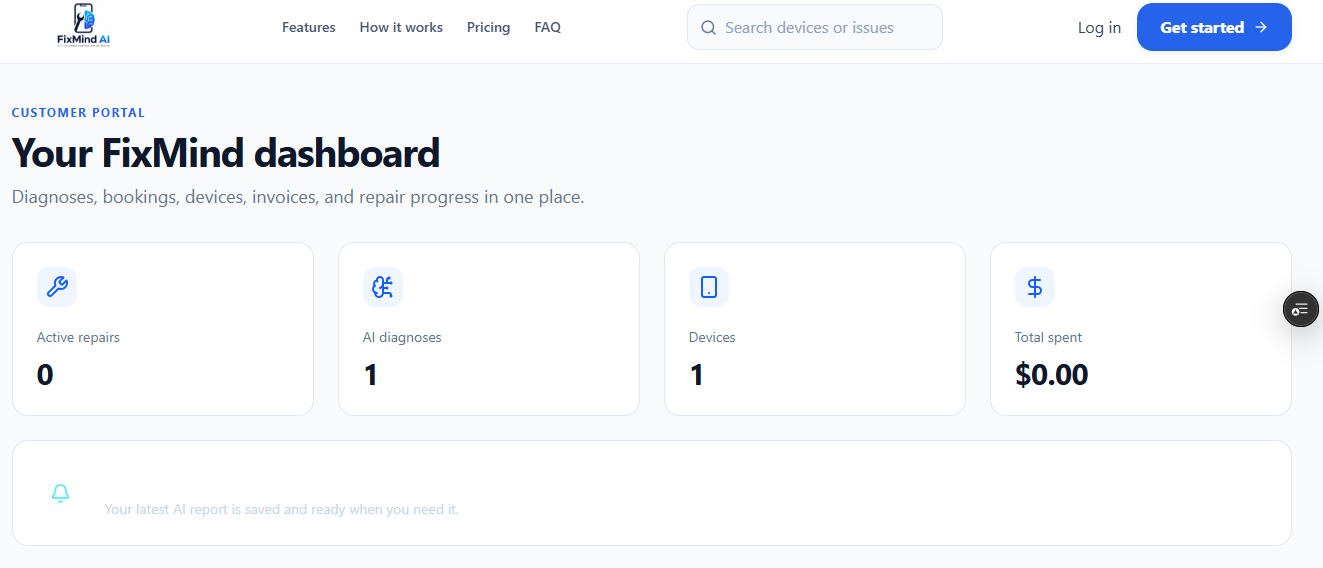
Customer dashboard
-
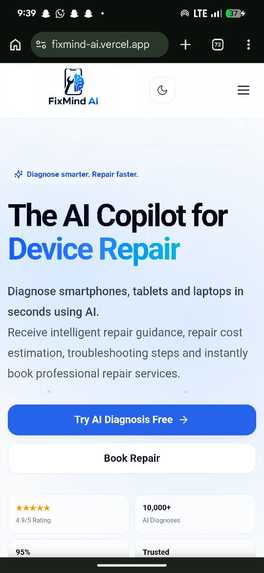
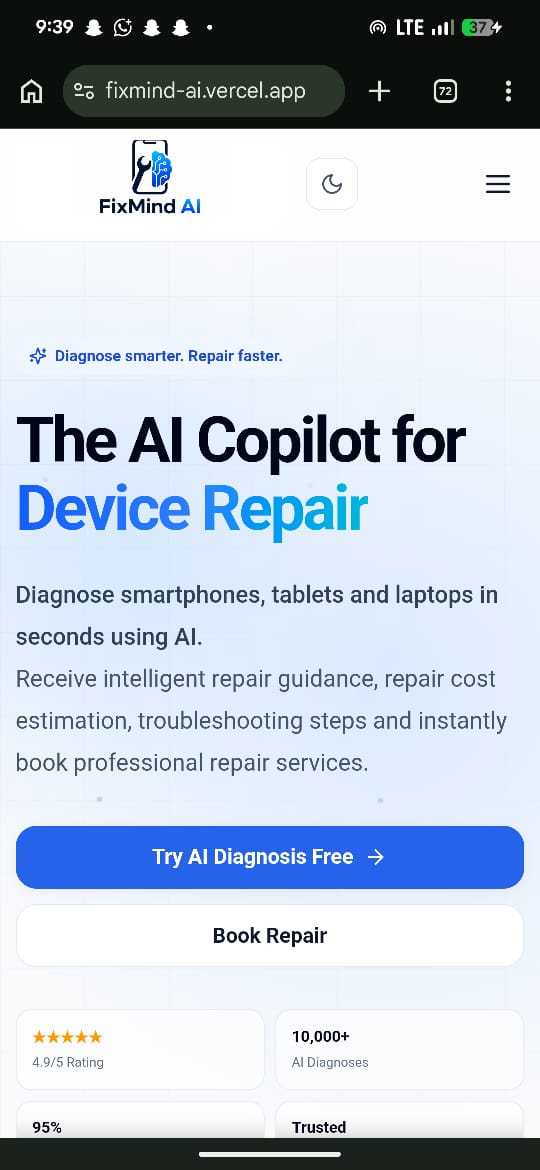
FixMind AI Landing Page(smartphone )
-
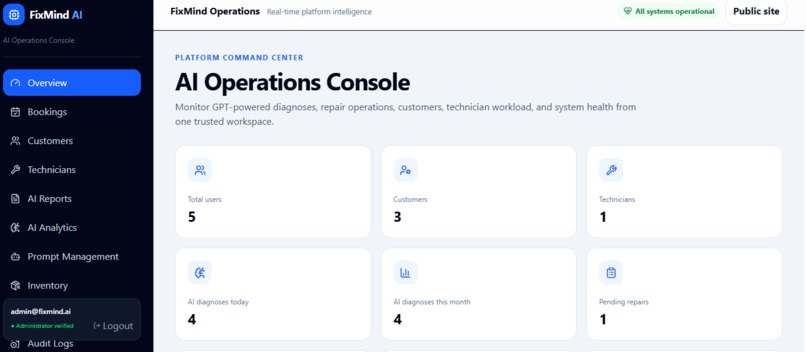
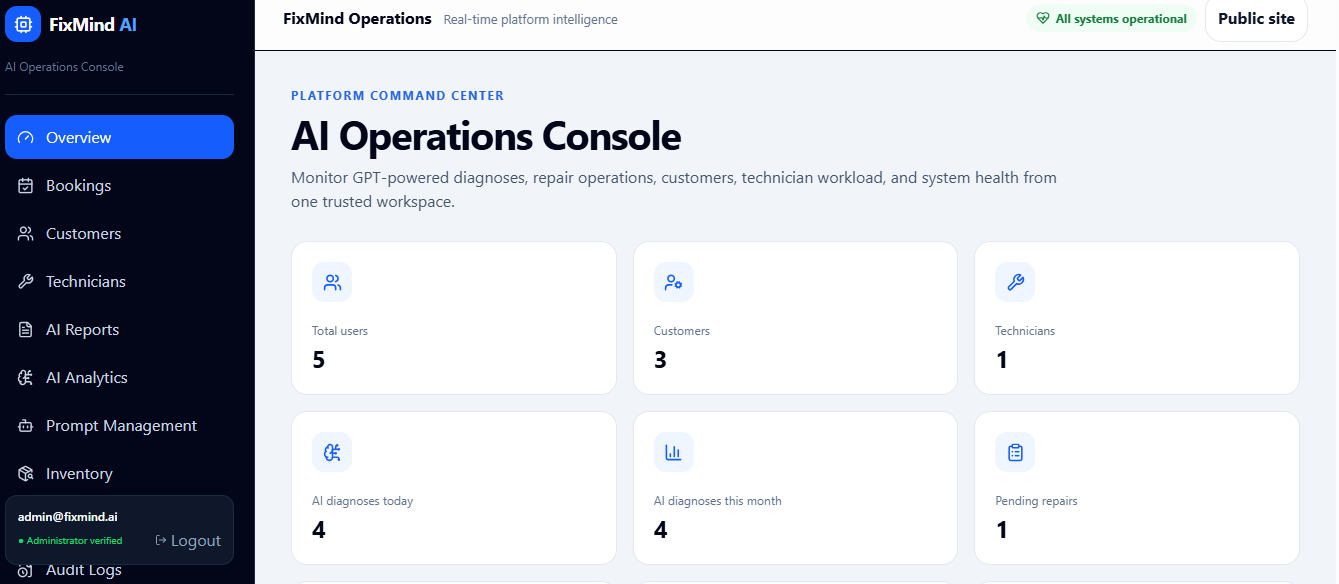
Admin AI Operations Console
-
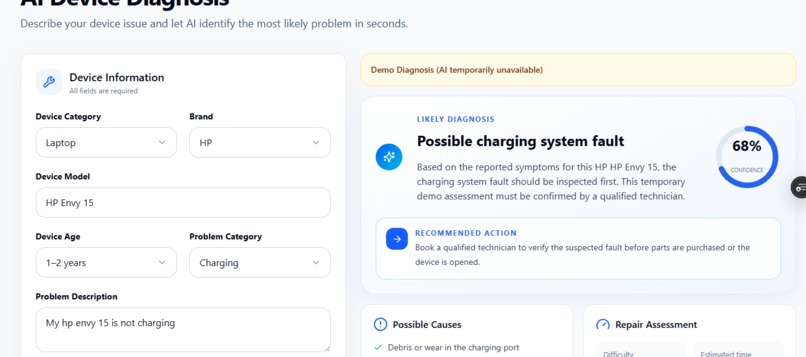
AI-Powered Device Diagnosis
-
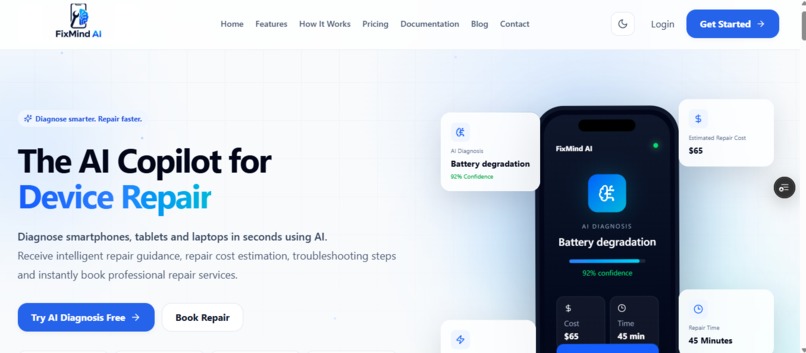
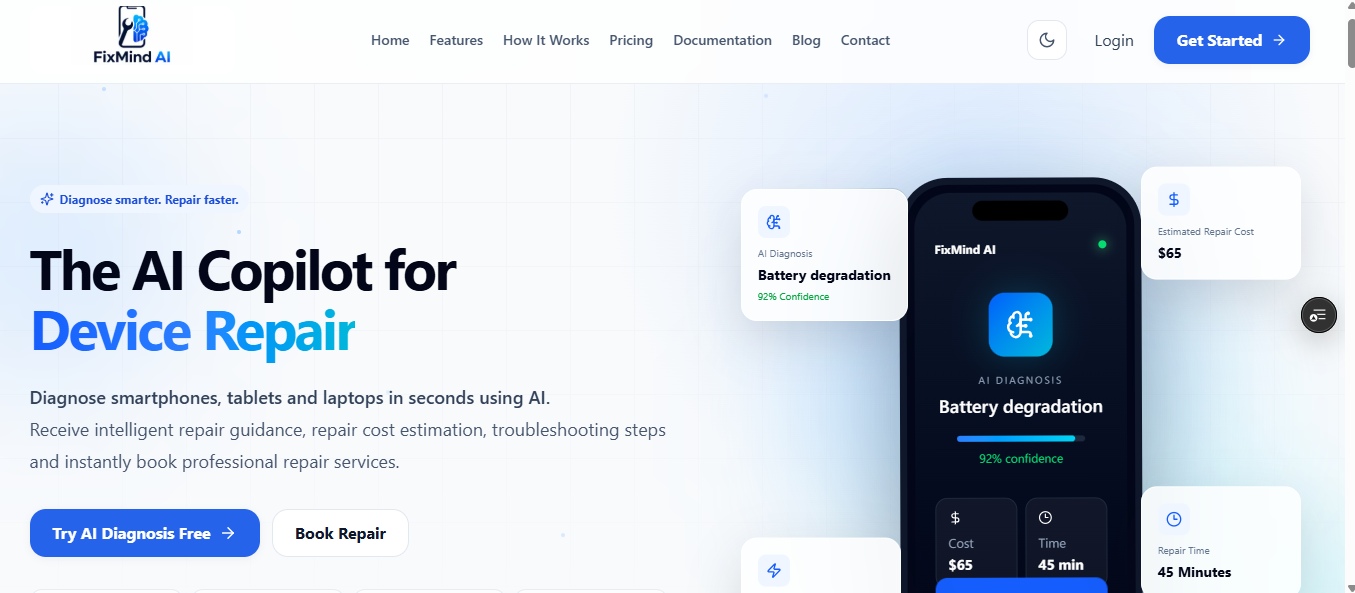
FixMind AI Landing Page
Inspiration
FixMind AI was inspired by a real problem we observed in the device repair industry. Customers often struggle to describe technical issues accurately, don't know whether a repair is worthwhile, and frequently receive inconsistent advice before visiting a repair shop. At the same time, repair businesses spend significant time performing repetitive preliminary diagnostics and answering the same questions.
Drawing on real-world repair workflows, we wanted to build an AI-powered assistant that helps users understand device problems before they spend money on repairs, while also giving technicians and repair businesses a smarter way to manage diagnoses and repair operations.
What it does
FixMind AI is an AI-powered repair intelligence platform that helps users diagnose smartphones, tablets, and laptops using natural language and images.
Users can:
Describe device symptoms in plain language. Upload photos for AI-assisted analysis. Receive structured repair reports. View likely faults with confidence scores. Estimate repair costs and repair time. Receive repair guidance and safety recommendations. Book a qualified technician. Track repair progress from diagnosis to completion.
The platform also includes dedicated dashboards for customers, technicians, and administrators.
The Admin Operations Console enables repair businesses to monitor AI activity, manage technicians, track repair operations, review AI reports, and oversee platform performance from one centralized interface.
How we built it
FixMind AI was built as a modern full-stack web application using:
Next.js 15 React 19 TypeScript Tailwind CSS Prisma ORM PostgreSQL OpenAI GPT-5.6 via the Responses API Structured Outputs with Zod validation Role-based authentication Responsive design optimized for desktop and mobile
GPT-5.6 powers the intelligent diagnosis engine by transforming natural language descriptions and uploaded device images into structured repair recommendations. Rather than returning plain conversational text, the AI generates organized outputs including likely faults, confidence scores, estimated repair costs, repair duration, recommended parts, safety precautions, and suggested next actions.
The platform combines these AI capabilities with complete repair workflows, enabling users to move seamlessly from diagnosis to technician booking while giving repair businesses operational visibility through AI-powered dashboards and analytics.
Challenges we ran into
One of our biggest challenges was designing an AI experience that felt trustworthy and practical rather than simply embedding a chatbot.
We redesigned the diagnosis workflow multiple times to present AI responses as structured repair reports instead of plain text. We also implemented graceful fallback behavior, structured validation, and role-based access control to create a reliable user experience.
Another challenge was balancing ambition with the hackathon timeline. We focused on building a polished end-to-end workflow instead of trying to implement every possible feature, ensuring that the core AI experience remained stable, intuitive, and useful.
Accomplishments that we're proud of Built a complete AI-powered repair workflow from diagnosis to booking. Created separate experiences for customers, technicians, and administrators. Developed an Admin Operations Console for managing AI-powered repair operations. Integrated GPT-5.6 to generate structured, actionable repair intelligence instead of simple chat responses. Designed a responsive, production-style interface suitable for real-world deployment. What we learned
This project reinforced that successful AI products require much more than calling an API. The biggest challenge is designing workflows that make AI outputs understandable, actionable, and trustworthy.
We also learned the importance of structured outputs, prompt engineering, robust error handling, and thoughtful user experience when integrating advanced language models into real applications.
What's next for FixMind AI
Our roadmap includes:
More advanced multimodal diagnostics for additional device categories. Real-time technician assignment and live repair tracking. Predictive maintenance recommendations based on historical repair data. Integration with inventory and spare-parts suppliers. Multi-language support. AI-powered analytics for repair businesses. Expansion into enterprise repair management for service centers and manufacturers.
Built With
- artificial-intelligence
- computer-vision
- css3
- framer-motion
- github
- gpt-5
- html5
- image-analysis
- next.js
- node.js
- openai
- openai-responses-api
- postgresql
- prisma
- progressive-web-app
- react
- responsive-design
- rest-api
- role-based-access-control
- shadcn/ui
- structured-outputs
- tailwind-css
- typescript
- vercel
- zod


Log in or sign up for Devpost to join the conversation.