-
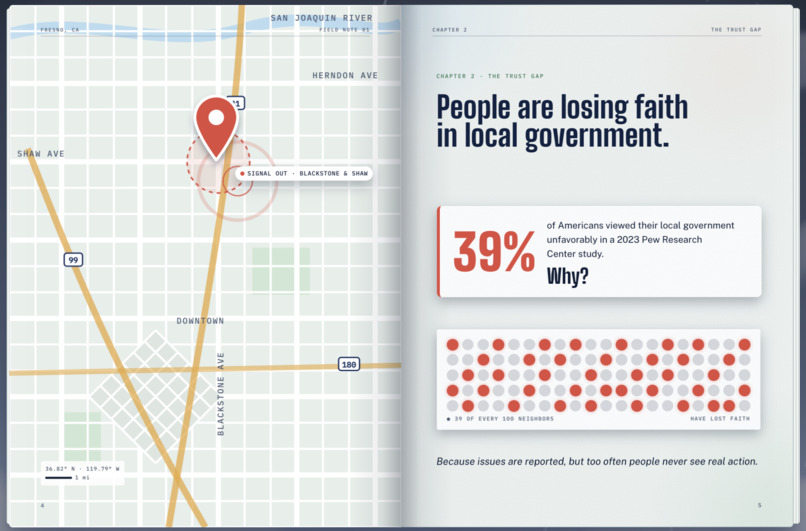
The government is not enough.
-
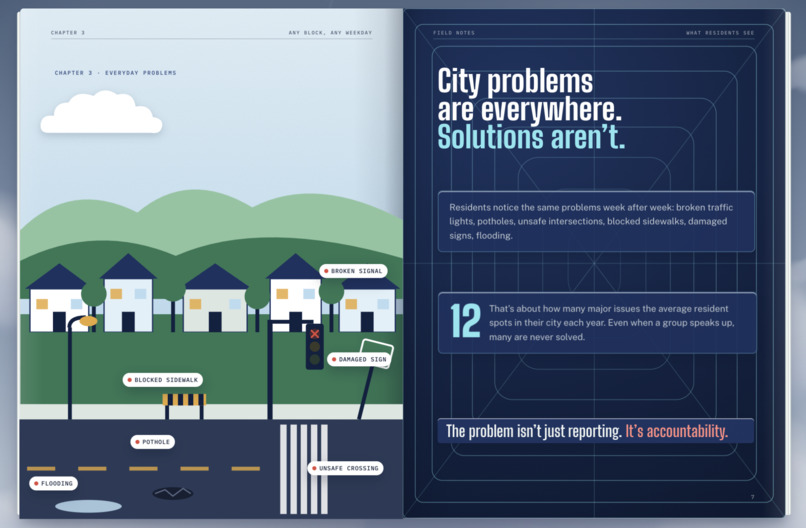
Issues in our city are going unsolved.
-
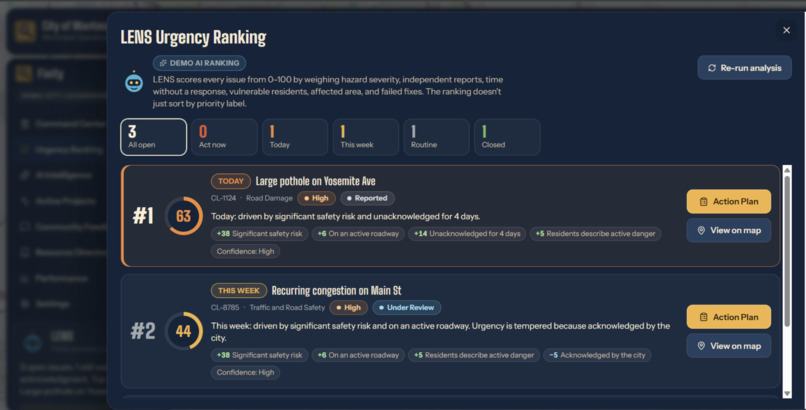
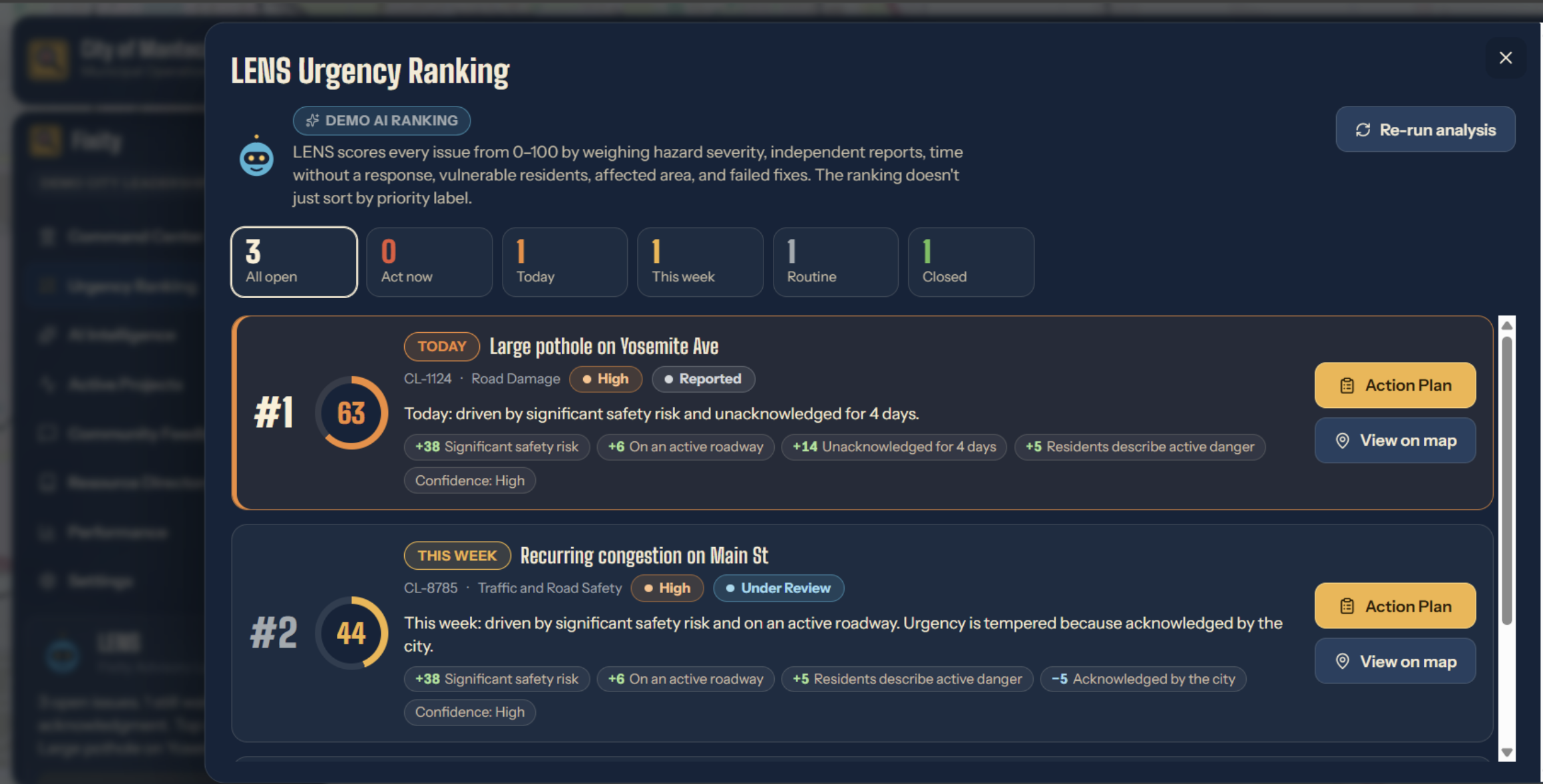
Urgency rankings
-
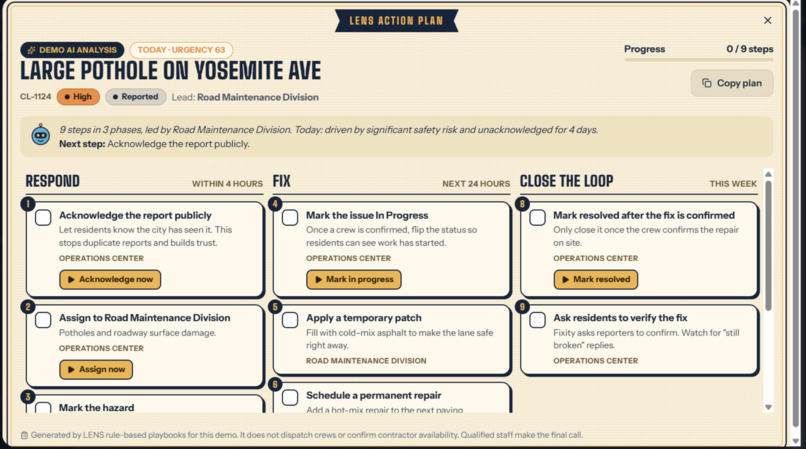
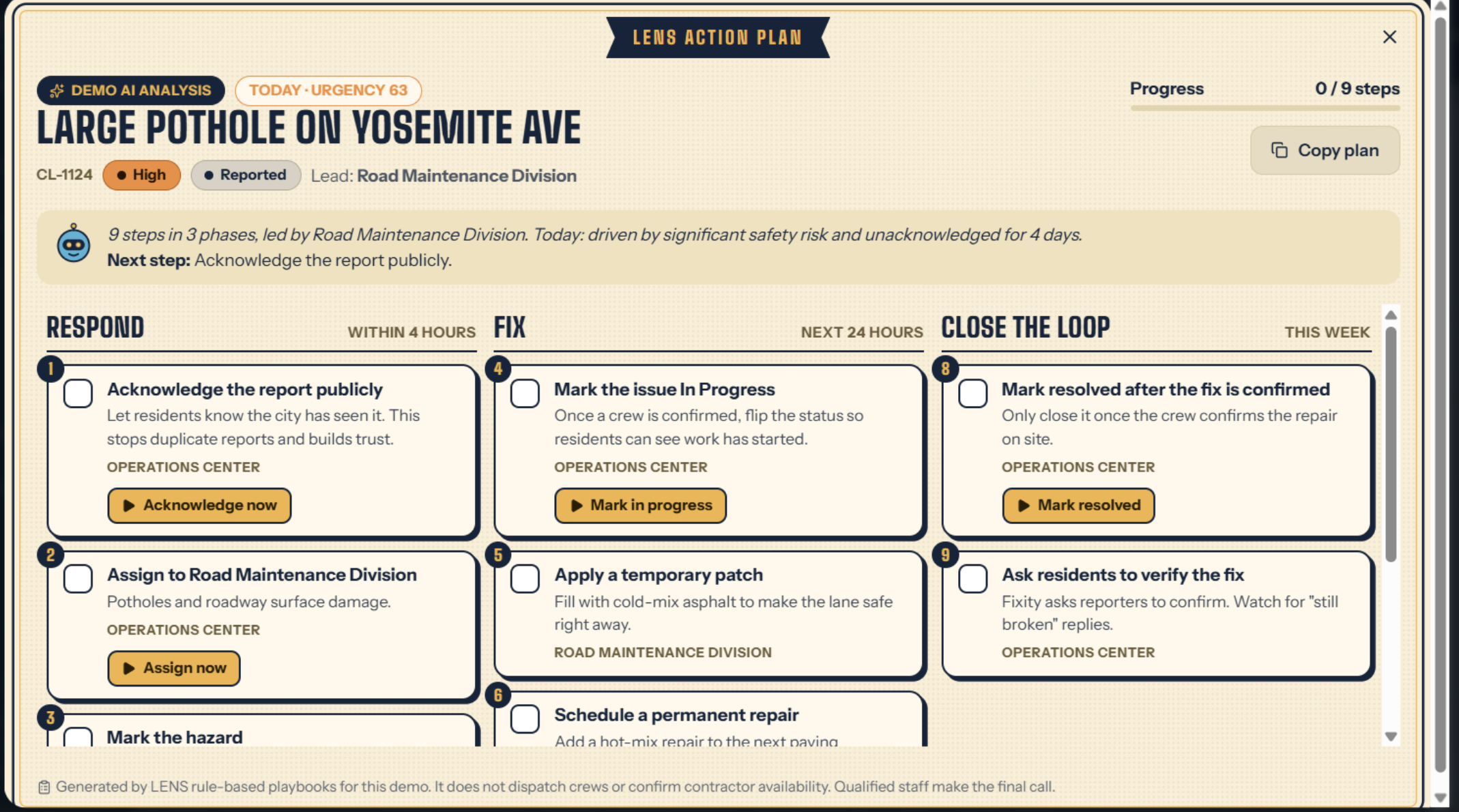
AI solution recommendations
-
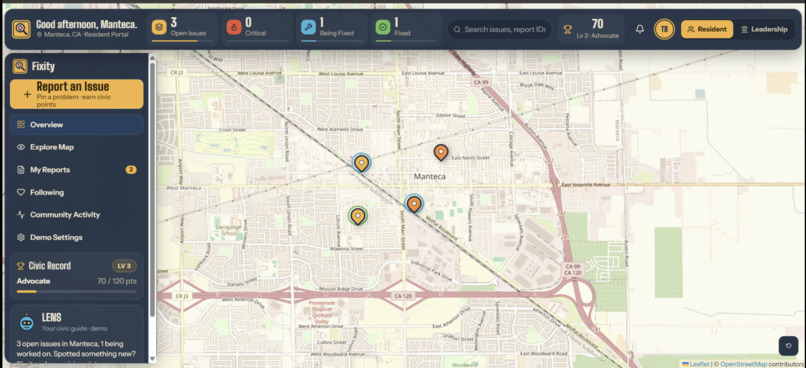
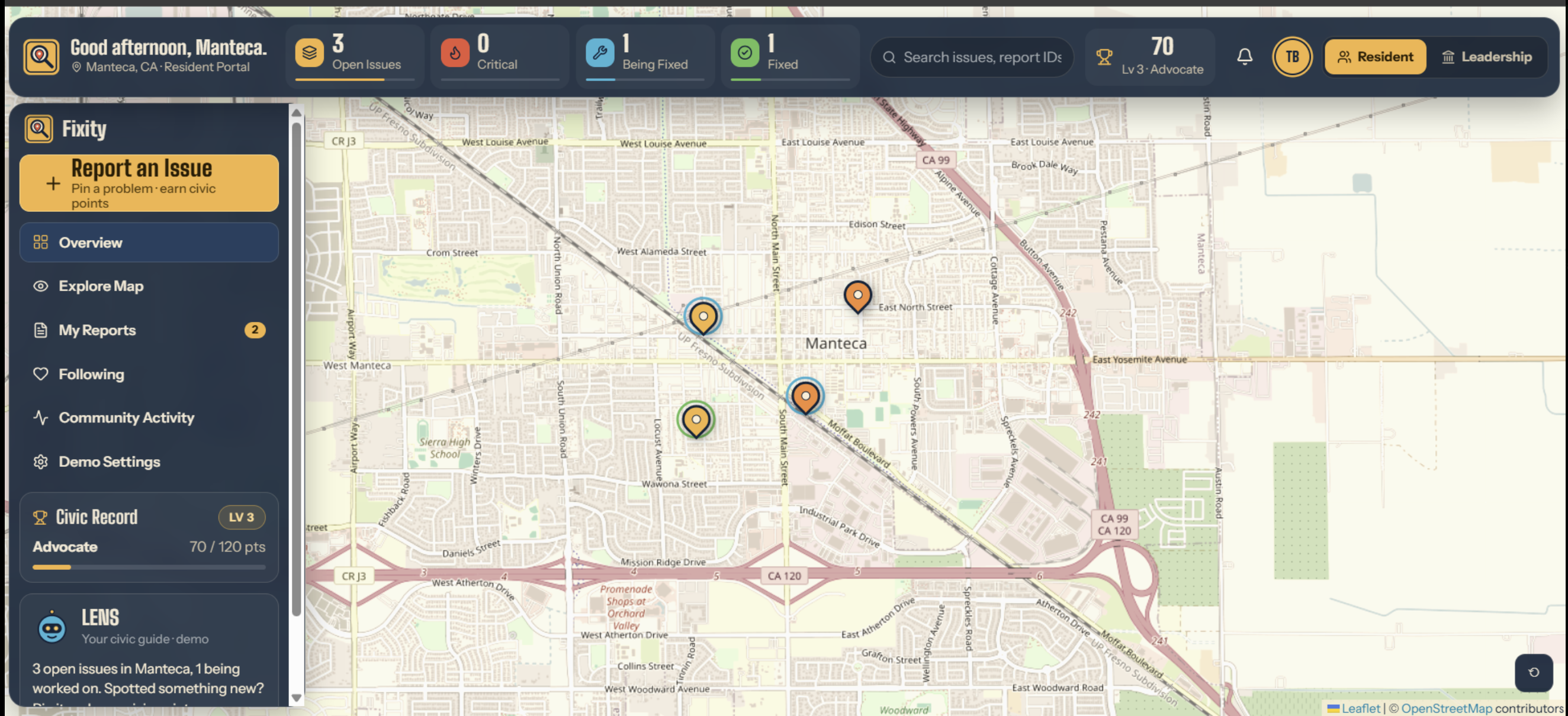
UI + Map Interface
Inspiration
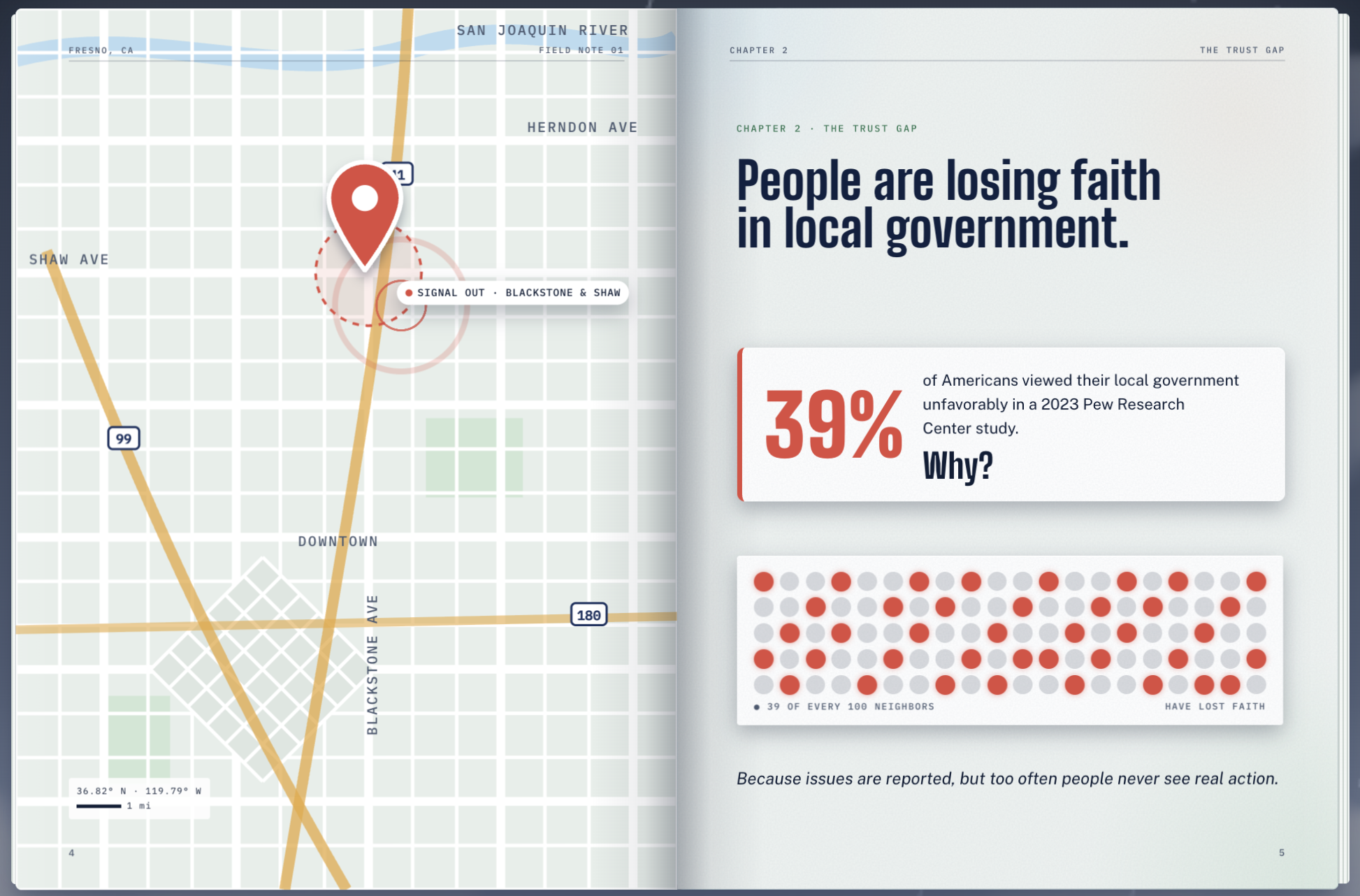
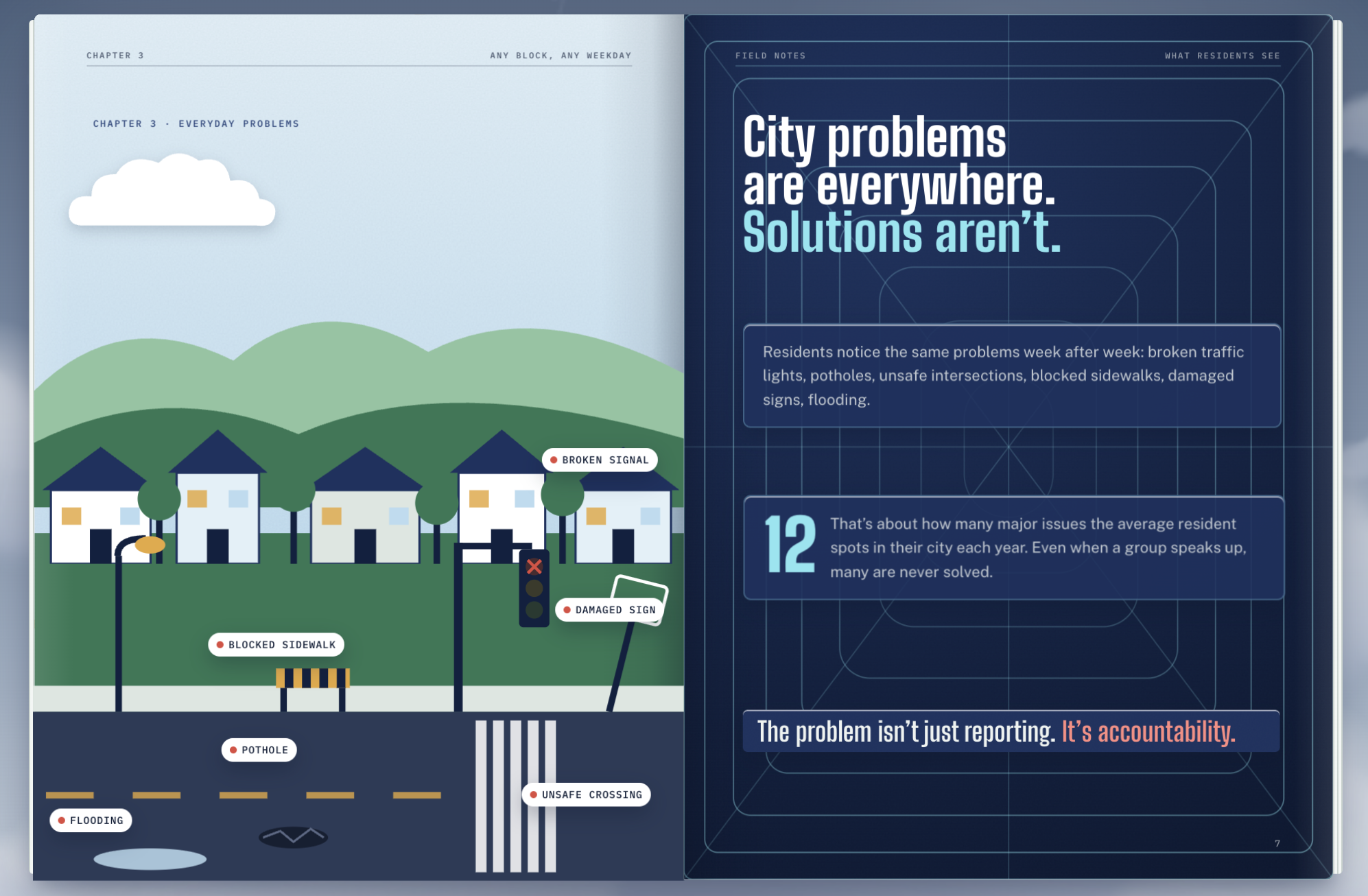
Every city has problems. From broken traffic lights to dangerous intersections, residents encounter issues every day that affect their communities. But reporting these problems doesn't always mean they'll be addressed. Often, residents don't know whether their concerns have been heard or what their city is doing about them.
We wanted to change that. Living in California's Central Valley, we recognized the importance of communication between local governments and the people they serve. We envisioned a platform where residents could directly identify problems in their neighborhoods and city leadership could respond transparently.
That idea became FixityAI, a platform built around one simple belief: Every voice deserves to be heard, and every problem deserves a solution.
What it does
FixityAI is an interactive, map-based civic engagement platform that connects residents directly with city leadership.
Residents can identify issues on a 2D map, mark affected areas and submit detailed reports. These issues appear as color-coded pins based on their urgency. For example, a malfunctioning traffic light receives a red pin because it represents a potential public safety hazard.
When multiple residents report the same issue, FixityAI groups their concerns together, allowing city leadership to recognize recurring problems without sorting through dozens of separate complaints.
On the leadership side, officials can examine submitted reports, review AI-generated summaries and identify which issues require immediate attention. They can also update an issue's status, publish proposed solutions and provide estimated timelines.
Most importantly, residents can follow the progress of reported problems. They can read official responses, ask questions and see when issues are marked as resolved.
FixityAI transforms civic reporting into a two-way conversation between communities and their governments.
How we built it
We designed FixityAI as a web-based platform centered around an interactive 2D map of Manteca, California.
The application features two interconnected interfaces: a resident portal and a city leadership dashboard. Both share information, allowing actions in one portal to appear in the other.
We focused on making the platform functional within the hackathon's limited development window. Rather than relying on a complicated backend, our prototype uses browser-based data storage and cross-tab communication to demonstrate how reports and government responses could synchronize in real time.
We also developed a simulated AI analysis system that categorizes reports based on their descriptions, determines potential urgency and groups similar complaints. The leadership dashboard uses these classifications to generate structured recommendations for addressing reported problems.
Throughout development, we prioritized usability and presentation. We wanted FixityAI to feel like a realistic platform that an actual city could eventually use.
Challenges we ran into
One of our biggest challenges was creating a system that served two very different audiences. Residents needed an interface that was simple enough to report a problem quickly, while city leadership needed more detailed tools to understand reports and organize responses.
Another challenge was handling multiple complaints about the same issue. We wanted the platform to recognize that several residents describing a broken traffic light were reporting one shared problem rather than several unrelated incidents.
We also faced time constraints. Building a complete municipal technology platform in a few hours wasn't realistic, so we focused on demonstrating the most important features through a functional prototype.
Finally, we had to balance automation with responsibility. Although AI can help identify urgent reports, decisions about city resources and public safety still require human oversight.
Accomplishments that we're proud of
Our biggest accomplishment is turning an ambitious idea into a cohesive prototype with a clear, practical purpose.
We're particularly proud of the connection between the resident and leadership experiences. Instead of creating another platform where complaints disappear after submission, we designed a system where residents can see what happens next.
The interactive map is another highlight. It transforms individual complaints into a visual picture of community concerns, making it easier to recognize where problems are concentrated.
We're also proud of our AI-assisted prioritization concept. By analyzing the content of reports, FixityAI demonstrates how technology could help local governments respond to urgent issues more efficiently.
Above all, we're proud that our project addresses a problem that affects real people. FixityAI isn't simply about making government operations more convenient. It's about giving communities a stronger voice.
What we learned
Building FixityAI taught us that solving community problems requires more than developing advanced technology. It requires understanding how people interact with that technology.
We learned how important it is to design for multiple types of users, especially when those users have different responsibilities and expectations.
We also gained experience with interactive maps, synchronized application states and rule-based AI simulations.
Perhaps our biggest takeaway was that transparency is just as important as efficiency. Reporting a problem is only the beginning. People also need to know whether action is being taken and have opportunities to participate in the process.
This project showed us how thoughtful software design can help strengthen communication between residents and the institutions responsible for serving them.
What's next for FixityAI
Our vision for FixityAI extends far beyond the hackathon.
The next step is developing a production-ready platform with secure accounts, cloud-based data storage and stronger AI capabilities. We want to integrate real municipal resource directories so the system can recommend appropriate city departments or approved contractors based on available information.
We also hope to introduce more advanced issue detection, geographic trend analysis and automated notifications that keep residents informed throughout the resolution process.
Eventually, we want to collaborate with local governments in California's Central Valley to test FixityAI in real communities, gather feedback and determine how the platform could complement existing city reporting systems.
Our long-term goal is to make FixityAI scalable enough for communities across the country.
We started with a simple question: What if residents could see their voices turning into action?
With FixityAI, we're working toward making that possible.

Log in or sign up for Devpost to join the conversation.