-
-
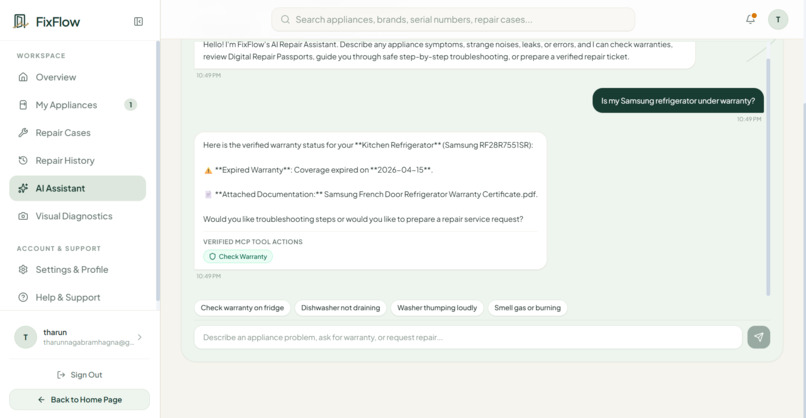
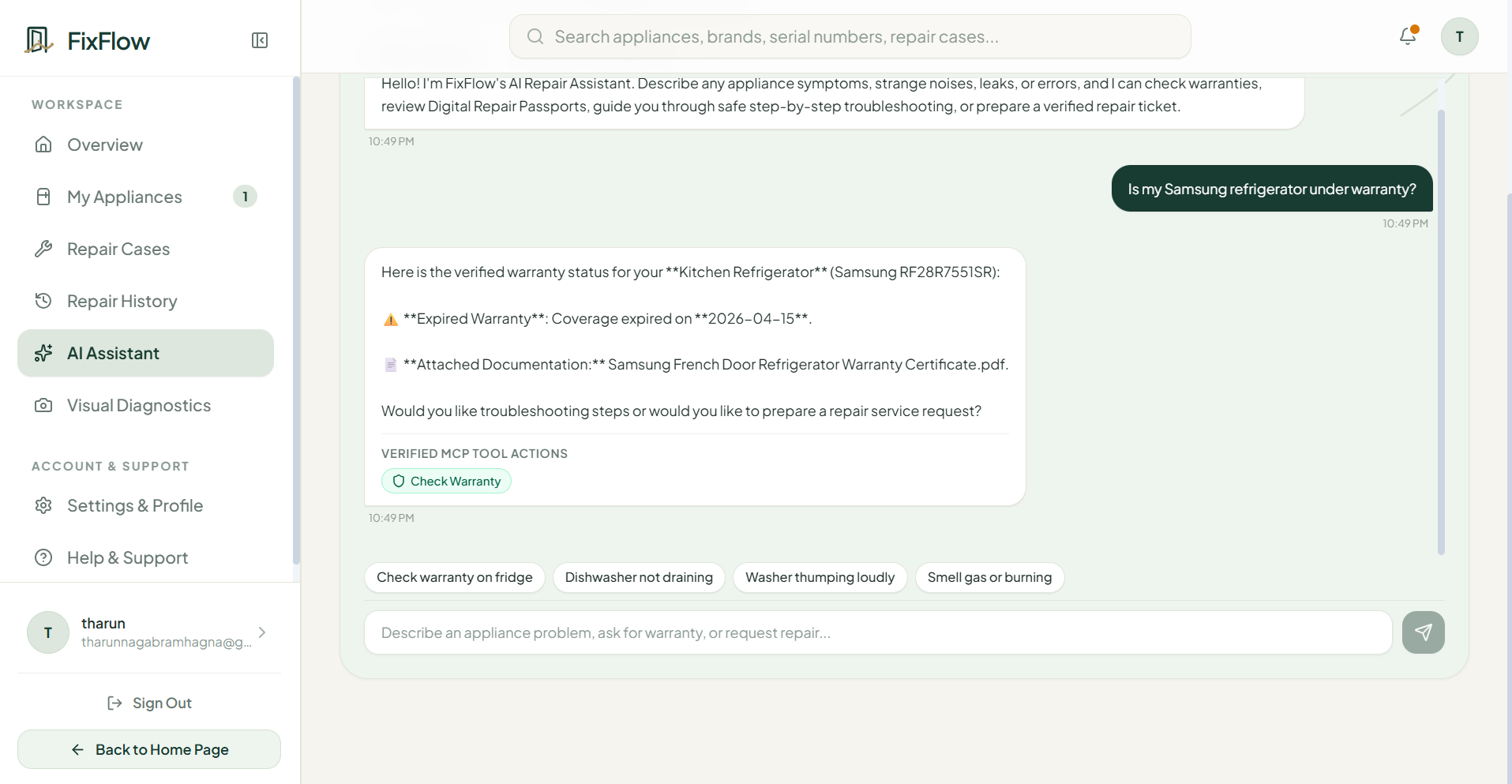
AI Assiant Section (Linked to Alexa+)
-
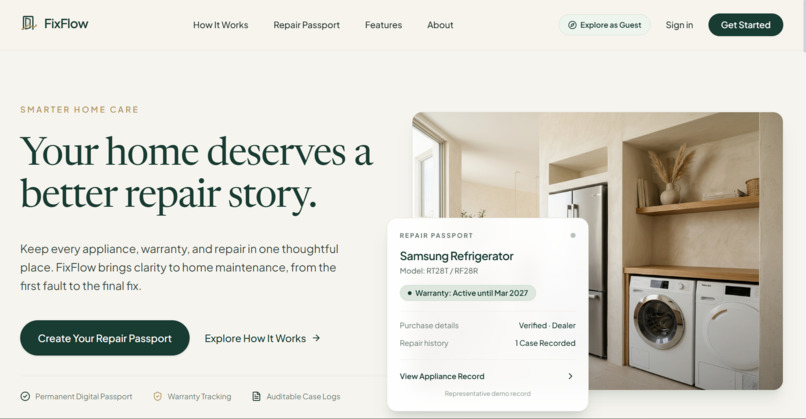
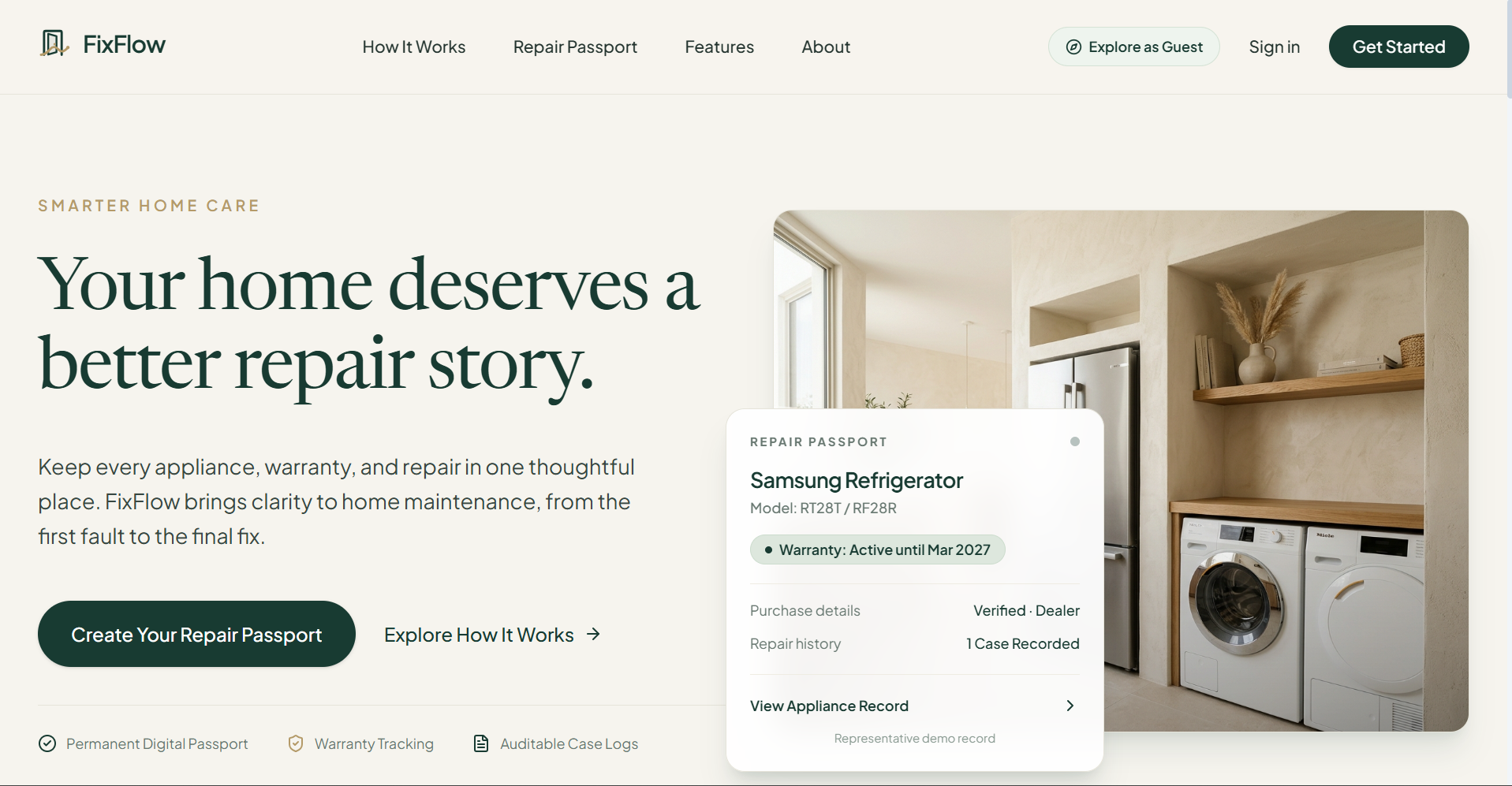
Home Page
-
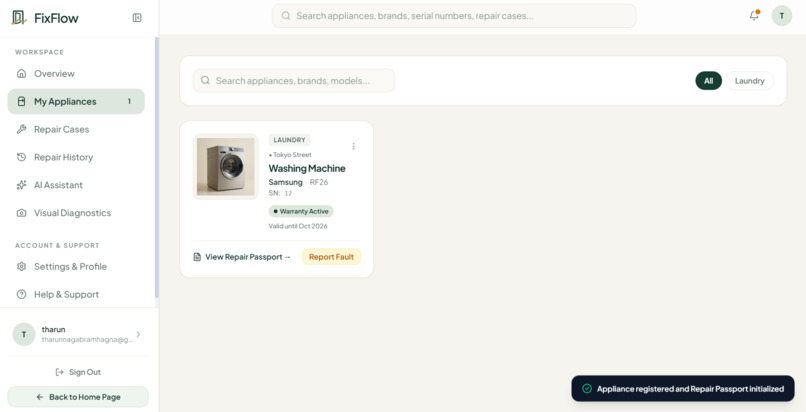
Overview section
-
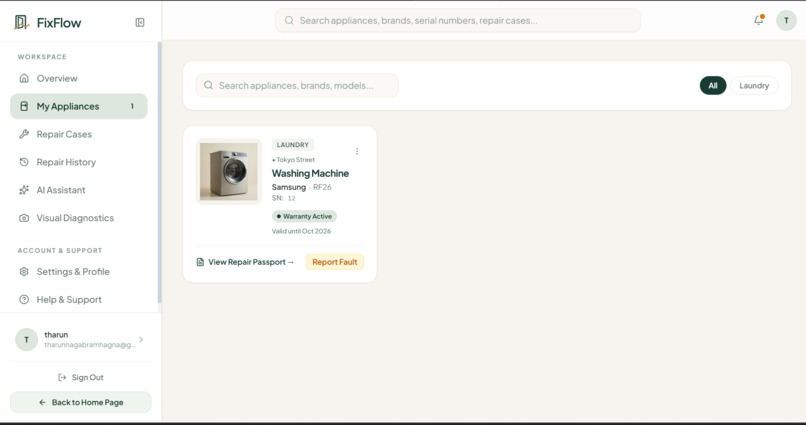
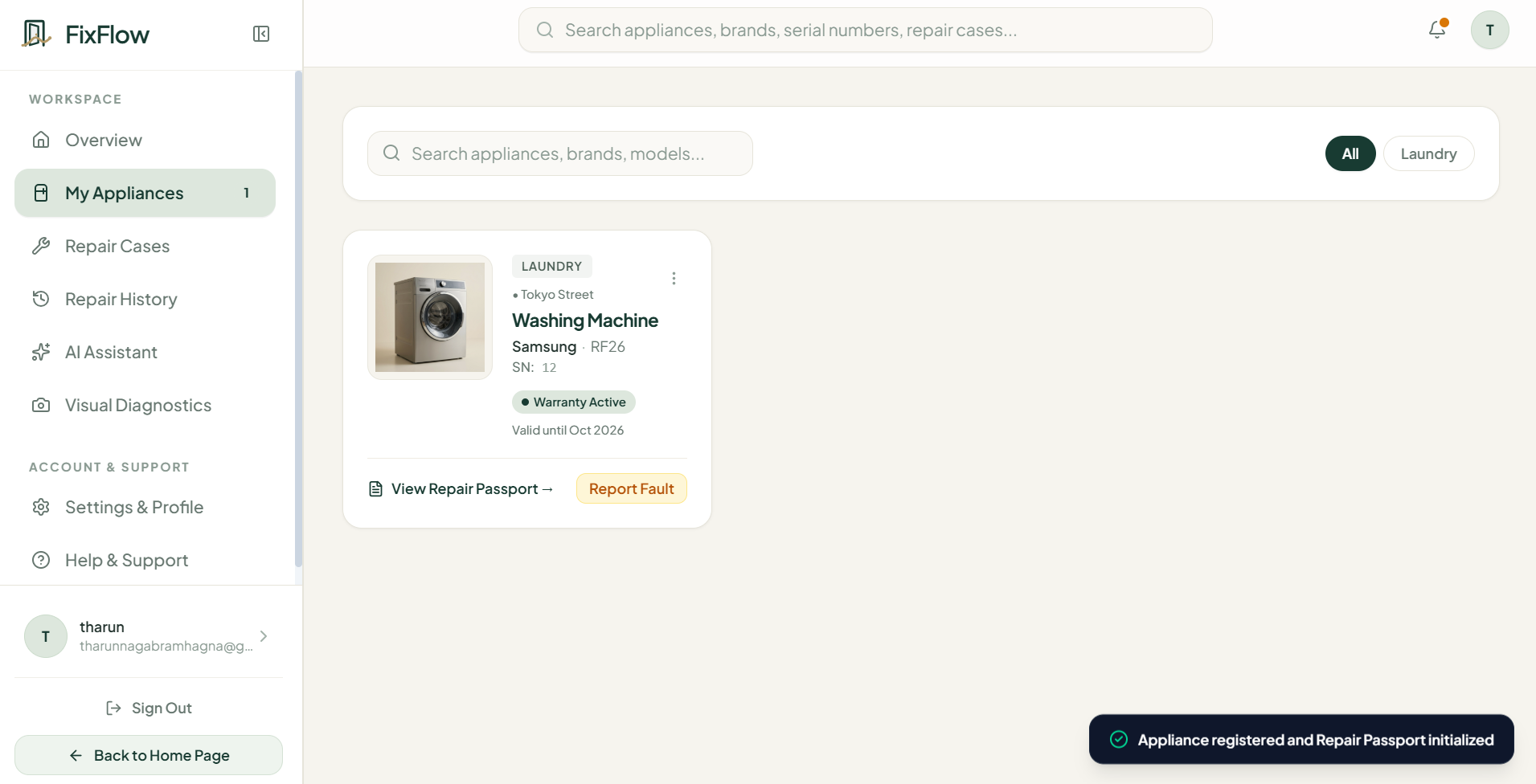
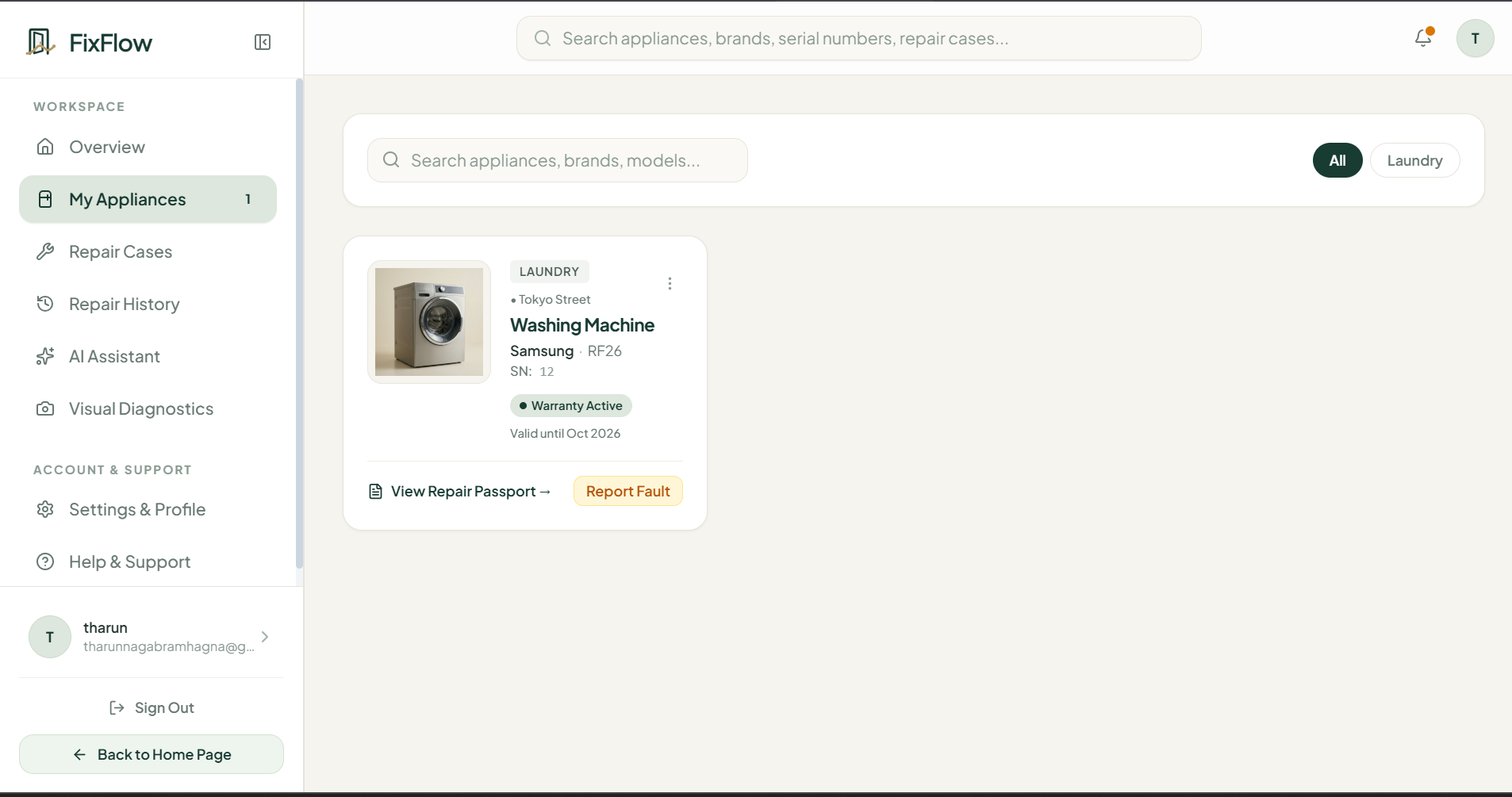
My Applicances Section
-
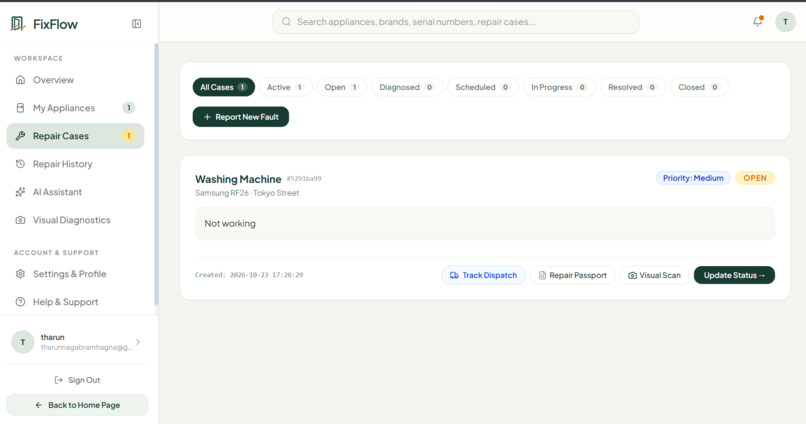
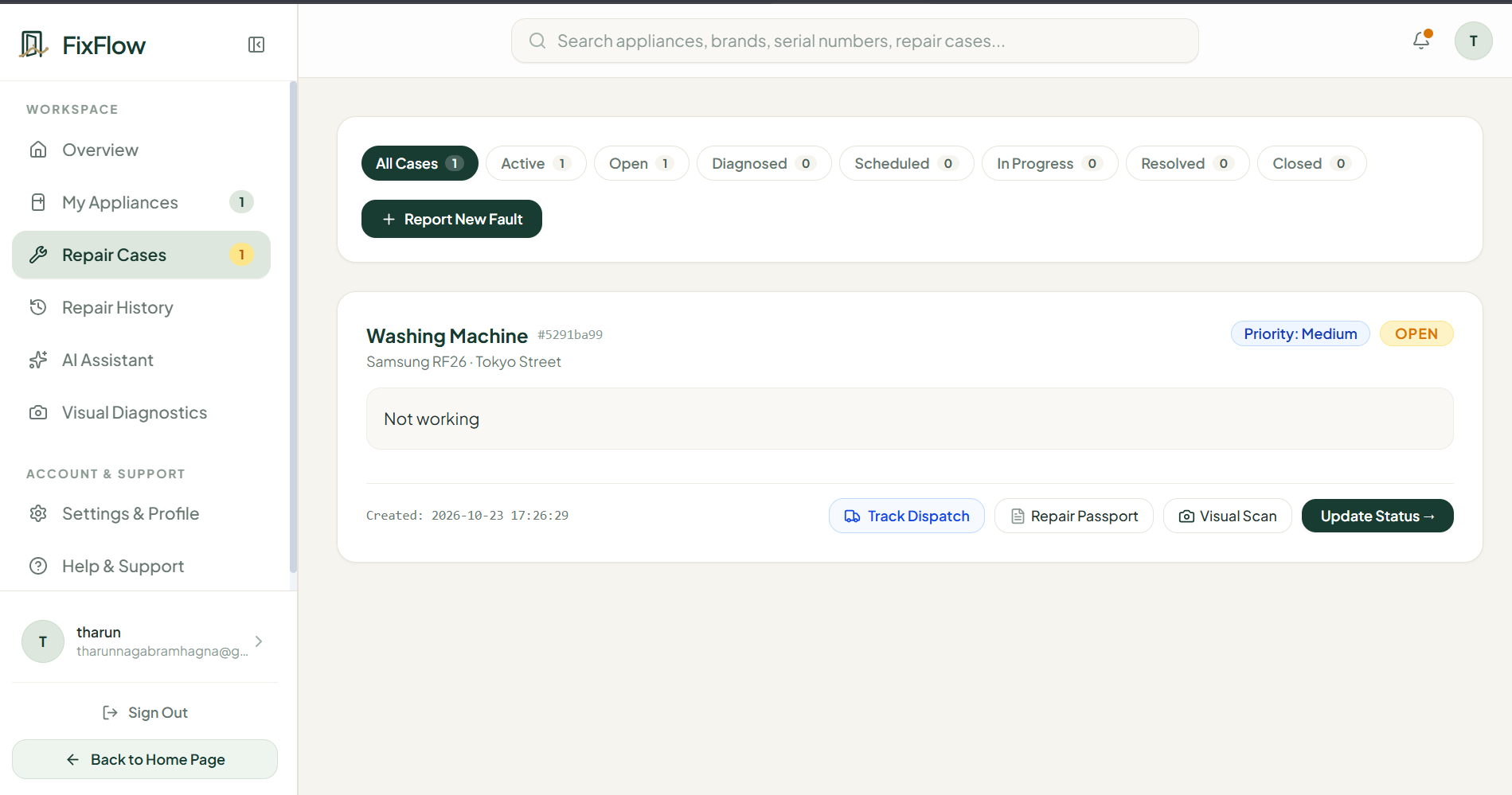
Repair Cases Section
-
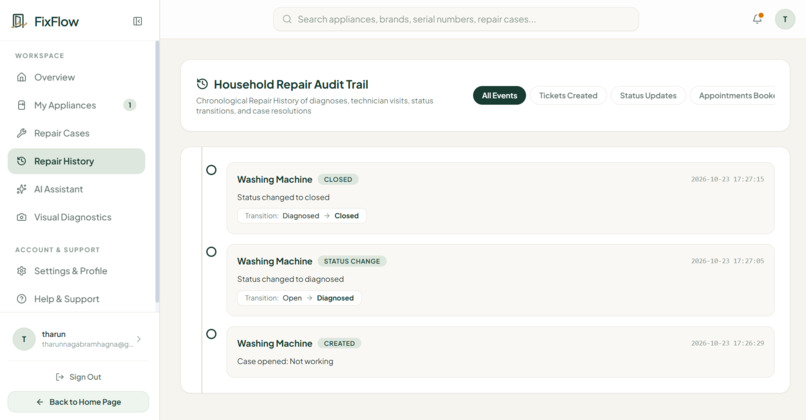
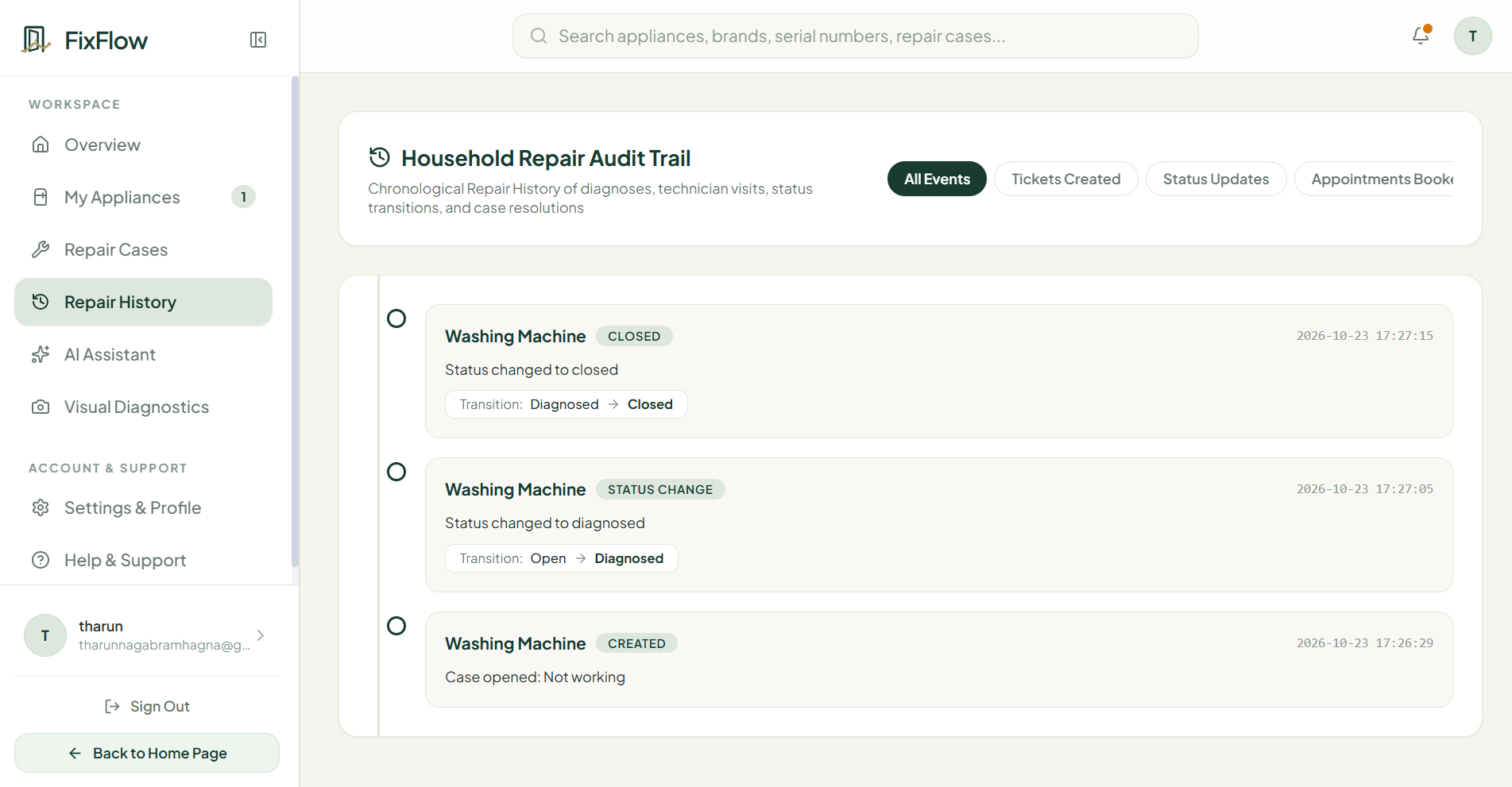
Repair History Section
-
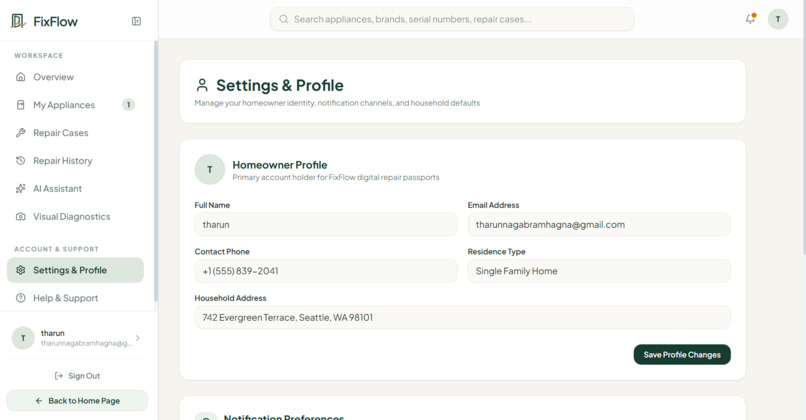
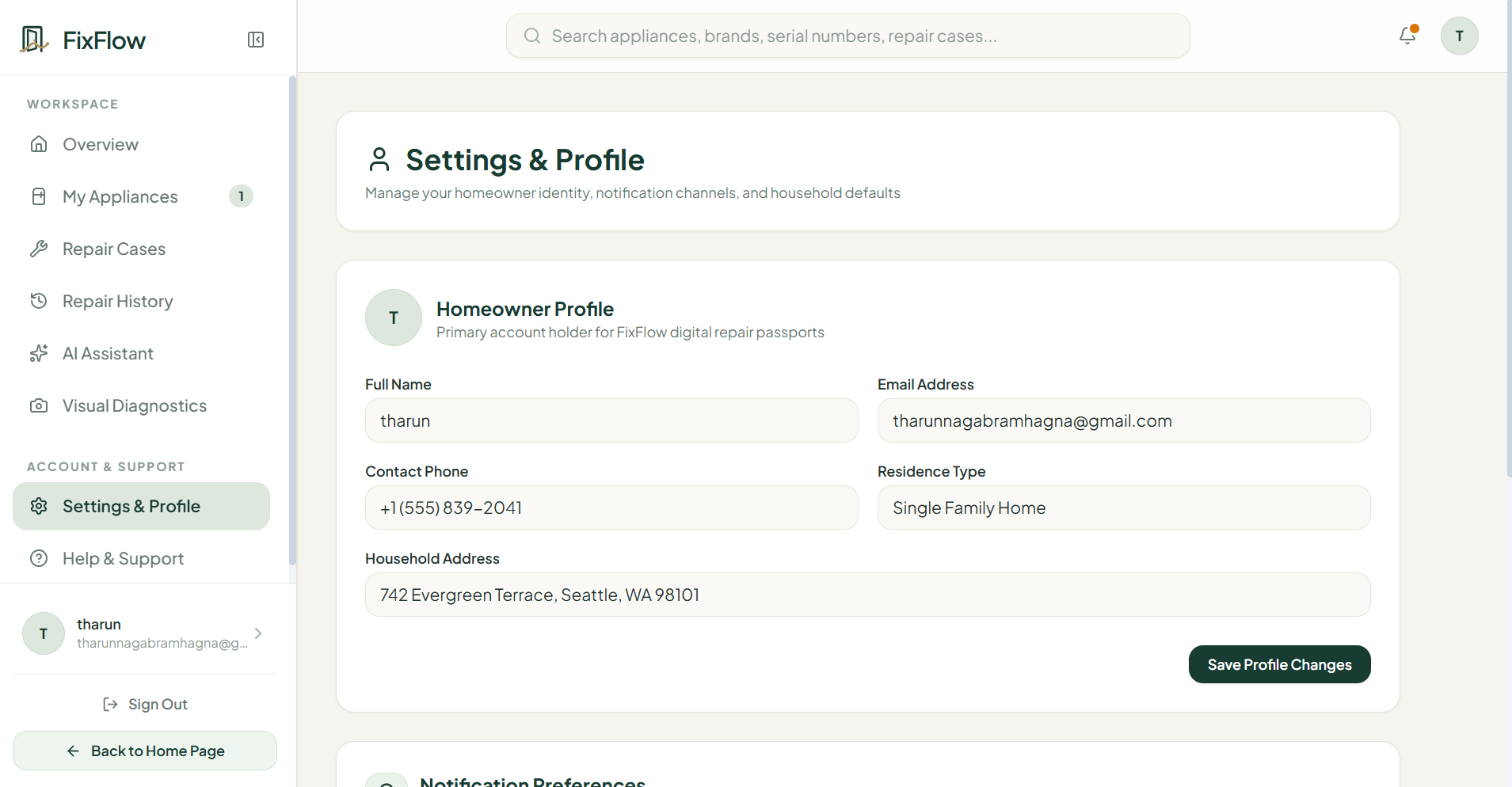
Settings and Profile Section
-
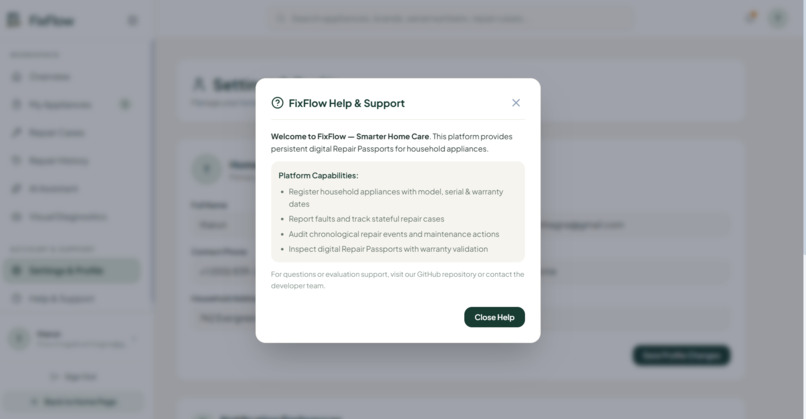
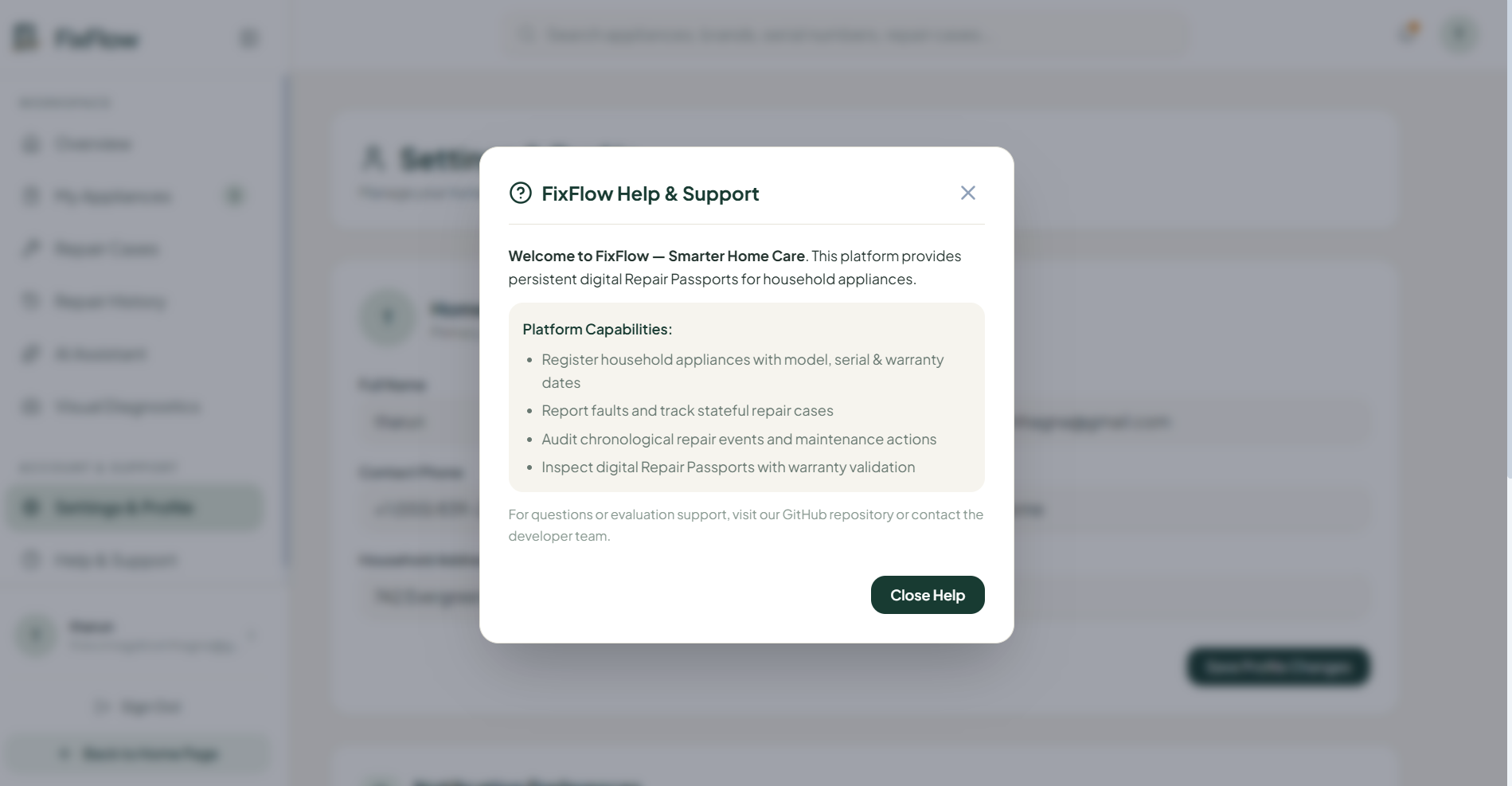
Help and Support Section
-
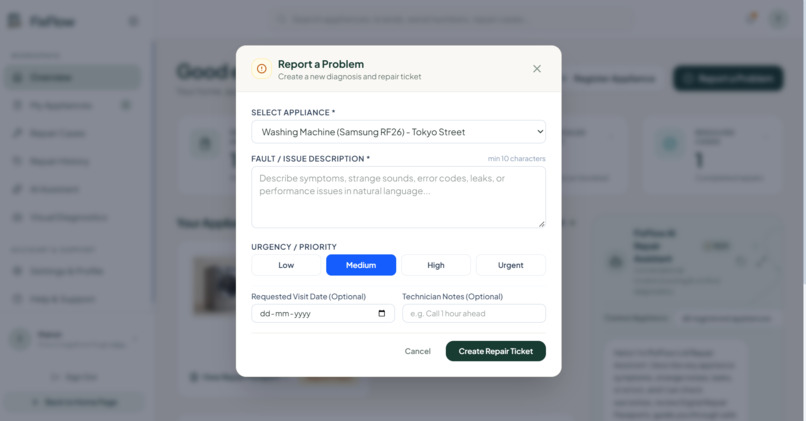
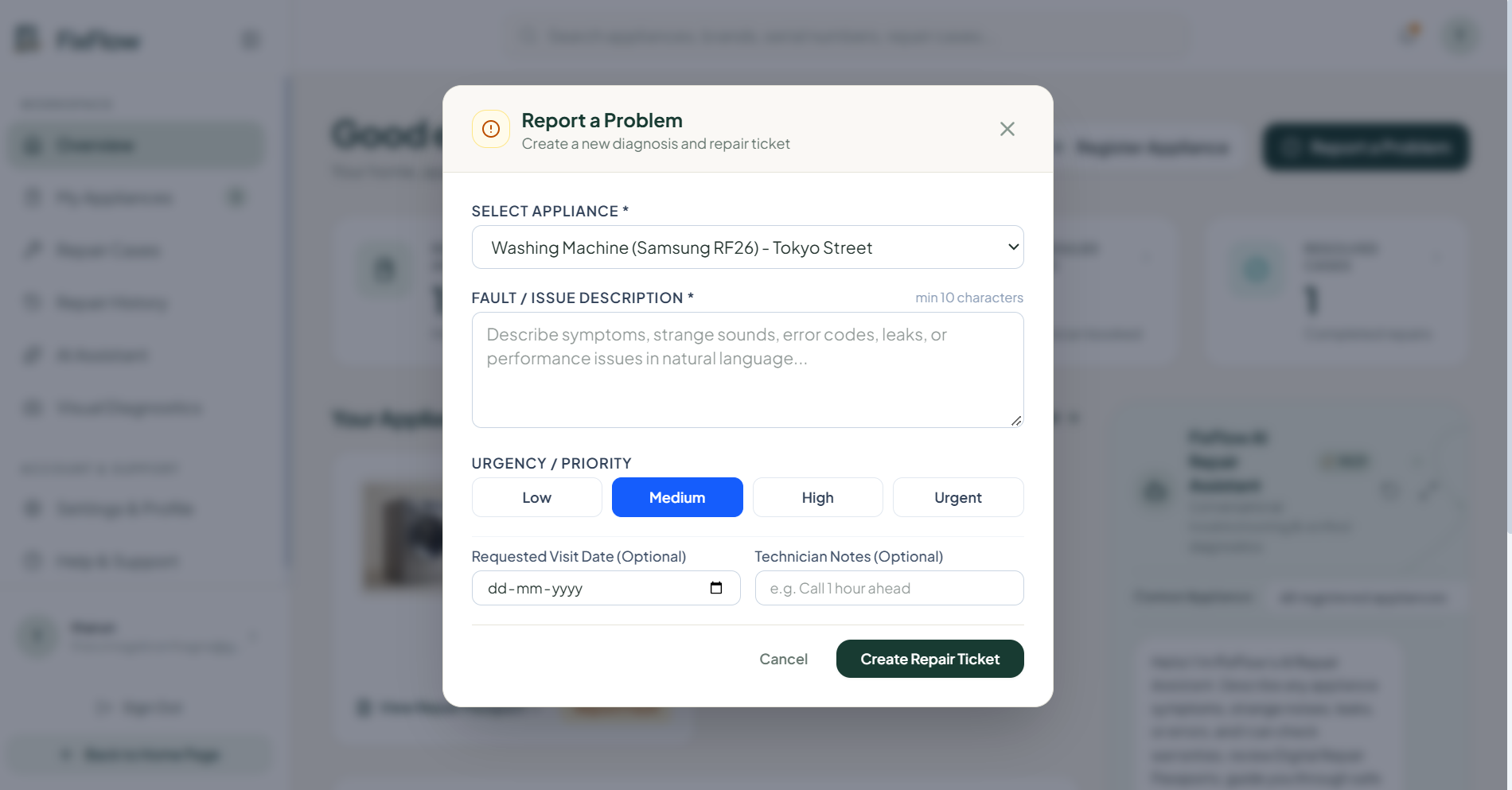
Report a Problem Option (In Overview Page)
Inspiration
Home appliances are essential to everyday life, but when something breaks, managing the repair can become frustrating. People often struggle to find warranty information, remember previous repairs, contact service providers, and keep track of appointments. When the same appliance develops another fault, they may have to explain the entire situation again.
We wanted to make home maintenance simpler by building an AI agent that does more than answer questions. FixFlow aims to help people manage the entire repair journey through natural conversations, persistent appliance records, and connected tools.
What it does
FixFlow is an AI-powered home repair management agent designed to help users go from reporting an appliance problem to tracking its resolution.
Key features include:
- Conversational issue reporting: Users describe appliance problems in natural language instead of navigating complicated forms.
- Appliance Passport: Maintain appliance details, purchase information, warranty documents, and previous repair records.
- Repair History Memory: Retrieve previous cases and identify recurring issues so users do not have to repeat the same information.
- Warranty Assistance: Help users review uploaded warranty documents and identify relevant coverage information, subject to the document's terms.
- Smart Service Requests: Generate structured repair summaries and prepare service requests for user approval.
- Repair Tracking: Keep repair cases organized through statuses such as Reported, Awaiting Approval, Scheduled, In Progress, and Resolved.
- Human-approved actions: Ask for confirmation before sending requests, sharing personal information, or committing to appointments.
Our goal is to transform home maintenance from a collection of disconnected tasks into one organized, intelligent workflow.
How we built it
FixFlow is designed around an AI agent connected to practical tools through the Model Context Protocol (MCP).
Our planned technology stack includes:
- Frontend: React, Vite, and Tailwind CSS for a responsive interface.
- Backend: Node.js and Express for application APIs and workflow coordination.
- Agent integration: An MCP server using Streamable HTTP to expose appliance and repair-management tools.
- Database: SQLite for appliance profiles, repair cases, service-request history, and status updates.
- AI capabilities: Natural-language understanding, tool selection, structured information extraction, and contextual retrieval.
- Document processing: Warranty and invoice uploads with text extraction where supported.
The agent can use tools such as get_appliance_history, check_warranty_document, prepare_service_request, and get_repair_status. Each tool is intended to perform a specific, verifiable operation rather than relying on generated answers alone.
The interface provides a conversation view alongside appliance profiles, repair timelines, and pending actions. Where live service-provider integrations are unavailable, the demo uses clearly labelled simulated service responses.
Challenges we ran into
Building a reliable repair agent involves more than connecting a language model to a chat interface.
Some of the key engineering challenges we are addressing include:
- Designing structured appliance and repair records that remain consistent across conversations.
- Ensuring the agent selects the correct tool for each request and handles missing information gracefully.
- Maintaining useful context across sessions without confusing different appliances or repair cases.
- Handling warranty information carefully instead of making unsupported claims about coverage.
- Preventing unintended actions by requiring confirmation before external requests or appointments are committed.
- Demonstrating a complete workflow when real service-provider APIs or physical smart-home devices are unavailable.
Our approach is to keep the workflow focused, validate tool inputs, persist important state in the database, and make the agent's actions visible to the user.
Accomplishments that we're proud of
FixFlow's central achievement is its focus on turning an ordinary conversation into a structured, trackable maintenance workflow.
The project brings together conversational AI, persistent memory, document assistance, tool orchestration, and repair tracking in one experience.
We are particularly focused on the Repair Passport concept: a reusable history for each appliance that helps the agent understand previous problems and prepare better-informed service requests.
We also aim to make the experience transparent by showing users what information was retrieved, what action was prepared, and what still requires their approval.
What we learned
This project reinforces an important lesson about agentic AI: a useful agent must do more than generate convincing text.
It needs reliable tools, well-structured data, persistent state, clear action boundaries, and a way to verify the results of its operations.
We also recognize that warranty information and repair recommendations require careful handling. The agent should distinguish verified information from assumptions, communicate uncertainty, and leave important decisions under the user's control.
What's next for FixFlow — AI-powered home repair management
Our next steps are to strengthen the end-to-end repair workflow and make FixFlow useful beyond a demonstration.
Planned improvements include:
- Expanding appliance profiles and repair-history management.
- Improving document extraction and warranty-information retrieval.
- Adding appointment integrations where supported APIs are available.
- Providing reminders for pending repairs and upcoming maintenance.
- Improving multilingual conversational support.
- Adding clearer audit trails, privacy controls, and user-approved external actions.
Our long-term vision is for FixFlow to become a personal home-maintenance agent that remembers the history of a household's appliances, helps coordinate the next steps, and keeps every repair organized until it is resolved.
FixFlow — Smarter Repairs. Happier Homes.
Built With
- agentic-ai
- ai
- express.js
- llm
- mcp
- node.js
- react
- sqlite
- tailwind
- vite

Log in or sign up for Devpost to join the conversation.