-
-
Icon
-
All Screenshots
-
-
-
-
-
-
Inspiration
My neck has hurt for three months. I sit at a desk all day, and by the evening it's stiff enough that I notice it constantly.
I know what to do about it. A physio told me, the internet tells me, everyone tells me: do these small movements a few times a day. Knowing isn't the problem. Remembering is. I get into something, hours pass, and it hits me at 11pm when it's too late to matter.
Fix Posture is what I wanted to exist — for me, and for everyone with the same problem. You don't need to be taught the exercises. You need something that won't let you forget them.
What it does
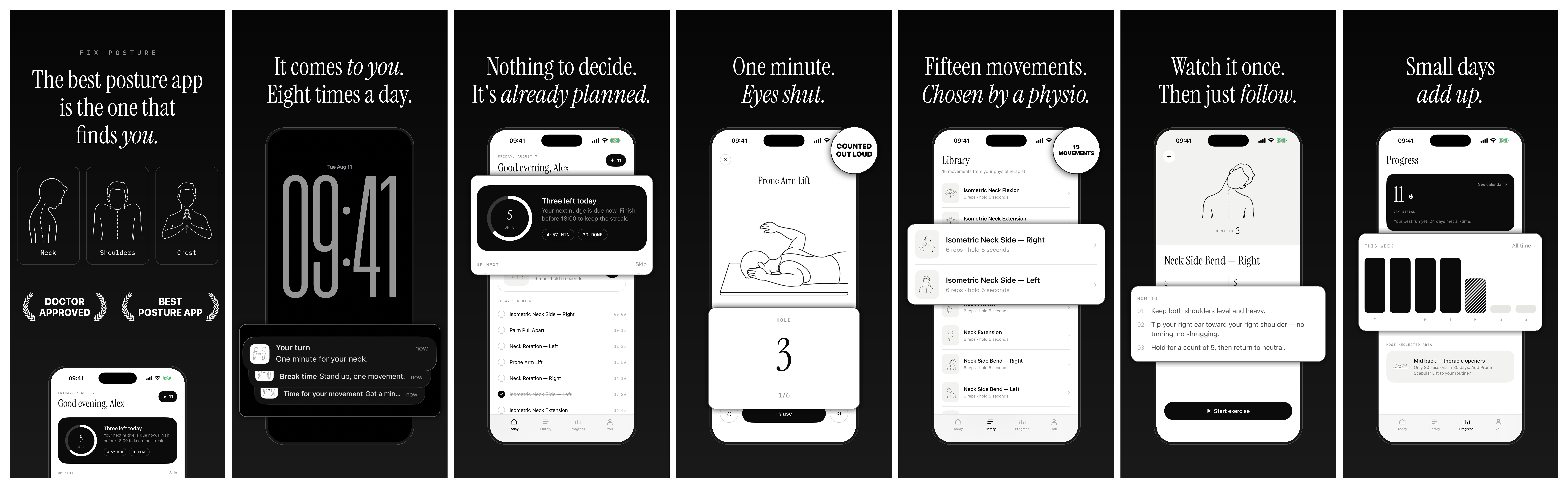
Fix Posture builds you a daily routine of neck, shoulder and upper-back movements, then comes and finds you throughout the day so you actually do them.
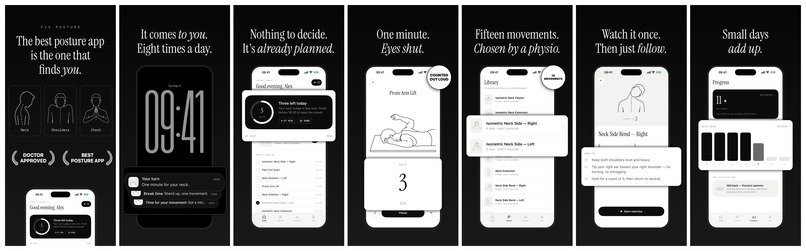
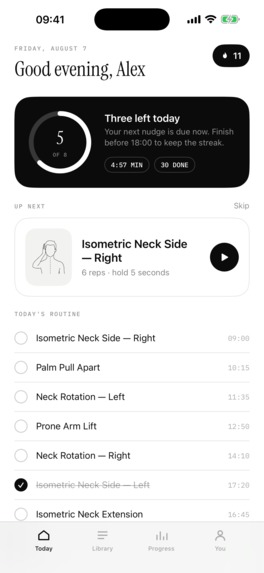
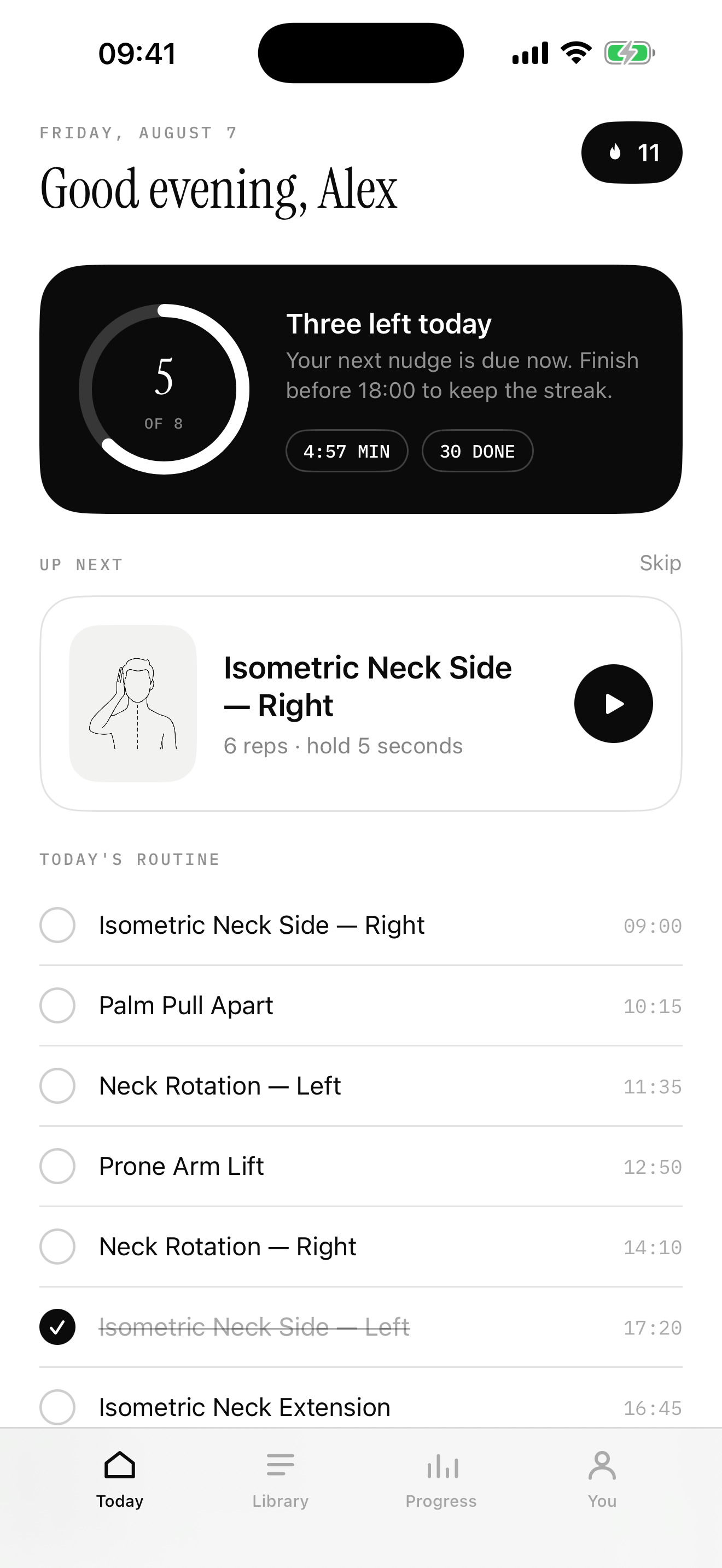
It plans your day. Tell it where it hurts, when you're at a desk, and how much you can handle. It spreads a personalised set of movements across your working hours — around one every 75 minutes. Movements for your problem areas come up more often, but nothing gets neglected. Tomorrow's routine is different from today's.
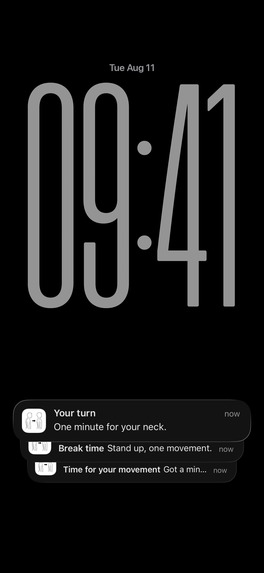
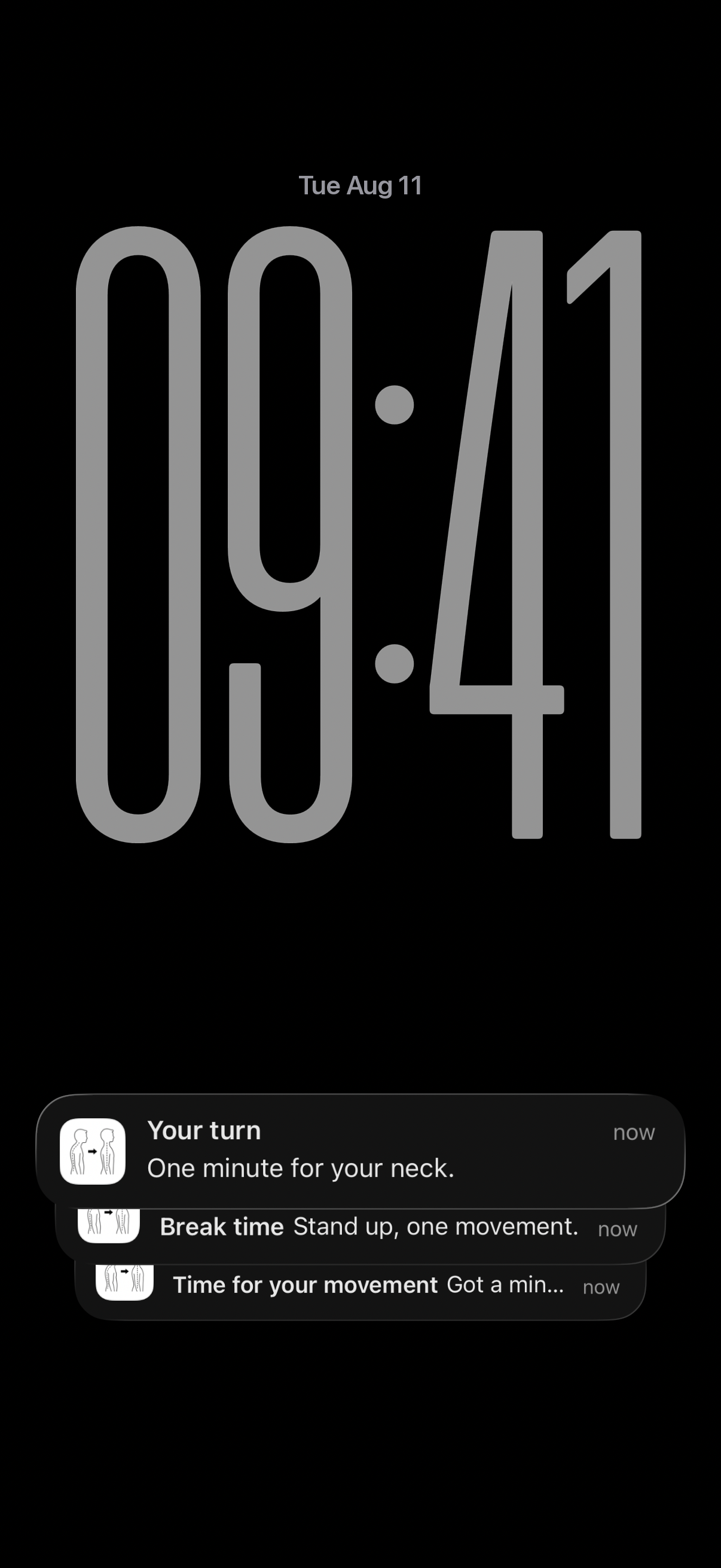
The reminder does the work. Each one names the movement and starts it straight from the lock screen. No opening the app, no searching for the exercise, no deciding whether it's worth it.
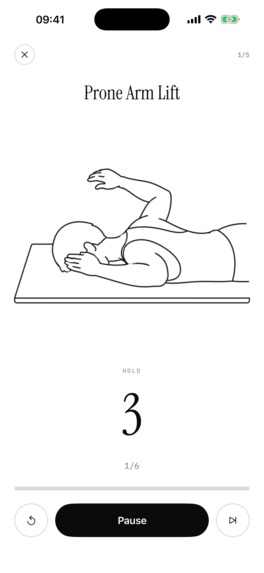
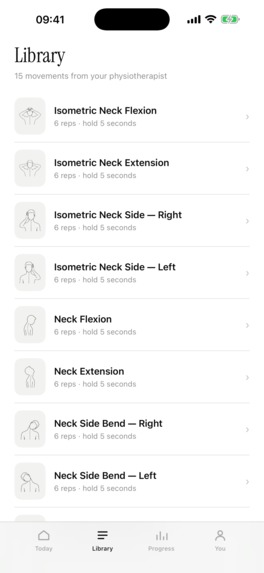
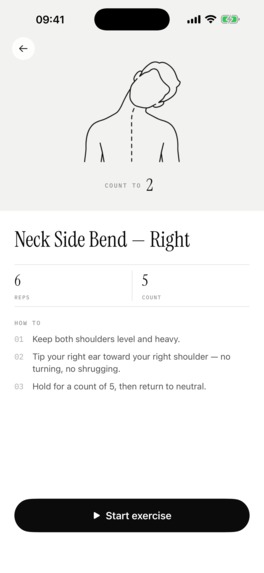
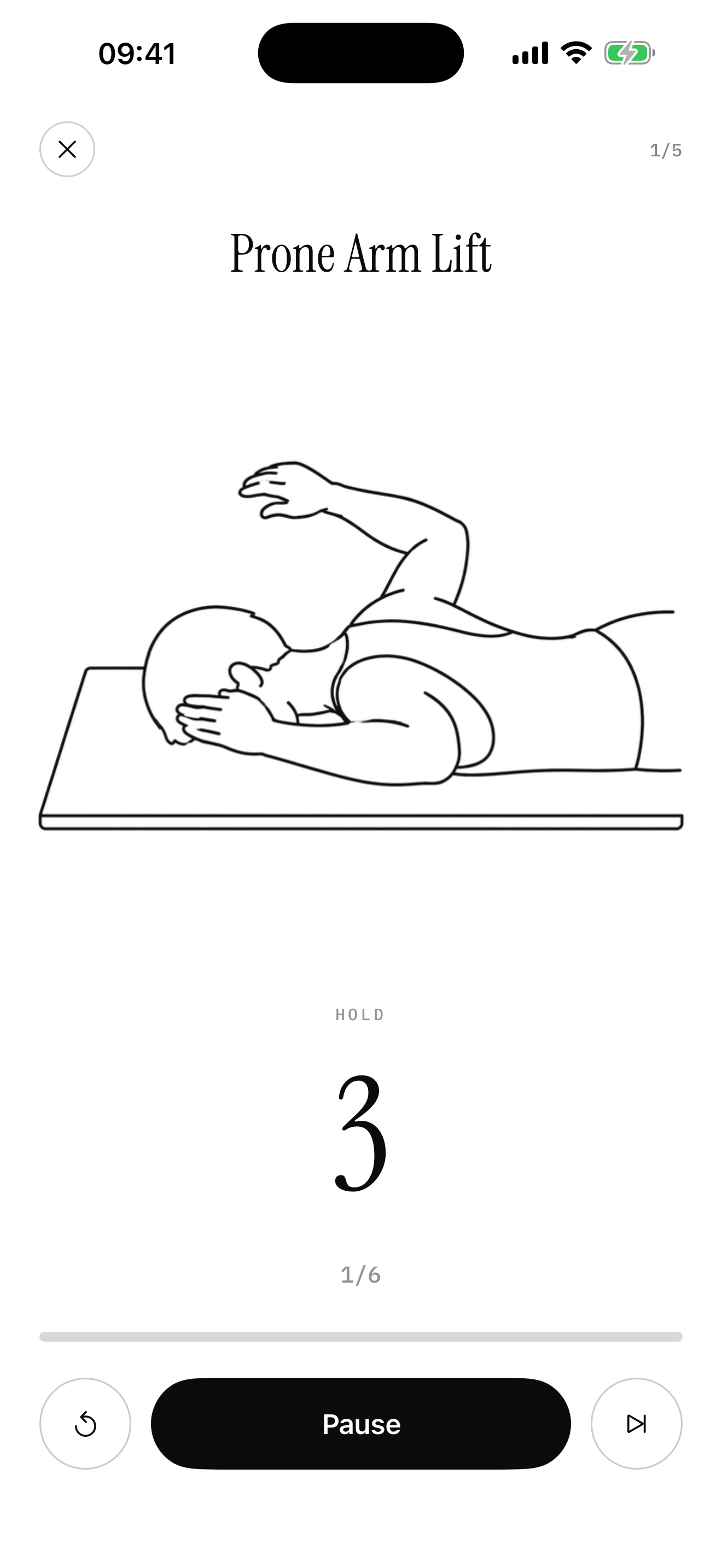
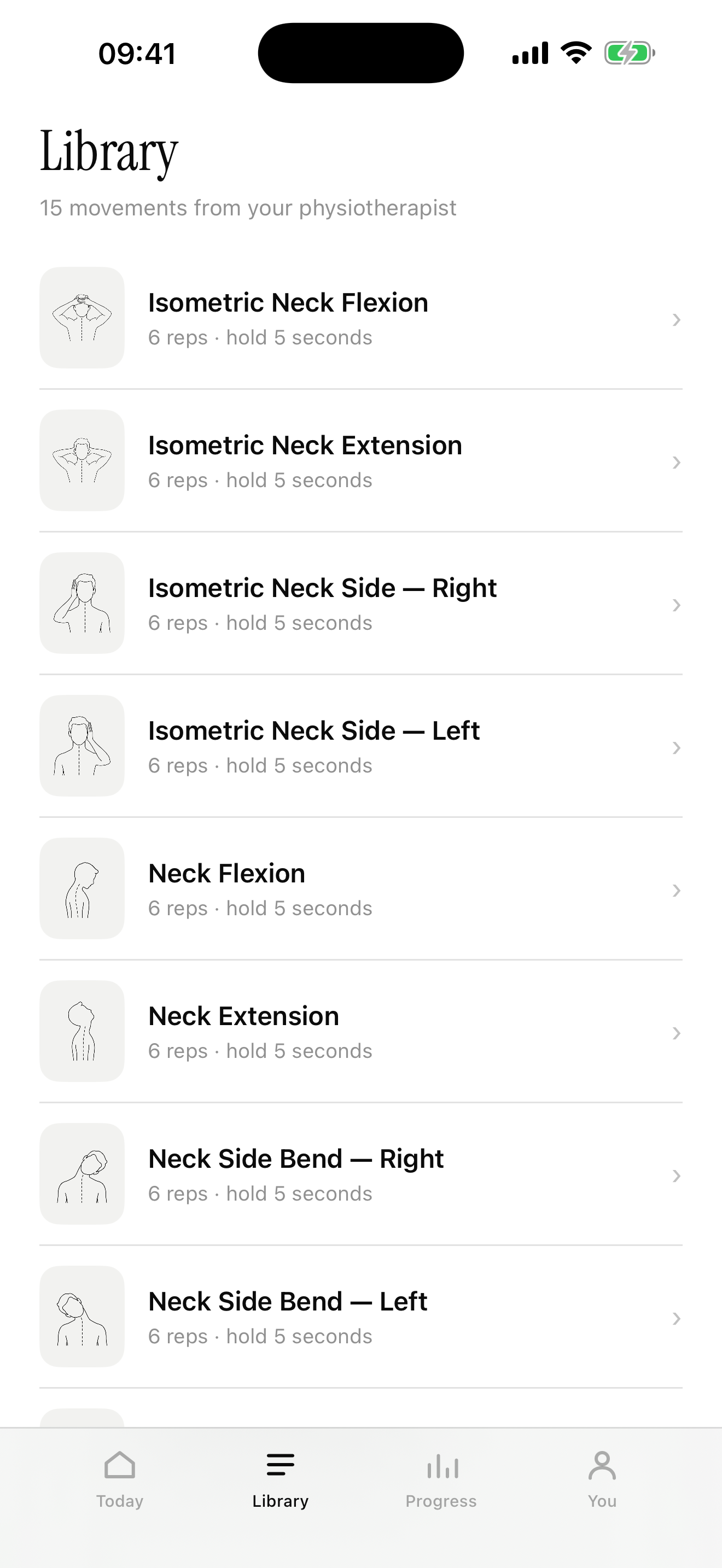
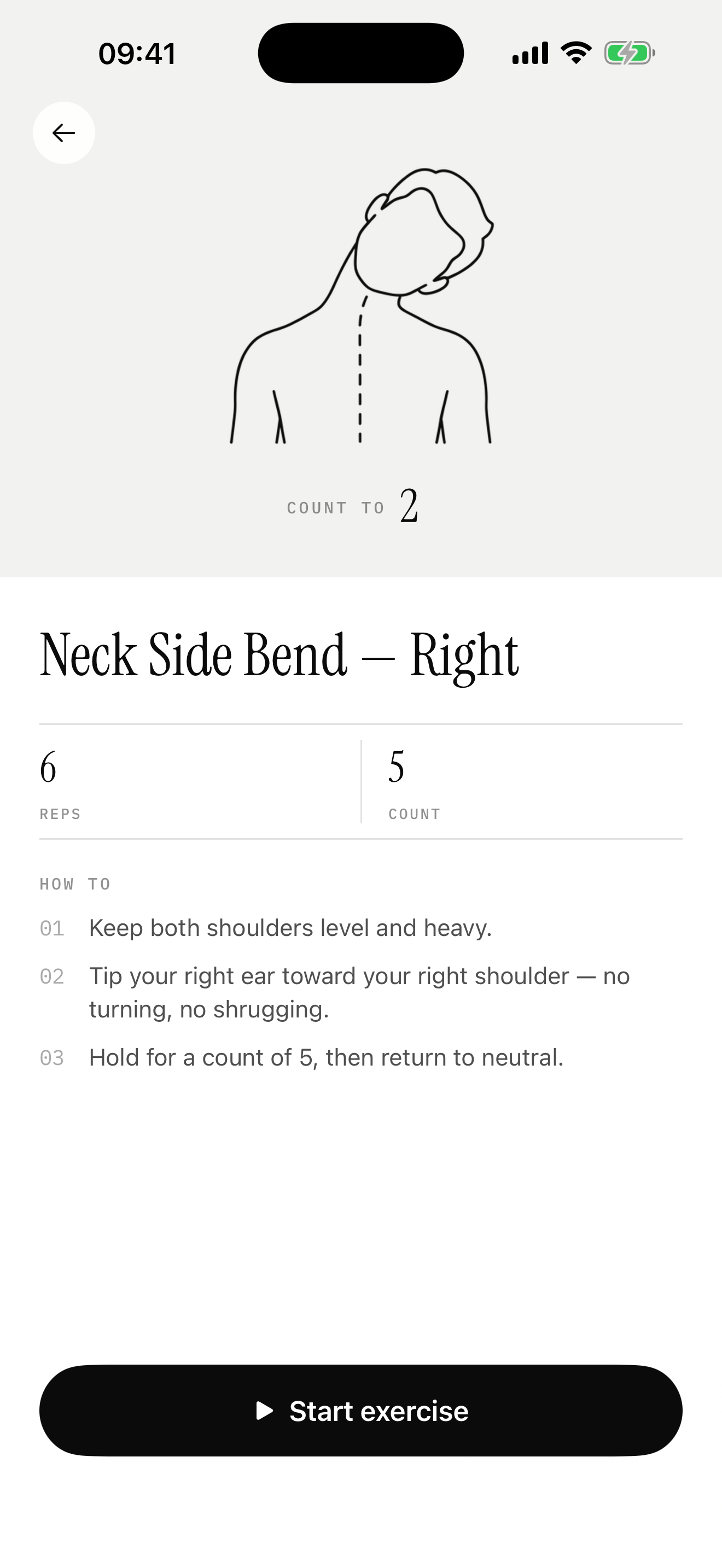
The session guides you through it. An illustrated character performs the movement while a soft tone marks every second of the hold. You can close your eyes and follow the sound — nothing to read, nothing to tap. Every one of the 15 movements is properly illustrated, not described in text.
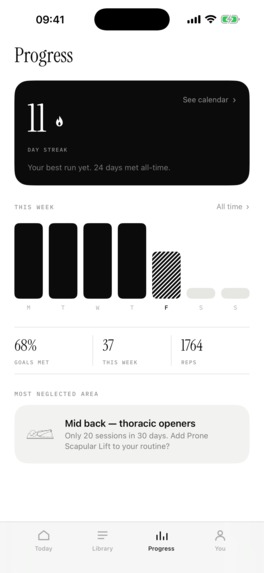
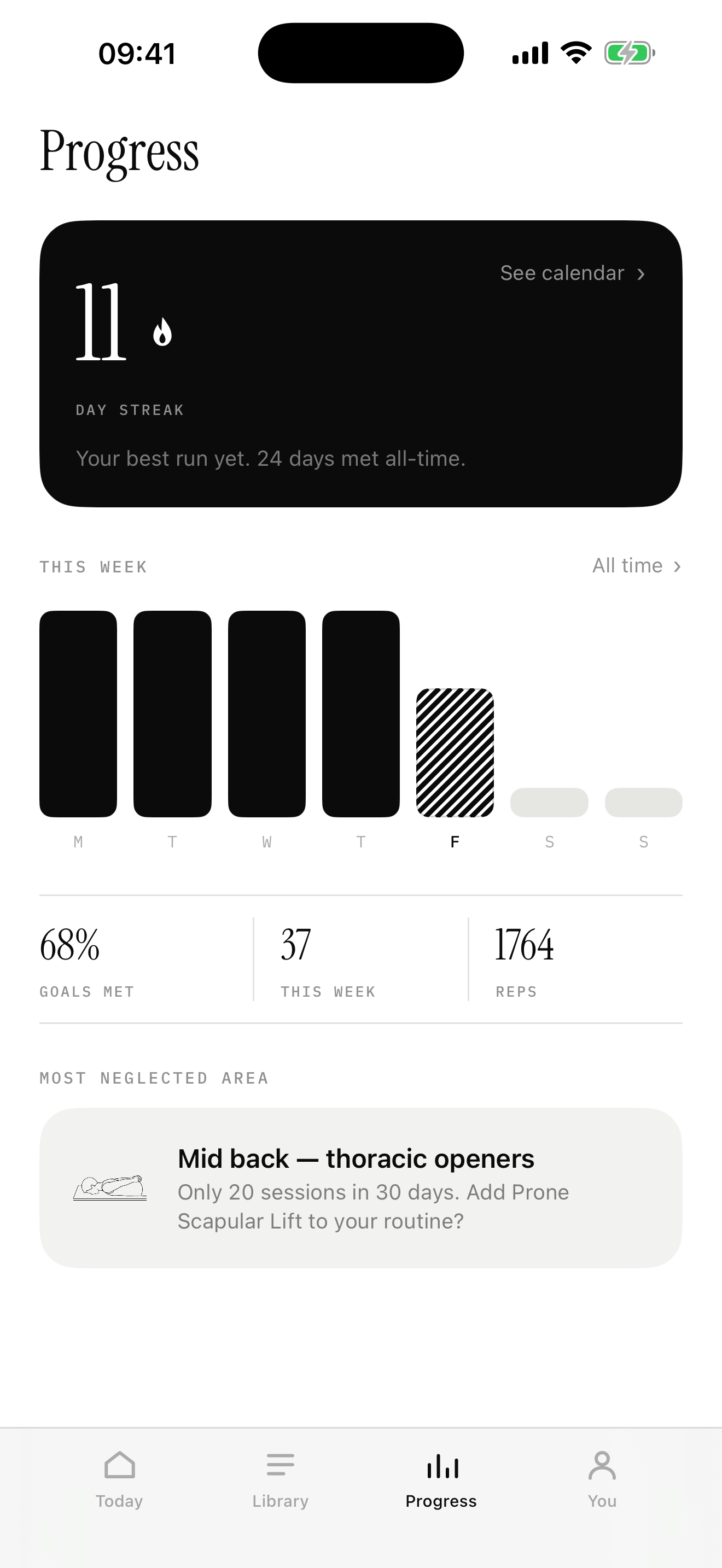
It's honest about your habits. Streaks, your week at a glance, and the body area you've been quietly neglecting with a specific movement to fix it. Ignore a reminder and it comes back once. Do the movement and it doesn't.
Three difficulty levels change how many reps you're asked for, while the hold lengths stay exactly as the movements were written. Rest days don't break your streak. Sessions go to Apple Health. Multiple languages, light and dark mode.
Everything stays on your phone. No account, no sign-up, no server.
How I built it
Native SwiftUI for iOS, built solo. Fully on-device.
The routine is generated from your profile and the date — personalised and different each day, but stable, so it never reshuffles itself while you're looking at it. The reminders are local notifications, scheduled ahead and topped up every time you open the app, so they keep arriving whether or not you've launched it in a while.
The illustrations were the largest part of the work. Every movement is a short animation of the same character, and getting one consistent character across every frame and every exercise took a custom pipeline to generate, align and verify each frame before it went into the app.
Challenges I ran into
Consistency in the artwork. It's easy to draw a person bending their neck. It's hard to draw the same person bending their neck a little further, four times in a row, so it reads as one movement instead of four different people.
Solving it meant giving up on refining each frame in isolation and generating whole sequences at once, so every pose is drawn in relation to the others. Everything after that was measurement — checking each frame lands where it should before it ships.
The other challenge was restraint. A posture app can very easily become a fitness app with 200 exercises, workout plans and a social feed. Fifteen movements you'll actually do beats two hundred you'll scroll past, and every feature had to justify itself against the one thing the app is for.
Accomplishments that I'm proud of
Fifteen movements, each illustrated with the same character, all of them consistent. That's the difference between an app that feels made and one that feels assembled.
And the reminder flow. From the notification arriving to the movement being underway there's one tap and no decisions. That gap is where every other posture app lost me, and closing it is the whole product.
What I learned
Fewer, better. Every time I cut something the app got clearer. The exercise library shrank, the settings screen shrank, and the app got more useful each time.
And that the hard part of a habit app is never the content. It's the twenty seconds between being reminded and starting. Everything worth building is in that gap.
What's next for Fix Posture
Apple Watch. A tap on the wrist is a much better reminder than a banner you can swipe away, and most of these movements need no phone at all.
Adaptive scheduling. Right now the routine comes from your settings. It should learn — if you always do the 10:00 reminder and always ignore the 15:00 one, it should notice and move.
Live Activities and widgets. Your next movement on the lock screen with a start button, so there's nothing at all between remembering and doing.
More of the body. Lower back and hips, for the same people sitting in the same chairs.


Log in or sign up for Devpost to join the conversation.