-
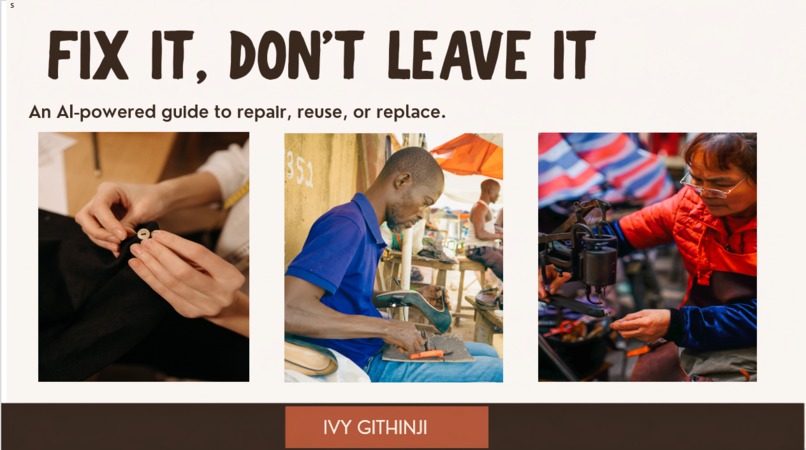
COVER PAGE
-
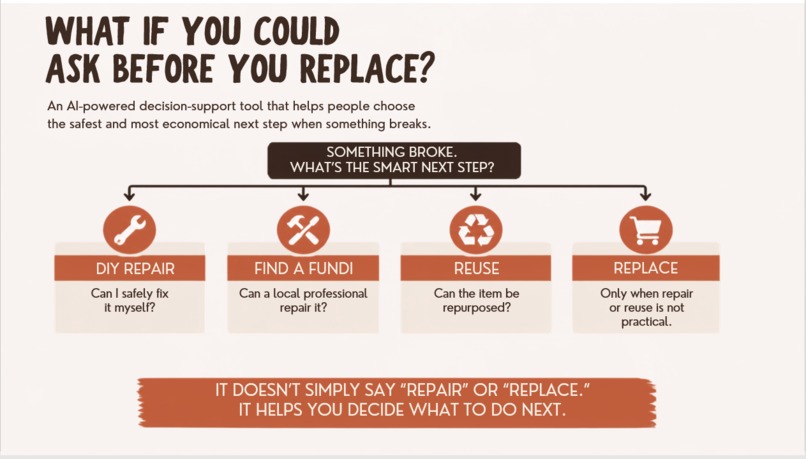
FIX OR REPLACE
-
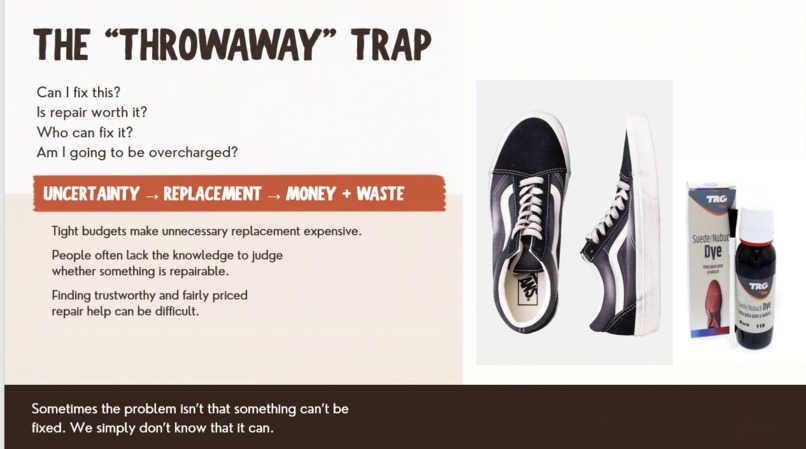
DON'T THROW IT
-
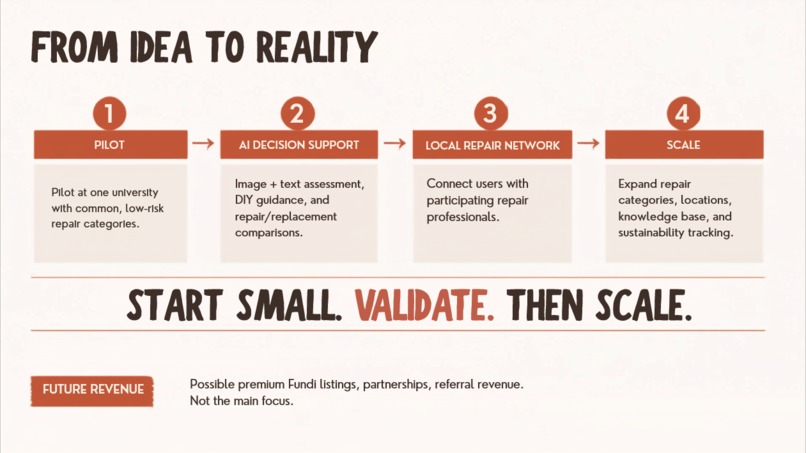
THE BIG IDEA
-
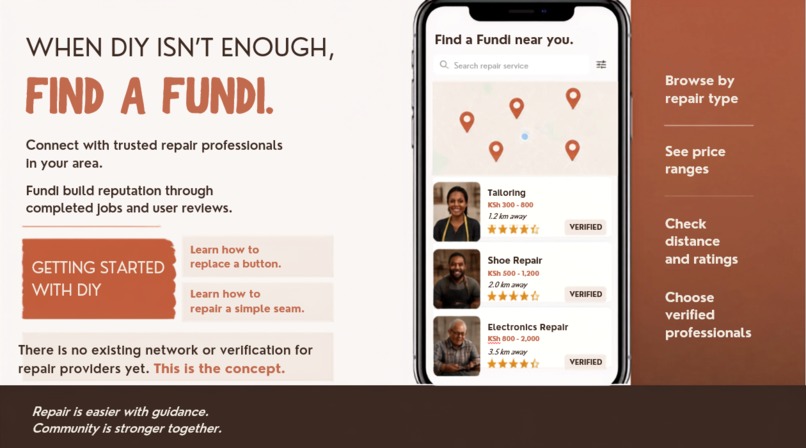
FUNDI TO FIX IT
-
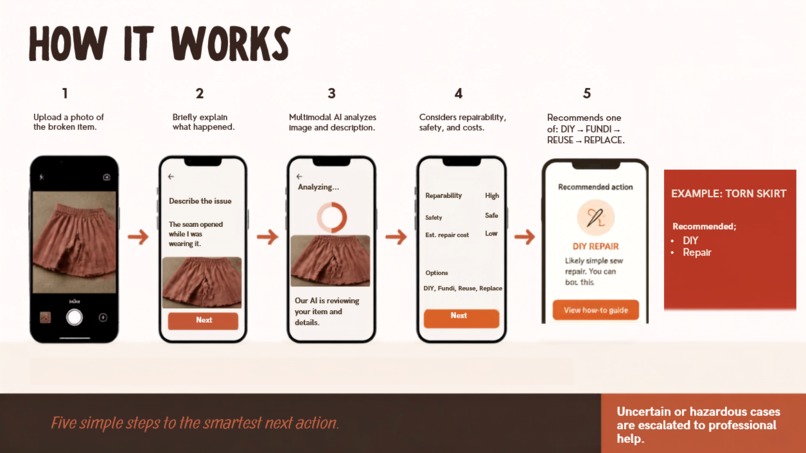
AI INCORPRATION
-
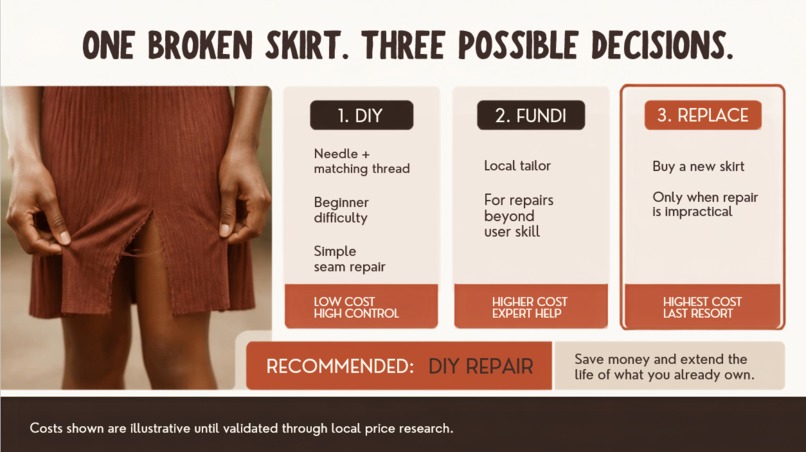
AI SUGGESTIONS
-
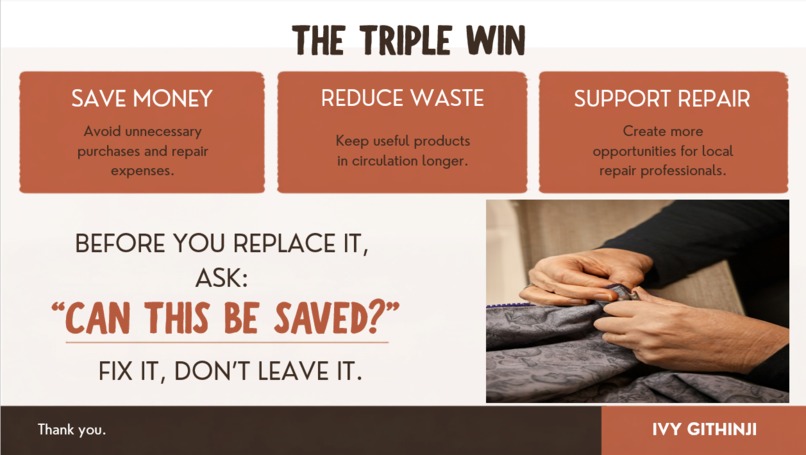
CONCLUSION
-
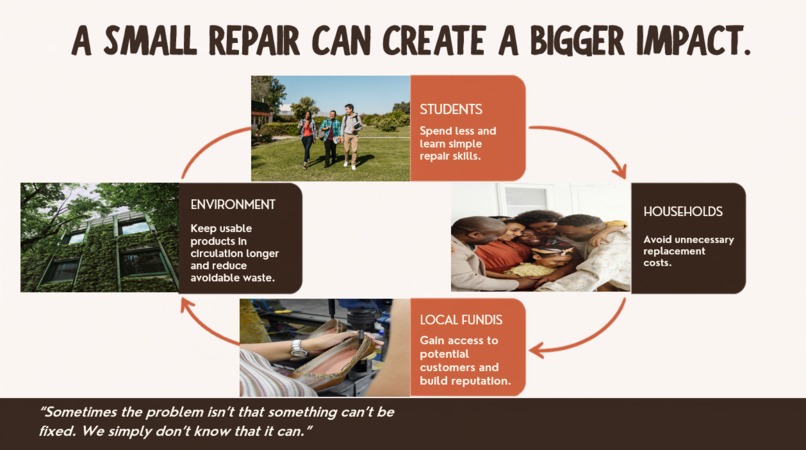
IMPACT
-
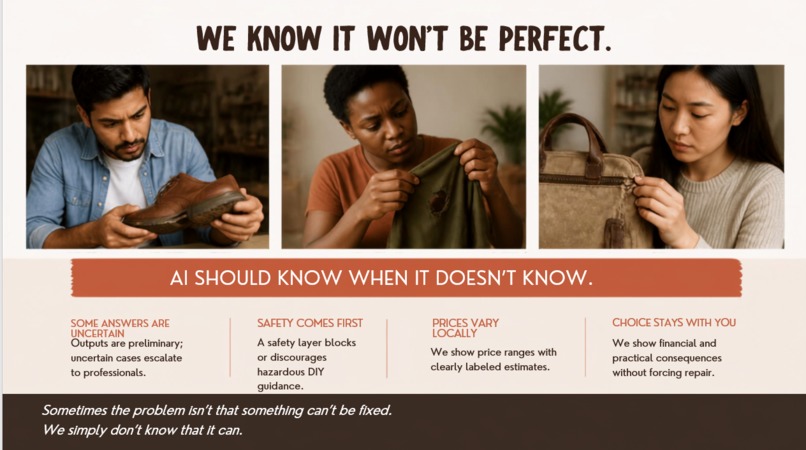
CHALLENGES
Inspiration
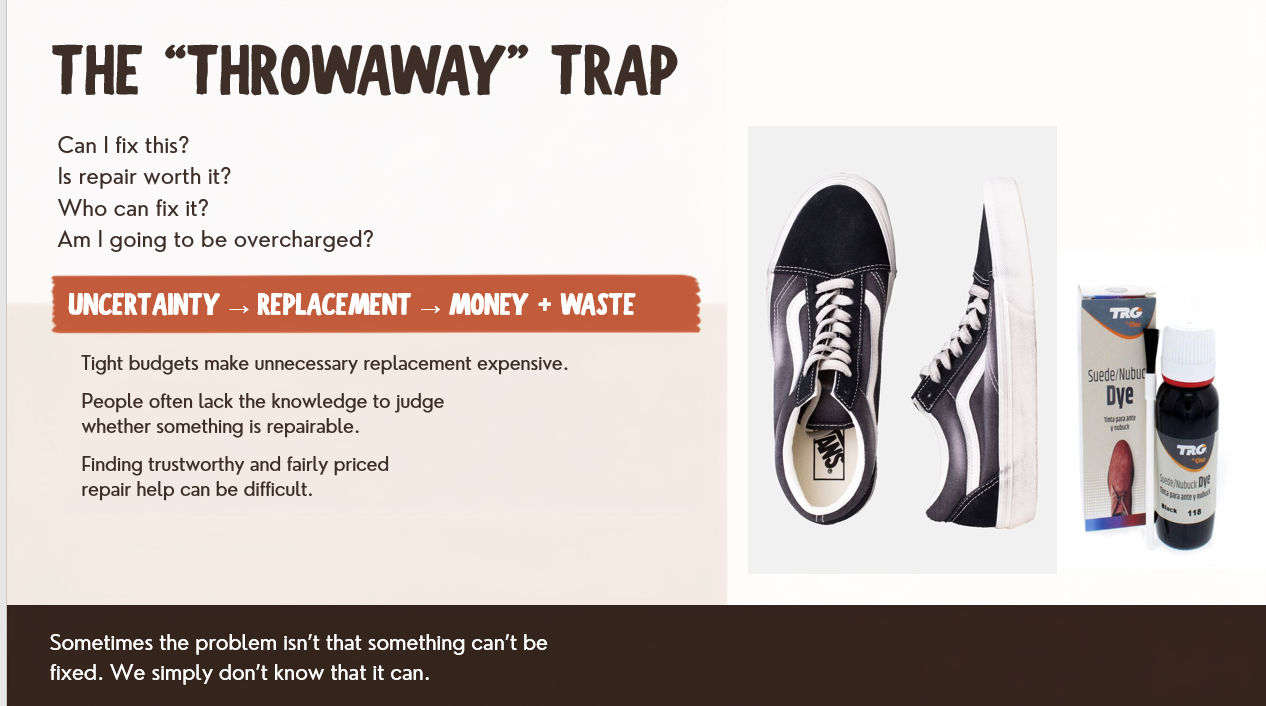
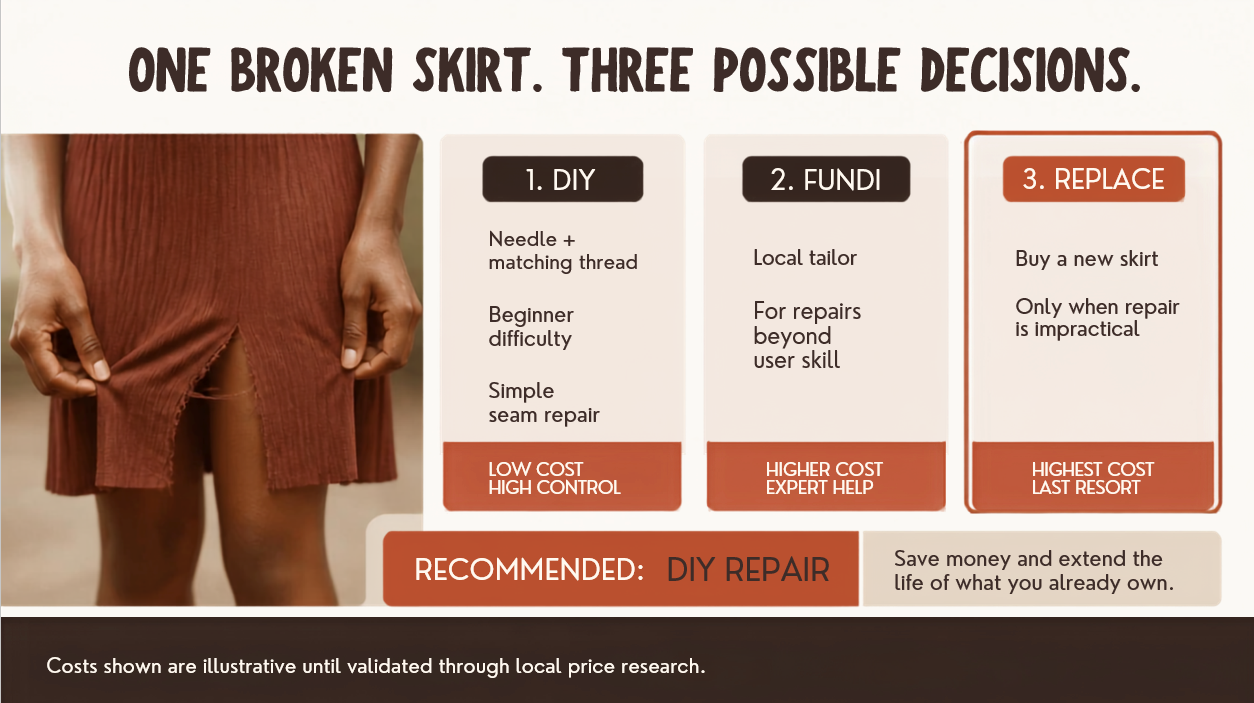
As a university student, I have seen a number of my friends dispose of repairable items a kettle with a faulty fuse, a skirt with a broken seam, and shoes with a slipping sole. These items were never impossible to fix they could never be repaired because they just don't know that, cannot find a reasonable price, and cannot identify anyone trustworthy whom one can trust. Hence purchase brand-new articles so the consumer lifestyle becomes more common and this provided the generation of the concept.
What it does
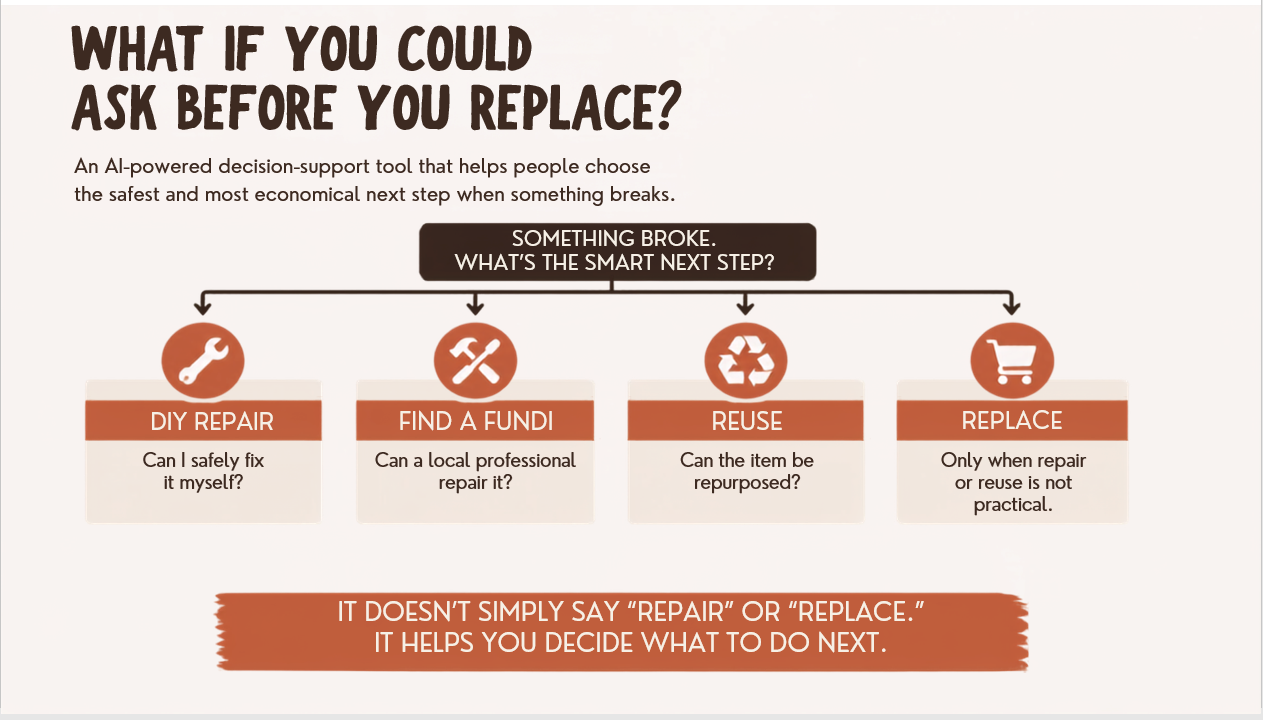
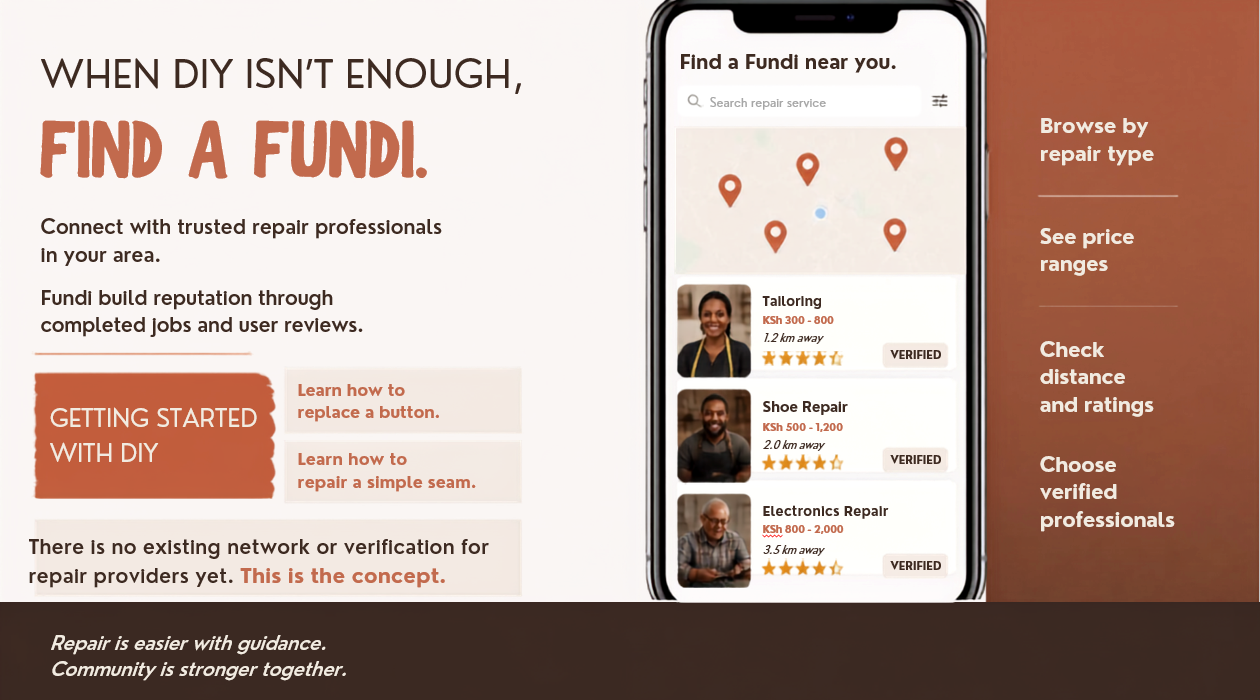
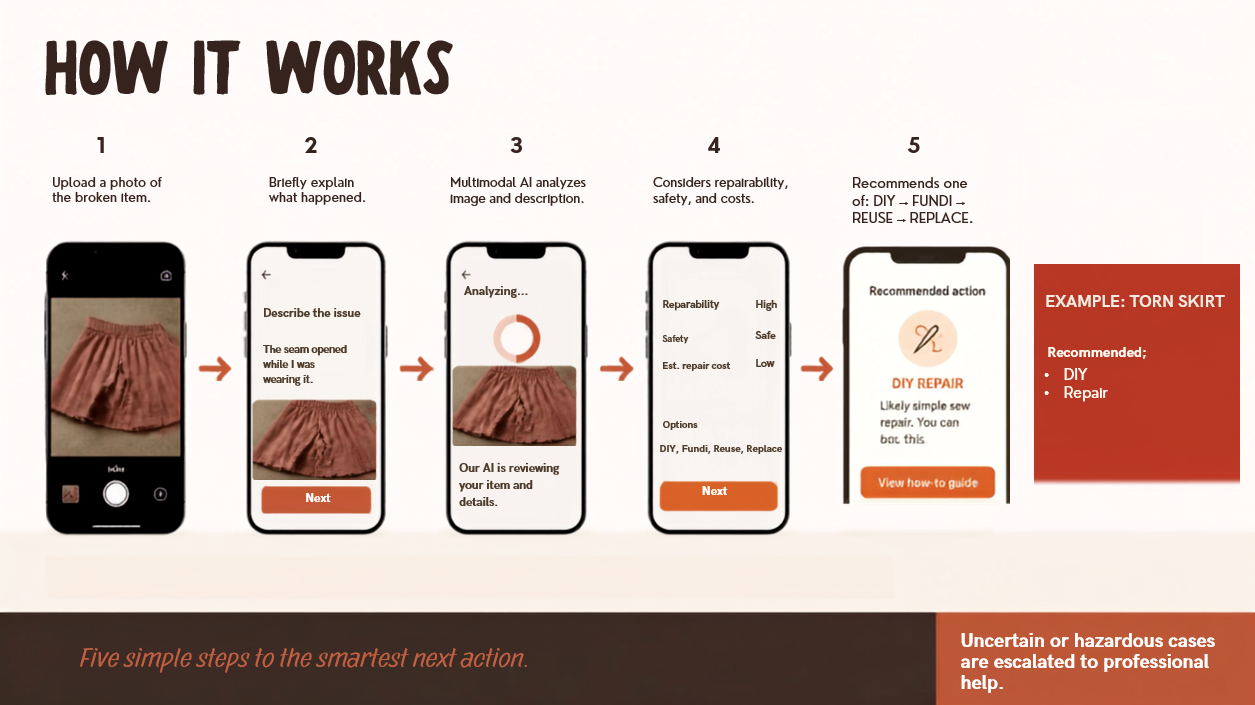
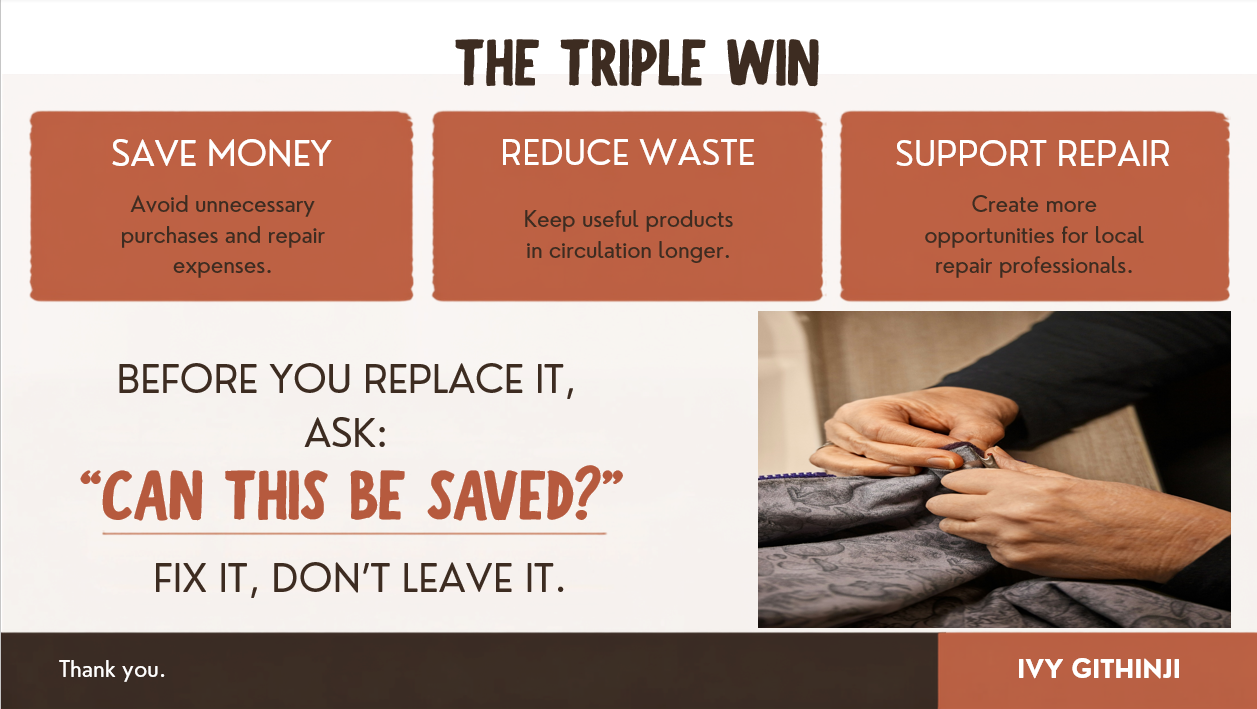
"Fix It, Don't Leave It" is an AI driven decision support tool. After taking and uploading a picture of a broken item, the user would describe the situation that led to the breaking. Following the provision of an initial verdict by the AI, the user would be directed to one of four alternative options: DIY repair: find a fundi (local repair person), reuse, or replace. It compares repair vs replacement cost and the use of the tool offers an interface with local repair people it has verified.
How I built it
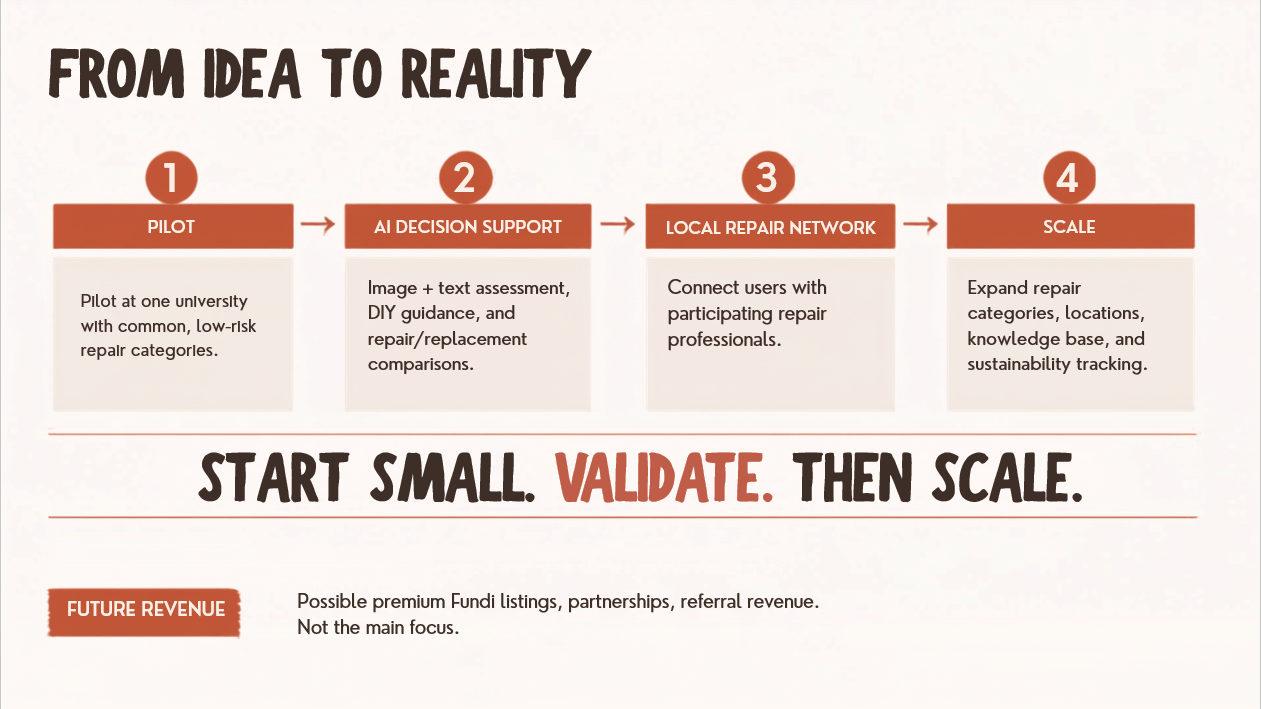
This is a concept as part of an ideathon, so there is no working application of the product yet. I produced a comprehensive product proposal that included an analysis of the problem, a proposed AI system (analysis of images and text: multimodality), a 4 phase product feasibility plan, a clickable prototype and a presentation pitch deck.
Challenges I ran in to
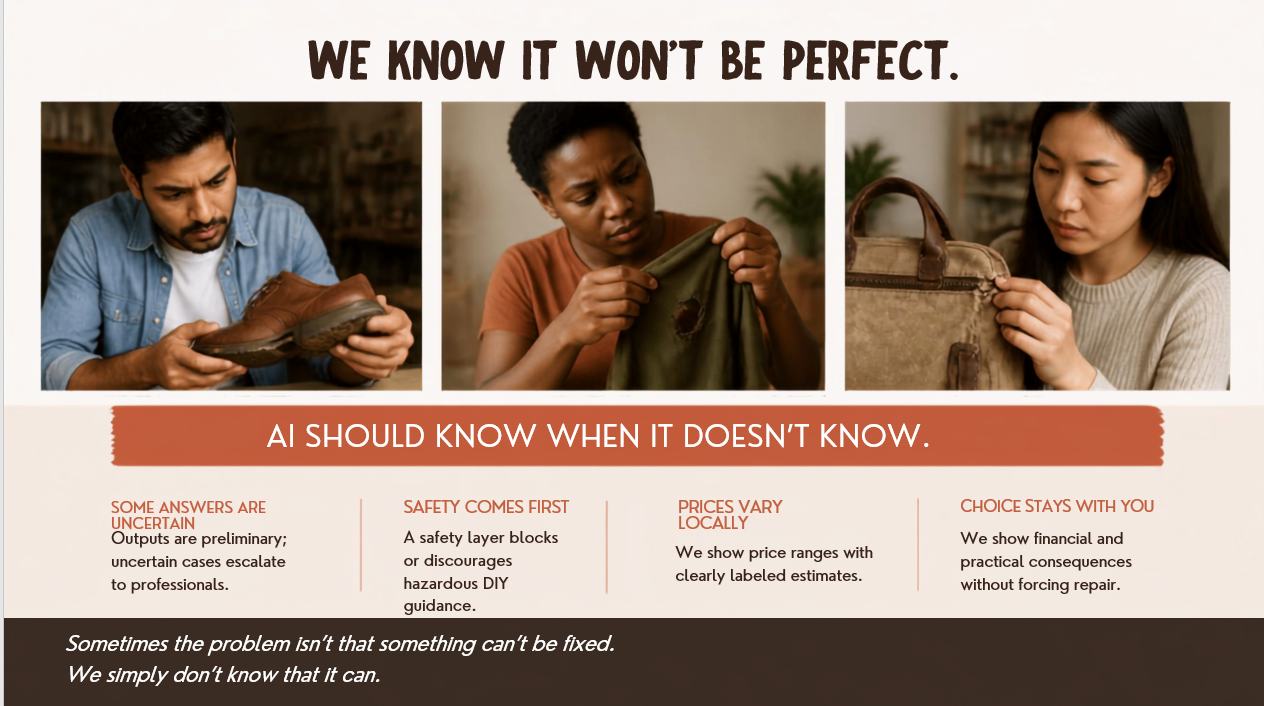
The main one being AI honest, as the AI can't reliably diagnose an actual object from a photograph so as to provide a pre-diagnose and not actual diagnose, coupled with this was adding a safety feature where if the object is not likely to be repaired, it is sent to professional repair. Also local price range varies I suggested to give ranges of prices instead of estimated figures.
Accomplishments I'm proud of
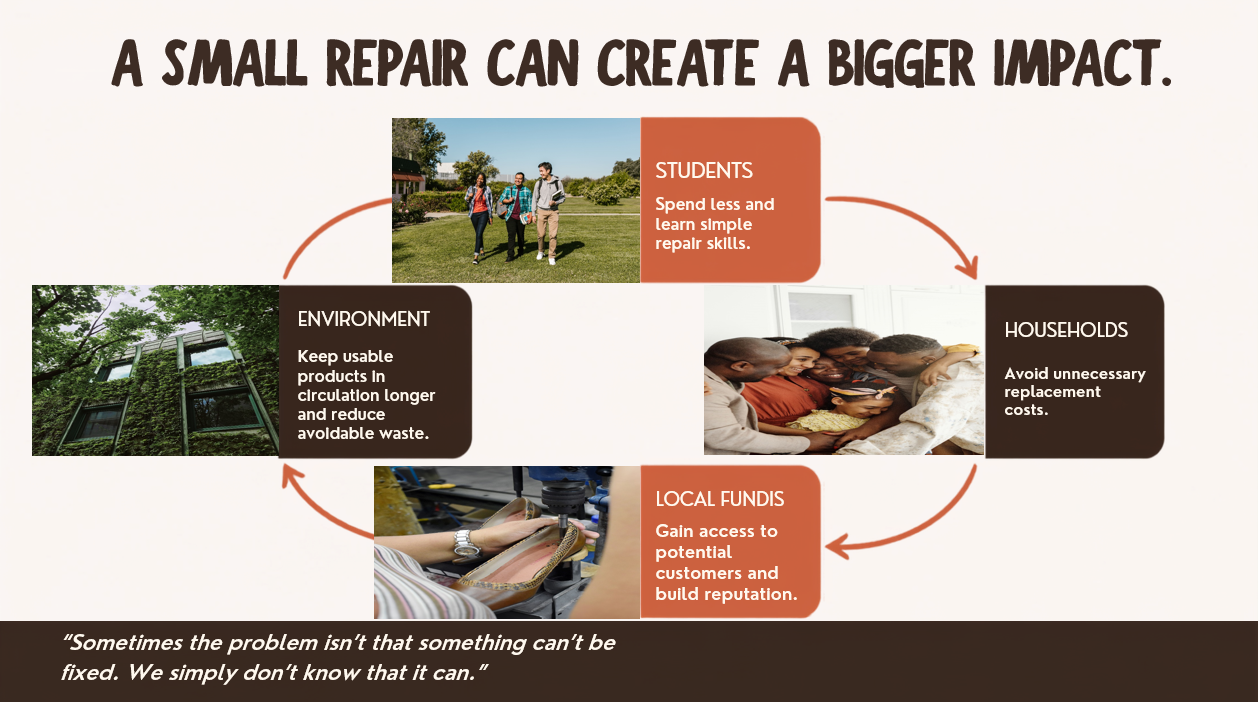
-Developing an answer to both money issues and an environment polluted by disposal of goods. -Developing a plan for an inclusive ecosystem that provides support to local repairmen. -Building an AI that prioritizes safety above other factors and understands its limitations. -Presenting the entire pitch deck and project proposal individually.
What I learned
The need to start by addressing the actual human problems instead of jumping to technological solutions. An honest and upfront understanding of the AI limitation does not weaken but strengthens the product as it allows for reliability and safety.
What's next A small scale pilot test will initially take place at a university (by involving the maintenance of clothes or a couple of basic repair items of small scale risks to minimize failure probability). Student feedback will be gathered to carry out validations thereafter. Building the core features (MVP) will incorporate API's available and further on "Fundi network" will be tried and tested with local technicians. Long-term plan prioritizing repair for every individual.


Log in or sign up for Devpost to join the conversation.