-
-
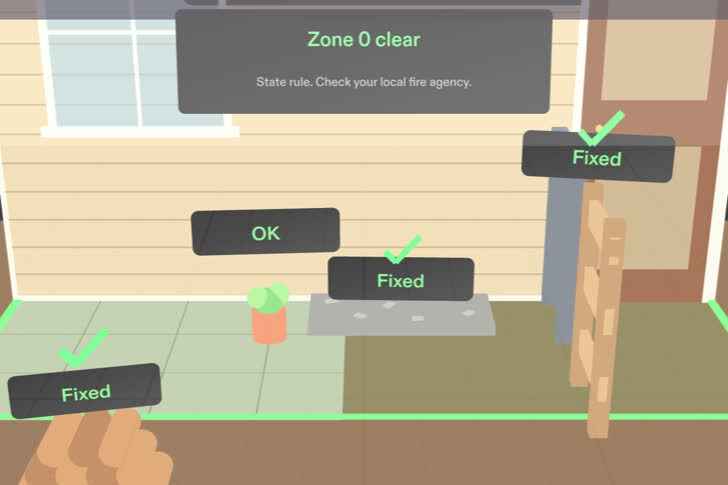
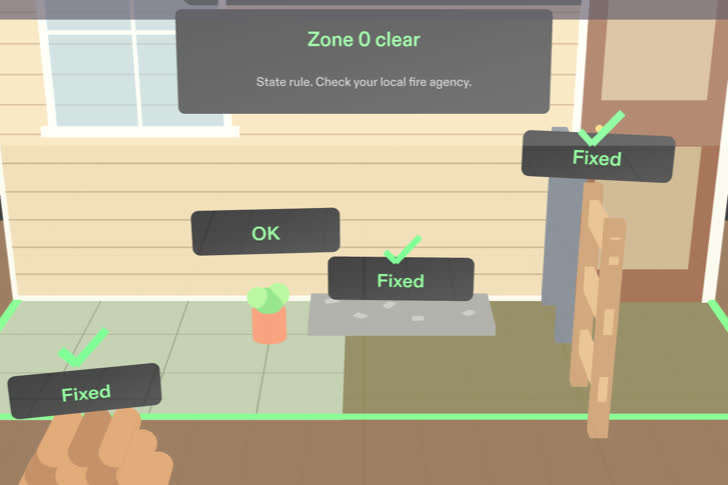
All 3 fixed. The 5 ft line turns green and the Zone 0 clear card shows.
-
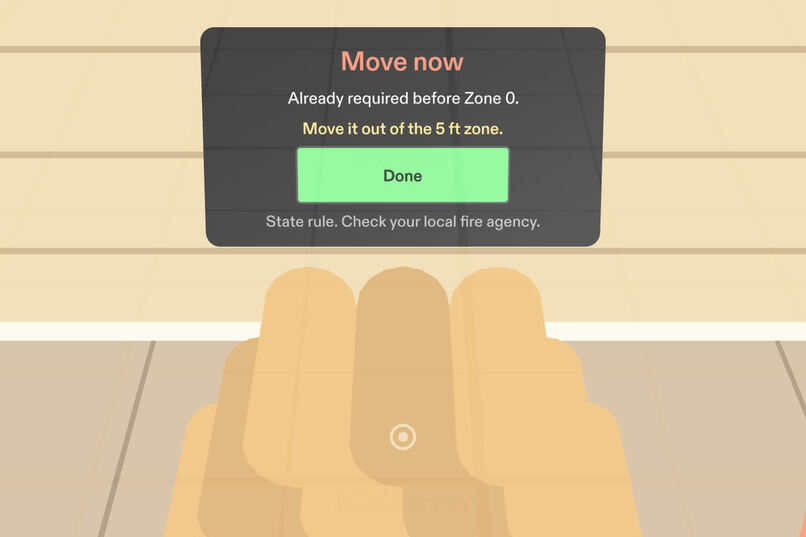
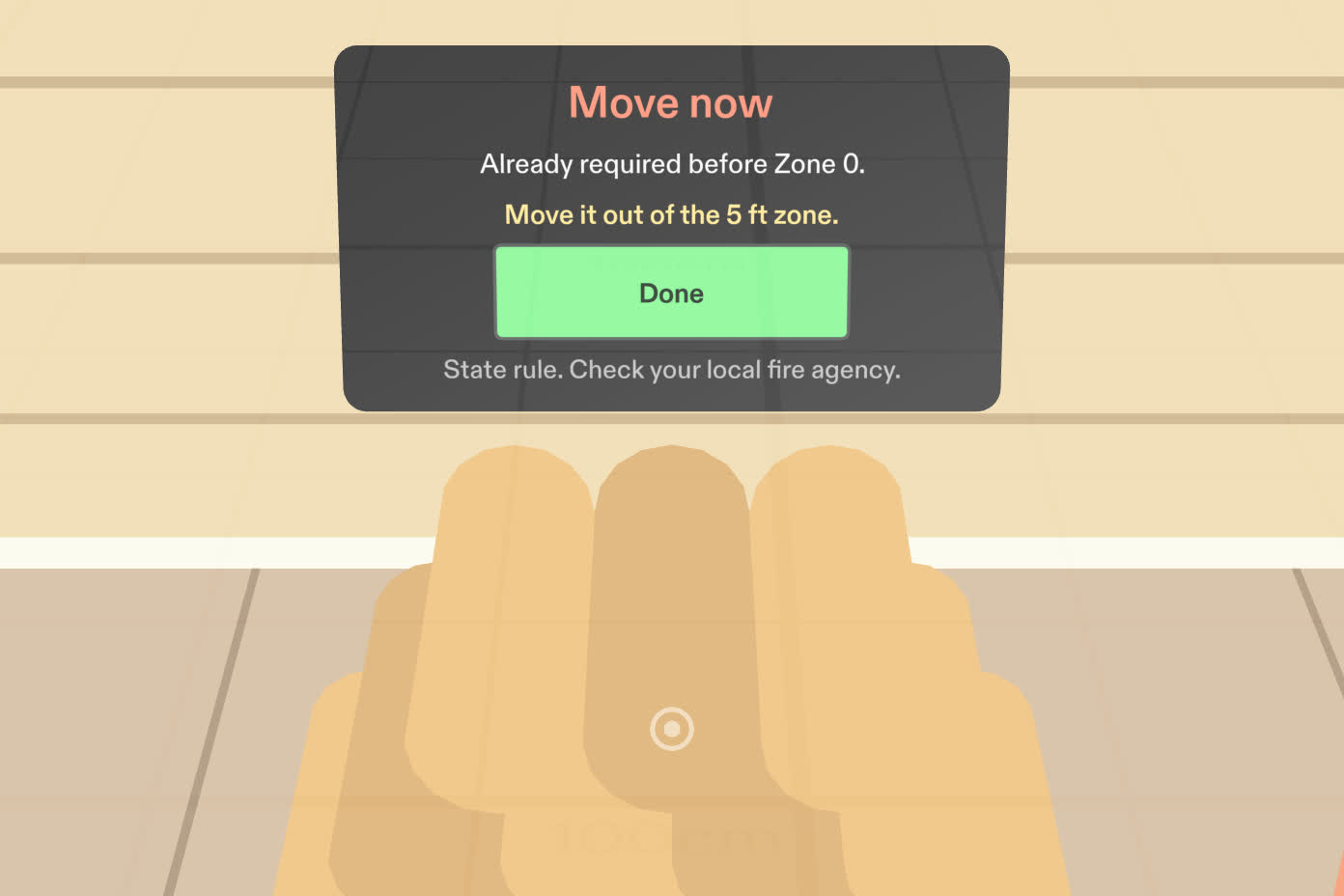
Pinch the firewood. The card says what the rule says and what to do, with one Done button.
Inspiration
Embers cause up to 90% of home ignitions in a wildfire (IBHS). The National Fire Protection Association (NFPA) calls the first 5 ft around a home the immediate zone, and says it is "the most vulnerable to embers." That guidance is for any home in wildfire country. On Aug 19, 2026 California's Board of Forestry made it a rule, called Zone 0. Most people can't judge 5 ft by eye, and the rule is long and hard to read. I live in San Diego, where this matters every fall, some of my very own friends were put at risk due to the dangerous wildfires that happened earlier this year, thats the main reason I wanted to do this project.
Who it's for
Anyone with a home in wildfire country who wants to know what to move first. The 5 ft line follows NFPA's national guidance, so it fits any home. The cards quote California's rule, since California has made it law. Another state's rule text could replace them.
What it does
Embers drift down onto the yard first. The ones that land within 5 ft of the house hit the firewood, the mulch and the fence and make them glow, which shows why the rule exists without any words. Then a line draws itself on the ground 5 ft out from the wall. That's Zone 0.
From far away each item just shows a small status badge. Walk closer and pinch it, and a card tells you what the state rule says and what to do about it.
- Firewood: Move now. Move it out of the 5 ft zone.
- Wood mulch: Phase-in. Existing homes get 3 to 5 years. Swap it for gravel, pavers or bare soil.
- A wood fence touching the house: Needs 5 ft gap. Make the part touching the house metal or masonry.
- A small potted plant: OK. Nothing to do.
Pinch Done and you see the fix. The firewood slides out past the line, the mulch turns to gravel and the end of the fence turns to metal. A counter on the wall goes from 0 of 3 to 3 of 3, then the line turns from orange to green and a card says "Zone 0 clear". Cards on the firewood, mulch and plant also name flood, tornado and earthquake risks. The Lens reads each card out loud, and for blind users it says each item, its distance and side as you walk up. Every card is also shown as text, so it works without sound for deaf users.
The cards stay the same size to your eye at any distance, and they always open in view above the item. Every card says "State rule. Check your local fire agency." Local agencies can be stricter, and the rule is not in effect yet.
Why glasses
The line is drawn where the rule actually applies, on the ground. Your hands stay free to move the wood or rake the mulch while the line stays in view. On a phone you'd be holding the screen instead of doing the work.
How I built it
- Planned it with the Learn AR skill pack. The design brief is in
devpost/design-brief.md. - Built it with CLAD in Lens Studio 5.23.2 for SPECS, using Spectacles Interaction Kit and UI Kit.
- Wrote 13 LEAF tests, one per done criterion. All 13 pass in the preview. One test measures the line at 152.00 cm from the wall at the left, center and right, and 5 ft is 152.4 cm.
- Built it in two rounds. Version 1 drew the line and showed the verdict. I judged it against what the judges said they like and added the ember opener, the fix flow, distance badges and voice in version 2, with 7 new done criteria written before the build.
Challenges
The preview can't recognize real objects, so the four items are labeled stand-ins and a pinch stands in for recognizing them. A preview tool also installed three packages on its own partway through, and one of them broke the compile. I archived them and rebuilt clean. The first layout put the 5 ft line under the user's feet, so I moved the start point back to 2.5 m from the wall so the line sits in view.
The tests passing didn't mean it worked. In version 2 all 13 LEAF tests passed, but when I clicked through it like a user, Done did nothing and the cards opened off the top of the view. The tests pressed the button through code, which skipped the bug. Mouse input in the preview was locking onto the item behind the button, so now the Lens works out each tap itself. I also changed one done criterion after that, from "the card scales with distance" to "the whole card stays in view at the same apparent size", and noted the change in the brief.
What I learned
Write the done criteria before building, and still click through it yourself. The LEAF tests caught logic bugs, and clicking through caught the ones a user would hit.
What's next
Recognize real firewood, mulch and fences with the camera instead of stand-ins. Add the roof and gutter checks, which need looking up. Link each card to the exact rule text once the final rule is published.
AI use
I chose the project, defined its scope, designed the architecture, selected the tech stack, and handled debugging and technical decisions. AI assistance was limited to writing implementation code from my instructions.
Sources
- NFPA, Preparing homes for wildfire: https://www.nfpa.org/education-and-research/wildfire/preparing-homes-for-wildfire
- IBHS, via Insurance Journal, Jul 15, 2020: https://insurancejournal.com/news/west/2020/07/15/575345.htm
- Times of San Diego, Aug 19, 2026: https://timesofsandiego.com/california-fires/2026/08/19/wildfire-requirements-zone-0/
- BB&K legal alert, Sep 9, 2026: https://bbklaw.com/resources/la090926-california-board-of-forestry-adopts-emergency-zone-0-regulations-under-ab-3074
Built With
- clad
- leaf
- lens-studio
- specs
- spectacles-interaction-kit
- typescript
- ui-kit
