-
-
Home Page
-
App
Inspiration
Fitz was inspired by a simple but frustrating problem with online fashion shopping: it is still very difficult to know how clothing will actually look on you before purchasing it. Most platforms only show garments on standard models, which makes it hard for users to judge style, fit, and overall appearance in a personal way.
We wanted to build a platform that makes online fashion more interactive and individualized. Our goal was to let users create a model of themselves, experiment with outfits, and explore clothing with more confidence before deciding what they want to save or buy.
What it does
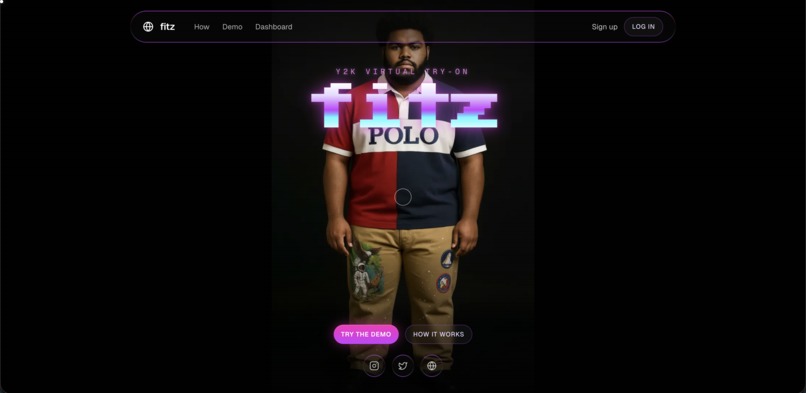
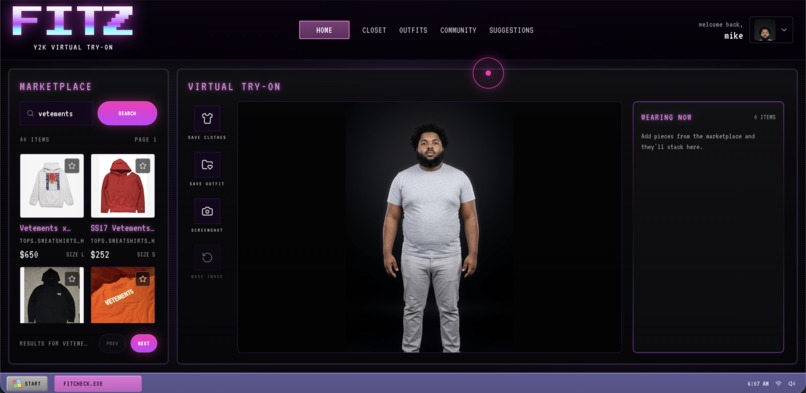
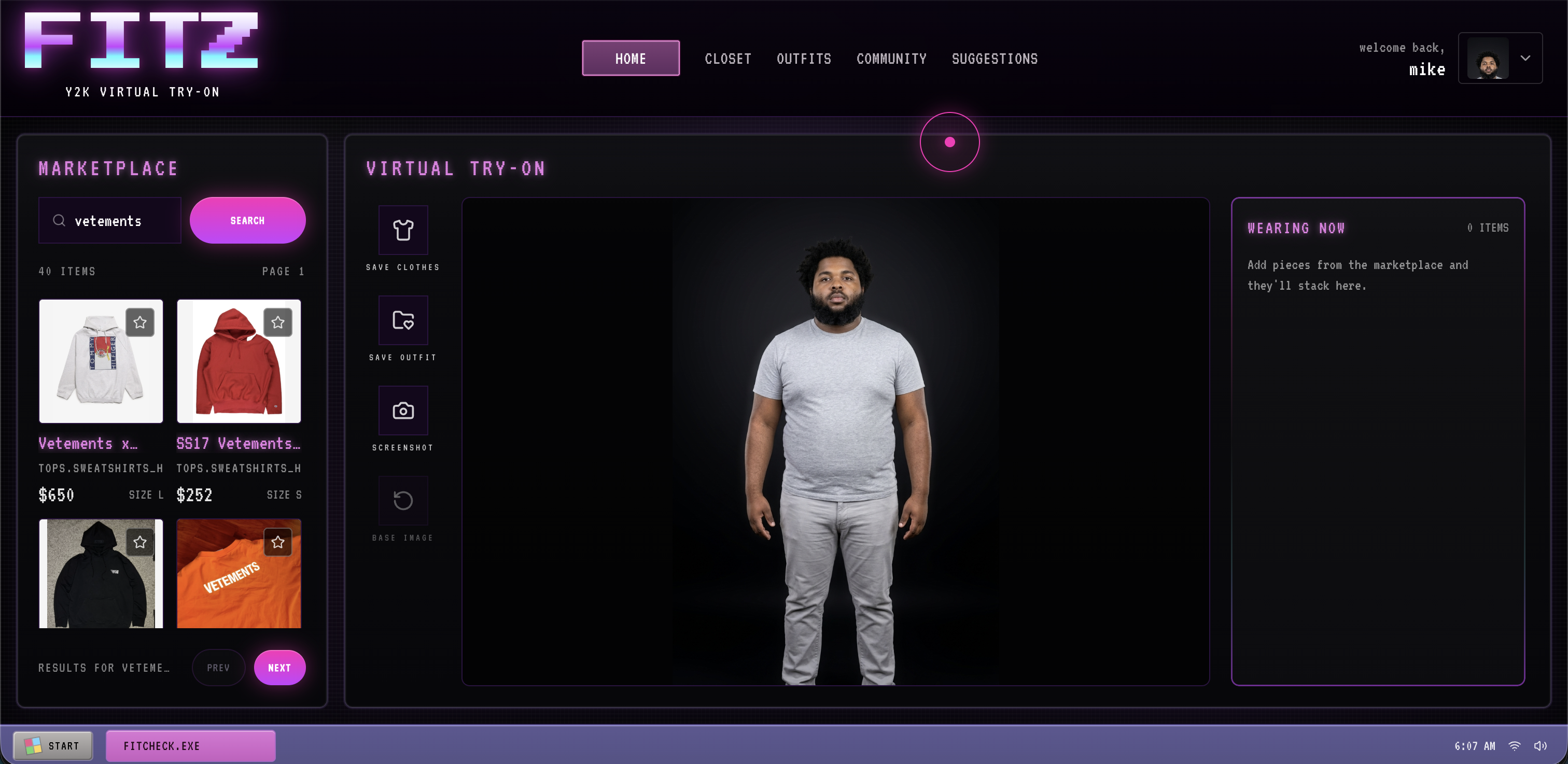
Fitz is an AI-powered virtual try-on platform that allows users to browse clothing, save items to a closet, combine pieces into outfits, and render an outfit preview on a personalized model.
The platform also allows users to save full outfits, revisit previous looks, explore outfits created by other users in the community, and receive suggestions based on the items they have viewed, saved, worn, or checked out.
In short, Fitz combines virtual try-on, outfit organization, social discovery, and personalized recommendations into one experience.
How we built it
We built Fitz as a full-stack web application using Next.js, React, and TypeScript on the frontend, with FastAPI and Python services on the backend.
For authentication, persistent user data, closets, and saved outfits, we used Supabase. This allowed us to support real user accounts and store personalized data across sessions.
We also integrated marketplace listing data and extended the browsing flow to support multiple photos per item, which made the current-item experience much richer. On top of that, we developed an AI rendering pipeline that lets users select clothing pieces, add them to an outfit, and generate a rendered preview on their own model.
Finally, we deployed the project to a VPS and configured the live frontend and backend stack so the application could run in production outside of local development.
Challenges we ran into
One of the biggest challenges was managing how many moving parts the project had. Fitz is not just a rendering demo. It combines marketplace browsing, outfit building, rendering, saved state, recommendations, community features, and deployment.
A major technical challenge was keeping all of those systems synchronized. We had to make sure that selected items, worn items, saved outfits, rendered previews, and restored outfits all behaved consistently across the interface.
Another challenge was handling marketplace item detail, especially when parsing listing data and supporting multiple item photos. We also spent a significant amount of time improving prompt behavior and render flow so the AI output would more reliably reflect the selected garments.
Deployment introduced its own challenges as well. We had to resolve environment issues, container setup problems, and configuration drift between local and production environments in order to get the live version working correctly.
Accomplishments that we're proud of
We are most proud that Fitz became a complete product experience rather than a single isolated feature.
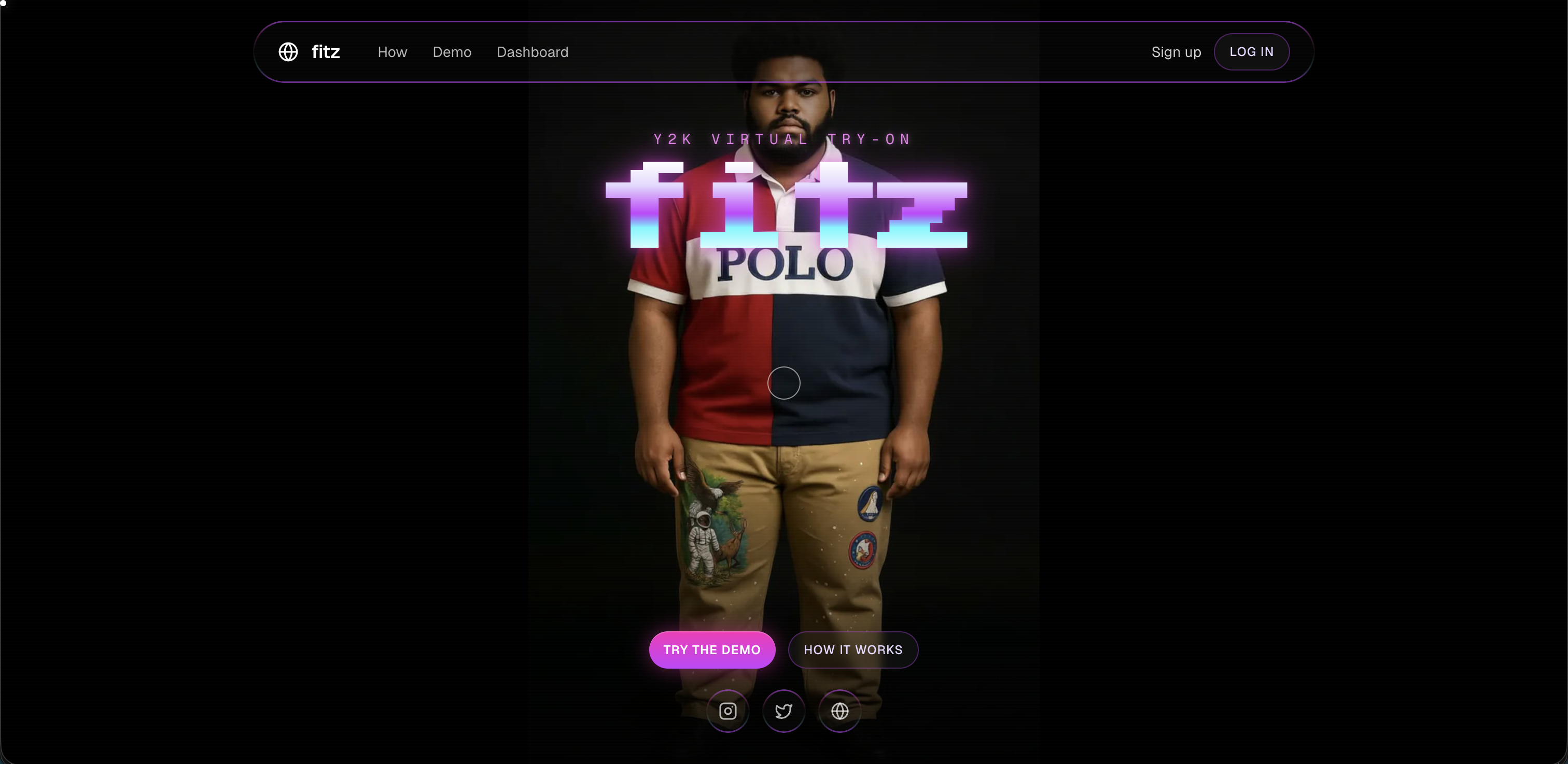
The platform supports personalized onboarding, closet management, outfit rendering, saved outfits, community discovery, and recommendation behavior in one connected workflow. We are also proud of the distinct visual identity of the application, which gave the product a memorable interface instead of a generic dashboard design.
From a technical standpoint, we are proud that we were able to connect AI rendering, marketplace browsing, backend services, persistent storage, and live deployment into a functioning end-to-end system.
What we learned
This project taught us a great deal about building and shipping a full-stack product under time constraints.
We learned how important state management becomes in interactive applications, especially when multiple features depend on the same underlying data. We also learned that AI features are only as strong as the product experience built around them. Rendering alone is not enough; the surrounding flow, usability, and reliability matter just as much.
In addition, we gained experience with deployment, backend integration, persistent storage design, and debugging production issues in a live environment.
What's next for Fitz
The next step for Fitz is to continue improving personalization and realism.
We want to make outfit suggestions smarter, expand ecommerce and transaction-based recommendation features, improve rendering quality and consistency, and continue building out the community experience. We also see strong potential in making the platform more production-ready through stronger scaling, better infrastructure, and more refined onboarding and recommendation systems.
Our long-term vision is to make online fashion more personalized, interactive, and trustworthy by helping users see style on themselves before making a purchase.


Log in or sign up for Devpost to join the conversation.