-
-
cover
-
vto-result-comparison
Inspiration
Online fashion shopping usually breaks at the gap between “this looks good in a try-on image” and “this actually works for my body.” Virtual try-on is powerful, but shoppers still need help understanding body proportion, garment shape, fabric behavior, shoe balance, and whether a look is worth trusting before checkout.
FitStyle Map was built from that retail problem. Returns are not only caused by wrong size charts. They also happen when the garment silhouette, material, and styling proportion do not match the shopper’s body-fit profile.
What it does
FitStyle Map is a pre-VTO fit intelligence layer for YouCam Apparel VTO.
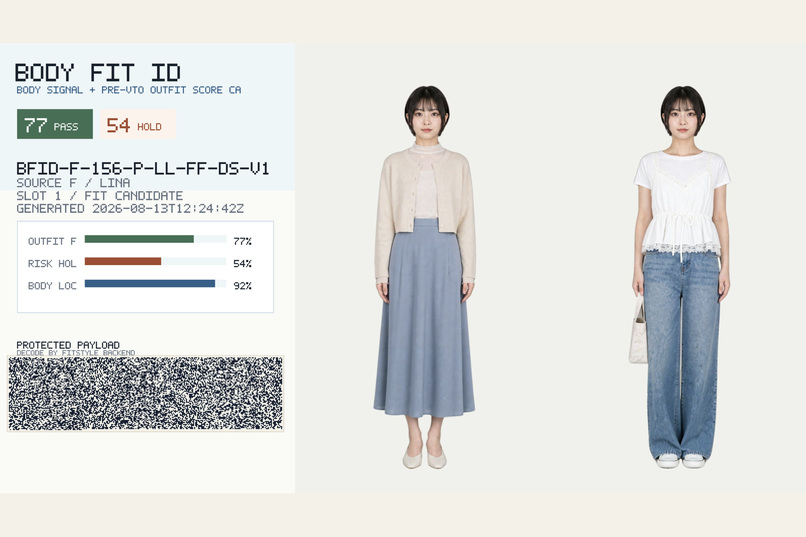
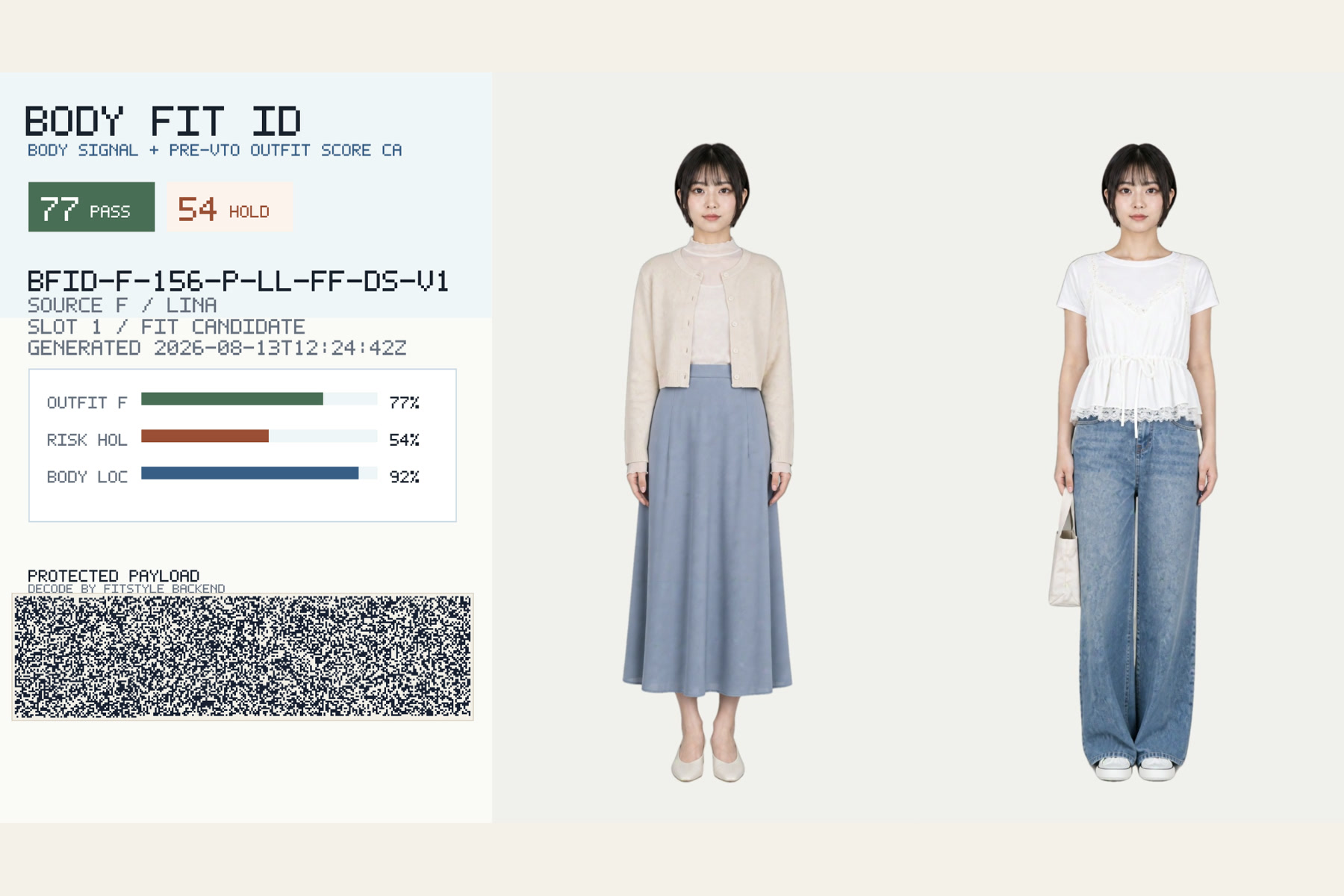
The product uses a locked Body Fit ID, visual calibration lines, outfit metadata, garment type, material behavior, shoes, accessories, and positive / risk outfit examples to decide which looks should be sent to YouCam Apparel VTO for visual generation.
Instead of treating VTO as the first step, FitStyle Map adds a decision layer before and after VTO:
- Lock a body-fit reference profile.
- Compare outfit candidates against fit and styling signals.
- Separate recommended looks from risk cases.
- Send selected cases to YouCam Apparel VTO.
- Review the returned try-on result as part of a side-by-side decision flow.
The goal is to help shoppers answer a better question: not only “How do I look?” but “Is this outfit likely to work for my body, my movement, and my shopping expectations?”
How we built it
We built the MVP with Next.js, TypeScript, React, Tailwind CSS, structured fit data, and YouCam Apparel VTO.
The system includes:
- A locked Body Fit ID profile for repeatable evaluation
- A visual calibration interface using body proportion guide lines
- A fit-confidence decision engine for recommended and risk outfits
- Outfit metadata covering garment type, material, shoes, and accessories
- A YouCam Apparel VTO dispatch flow for approved test cases
- A dispatch counter and confirmation step to make API usage cost-aware
- A protected staging demo for judges and organizers
YouCam Apparel VTO provides the visual try-on generation layer. FitStyle Map adds the retail decision layer around it: when to generate, what to compare, and how to explain the result.
Challenges
The hardest challenge was separating visual try-on quality from fit decision quality.
A generated try-on image can look clean, but a shopper may still care about shoulder width, sleeve length, waist position, hip room, calf shape, fabric stiffness, shoe balance, or whether the outfit visually shortens the body. We built FitStyle Map to complement VTO with structured reasoning instead of replacing it.
Another challenge was keeping the experience respectful. The product avoids body-shaming language and explains risk through practical terms such as mobility, garment allowance, visual balance, silhouette, and material behavior.
What we learned
We learned that a stronger fashion VTO experience needs two layers:
- Visual confidence from YouCam Apparel VTO
- Purchase confidence from body-fit and outfit intelligence
This turns VTO from a single image-generation moment into a more complete consumer and retail decision workflow.
What’s next
Next, we plan to connect real product catalogs, support more body profiles, expand the outfit matrix, add color and skin-tone harmony analysis, and help retailers decide which products should be recommended, generated, compared, or held back for different shoppers.
Built With
- ai
- api
- apparel
- body
- css
- database
- e-commerce
- fashion
- fit
- garment
- intelligence
- measurement
- next.js
- react
- recommendation
- retail
- style
- tailwind
- tech
- try-on
- typescript
- virtual
- vto
- youcam

Log in or sign up for Devpost to join the conversation.