-
-
-
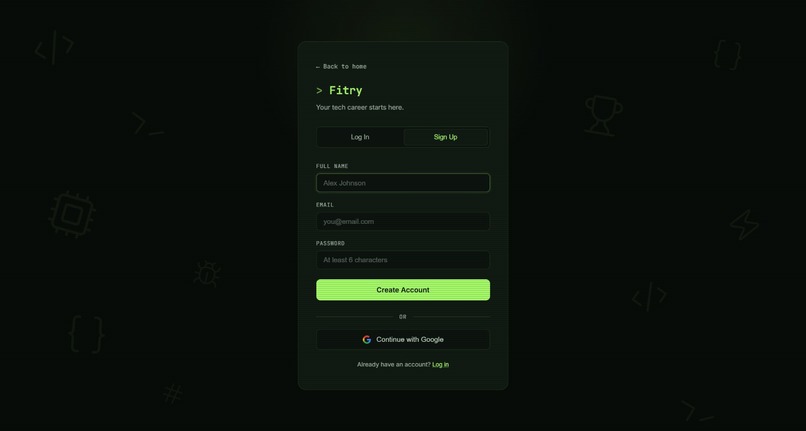
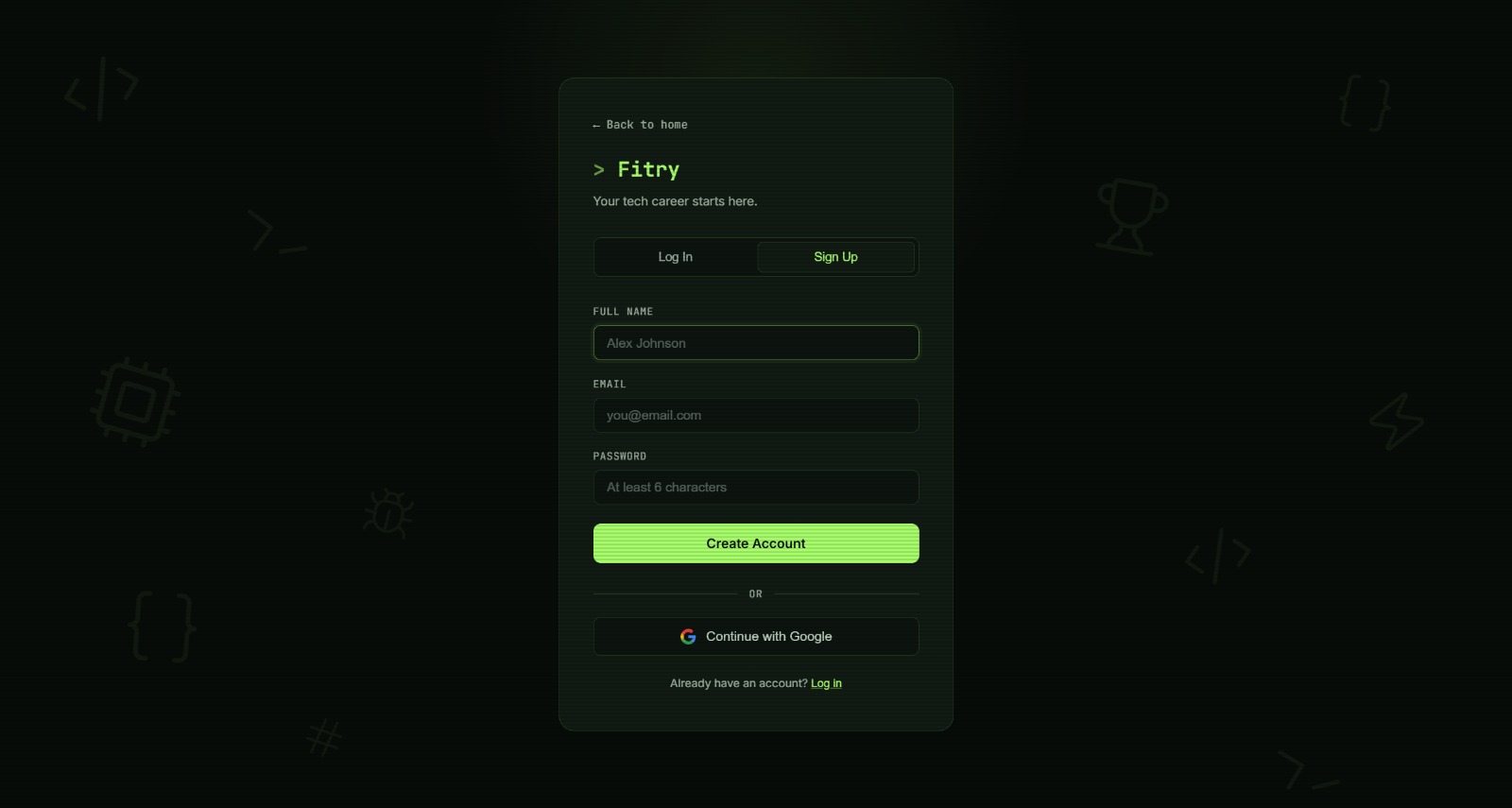
Login/signup
-
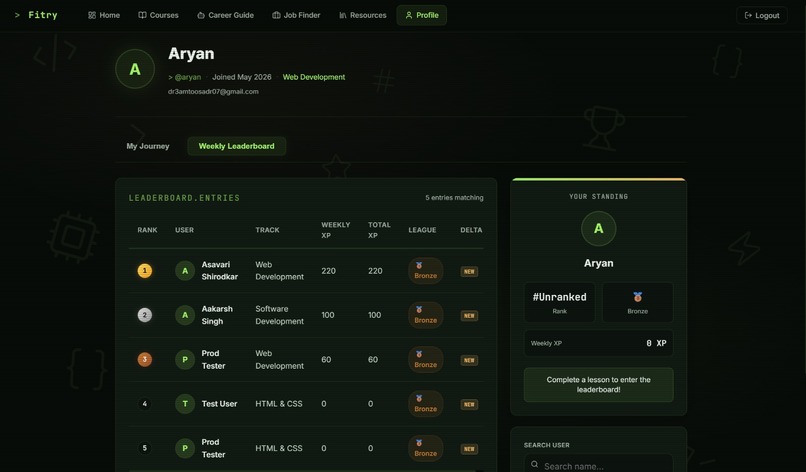
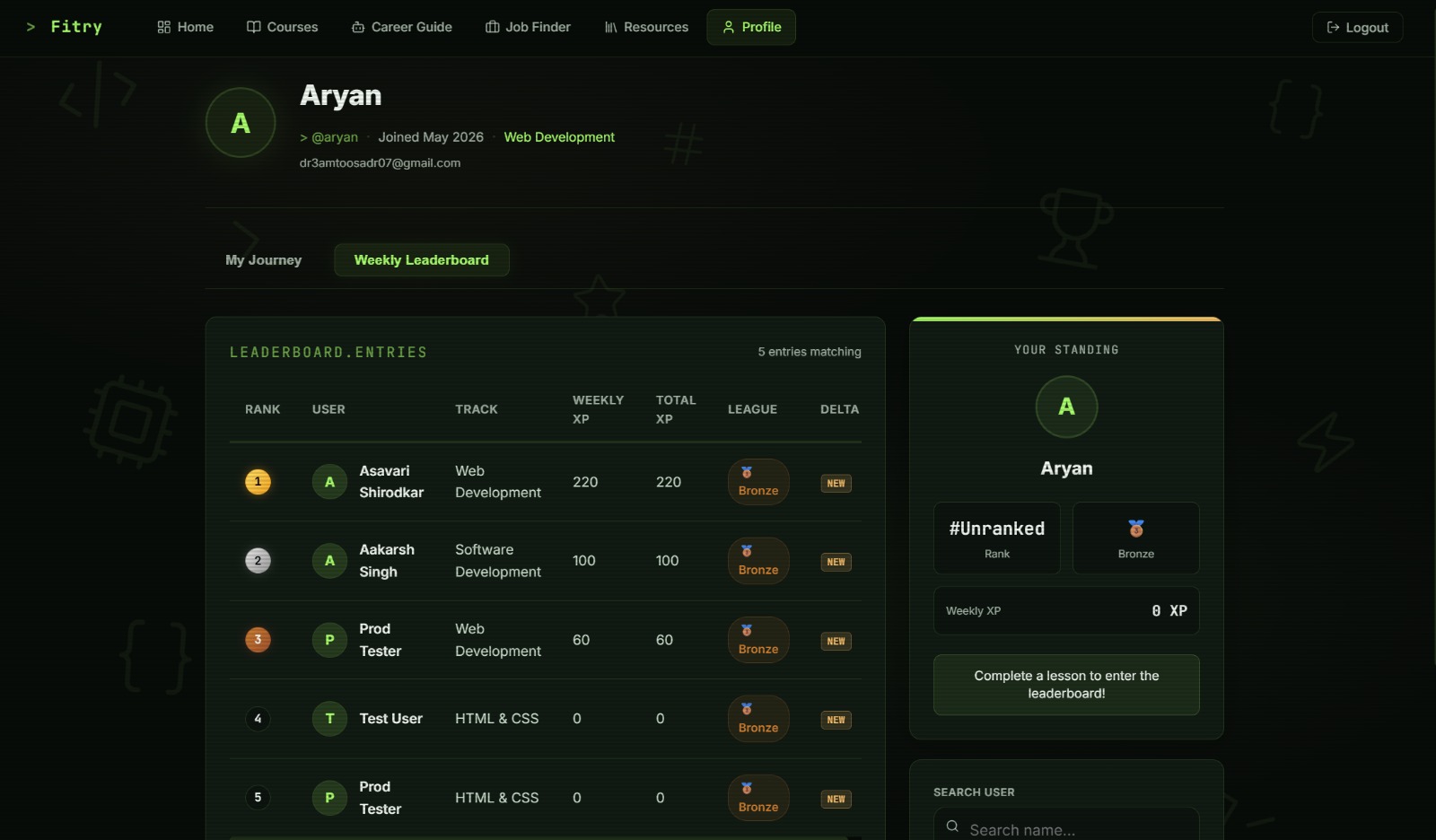
Profile- leaderboard
-
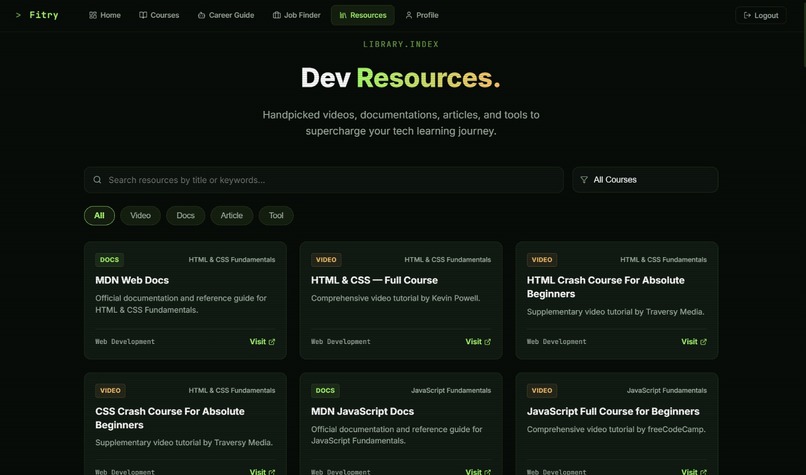
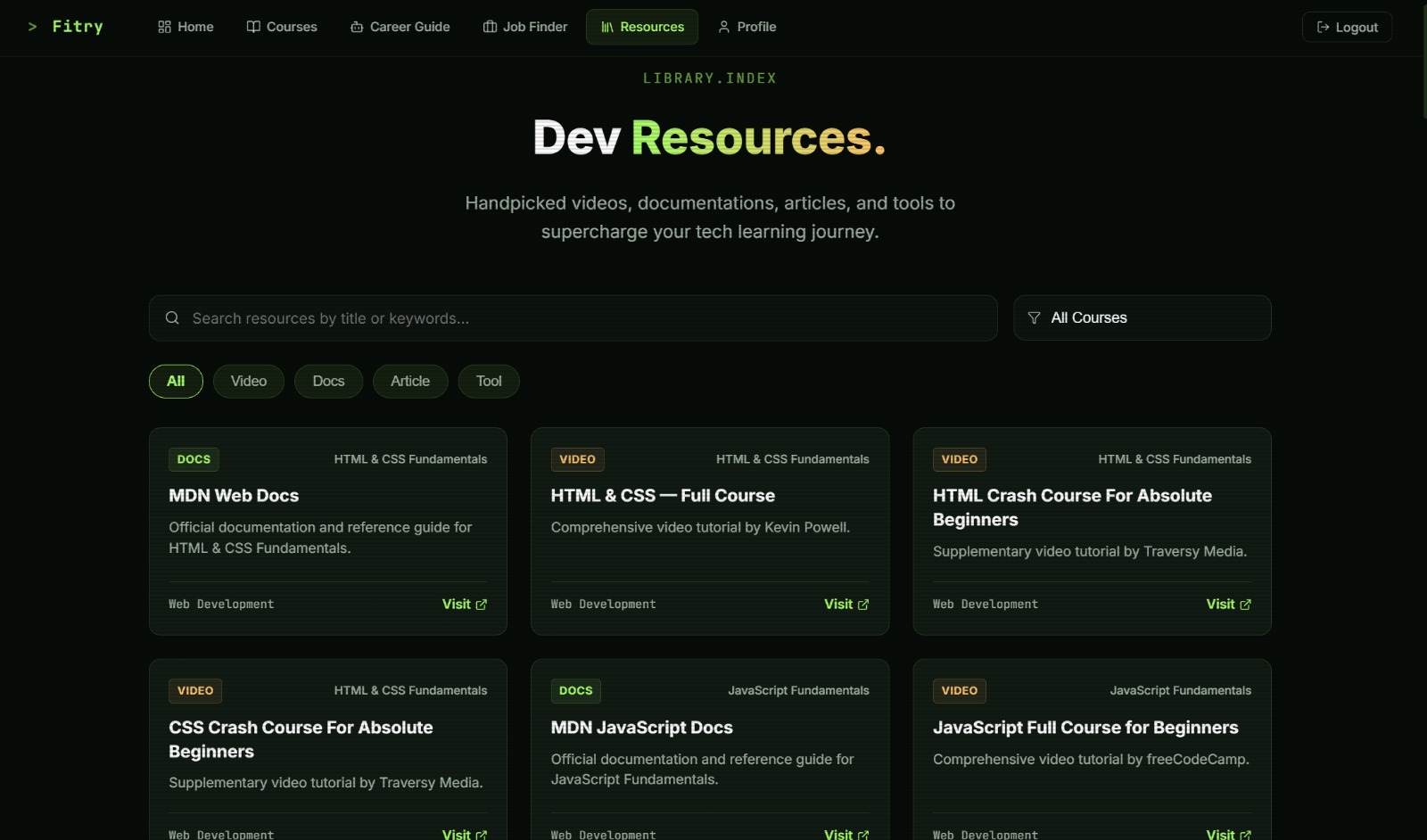
Resources
-
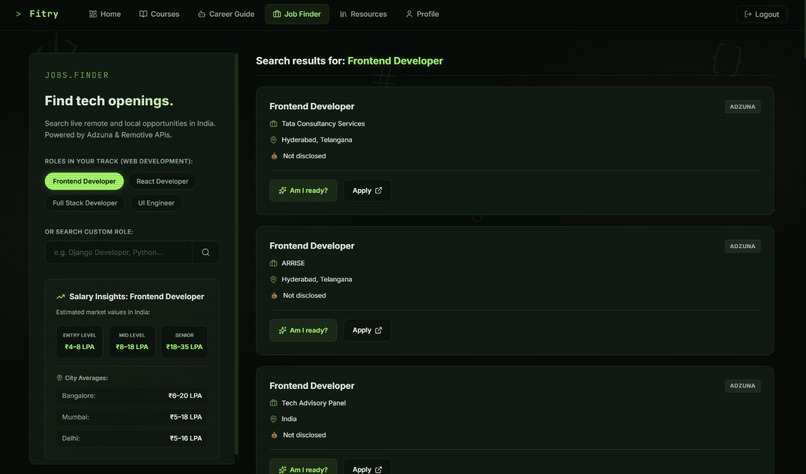
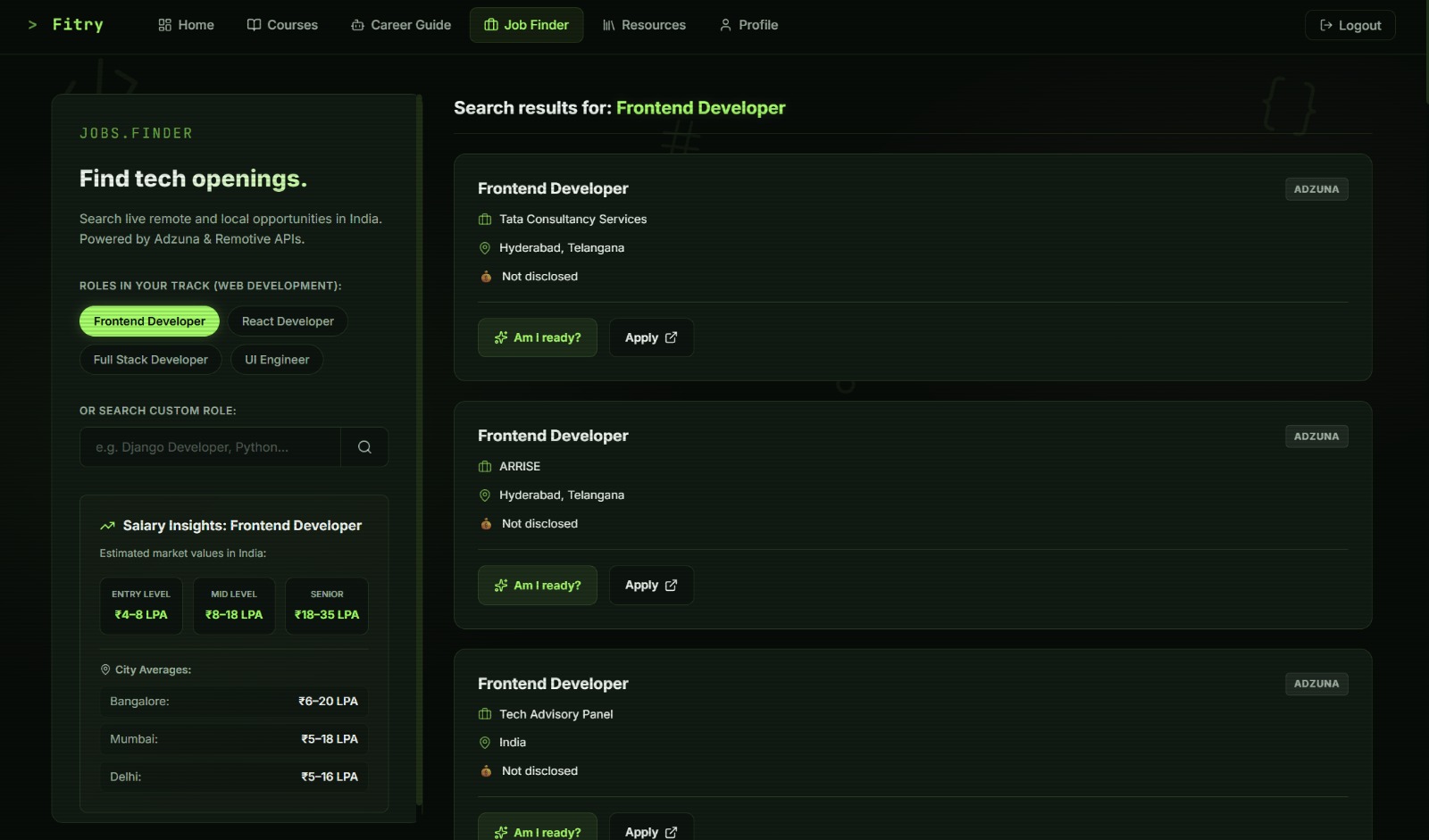
Job finder
-
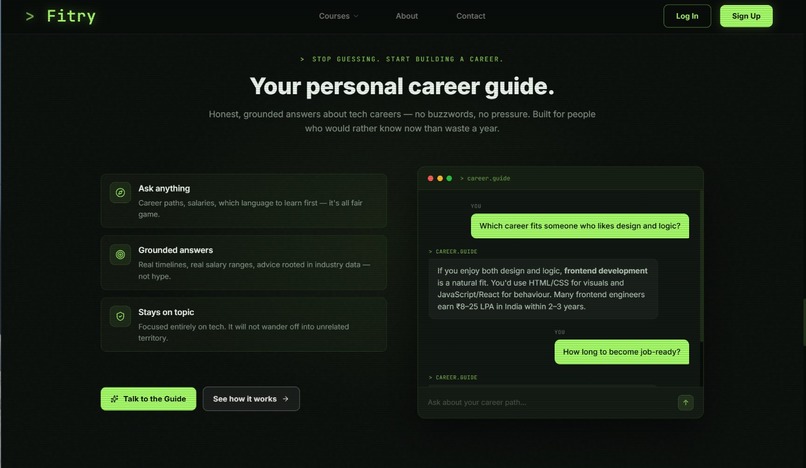
Landing page-3
-
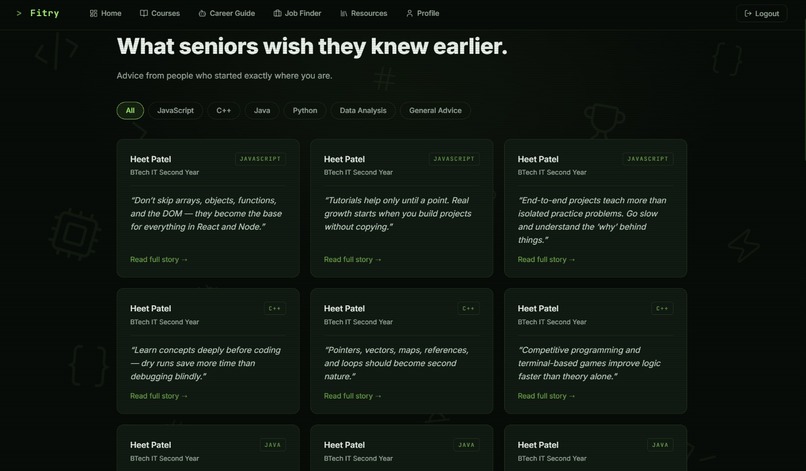
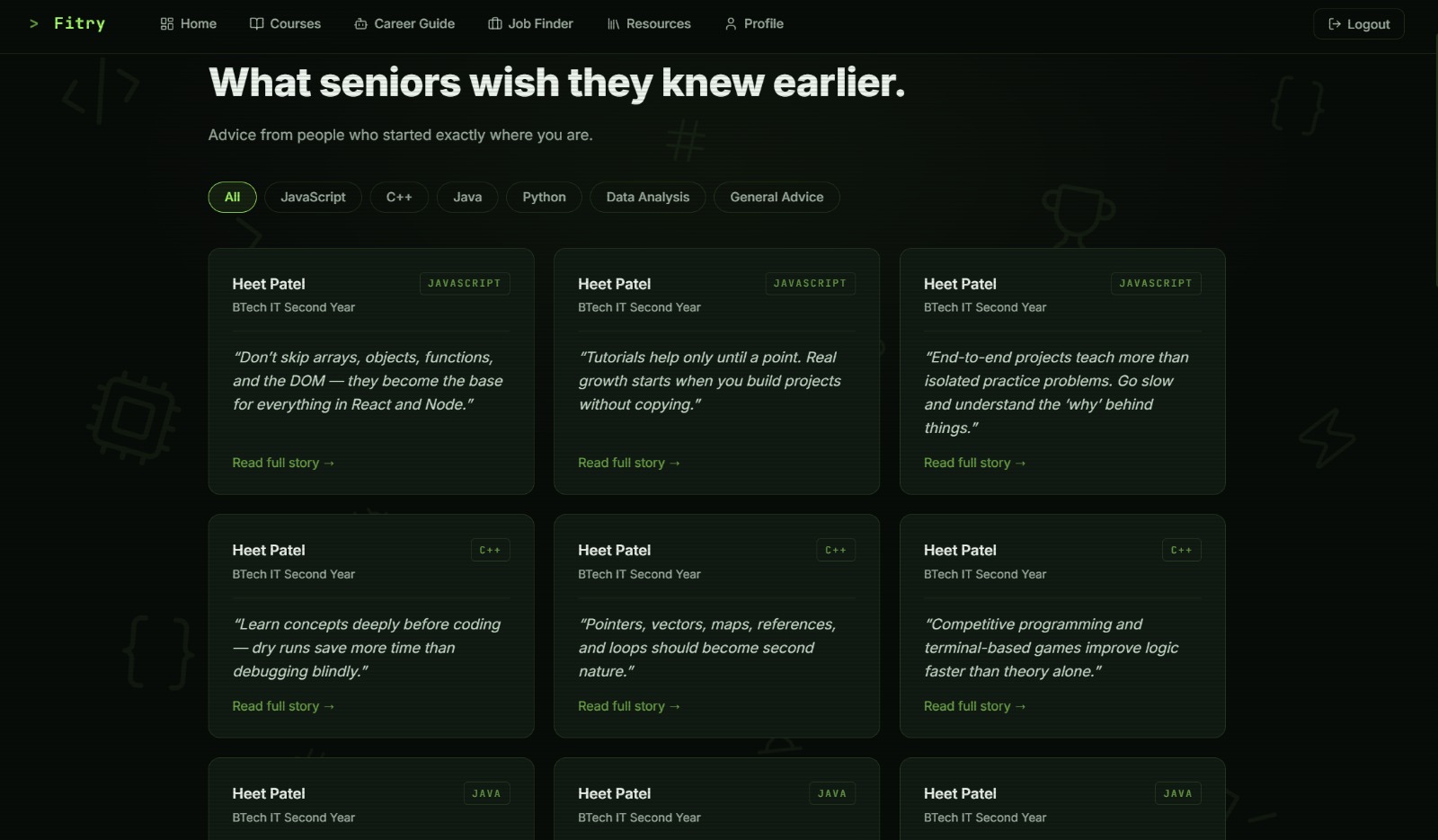
Insights from seniors(university)
-
-
Career guide
Inspiration
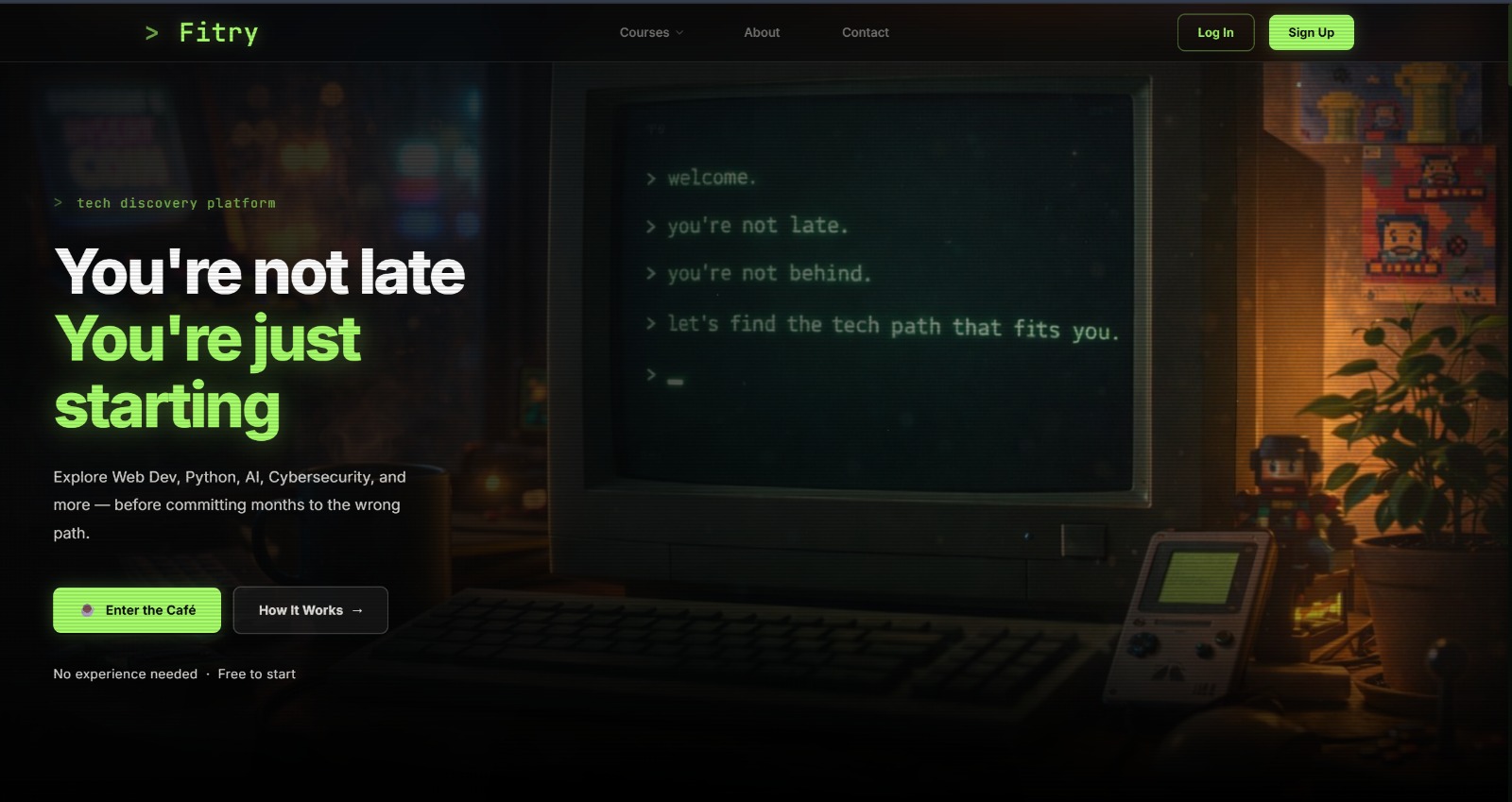
We kept seeing the same pattern around us — friends and classmates who spent months on YouTube tutorials, finished courses on big platforms, and still could not answer "am I ready to apply?" with any confidence. The learning existed but the connection to actual hiring never did. Nobody was telling them what was missing, what roles they qualified for, or what to build next. We wanted to build something that did not just teach — but guided someone all the way from their first line of HTML to their first job application with real, honest feedback at every step.
What it does
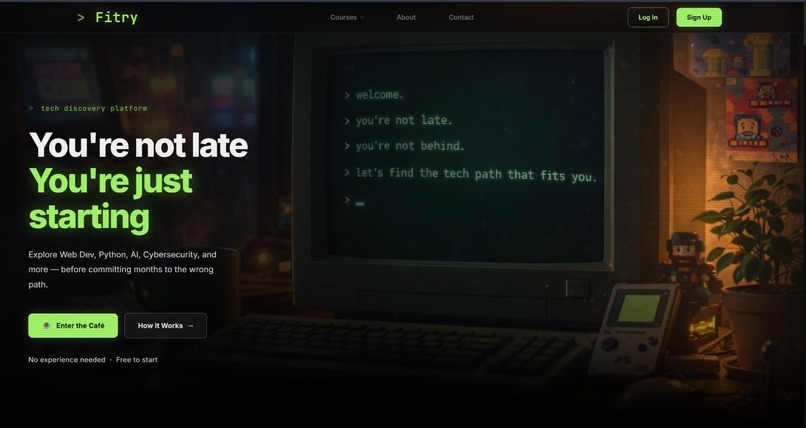
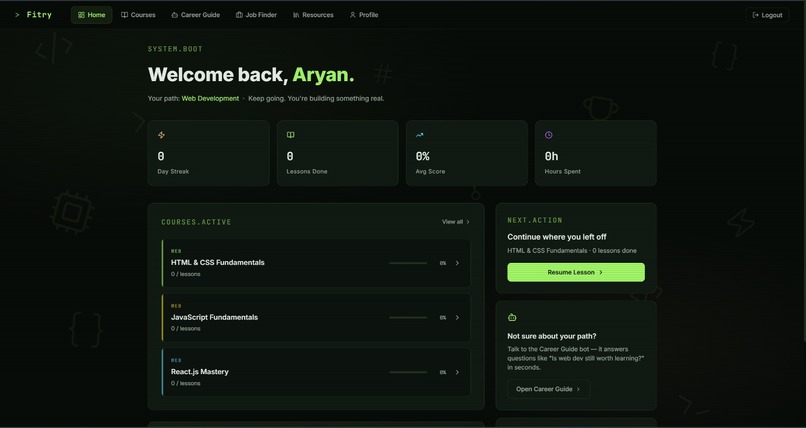
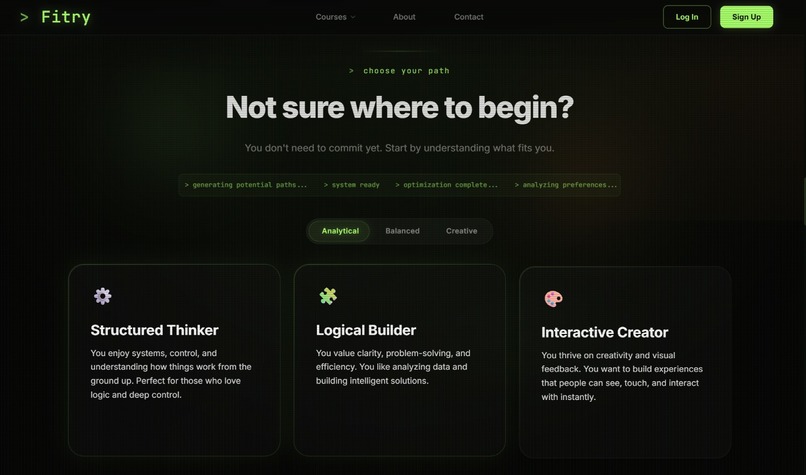
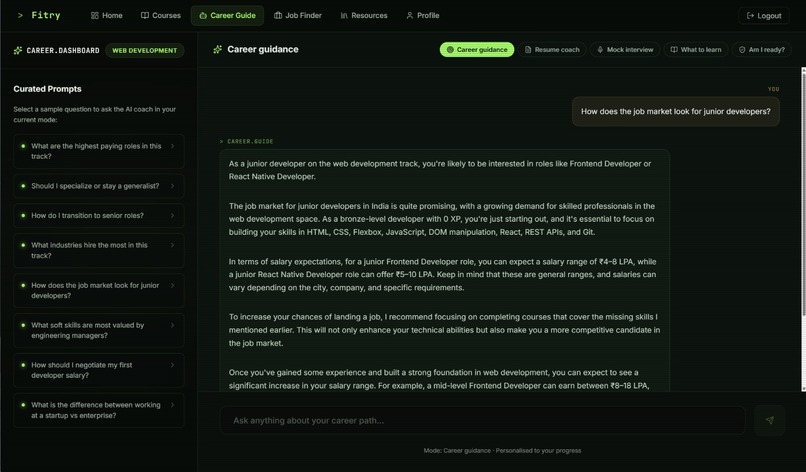
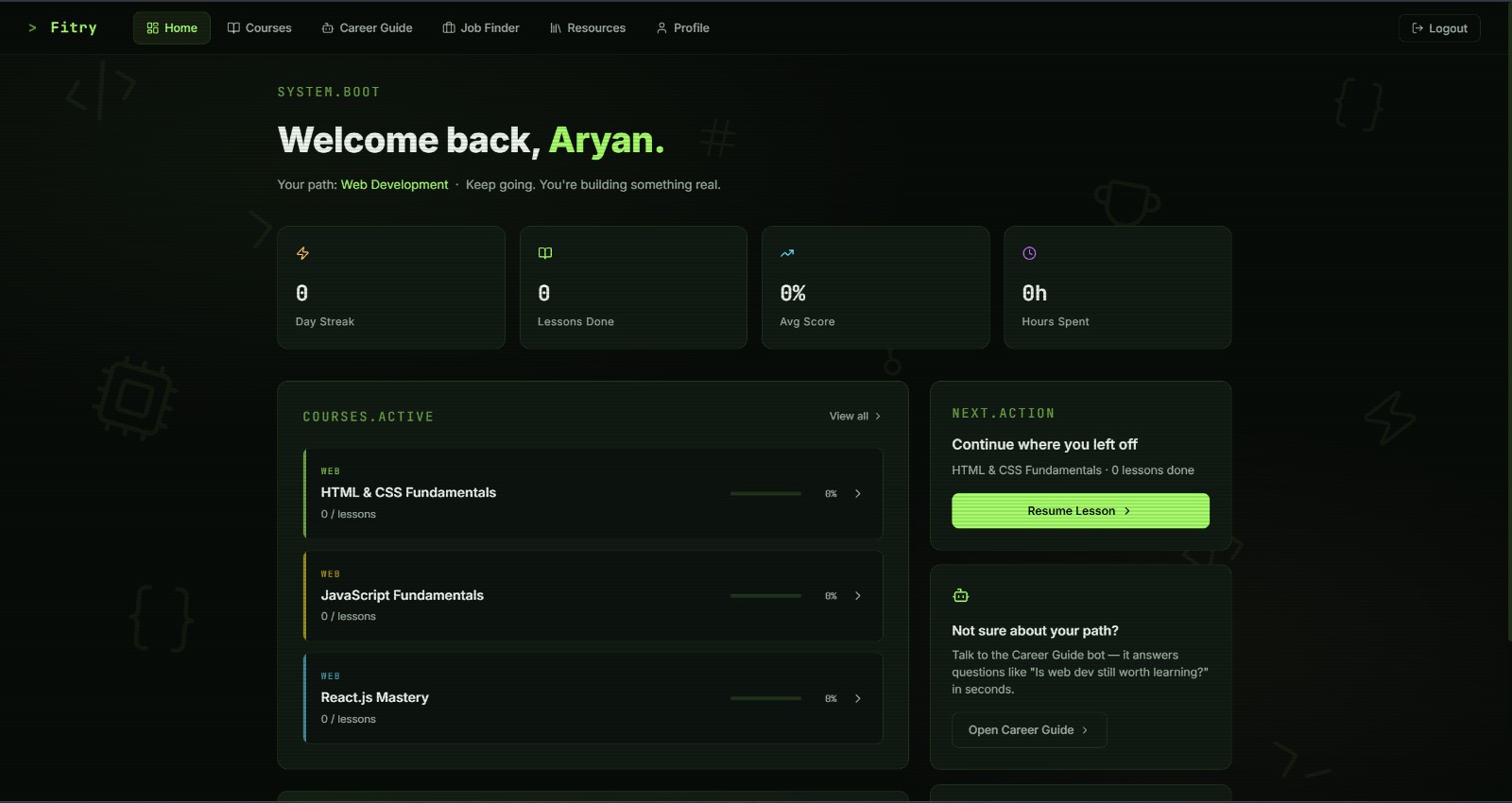
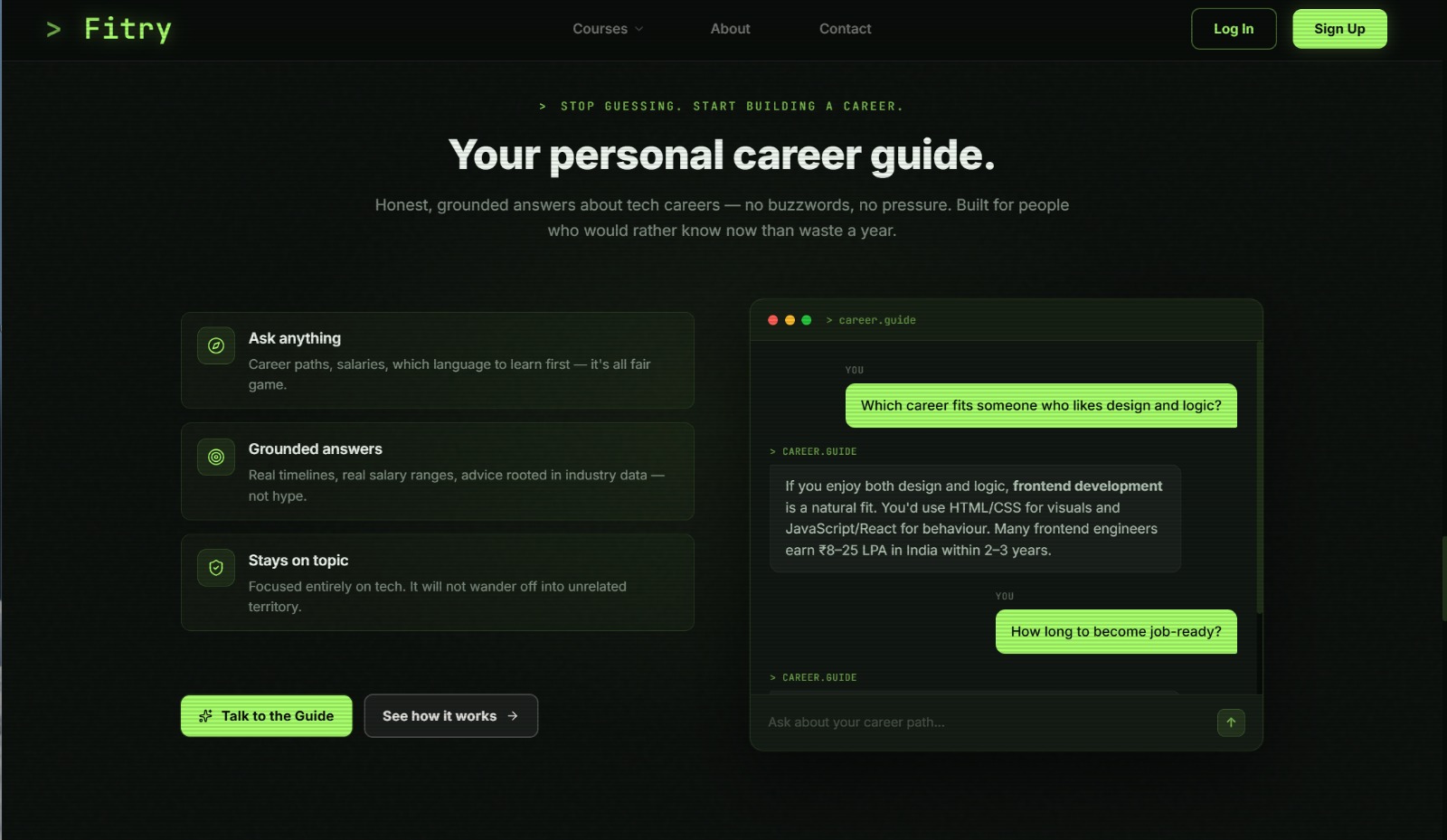
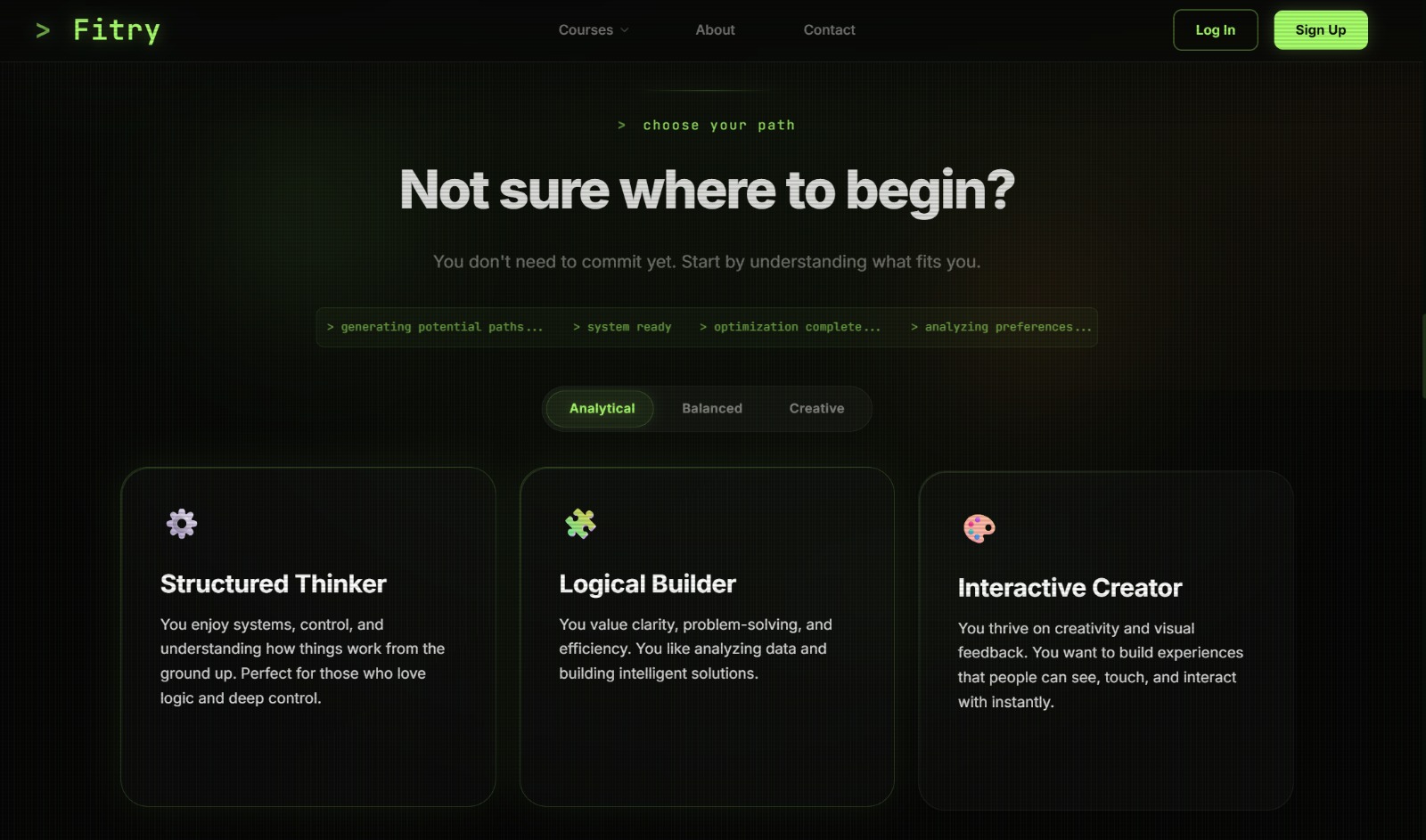
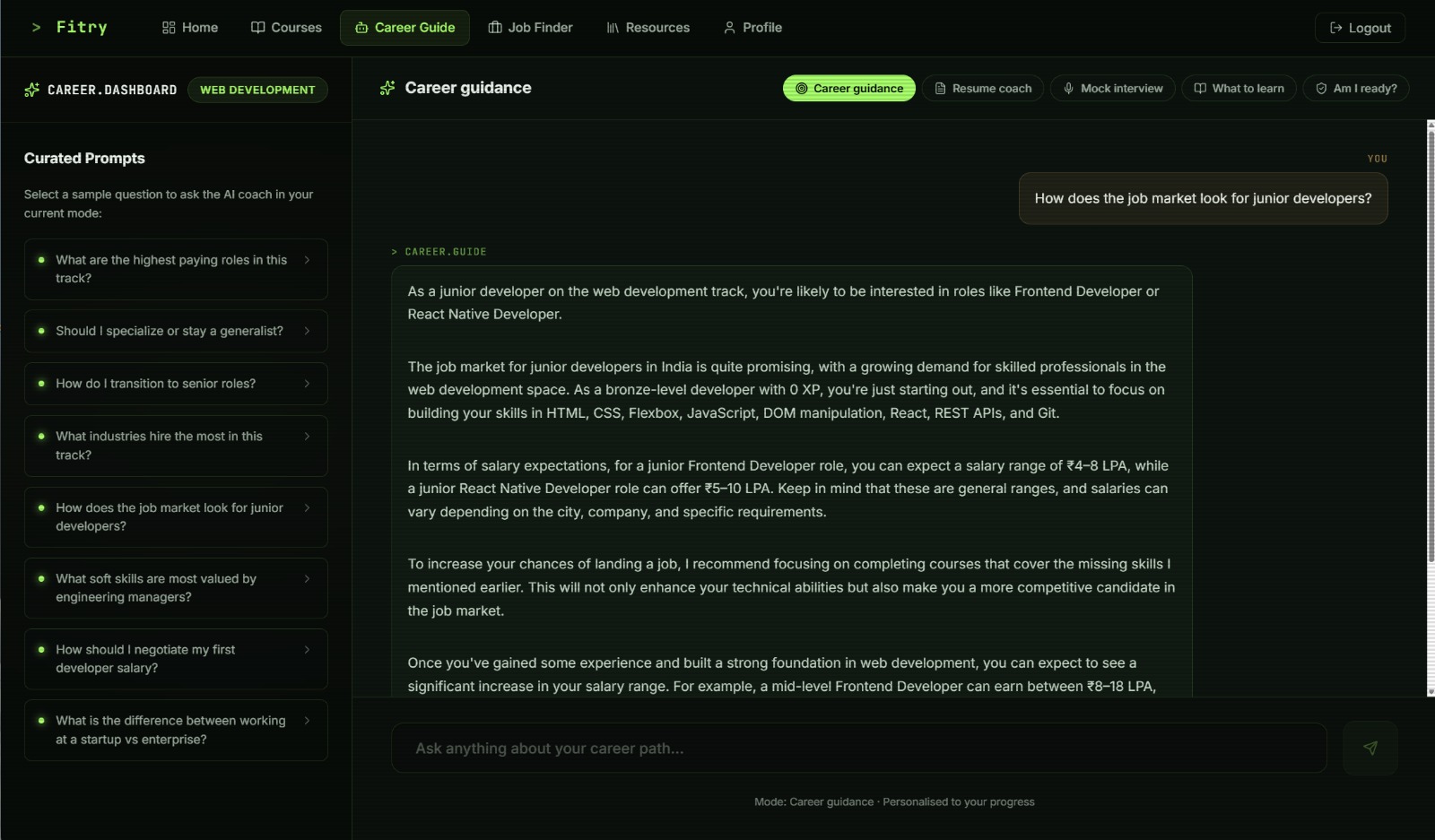
Fitry is a career-first tech learning platform that takes a complete beginner from their first line of code to being genuinely ready to apply for a tech job — and tells them honestly when they are there. A new user takes a short onboarding quiz and gets placed on a track — Web Development, Data Science, Cybersecurity, Mobile, or Systems. From there they follow a structured course path where every course is split into three gated levels — Beginner, Intermediate, and Advanced. Each level has five lessons, a quiz after each one, a coding challenge with an in-browser editor, and a mini project at the end. Nothing unlocks until the previous level is fully complete and the mini project is submitted and graded. The AI grader scores every submission, gives structured feedback, and lets users retry as many times as they need. As users progress they earn XP, build daily streaks, and compete on a weekly leaderboard with Bronze, Silver, and Gold leagues that reset every Sunday. Completing a course issues a certificate with a unique verification ID that anyone can look up publicly. The Career Guide is where Fitry separates itself from every other learning platform. It has a personalised AI career bot with five modes — career guidance, resume coach, mock interview, what to learn next, and am I ready. Before every single message the bot reads the user's actual Firestore progress — completed courses, current level, missing skills, streak, and XP — so its advice is always specific to where that person actually stands, never generic. Alongside the bot, the Career Guide shows a visual role roadmap from courses to target role, a live skill gap analysis comparing what the user has against what the job requires, a portfolio checklist that auto-checks as mini projects are completed, and a Job Finder powered by live APIs that shows real openings filtered by the user's track with an "Am I ready?" AI assessment per listing. The Resources tab surfaces curated videos, documentation, articles, and tools relevant to the user's current course — and after every lesson completion, the most relevant resources float to the top automatically. Everything runs with no exposed API keys, no traditional backend, and no monthly cost.
How we built it
Fitry is built on React and Vite on the frontend, deployed to Firebase Hosting. All user data — progress, XP, streaks, leaderboard entries, and certificates — lives in Firestore with auth-gated security rules. Firebase Authentication handles login. The AI layer runs on Groq's Llama 3.3 70B model, which gave us fast, high-quality responses on the free tier. Live job listings come from Adzuna for India-based roles and Remotive for remote positions. Contact form emails go through Resend. The most important architectural decision was the Cloudflare Worker — it acts as a secure proxy between the browser and every external API, meaning no key is ever exposed client-side. Rate limiting runs on Cloudflare KV storage, enforced per user per endpoint. The entire stack costs ₹0 per month at current scale.
Challenges we ran into
The biggest challenge was the Firestore schema. We started building UI before the data structure was finalised and paid for it with multiple painful refactors. Eventually we stopped everything, designed the complete schema — users, progress subcollection, leaderboard, certificates, weekly snapshots — and only then wrote a single component. That decision saved the project. The second challenge was making the AI feel genuinely personalised rather than generic. Early versions of the career bot gave advice that could have been copy-pasted from any career website. The fix was building a context assembler that reads the user's completed courses, current lesson, missing skills, and XP from Firestore immediately before every single Groq call. The third challenge was the gated course progression — designing a system where levels unlock correctly, retry logic works, XP is awarded exactly once per action, and certificates only issue when truly earned, all without a traditional backend. Getting that right in Firestore rules and client-side logic took longer than any other single feature.
Accomplishments that we're proud of
We are proud that the entire platform runs on free tiers and costs nothing to operate — not as a cost-cutting measure but as a proof that thoughtful architecture can replace infrastructure spending. We are proud of the career bot. Not because it uses AI — everyone uses AI — but because it actually knows the user. It reads their completed courses, their current lesson, their missing skills, and their streak before every single message. That specificity is what separates it from a wrapper around a language model. We are proud of the gated progression system. It would have been easier to let users skip around. We chose not to. Every level must be earned. Every mini project must be submitted. Every certificate reflects real completion — not just time spent on the platform. That decision makes Fitry's certificates mean something. We are proud that we built a full security layer — Firebase token verification, per-user rate limiting, encrypted API keys — without writing a single line of traditional backend code. And most of all we are proud that we built something we would have wanted when we were starting out. A platform that does not just teach — but tells you honestly where you stand, what you are missing, and exactly what to do next.
What we learned
We learned that product decisions matter more than technical ones. The choice to gate course progression, to inject real user data into every AI prompt, and to design the Firestore schema before touching any UI — these were not technical breakthroughs, they were judgment calls. And every time we made the right one early, we saved days of refactoring. Every time we skipped it, we paid for it later. We learned that security does not require a backend. Cloudflare Workers gave us production-grade API protection, rate limiting, and request proxying at zero cost — something we assumed would need a full server to achieve. We learned that AI is only as useful as the context you feed it. The career bot went from generic and unhelpful to genuinely personalised the moment we started injecting real Firestore progress into every system prompt. The model did not change — the context did. And we learned how to build a real product under real constraints — free tiers, no team budget, academic deadlines — and ship something we are actually proud of.
What's next for Fitry
The foundation is solid. What comes next is depth and reach. On the product side we want to add a Resume Builder tab where the AI guides users through writing a professional resume section by section, auto-populating skills from their completed courses. GitHub integration is next — after every mini project, users will be able to push their work directly to a GitHub repo, turning their learning into a visible portfolio employers can actually see. On the course side we want to expand into Game Development with Unity, SQL and Databases, DSA in Python for interview prep, and DevOps fundamentals — the skills that keep coming up in every job listing but are underserved on most beginner platforms. On the business side Fitry has a natural freemium path — free access to Beginner levels, paid unlock for Intermediate and Advanced. The leaderboard, streak system, and career features create the retention loop that makes that model work. The job finder and "Am I ready?" feature are also natural surfaces for recruitment partnerships. The long term vision is a mobile app built in React Native on the same Firebase backend — bringing the full Fitry experience to the phone, where most of our target users actually spend their time.
Built With
- adzuna
- firebase
- groq
- javascript
- react
- remotive
- vite

Log in or sign up for Devpost to join the conversation.