Inspiration
Fitness apps today rely on screenshots or leaderboards to show progress. The problem is — these can be easily faked. Whether it’s proving to a trainer, a friend, or even for health/insurance benefits, there’s no trustable proof that the data is genuine. I wanted to build something where people don’t need to “trust me” — they can verify the data themselves. That’s how FitProof was born.
What it does
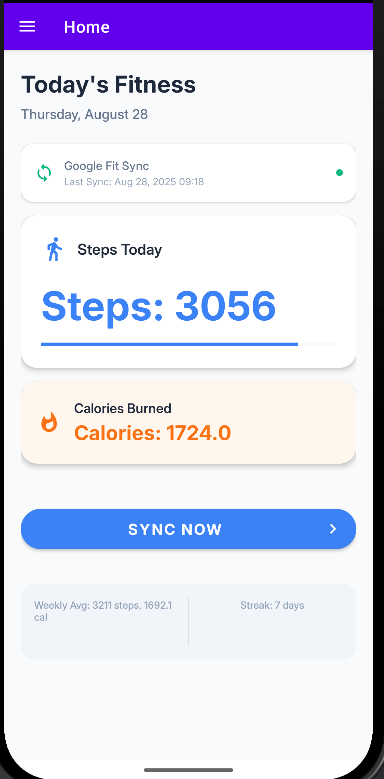
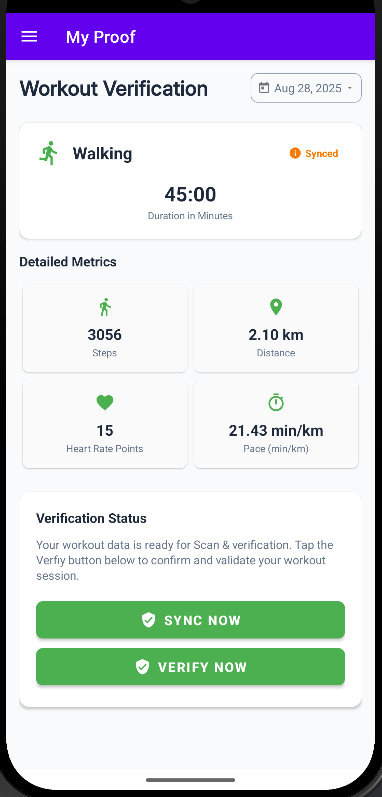
FitProof securely fetches your workout and health metrics from Google Fit (steps, heart points, distance, pace, duration, etc.). With one click, it:
Builds a JSON summary of your workout.
Generates a SHA-256 hash for tamper-proofing.
Publishes the record to a public GitHub Gist.
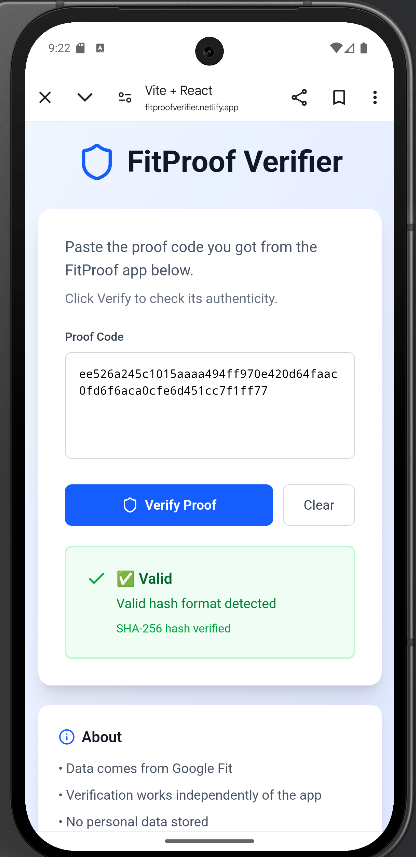
Lets anyone verify that proof by pasting the hash into our website — showing ✅ if valid or ❌ if tampered.
In short: FitProof turns your fitness activity into a verifiable, public proof.
How we built it
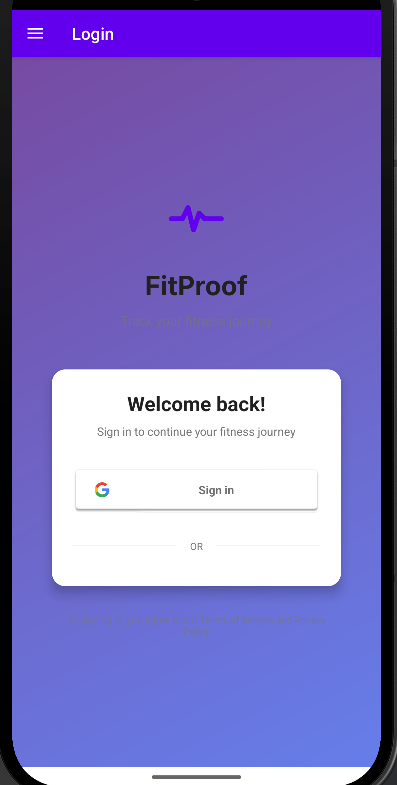
Frontend (Android App) → Built fully in Java with XML layouts using Android Studio.
Google Fit Integration → Integrated Google Fit API with Google Sign-In authentication to securely fetch steps, distance, heart points, and pace.
Verification Logic → Created a SHA-256 hash of a canonical JSON summary of the workout.
Publishing → Automatically uploaded the JSON + hash to a GitHub Gist as a public, immutable log.
Verification Website → Developed a lightweight web tool where anyone can paste the hash or URL, recompute the hash, and confirm authenticity.
Challenges we ran into
Getting canonical JSON format right so the same data always produces the same hash.
Integrating Google Fit’s multiple metrics (steps,distance, heart points) consistently.
Automating GitHub Gist uploads from the app.
Designing the flow so judges/users clearly understand the “proof → verify” concept in under a minute.
Accomplishments that we're proud of
Built a working proof-of-concept app end-to-end in limited time.
Made fitness data tamper-evident without needing a blockchain or complex infra.
Created a public verifier website so proof works outside the app.
Achieved the hackathon theme: trust without trusting me.
What we learned
How to use Google Fit APIs effectively for pulling structured data.
The importance of data canonicalization when dealing with hashes.
Publishing to public logs (like GitHub Gist) can be a lightweight alternative to blockchains.
Clear UX is key — people must understand why this is trustworthy.
What's next for FitProof
Multi-platform support → Add integrations with Apple Health, Strava, Garmin, and Health Connect to make FitProof useful across devices.
Stronger security → Integrate Play Integrity API / SafetyNet to prove the data came from a genuine device and hasn’t been tampered with.
Gamification & social use cases → Allow sharing verified achievements on social media, fitness challenges, and competitions.
Built With
- android-studio
- github
- google-fit-api
- google-sign-in
- java
- react
- sha-256
- xml


Log in or sign up for Devpost to join the conversation.