Inspiration
We were inspired by classic platformer games like Mario, where simple mechanics create endlessly fun and challenging gameplay. We wanted to recreate that feeling of tension and excitement, where every jump matters, while adding our own twist with combat elements like sword fighting. As a team of CS students, we wanted to prove we could build a complete, polished game from scratch.
What it does
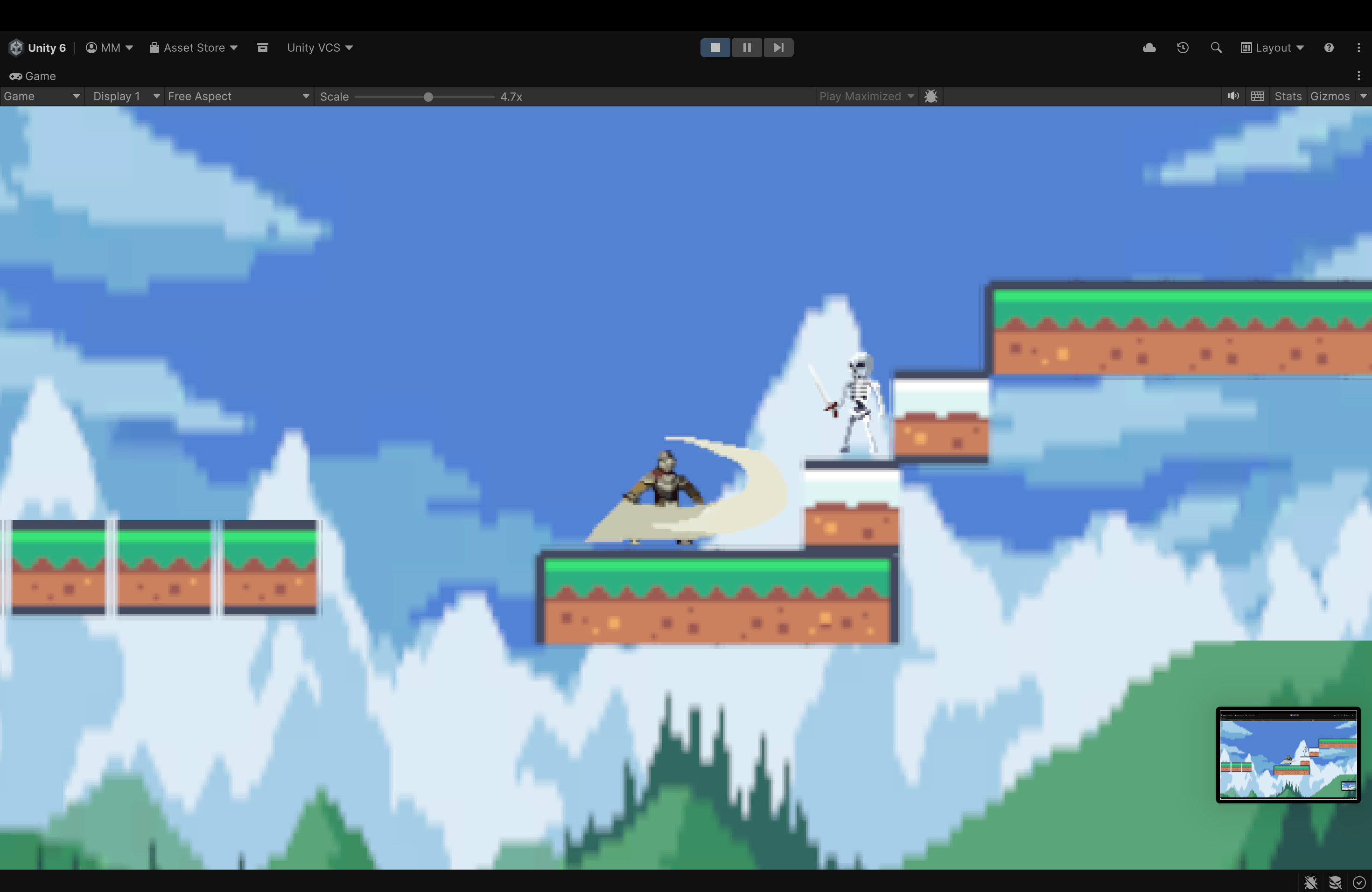
Game Fighter is a 2D side-scrolling platformer where the player controls a fighter character navigating across grass-topped platforms. Players jump between blocks, climb ladders, and swing on ropes to traverse the level. Along the way, they battle enemies using a sword. Miss a jump and fall, then it's game over. The goal is to survive every obstacle and reach the end of the level.
How we built it
We built the entire game in Unity using C# for all game logic, including player movement, jumping physics, collision detection, enemy behavior, and scene management. Every visual asset, including the background, character sprites, platforms, ladders, and ropes were created by our team directly in Unity. We composed and recorded original MP3 audio for the background soundtrack and all action sound effects. We used GitHub for version control and collaboration throughout development.
Challenges we ran into
One of the biggest challenges was getting the jumping and collision physics to feel natural and responsive. Tuning Unity's Rigidbody2D settings took a lot of iteration. Managing Git as a team was also a learning curve; dealing with merge conflicts, especially in Unity scene files (.unity), was tricky since they are binary-like files that don't merge cleanly. Coordinating asset creation while others were writing code required constant communication to avoid overwriting each other's work.
Accomplishments that we're proud of
We are proud that every single asset in the game, visuals and audio, was made by our team. Building a fully playable game with working combat, traversal mechanics, original art, and an original soundtrack entirely from scratch as students is something we're genuinely proud of. We also successfully managed a collaborative Git workflow across the whole project.
What we learned
We learned how to structure a Unity project for team collaboration, how to use Git effectively for game development, and how to implement 2D physics and player controllers in C#. We also gained experience in game design principles, understanding how platform spacing, jump height, and enemy placement affect the feel and difficulty of a level. Working as a team taught us the importance of clear communication and consistent version control habits.
What's next for Game Fighter
We plan to add multiple levels with increasing difficulty, more enemy types with different attack patterns, a scoring system based on time and enemies defeated, and a main menu with level selection. We would also like to add more traversal mechanics and explore mobile platform support.


Log in or sign up for Devpost to join the conversation.