-
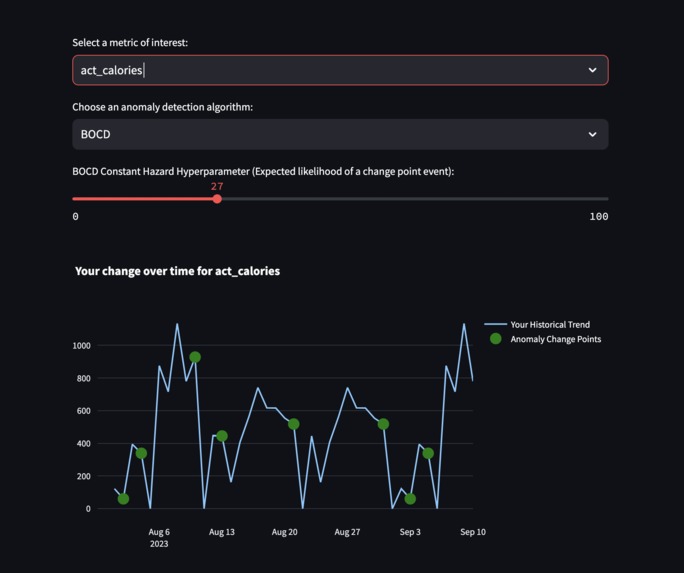
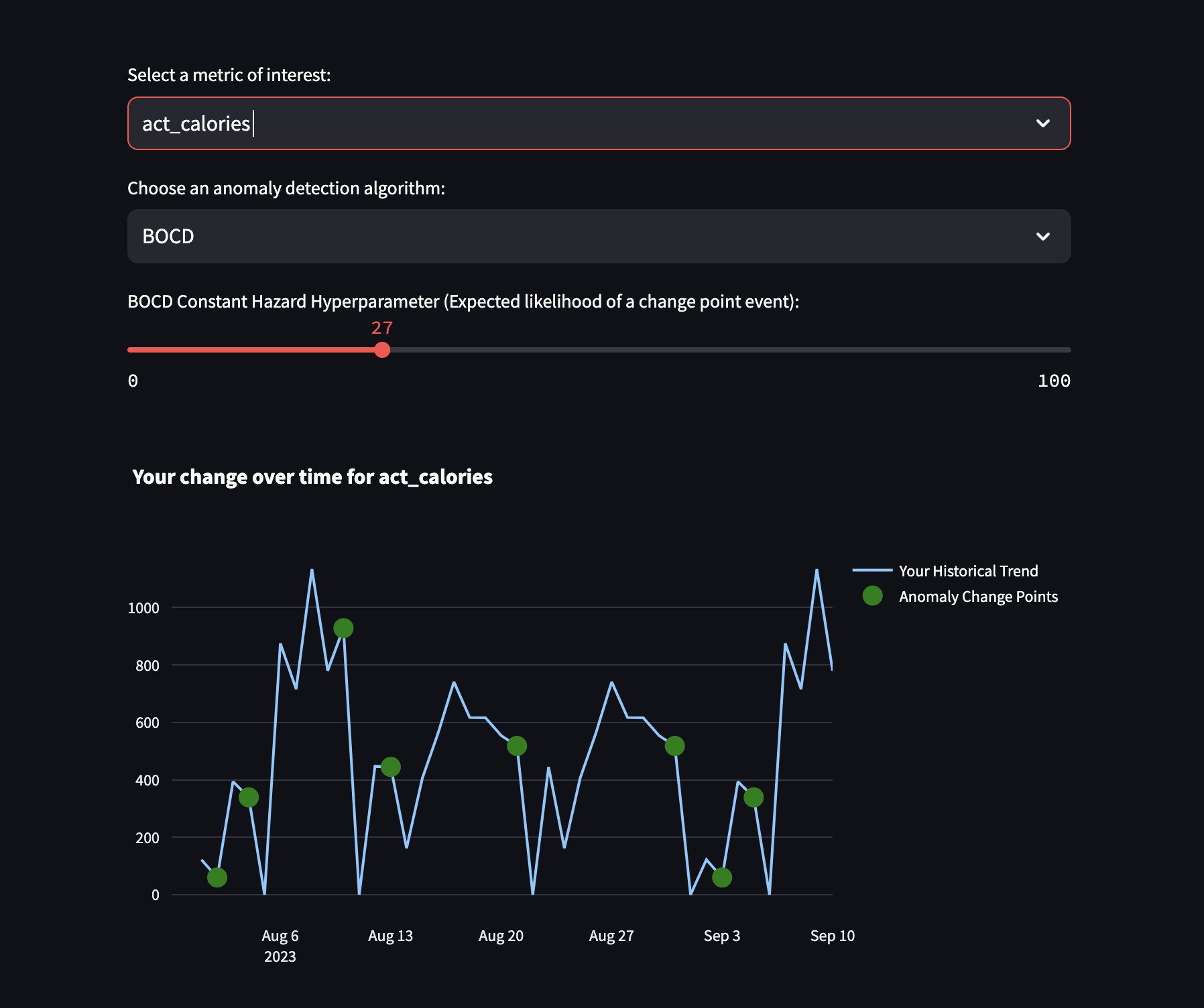
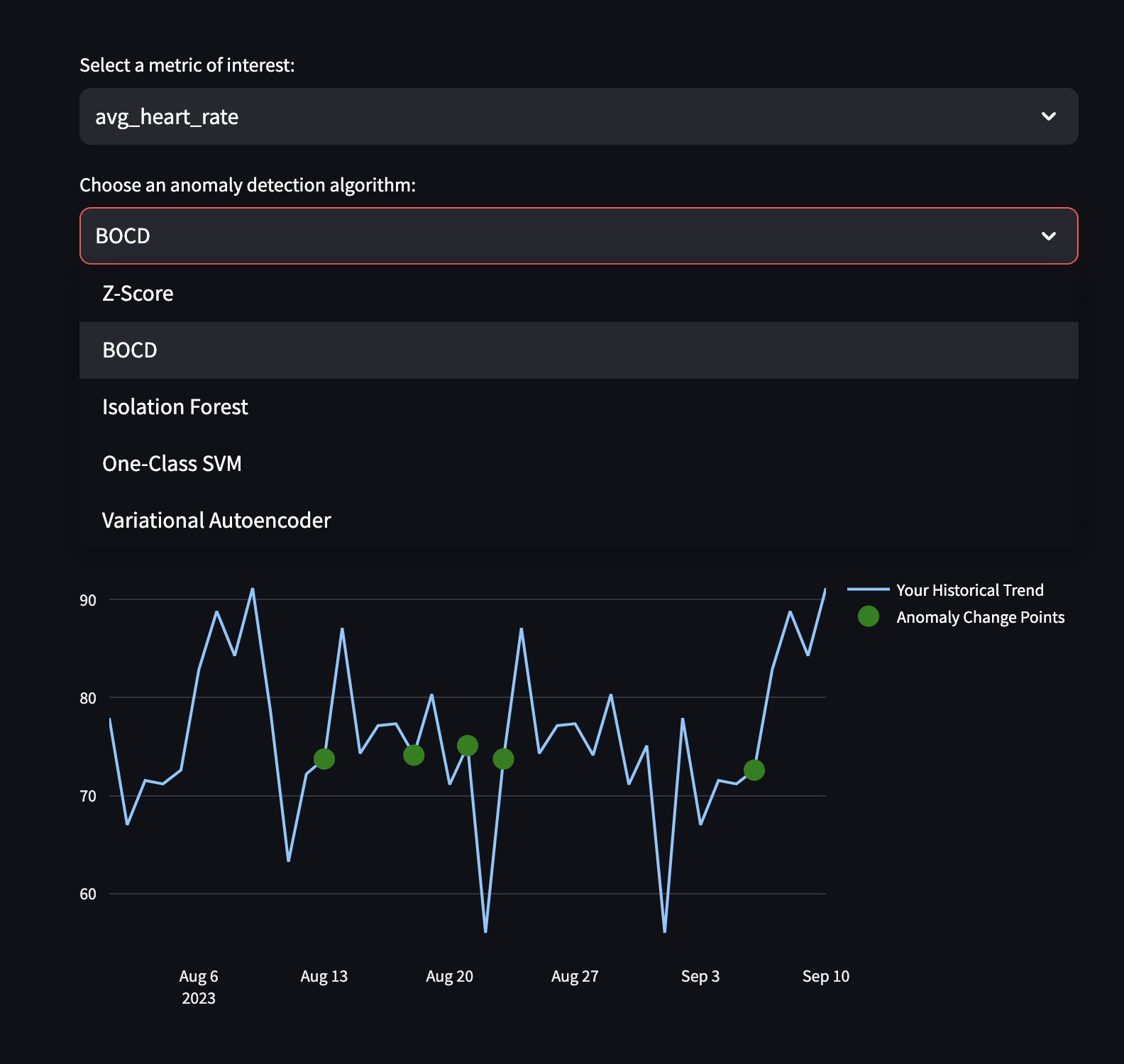
AnomaLife anomaly detection output
-
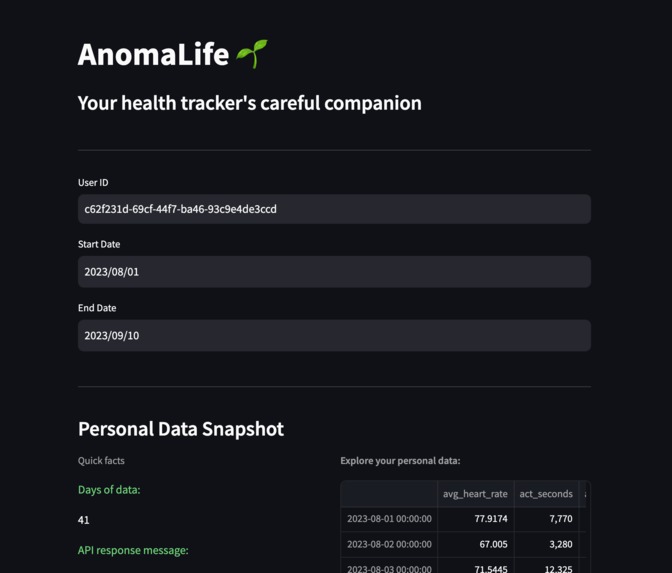
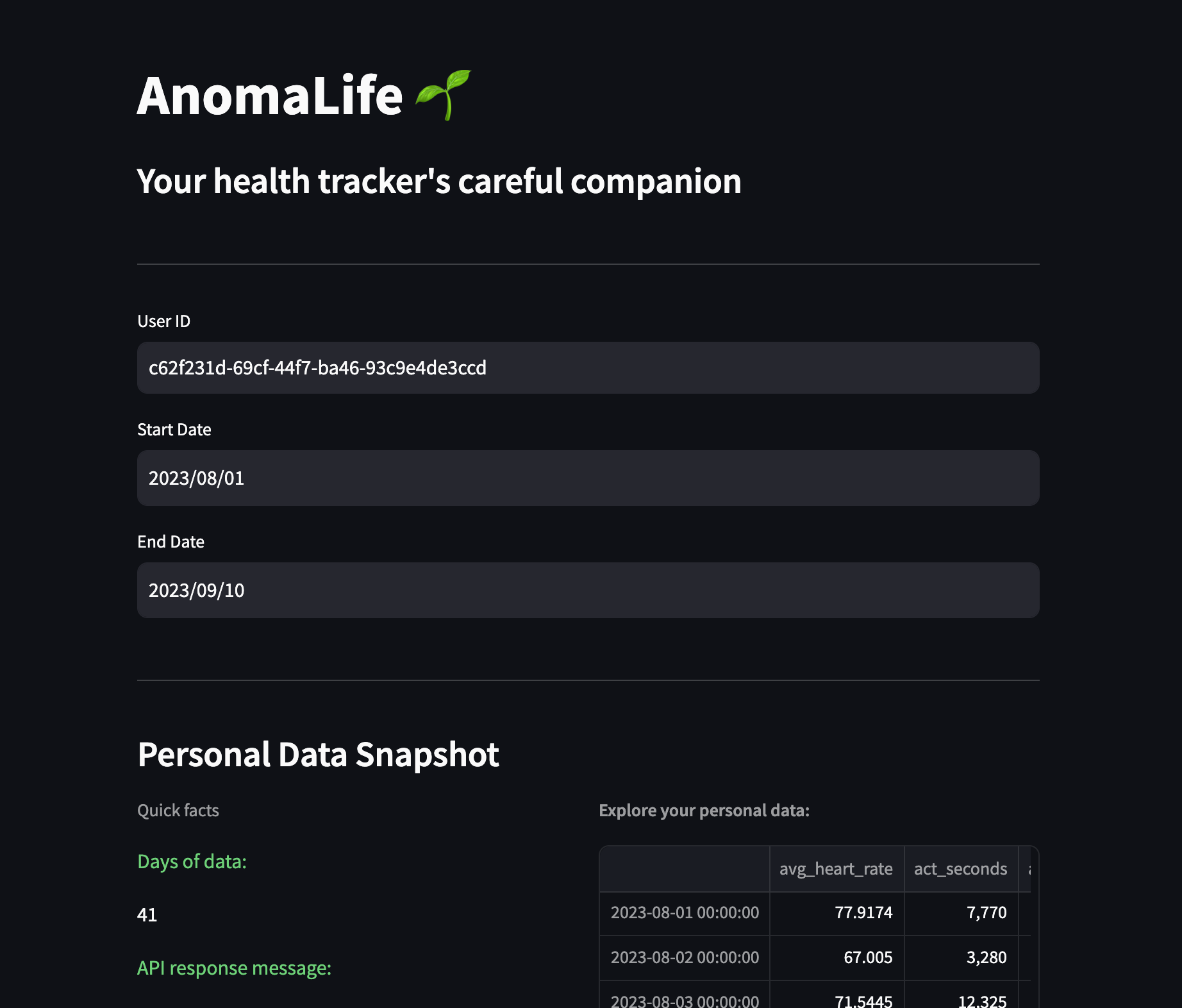
AnomaLife data entry UI
-
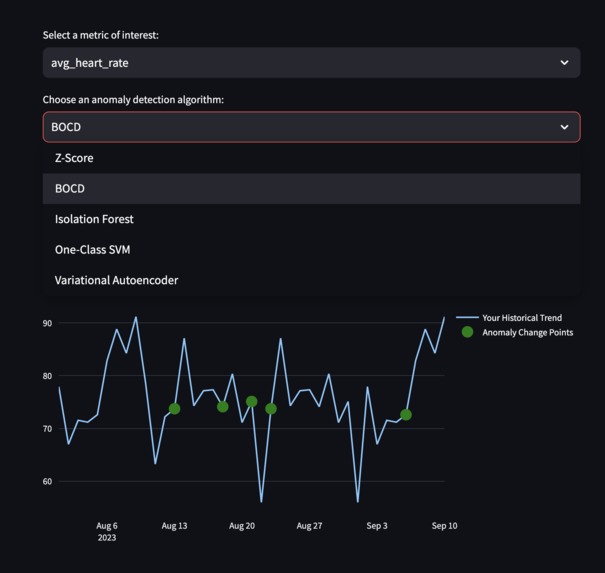
AnomaLife detection algorithm options
Inspiration
The inspiration behind AnomaLife comes from a desire to address critical healthcare challenges, particularly in community health management. The COVID 19 pandemic showed us the need for continuous improvement in the US medical system and the challenges that medical practitioners face everyday, almost unaided. The project's ultimate goal is to enhance community health and alleviate the burden on existing healthcare infrastructure.
What it does
AnomaLife offers a comprehensive set of functionalities:
Data Collection: It interfaces with wearable health tracking devices through the Terra API, allowing users to seamlessly gather their health data.
Data Processing: AnomaLife processes the collected JSON data, converting it into CSV format to make it suitable for analysis.
Anomaly Detection: The system employs the Bayesian Online Changepoint Detection (BOCD) algorithm to monitor real-time health data for anomalies and unusual patterns.
User Interface: The project includes an intuitive web interface developed using Streamlit. This interface enables users to interact with their health data, view time series visualizations using the Plotly library, and customize anomaly detection settings.
Future Enhancements: AnomaLife lays the groundwork for future enhancements, such as alternative anomaly detection methods, integration with healthcare provider tools, autonomous reporting during emergencies, and assisting with automatic triaging tasks in emergency room settings.
How we built it
AnomaLife was built collaboratively by our team, leveraging a range of technologies and tools:
Terra API Integration: We utilized the Python-terra library to interface with the Terra API and collect health data from wearable devices.
Data Processing Pipeline: We designed an efficient data processing pipeline to convert JSON data from the Terra API into CSV format, preparing it for further analysis.
Anomaly Detection: The BOCD algorithm was implemented to perform real-time anomaly detection on the time series health data.
User Interface: The user-friendly web interface was developed using Streamlit, offering a platform for users to explore their data and access time series visualizations created with the Plotly library.
Ongoing Development: We continuously work on expanding the project's capabilities and addressing healthcare challenges.
Challenges we ran into
During the development of AnomaLife, we encountered several challenges:
Data Integration: Integrating with the Terra API and processing the data in real-time while ensuring data accuracy and consistency presented initial difficulties.
Algorithm Complexity: Implementing the BOCD algorithm for anomaly detection required a deep understanding of statistical methods and data analysis.
Scalability: As the project evolves, ensuring that it scales to handle large volumes of health data and user interactions becomes an ongoing challenge.
Integration with Healthcare Systems: Future integration with healthcare provider tools and emergency service providers poses unique challenges related to data privacy, security, and compliance.
Accomplishments that we're proud of
We are proud of several accomplishments:
Successfully creating a functional system that integrates with the Terra API and provides users with valuable insights into their health data.
Implementing the BOCD algorithm for anomaly detection, enhancing the system's ability to detect irregular health patterns.
Developing a user-friendly web interface with Streamlit, making it accessible to a wide range of users.
Laying the foundation for future enhancements and the potential to significantly impact community health.
What we learned
Throughout the development of AnomaLife, we have learned valuable lessons in:
Data integration and processing in real-time.
Implementing complex algorithms for anomaly detection.
Creating user-friendly interfaces for data exploration.
The importance of addressing scalability and privacy concerns in healthcare applications.
What's next for AnomaLife
The future of AnomaLife is exciting and includes:
Implementing alternative choices for anomaly detection to provide users with more customization options.
Expanding the project's scope to include seamless integration with tools commonly used by healthcare providers.
Developing a feature for autonomously sending health reports to emergency service providers during critical situations.
Utilizing our analysis and tracking capabilities to assist in automatic triaging tasks in emergency room settings, potentially revolutionizing healthcare delivery.
Ongoing enhancements and updates to further improve community health and reduce the burden on healthcare infrastructure.
We are committed to continuously evolving AnomaLife to make a meaningful impact on healthcare and community well-being.
Built With
- python
- streamlit
- terraapi


Log in or sign up for Devpost to join the conversation.