Inspiration
Inspiration
Fitness trackers help people understand their workouts. We wanted to build a simple MATLAB-based tracker that turns phone sensor data into useful fitness results.
What it does
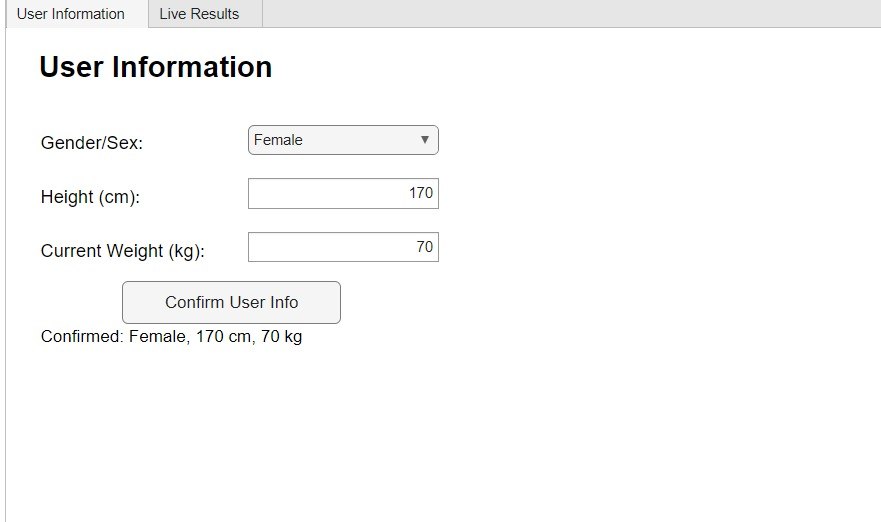
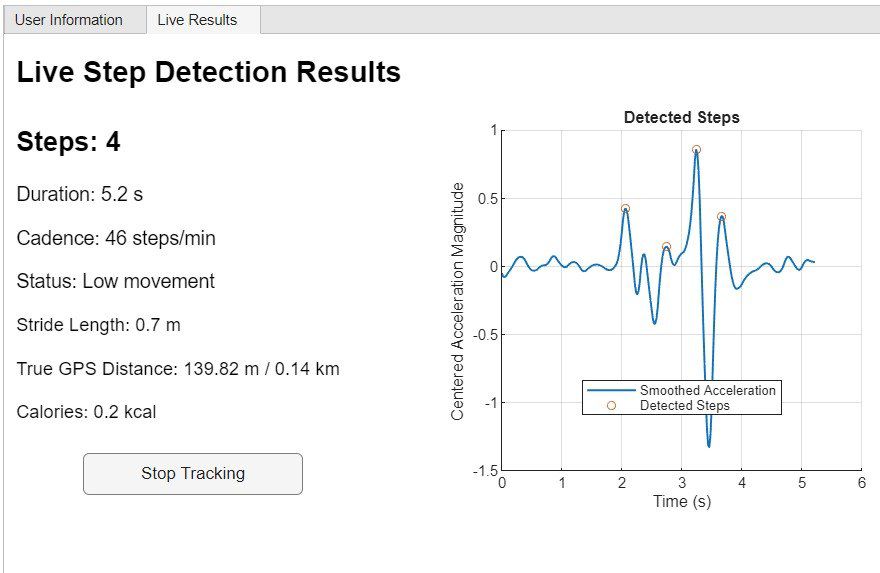
Our tracker uses smartphone acceleration data to estimate steps, cadence, distance, and calories burned. The user enters height, weight, and gender so the distance estimate can be personalized.
How we built it
We collected sensor data using MATLAB Mobile, then processed it in MATLAB. We calculated acceleration magnitude, smoothed the signal, detected movement peaks, and counted those peaks as steps.
Challenges we ran into
The biggest challenge was connecting MATLAB Mobile live sensor streaming. We also had to tune the peak detection settings so the model would not overcount or miss steps.
Accomplishments that we're proud of
We built a working fitness tracker interface with separate tabs for user input and results. We also made the model convert raw acceleration data into clear fitness metrics.
What we learned
We learned how phone sensors can be used for fitness tracking, how acceleration patterns relate to walking, and how MATLAB can visualize and process real sensor data.
What's next for Fitness Tracker
Next, we would improve accuracy using GPS validation, add altitude-based stair detection, and train a machine learning model to classify activities like walking, running, and resting.
