-
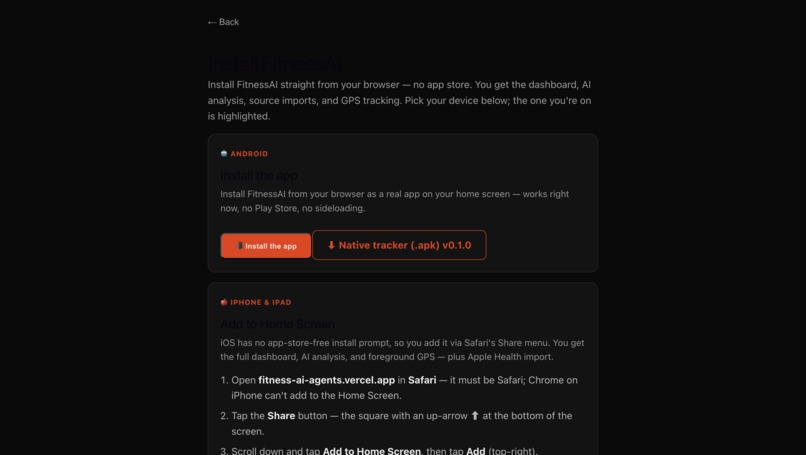
Download the App
-
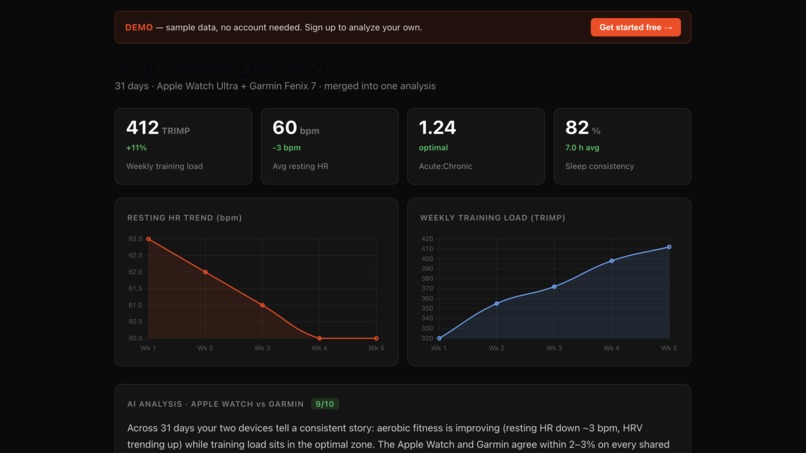
Sample Dashboard
-
Sign Up
-
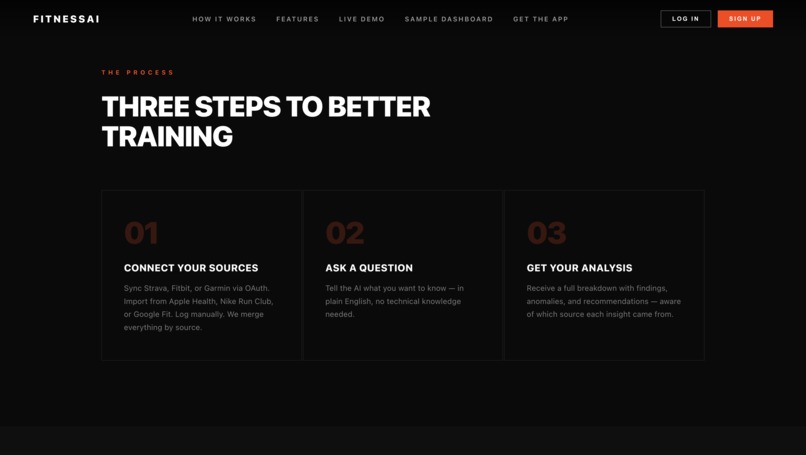
How It Works
-
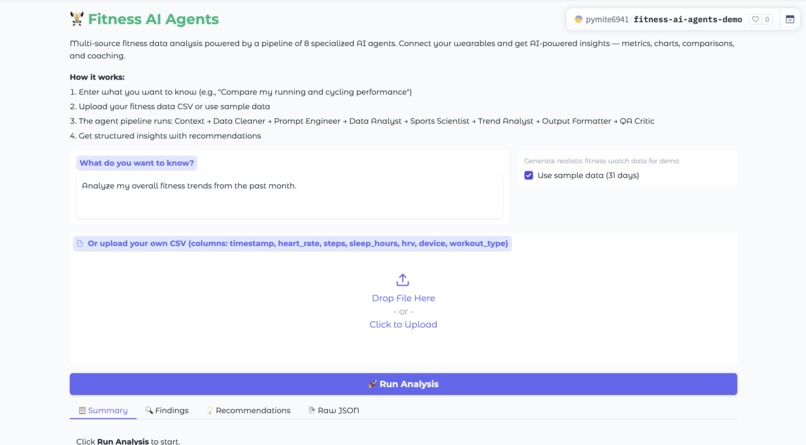
Fitness AI Agents
-
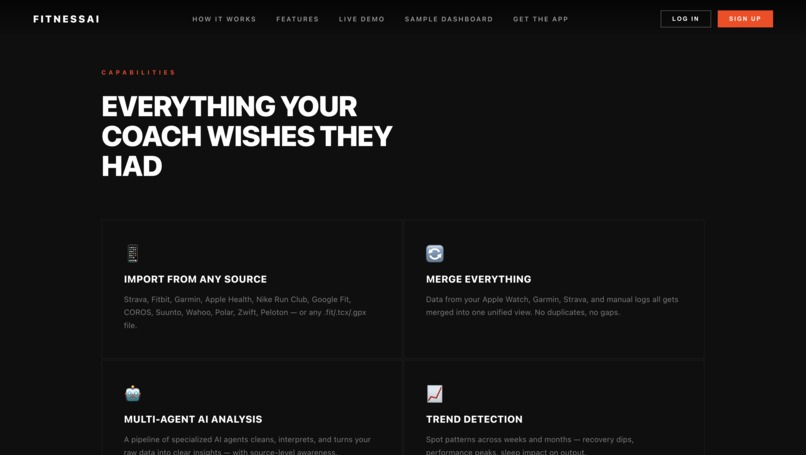
Features
-
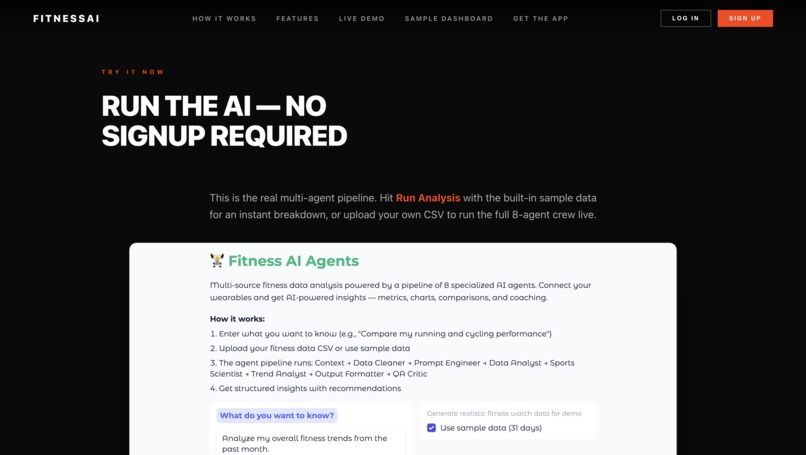
Live Demo
-
Home Page
-
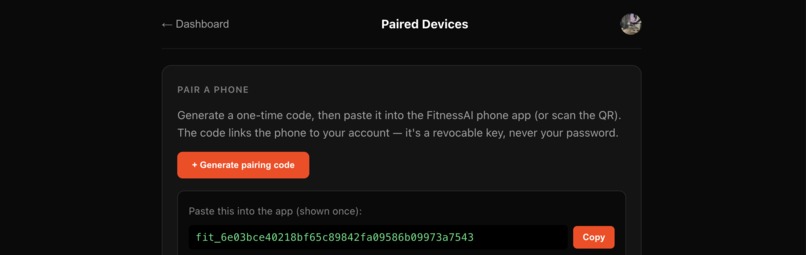
Connect to Device
-
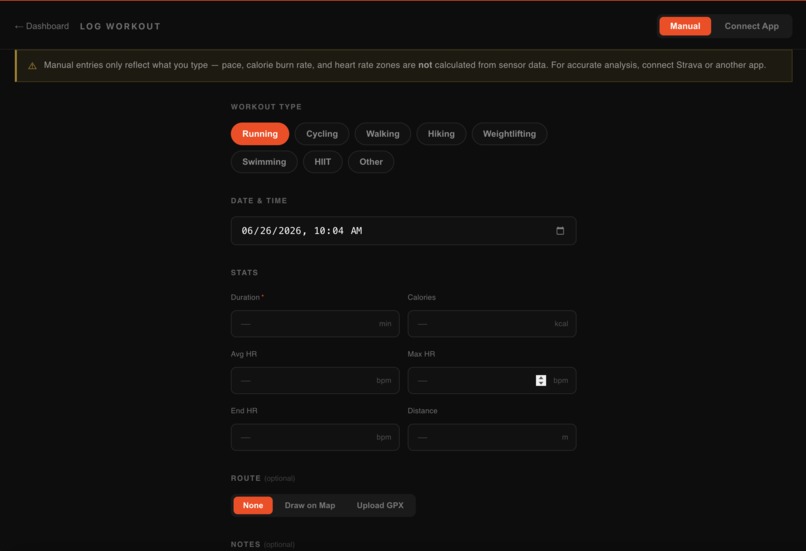
Workout Log
-
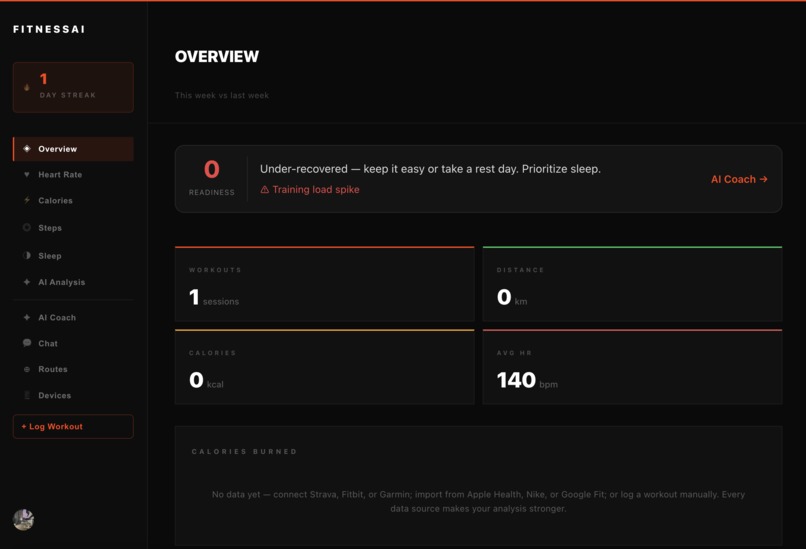
Workout Overview
-
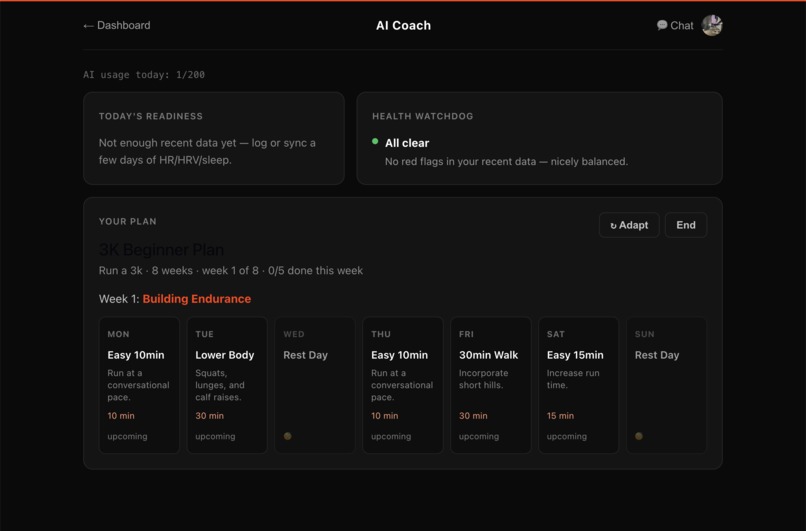
Training Plan
-
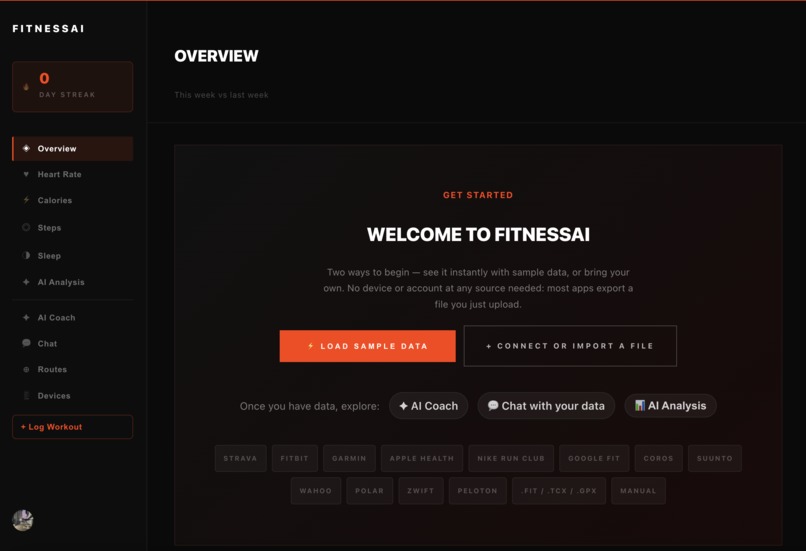
App Home
-
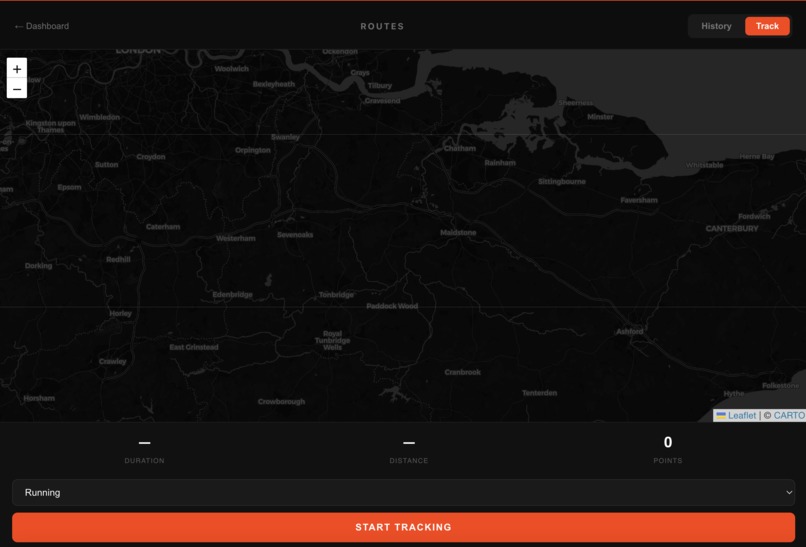
Route Tracking
Inspiration
The inspiration for this project came with the use of a different project Matt designed the backend to, using CrewAI to conduct unbiased research. We have adapted this to now pertain to the context of Fitness and how Fitness can connect to Tech.
Most people already own at least one wearable or fitness app. The data is there — heart rate, sleep, steps, GPS, HRV — but it's completely fragmented across platforms that don't talk to each other, and even when you can see the numbers, they don't mean much without context. The people who can actually interpret that data — sports scientists, personal coaches — are expensive and inaccessible. We wanted to close that gap and put real, evidence-based training intelligence in everyone's pocket, free, using the data they're already generating.
What it does
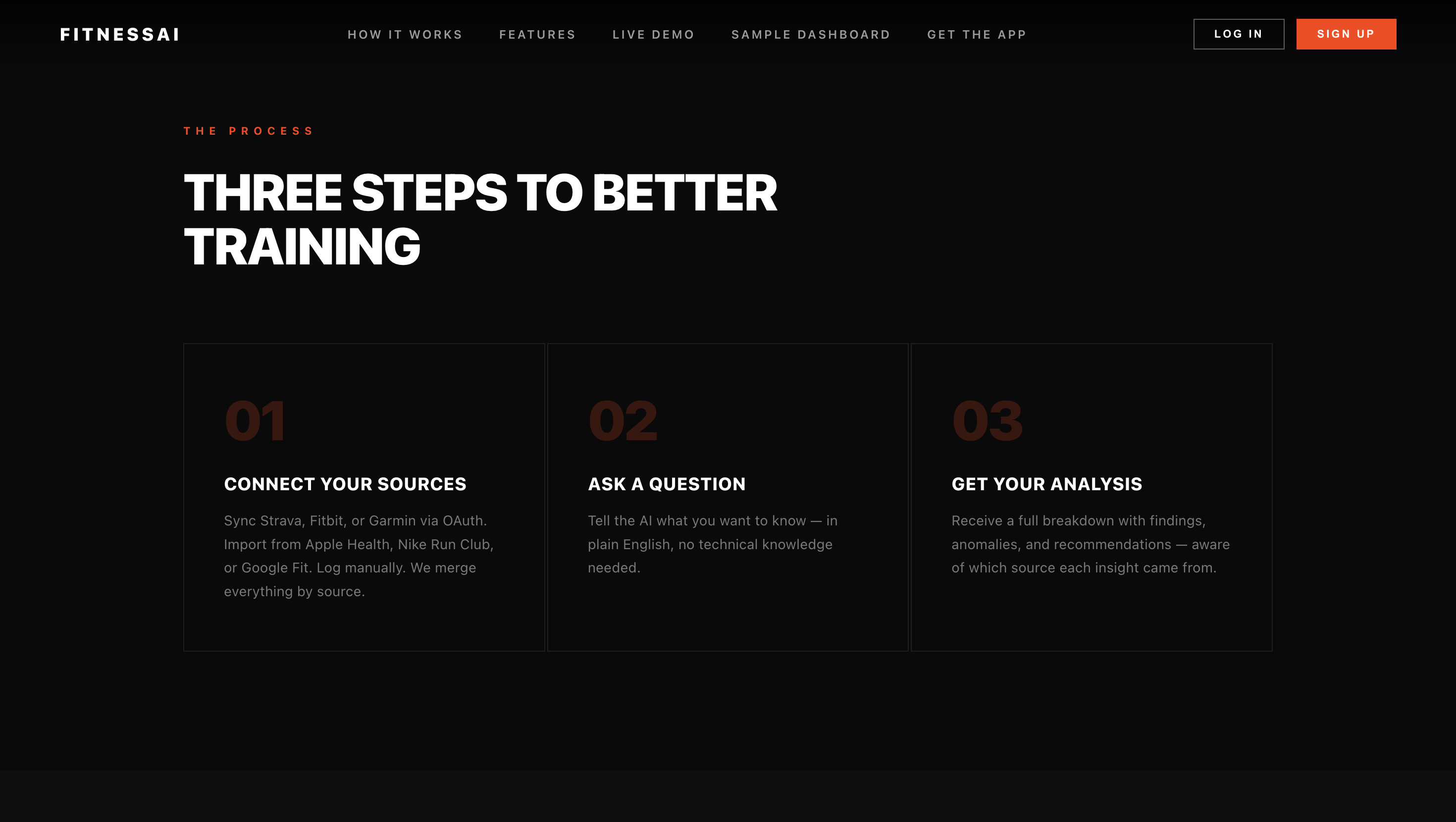
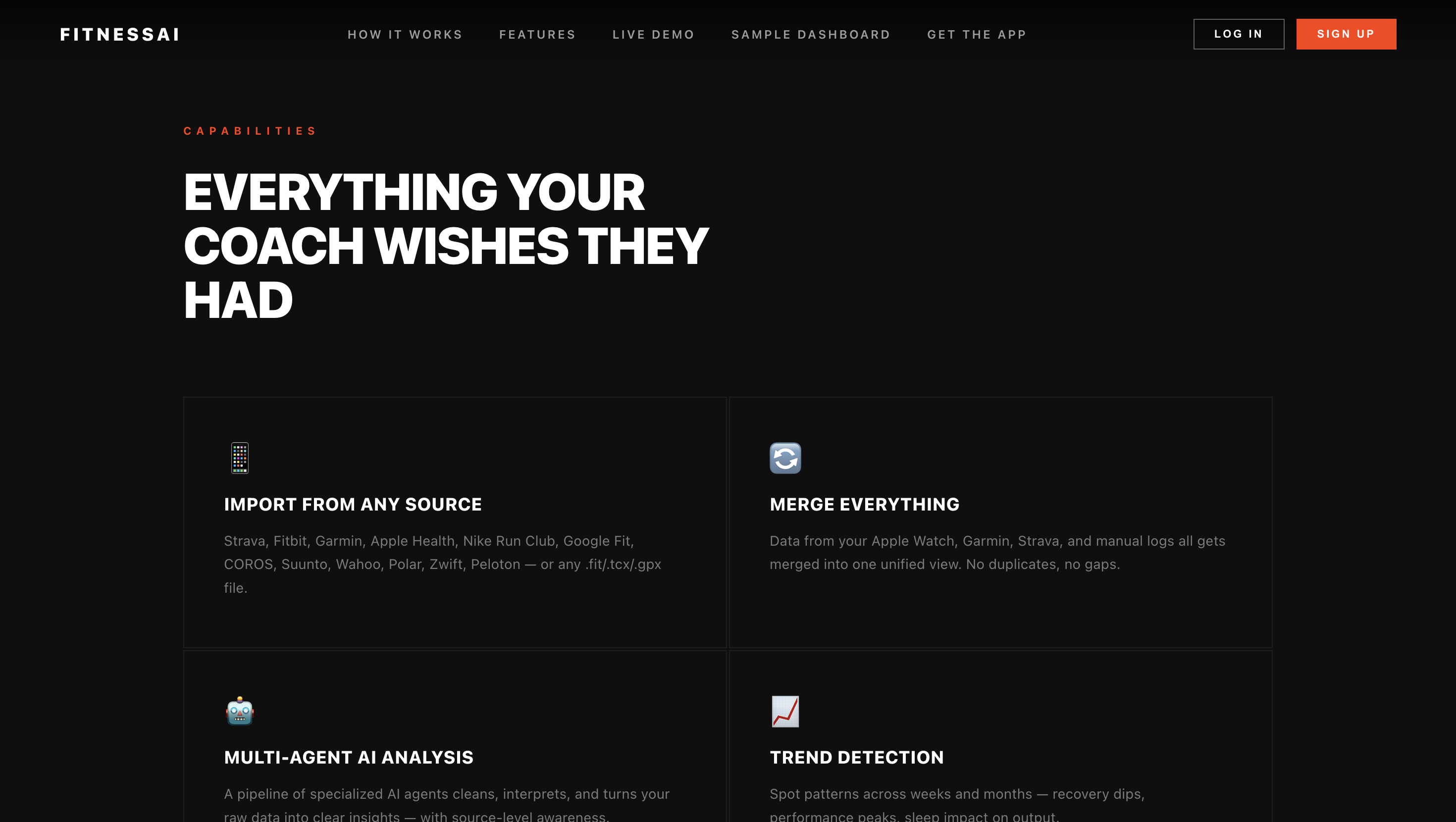
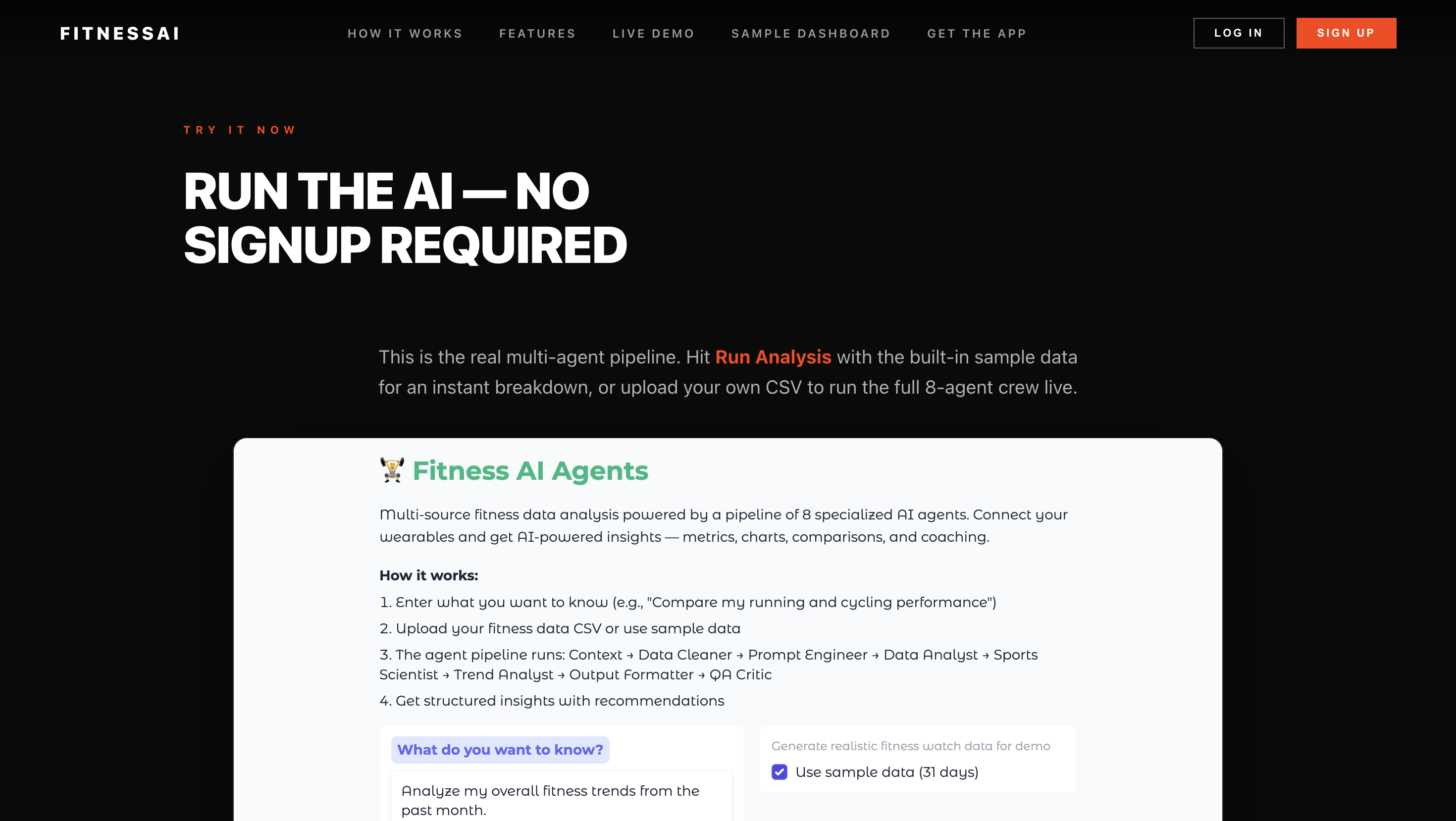
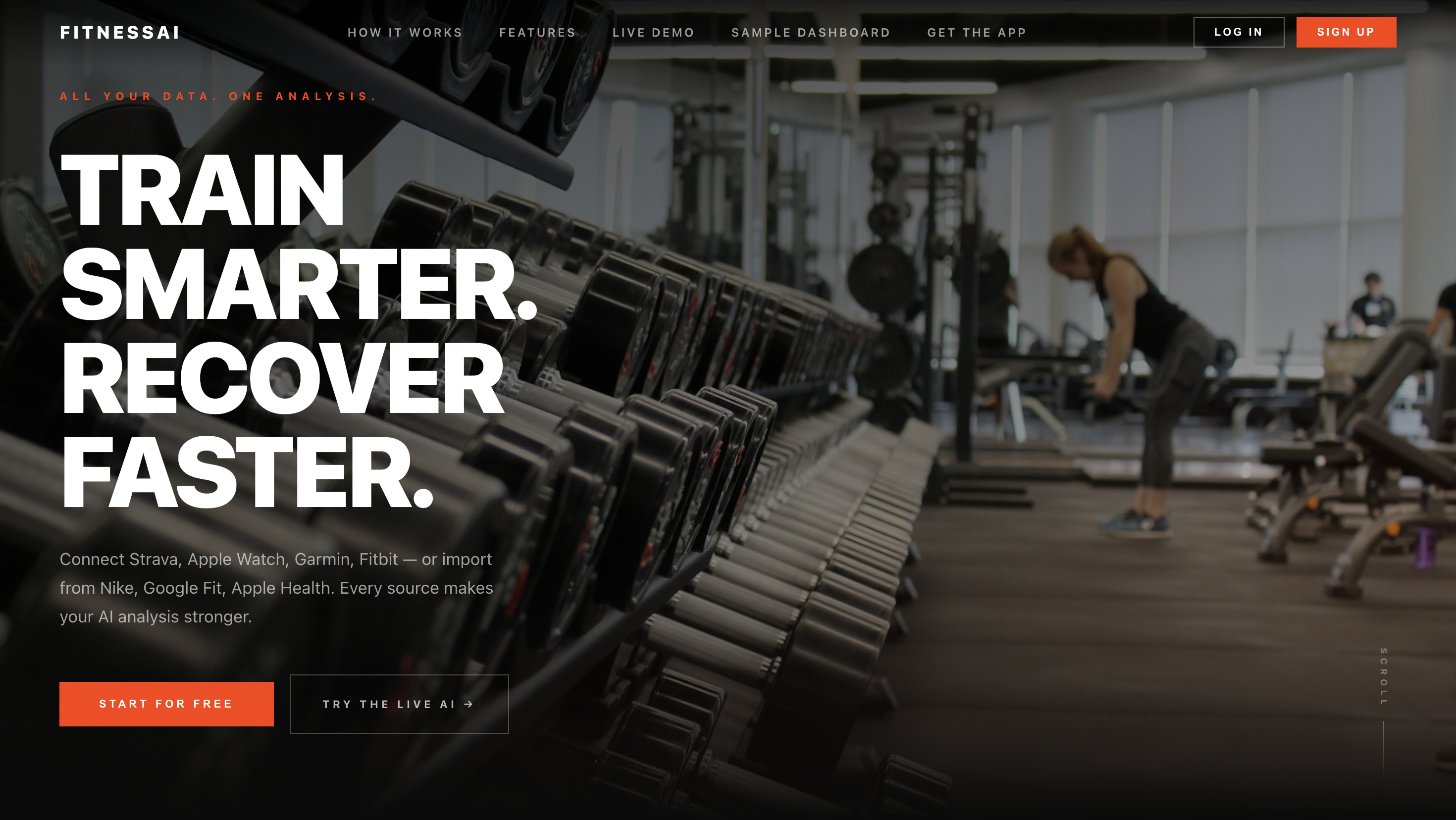
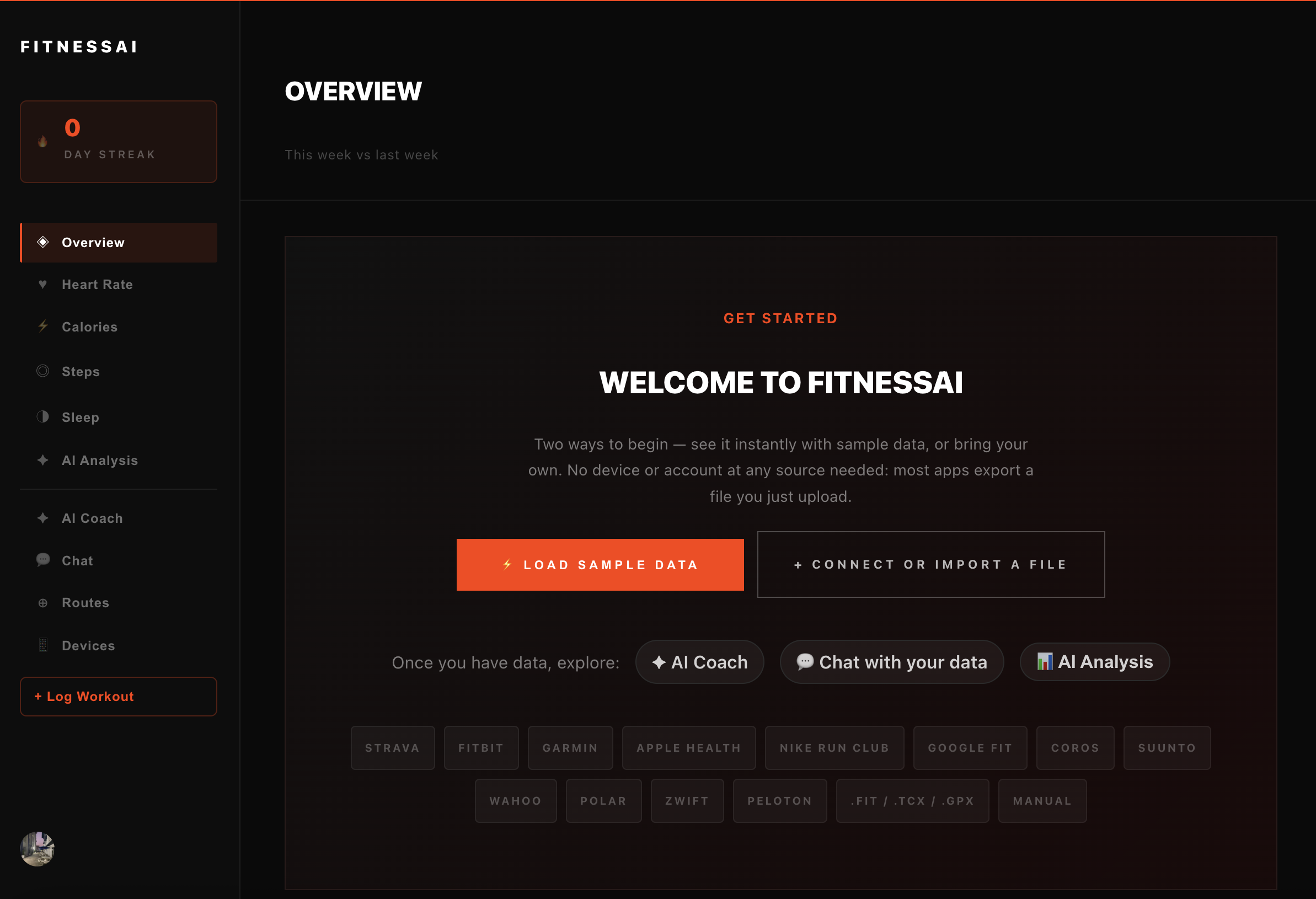
Fitness AI Agents lets you connect your fitness data from any source — OAuth sync with Strava or Fitbit, file imports from Garmin, Apple Health, COROS, Wahoo, Polar, and a dozen others — and then runs it through a pipeline of AI agents that work together the way a team of domain experts would.
From there you get five things:
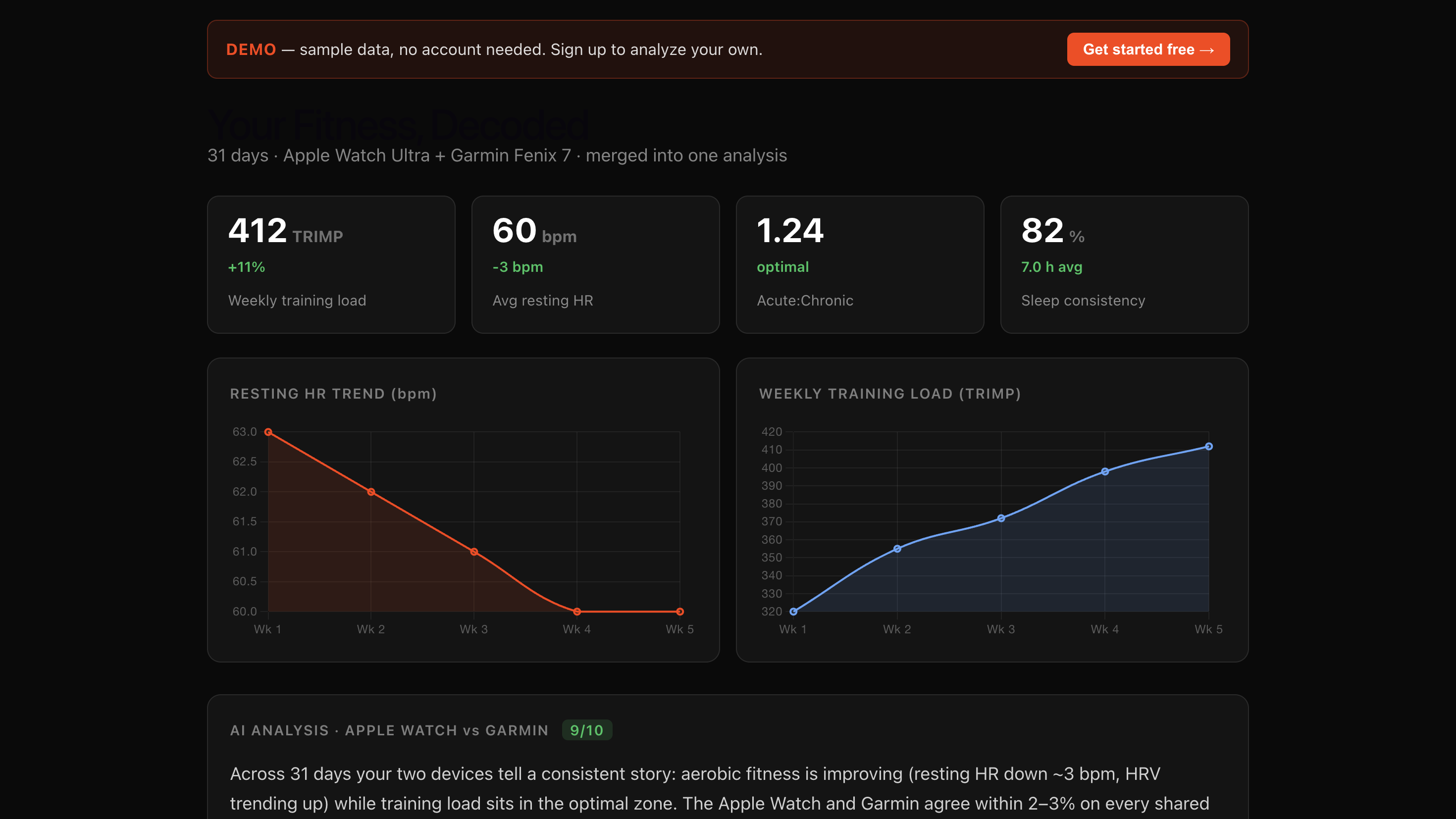
- AI Analysis — an 8-agent CrewAI pipeline turns your raw data into metrics, charts, trend comparisons, training-load reports, and a QA-scored summary grounded in exercise physiology
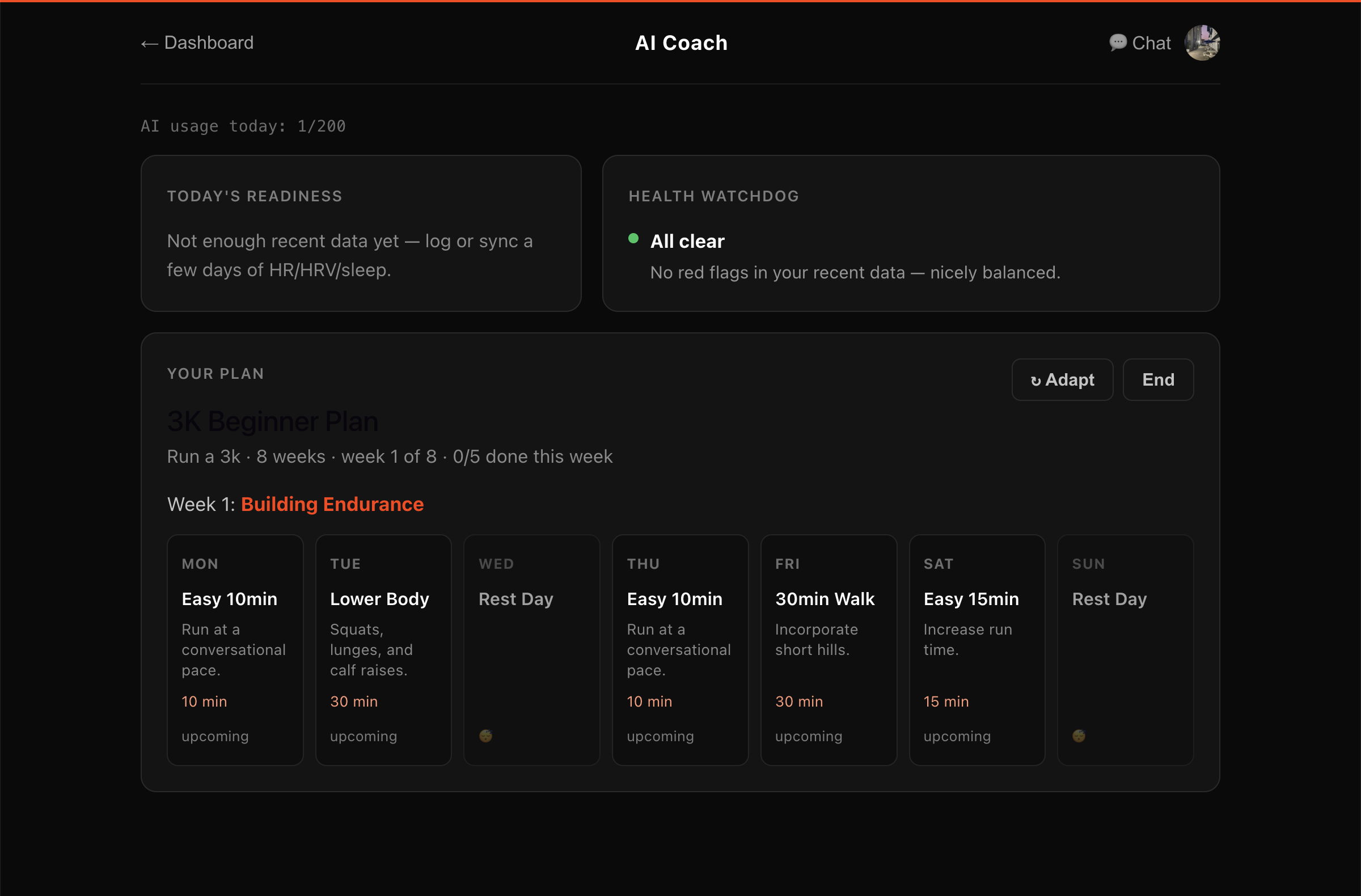
- AI Coach — set a goal, get a week-by-week training plan that tracks your real workouts as they come in and adapts if you fall behind or overtrain
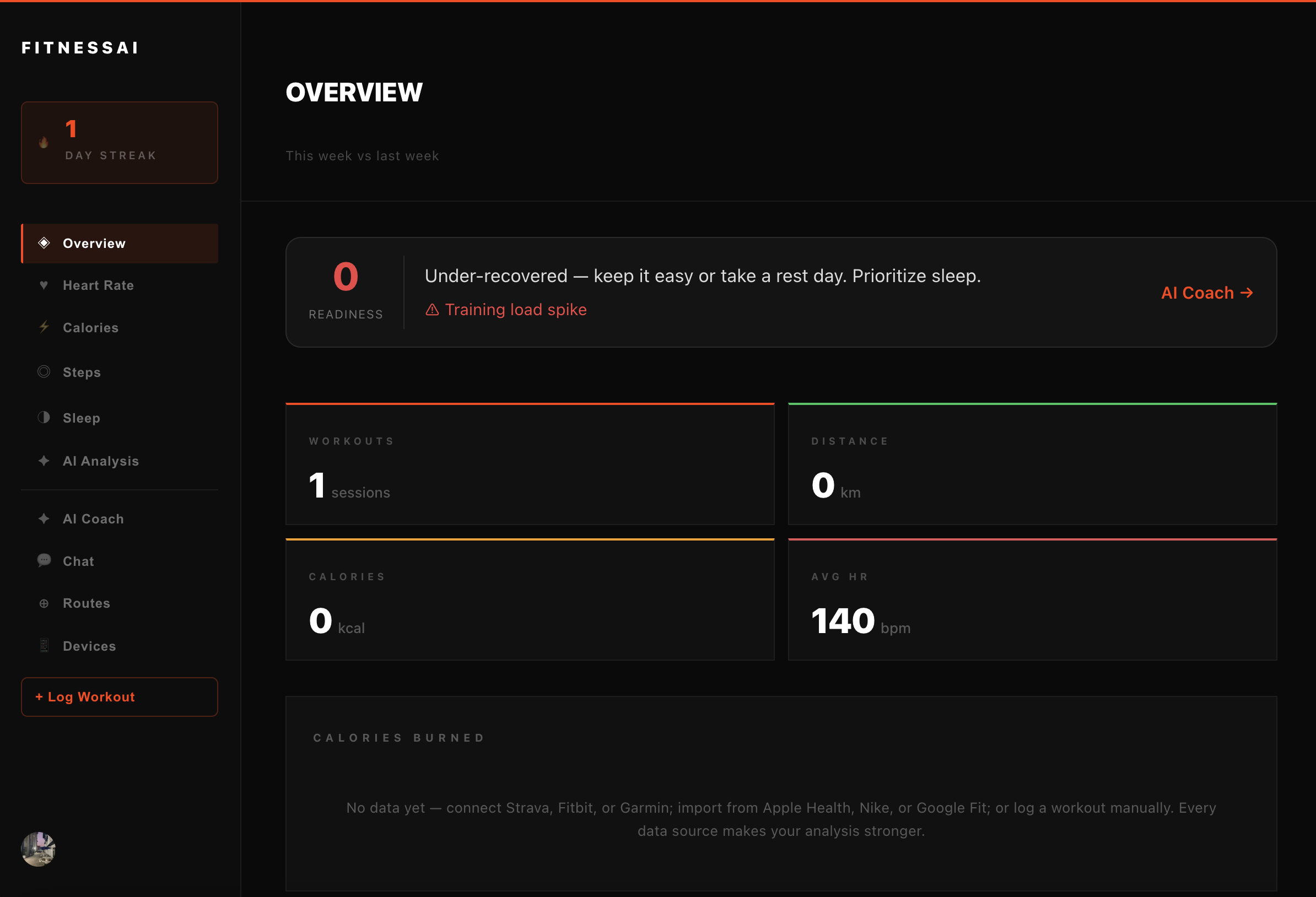
- Daily Readiness Score — the same recovery score Whoop and Oura charge subscriptions for, computed from HRV trend, resting HR, sleep, and acute:chronic load ratio, completely free, from any data source
- Health Watchdog — proactive alerts when your resting HR trends up, HRV drops, or training load spikes — no AI calls, pure deterministic sports-science logic
- Chat with your data — ask anything in plain English and get answers grounded in your actual history, not generated from scratch
It's installable as a PWA on any device, secured with row-level Supabase isolation and hashed device tokens, and has one-click GDPR data deletion built in.
How we built it
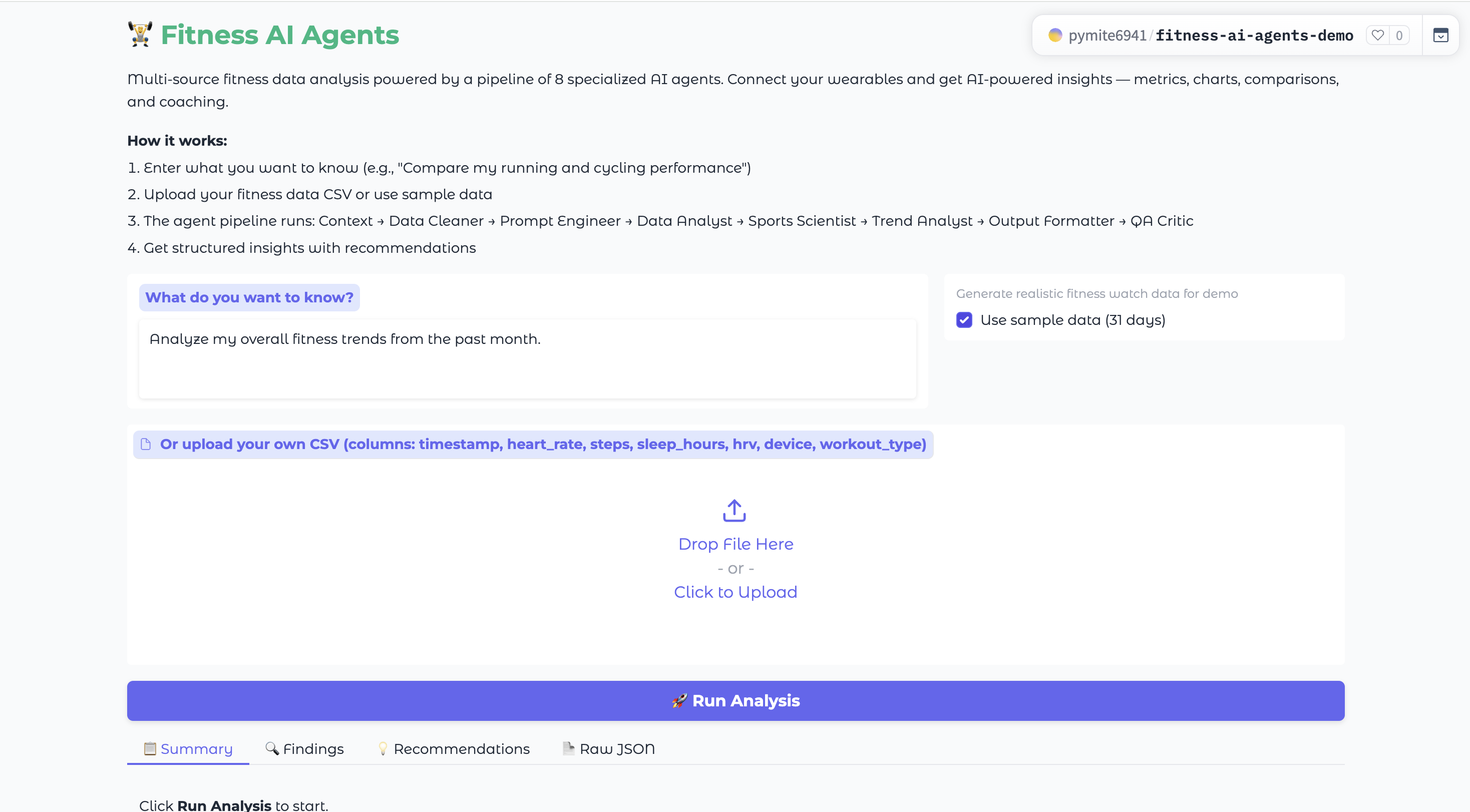
We started with the multi-agent backend. The core AI pipeline is built on CrewAI — eight specialized agents that run in sequence, each passing context to the next: a Context Agent that interprets your question, a Data Cleaner that validates physiological ranges, a Prompt Engineer that writes the analysis plan, a Data Analyst that runs the numbers, a Sports Scientist that applies exercise physiology, a Trend Analyzer that detects patterns over time, a Formatter that produces structured JSON, and a QA Critic that scores the whole output for accuracy.
The backend is FastAPI deployed on Vercel — always-on, free tier. The database is Supabase Postgres with row-level security enabled on every table, so even with the right URL the anonymous key returns nothing. Authentication is Clerk for web users, with a separate hashed device-token system for the Android app so it can POST to /ingest without a browser JWT.
For the lighter AI features — Coach, Chat, and the Watchdog — we wrote llm_lite.py, a custom multi-model failover router that cycles across free Groq and OpenRouter models, reads rate-limit headers, and enforces a 200-call-per-user-per-day guardrail so no single account can drain the shared model pool.
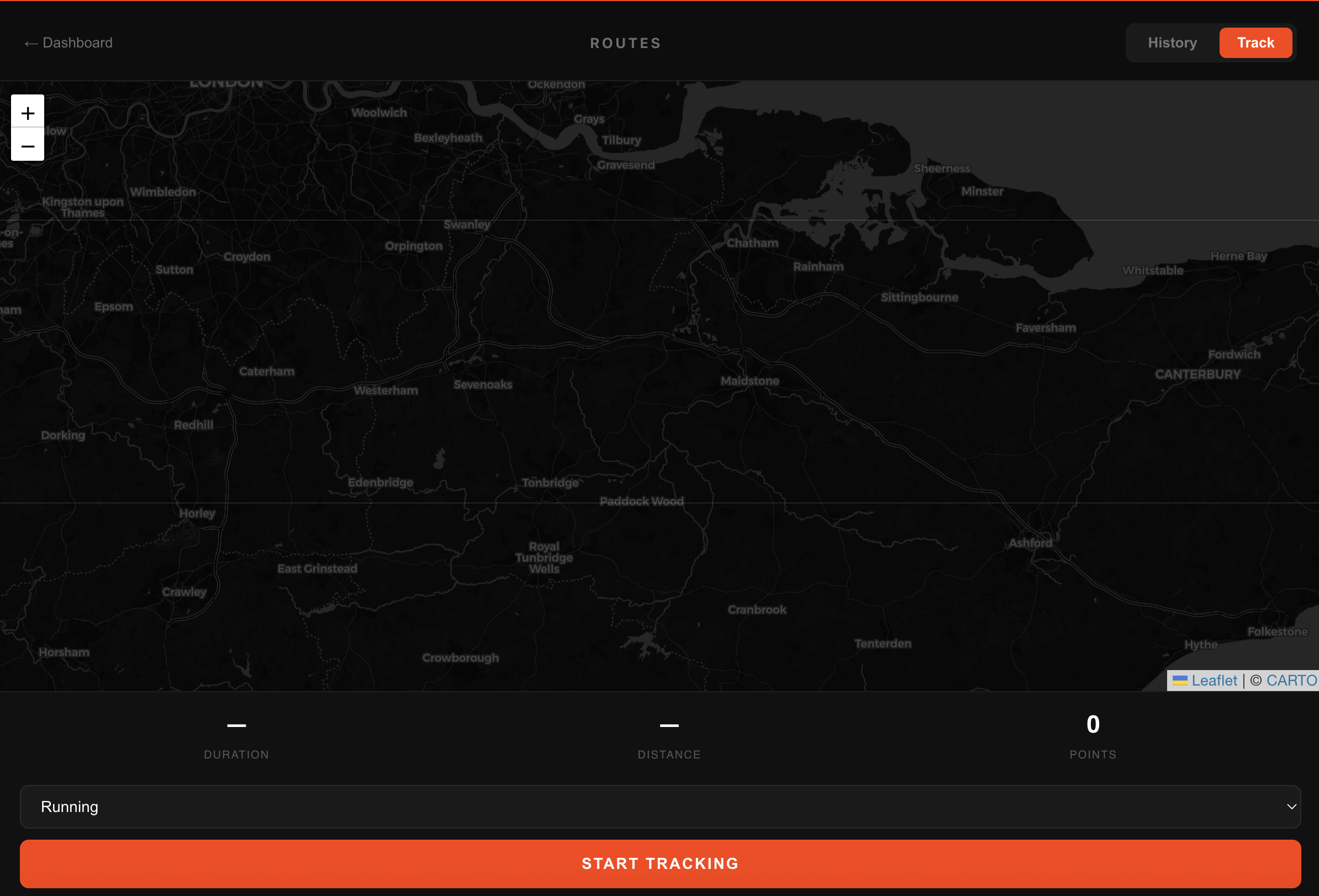
The frontend is React 19 with Vite, Chart.js for graphs, Leaflet for GPS route maps, and Clerk for auth. It's deployed on Vercel and ships as an installable PWA.
The heavy 8-agent pipeline runs in a dedicated HuggingFace Gradio Space because it needs the compute — it makes 20+ LLM calls per run. The lighter Vercel backend handles everything else.
Challenges we ran into
Free model rate limits. The 8-agent pipeline makes upward of 20 LLM calls per analysis run. Free Groq and OpenRouter quotas run out fast. We had to build a proper failover router that reads the x-ratelimit-remaining headers and cycles models mid-run instead of failing hard.
Cross-platform file parsing. .fit files from Garmin encode data completely differently than .fit files from a Wahoo or COROS device. .gpx files from different apps have different heart rate field names and some don't include HR at all. We hit a subtle Python bug where a childless XML element evaluates as falsy, so el.find(...) or el.find(...) silently dropped GPX heart rate data — had to rewrite every file parser to use explicit is None checks.
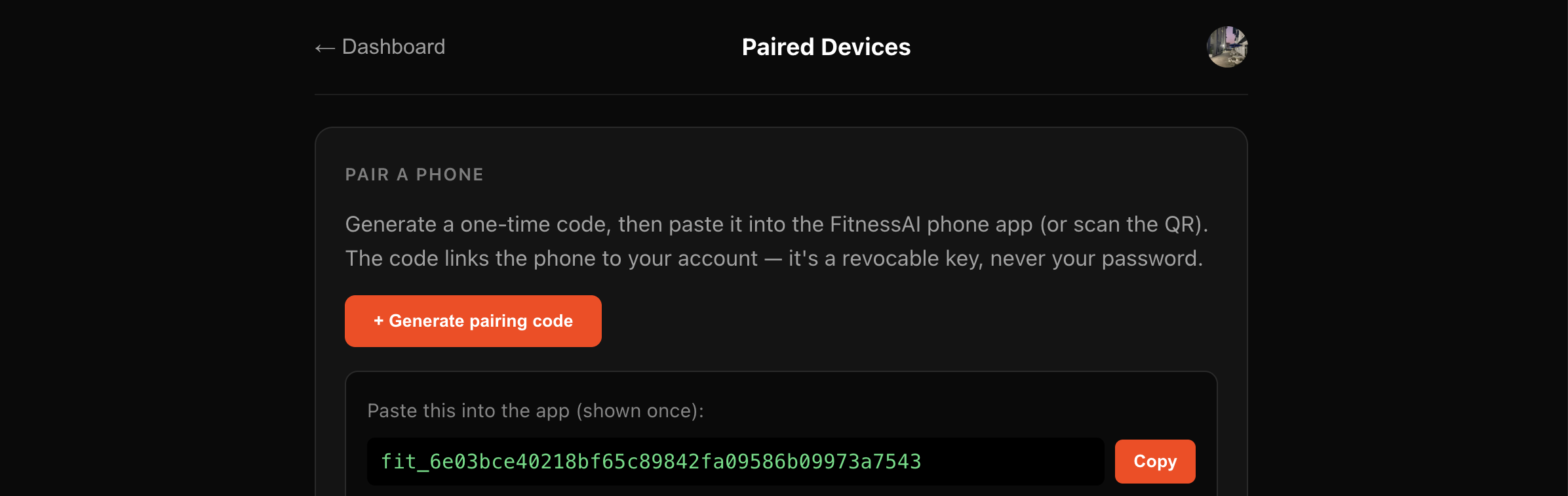
The authentication split. The Android tracker can't get a Clerk JWT — it runs as a background foreground service with no browser. We had to design a second auth path: the web app issues an opaque fit_… device token via POST /device/pair, the Android app stores it in the Android Keystore, and the backend's get_user_id_flexible function accepts either a Clerk JWT or the device token and maps both to the same user_id. Getting that handshake right took a few iterations.
Making the Readiness Score accurate. We didn't want to just invent a score — we wanted it to reflect actual sports science. That meant researching HRV methodology, acute-to-chronic workload ratios, and resting HR baseline calculations, and tuning the formula weights so the output felt meaningful rather than arbitrary.
Infrastructure constraints. Free HuggingFace only runs one Space at a time. We had to split the architecture — the heavy pipeline stays in the demo Space, and the always-on API moved to Vercel — and make the two work together cleanly.
Accomplishments that we're proud of
We're proud that the Readiness Score actually works. It produces numbers that make physiological sense — recovery goes down after hard training blocks, goes up after rest days — and it matches what Oura and Whoop produce, for free, from any data source.
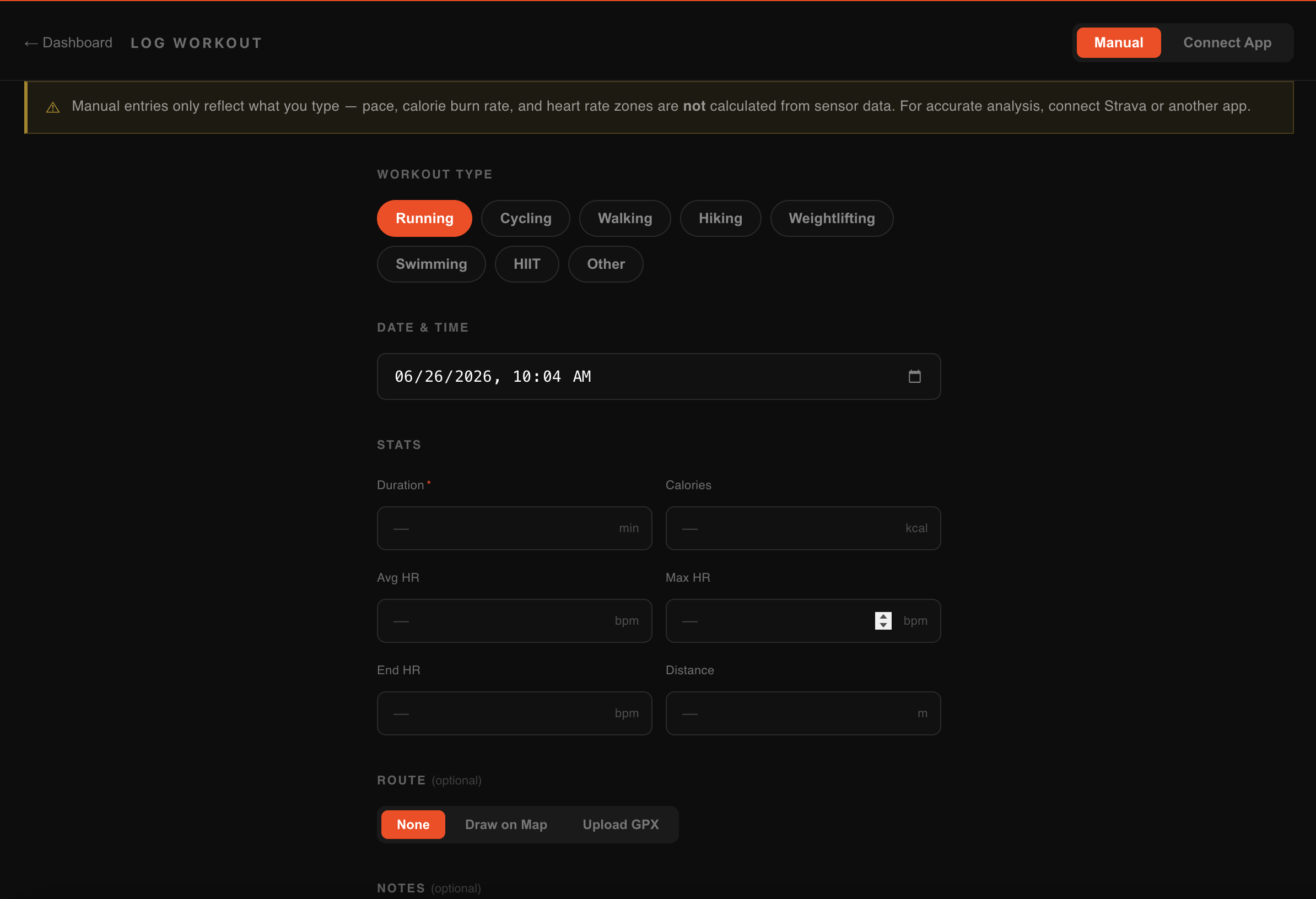
We're proud of the universal file import. Supporting 13+ sources required writing parsers for three binary and XML formats from devices that each encode data slightly differently. It all works, and every row is tagged with the device that produced it so the AI knows the provenance.
We're proud that this is 100% live and not a demo. Everything — the full dashboard, the 8-agent pipeline, the Coach, the Chat, the Readiness Score — is deployed and accessible right now at fitness-ai-agents.vercel.app. You can load 31 days of sample data and get a full AI analysis in under two minutes.
We're also proud of the security model. RLS deny-all on every Supabase table, SHA-256 hashed device tokens, Clerk JWT verification on every protected route, a per-user AI rate limit, and a GDPR one-click data erase — for a hackathon project, that's a production-grade security posture.
What we learned
We learned a lot more sports science than we expected. Terms like TRIMP (Training Impulse), acute-to-chronic workload ratio, HRV methodology, and HR zone distribution aren't things you just know — we had to research and implement them properly so the Readiness Score and Watchdog actually mean something.
We learned how to architect a multi-agent system that fails gracefully. When one LLM call times out or a model hits its rate limit mid-pipeline, the whole crew can't just crash. Building the failover router and making the agents resilient to upstream failures was one of the harder engineering problems.
We learned the real complexity of fitness data formats. We thought file import would be straightforward. It wasn't. Every device and platform has its own quirks in how they encode timestamps, heart rate, GPS coordinates, and workout metadata. Handling all of those correctly required a lot more defensive parsing than we anticipated.
We also learned how far you can take free-tier infrastructure with the right architecture. The entire platform — frontend, backend API, database, and AI pipeline — runs at zero cost. That's only possible because we split the workloads correctly: heavy computation in HuggingFace, always-on API on Vercel, deterministic logic with no model calls at all where possible.
What's next for Fitness AI Agents
The web platform is complete and live. Here's what we're building next:
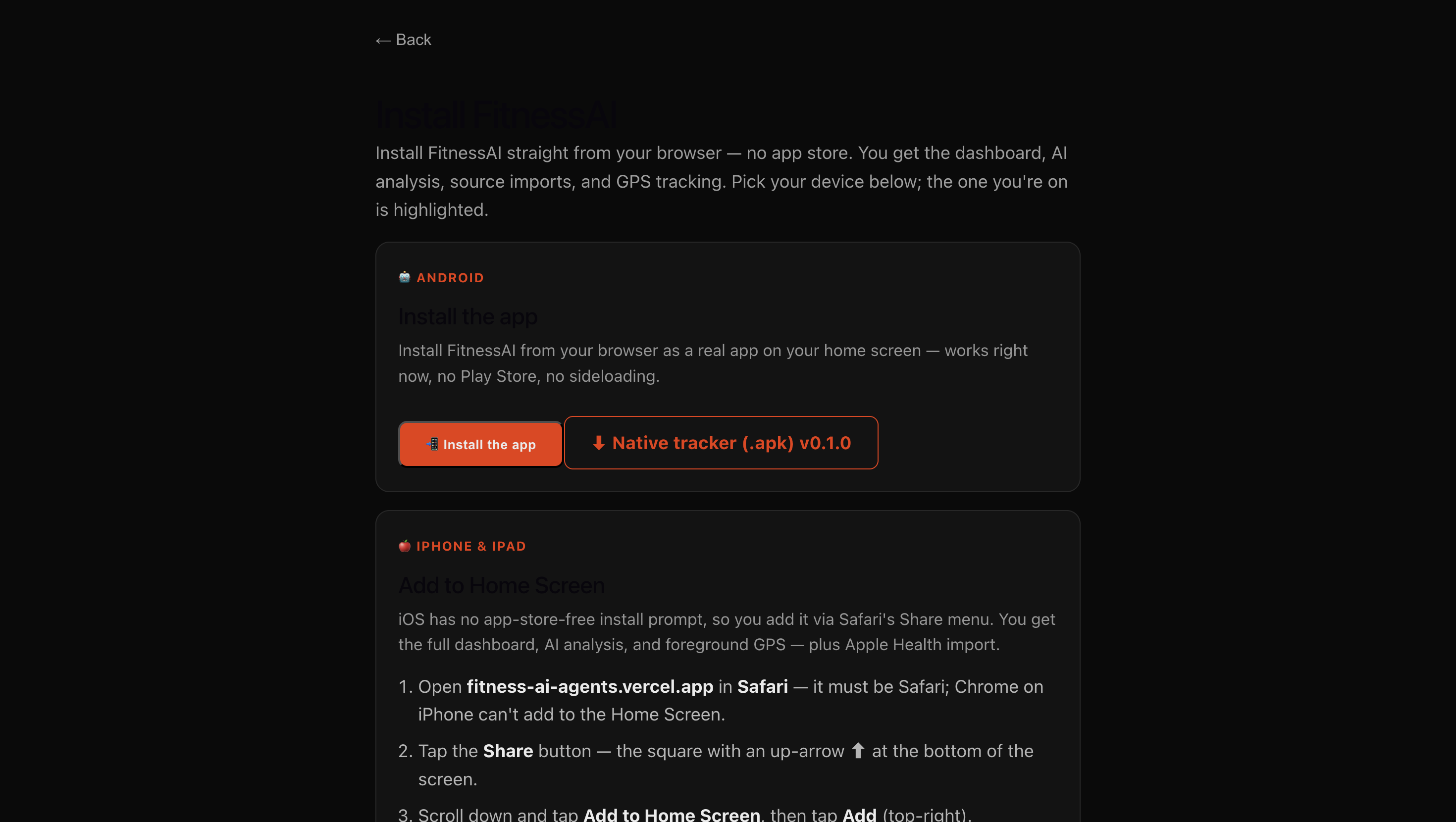
- Native Android APK — the Kotlin scaffold is already in
mobile/android/. The app runs a background foreground service for step counting and GPS tracking, pairs to the account via a device token, and queues uploads with WorkManager. It just needs to be built and signed in Android Studio, then dropped atfrontend/public/fitness-ai.apkfor distribution from the site. No app store required. - iOS HealthKit integration — reads steps, HR, and sleep from iPhone and a paired Apple Watch in the background. Scaffold is in
mobile/ios/. Hardware-blocked for now but the data path on the backend is already live. - Always-on AI analysis — the full 8-agent pipeline runs in the demo today. Bringing it into the main dashboard for all users just needs a dedicated model key with sufficient quota. That's a funding question, not an engineering one.
- FitnessAI Watch — a custom open-hardware ESP32-C3 smartwatch (HR sensor, step counter, GPS) that pairs directly to the platform. We built and archived the earlier firmware in
watch-archive/and will pick it back up once the software side is fully stable. - Weekly digest — a scheduled email summarizing the past week: training load, readiness trend, coach plan progress, and one standout insight from the AI.

Log in or sign up for Devpost to join the conversation.