Inspiration
Fitness apps only see you at the gym, but most of your life happens at home. We wanted one app that knows where you live, what you eat and how you move, and that can keep an eye on the people you care about. When we learned that WiFi signals change as a body moves through them, we realized the router already in every home could double as a fitness and safety sensor.
What it does
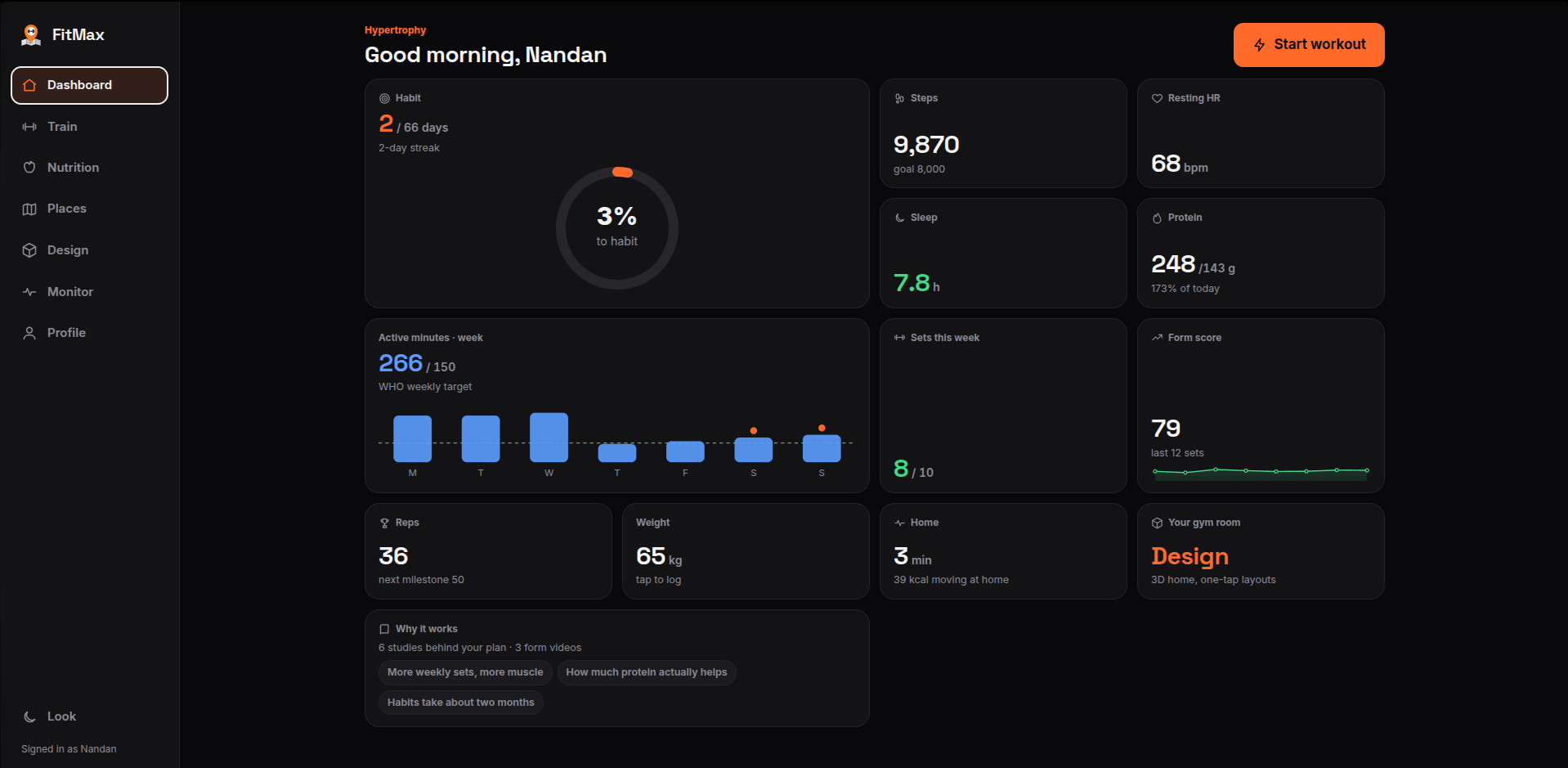
FitMax turns your home into your gym, your coach and your safety net.
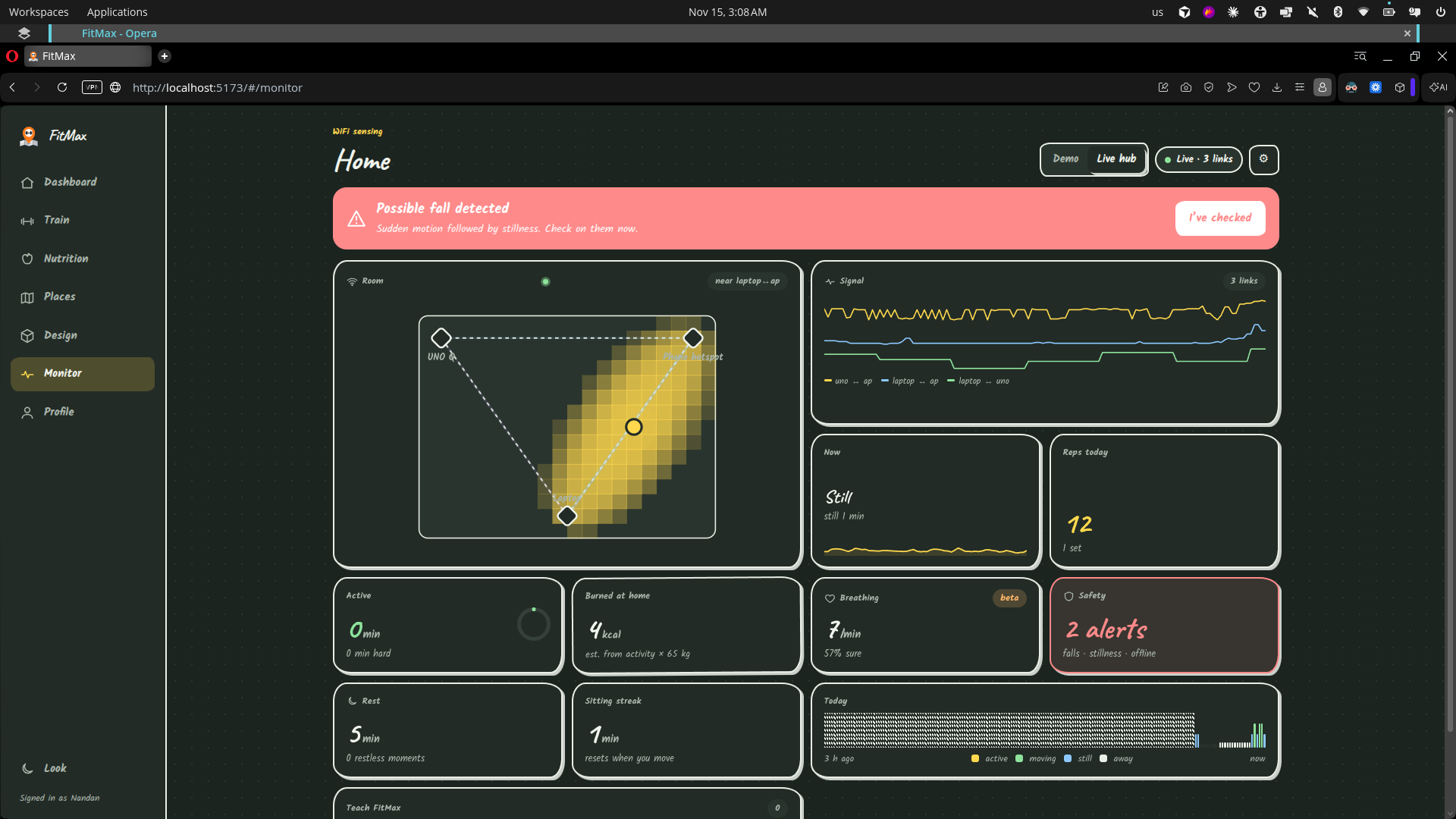
- WiFi monitor: an Arduino UNO Q, a laptop and a Bluetooth link form three radio paths across a room. FitMax reads their signal strength to detect motion and falls in real time and to estimate breathing and count reps, with no wearable. A webcam measures heart rate and breathing in the background, and the video never leaves the device. A fall triggers an alert, which makes it useful for elderly parents living alone.
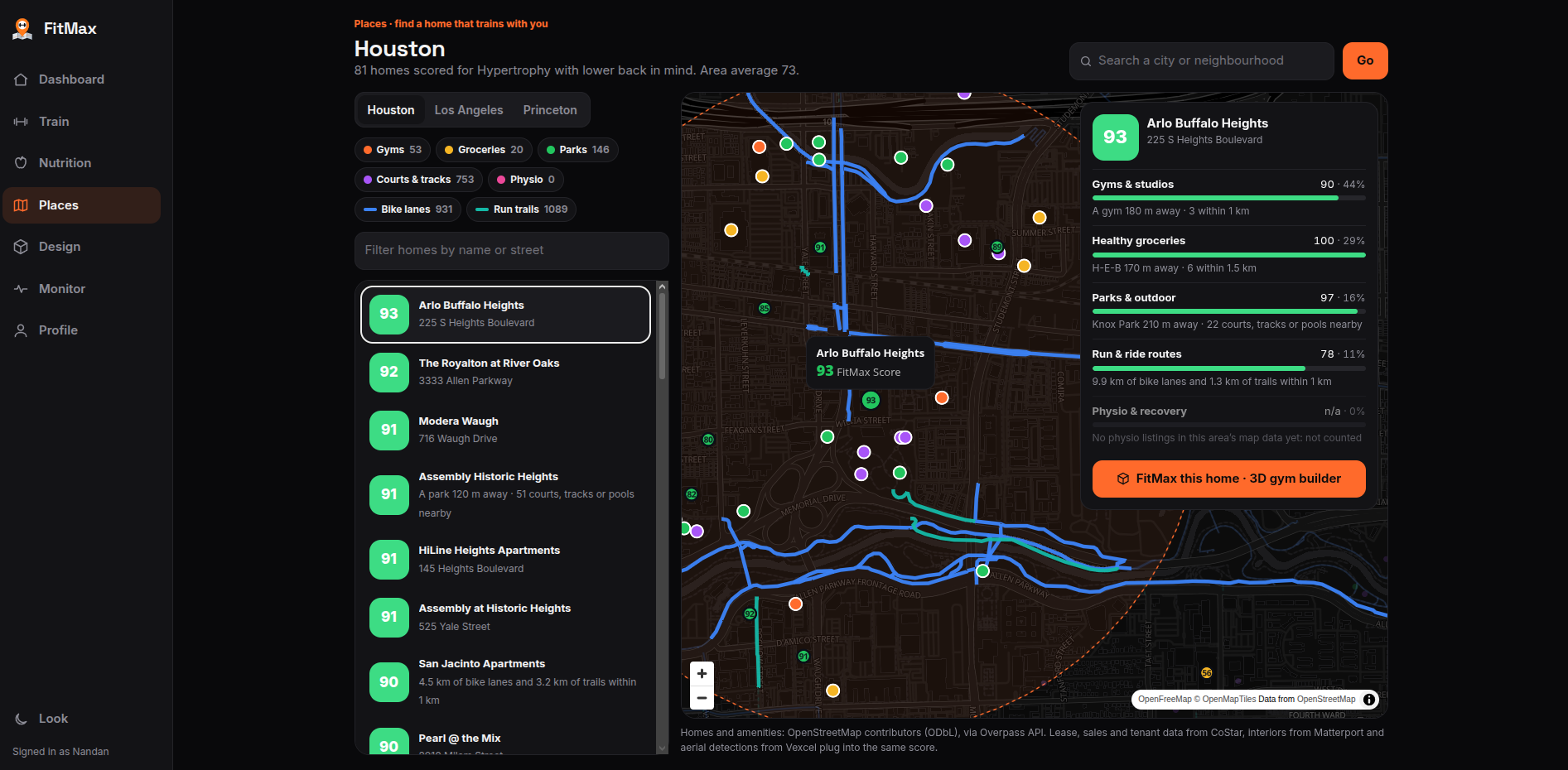
- Places: CoStar listings get a fitness score, shown over Vexcel aerial imagery, so you can find homes that fit how you train.
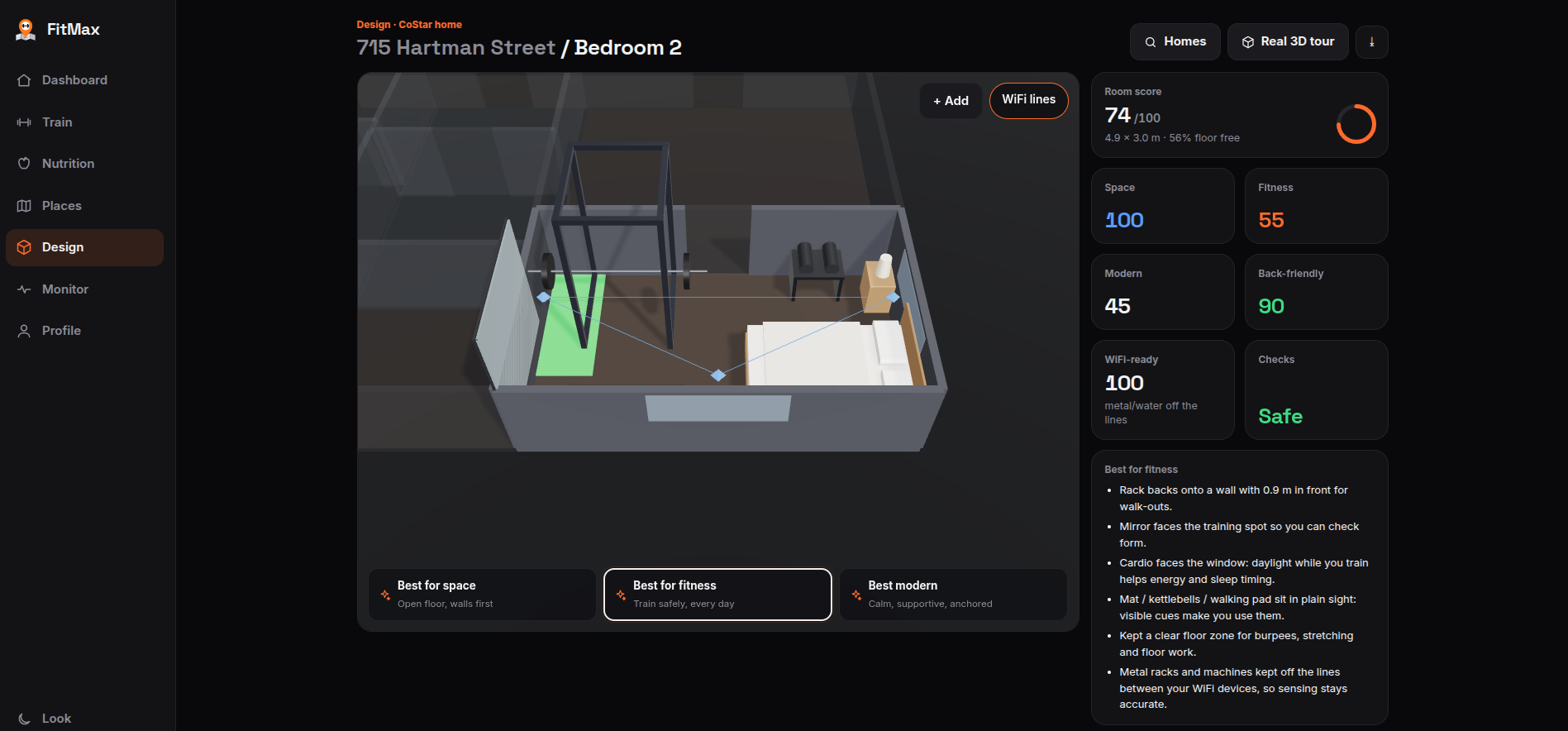
- Design: every home opens as a 3D dollhouse where you drag in real gym equipment and furniture. A research-based engine scores each layout for space, fitness, ergonomics and WiFi placement. You can then walk the home's real Matterport tour and pin your equipment onto the actual scanned floor.
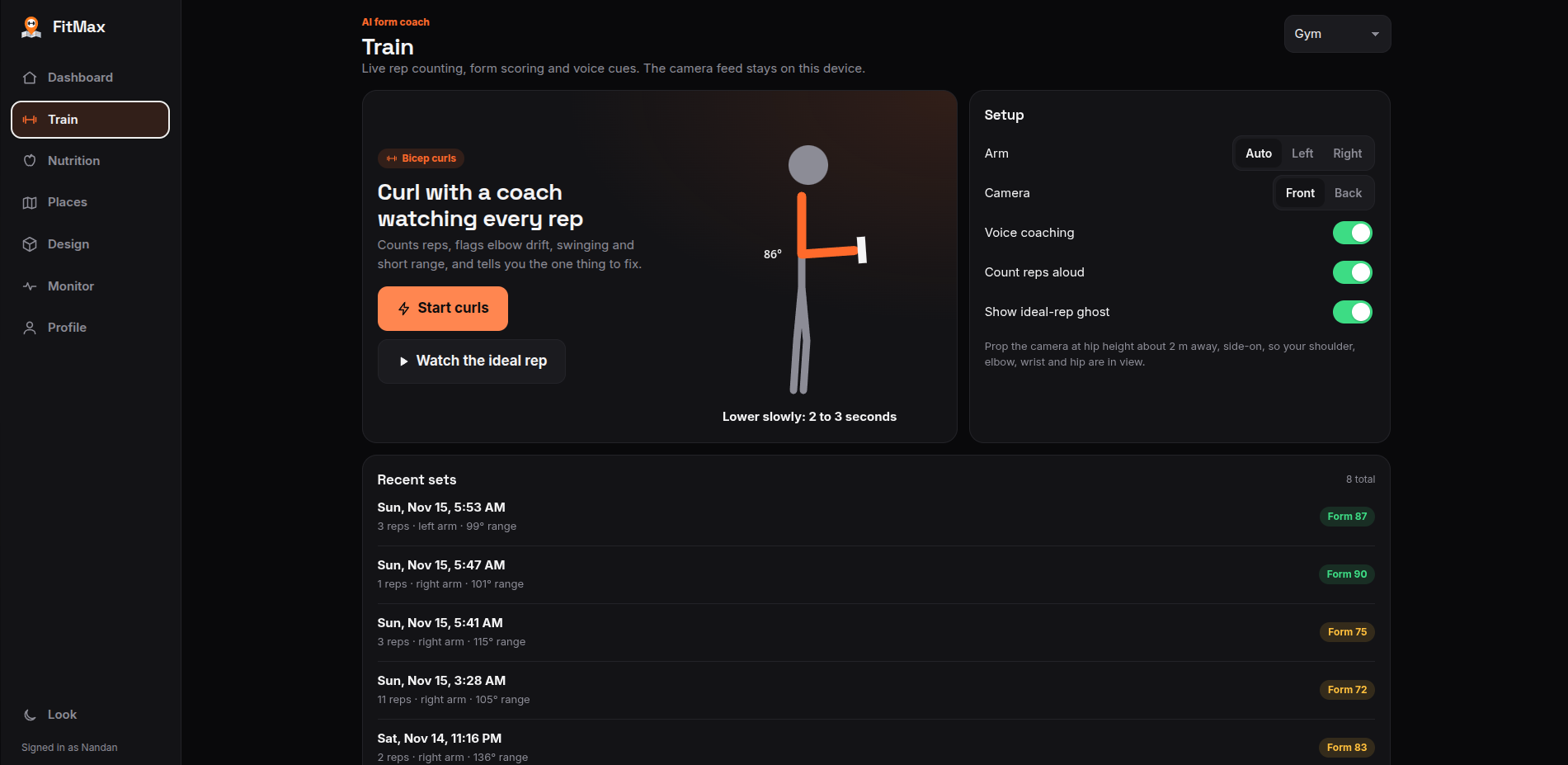
- Train: a webcam coach counts curls, scores your form and calls out the one thing to fix.
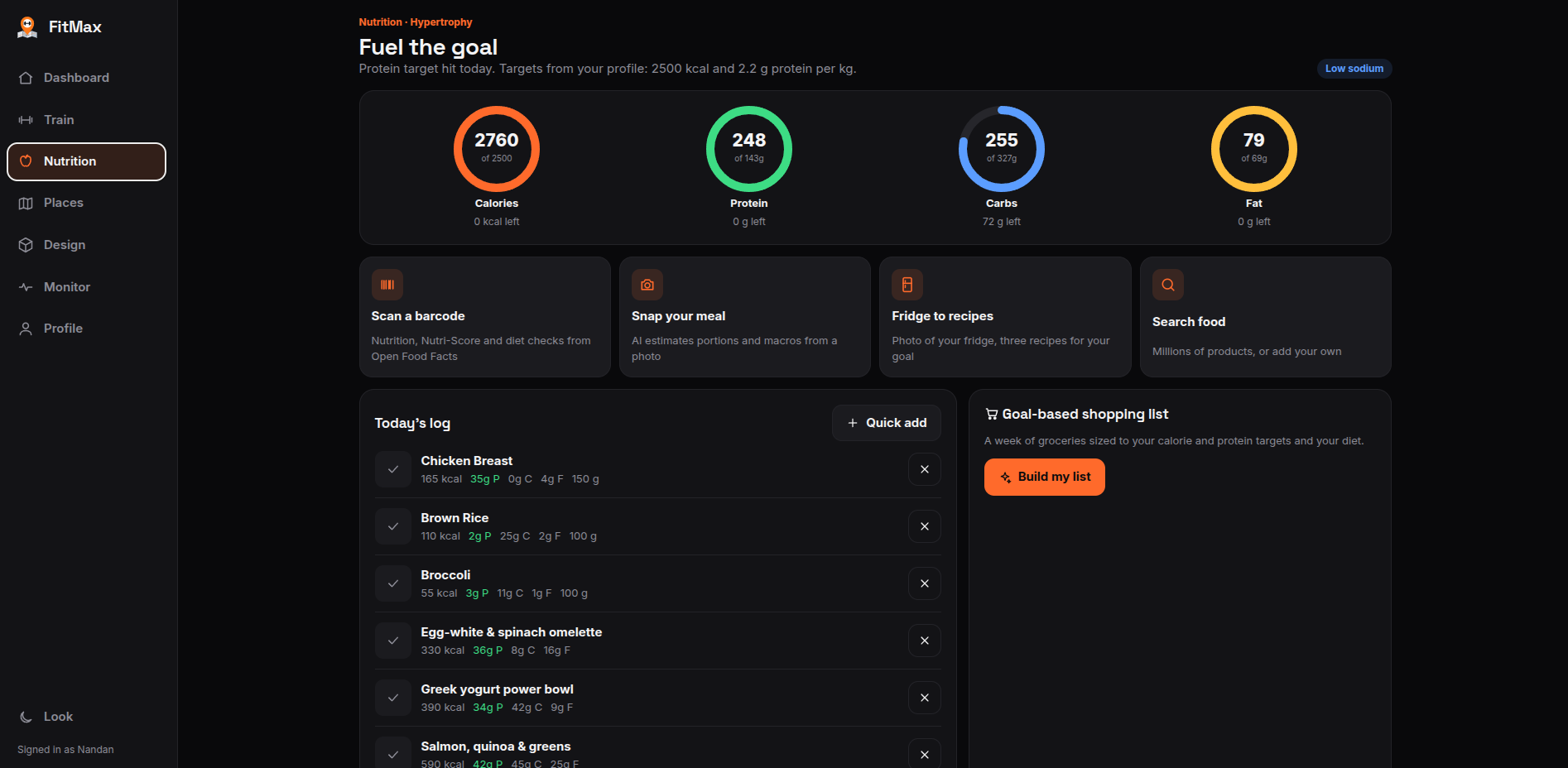
- Nutrition: snap a meal to log its macros, or snap your fridge to get high-protein recipes made from what you already have.
How we built it
- Frontend: a Vite and React 19 progressive web app in TypeScript, with a customizable widget UI and six visual themes.
- Sensing hub: a dependency-free Python service on the Arduino UNO Q. It turns signal-strength readings into motion, reps, breathing, falls and a room heat map, using methods from published WiFi sensing research (Patwari, UbiBreathe, and Wilson and Patwari's radio tomographic imaging). The laptop and a Bluetooth link via
bleakfeed in two more paths. - Vitals: MediaPipe Pose tracks the face and shoulders. Heart rate uses the POS remote photoplethysmography method (reading the pulse from tiny colour changes in the skin), and breathing comes from shoulder motion.
- Places and Design:
- Vexcel API 2.0 aerial imagery through a server proxy, so keys never reach the browser.
- Building footprints from OpenStreetMap.
- three.js for the 3D dollhouse, and Jolt Physics compiled to WebAssembly so equipment collides and drags realistically.
- The Matterport Showcase SDK, which uses raycasts and the Tag API to pin equipment in real tours.
- AI: NVIDIA NIM vision models (Gemma 3, Gemma 4, Llama 3.2 Vision) answer in structured JSON. Claude was our pair programmer through the night.
Challenges we ran into
- Noisy WiFi: a single signal-strength reading is noisy, and random flicker kept getting counted as reps. Fixing it took stricter rhythm detection, noise floors calibrated on an empty room, and checks that each signal path agrees with the others.
- Hardware setup: App Lab and adb fought over the board's USB connection, and moving to a phone hotspot changed every IP address mid-hack.
- Removed scans: 766 of the 1,779 CoStar Matterport scans had been taken down, so we built a checker that only shows live tours.
- Slow AI: Llama 3.2 Vision was too slow and often cut its JSON off partway. We switched to racing two faster models and repairing broken output.
Accomplishments that we're proud of
- Three-link sensing detecting live motion, presence and falls on a $60-class board, with no cameras or wearables needed.
- Real equipment in real tours: a research-scored 3D home gym designer that drops equipment into a real Matterport tour.
- Background vitals: webcam heart rate and breathing that run quietly on every screen.
- Tested end to end: 65 app tests and 16 sensing tests passing.
What we learned
- Bodies and radio: the human body is mostly water, which absorbs and reflects WiFi, so cheap hardware can tell a surprising amount about what's happening in a room.
- Combining signals: when several weak sensors agree with each other, they beat one expensive one.
- Real data is messy: listings go stale and models break their output format, so defensive engineering matters as much as features.
What's next for FitMax
- Smart home: connect to Google Home and Apple Home as a presence and fall sensor.
- Hospitals: pilot in understaffed wards and assisted living, to monitor patients around the clock and alert staff only when something changes.
- Richer sensing: use full WiFi channel state information (CSI) instead of signal strength alone, for finer breathing and activity detection.
- Full 3D in tours: show full 3D equipment models inside Matterport tours with the SDK Bundle.
- Better home scores: use Vexcel aerial detections such as pools, courts and yards to sharpen the fitness scores.
